A Consideration of Luna’s “Poem #264”

I‘ve made no secret that my formal training is as a student of language and literature. As I move back to doing the kinds of things that got me into that study–reading and thinking about what I read–it seems fitting that I would return, too, to some of the exercises that accompany those things. It seems fitting that I would return to writing about the things I read, using that writing to shape my thinking and evidence it, and a poem posted by someone who has paid attention to my work seems a good thing on which to focus my attention.

File:Lady Reading Poetry by Ishibashi Kazunori (Shimane Art Museum).jpg
Ishibashi Kazunori’s Lady Reading Poetry, which I am told is a public domain image, used here for commentary

The piece in question, Luna’s “Poem #264,” is a free-verse composition in three uneven stanzas. Adopting a first-person perspective, the poem describes a performative reaction to being stabbed, one occurring after a coarse self-healing and catharsis, one juxtaposed with enacting betrayal or violence in return. The first stanza details the performance in six lines, couching it in terms of “juggling the knives” with which the narrator is stabbed and using them hopefully to earn money or to facilitate conversation about injury. The second describes the unskilled self-healing–the narrator notes that s/he “made my stitches rough”–and the catharsis, giving four lines to it. The third, a scant three lines, articulates the expected response of returning the injuries.

What emerges quickly to my reading is that the narrator has been betrayed. S/he notes “the knives stabbed in my / back,” and being stabbed in the back is a common reference to being betrayed, as it bespeaks having trusted someone enough to allow them into a blind spot from which they can strike deeply and with little fear of reprisal. Working from that, I read the poem as the narrator stating his/her desire to show off the injuries and their means of being inflicted, to appropriate them to some other purpose than was intended. They are, after all, “supposed to” be sent back whence they came, but they are instead made objects of delight or mockery, given how street performers are often regarded. This does not mean the injuries did not occasion anger, as the second stanza makes clear. But it does mean that the narrator is reclaiming the injuries inflicted; they are still clear (“I’ve earned my scars and how / much blood I’ve lost pulling these blades out” makes evident that the effects of the injuries linger), but they are the narrator’s, now, and not those of the narrator’s injurers.

Morbid as the imagery of knives, bleeding out, and roughly done stitches might be, the poem seems ultimately to offer a hopeful resolution. The narrator does suffer as a result of having been injured, yes, but s/he is able to make those injuries into something else. And if it may be permitted to read a bit past the poem, it might be hoped that the audiences who see the narrator juggle, who stop to listen or throw in a dime, might learn lessons from the performance that they can use to avoid hurts of their own. And so may we all.

Did I bring you as much pleasure as a slice of pizza does? Could you kick in as much for me so that I can keep doing it? Click here, then, and thanks!
A Robin Hobb Rereading Series: Entry 61: Assassin’s Quest, Chapter 2

Read the previous entry in the series here.
Read the next entry in the series here.


The next chapter, “The Parting,” opens with a reasonably detailed overview of the Six Duchies’ political situation in the wake of Shrewd’s death. It moves to Fitz and Chade conversing, with Chade voicing his surprise that Fitz is as ready to leave things behind as he is. Chade pushes Fitz to Skill to Verity, but he cannot, and he flees.

image
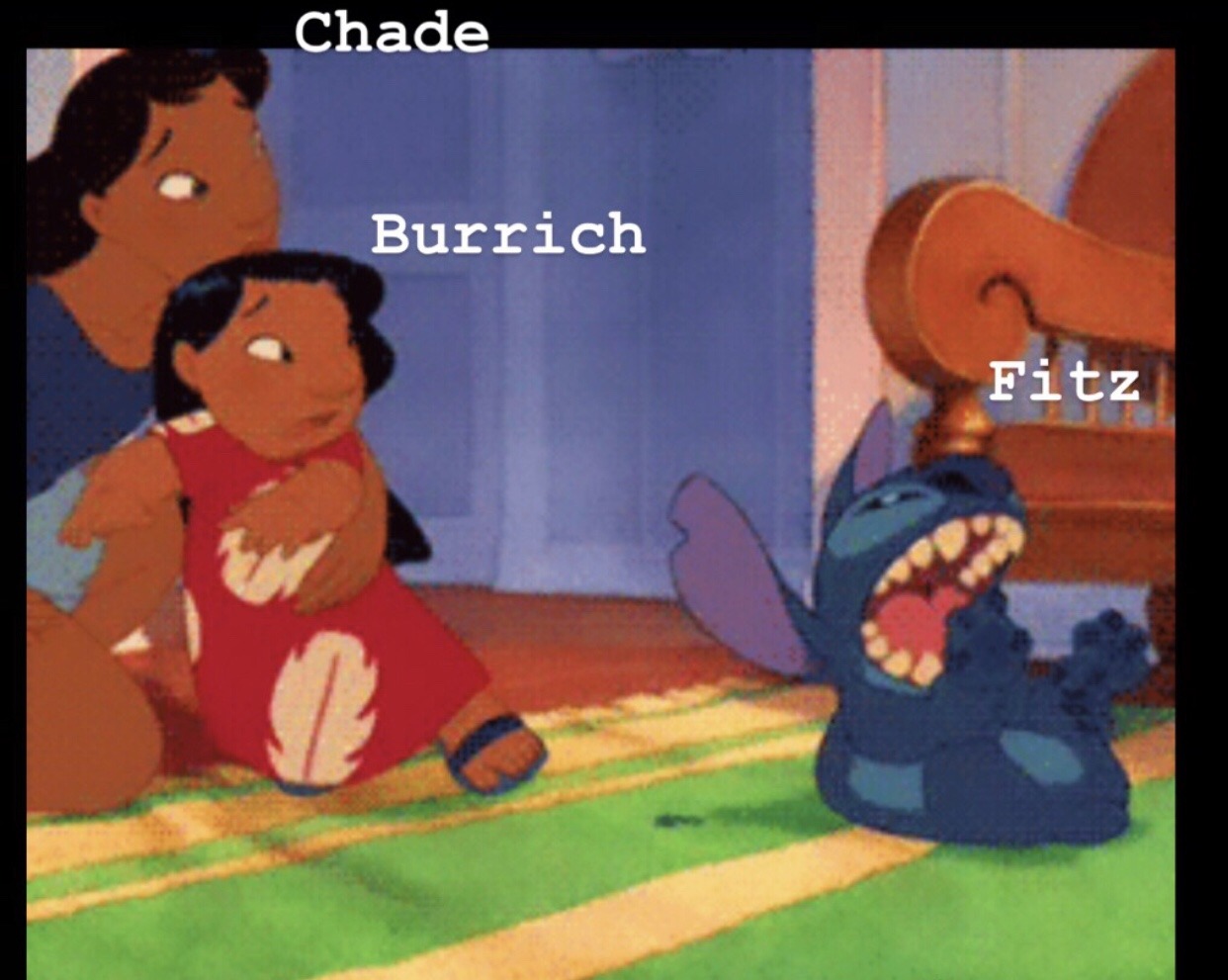
A memetastic bit from Darling, Say It Backwards on Tumblr, here, and used for commentary

Along with Nighteyes, Fitz considers himself, his shame at having suffered as he did, and the course of action he feels he must take. He steels himself to it, and, over dinner that night, he excoriates Burrich in singularly harsh terms. Burrich leaves, and Chade presses Fitz, returning to the idea of Fitz’s long-simmering anger. Before matters can devolve, though, Chade departs.

Burrich returns in the night, speaking with Fitz about his own history. In the wake of it, Fitz turns to his resolution to kill Regal.

The present chapter makes much of the power of words; Fitz strikes with and in stricken by the words of others. (Not without justification on any side; Fitz’s return to life was far from pleasant, while Burrich’s sacrifices for him had been many, and Chade was not wrong in pointing out the ways in which Fitz had acted with far less deliberation than ought to have been the case.) That an author, whose work necessarily relies on the power of words, would present such a scenario is to be expected–and it is something of a theme in Hobb’s work, as I have motioned towards. Ill-considered words have the potential to cause great harm in Hobb’s milieu, as in life.

The present chapter is another part of the series I find it difficult not to read with affect. As might be thought, I’ve said a great many things in my life. As might be expected, a great many of those things have been hateful; I have not always been in a position to defend myself with fists and feet, but my tongue has always leapt free and quickly. It has not always been at those who have earned rebuke or scorn, either; too often, I have spoken to those I claim to love most unkindly. It has hurt them, I know, and in my better moments, I am astonished that they remain in my life after some of the things I have said to them. Some of them have been as harsh as what Fitz says to Burrich; some of them have been worse.

Far worse.

I am grateful that I have not been left, even if I have deserved it, and from many more people than have left me behind. I continue to work on improving, even if I never do so well as I hope to–and not even close to so well as those around me deserve.

Did you resolve to be more giving? Can I help you meet that goal?

A Robin Hobb Rereading Series: Entry 60: Assassin’s Quest, Chapter 1

Read the previous entry in the series here.
Read the next entry in the series here.


The first chapter in the novel, “Gravebirth,” opens with comments about slavery in the Six Duchies’ neighboring nation of Chalced and a reported story Fitz asserts Burrich latched onto as a way to save him from the dungeons. It moves into Fitz’s nascent return to humanity from the experiences of death and wolfhood. It is not an easy transition for him–or for Burrich, who is haltingly coaching his return.

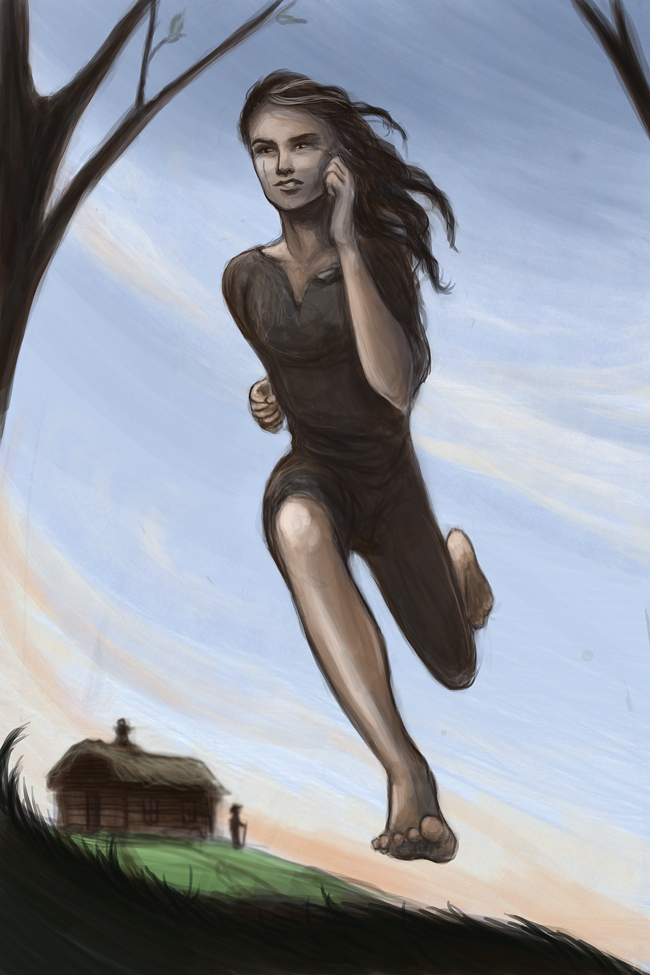
Fitz Flees by ThereseOfTheNorth on DeviantArt; used for commentary

Amid the recovery, Fitz’s seizures continue. Chade checks in on him and Burrich from time to time, carrying news and occasional supplies. Burrich also goes out at odd times, returning with what Fitz identifies as a feminine smell. Old traumas continue to resurface for Fitz, and his account grows more focused and lucid as memories of his life before death reassert themselves. And amid some of Chade’s efforts to restore Fitz, Verity makes contact through the Skill, announcing that he yet lives. Fitz flees after delivering the message.

In the wake of the revelation, Fitz’s old personality and memories reassert themselves fully. He and Burrich confer about the events leading up to Fitz’s death and Regal’s usurpation of power. The various traumas continue to tell upon Fitz, as well, and Burrich grows restive in his inability to act effectively and in his enforced withdrawal from alcohol. Chade is overjoyed to see Fitz restored, though, even if Fitz is far from pleased at having been restored to life.

The shape of the chapter reminds me of the earlier parts of Daniel Keyes’s “Flowers for Algernon,” which I read in short story form and which has remained with me for years. The increasing lucidity and focus of Fitz’s narration as he rehearses his return from a semi-feral state to something near the sharp-minded young man he had been seems to me to work along the same lines as Charlie Gordon’s experience of enhancement before it begins to falter. Even knowing what comes, I find myself recalling that Hobb has no problems killing her protagonist (though, clearly, death does not necessarily stick in the Six Duchies), and I tremble at the thought that Fitz will also suffer again.

The final line of the chapter–“I was kind to the old man. I did not tell him that they had” done something worse to him than let him die–is telling. It seems to follow an earlier comment of mine, that Hobb subverts what would normally be an event worth celebrating. Chade is certainly happy to have Fitz back, and Burrich seems to be; both reactions seem to proceed from love or what might be described as love, even if, as I think on it now, they seem more selfish than that. It is only that they evidently believed Fitz to be alive as they had understood being alive–not in sharing a body with a bonded soul, which has to be a different thing, somehow–that it is not an utterly horrifying tragedy. If it is not.

I am not a clever enough theologian to untangle all the resonances that apply here, nor yet a literary scholar. Clearly. But I can at least see the knots in the tapestry, and I can wonder what picking at them would reveal.

Help me continue to indulge bad habits?

A Note on the New Year of Hindsight

Now that everybody in my part of the world’s had a chance to get woken up and get their hangovers under control, a few comments are likely in order. It is a new year, after all, and the new year does tend to invite this kind of thing, the more so since I did not do a retrospective over 2019. (I usually do that kind of thing on the blog’s anniversary, which happens in June. I hope you’ll stick around for it.)

Image result for new year's day kerrville"
Image from the Kerrville Convention and Visitors Bureau, used for commentary

For one, I’ve given up teaching. I realized, later than probably ought to have been the case, that I was not doing any good in the classroom anymore, that I was simply doing it to collect a paycheck. I’m in a position now that I don’t need the income–there was quite a while that I very much did, but such is not the case at this point–and it’s enough of a disservice to those who would attend classes to have someone who has more or less checked out that I decided I would, in fact, check out. I will not rule out the possibility of teaching again at some later point when I might be able to do some good with it, but I do not see such a time coming again for me at any point in the foreseeable future. I am not a prophet, though; again, I’ll not rule out the possibility.

For another, I do mean to continue to work in this webspace. Even if a lot of the traffic to it since I started has been driven by my students needing to access it, not all has been. Indeed, some of the stuff I’ve done here has helped some people do the things they’ve needed to do. Insofar as that’s the case, then, I’ll keep working on this. In truth, since I’m not teaching anymore, I might well have more time to put to this project; I’ve not been as good about keeping abreast of it as I ought to have been, I know, and I am not proud of it–but I can work to address it and make sure that, moving forward, I give it what it ought to have.

For the record, that does include the Fedwren Project and the Robin Hobb Rereading Series. And it will resume including my commentaries, in which I had formerly engaged and which I would like to turn to doing again; I have missed thinking about things and writing about what I think, even if I am not likely to get anything placed in any kind of scholarly journal and do not really have a need to do so. Again, I’m not teaching; I’ve long since given up on having the kind of academic position that requires publications, and it makes little sense for me to compete with the people who are (and who have institutional access to apparatus) and whose continued livelihoods depend on them getting (back) into print.

For a final note or two: I’m looking at getting a couple of poetry collections compiled and into print. I will, of course, be plugging them here as I get them closer to being done (I’d be a fool to not, and I try not to be a fool). Too, I’m looking at putting together a kind of synoptic history of a local group of which I was part and with which I am associated once again. More on that will come later, as I get more put together, but I will be plugging that here, as well. So there are some things to look forward to as I move into the new year, and I hope that you’ll follow along, as well! I’ll try to make it worth your while.

Did I bring you as much pleasure as a cup of coffee does? Half a cup? Could you kick in as much for me so that I can keep doing it? Click here, then, and thanks!