Read the previous entry in the series here.
Read the next entry in the series here.
After a seemingly clandestine message from Kim in Cassarick to Hest Finbok that affirms concerns raised earlier, “Kelsingra” begins with Alise stalking through the streets of the ruined city, mentally categorizing and interpreting what she sees in something like an exercise in amateur archaeology. The strange condition of the buildings and the occasional echoes earlier presentations of the city, and Alise muses on matters at some length as she surveys the site. With thoughts turning to possible futures, Alise confers with Leftrin, who notes the problems that face the expedition despite best efforts being made by all members of the party. Alise offers a solution to at least part of their problem, but Leftrin argues against it, citing the reasons it would not work and that they should not attempt it. Leftrin’s own proposal receives similar treatment from Alise in turn, and the two make to return to the Tarman together. They are interrupted in their progress by an encounter with an agitated Heeby and a stricken Rapskal, to whom they attend. Reviving him from strange visions, they proceed.
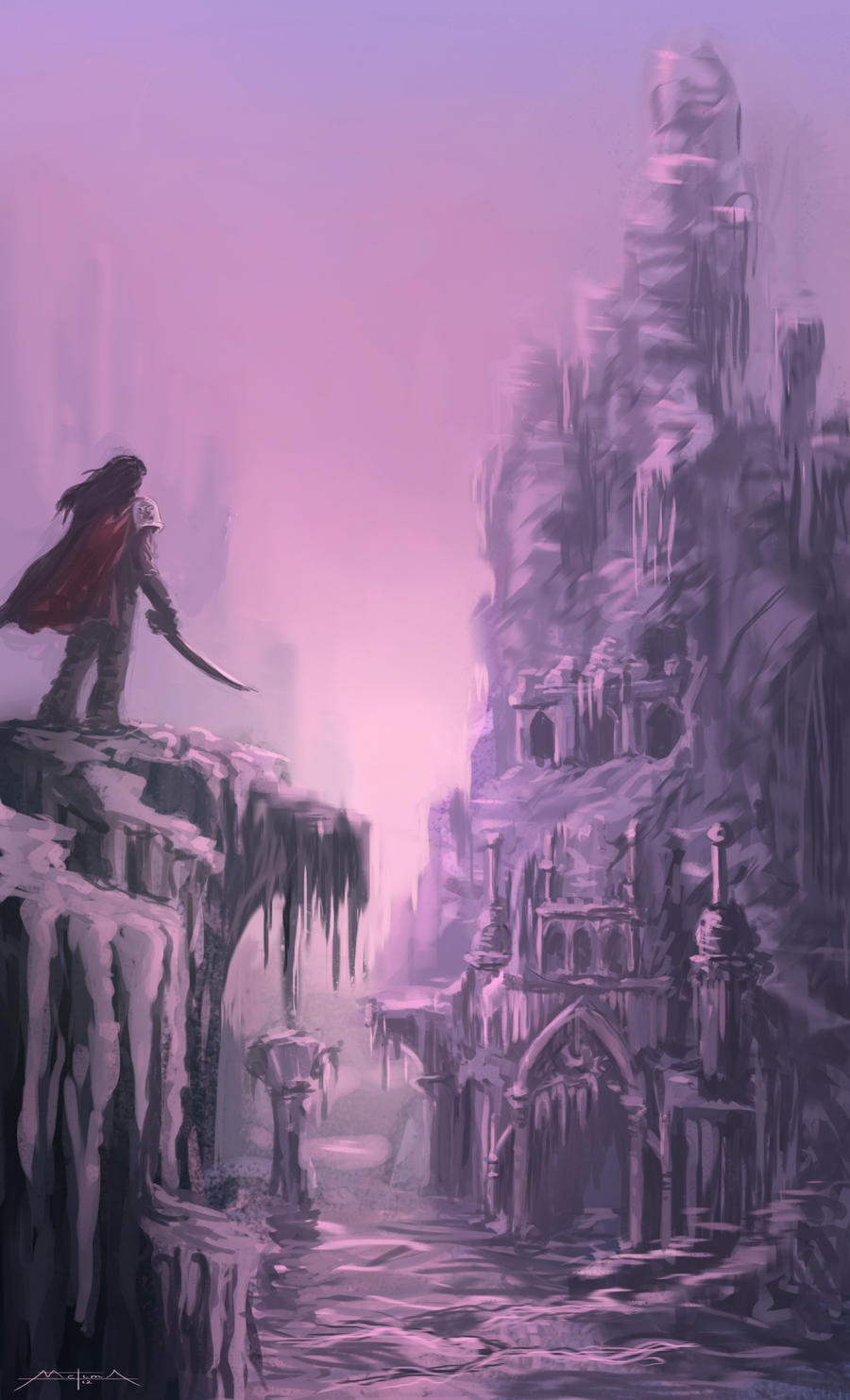
Once again, Frozen History by MeetV on DeviantArt, here, used for commentary.
Heeby bears Alise and Leftrin back to the Tarman in turn. Alise considers the experience as she is taken aloft. Leftrin watches anxiously as she goes, Rapskal offering some cold comfort as the two confer about Rapskal’s experience with the carved stones of the city. Leftrin presses Rapskal for details and receives cryptic answers about the purposes of the memories embedded in the stones. Given the responses, Leftrin opts to send Rapskal on ahead, awaiting a later turn to cross the river back to his ship and crew.
Before getting into discussion of the main chapter, I have to note once again my appreciation for the prefatory materials for each chapter–and their integration. I enjoy getting the sense that the narratives I take in take place in a world that exists outside the context of those narratives, and while this sometimes must mean that such indicators only tangentially affect the main narrative, it is also a pleasure to see them tie into themselves. It’s a bit of storytelling craft I like seeing at play.
As to the main chapter: I appreciate that Alise, even in the act of surveying what is present in Kelsingra, begins to move from simple recording into interpretation of data. It’s something of a popular misconception, I find, that the work of those who look to the past–be it in formal histories, in archaeology, or in older literatures–is a matter of rote memorization, a “these-are-the-facts-and-you-have-to-know-them” approach to the echoes of lives lived (sometimes not-so-) long ago. But it is not, or it is, at least, not only that. Yes, the available information has to be recorded, but the record has no meaning until it is acted upon; meaning and understanding are necessarily matters of interpretation. Indeed, even the selection of what merits inclusion in any kind of formal record is an interpretive act. (Consider: there is no way to take in and put down all of the possible data, so only what’s “important” gets noted. But how does a person know what’s “important” in a given context? By making an interpretation, hopefully based on an empathetic understanding deriving from intensive training and study, but always necessarily reflecting the inherent and ingrained biases present in the person making the record.) And, as Leftrin motions towards, the earlier interpretations will necessarily influence those that come later on–something with which my own trained field grapples, not always well.
Clearly, there is more work to do.
I continue to offer bespoke, human-crafted writing with no AI!
Need more details? Fill out the form below!


 Elliott RWI
[…] Read the previous entry in the series here.Read the next entry in the series here. […]
LikeLike
[…] the previous entry in the series here.Read the next entry in the series […]
LikeLike
[…] chapter is not the first part of the Realm of the Elderlings corpus to bear the name; it follows the fourth chapter of City of Dragons in that. Correspondences between the two chapters are limited, although there are some to be found. […]
LikeLike