Help with NaNoWriMo

The time of the year has come around again when many people focus their attentions on generating the text of a new novel. It’s a worthy endeavor, of course; writing is a good thing to do, novels are good things to write, and I and others benefit from them existing in the world. The challenge of composing nearly two thousand words daily is a hefty one, and not everybody who sets out to address it meets it. Even so, even making the attempt earnestly and sincerely is a good thing to do. You’re on the right track as soon as you take the first step onto it.

This is still the sign, and the image is still from the NaNoWriMo site, used for reference.

Even the best writers, though, benefit from having another set of eyes on their work. Ultimately, nobody writes all alone. I’ve done a lot of writing across many years and in many contexts, so I’ve got experience with this: you always miss something. Maybe it’s because you’re in a hurry, buoyed along by the joy of having done the writing. Maybe it’s because you’re distracted, living in the world with all of the demands it makes upon a person. Maybe it’s because you know how it’s supposed to go, how glorious it looks in your head, and you see that instead of what’s on the page. Maybe it’s just an issue of skillset; you’ve got great ideas and you’ve got them on paper, but the fine-tuning and polishing is just not your forte. Whatever the reason for it is, the truth is that you’re not going to catch everything that’s on the page, even though you put it there. You won’t necessarily see that you forgot to make the connection between those two characters clear, or you might miss the notion that this other characters’ background seems really interesting and readers will want to know more!

That’s where I come in.

With nearly twenty years of experience reviewing others’ writing, ranging from middle schoolers to established scholars and in fields ranging from aerospace engineering to business, cybersecurity to education, fiction to literary analysis, poetry to psychology, I have the skills and expertise to help you hone your craft and be the best writer you can be. If you want to know if your story makes sense, if your characters are believable, if your quips are clever, or even only if you got your commas in the right places, I am here to help you. Whether you’d like chapter-by-chapter guidance and feedback or a whole-work review of what works well and what needs some support, I can offer in-depth, detailed reading and response so that you can put out the best possible product.

You’re already doing great just by taking on a project like this. Make the most of it; get set up for your consultation today! Fill out the contact form below to get started!

It’s not just for NaNoWriMo, either! I’m happy to work with writers on a variety of projects, as well as to write the kind of thing you need written; send me your details below, and we’ll begin!

Go back

Your message has been sent

Warning
Warning
Warning
Warning.

Or you can send your support along directly!

Following up on “Something from Tutoring”

A while back, I worked with a tutoring client to draft a response to Shakespeare’s Sonnet 130, “My mistress’s eyes are nothing like the sun,” and I wrote a post about how I went about helping the client that provided my own example of that kind of work. (Find it here.) In that post, I note similarities between the client’s assignment and the often-taught Marlowe-Raleigh-Donne sequence (“The Passionate Shepherd to His Love,” “The Nymph’s Reply to the Shepherd,” and “The Bait”), and in recent days, I had occasion to revisit my post on the Shakespearean subject. I was reminded of the events then discussed, and it occurred to me that it might be a useful exercise to put myself in the position of Donne to the already-existing Raleigh, the rebuttal to Shakespeare’s Sonnet 116.

Sorry, Billy.
Again, the Chandos Portrait at the National Portrait Gallery, used under a Creative Commons license for commentary

As a reminder, Shakespeare’s Sonnet 116 reads

Let me not to the marriage of true minds
Admit impediments. Love is not love
Which alters when it alteration finds,
Or bends with the remover to remove.
O no! it is an ever-fixed mark
That looks on tempests and is never shaken;
It is the star to every wand’ring bark,
Whose worth’s unknown, although his height be taken.
Love’s not Time’s fool, though rosy lips and cheeks
Within his bending sickle’s compass come;
Love alters not with his brief hours and weeks,
But bears it out even to the edge of doom.
If this be error and upon me prov’d,
I never writ, nor no man ever lov’d.

My rebuttal thereto reads

You never writ, nor no man ever loved,
If love is never love that, finding change,
Stays as it is when it first ever moved
Or strives not living patterns to arrange
In hopes of bringing its love to the mark
That looks on tempests and is not shaken.
No, use will change the shape of every bark
That plies the waves, whatever standard’s taken.
Love’s not Time’s fool, oh no, but is its flow’r
And fruit that ripens not all in one go,
But in its season and appointed hour
If tended well, made better, and let grow.
No thing that is made better stays the same,
And stasis gives the lie to goodness’s claim.

Following the pattern, to make this work, I’ll need to continue to use the Shakespearean sonnet structure of fourteen lines of iambic pentameter rhyming in three quatrains and a couplet, with a (somewhat shaded) turn into the couplet. Too, to stand in place of Donne in response to Raleigh, I will need to put myself in position to flirt with the narrator of the rebuttal–something, to follow the Shakespearean example, like making a pass at Beatrice after she has rebuffed Benedick. Further, the dominant metaphor will need to shift fairly substantially; Marlowe and Raleigh work in the pastoral, while Donne pivots to angling, so I would need to move from the nautical and agrarian to something else, entirely.

Farming and boating are both active, engaged ways to make a living. A deviation from that would be something like my once-intended line of work: professing the humanities. Fortunately, I know enough about doing that (or convinced at least a few people that I did) that I can discuss it convincingly. Too, the narrator being addressed has to be considered; what does such a narrator de/value? The rebuttal is a rebuke of hubris, the conceit on Shakespeare’s part that he is able to universalize in such a way as he purports to do; so much must be avoided in the new poem (to the extent possible, knowing as I do that there is arrogance in any act of writing, something of the “I have important things to say and you need to read them“). I fancy, as well, that the rebutting narrator values growth and change, which does raise the possibility of leaving things behind (which Shakespeare’s narrator really cannot consider with love as a set constant).

With such in mind, I come up with the following:

In no minds’ marriage would I interfere,
Nor yet presume to speak of such with you,
Who, though in but a moment, has made clear
What thoughts are held on how to carry through
A life of love. Instead, I turn a page
I’ve read before and read again the words
I have long known, and in my later age
I hear in them what I’d not in youth heard.
So may love be, itself a constant thing
That is itself and e’er itself remains,
While those who fall to Time’s long sickle’s swing
Will alter in what they will from it gain.
The book is open; read whoever will,
And in the reading by love be well filled.

I hope the reading pleases.

I’m happy to do this kind of work on your behalf! Reach out below for details!

Go back

Your message has been sent

Warning
Warning
Warning
Warning.

I’m also happy to accept patronage!

This Morning

I do so love a chilly clear morning
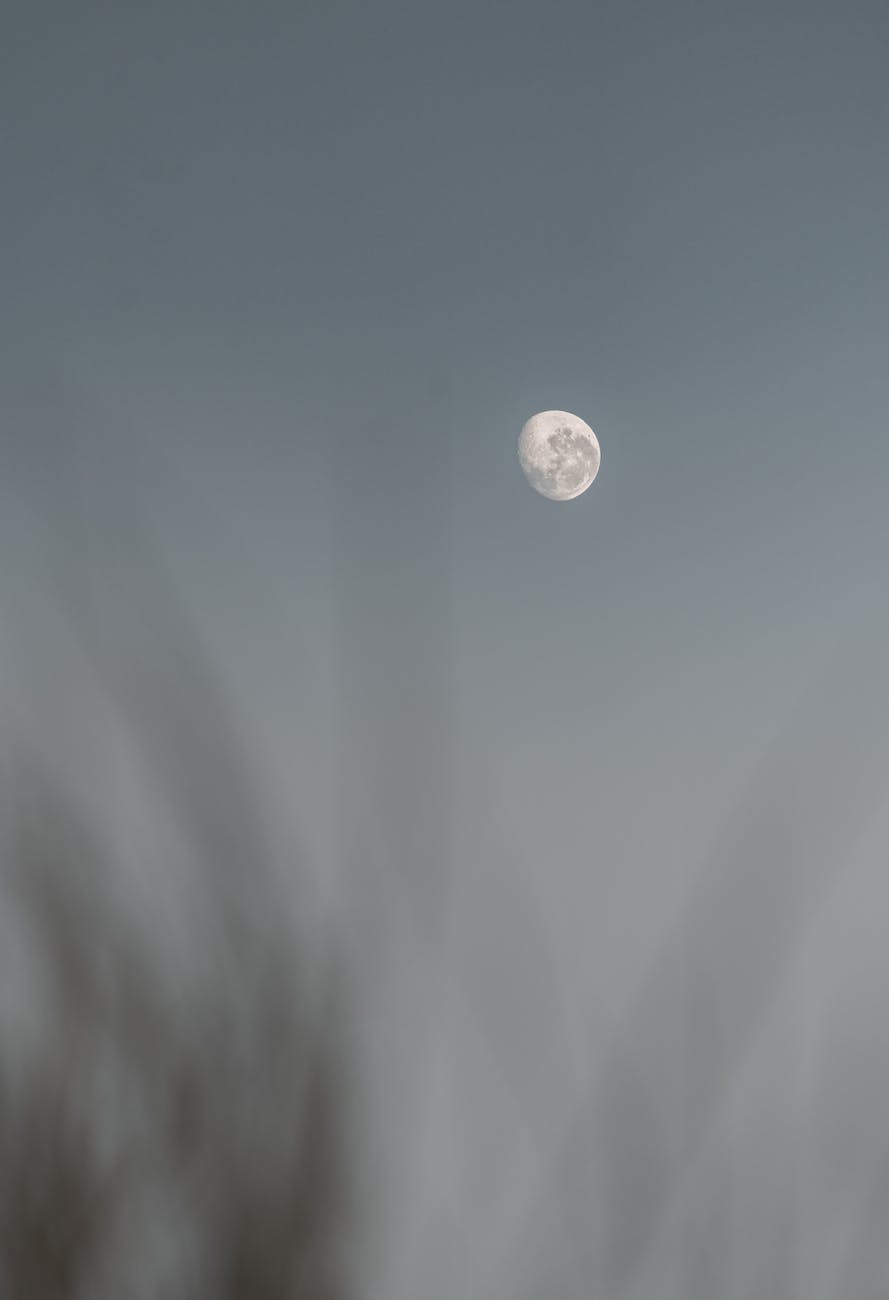
The moon off full staring silently down
At crisping grass waving gently silvered
In the quiet before the world wakes

That’s no battle station…
Photo by Ben Mack on Pexels.com

It never lasts
Arien running her appointed course as Tilion dallies yet again
And the books demand my attention as they ever do
Where a steaming mug awaits

I’m happy to write to order for you; fill out the form below to get your piece started!

Go back

Your message has been sent

Warning
Warning
Warning
Warning.

Or you can send your support along directly!