I sometimes daydream of the cleansing flame
Calling in at the house I have made my home and
Poor guest, bringing no gift
Feasting past fulfillment not only on
What I would lay out for any at my door
Whom I would welcome in
But also on what I keep from my visitors
Things of which I am but a custodian
Keeping them for worthier hands than mine
Heirlooms laid up for those few I see
Who will come after or have arrived
Little enough of a legacy without
Flapping red tongues being put to it
It’s a hot time on the old blog tonight! Photo by moein moradi on Pexels.com
It is not that I am eager To lose so much The results of the work of years Decades And not only mine But the notion of starting again Doing it right This time Has appeal And a clean break is better than a ragged as Leaves bone protruding through skin Shards moving through flesh Tearing and hemorrhaging Killing in pain and quiet from within
I am not looking for matches
Brimstone striking to cauterize the wound
Or even for the knife to
Make the cut
But
I know where the cutlery is
And my whetstone is well used
And the matchbook is not so far from my hand as all that
Read the previous entry in the serieshere. Read the next entry in the serieshere.
An incomplete letter from Fitz to the Fool precedes “Invisibility,” which begins with Bee fuming at Fitz’s attention to Shun. She changes into new clothes, noting her late mother’s handiwork upon them, and she stumbles onto a strange cloak left by the now-dead messenger. Taking it up, she finds another entrance to the hidden corridors of Withywoods. There, she attends to a cat that she had bidden hunt for her and secrets it away in her hiding-place. Fitz finds her there, and he takes her to what had been Molly’s sitting room, where they will both spend the night.
The present chapter is startlingly brief, only six pages in the edition I am reading. Following immediately after another brief chapter, it creates the impression of accelerating towards some event of import–sensibly enough, since the book is closer to its end at the end of the present chapter than it is to its beginning. To put it in terms of Freytag’s Pyramid, the falling action is clearly underway–although what the climax of the novel is in that sense is not entirely clear to my reading. Is it the arrival of the messenger? The arrival of Shun? Fitz’s agreement to take her on? The death of Molly, even? And, to expand to the whole of the Fitz-focused portion of the Realm of the Elderlings corpus, where is the overall climax? Is it even appropriate to apply Freytag’s pyramid to such an overarching narrative structure?
Many questions, of course, and it is good to have so many; it means there’s more work to do with the texts. So much is, perhaps, a self-serving assertion; I do, after all, do such work, and it is in my best interest to note there’s more of it to do. But the electrician who sees room for more circuits to be installed is not held to blame for it, nor yet the mason who sees where stonework could be built to benefit. And if it is the case that the work I do does not have the immediate benefit that that done by tradespeople carries, it is also the case that any ill done by my work is less harmful–while the good it does may well endure longer.
If you like the kind of writing I do, consider hiring me to write for you! Fill out the form below to get started!
I write to leave a record of my days
I write in hopes of earning people’s praise
I write that I might delight and amaze
All those who read the lines I leave each time
I put a pen to paper, whether rhymes,
Alliteration, free verse, prose, and I’m
Yet pleased to have the time to write I need.
That voice that says I’m privileged, I heed,
For having time to sit and write and read
Is luxury that many, sadly, lack.
It may well be that I remain a hack
Despite the written pages that I stack
On shelves of wood and bits and bytes, but still
I write, and as I do, I yet do thrill.
Truer than might be preferred… Photo by Tony Zohari on Pexels.com
I’m happy to write for you, whether a sonnet or something else! Fill out the form below to begin to get yours!
The due date was stamped in Red ink, only the Fourth such stamp to mark the Slip stuck into the Back of the book And more than a decade After the last one
Seeing the spread, I Have to wonder who Bought this book for the Library in the first place Who read it before I did Who will read it next And if they and I got Something like the same thing From doing much the same thing Years apart
Bespoke poetry makes a fine gift; get yours started today by filling out the form below!
Read the previous entry in the serieshere. Read the next entry in the serieshere.
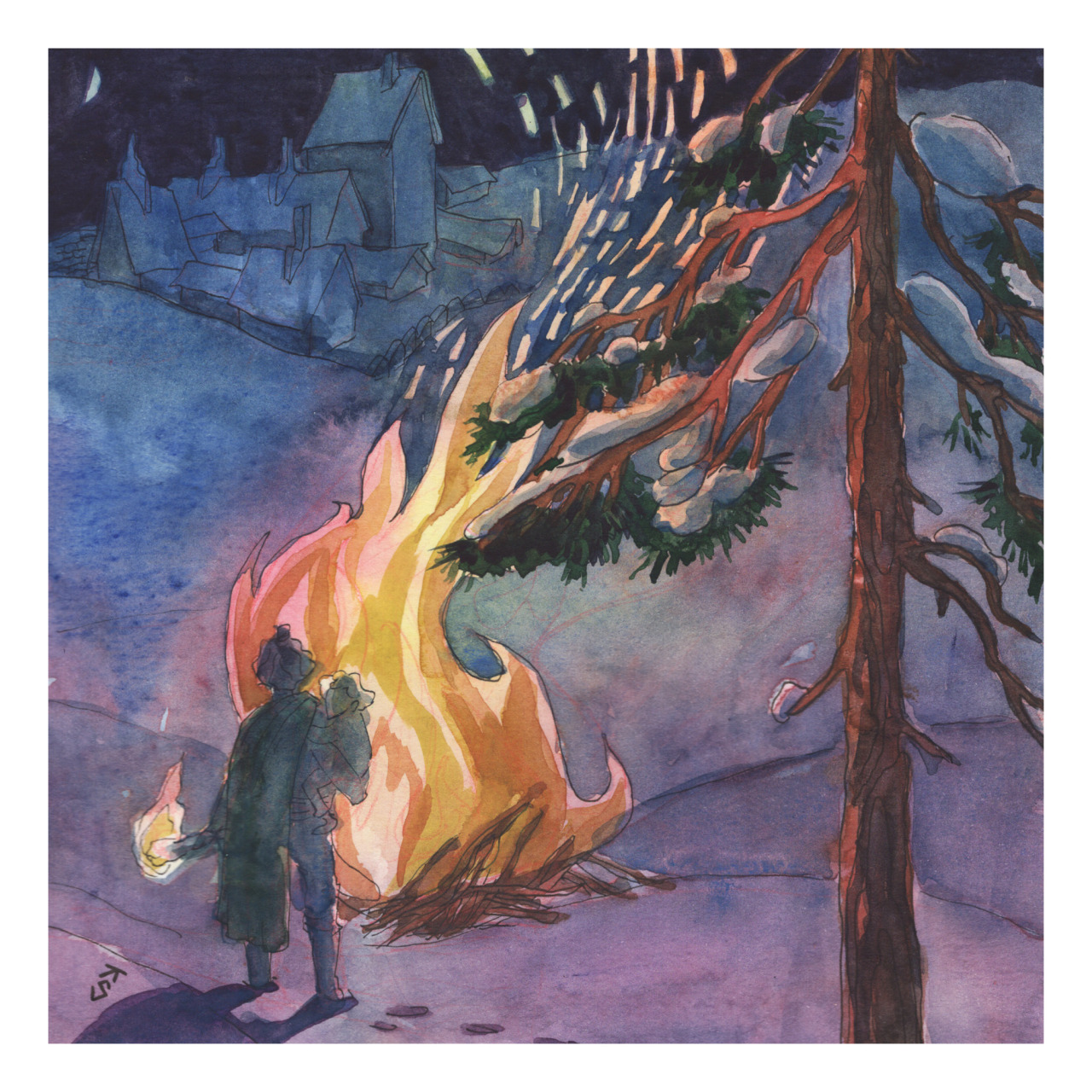
After a passage from an assassin’s instruction manual opining on the inherent cruelty of the profession, “Assassins” begins with Fitz killing the messenger that had reached him, musing that, despite the endorsement of the victim, it was his worst killing–and that he was involving Bee in the worst of his business. But with the killing accomplished, he bears the messenger’s body to a woodpile, Bee trailing behind him. The pair prepare the body and set the pile alight, making a pyre of it, and they confer about their cover story. They confer, too, if somewhat obliquely, about Fitz’s quiet work for the Six Duchies.
Fitz finds himself puzzling over the message the Fool had sent to him, trying to suss out the parentage of the Fool’s child. Garetha, who had provided flowers for LordGolden and thereby shown her knowledge of his identity, is offered as one possibility; she is not the only one. At length, Bee interrupts his reverie, and the two proceed back inside, Fitz rebuking himself for his many follies along the way. His thoughts turn dark, and Bee has to lead the pair of them back home.
Within, Fitz begins to see to Bee, considering ramifications of his actions, until interrupted by shrill screaming from Shun. She has woken form a dream in guilt and terror, and Riddle sees to her as Fitz searches her rooms. Finding himself dissatisfied with Shun and confused by Chade’s interest in her, Fitz stalks on to settle matters. When he returns to where he had left Bee, however, he finds her gone, and the search for her begins.
The present chapter is relatively brief, some fifteen pages in the edition of the book I am reading. I have yet to puzzle out any consistent pattern in the chapter-lengths, although I admit that I have not been doing enough work on that issue to have come to any conclusions. It is the kind of thing that could underpin a decent study, I know; I actually recommend it as an exercise for students when I write lesson plans as a freelancer (which happens less often anymore than I might prefer, although I’ve got a couple such jobs on my plate at the moment, so it’s fresh in my mind).
In those long-ago days when I had students and the audacity to think I was doing a decent job with them, I would suggest such an approach or a similar one to those of my pupils who thought there was no “real data” to be found in literary pages. (A few scholars, noted here, here, and here, might have been good to be able to reference then, as well, but I did not know about them at that point.) There is information in the paratext of a work no less than in the text, and that in one certainly influences the other. I’ve long known it, and Oliver, among others, cites a number of scholars in confirmation thereof.
As I’ve been getting back into more scholarly work–and I have been, and not only on the Fedwren Project–I’ve noticed my reading is shifting again. I am still decidedly affective when I read, something for which I know several of my professors would rebuke me were I still under their supervision. (Since I am not, I doubt they are aware of what I am doing. Such is life, I suppose.) But I have also begun to remember more as I write, which prompts me to review again those sources I have so often handled to find where it is I remember the remembered from and to link back to them (because this is an online composition, and linking is the preferred citation method, even when it is the case that many things thought stably and permanently online are…less so). I have begun to remember what I had wanted to make myself become, and I have begun to remember the joy and animation of it–strange as it might well seem to those who have not felt elation at puzzling out some knotty set of references or allusions or the like, who view the work of literary criticism as dry and dull and dreary.
Such long sustained me, though, and it is good to feel it move within me again.
If you like the way I write, you might hire me to write for you; get started by filling out the form below!
As I continued my Robin Hobb Rereading Series into the middle of July 2024, I noted resuming work on one of my efforts to keep at least a toe in the great flow of scholarship: the Fedwren Project. As part of that resumed work, I read Matthew Oliver’s “History in the Margins: Epigraphs and Negative Space in Robin Hobb’s Assassin’s Apprentice.” While the Project contains a summary of the piece, here, and I’m happy to have the summary, I’m not happy to have only the summary. No, as has happened to me more than once before–such as here–I feel I have to respond in some way to what I have read. Not because it is bad, no, but because it is good–if limited.
I want to stress that I do find Oliver’s article to be a good one. I agree with the central idea–that the epigraphs in Assassin’s Apprentice and Fitz’s own unreliability as a narrator serve as reminders of or parallel the constructed nature of “history.” What is recorded about what happened in the past is very much a function of those doing the recording (an adage about writing and winners comes to mind). A number of the secondary points also ring true for me. The epigraphs do add to the “authenticity” of the text, yes, contributing to the verisimilitude Hobb is on record as prizing and helping to fix Hobb as a participant in dominant literary traditions even as she moves away from them in decidedways. Too, there is no small irony in an overtly fictional text making much of its realism. (Whether this makes it Frankfurtian bullshit, I am not certain; I think it is a question worth considering. But then, I would, as witness this and certain items here.)
That I think Oliver’s article good, however, does not mean I find it without issue. The chief one I find with it is its limited scope. While I am well aware that a journal article can only take in so much and still carry out the kind of discussion it needs to, I am also well aware that there are many more novels in Hobb’s corpus than Oliver treats. There are many more Fitz-centric novels than Oliver treats. Even just the two sequels in the Farseer trilogy move away from some of the details Oliver relies upon in making his argument. For example, Oliver makes the comment that the epigraphs in Assassin’s Apprentice are all Fitz’s, and this is not the case with Royal Assassin (as witness the epigraphs to chapter 8, “The Queen Awakens”; as well as chapters 26, “Skilling”; 27, “Conspiracy”; 30, “Dungeons”; 31, “Torture”; and possibly some others) or Assassin’s Quest (as witness the epigraph to chapter 25, “Strategy”, and possibly others). It is certainly not the case with the Tawny Man novels–and the Fitz and the Fool novels throw that completely out. Nor yet is it necessarily the case with Assassin’s Apprentice, itself. The introduction to chapter 18, “Assassinations,” is a partial subversion, with Fitz quoting Chade’s notes at length; that to chapter 20, “Jhaampe,” is not partial, being explicitly taken from another in-milieu document. Further, while some of the materials Oliver cites in making his argument about the introductory frustration of narrative objectivity are right at the time, later events in the Realm of the Elderlings Corpus (this and this come to mind) belie them, at least to some extent; Fitz has more memories than he necessarily wants to face.
(Admittedly, there are questions about the order of composition within the milieu to address. My impression–which gets some confirmation here–is that the texts of many of the Fitz-centric novels are private writings–one option Oliver admits of [45]–with much of the Farseer novels composed before the events of the Tawny Man books, and those composed in advance of and into the Fitz and the Fool novels. The last series does confound that impression to some degree, although the extent to which it does escapes me at the moment. I’ll stumble into it, I’m sure.)
Had Oliver’s article been earlier than it is, the restriction of its discussion would make more sense. But it is relatively late against the Realm of the Elderlings corpus; the novels that belie many of his details were well in circulation when the article was released. Even taking into account commonplaces about academic production–journal articles can take years to hit print from acceptance–leaves at least the Tawny Man novels available for consideration and comment. And, for me, the omission of so much other material seems…other than optimal.
There is some justification for the restriction to the first novel, however. Again, as noted above, there’s only so much a journal article can take in; there is always necessarily some selectiveness at work in doing that kind of scholarship. Too, and this goes to discussion from the Tales after Tolkien Society’s paper session at the 2024 International Congress on Medieval Studies, in which Sylwia Borowska-Szerszun asked an excellent question about whether the dragons can be considered parallels to indigenous North American populations,* Assassin’s Apprentice is…not as…willing to move away from the dominant Tolkienian tradition of fantasy literature as later entries in the Realm of the Elderlings Corpus are. It’s a first effort, and a fine one, well worth reading (and amply read, not just recreationally, and not just by scholars of fantasy literature within scholarly circles when read as an object of study), but it is, in some ways, finding its way. Even the structural concerns on which Oliver focuses echo Tolkien’s work–while Oliver points out that Tolkien largely eschews epigraphs in Lord of the Rings (46), it is a commonplace that the text and its companions, The Hobbit and The Silmarillion are, in fact, in-milieu compositions “translated” by Tolkien, not at all unlike the personal narrative Fitz provides and supplements. In brief, Assassin’s Apprentice is more derivative than its successors, and to a substantial degree. That separation perhaps justifies the narrowed focus in an article that, again, makes an excellent central argument that is well worth attention.
*For the record, my answer then was “no,” and it remains “no.” During the discussion, I made comments much like those in the paragraph–namely, that the North American-ness of the Realm of the Elderlings corpus was not something initially meant (insofar as authorial intent ever matters), but something that grew up and emerged in the texts as the series continued.
I’m available to write for you, if you’d like. And if you’d like, I’d like you to fill out the form below!
A couple of weeks ago, I mentioned (here) that my daughter was away at camp. It was not the first week she’d been away; she’s had a busy summer so far, and she’s not yet done with it at this point. For a month, she was with her grandparents and attending a day-camp theatre program. When I noted she was away, she was in the first of two weeks at Girl Scout camp in central Texas. As I write this, she’s in another day-camp theatre program (although it’s closer to home, so that she’s with her mother and me at night), and she’s got a week-long day-camp cheer program coming up soon. (Nor yet is it a summer-only thing; come the fall, she’s going to be on her school’s student council, as well as taking up the tuba–yes, tuba–and continuing in her cheer program and yet another theatre program, in the last of which she will be exploring costuming and related work.)
Yeah, that’s the stuff… Photo by Mac DeStroir on Pexels.com
It is, admittedly, a lot. I was not nearly so active at her age as she is now; my own summers then were taken up with household chores and more reading than was likely good for me, at least until I got big enough that I could actually begin to do some work and earn some money helping my great uncle on electrical jobs. Too, I was not an only child as my daughter is; it’s easier to provide so much for one child than it is for two. There were other factors, too, the details of which I will omit here, thank you kindly; it will suffice to say that matters were otherwise then than they are now, and not only in the differences in personality between my daughter and me.
Such differences do have a lot to do with my daughter being so much more engaged in the world than I was (and, it might well be argued, still am). She’s always been far more outgoing than I was at her age (I return to the phrasing again and again because it really is not fair to compare a forty-something man to a girl roughly a quarter his age), and I’ve made a point of reinforcing that behavior with her. She’s far more pleasant to be around than I was, certainly, less apt to point out how those around her are in error when it doesn’t actually make a difference to how things are going, less determined to prove she’s the smartest person in the room in every room she’s in. (It didn’t work out well for me.)
Instead, my daughter is open to new experiences and people, willing to do things other than her normal routines (although she would like to sleep in more than a lot of things allow). She, by inclination and training, makes a point of thanking those with whom she works for taking the time to work with her, and she continues to approach activities with enthusiasm and a joy that I find refreshing to see in the world. Certainly, I am biased (how could I not be?), and certainly, I approach all of this from several positions of privilege (I’m even aware of some of them, although I acknowledge there may well be others of which I am not immediately cognizant). But I think I have some reason to be so; I am and remain pleased with my daughter, and I look forward to seeing how she continues on through the summer and beyond it.
See something you like in my writing? Get some of it for your own; fill out the form below and hire me to write for you!
Read the previous entry in the serieshere. Read the next entry in the serieshere.
Following an excerpted translation done by Fitz of a damaged original, “Honored Guests” returns to Bee’s narrative perspective and glosses the adjustments to her life occasioned by the arrival of Shun and the arrival and departure of the messenger. She accompanies Fitz as he secures her in the hidden corridors of Withywoods so that he can make a full search of the facility, and Bee ruminates on her recent visions as he departs to carry out the search. She records what she recalls, then leaves a message for Fitz and strikes out through the corridors on her own again.
Pic not related. Photo by Anni Roenkae on Pexels.com
Bee’s escapades in the corridors are detailed, and Fitz returns to recover her. When he does, Bee asks him after the results of his search, which he reports, and she asks him for a knife, which he agrees will come in time. The pair discuss Shun, as well, and Bee is annoyed at having been left with her while Fitz and Riddle confer together. Shun, for her part, seems no happier with it, and the two trade barbs until Fitz returns. Then Bee asks to be taken to bed, sniping at Fitz as she does, and she considers the status of the household after Fitz withdraws.
Bee is disturbed from her reverie by the return of the messenger, who is in markedly poor condition. She calls out, and Fitz arrives in haste and anger, but relents as he recognizes the messenger. The messenger provides information that confirms the veracity of her mission to Fitz, and she delivers her message: the Fool has an heir he asks Fitz to find and ensure is safe. The message delivered, she warns of the danger in her body and dies; Fitz and Bee prepare to burn the body and all the cloth they know it has touched.
After too long a while, I have been at work updating the Fedwren Project. My lack of institutional affiliation and access does complicate that work a bit, to be sure, but it is good to return to reading and addressing scholarly writing. I have no doubt that it is going to get into the write-ups I do here, and, in truth, it ought to do so. There is a growing body of scholarship on Hobb’s works, to which I flatter myself that I can contribute in the rereading, the Fedwren Project, and such other learned (or “learned”) writing that is yet in me to do. So there’s that.
To return to discussion, though: the present chapter seems to further the foreshadowing and issues of gender fluidity at work in the previous chapter. (Discussion of the latter in earlier series is in the Katavić, Melville, Nordlund, Prater, Räsänen, Sanderson, and Schouwenaars sources in the Fedwren Project, which I recall now that I’ve resumed some work on it.) After Fitz’s experience thinking that the messenger was, in fact, the Fool and being surprised at the revelation that she was not, the idea that the Fool has sent word of a son lost along the way, coupled with the translation-excerpt at the head of the chapter, it seems fairly obvious (even without the benefit of a rereading) that the object of the Fool’s message is not as the characters expect.
Admittedly, I am rereading, and I am outside the narrative itself, so I have access to information the characters within the narrative do not. The oversight and lack of insight may be Hobb deploying irony, deliberately or otherwise; it seems a bit heavy-handed to my reading if it is the case, but I also know that I have had trouble catching onto things at times, and I flatter myself (among others) that I am an insightful reader. It may also be the case that Hobb is continuing to make the kind of commentary about gendering that the scholars noted above–and possibly others; again, I am at work on the Fedwren Project, so I may run into other piece yet that I do not presently recognize–identify. I’d not be surprised, of course, or disappointed; I do enjoy seeing that others also have recourse to Hobb’s works, and I hope to continue to contribute to such discussions.
If you like the way I write, hire me to write for you! Fill out the form below to get started!
For several years more than several years ago, my wife and I lived in Brooklyn, NY. (This is as opposed to Brooklyn, IA, where I have been; the two could be more different, but it would be hard to do.) When we started living there together–she had been in the area for school, and I moved up later, once I was clear of comprehensive exams; I couldn’t stand to be away from her any longer–she had two cats: Misty (a big ol’ kitty) and Dude (a lithe snowshoe). While we were there together, we took in a third cat: the street-kitten Franklin Bedford Gates. (You can guess where he was found.)
Count ’em… Photo by cottonbro studio on Pexels.com
For the most part, the three got along. Misty and Dude had been together for years–since long before my wife and I met, in fact. Frank, younger and smaller by far, would occasionally try to assert himself with the older cats, but they would remind him that they, in fact, had seniority, and he largely accepted it. They would snuggle together and play, although which games each would engage in with the others differed. (There might be other things to sat about that in time, but not quite at the moment.) And they benefitted from my wife’s indulgence of them and my uxoriousness.
At the time, my wife and I were making a pretty good living. I had full-time, continuing, union work; she had an assembly of part-time jobs, too. Both of us, being relatively young and unencumbered, lived within our means but pushed them; as should not be a surprise, we ordered a lot of food delivery. Because we were where we were and had the tastes we did, we ordered sushi pretty often. And because we were more bougie than we knew what to do with, when we ordered sushi for ourselves, we’d order a little for the kitties, too.
Misty and Dude both took to the sushi, of course. Being cats, they would be expected to do as much. Frank, however, differed from his adoptive brothers. (Yes, brothers. Misty was a neutered male. He was named by a young child who had not yet grasped the notion that not all cats are girls.) He’d eat the fish, yes, but what he really liked was edamame–the steamed-and-salted soybeans often served as an appetizer at sushi joints in our part of the world. But that was not something we knew when we got him; the woman who took in his mother had found him in a warehouse or somesuch thing, after all, not gotten him from any highfalutin’ family or even an overcrowded shelter.
No, we realized Frank’s love of edamame when one of us had dropped a pod of it onto the apartment floor. Frank leapt upon it, seizing it in his tiny mouth with its needly teeth and retreating to the side of the couch, hunkering down over it and under the lower ledge of the cat-tree we still have. As he started to pick at the pod-shell, trying to get to the beans inside, Misty–at that time close to four times Frank’s weight–padded over to check out what was going on. Frank looked at the older cat, pinned his ears back, and growled; I thought for a moment that a dog had gotten into the apartment, so low and fierce was the noise coming out of a kitten not much larger than my splayed hand.
Misty…reconsidered his investigation at that point.
Years have passed since, of course. Misty and Dude have both crossed the rainbow bridge. My wife and I are long gone from Brooklyn (either New York or Iowa; take your pick). We don’t order out nearly so much, we took in a dog, the mutt Cherry, and we adopted another cat, a black tortoiseshell named Stormy. Frank still stalks around the house, though, clearly himself the pet with seniority, and he still loves his edamame.
Like what you see? Then hire me! I can do it for you for a reasonable fee!
It is a fair question Of course Because any poem is Just words on a page Few will read or Breathed into the air And wafted away on the winds
Not the least accurate depiction… Photo by lil artsy on Pexels.com
And yet The poems are still written Still spoken Still sung Still read Still heard Still matter Now as in all the elder days of which we know
Knowing that so little reward So few resources or acclaim Accrue to verse and those who make it Though more to those who worship several Muses at once They still work the work who work it And there must be some reason Even if it is not clear
If you like the writing I do, hire me to do some for you!









 Elliott RWI