Claudia’s husband never bestrode these hills Having many of his own to tread But his time has held sway upon them During which time they have burned yet again Feeling their immolation in annual tribute To glories long gone and a long way from here
Picture possibly related. Photo by Joe Ambrogio on Pexels.com
In truth that those here know in their flesh The name of the ruler doesn’t matter The weather will do what it does without regard For those upon whom the sun shines brightly Upon whom the rain will refuse to fall And Aestas is yet dancing
I’m happy to write to order for you; fill out the form to get your piece started!
I‘ve never made a secret that I do a lot of reading. Indeed, I’ve done rather the opposite, and there’ve been a few times that I’ve done it to such excess as has prompted people to punch me in the face. I’ve also not made a secret that I’ve read Tolkien and that I’ve read about Tolkien; it shows up in many entries to this webspace, but perhaps most emphatically here, here, here, and here. I’ve got other stuff I’m doing on the subject, as well; I’ll discuss that more later. It should come as no surprise, then, that when I saw “Tolkien’s Deplorable Cultus” by Robert T. Tally, Jr., pop up on one of my social media feeds, I was interested, and I read it. And, given my history of such things, it should not be a surprise that I feel the need to engage with the piece by responding to it.
Picture possibly related. Photo by Chris LeBoutillier on Pexels.com
Tally’s central argument is that Tolkien’s Legendarium is amenable to a Marxist reading that can be used to at least partially counteract the vocal hypercapitalist / neofascist actors and their supporters that are appropriating the Legendarium and, by extension, fantasy literature as a genre. For him, “Fantasy is fundamentally the literature of alterity, a means of empowering the imagination to think of the world differently,” and that a Marxist reading of Tolkien’s work and the genre for which that work is the dominant, guiding example has value in “exposing its ideological limits while also limning its potential for helping us to imagine radical alternatives.” Although some might have problems with Tally’s specific framing, I think he is correct; the text does stand multiple interpretations, fantasy is necessarily concerned with alterity and thus inherently offers access to other ways of thinking (and perhaps being), and pointing out the limitations of a thing does not preclude identifying and making good use of its potentials.
Tally does well to note the limitations of his proposed reading, commenting at some length on popular and academic receptions of Tolkien’s work as reinforcing hierarchies along racial and what might well be called ethnic lines. I am not sure that the associated contention that fantasy literature at large is thus received is accurate–and Tally also voices some frustration of it in a list of fantasy authors whose politics are decidedly out of step with such a world-view–although it is certainly the case that a great many fantasy authors echo, follow, emulate, or parrot Tolkien to a greater or lesser extent, such that the Tolkienian tradition of fantasy literature remains dominant in English-language texts. (It might in others, as well, but I am not sufficiently proficient in other languages to look into it at this point. It might also be argued that I’m not sufficiently proficient in English to know what I’m talking about, although I think it would be a harder case to make.) Tally also does well to point out those features of Tolkien’s writings that seem to animate vocal hypercapitalist / neofascist actors and their supporters in their seizing upon the Legendarium as support for their own positions, even if there are places in the article where I’d be comforted by seeing some more specific citations. And, on a more personal note, I do appreciate Tally’s identification of the inconsistencies in the actors’ stated positions, the ways in which what they claim to value fails to align with what they act as if they value; none of us is completely consistent, especially over time, but there are levels and levels of irony.
(As an aside, I do not like the citations provided. The information’s fine, so far as I can tell; I just like to have citations where I can see them. But that’s more an issue of the platform than the person standing on it; I’ve commented on such things before.)
Correspondences or resonances with other readings I have done come to mind as I further consider Tally’s article. For example, when Tally remarks on the seeming reliance of the vocal hypercapitalist / neofascist actors and their supporters on Jackson’s films for their understanding of Tolkien’s works, I was put in mind of Sturtevant’s Middle Ages in Popular Imagination. I also found myself in mind of a number of pieces by Helen Young when reading Tally’s discussion of the embedded racial hierarchies at work in Tolkien, including but not limited to commentaries early on in Travels in Genre and Medievalism. The series “Race, Racism, and the Middle Ages” on The Public Medievalist also came to mind for me (partly because of overlaps, I admit). I understand well that a journal article can only take in so much at a time, however.
I think I will have some use for Tally’s piece in some work of my own that I’m doing (again, I’ll talk more about it later). I think I may have some use for his ideas in other work that I’m doing; given my predilections, I have to wonder how Hobb’s Realm of the Elderlings or Soldier Son works (and I am going to get to those, I promise) would work under such an interpretive rubric. As with so many other things, though, that’s a “someday” project. I’ve got more than enough to do right now, and there’s never as much time to do it as might be best.
I’m happy to do this kind of writing–and many others–for you. If you’d like me to do so, please fill out the form below, and we’ll get started!
Read the previous entry in the serieshere. Read the next entry in the serieshere.
After the transcript of a somewhat degraded message seemingly from Riddle to Nettle, “Perseverance” opens with Bee musing bitterly on Shun’s influence on Fitz and Riddle, noting the men’s failures of her in favor of the elder. Changes ongoing at Withywoods attract her attention, not entirely favorably, and she puts in at the stables, assessing the mare that she had been told had long since been assigned to her. While there, she encounters a stable boy who introduces himself as Per and the mare as Dapple. Per explains that he is truly named Perseverance and that he will later be called Tallestman after he exceeds the height of his father–Tallerman–who himself exceeds the height of his father, Tallman.
Amazing. Give it a lick. Photo by Pixabay on Pexels.com
The pair, Per and Bee, confer further, the former noting at the latter’s suggestion that a better name for the horse than Dapple is Priss. Bee agrees, and she accepts Per’s offer of readying the animal for riding, despite her trepidation. With his further assistance, she mounts and begins to ride, albeit with him guiding both girl and beast. The exercise concludes successfully, and Bee determines to attempt it again the next day.
Bee withdraws to her private sanctum in the hidden corridors of Withywoods, considering the cloak she has made her own. Taking it up, she stalks out covertly into the manor, watching. As she does, she sees FitzVigilant arrive at Withywoods, assessing him from his appearance and demeanor as he is greeted by a servant and starts for his accommodations.
Bee is disturbed from her musings by the arrival of the cat in her acquaintance. She reluctantly admits the cat into her warren of corridors, making provision for it and offering a warning. The cat agrees to assist her in exchange for further consideration, and the two seem to begin to form a bond.
The present chapter is another relatively brief one, shy of ten pages in the edition of the text I am reading–and I am reminded once again that I really ought to spend some time with a full set of the Fitz-centric Elderlings novels in a single edition so I can pull out page-lengths. It’s a project for another time, one of the many “somedays” I’ve seen as I’ve worked through the rereading and even before, when the pages of my personal journals boasted ideas for papers to be written and how rather than focusing on the shapes of my days and the experiences of my loved ones in them. (I do think the current use of those pages is a better one; I think that my daughter, and maybe some others to follow her, will get some good from the daily record that they cannot from my scholarly ambitions. But the earlier use remains on the pages I used to write no less than in the pixels I produce.) I still don’t know what, if anything, looking at that kind of data will reveal, but I do think there is something there to look at. There’s meaning to be found in every detail, “intentionally” placed or not.
Aside from that, though, I think the present chapter does well at presenting children’s interactions. I’ll admit to being inexpert in such things. My daughter is an only child, although she has a fair number of friends in the neighborhood and outside it, so I’ve not watched a lot of child-on-child interactions. My own childhood is many years ago, now, and what I remember about my interactions with other children is…not kind. (I was not a good friend, having a massive chip on my shoulder, and my mouth often wrote checks my ass could not cash. I was also not a good brother. I take some satisfaction in having taught my daughter to do better than I did.) But what I have seen and what I do know seems to be in line with the kind of fixation and interaction Hobb depicts. The plain presentation of information moving from topic to topic with little transition and rapt attention seem in accord with what I recall others doing and what I’ve gotten glimpses of my daughter doing. It’s a pleasant enough thing to witness, even through print, however long it might actually get to last.
School’s back in session. If you need help generating or answering instructional materials, reach out; I can help!
I‘ve written a time or two before about excursions my family and I have taken, going out and about in the vicinity of our own little part of the world. In truth, it’s an odd thing for me; I’m a homebody (if I put things politely, which not everybody does or should), not inclined to “get out” much, so trips further than going to the gym, to work, to church, or to the grocery store aren’t commonplaces for me. That’s part of why I write about them. I know that my field trips don’t show up as being the kinds of things of which major events are made for a lot of other people, they stand out to me for their relative rarity, even as I am aware that they don’t go far into the field at all.
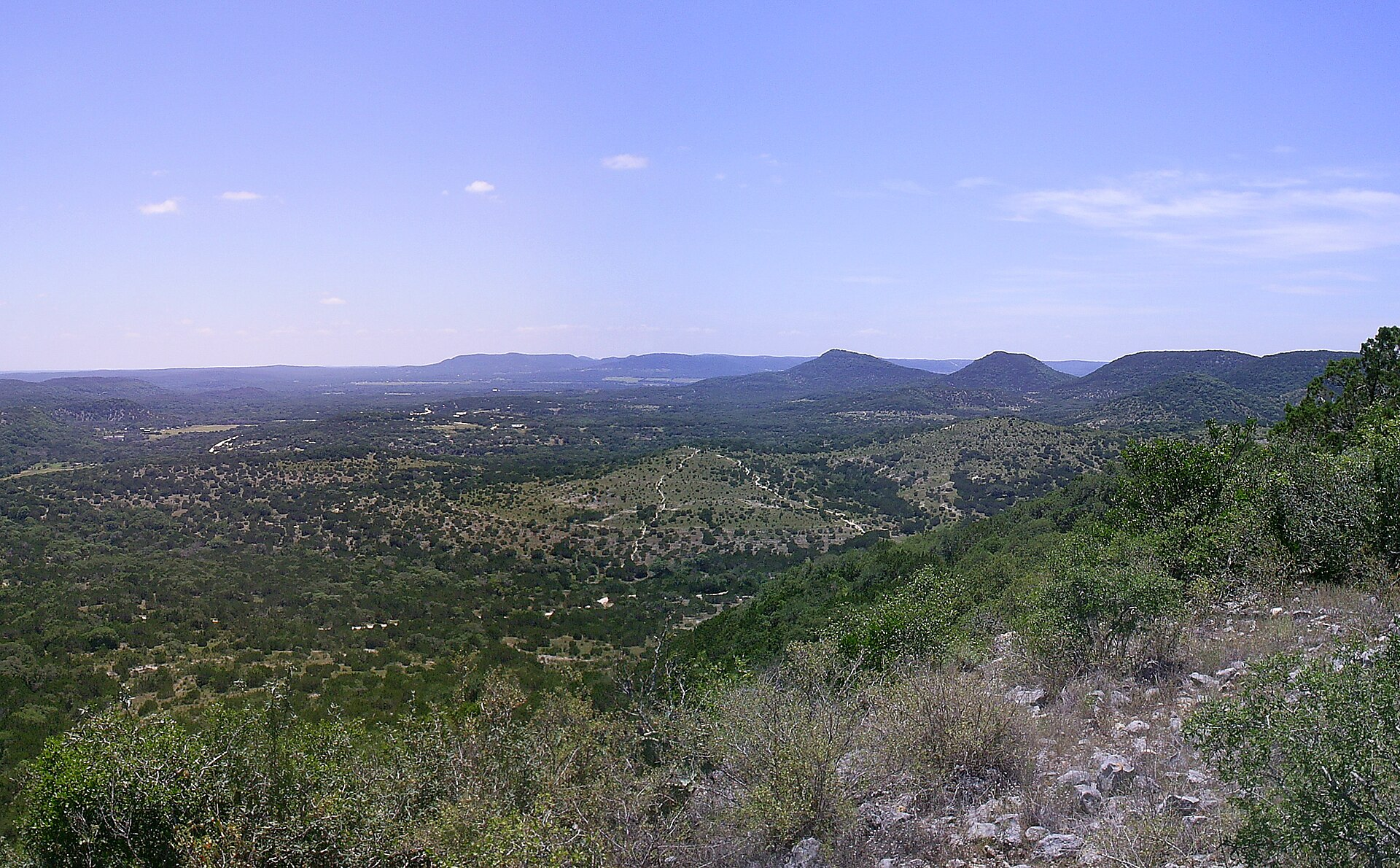
The most recent little expedition we took was this past weekend, one last hurrah before my daughter started school. (She returned to class on Wednesday. It’s a late start, I know.) We returned to the vicinity of Lost Maples State Natural Area, one of the gems of the Texas Hill Country, lodging for a few days at one of the properties operated by Foxfire Cabins. We’d stayed at another of the properties about this time last year, finding it a generally enjoyable experience, and we decided we’d work to make it something of a family tradition. Hence the return this past weekend, when many of the area schools had already started back up, making for a less crowded time for us to enjoy.
My wife, my daughter, one of her friends (whom I’m still considering how to pseudonymize; I don’t generally discuss minor children by name for privacy reasons), and I made our way down to the location on Friday afternoon, my wife having taken off work and my own job being such that I’ve not been in office on Fridays for some months, now. Our drive was reasonably good, although we got off to something of a slow start, as there were some errands that needed running before we could pack up and head out. Too, we got delayed along the way; stopping off for lunch took longer than expected, as did going to the grocery store along the way. But, as ever, the drive was scenic, with the rolling hills parting at times to offer spectacular views of hardy trees stretching to the limits of vision in the distance.
We got to our lodging, the Alta Vista cabin operated by Foxfire, in good form around five pm. A two-bedroom, one-bathroom place with a wraparound porch, firepit, grill, and picnic table, the cabin–and the neighboring Buena Vista–offers remarkable quiet and excellent views of the towering hills enfolding FM337. There was a bit of a trick to finding it (including a steep drive up an unpaved drive), to be sure, and another window unit would have been welcome, but it was from the outset a good place and restful.
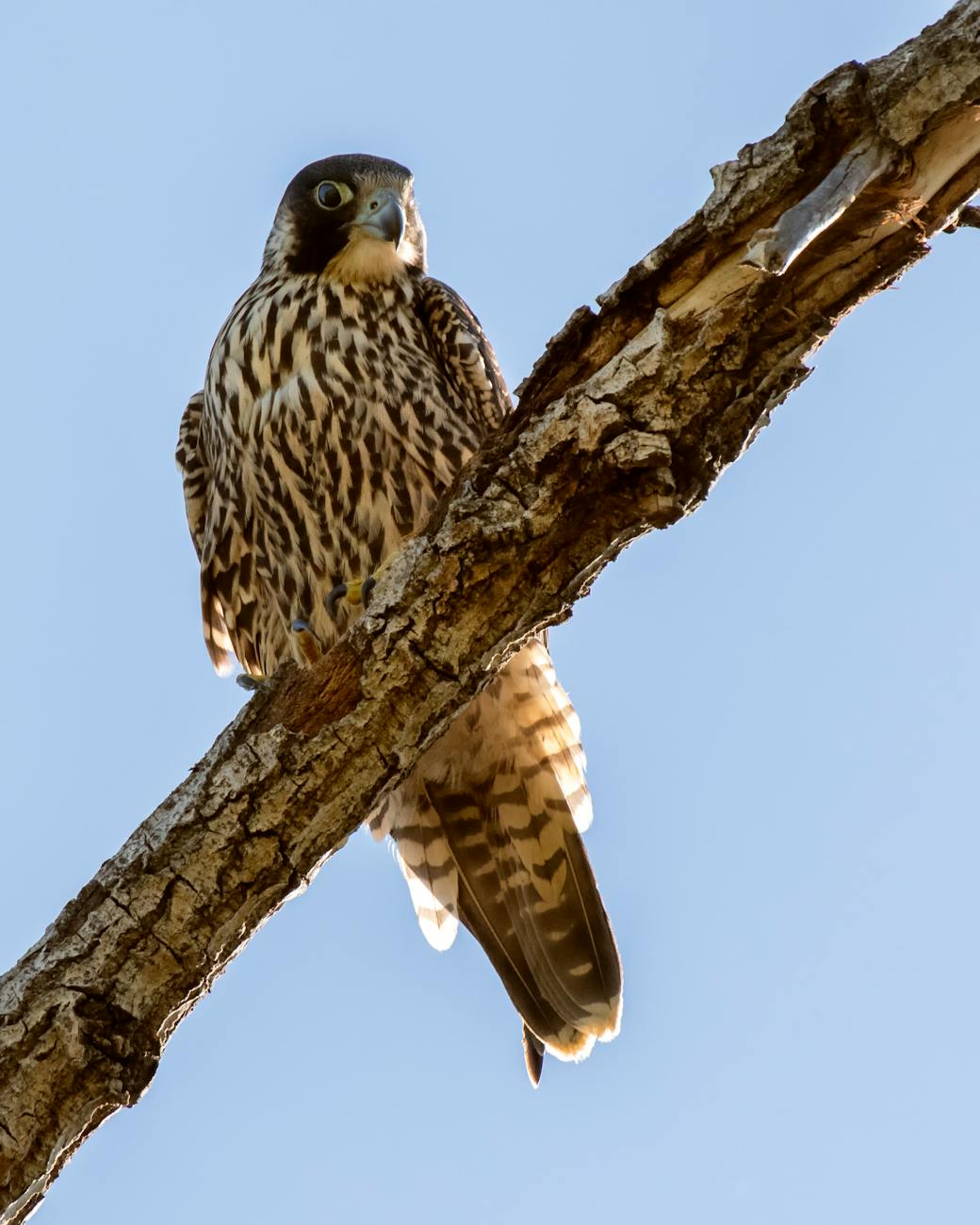
The next morning, all four of us on the trip slept in until close to nine. After breakfast, we went to the main Foxfire facility, right on the upper Sabinal River. There, my wife and the girls swam a bit, the latter playing with the children of another group of families that were having something of an annual reunion on the property; given that I swim just about as well as a rock (about which more later), I abstained. My wife and I got some information about local happenings, as well, and we decided that we would make arrangements to take the Frio Bat Flight tour that evening. Right off the intersection of TX127 and FM2690, the tour takes visitors to the entrance of a cave system that hosts between 10 and 12 million Mexican freetail bats–a colony whose emergence shows up on weather radar as often as not. The guide was informative, and the setting was beautiful–although I was sad to see the falcons hunting the emerging colony miss so many of their attempts.
Shown not eating. Photo by Frank Cone on Pexels.com
We drove back to Alta Vista by way of Utopia, missing much of the scenery in the darkness that followed the bats’ emergence. After another long sleep, and a Sunday morning breakfast, though, we were back at it, heading down FM337 to Leakey (pronounced “Lake-ee,” for those not familiar) to see about visiting a river outfitter and floating the Frio. The one we visited in town gave an…unhelpful answer, but the next one we called, Happy Hollow in Concan, was much more accommodating. With them, we made arrangements to rent inner tubes and be shuttled upstream on the Frio River–I believe to the crossing on FM1120, but I could not see road signs from where I was sitting–to enter the river and float on down. While the water was generally low, and I managed to scare my daughter and entertain her friend with the prospect of my drowning where the river got deeper (she had complained of nearly falling through one tube, so I switched her to one with a net, and I went into the water more energetically than I expected), it was a generally peaceful, pleasant experience. Much of the float was shaded, and the people still on the banks so late in the season were friendly.
After the float, a picnic lunch, and more swim time for my wife and the girls–I abstained again, not wanting to tempt matters–we drove back down to TX127, where we put in at The Frio Float, a little ice-cream shop right on US83. I got a small cup of ice cream that I ate with delight; my wife and my daughter’s friend each got floats with Dublin Bottling Works Texas Red Creme Soda, and my daughter got a big helping of a strange concoction of ice cream and toppings. The three of them overestimated their capacities, which made for a bit of a delicate drive back to Alta Vista (once again by way of Utopia, although with much better views in the daylight than in the previous darkness), but things were well settled by the time we got back and lit up both the grill and the firepit on site.
Monday morning, we didn’t sleep in near so much, as we had to eat our breakfast, pack our stuff, and skedaddle. My wife and I both had to go back to work on Tuesday, and the girls had their Wednesday start of school; in preparation for the latter, there was a Meet the Teacher Night we were pleased to attend. It was a sadness to leave, as it most always is to return to the real world from a vacation from it, but we’re already looking towards next year, and we got back to our lives with more vigor for having had the time away.
I’m happy to help you meet your writing needs! Fill out the form below to get started!
Read the previous entry in the serieshere. Read the next entry in the serieshere.
After an excerpt from an in-milieu conduct manual, “Search for the Son” begins with Fitz conferring with his steward, Revel, about coming changes and the standing décor of the guest suites in Withywoods. Fitz endues the steward’s gentle rebuke for his negligence and ignorance, and he authorizes repairs. He reaches out then through the Skill to Nettle, seeking approval for the use of funds and finding some exasperation from his elder daughter about it. The pair also confer about FitzVigilant for a bit before Nettle retires.
Fitz muses then on Bee and her reluctance to be with him and on Shun’s many complaints. He contrives an errand to buy himself and Bee some time of peace at the estate, and he recognizes what Bee is learning about him from reading his papers. He further ruminates on the messenger that had reached him and the clear signs that she and her pyre had been observed; more rumination about how to proceed on the Fool’s request and how to secure Bee follows. Fitz confers with Chade through the Skill about the matter, after which he revels in Skilling for a time.
Nettle catches Fitz at his lingering, rebuking him harshly and at some length. Her comments about Bee leave him stunned and considering his mistakes once again.
The prefatory bit for the present chapter offers a singular bit of delight; the excerpt from Lady Celestia’s Guide to Manners comes off as a biting comment on etiquette guides, generally, and I have to wonder if there is something biographical at work in the offering. The title of the excerpted piece–which does carry the function Oliver asserts in his comments about similar bits in Assassin’s Apprentice–suggests that the work will be some genteel, kindly thing, and the suggestion is utterly belied by the text itself, which is…certainly a thing, coming off as underscoring methods of manipulation and control rather than as a guide to getting along well with others. Therein, I think, lies the commentary. To what extent is etiquette merely the means of securing control from and over others? To what extent does it follow Frankfurt’s assertion at the end of On Bullshit? Fredal’s in College English? Or is it simply the juxtaposition of content and expectation–since the author and title follow the scathing passage–that produces effect? Such questions are the kinds of which critical inquiry is made, and they add to the large pile of such things that I have to think upon–later on.
The last part of the chapter, in which Nettle rebukes Fitz for his seeming willingness to die and his neglect of Bee, resonates with me, affective reader that I am. I’ve not made any secret of having a child–a wonderfully precocious daughter for whom I feel great affection. I don’t think I’ve hidden that I am and remain markedly insecure about how I parent her. I worry fairly often that I do not challenge her enough; I worry just as often that I push her too hard. In both cases, I worry about whether or not I am teaching her what she needs to know to be a person in the world and to be able to find happiness for herself, and I am concerned at pretty much all times that I am working against both of those simply by being the person I am. It’s probably overthought, in the event; to all appearances, my daughter thrives, and if she faces some problems, they seem to be the kind endemic to children in the Texas Hill Country. But there is still a voice in my head that nettles me about it, even though I have little enough wit or skill or magic about me, and so I find myself once again feeling right along with Fitz, flawed though I know such reading necessarily is.
Have you considered commissioning bespoke writing? Maybe it’s the thing you need; find out more by filling out the form below.
I‘ve been adding more to my ongoing Fedwren Project than Matthew Oliver’s piece or the work of Busse and Farley–albeit slowly, the demands of daily life outside academe being what they are. Most recently (to this writing), I read Benjamin Bruening’s “Word Formation Is Syntactic: Adjectival Passives in English,” which I entered into the Fedwren Project here. (It is the fiftieth entry in the project, although I am listing alphabetically rather than when I encounter and annotate the pieces.) There’s a summary of the article there, and Bruening himself provides an abstract, so I don’t feel any need to give another one here. I do, however, think I need to offer some response to the article here–not one in which I point out what I see as problems with the piece, but one that leads me to some reflection on what I see as a tendency in scholarship involving Robin Hobb–now that I feel I’ve got enough material described that I can speak with some certainty about such things.
As might be guessed from the title, Bruening’s article is a linguistics argument. I’ve got some training in linguistics; it’s effectively a requirement for working as a medievalist, and, as I noted long ago, my own graduate training had specific guidelines about it. (It’s been a while since I was there; things might’ve changed in the interim.) Too, my wife’s formal academic training is as a linguist, and, as might be expected, many of her friends from her adventures in New York City–on which I joined her for many years–were in similar training. I can safely claim, therefore, to have some familiarity with the discipline, although I am not a specialist in it by any means (insofar as I am a specialist in any academic field at this point in my life). Even so, Bruening’s article was…challenging…to read–but then, academic wok is written by specialists to other specialists, and I am, again, not a specialist.
(I do wonder what reaction Bruening has faced in challenging the orthodoxies he does in the article, however. He does seem to say he thinks a lot of people are wrong, and it’s possible they might be, or that he’s right–which isn’t the same thing. But it’s also the case that academics are all too human, and there’s no shortage of ongoing grudges attested in the literature of several disciplines. [I point at a small example here.] There are stories of fistfights, even–some of which are true; I saw one. It’s a personal curiosity, but one I’d not mind having indulged.)
Despite the challenge, however, I did manage to make my way through the piece. And I noted in it the use of Hobb’s work as an example of natural English language text, a use that follows the same pattern a number of other works I’ve annotated for the Fedwren Project display. It seems that several social scientists read Hobb; they make use of her work as examples of community formation, word formation, and the like. I suppose it suggests her appeal beyond “the usual suspects” (people like me who get accused of not being part of “the real world” or of doing work that has any utility or sense behind it), since it’s not likely the researchers in question would have recoursed to her without being familiar with her work already. I suppose, too, that it suggests Hobb’s writing style as a model worth mimicking, since it does seem to be accessible to non-literary types and even to machine learning. Certainly, there are worse examples for such to follow, although I have to wonder about issues of consent and compensation.
There is, of course, more work for me to do on the Fedwren Project. I have other articles printed out and ready for me to read and remark upon, as well as others in PDF waiting for similar attention. There’s a dissertation waiting for me to read, too, and I am certain there is other work out in the world that I don’t know about quite yet. How much, if any, of it falls into this same pattern, and what other patterns of research are out there, I look forward to seeing.
Need someone to help you make sense of the research? I can be your guy for that; fill out the form below to get started!
Read the previous entry in the serieshere. Read the next entry in the serieshere.
After an excerpt from a translated commentary on killing (one that Dargen seems to have studied), “The Morning After” begins with Bee waking late and ruminating on her displeasure at Fitz’s seeming valuing Shun over her. She also considers how others relate to her, and she fumes as she collects clothing that fits badly and changes in private before seeking Fitz.
Not quite true to text, but you get the idea… Photo by Wallace Silva on Pexels.com
Bee finds Fitz at table with Shun and Riddle, and she comments with some aspersion on him having eaten without her. Several barbed exchanges ensue, with Bee aiming at Fitz to some effect–though he does not respond in kind–and Shun to more of it, provoking anger from her. Fitz notes the impending arrival of FitzVigilant, which occasions mild upset from some present and curiosity from others, with Bee remembering his earlier visit to Withywoods. Shun’s continued barbs are shut down, and Bee becomes aware both of Fitz’s approval and the limits of others’ knowledge. More normal conversation follows, with Bee ruminating on preparations and on her status as she excuses herself from the table.
Later, Bee returns to the messenger’s pyre, rekindling the flame and ruminating on the messenger and on bits of prophecy of which she is aware. Returning to her home, she observes a cat at hunt. The successful animal notes the utility of autonomy, and Bee considers the lesson closely.
The present chapter is another brief one, less than ten pages in the edition of the novel I am reading. Again, I am not sure regarding any significance of the chapter lengths or patterns in them, and, again, I am convinced that going through the text and taking page-counts is something that could be done, with some tedium though not with difficulty.
It occurs to me that the idea of some significance associating itself with something like patterns of chapter-lengths runs into the notion of authorial intent. Wimsatt and Beardsley come to mind, of course, as do gallons of ink spilled on reams of paper about curtains being blue. That is, whether Hobb means anything by any patterns of chapter length that exist is immaterial; even if she has attested to it–and I do not know if she has; I’ve admitted that the Fedwren Project is not comprehensive, after all–the attestation would be itself a re/construction of events, a story told about them, subject to the frailties of human memory and perception in the recording and the relation.
What matters is the effect such a pattern has on readers, and whether that effect is in accord with the effects generated by the other features of the text. (Whether chapter length counts as text, proper, or as paratext is something that could be argued meaningfully. It likely has been in other contexts, but , if it has, references thereto do not come to mind.) For me, the shorter chapters stand out no less than the longer ones; the very difference marks them out for some attention. Whether those differences correspond to any particular points of narrative heft, I cannot say at the moment; I’d have to do the data collection and review my notes in a way that composing this entry in the rereading series does not really allow (and, honestly, I should have the notes for the entire body of work ready before I make the attempt). But I can say that anything that sticks out calls for attention, deliberately or not, and even if it is not a deliberate thing on the author’s part, there is some meaning to be gleaned–even if only a little.
I’m happy to put pen to paper or purpose some pixels for you; if you’d like me to do so, please fill out the form below!
She performs so exuberantly Every time she is in residence here Shining brightly on the pale stage with its Crooked wooden pillars and its Fading verdant hangings And the audience sweats in the lights held aloft
Looks like it’ll be a hot time… Photo by Vishnu R Nair on Pexels.com
Those in attendance at her show Must like what they get from her Year after year Seeming to invite her again and again Although she rarely varies her set-list And there are complaints when she does
Perhaps you want to purchase a poem of your own? I can provide it! Fill out the form below to begin…







 Elliott RWI