A Robin Hobb Rereading Series, Entry 430: Fool’s Quest, Chapter 8

Read the previous entry in the series here.
Read the next entry in the series
here.


Following an excerpt from lyrics by Starling Birdsong, “Farseers” begins with Fitz returning to his chambers and hurriedly changing in response to the urgent summons he had received. So much done, he rushes to answer the summons, Skilling to Chade to inform him of yet another cover identity, and entering into the midst of celebration. Fitz attends to his surroundings, noting major players (including Dutiful and Elliania) and their conduct as he makes his way through the throng.
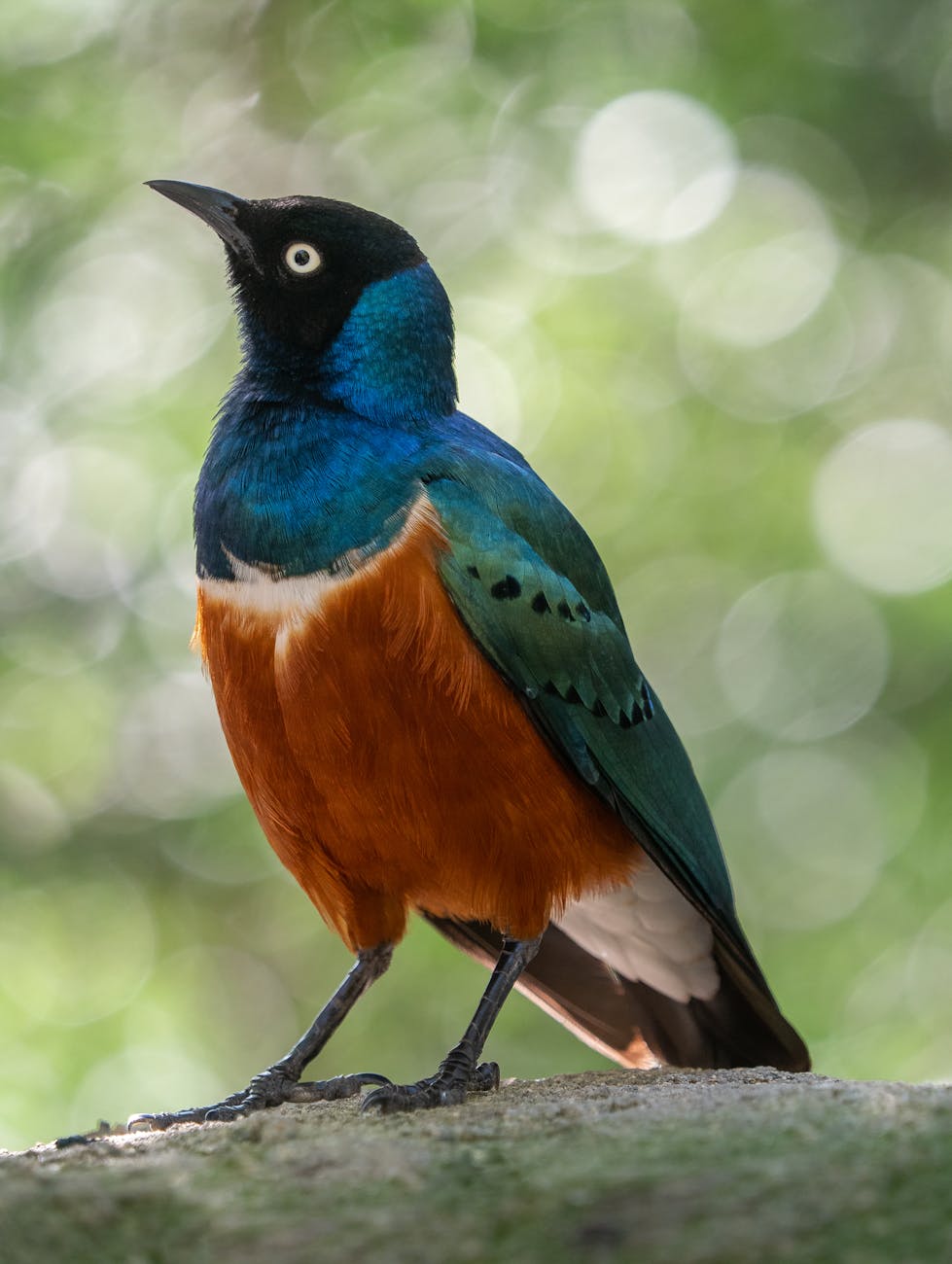
A prominent character once again…
Photo by William Warby on Pexels.com

Fitz’s progress is halted by the beginnings of an announcement by Elliania which notes first that Nettle is a Farseer and second that she is pregnant. Fitz marks the reactions of those concerned, and he considers likely regard for the news thus delivered. Kettricken then summons a minstrel to recount Fitz’s deeds along the trip to assist Verity, which summons Starling Birdsong answers in full glory. Even Fitz, who is somewhat chagrined at hearing himself lauded in song, is singularly impressed at her work. He is less impressed at being hustled forward by Chade, where Dutiful improvises a likely story to explain his appearance and absence, and Fitz faces the gathered crowd.

The prefatory materials to the present chapter, Starling’s lyrics detailing one of the more prominent early events in Fitz’s public career, are the third such piece in the current volume; one of Hap Gladheart’s songs and the propaganda by Farrow minstrel Celsu Cleverhands both appear earlier in the text. Some explication of Hap’s lyrics has already been given; consideration of Celsu’s might well be undertaken (if perhaps not here), as might some of Starling’s own work. (Yes, I am aware that all three characters and “their work” are the inventions of the author, Hobb, herself an adopted authorial persona of the author, about which construction some comments are here. I know I have a tendency to talk about characters as if they are people; I have noted more than once that I read overly affectively. But, as I think I have also noted before, the fact of my affective reading is part of what motivates my studies to begin with; I’d not’ve spent the time and effort on this hadn’t I emotional investment in the work.) I think it’ll add to my scholarly somedays, honestly, unless I find that someone’s already done the work first to explicate the selections more thoroughly and second to read them against one another.

In any event, however, there is something to be said about the inclusion of another bit of verse at the head of the chapter. It’s not the first time Hobb does so, of course, not even within the present volume. But it does seem marked as a more common occurrence in the present volume than in previous volumes in the Elderlings corpus; three, and within four chapters, is a lot for this kind of thing. I’m sure there is some significance to be found in it; perhaps it speaks to the author’s readings during and soon before composition of the present text (although I am wary of biographical criticism for reasons I believe I’ve articulated), perhaps it serves to highlight differing social constructions across the component fiefs of the Six Duchies, perhaps it does something else, but even if I am uncertain what that else is, I am sure it’s there. So that might be yet another scholarly someday for me; I seem to collect them.

And there’s another, perhaps clearer, such scholarly someday for me in the present chapter. Some years ago, now, I wrote a master’s thesis that examines Hobb’s use of Arthurian tropes in the characters of the Farseer and Tawny Man trilogies. I’ve moved on from some of the ideas I voice in that text, at least partly; for example, I don’t think the Six Duchies are a recapitulation of Britain / England, at least not primarily (although, as I look at the text again, I note that even in it, I point out deviations from the “source” materials, even if I hadn’t yet realized where they came from). But some of the things I have in the thesis still seem true; “Chade is very much like Arthurian Merlin” (29) is one of them, and the idea that Chivalry and Verity Farseer are Arthurian-esque heroes (38) is another. So is young Fitz’s similarity to Gawain (39-51). And the overall concept is reinforced in Fitz’s return to public life in the Six Duchies; the presentation of him Dutiful makes to his assembled court is very much in the model of rex quondam rexque futurus who, per Malory, “shal come ageyn” from having gone “by the wylle of our lord Ihesu in to another place,” the which is often understood to be the enchanted isle of Avalon (note here and here, XI.2). If I might add to my collection, I think another revisit to an older project–along the lines of this piece–might well be in order.

Someday.

Just a reminder: I write all year long, even as the new one begins! Get your piece started by filling out the form below!

Go back

Your message has been sent

Warning
Warning
Warning
Warning.

Or you can send your support along directly!

Still Another Rumination on a Birthday Not Mine

As happens from time to time, my regular posting in this webspace coincides with the birthday of a loved one. This time around, it’s that of my surviving grandmother, a lifelong Iowan currently living in Cedar Rapids; prior to moving there, she had lived for decades in Tama. I believe her birthday present made it to her–I sent it off in time for it to do so, at least, though I haven’t received delivery confirmation quite yet–and I’ve no doubt that I’ll be talking to her again soon. (I last did so on Christmas Eve, when we exchanged holiday greetings, and I’ve been writing her in response to her cards and notes, keeping her apprised of how her family in my part of the world is doing. I am trying to be a good grandson, even if the effort is later than it perhaps ought to have been; I have noted before the kind of person I used to be.)

Seems appropriate
Photo by spemone on Pexels.com

It’s not my grandmother’s first birthday, of course, not by a wide margin. It could hardly be so and she be my grandmother, after all. Nor yet is it the first on which I’ve sent her gifts or called or written or some combination of the three. So it’s not the first time I’ve thought about it, or considered the differences in family positioning between my parents’ families, or between my wife’s and mine.

On the side of the family in question–my dad’s, for ease of reference–I’m the older of two children, the eldest of six grandchildren, and the eldest of a number of great grandchildren I do not remember if I ever knew it. (Dad’s family is mostly in Iowa, and I never have lived in that state; the lifelong distance means some things that would have been “normal” for me to know are outside my knowledge.) My daughter is my only child (that I know about–and I doubt that any precede her, or I’d expect I’d’ve heard something about them by this point); my brother’s son is likely to be his only one, and there’re a couple of cousin’s kids in there–but my girl’s the first out of her generation of Dad’s family. For Mom’s…not so much; I’m the third from last grandkid, and my late maternal grandmother was the second to last of ten born. (If memory serves, some of her elder sisters were mothers before she was born. If.) And I’m younger than my wife, who was herself the second child of her parents–and her father was not the oldest of his parents’ kids, either.

It happens, then, that I am forty-two years old and with a child of my own, and I still have a living grandparent, even if I don’t see her often and my daughter has seen her surviving great grandmother maybe twice or thrice in her life (and one of those was in her early infancy, so there’s no way she remembers it, though there are pictures). I don’t think Dad had his grandparents quite that late (I’d have to look at records and do math); I know Mom did not, and I know my wife does not. Nor do I think that many others my age do; some, sure, but not a great many.

As such, I make sure that I mark my grandmother’s birthday. It’s an unusual thing to have gotten to keep so long, as I well know, and I am not unmindful of the gift I have been given in having her be part of my life for so long.

I can write for birthdays or other special occasions–or even for day-to-day life! Get your piece started by filling out the form below!

Go back

Your message has been sent

Warning
Warning
Warning
Warning.

Or you can send your support along directly!

A Bit about Another Day’s Observance

This isn’t the first time I’ve had a post to this webspace go live on this calendar date, to be sure. (I looked to be sure.) Nor yet was that the first time I’ve written about the day’s holiday; I’ve been a reasonably avid blogger for a while, now, even as it’s more than a little passé that I would be one, and holidays do tend to invite reflection and introspection such as prompt writing. So much I’ve shown, and so much’ve others shown, across not only the years in which blogging has been a thing, but across much of written record. To such a thing I turn again.

Yep. That’s it.
Photo by Olena Bohovyk on Pexels.com

I have a somewhat fraught relationship with holidays. Cheer, such as is often demanded, does not come easily to me, nor does it linger long. To my recollection, it never has done either, although I will admit that my memory has limits, seemingly more with each day. (That’s a concern, but one I’ll address another time…if I can remember to do it.) I do and have done better with quiet and thought, with looking on from the edges of things, rather than being in the middle of them and loudly reveling. It makes me a terribly fun person, I know, but I don’t think I’ve often been sought out for fun.

Each year, though, I work to be a little…happier with events, to be a little more present with the people I love. Each year, I think it works a little better. Each year, I try to shut my mouth just a little bit longer, to stifle my misgivings. Each year, I do a little more that might be thought “normal” for a holiday, participate in one more thing that I mightn’t’ve done in a previous year. Each year, I get out a little bit more, spend one more night out and among events being hosted. Each year, I do one more thing to try to create a situation where the people I care about can be happy more easily.

Each year, I don’t do enough. This year’s not different from any other in that regard. But I do what I can, and not only on or about the holiday.

I write for more than just the holidays. If you’d like me to do so for you, fill out the form below. It may be a little bit before I get back to you, though, given what all’s going on.

Go back

Your message has been sent

Warning
Warning
Warning
Warning.

Or you can send your support along directly!

A Robin Hobb Rereading Series, Entry 429: Fool’s Quest, Chapter 7

Read the previous entry in the series here.
Read the next entry in the series
here.


After a piece of propaganda celebrating Fitz’s death and Regal’s accession, “Secrets and a Crow” opens with Fitz, disguised as Feldspar, returning to his chambers and planning the events to follow. Riddle greets him there and receives an unexpected apology before delivering the news that Nettle is pregnant and that they are wedded by custom and against Dutiful’s wishes. Fitz’s mind races over political implications, and Riddle adds to the complexities thereof by reporting that Patience can be regarded as a descendant of the Farseers, not only as a widow of them. Fitz offers his commendations, and then Riddle returns to the matter of Bee, which leaves Fitz uncomfortable. After Riddle takes his leave, Fitz responds to Nettle’s Skill-sending, the two conferring through the magic briefly and sharply. Fitz is left to consider once again the wisdom of his choices, and he arrives at a decision.

Not the tastiest meal…
Photo by Tom Swinnen on Pexels.com

Fitz rejoins the Fool and receives a message left for him. They confer about the Fool’s situation, and Fitz reads the message, which is from Chade and bids him attend the final Winterfest feast in his guise as Feldspar. Meanwhile, the Fool waxes despondent about the situation in Clerres and the depredations of the Servants, and he weeps at what he has suffered. Fitz offers what comfort he can, which he knows is not much, and he glosses the message from Chade to the Fool. Fitz also considers what his loved ones have given up for him across the years and his purposes moving ahead.

Leaving the Fool, Fitz goes about his errands as Feldspar. While about them, he notes the cawing of a crow, calling out for Tom. It is, in the event, the crow of which Web had spoken, and, as Fitz goes about his errands, it makes a show of itself and its ability to speak the name “FitzChivalry,” which occasions upset among onlookers. Fitz manages to turn the situation, taking the crow with him as he hurls imprecations and abuses that afford him an escape. The pair return to Buckkeep to find festivities in progress, and he hastens to attend to the bird as he frets about meeting his many other obligations. But, returning to the Fool, Fitz and the crow find aid, and once the bird is freed from its entanglements, Fitz Skills to Chade, only to be summoned with some urgency. Fitz hastens to answer the summons, leaving the bird with the Fool, who approves of her.

The present chapter once again points out the odd gender-blindness at work between Fitz and the Fool regarding the putative unexpected son of the former. Again, the Fool moves fluidly among gender expressions and makes much of the fact that Fitz (and others) make much of the reproductive equipment other people possess; for the Fool to remain so adamant in the idea that the son is a son seems…out of keeping with the usual insightfulness the character displays. Perhaps it is a reinforcement of the idea that everybody has areas in which they falter, a bit of the verisimilitude that Hobb is often at pains to include in her work. Perhaps it is the Fool’s response, or part of it, to the trauma that has clearly been endured. (I am minded that Hobb’s work does go in for torture at more than one point, and not only in the Elderlings novels; another scholarly someday seems to be at work.) But it still seems…odd to me as I read.

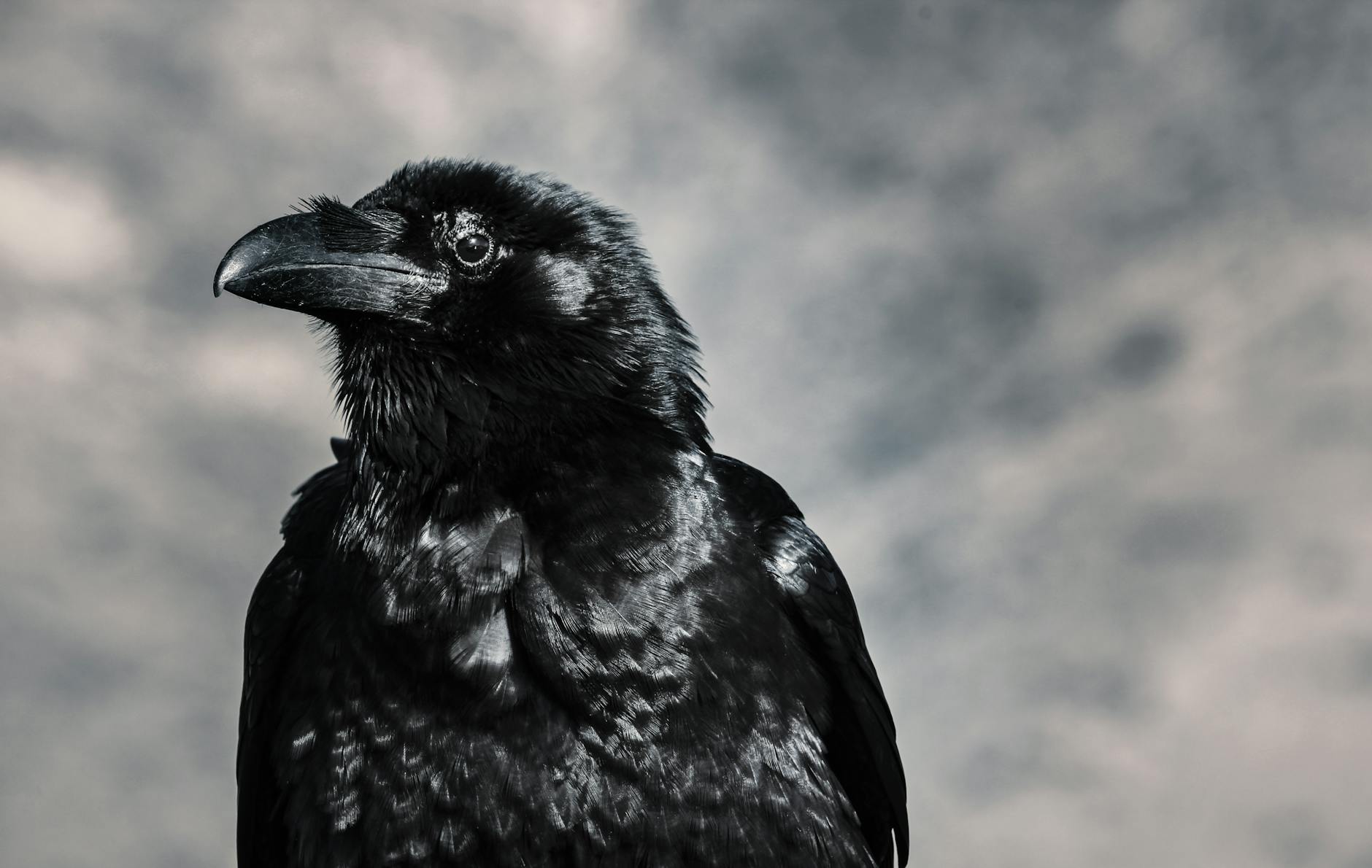
The present chapter also does some…interesting things with symbolism as surrounds the crow. One implication, and something that the text supports, is that the crow is an ill omen. By calling out Fitz’s true name, the crow occasions recollections of the kind of propaganda excerpted in the preliminary material of the chapter, something made fairly explicit in popular response to the crow’s call; among the comments are folk-legend-esque remarks about the beast-form that the Witted Bastard had adopted and the evils associated with him. Fitz is not ignorant of the danger such things represent to him–and, by extension, to his avowedly Witted King, Dutiful. But, as I’ve noted more than once, the set of symbols that occasion such functions are not necessarily the best applied to Fitz and to the Realm of the Elderlings, more generally. For one, even within a Northern- and Western-European-medieval background basis for the Six Duchies, Fitz’s symbolism is…complicated; adding the crow to the wolf with which he was already long associated begins to shade him towards Odin, and while that may not be the happiest set of associations for a great many, it is not an ignoble one, as such. More emphatically, given the decidedly non-European-based ways in which much of the Realm of the Elderlings can be read (and no, I am not going to avoid pointing it out when the opportunity presents itself, nor put off looking for such opportunities), I have to think that other resonances are more at work, or are also at work in ways that make the doom-imagery not the only or best way to read the presence of the crow in the text.

But, as with so much else in the Fitz-centric novels, foreshadowing is a thing.

I write for more than just the holidays; get yours going today!

Go back

Your message has been sent

Warning
Warning
Warning
Warning.

Or you can send your support along directly!

Current Events

Once again
I dip into the flow
Feel the currents ripping past me
Carrying me along
And while I think I know where the flow is going
There is still fear in
Being dragged under
I have found the rocks too many times
Not yet worn away by the years
And perhaps not smoothed by them, either
Jagged edges and solid things
Have left me cut and bruised more than once
But I still go back in again

It’s a metaphor, see?
Photo by Ian Turnell on Pexels.com

I’m still happy to write to your order; fill out the form below to begin!

Go back

Your message has been sent

Warning
Warning
Warning
Warning.

Or you can send your support along directly!

Something Written in Some Haste

The poems have started to come to me again
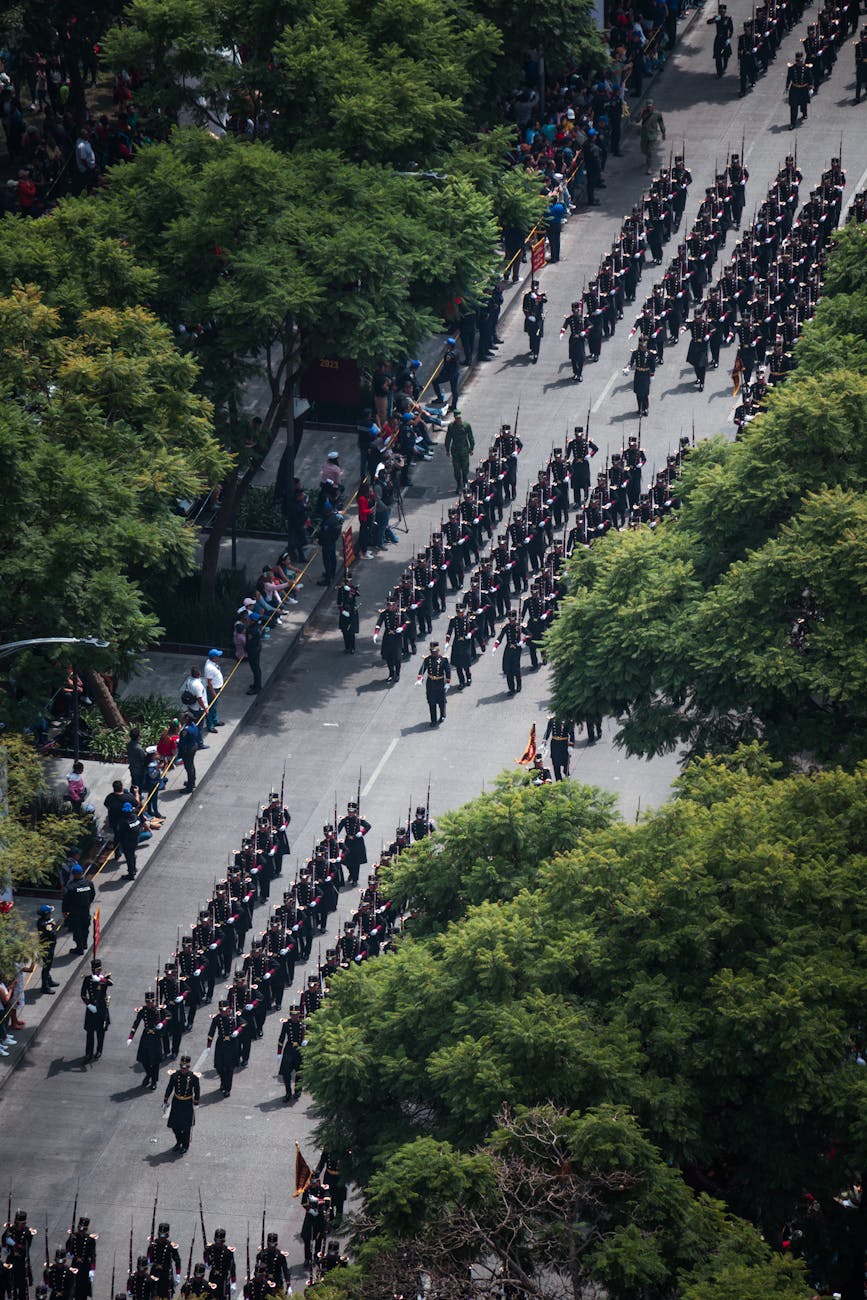
Passing by in review where I sit in what might have been thought a grandstand
Because I have made much of myself here and often
Saluting with swords raised as they cross my sight
A drum major swinging the mace up and down before
The band beats out its cadence and the horns blare
And I marvel at their shining uniforms
Ribbons and buttons gleaming in the light
Streaming down from above
Before I hunch in again and
Get back to what else I was doing

Apropos.
Photo by Enrique Fernandez Calderon on Pexels.com

There’s still time to get a custom piece of writing for your holiday needs–and quickly!

Go back

Your message has been sent

Warning
Warning
Warning
Warning.

Or you can send your support along directly!

A Robin Hobb Rereading Series, Entry 428: Fool’s Quest, Chapter 6

Read the previous entry in the series here.
Read the next entry in the series
here.


Following an in-milieu historical work reporting the end of the Red Ships War and the reaffirmation of the Farseer dynasty, “The Witted” begins with Fitz taking stock of his situation and finding himself annoyed that time has passed while he has been otherwise engaged. He hastens to ready himself for an audience with Kettricken, to which he reports and waits for a time before being admitted thereto.

A relevant image, I think…
Photo by Caleb Falkenhagen on Pexels.com

Once she admits Fitz to her presence, Kettricken dismisses her attendants and drops pretense with Fitz, laying out her intentions for Bee and asking after the Fool. She weeps at Fitz’s answers regarding the latter, although he makes a wry comment at her reference to a question Starling had posed years ago.

Further conversation in that line is interrupted by the arrival of Witmaster Web. Talk at that point turns to the magic the three of them share, of Web’s new bond and Kettricken’s purpose to form a Wit-bond of her own. Continued political difficulties associated with the Wit are noted, and Fitz is urges to consider taking on as a companion an oddly colored crow. Web lays out the crow’s situation to Fitz and then returns conversation to Bee. Fitz then turns conversation to the princes, Prosper and Integrity, who evidently have the Skill in some measure. Plans are made for the coming days, and Fitz excuses himself.

A couple of points present themselves for discussion regarding the present chapter. One of them is the subject, again, of gender fluidity. Others, of course, speak to the presentation of gender fluidity in Hobb more eloquently and at greater length than I can afford here; Katavić, Melville, Mohon, Prater, Räsänen, Sanderson, and Schouwenaars, whose works are glossed in the Fedwren Project, all do so, and I’m sure there’re others of which I’m not yet aware. The subject of the Fool’s “son” and the part the Fool played in giving rise thereto receives (more) comment in the present chapter, and I find myself a bit…uncomfortable at the movement toward gender essentialism at work in the commentary. But I am also minded that 1) cultural differences obtain and 2) as part of that, with Kettricken having been intimately involved in issues of dynastic succession, her focus on such matters has some embeddedness to it. (And, yes, I know: “it’s just a book.” But if it’s okay for people to spend thousands of dollars to go to stadia and paint themselves in colors of schools they never attended, it’s okay for me to be nerdy about a book that cost far less than that.)

The other, related, is the resurgence of the notion of the Wit as a metaphor for homosexuality. I’ve commented, referencing others, before (here and here, for examples), and I remain of the opinion that having a metaphor for something that is actually in evidence is…a stretch. But as I reread, I wonder if the issue is less that the Wit is a metaphor for homosexuality (in the United States; primary expected readership remains a factor to consider) than that the regard in which it is held is a metaphor for the regard in which same-sex relationships–and queerness, generally–are held among the anticipated primary readership. I am likely late in arriving at the idea; I acknowledge that my attentions have generally been on other matters, both as regards my reading of Hobb and more generally. Given that I would have an outside perspective on the matter, I do not think adding to work investigating that part of the text will be one of my scholarly somedays, but it is still something worth considering, I think, if for no other reason than that those scholars of whose works I am aware wrote before the Fitz and the Fool trilogy was out. After all, I clearly think works can be revisited and extended when new primary materials become available, and I’m not so arrogant as to think I’m the only one who ought to do so.

There’s still time for you to get your custom writing done in time for the holidays! Fill out the form below for more detail!

Go back

Your message has been sent

Warning
Warning
Warning
Warning.

Or you can send your support along directly!

Sonnet for the Hills

In mesquite, oak, and cedar, limestone hills
Rise towards the sky, a sight that thrills
In summer heat or winter rain, and stills
The anxious worry of a heart beset
By many cares. And in the springs of wet
Years, flowers bloom in colors bright and set
At ease or raise in joy the souls of those
Who look on them. But it is not the rose
That does such in the hills, as each one knows
Who has the wildflower carpet seen
Stretching out amid the trees’ new green
In colors that reflect a sunrise scene.
Such only happens in the limestone hills;
No wonder, then, that the Hill Country thrills!

A fairly typical view…
Image from TPWD’s Chase A. Fountain, here, which I believe makes for public domain

Remember: It’s not too late to get your own poem of praise! Fill out the form below to begin!

Go back

Your message has been sent

Warning
Warning
Warning
Warning.

Or you can send your support along directly!

It Could Have Been Worse on April Fifteenth

A blackout poem taken from public documents, here

Other Schedules and Forms
You May Have To File

  • Schedule A (Form 1040) to deduct
    interest, taxes, and casualty losses not
    related to your business.
  • Schedule E (Form 1040) to report
    rental real estate and royalty income or
    (loss) that is not subject to
    self-employment tax.
  • Schedule F (Form 1040) to report
    profit or (loss) from farming.
  • Schedule J (Form 1040) to figure
    your tax by averaging your farming or
    fishing income over the previous 3
    years. Doing so may reduce your tax.
  • Schedule SE (Form 1040) to pay
    self-employment tax on income from
    any trade or business.
  • Form 461 to report an excess
    business loss.
  • Form 3800 to claim any of the
    general business credits.
  • Form 4562 to claim depreciation
    and amortization on assets placed in
    service in 2023, to claim amortization
    that began in 2023, to make an election
    under section 179 to expense certain
    Jan 24, 2024 Cat. No. 24329W C-1
    property, or to report information on
    listed property.
  • Form 4684 to report a casualty or
    theft gain or (loss) involving property
    used in your trade or business or
    income-producing property.
  • Form 4797 to report sales,
    exchanges, and involuntary conversions
    (not from a casualty or theft) of trade or
    business property.
  • Form 6198 to apply a limitation to
    your loss if you have a business loss and
    you have amounts invested in the
    business for which you are not at risk.
  • Form 6252 to report income from
    an installment agreement.
  • Form 7205 to claim the IRC 179D
    deduction for qualifying energy efficient
    commercial building expenses.
  • Form 8582 to apply a limitation to
    your loss from passive activities.
  • Form 8594 to report certain
    purchases or sales of groups of assets
    that constitute a trade or business.
  • Form 8594 to report certain
    purchases or sales of groups of assets
    that constitute a trade or business.
  • Form 8824 to report like-kind
    exchanges.
  • Form 8829 to claim actual
    expenses for business use of your home.
  • Form 8936 to claim the
    commercial clean vehicle credit.
  • Form 8960 to pay Net Investment
    Income Tax on certain income from
    your passive activities.
  • Form 8990 to determine whether
    your business interest deduction is
    limited.
  • Form 8995 or 8995-A to claim a
    deduction for qualified business income

Poetry is everywhere for those who have eyes to look–let me help you find yours! Fill out the form below to begin…

Go back

Your message has been sent

Warning
Warning
Warning
Warning.

Or you can send your support along directly!

A Robin Hobb Rereading Series, Entry 427: Fool’s Quest, Chapter 5

Read the previous entry in the series here.
Read the next entry in the series
here.


Fitz dreams of Nighteyes as a preface to “An Exchange of Substance,” waking as the chapter begins and assessing himself and his surroundings. He notes that Ash has come and gone again, and he purposes to check on the Fool before sleeping further. He finds the Fool convalescing, and the two confer briefly before Fitz sets out breakfast for his friend. Over the meal, they talk further, the Fool relating more of his journeys; it is an unhappy tale that takes the Fool and Prilkop to Clerres, where they are taken in and taken in, and the Fool weeps over his folly.

Cue the bassoon…
Photo by Alexas Fotos on Pexels.com

One of the Fool’s comments speaks to the Pale Woman, naming her as a thing made by the Servants to enact their goals, and Fitz’s mind races back over what he has known to sort in the new information he has gained. The Fool comments that Fitz’s existence and actions thwarted the long designs of the Servants to some extent, and they discuss that point before Fitz tends to the Fool’s injuries again. The experience is unpleasant but soon concluded, and talk turns more fully to healing and the mixtures of magics that have pervaded their lives.

Fitz makes to prepare for an audience with Kettricken in his role as Feldspar, but the Fool halts him by resuming his narration of his travels. He teases him as he had once done, offering what reassurance he can before lapsing into sleep.

The present chapter, particularly Fitz’s assessment of the Servants’ breeding program, calls to mind other major prognosticatory threads in fantasy and science fiction: Asimov’s psychohistory and Herbert’s spice-fueled insights. Hobb has some connections to both; I have long commented on the ways in which the Fitz-centric novels emulate the Asimovian encyclopedia-entries in their chapter-beginnings, and Hobb has geographical associations with Herbert. The selective breeding programs, the cold calculations, the access to multiple possible futures and the refinement of predictions from years of gathered observations all speak to a similar narrative construction among the three (and, doubtlessly, others, but I am limited in my observations to what I have read often and know well).

In Asimov and Herbert, the protagonists work to gain control of the prognostication; such is not apt to be the case in Hobb, although some of that is because they already have some degree of control over it. The Fool has been, and it seems that Bee is, a White Prophet, whose dreams foretell events to come; they already have learned what awaits, at least to some extent. The rest is foreshadowed in Fitz’s reaction to the Fool’s description; he is horrified at the implications, and Fitz’s horror often results in things dying, not always peacefully or swiftly.

As in the earlier works, Hobb’s corpus invites consideration of the tension between fate and free will. I’m not as up on the philosophical work done in that line as I probably ought to be (although I will plead that there is only so much time, and I do have other things that demand my attention and study), so I don’t know that I am well positioned to explicate the parallels and borrowings in that regard. I’m not sure that there’s been much work done that way, either (although I do have some more items to review for the Fedwren Project that might speak to that end). It seems a project worth undertaking, though, even if it’s not one of my many scholarly somedays…

If you hurry, you can still get bespoke writing in time for the holidays! Fill out the form to get started now!

Go back

Your message has been sent

Warning
Warning
Warning
Warning.

Or you can send your support along directly!