Read the previous entry in the series here.
Read the next entry in the series here.
After a piece of propaganda celebrating Fitz’s death and Regal’s accession, “Secrets and a Crow” opens with Fitz, disguised as Feldspar, returning to his chambers and planning the events to follow. Riddle greets him there and receives an unexpected apology before delivering the news that Nettle is pregnant and that they are wedded by custom and against Dutiful’s wishes. Fitz’s mind races over political implications, and Riddle adds to the complexities thereof by reporting that Patience can be regarded as a descendant of the Farseers, not only as a widow of them. Fitz offers his commendations, and then Riddle returns to the matter of Bee, which leaves Fitz uncomfortable. After Riddle takes his leave, Fitz responds to Nettle’s Skill-sending, the two conferring through the magic briefly and sharply. Fitz is left to consider once again the wisdom of his choices, and he arrives at a decision.
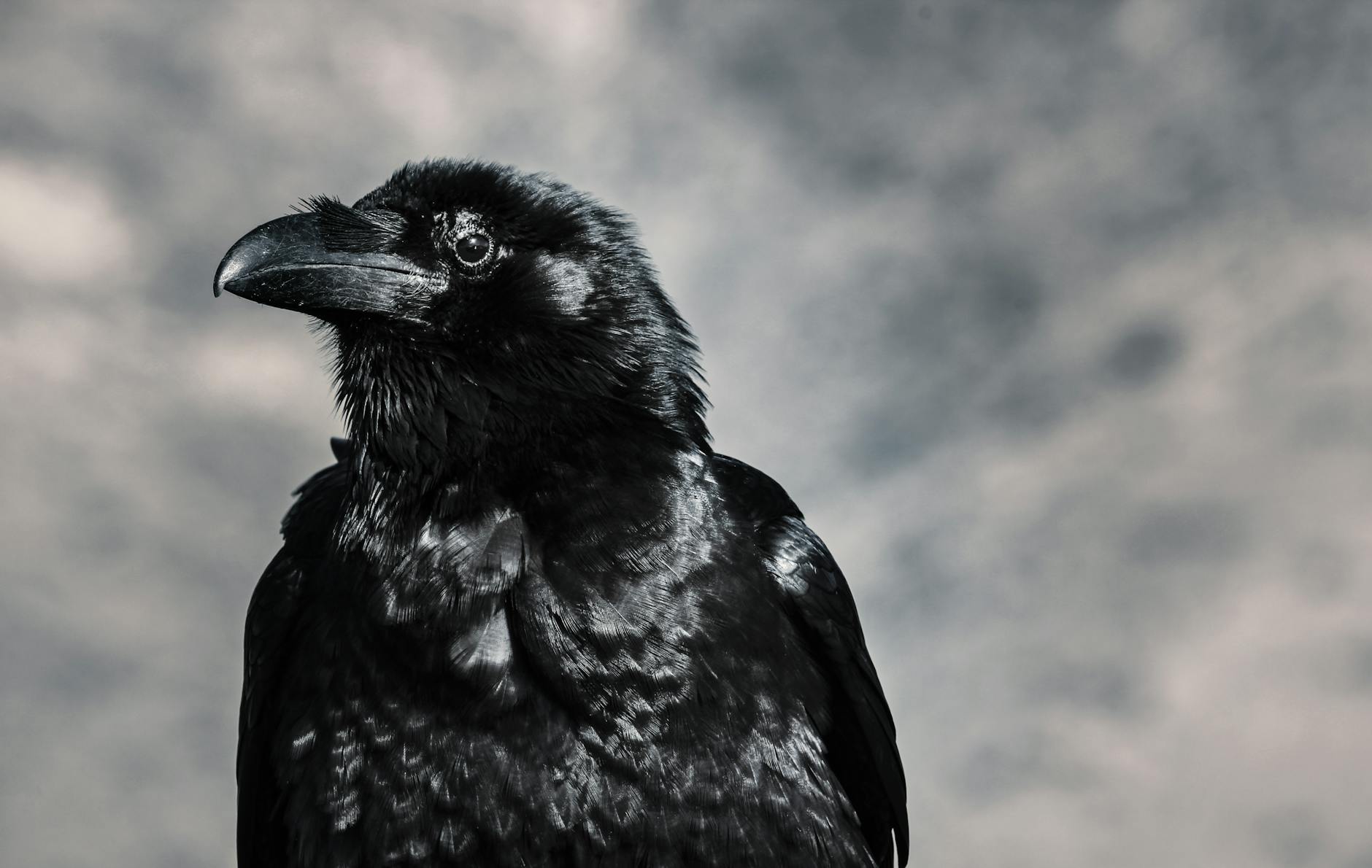
Photo by Tom Swinnen on Pexels.com
Fitz rejoins the Fool and receives a message left for him. They confer about the Fool’s situation, and Fitz reads the message, which is from Chade and bids him attend the final Winterfest feast in his guise as Feldspar. Meanwhile, the Fool waxes despondent about the situation in Clerres and the depredations of the Servants, and he weeps at what he has suffered. Fitz offers what comfort he can, which he knows is not much, and he glosses the message from Chade to the Fool. Fitz also considers what his loved ones have given up for him across the years and his purposes moving ahead.
Leaving the Fool, Fitz goes about his errands as Feldspar. While about them, he notes the cawing of a crow, calling out for Tom. It is, in the event, the crow of which Web had spoken, and, as Fitz goes about his errands, it makes a show of itself and its ability to speak the name “FitzChivalry,” which occasions upset among onlookers. Fitz manages to turn the situation, taking the crow with him as he hurls imprecations and abuses that afford him an escape. The pair return to Buckkeep to find festivities in progress, and he hastens to attend to the bird as he frets about meeting his many other obligations. But, returning to the Fool, Fitz and the crow find aid, and once the bird is freed from its entanglements, Fitz Skills to Chade, only to be summoned with some urgency. Fitz hastens to answer the summons, leaving the bird with the Fool, who approves of her.
The present chapter once again points out the odd gender-blindness at work between Fitz and the Fool regarding the putative unexpected son of the former. Again, the Fool moves fluidly among gender expressions and makes much of the fact that Fitz (and others) make much of the reproductive equipment other people possess; for the Fool to remain so adamant in the idea that the son is a son seems…out of keeping with the usual insightfulness the character displays. Perhaps it is a reinforcement of the idea that everybody has areas in which they falter, a bit of the verisimilitude that Hobb is often at pains to include in her work. Perhaps it is the Fool’s response, or part of it, to the trauma that has clearly been endured. (I am minded that Hobb’s work does go in for torture at more than one point, and not only in the Elderlings novels; another scholarly someday seems to be at work.) But it still seems…odd to me as I read.
The present chapter also does some…interesting things with symbolism as surrounds the crow. One implication, and something that the text supports, is that the crow is an ill omen. By calling out Fitz’s true name, the crow occasions recollections of the kind of propaganda excerpted in the preliminary material of the chapter, something made fairly explicit in popular response to the crow’s call; among the comments are folk-legend-esque remarks about the beast-form that the Witted Bastard had adopted and the evils associated with him. Fitz is not ignorant of the danger such things represent to him–and, by extension, to his avowedly Witted King, Dutiful. But, as I’ve noted more than once, the set of symbols that occasion such functions are not necessarily the best applied to Fitz and to the Realm of the Elderlings, more generally. For one, even within a Northern- and Western-European-medieval background basis for the Six Duchies, Fitz’s symbolism is…complicated; adding the crow to the wolf with which he was already long associated begins to shade him towards Odin, and while that may not be the happiest set of associations for a great many, it is not an ignoble one, as such. More emphatically, given the decidedly non-European-based ways in which much of the Realm of the Elderlings can be read (and no, I am not going to avoid pointing it out when the opportunity presents itself, nor put off looking for such opportunities), I have to think that other resonances are more at work, or are also at work in ways that make the doom-imagery not the only or best way to read the presence of the crow in the text.
But, as with so much else in the Fitz-centric novels, foreshadowing is a thing.
I write for more than just the holidays; get yours going today!


 Elliott RWI
[…] Read the previous entry in the series here.Read the next entry in the series here. […]
LikeLike
[…] the previous entry in the series here.Read the next entry in the series […]
LikeLike
[…] in which his new status will affect Bee. He is distracted from his ruminations by the arrival of the crow that has insinuated herself into his life, giving rise to a rumination on the Wit and its limits. The bird harangues him for a bit as he […]
LikeLike
[…] Realm of the Elderlings corpus is amply noted (see this, this, this, this, this, this, this, and this, for examples; Selden in Chalced also offers examples). It also pops up in her non-Elderlings work; […]
LikeLike
[…] on the Fool’s explanations and some implications of the same, and his thoughts turn to Patience in the court where he now […]
LikeLike