Read the previous entry in the series here.
Read the next entry in the series here.
A content warning regarding torture applies.
Following a brief note on torturous punishment from one of the Four at Clerres, “Bee’s Book” begins with Fitz adapting to the Tarman and the liveship’s strange resonance with his magics. Despite concerns, he determines to Skill to the Six Duchies and reviews preparations for doing so with the Fool, whose condition he considers. When he reaches out into the magic, he finds Chade waiting for him, seemingly striving to immerse himself within the Skill, and Fitz thrusts the old man into the waiting presences of Nettle and Dutiful. Leaving only a message that he will send word by mundane means, he returns to himself, rattled, and his condition startles the Fool. The two confer uneasily for a time, and the Fool, adopting the persona of Amber, departs.
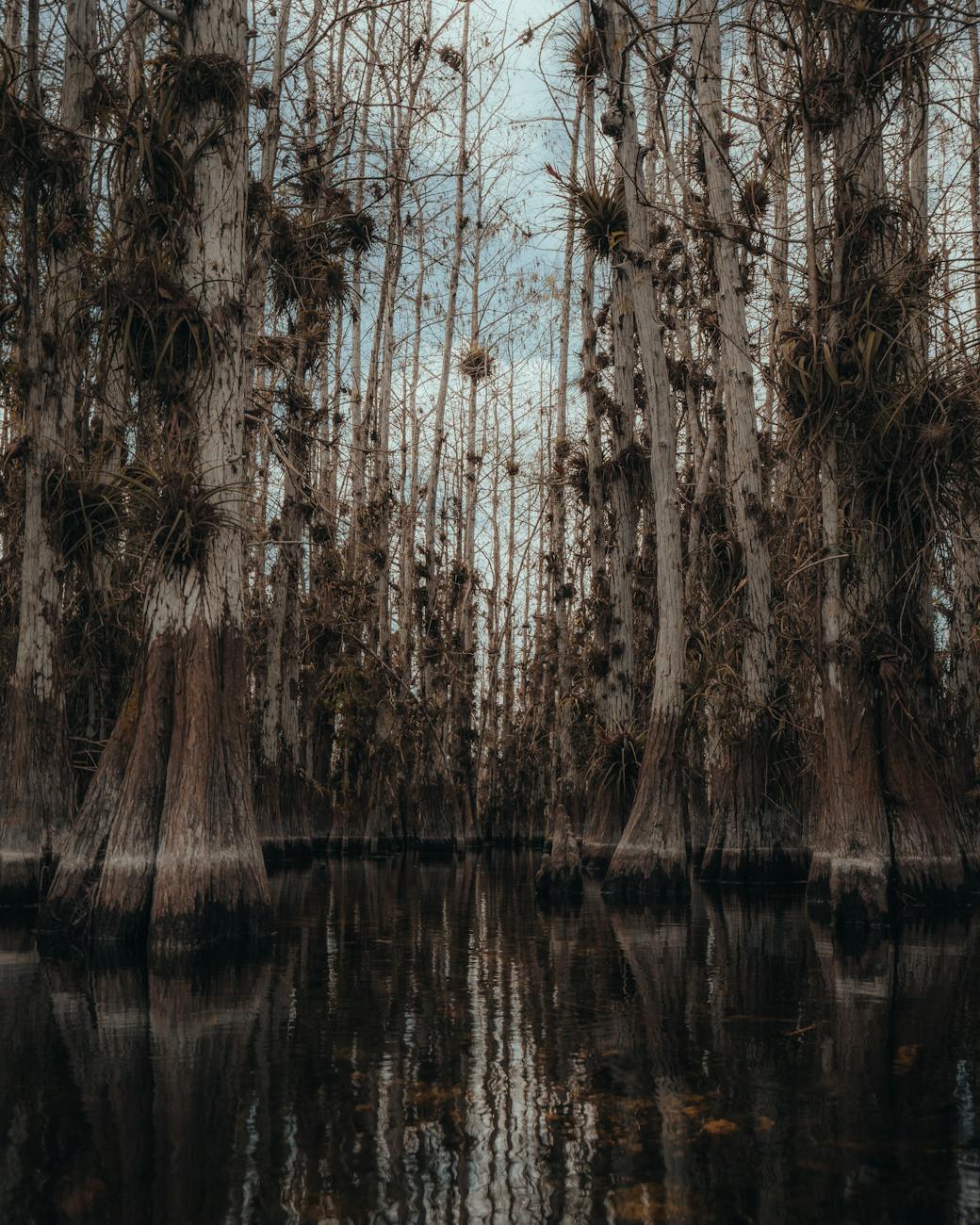
Photo by Osmany Mederos on Pexels.com
After, Fitz and the Fool quarrel over Bee’s journals, Fitz wanting to keep something of his daughter to himself, as well as his shame at not being more present for her early on. But he relents and discloses Bee’s dreams to the Fool, and the pair bemoan her loss.
Fitz notes difficulty sleeping aboard the Tarman, contrasting the experience to sleeping alongside Nighteyes years before as he marks the continued passage down the Rain Wild River. One morning, Spark confers with Fitz about her part in his quarrel with the Fool. Fitz finds his anger at her dying away, and the conversation ends in an awkward quiet.
Later, the Tarman reaches a settlement on the Rain Wild, the setting described. Rain Wild architecture is explained to Fitz. Some of the social tensions at work along the Rain Wild River are noted, as are entanglements surrounding Althea, Brashen, and the Paragon. Fitz finds himself again desiring and unable to send his companions away.
At length, the Tarman pulls into Trehaug, and the liveship’s crew begins to bid farewell to Fitz and his companions. The city is described as Fitz encounters it, and he sights the waiting liveship Paragon. Seeing his own face upon it, he starts, and the Fool as Amber notes that all can be explained.
The present chapter, glossing travel that in earlier volumes takes many chapters to enact, serves principally to relocate Fitz and his companions to a more “useful” location. The travel is not the important thing in itself; what the travel allows is. One thing it allows is a suggestion not only of the passage of time among the various components of the Realm of the Elderlings series, but also of the progress and development of various areas within it. While the seemingly swifter passage from Kelsingra to Cassarick and thence to Trehaug is doubtlessly partly a result of going downstream rather than up, more of it is likely to be greater familiarity with the waterways involved, which is something that can only come about with repeated round trips between the settlements over time. Too, the noted population density suggests that Rain Wild society is growing and prospering, and even the noted tensions between Cassarick and other settlements along the river are suggestive; the people on the river have the luxury of being at odds with one another. All of this suggests, at least to my reading, that the Rain Wilds are doing better than they previously had, and as I reflect on it, I wonder if I can tie so much back to the parallels to the early United States I’ve identified as being at work in the Liveship Traders and Rain Wilds novels. I suppose it adds another to my sprawling collection of scholarly somedays.
On the topic of tensions surrounding Cassarick: I appreciate seeing that they are, in fact, in place. It is too much to expect that so loose a polity as the Traders seem to have would be united in the absence of an overt outside threat (perhaps another parallel to the early United States under the Articles of Confederation applies); it is entirely fitting that the various city-states, even if having commonalities of culture, would find themselves at odds with one another from time to time. From its early introduction, Cassarick is not exactly the nicest of places, and some of its leadership does present itself as unacceptably predatory and aligned with adverse interests, so it makes sense, too, that it would find itself under some opprobrium. There’s not a nice, neat “and they all lived happily ever after” here; we see the after, and it’s not entirely happy, although there is happiness to be found in it. It’s a good bit of verisimilitude in a series that, despite being clearly fantasy, makes much of such things.
I’m happy to put my pen to work for you!


 Elliott RWI
[…] Read the previous entry in the series here.Read the next entry in the series here. […]
LikeLike
[…] the previous entry in the series here.Read the next entry in the series […]
LikeLike
[…] to explain, something about which Fitz expresses doubt before returning to his contemplation of Trehaug as he approaches it aboard Tarman. The liveship barge docks alongside what had been the Ludlucks’ ship, and Amber, the Paragon, […]
LikeLike
[…] a report from Rosemary to Dutiful, Elliania, and Kettricken that follows up on Fitz’s work in Kelsingra, “Serpent […]
LikeLike