Today is not the first time I’ve posted on this calendar date–9 January–in this webspace; a couple of years ago, I posted something of a hopping piece at this time of year, after all. Nor yet is it the only time I’ll have marked what is, for me, the significance of the day; that, I’ve done atleastthrice in this webspace. The last of those is probably the most relevant, being the one that most directly addresses what I would mention now: today marks sixteen years I’ve been a married man, and all of them to the same most excellent woman.
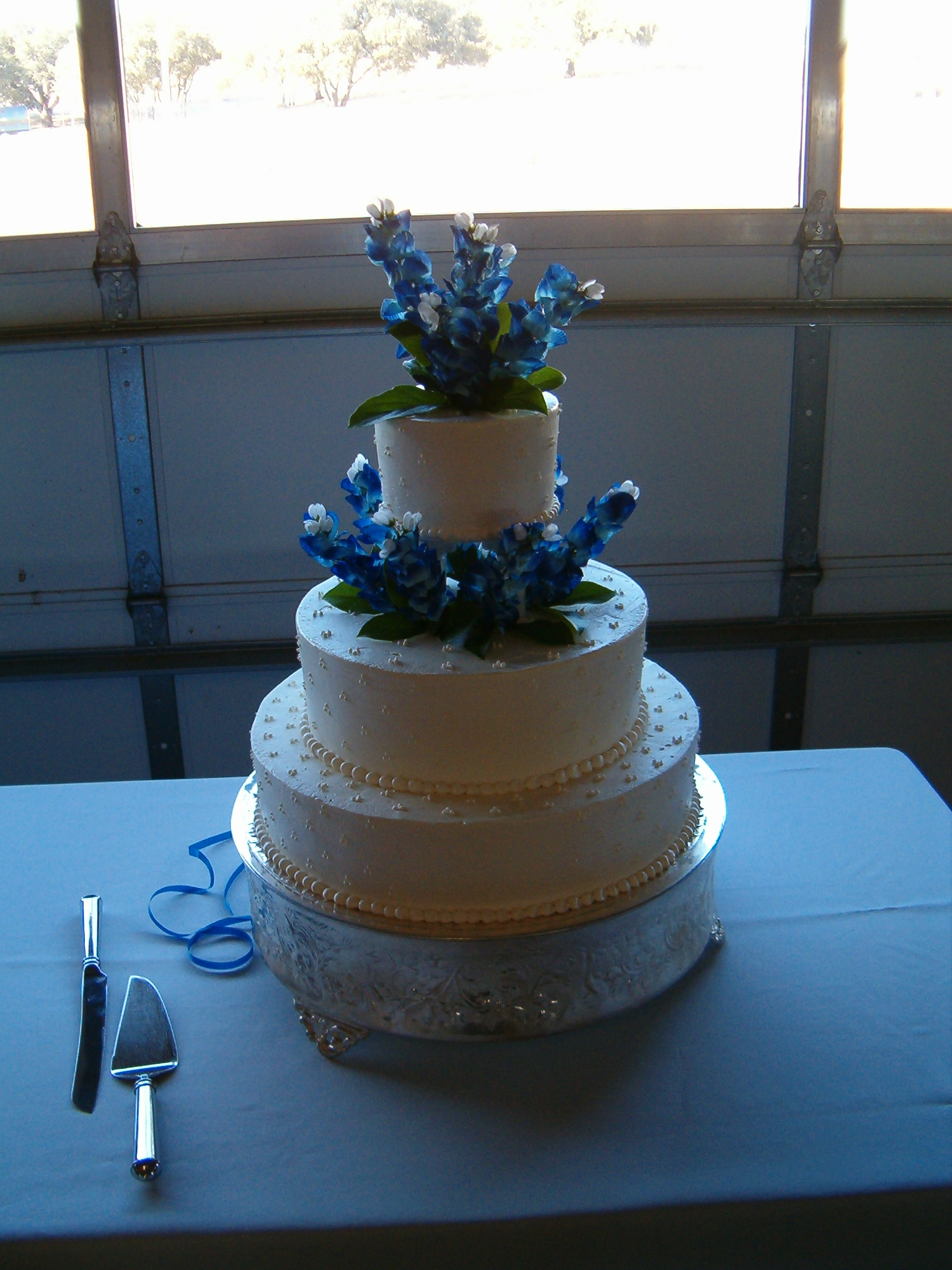
It was a very good cake. I don’t remember who took the photo, however.
It was a cold day in the Texas Hill Country, I remember, a reminder that winter touches even the limestone stage where Aestas enjoys long residence. But it was a good day, one of the best that I’ve had, and one that made all of the better days that followed possible. (I think I may be forgiven some sentimentality about the matter, especially since the statement is accurate; I have only gotten to where I am because I have had the support of my most excellent wife, and there have been times when the fact of our public solemnization of our relationship has maintained it.)
Someday, perhaps, I will write here a fuller account of the day. For now, it will be enough to say: Happy Anniversary, my beloved, and I hope for many more anniversaries with you!
If you have an anniversary coming up, consider commissioning a piece of writing to celebrate it! My rates are reasonable, and I guarantee I won’t spoil your piece with AI slop!
Although it is the case as I write this that tax season has started in the US, and my day-job has commensurately stepped up, that’s a relatively recent development. Prior to that, the holidays made their demands; I volunteer with a number of non-profit groups in the town where I live, including Lights Spectacular Hill Country Style (for which donations are most welcome), and working with those groups took up a lot of my time in late November and December. It was good to do it, and I will be pleased to do it again, but it was a lot of doing.
A fair bit of this kind of thing went on, yes. Photo by cottonbro studio on Pexels.com
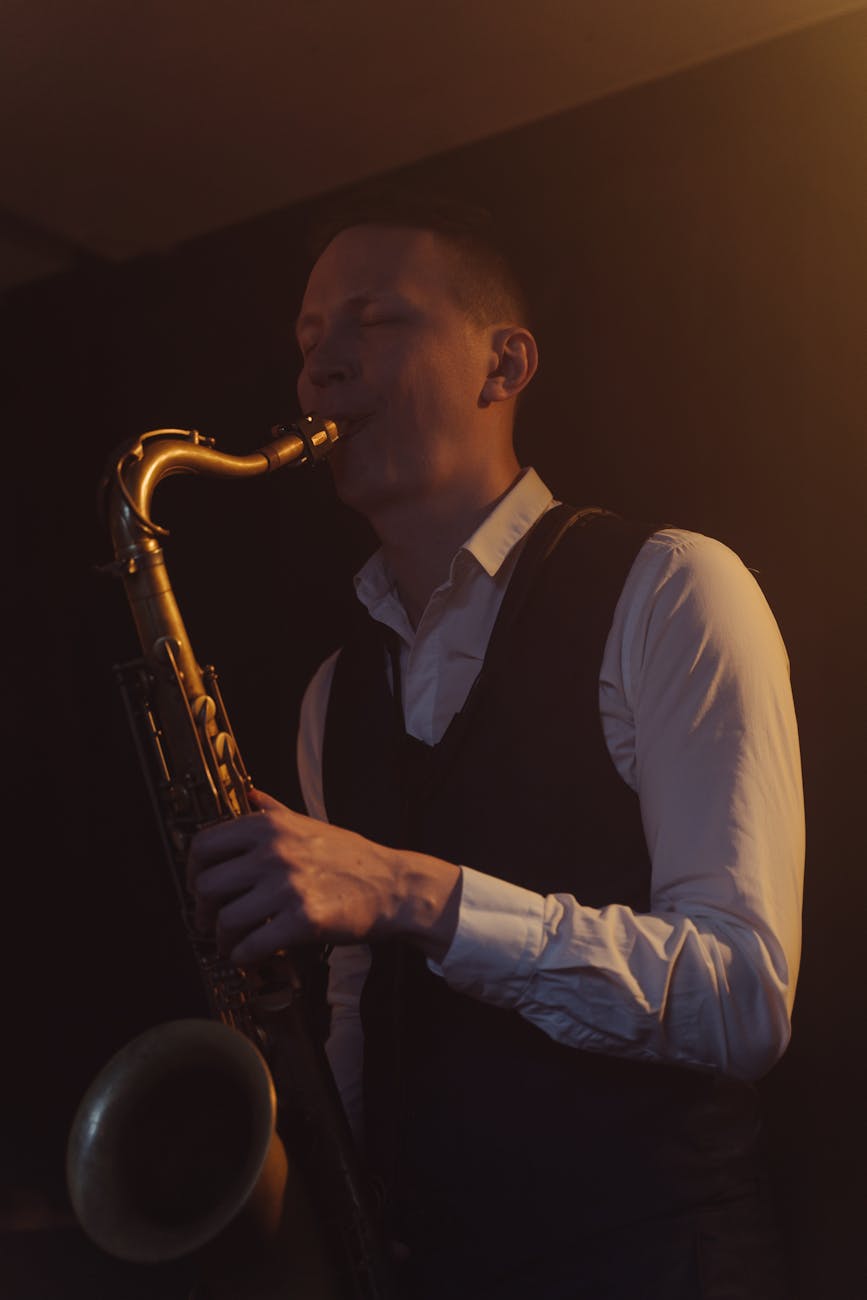
After the New Year, however, the non-profit work more or less wrapped up (for a bit; things are starting back up again soon enough). My attention shifted to something I’d not done in a while: performing publicly as a saxophonist. That I have done such things has not been a secret; I write a fair bit about having been a bandsman, having played as an alumnus of a high school band program, and my continued engagement with music programs, after all. Still, I’d not played in public in a bit, most of my work being just puttering around on an inherited bari in my office, maybe playing alongside my tubist daughter as she practiced up for one thing or another, and it’s a different thing to be on stage in front of people than it is to be in the background helping others along.
On 3 January 2026, I had the privilege of joining the Symphony of the Hills in my hometown of Kerrville, Texas, performing in a saxophone quartet supporting the group’s pops concert. How I got involved is something of a random event; I had posted news about some upcoming work, and an old friend of the family saw it and reached out. Said friend is someone I’ve known since I was around my daughter’s age, someone who’d been band-mates with my father and great uncle and who had tutored me (on flute, in the event) when I still entertained the idea that I would grow up to be a band director. I’d gotten along well with him through my teens and early twenties, but being away from the Hill Country during my mid-twenties and into my thirties, the connection that had been in place…attenuated.
It’s not uncommon, of course; people move, people lose touch, even in a time of easy social media connectivity. What is uncommon is that, decades later, a post about an entirely unrelated topic will prompt a job offer. What’s perhaps more uncommon is that the person accepting that offer will practice up for a few weeks–first on etudes, then for around a week on the actual performance materials–and break the proverbial rust from his fingers to be welcomed as a peer not only among the other saxophonists, but also among the ensemble, more generally. All of that happened, though, and, yes, everybody clapped. (It was an orchestra concert; it’s what happens. And it was reported upon.)
All of this is to say that I enjoyed getting to play with the groups, both the sax quartet and the broader orchestra. I hope to be able to do so again, and to play in other performances. It was good for me to pick up my horn again and practice up, and I mean to maintain the discipline of doing so; I enjoy playing, and I know from experience and observation that winding a horn is a good way to keep the lungs healthy. (It also sets a good example for my daughter, who herself has a performance coming up as I write this.) Even if I don’t manage to get in front of other people again (although I think I might well), it’s good to engage in arts, to do more than simply passively consume what is shoveled out from the hind-ends of slop-makers, and there needs to be more good in the world.
I’m happy to put my pen to work for you; fill out the form below to begin!
Read the previous entry in the serieshere. Read the next entry in the serieshere.
A proposal for exploiting prophetic foreknowledge precedes “Bribes,” which opens with Bee waking to breakfast in her imprisonment. Disoriented, she takes a moment to collect herself and asks for wash-water, only to be denied. Prilkop explains, and the Four enter, described once again as Capra takes Bee from her cell. Bee follows her past cells and into the stronghold of Clerres, coming to a room where Bee is instructed to bathe.
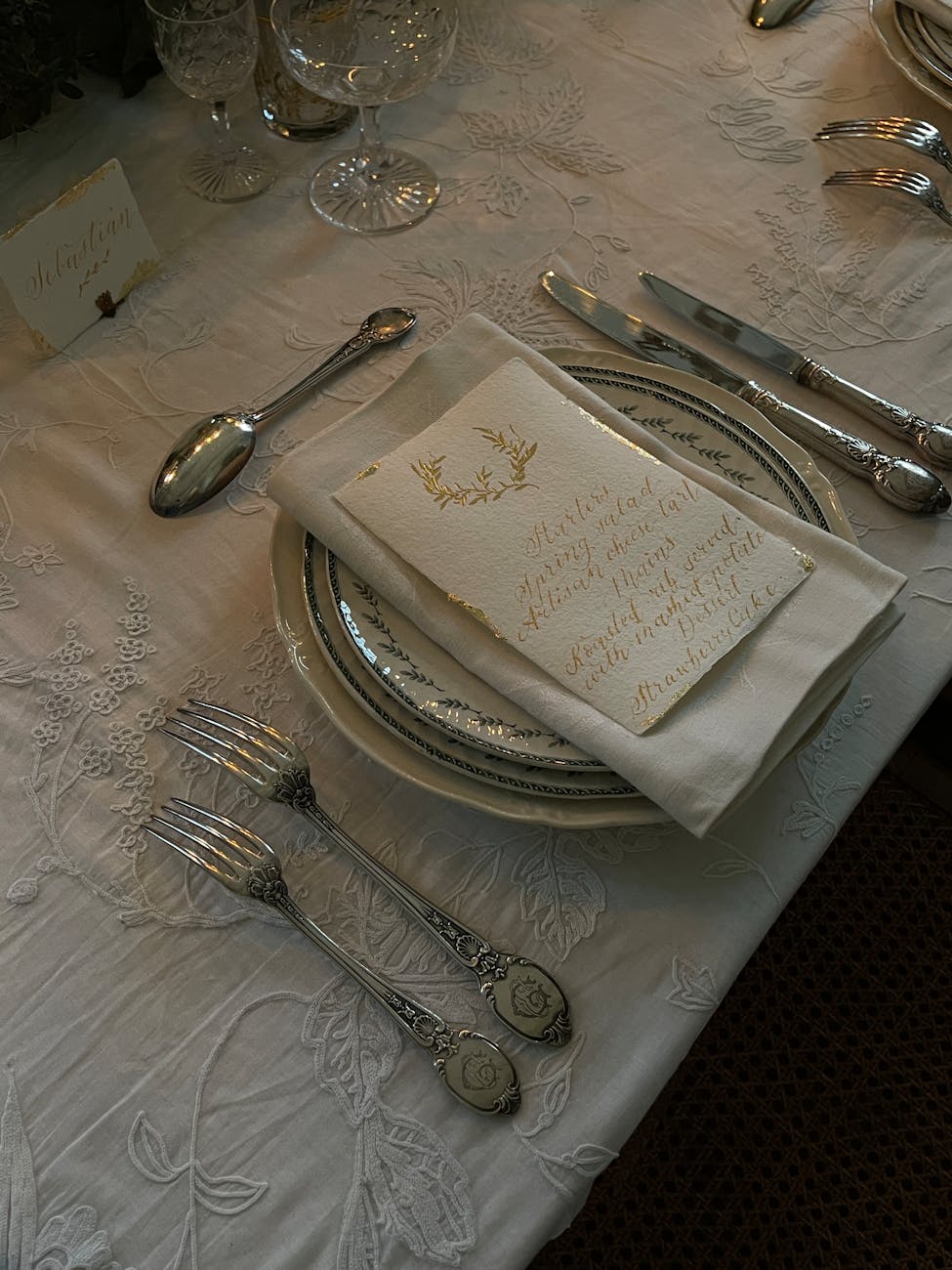
Strange things can be daunting… Photo by Eugenia Remark on Pexels.com
Bee does as bidden, assessing her physical state. As she dresses, she keeps with her a candle Molly had made, about which Capra asks her; at the questioning, Bee sees possibilities emerge, but she is soon obliged to follow Capra again through more of the stronghold. As they proceed, Capra explains what they pass by, noting a core library of texts and how they are used in Clerres to effect.
The pair continue on, and Bee begins to formulate a plan for how she will go on. Capra lays out possibilities for Bee to consider, and she takes her to dine privately. Bee puts forward her best possible presentation while concealing as much of her deeper self as she can, deflecting questions about deeper truths. Coached along by Wolf-Father, Bee has some success in it, partly by divulging information that belied Dwalia‘s earlier comments. The success is only partial, however, and she soon finds herself being recorded in detail.
Bee considers the scribe brought in to attend upon her, Nopet, and begins to make her report. In doing so, she gives more detail than she intends, and Wolf-Father continues to coach her. But it proves well for her that she does, because her accounts are confirmed by other sources, and as the Four begin to argue, Capra takes Bee back to her imprisonment next to Prilkop. Capra ubpraids the other three again, and Bee is left confined to consider what will happen next.
The present chapter, in Capra questioning Bee at the table about Fitz and the Fool, offers a reminder about the Six Duchies’ predilection towards emblematic names, something long asserted in the Realm of the Elderlings novels. (Indeed, the opening prefatory materials that begin the whole corpus make mention of it; readers learn the practice before they learn the narrator’s name in the text.) Originally an issue of royal and noble names, the practice seems to spread beyond those confines; one example is Perseverance, who does seem to keep going when he probably ought not to do so, and Spark/Ash presents another, paired, example of the same. (I am suddenly put in mind of something of a backhanded chain of jokes as regards Spark; her presence seems to kindle Lant[ern? I know it’s not, but it’s close enough for the evocation], much as he had been infatuated with Shine and fairly glowed in her company before the revelation of their close kinship. I motion towards the latter in earlier comments, but the former only now occurs to me, I think. It’s probably not a mark in my favor, although it is something that bespeaks the value of rereadings; more details emerge each time, deepening understanding and appreciation–at least for me.)
The present chapter also speaks to what I’ve noted is a recurring theme in Hobb’s work: the primacy of writing. As I’ve commented before, it’s not a surprise that a writer would espouse such themes; making money from writing requires that people believe in the value of writing, after all. I find, however, that in the present-of-this-writing, there is a connection between the accumulated knowledge of untold but implied-to-be vast time-spans of prophecies (and the subsequent reports that bear out their correctness) and the information economy that was certainly in place as the novel was composed and initially released. Again, the novel dates to 2017; social media, with its information-harvesting and predictive algorithms targeted at the acquisition of money, was already very much in place. The idea of reading Clerres as a fantasy take on science-fiction dystopiæ tantalizes, suggesting itself as yet another scholarly someday worth investigating.
I seem to continue to collect such things. I hope to be able to address at least some of them.
The young year invites new writing; fill out the form below to get yours started!
With the new year but just begun, I find already I must run, For work already makes demands Of my poor heart and poorer hands, And what I would, I may not do Because I must yet carry through Some deeds for dollars. Still, I yearn For things to take their rightwise turn.
Not quite a portrait of the artist at work… Photo by Malte Luk on Pexels.com
Bespoke writing awaits you; get yours started by filling out the form below!



 Elliott RWI