Once again, a day has come that bandsfolk in the United States do well to commemorate. A bit of a pun, March Fourth associates in some communities and in some times with John Philip Sousa, the March King, long-time conductor of the US Marine Corps Band and composer most notably–though hardly exclusively–of “The Stars and Stripes Forever.” The eponym of a prominent bandhall, of a bridge, of a marching instrument in wide use, and of what is often considered the highest award that can be given to a high-school bandsperson, Sousa continues to exert influence on the musical culture of the United States and on the broader culture enfolding the same.
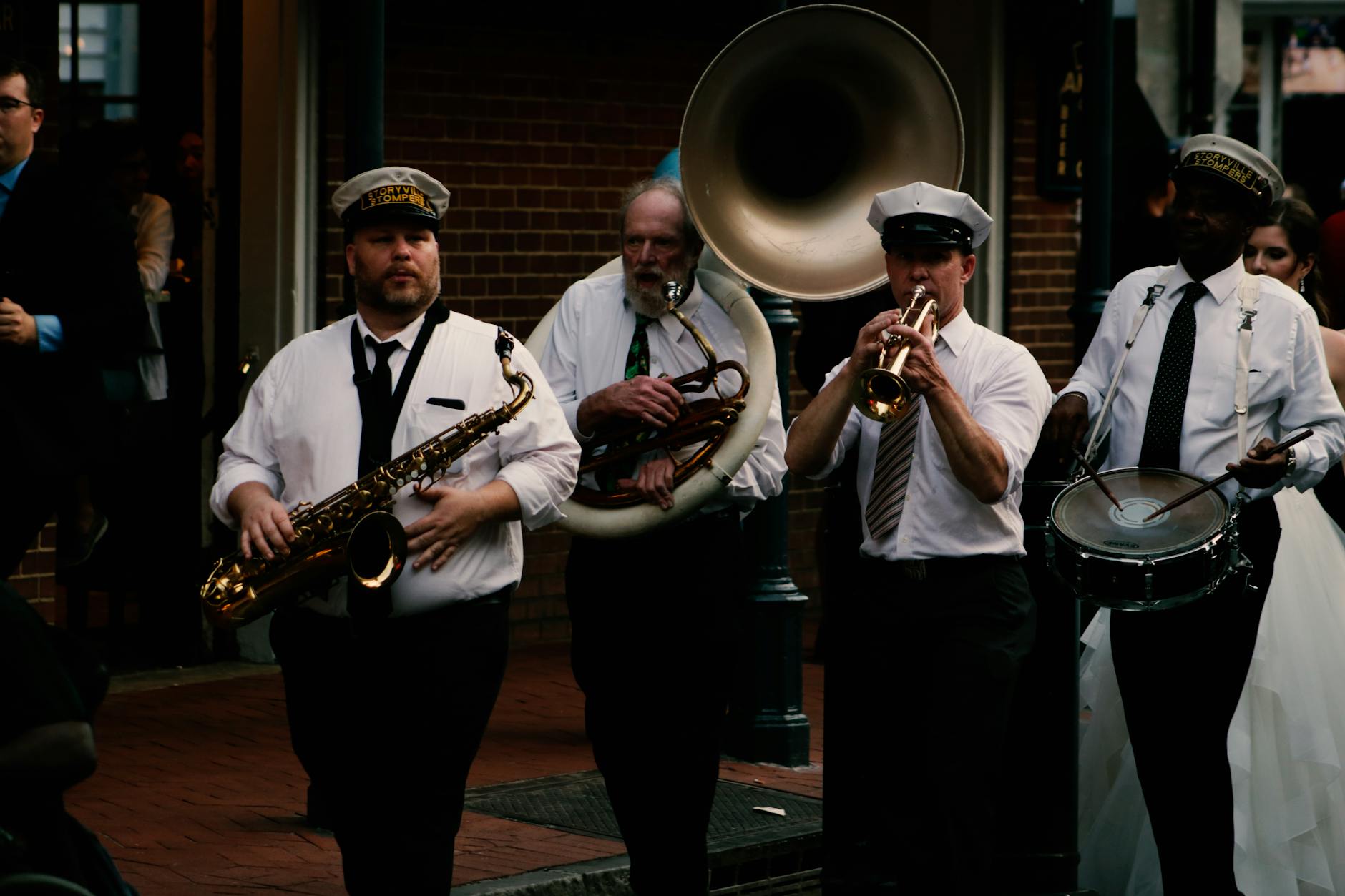
Photo by Kendall Hoopes on Pexels.com
It is a small thing, to be sure. I do not have the numbers ready to hand, but I’d wager that current and former bandsfolk are in the minority here. (My experience is skewed by having been a bandsman from a family of bandsfolk and by passing that tradition forward; Ms. 8 is a tubist and an award-winning one already.) Bandsfolk are not prominently represented in popular culture; bands are present, sure, but they rarely appear as central groups, their members as central characters. (There are exceptions, I know; Mr. Holland’s Opus and Drumline come to mind, dating me, and The Music Man also suggests itself. But two movies and a musical out of thousands of each…) They are part of the background of the world, as music itself often is, and this does lead to some tendency towards disdain for them. (Again, there are exceptions. I am aware of this. I am also aware of what the word “tendency” means.)
As often, though, I might refer to things many others have stated more eloquently than I: remove music, even as background, from the world, and it is far less good a place. For there to be music, there must be musicians–even in an era prone to AI slop and “good enough.” And for musicians to be, there must be the structures that allow them to be; there must be those who study and teach the making of music, and there must be time and space for the development of the skills and muscle memory–because the performance of music is a thing of muscles–that allow enough proficiency that the notes can be known and hit, again and again.
On this day, as much else goes on in the world, no little of it worth mourning, it might be well to reflect on such things and to work towards an existence that does more to promote them than to offer yet more over which to sorrow. Those who are grieving have their right to do so; I do not say that they should not. But those who are not grieving might find good use for their thoughts in such things. And perhaps both might well be done, there being elegies and requia and dirges aplenty.
There are worse things for which to wind a horn.
Need something written? Maybe I can help; fill out the form below to see!


 Elliott RWI