Delving Deeper into Hanlon

For whatever reason, I have been feeling somewhat historically minded recently (insofar as I’m able to do that; I’ll admit to limitations on my perspective). As such, for the overtly educational portion of this week’s session, I gave a brief gloss of the origins of the tabletop roleplaying game, as attested by Lawrence Schick, Gary Alan Fine, and Daniel Mackay. I know there are other, more recent sources; I have not had the opportunity to review them yet, or even to get hold of copies thereof, although I do have some concerns about some of which I am aware. Publishers have interests in how their products present them, after all, as I’ve discussed. Still, for a few minutes talking to a few middle-school-age children, what I had handy was enough; I can always tack more onto my scholarly somedays at need.

This isn’t quite the setup I work with, no.
Photo by Sonny Vermeer on Pexels.com

In terms of gameplay, the party continued on from where it had been at the end of the previous session: not far into the dungeon through which the players’ characters are crawling. Player absences told upon the group as they encountered one of the most formidable opponents D&D presents: a locked door. Try as they might, they could not break down the door that confronted them, and after pretty much every player had failed both of the rolls made available to them to have their characters receive the necessary information to proceed, an allied NPC, once asked for aid, opened the door for them to move forward.

I know that it’s not ideal to have the party be rescued in such a way. Normally, I would not have gone with it. But, again, three of the seven regular players were absent, one of whose characters has skills particularly suited to the task of unbolting the door; it was an unusual situation, and all of the players had made several attempts through different skills and approaches. They gave it the traditional college try, so I threw them a line. Of course, doing so also fed into some of their (incorrect) ideas about the allied NPC…and I’ll admit that I didn’t do a lot to discourage that thinking. It will make the revelation of the truth much more entertaining when, at long last, it happens.

But they’ve got to get through the dungeon before that can happen for them.

If you’d like, I can write some RPG stuff for you–and free of AI slop, to boot!

← Back

Thank you for your response. ✨

Or you can send your support along directly!

Another Rumination on Sousa Day

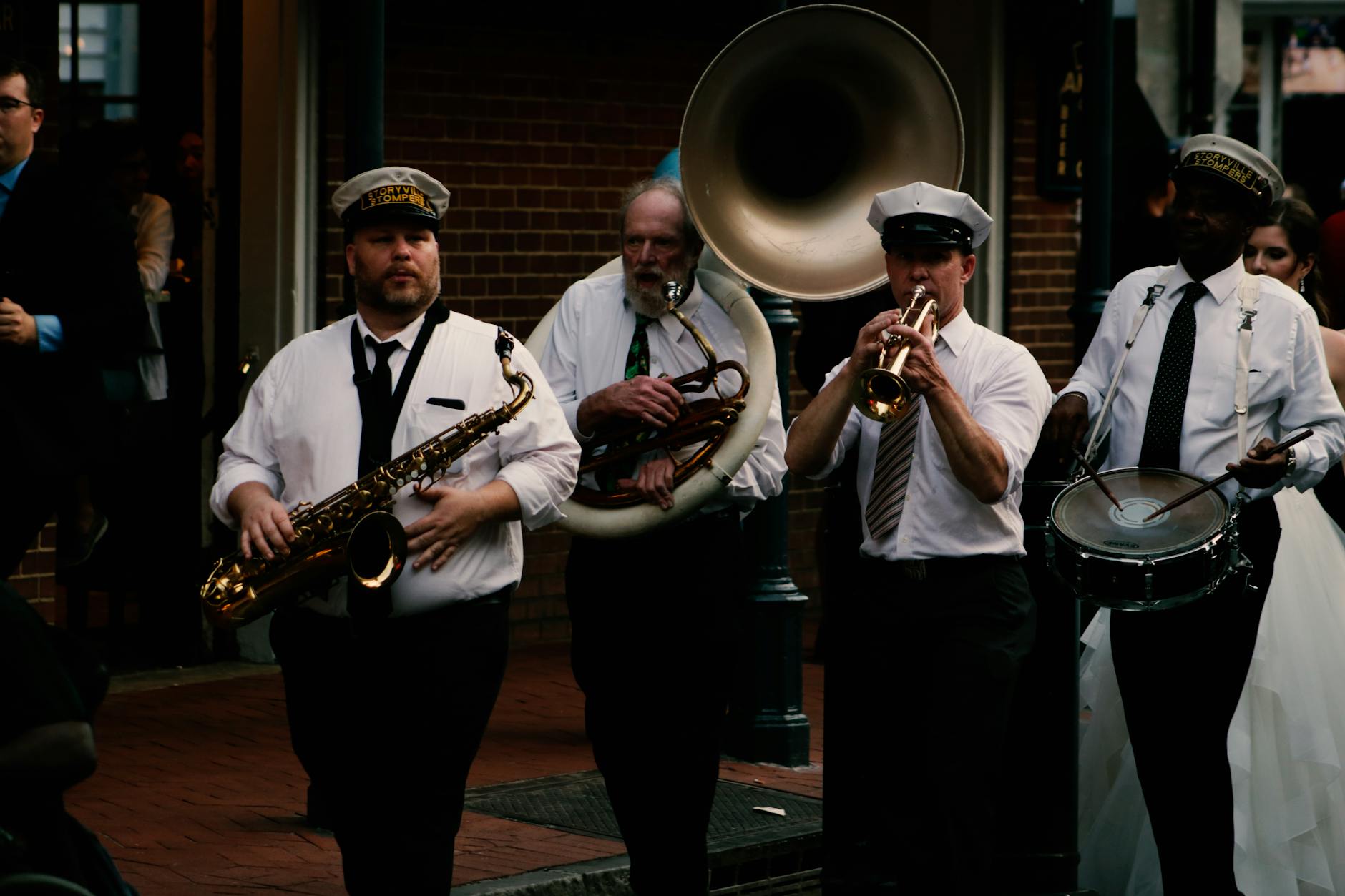
Once again, a day has come that bandsfolk in the United States do well to commemorate. A bit of a pun, March Fourth associates in some communities and in some times with John Philip Sousa, the March King, long-time conductor of the US Marine Corps Band and composer most notably–though hardly exclusively–of “The Stars and Stripes Forever.” The eponym of a prominent bandhall, of a bridge, of a marching instrument in wide use, and of what is often considered the highest award that can be given to a high-school bandsperson, Sousa continues to exert influence on the musical culture of the United States and on the broader culture enfolding the same.

The guy in the middle gets it…
Photo by Kendall Hoopes on Pexels.com

It is a small thing, to be sure. I do not have the numbers ready to hand, but I’d wager that current and former bandsfolk are in the minority here. (My experience is skewed by having been a bandsman from a family of bandsfolk and by passing that tradition forward; Ms. 8 is a tubist and an award-winning one already.) Bandsfolk are not prominently represented in popular culture; bands are present, sure, but they rarely appear as central groups, their members as central characters. (There are exceptions, I know; Mr. Holland’s Opus and Drumline come to mind, dating me, and The Music Man also suggests itself. But two movies and a musical out of thousands of each…) They are part of the background of the world, as music itself often is, and this does lead to some tendency towards disdain for them. (Again, there are exceptions. I am aware of this. I am also aware of what the word “tendency” means.)

As often, though, I might refer to things many others have stated more eloquently than I: remove music, even as background, from the world, and it is far less good a place. For there to be music, there must be musicians–even in an era prone to AI slop and “good enough.” And for musicians to be, there must be the structures that allow them to be; there must be those who study and teach the making of music, and there must be time and space for the development of the skills and muscle memory–because the performance of music is a thing of muscles–that allow enough proficiency that the notes can be known and hit, again and again.

On this day, as much else goes on in the world, no little of it worth mourning, it might be well to reflect on such things and to work towards an existence that does more to promote them than to offer yet more over which to sorrow. Those who are grieving have their right to do so; I do not say that they should not. But those who are not grieving might find good use for their thoughts in such things. And perhaps both might well be done, there being elegies and requia and dirges aplenty.

There are worse things for which to wind a horn.

Need something written? Maybe I can help; fill out the form below to see!

← Back

Thank you for your response. ✨

Or you can send your support along directly!

Another Rumination on Texas Independence Day

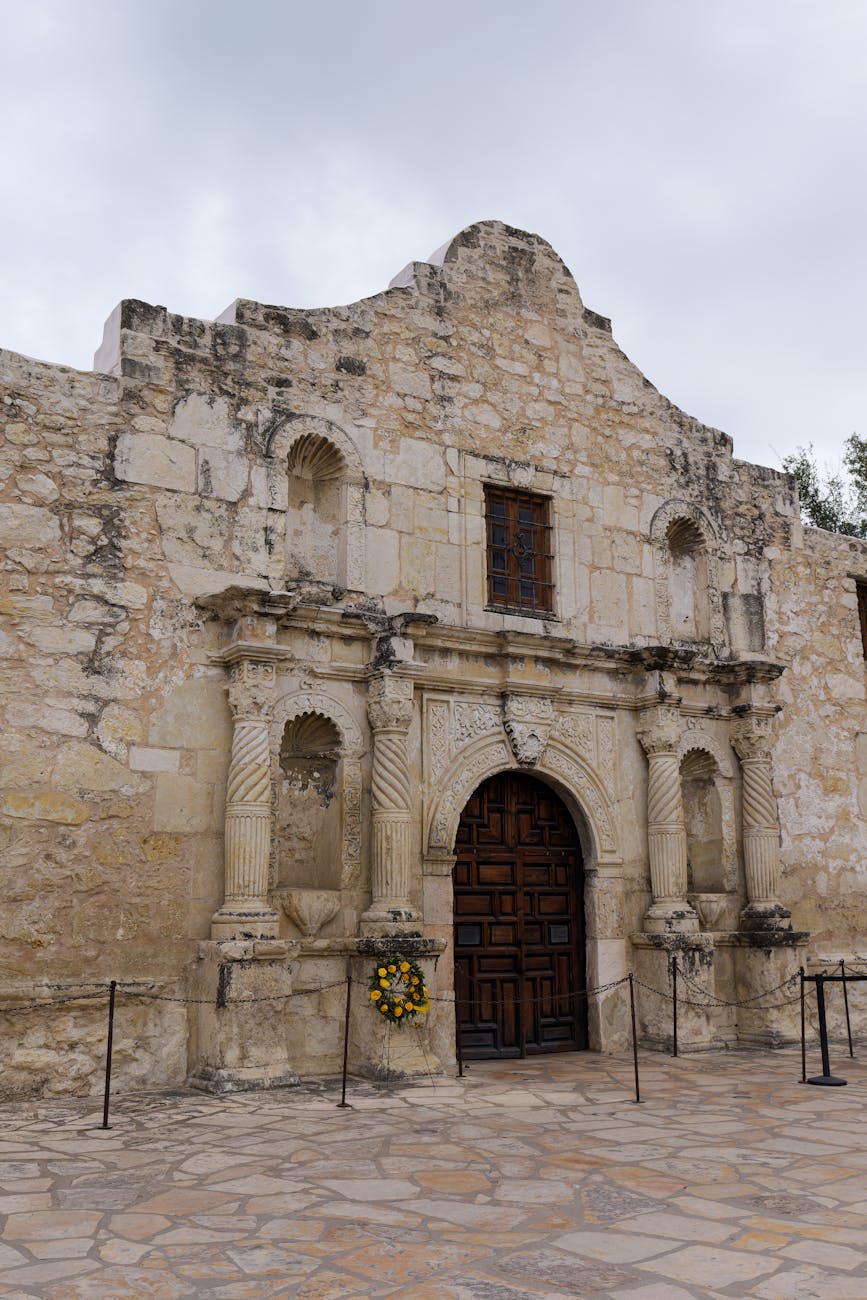
Today is, of course, the anniversary of the declaration at Washington-on-the-Brazos of the independence of the Republic of Texas from Mexico. It is something I acknowledge, of course, and not only because it is good for me as a professional to do so as a signification of my participation in the broader community of this state (despite not being a native, which disqualifies me from being a “True” Texan). Despite the many negative stereotypes about the state and its people–and there are reasons the stereotypes exist–I do continue to claim my Texanness, to assert that I am and belong here.

I remember…
Photo by Mark Direen on Pexels.com

And why should I not? I have lived more years than not in the Hill Country; it’s where I grew up, it’s where my family is, it’s where my name is on the walls and where it remains spoken. It is where I have worked these many years, and it is where the work I do conduces to the health of the broader community, including children, the indigent, business leaders, and visitors in and out of season. It is where I have put down roots once again and from where I picked them up a time or two. And while there are problems to be found in it, as there are in all places, there is also much good, and if it is to our discredit that the bad is often elided or ignored, it would very much be to our discredit were we to set aside the good that is (and for nerd communities, no less; Texas has given rise to no few artists in several genres on whose work much hangs).

At its best, Texas–like many other places, to be sure–is a promise and an endorsement. Nobody is always at their best; I certainly am not, and I do not think it would befit for me to expect the state of which I am a part to be such if none of us who live here can claim to be so. But, damn it, I and others try, and even trying, we can do a damned lot of good.

(Just so you know, I’m not abandoning the Robin Hobb reread; it’ll resume next week. Too, yes, I know this posted later than usual. It was busy. But I didn’t forget.)

I’m happy to write for you, and without AI slop! Fill out the form below to get your work started!

← Back

Thank you for your response. ✨

Or you can send your support along directly!