I have been remarking on what today commemorates for some years, now, not only in this webspace (here, here, and here), but also in others. Having been a union man, and still being one in some ways, I know well the value of organized labor, and I note with some…vexation the repeated refusals by those who claim to want a return to the practices of decades past to align with the organizing principles that informed many of those practices. What made things great wasn’t what many want to believe. (That things weren’t great for a lot of people does not escape me, either, even if it does many–although I know that many don’t bother with pursuit.)
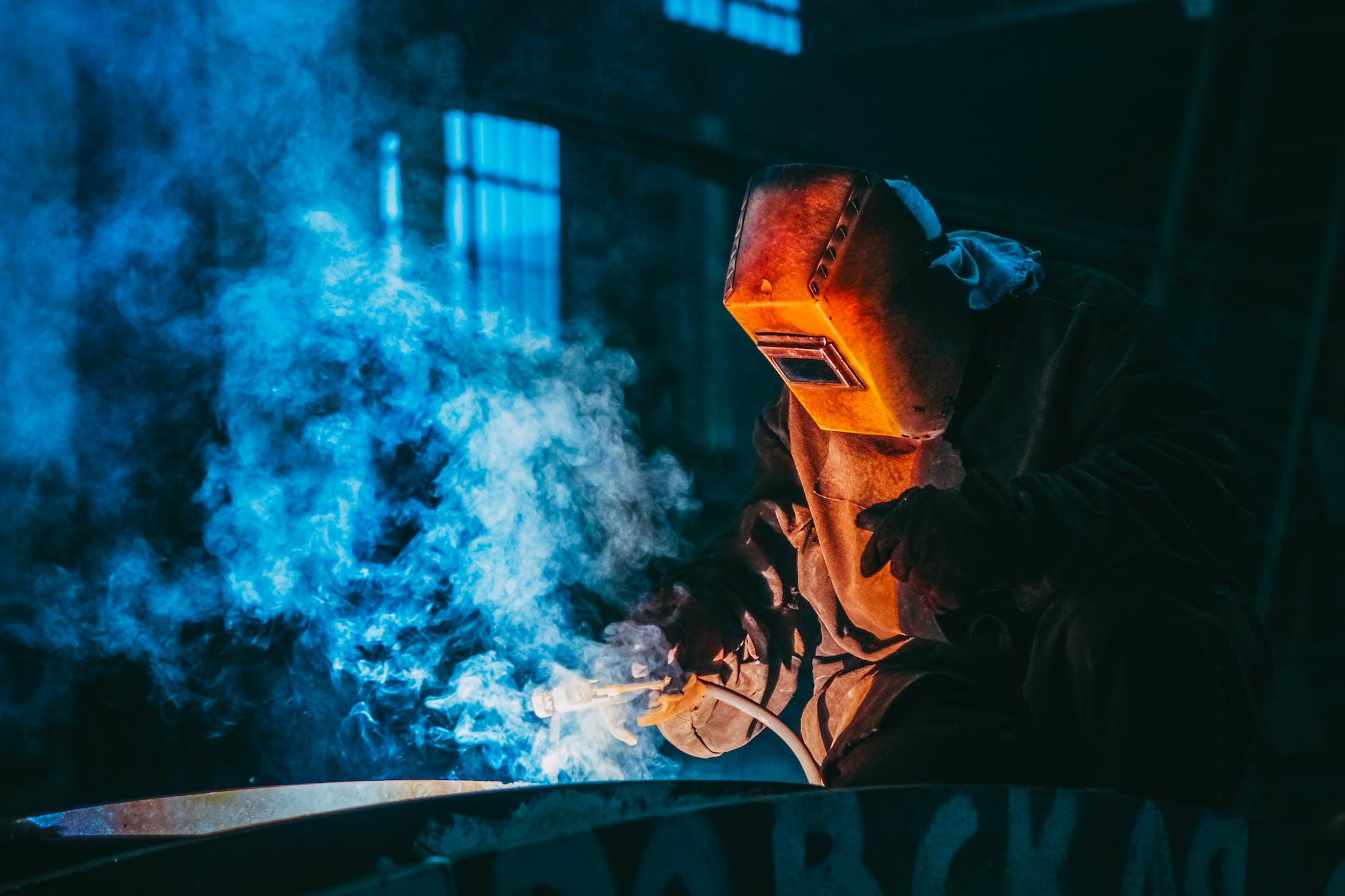
Keep it going! Photo by Kateryna Babaieva on Pexels.com
As I think on things this time around, I find myself somewhat caught. I suppose it’s a symptom of too much thinking that conundra emerge, and I suppose it says something about me that I encounter them as often as I do, but I recognize there is a tension at work between the potential ennobling effects of work and the fact that having to work is, in some ways, a curse. For those who value Genesis (the book, not the band or the up-jumped Hyundai), work is one of the things with which the fallen Adam is cursed (1:17-19); I am not up enough on other ideologies to remark on whether a similar burden is imposed from on high, which is my failing and not that of said ideologies. I can remark, however, that there are few in my experience or of whom I have heard report who do not, at least on occasion, complain about their work, even those who say that they love their jobs (and there are many who affirm very much the opposite). Much as I enjoy writing, there are times when the blank page taunts me, and while I meet some of those taunts bravely, there are some from which I have turned away.
I can also remark, though, that I am improved by working, and not only in terms of my bank accounts. Such work as I have done and still do–and I know there are some who will say that I do not “really” work and never have–has sharpened my mind. Used to be that it strengthened by body, too, until I had my jobs that are inside work with no heavy lifting. I’m not the only one, either; my family’s been full of such people, almost all of them better at what they do than I am at what I do, and my family is but one of many such. So there is nobility in the work that is done, even if it is otherwise than ought to be that the work has to be done.
But the work does have to be done, and I remain grateful for those who do that work. As should we all be, even as we work to ensure that those who do the labor upon which we rely are treated as they ought to be, as we would ourselves hope to be treated, did we do that work.
Like the labor I do? Maybe see what I can do for you; contact me at the form below, and we’ll get started!
A holiday looms An extra day off For some people But not as many as should be And never enough And some are content with the way things are While others are certainly not And have started their celebrations early
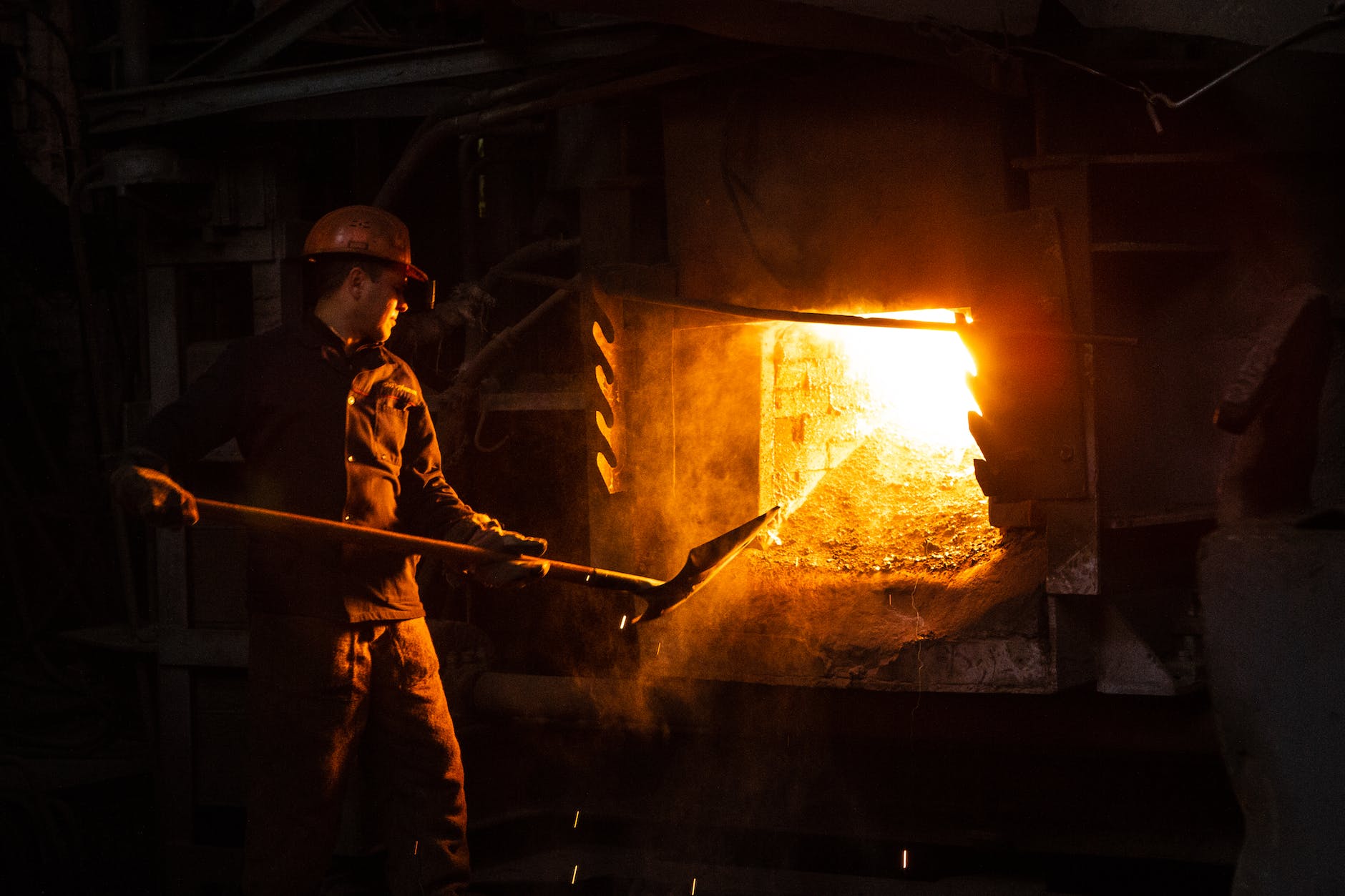
I, too, use a shovel, but not for that, as might well be understood. Photo by Kateryna Babaieva on Pexels.com
Who can blame them Really As would not do the same Had they not thought of it in time?
But that I do not blame them Does note mean I am not struggling Making sure my work gets done And some of theirs When they are not here
I’m happy to write to order for you; fill out the form below to get your piece started!
I dare not follow Farragut closely My hull not so sound as to shrug off mines blithely And the sonar and spotters I sport are Fogged and faulty, failing to find a Clear course I might cruise that Does not run me aground, and I am not built for beaching
Iconic. Photo by Sachith Ravishka Kodikara on Pexels.com
Each bark that braves such waters and blasts Has its hull hit a time or two I know But with fresher crew and more in reserve Than I have on deck or in hold
I’m happy to write to order for you; fill out the form below to get your piece started!
The people coming up now are doing the best they can with what they have And if they react differently than I did Their situation is different than mine was And they did not start where I did Where they could see what I saw And bask in a light that has been dimmed or switched off
It’s a different look. Photo by Alizee Marchand on Pexels.com
The people who went before were doing the best they could with what they had And if they reacted differently than I do Their situation was different than mine was And they did not start where I did Where they could see what I saw Looking through windows that had not been built yet
I’m happy to write to order for you; fill out the form below to get your piece started!
Read the previous entry in the series here. Read the next entry in the series here.
Following a report from Detozi to Reyall about the status of messenger birds in Trehaug that also mentions the Tarman, “Second Thoughts” begins with Thymara waking after her assignation with Rapskal and chastising herself for the indiscretion before surveying her surroundings and gathering supplies. Both she and Rapskal clothe themselves in Elderling robes they find nearby, and they head back out into the city to scout more of Kelsingra. They prepare things for the group on the other side of the river, as well, and Rapskal comments easily about Heeby in ways that leave Thymara stinging at her lack of connection to Sintara. After they find some food, they confer about their assignation, Rapskal affirming affection for the questioning Thymara.
Image from Viridia Lizard’s Tumblr, here, used for commentary
Aboard the Tarman, Reyn and Malta confer about their situation as the liveship is readied for the return to Kelsingra. The condition of their son receives attention, as well, and the pair decide on a name for him: Ephron “Phron” Bendir Khuprus. Malta’s thoughts turn to her absent younger brother, Selden.
Selden wakes in poor condition in captivity, surveyed by his captors and pleading for hot food and drink and a blanket. He confers with a ship’s boy and learns he is aboard the Windgirl, bound for the capital of Chalced, there to be delivered to his enslaver. Selden recalls, in broad terms, his progress into captivity, and he is denied his requests. The ship’s boy leaves him to ruminate bitterly.
Leftrin frets at the delays in getting back underway to Kelsingra. Although Khuprus financial backing is helping him resupply, he is also paying premiums for the speed at which he is acquiring materials, and he is drawing ire from customers whose purchases are being subordinated to his. Crew and family difficulties assemble, legal entanglements threaten, and Leftrin issues orders to accelerate departure. A Council delegation makes to confront Leftrin, and, after some dickering, the Tarman shoves off, evading pursuit at the risk of revealing the clandestine modifications made. As they depart, Malta, Reyn, and Tillamon confer.
In Kelsingra, Thymara and Rapskal rejoin their companions, who watch as they return, Tats jealous and the dragons conferring. Questions are posed and reports made, and Alise chafes at the despoiling done, citing the mercantilism of Bingtown. Rapskal gives answer, suddenly eloquent on the topic, and Tats recognizes that Rapskal has positioned himself as a leader in their company, and it eats at him. His dragon eases him, and Mercor takes overall command of the situation, bidding all focus on helping the remaining grounded dragons to fly.
There is a lot going on in the present chapter–sensibly, since the end of the book approaches and things must be made ready for the subsequent volume. It’s something I recall noting before (although whether it is in this webspace or not, I do not recall), a tendency to rush towards the end, and I tend not to like it as a reader. Somehow, it seems to me to be…off. But, as I also recall I’ve said before, it’s not like I can do any better. Too, I’m sure that it works quite well for some people. That much said, I think I’m allowed to express personal preferences (and it can’t be too far outside them; I am still reading the book, more than a decade later).
Of some small interest is the way in which Selden’s present and his brother Wintrow’s past align. Both have been subjected to enslavement on the Chalcedean model (Selden at present, Wintrow here), and it seems that both have lost parts themselves (Selden here, Wintrow here). Markings and maimings differ, of course, but the fact of the parallel is somewhat striking. Wintrow’s ordeals emerge from the actions of Kyle Haven and his crew, as has been noted, but Selden’s do not seem to have quite such a source, at least not that springs to mind. Perhaps it can be read as a longer-ranging unintended consequence of Kyle’s perfidies.
Also of interest is how Leftrin acts in the chapter. I have opined at great length about the Traders’ society echoing the early United States; reading the text with that in mind, Leftrin’s actions call up, for me, memories of having read Louis L’Amour’s Sackett novels in my teenage years. (I grew up in central Texas; Westerns are a thing.) They seem entirely consonant with the kind of ethos that often gets espoused, in those books as elsewhere, and not only where I grew up; the law is useful to an extent, but sometimes right requires moving outside it–and even more so does need.
I wonder, as I write this, how far that parallel might be taken. I know there are resonances between typical Westerns and the kind of materials from which much mainstream US fantasy literature borrows, of course, and there is certainly more to be done to bear out that kind of connection. The extent to which fantasy literature borrows from Westerns, though, is something I’ve only done a small amount to investigate. (I’m also not the only one, as might well be imagined.) Efforts of which I’m aware have focused otherwise than on the Realm of the Elderlings novels, but if it is the case that the Traders are echoes of US settlers / colonists, then it follows that the milieu in which they operate can be read with an eye towards such a refiguring no less than a mainstream fantasy novel working an amorphously “medieval” milieu can be read with reference to earlier renditions of medievalism (e.g., reading A Song of Ice and Fire to see how it mis/uses tropes from, say, Lord of the Rings). So perhaps there’s another line of inquiry that someone with more time and energy to devote to the life of the mind can follow.
I’m happy to write to order for you; fill out the form below to get your piece started!
Some theaters have already opened their campaigns Begun training their personnel Laying in provisions Knowing an assault will come soon enough Hoping to be ready for it
Resolution is coming. Photo by Vladislav Murashko on Pexels.com
Others hope to delay the inevitable Put off until tomorrow Or until the days after What will most certainly come Even though they know The order of the seasons has been All upended and overthrown Preempted by the war we have been told For decades now Is ever ongoing
They are not wrong Strangely enough There is a war And it has been in progress But those who are waging it Are not those accused of doing so The WMDs are not where they were said to be Once again Nor should it be a surprise Given who keeps making the claims
Maybe you want to start your holiday shopping early? Bespoke, human-made writing makes a fine, unique gift! Interested? Contact me at the form below, and we’ll talk!
Just suck it up Put one foot in front of the other Press on ahead And choose to be happy They say Among many other things What’ve you got to be sad about Don’t you know they’re starving over there How would you like to live like they do If you can even call it living You’ve got a house and a car and a job You’ve got friends and a family You’ve got your health So stop complaining And smile a little Nobody wants to see you looking like that
You’d be prettier / more handsome if… Photo by Pixabay on Pexels.com
There’s not a lot of straw left to suck on And a lot of irony in telling someone to suck when You want them to think they’ve got it good
One foot falls in front of the other Yes But you can’t choose what’s not on the menu in most places And the ingredients have to be in stock no matter what you order If you want to be well served
That things are hard for other people in other places Is not a good thing No But that they have it bad doesn’t mean you have it good Despite what you do have Because you see what you don’t have And know you’re likely to need it soon
Nor yet should you have to smile Because your frown might show somebody something They don’t want to see Because it reminds them that Their own grin is nailed in place Hammered home by other tools And they don’t want to be the only ones Hit in the face
Like the work I do? Maybe see what I can do for you; contact me at the form below, and we’ll talk!
Read the previous entry in the series here. Read the next entry in the series here.
Following a clandestine message from Kim to Trader Finbok, Hest’s father, “Illumination” begins with Carson rousing with some annoyance as Tats calls on him and Sedric in the night. Tats reports the absence of Thymara and Rapskal, noting his suspicion that they and their dragons are on the other side of the river, in Kelsingra. Carson reports observations that support that suspicion, and Tats confides his jealousy of Rapskal in the older man, encountering a bit of gentle teasing from Carson and receiving a bit of solid avuncular advice. The conversation is interrupted by the clear awakening of Kelsingra, shining light into the darkness and rumbling into the night.
Something like this, perhaps? Photo by William Oris on Pexels.com
Alise is awakened by the commotion. She rushes out to see what has transpired and guesses that Rapskal is at the heart of it. Her scholar’s mind asserts itself, and she begins trying to fix features in memory.
Aboard the Tarman, Leftrin confers with his crew about how to address the issues with which Reyn, Malta, and their child present him. The Chalcedean entanglements attendant upon assisting the Khuprus family receive attention, and Reyn relates what he knows and guesses about the genesis of Elderlings. Reyn pleads to depart, and Leftrin agrees in principle but notes the exigencies faced by the group in Kelsingra. Reyn offers the Khuprus coffers to outfit the Tarman and resupply the expedition. Leftrin agrees to take the Khupruses to Kelsingra pending the resupply, and Reyn suggests employing Althea and Brashen to assist. The idea is commended by Tillamon, whose presence had been unmarked. She rails at the treatment she suffers for being marked by the Rain Wilds as she is, and she purposes to emigrate to Kelsingra, herself. Leftrin gives orders and retires.
Alise wakes in the morning and pines for Leftrin as she attends to beginning the business of the day. After eating breakfast, she heads out and surveys her surroundings, musing on the course of action she will take. Her reverie is broken by the overflight of a dragon–Sintara, who delights in Alise’s appreciation.
A few things attract my attention in the present chapter. One of them is the parallel for race relations that emerges in Tillamon’s monologue aboard the Tarman. The discrimination–not legal, but not less present for not being formalized–she describes seems to me to be somewhat reminiscent of how earlier populations in the United States have been and still are treated. Indigenous peoples and people of Spanish colonial descent (a phrase I acknowledge is somewhat awkward but which has the benefit of being descriptive) predate Anglophone settlers and their descendants in the United States by millennia and centuries, something openly acknowledged, and they still suffer discrimination (that unfortunately often takes the form of physical violence tacitly condoned if not outright sanctioned by state actors) from the more junior populations. And that parallel is in addition to others already pointed out, which, while frustrating some one-to-one correspondences still highlights the ubiquity of the execrable phenomenon.
A couple of others have to do with names. I’ve noted Hobb’s use of emblematic names before, principally among the social elite of the Six Duchies (representative examples here and here), but also among the Traders (representative examples here and here). It strikes me, then, that Hobb seems to favor starting women protagonists’ names with A (Althea, Amber, and Alise come to mind, though only two are noted in the present chapter); what emblematic function is served here? It also strikes me as somewhat interesting that Leftrin seems to put so much stock as he does in Hennessey, whose name suggests a liquor associated with ostentatious consumption in popular culture contemporary to the publication of City of Dragons. Sailors are stereotypically associated with heavy drink, of course, and various forms of brandy not occasionally. Still, it seems a pointed choice of name, the kind of thing that scans to my eye as a quiet joke. (Oh, to have the time to sit and explicate such things again, as I usedto do!)
I look forward to a time in which I have the time to sit and focus on such things more than I do or did. It is perhaps one with my failure to be a “real” academic that I did not do enough to look at and examine such little bits of text and other media, finding the nuggets of joy in them; it is a regret I yet carry, one of many such–not that I did, but that I did not do enough. Things might have been different, else.
I’m happy to write to order for you; fill out the form below to get your piece started!
In my opinion Great men have always stood on the shoulders of giants Since the beginning of time It is my belief that The dictionary defines the term as It was a dark and stormy night Everybody understands that Sometimes things are the way they are because There are three things to remember here Coming from an underprivileged background In this essay, I will prove All of these people were wrong
Bane and boon in one? Photo by Luis Quintero on Pexels.com
In conclusion Cartago delenda est And they all lived happily ever after And there will need to be nothing else said about the topic
Like the work I do? Maybe see what I can do for you– and with no AI! Contact me at the form below, and we’ll talk!
A while back, I opined on my daughter wrapping up her first grade year, voicing some concerns that I had at the time. In the years since, we’ve moved cities and therefore schools for my daughter, and she’s done well for herself in her new setting. Indeed, my daughter started fourth grade today, pleasing me no small amount; I’m glad to have helped her to get this far, and to have helped her get where she is in fairly good shape and with availed-upon access to a number of enrichment activities (theatre programs, day-camps, sleep-away camp, and a couple of weekend excursions) that I hope will stand her in good stead as she moves forward, not only into the new school year just begun, but in her life beyond and outside school.
Truer than may be good. Photo by Arthur Krijgsman on Pexels.com
That I am looking outside the schoolhouse walls might come as a bit of a surprise coming from me, given my own long formal studies and the time I spent at the front of several classrooms. Clearly, I am invested in formal education, and clearly, I believe in its essential value, irrespective of concerns of marketability and future earnings. (Clearly.) And, indeed, my higher education led me to my wife and, in time, to my beloved daughter; the best parts of my life, I owe to having studied where and when and what I studied. I cannot in good conscience deny that there is value in taking the time to learn and think and study and become that I had.
But I also acknowledge that my own path to arrive where I am has not been ideal; I am and remain tens of thousands of dollars in debt because of the choices I have made, and while I accept the justice of the price I pay for having what I have, I chafe no small amount at seeing others have more for paying less (the more so because so many who have benefited from luck fail to acknowledge that they have, in fact, been lucky; no amount of work will allow forward motion where there is no gap in the wall through which to squeeze). And there are other prices I pay to be the person I am than monetary, upon which I will not elaborate here but which I am sure the more astute among my readers–yes, I am referring to you, and you know it–can intuit. There are other paths than that I took, and I think they are likely to be better for more people than not.
I think as much is true for my daughter.
Admittedly, she is only going into fourth grade today. There’s time, I hope, for her to figure things out, and if it is the case that she proceeds as she has been, I’m reasonably certain I’m doing at least decently to help her along that path, making sure the pack she carries is full of good and useful things, even as I know it’s probably heavier than she ought to have to carry. If it isn’t, I can hope she knows 1) that I love her, and 2) that I’m ready to help her along, however I can.
What else is there, really?
Like the work I do? Maybe see what I can do for you; contact me at the form below, and we’ll talk!





 Elliott RWI