That I have a daughter, Ms. 8, is not new information for those who have read my blogging these past many years. (Thank you who do so, by the way; I really appreciate seeing that you see what I put here!) That I take great delight in her is also not new information, and I do not think it would be a surprise if I were to note that I take more delight in her each day; as she grows and matures, Ms. 8 reveals more of herself to the world, and, biased as I am, I find it captivating.
Here kitty, kitty, kitty… Photo by Alexas Fotos on Pexels.com
As I try to be a good parent for her, I work to remain engaged in what she does–and at the moment, a lot of what she is doing is school. Central Texas schools tend to start back up in mid-August, and as I write this, Ms. 8 is in the second overall and first full week of classes for the year. She’s adjusting to having homework (really just completing things from class, although there’s a lot more of it now than she was accustomed to having in earlier grades–but that’s not unexpected), and she’s not necessarily thrilled at the same, but she’s doing reasonably well with it so far. (Some learning curve is to be expected.)
One of the things Ms. 8 is being asked to do is to read a novel. It’s not an issue, really; it’s the kind of thing students in language classes should, generally be asked to do. The novel in question is CS Lewis’s The Lion, the Witch, and the Wardrobe, which I did not read until graduate school. (I had a class on the Inklings; my sixth-grade read was Tolkien’s The Hobbit. You can guess where that took me.) When I learned about the assignment, a number of questions about it did pop into my head (“Why not Tolkien?” being prominent among them), and I looked through my old notes to see if I had anything that might be useful for Ms. 8 as she moves into treating the text (I didn’t, alas; I focused on Tolkien in my Inklings class, as might be expected). I also let her borrow my copy of the collected Chronicles of Narnia, which she delighted in taking to school.
I have asked Ms. 8 if she would consider taking some time to write about her experience of reading the text as she moves through it, noting that it might be something good for her to have later on in her life. Literacy narratives are commonplace assignments in higher grades (and in college), and it’s possible that she will, at some point, want or have occasion to reread the book; in the latter case, having her initial impressions on record would offer her a useful contrast. (That I see value in rereading is also a factor, yes). So far, she seems reasonably amenable to the idea; I can hope that she will remain so.
Whether or not I post anything about what she writes, other than that she writes (which I know will creep into things; I know me), I do not know. Whether or not I do, though, I look forward to reading what she writes, to seeing the evidence of how she thinks and thereby learning my daughter a little bit better than before.
Need something new for your kids to read? Might be I could help! Fill out the form below to get started!
It has been close to eleven months since I last posted this kind of thing, looking back into earlier materials I drafted to help one tutee begin to acclimate to testing culture. With school back in session and thus testing looming once again, I figured it would be a good time to remind people that I am capable of generating original testing material free from plagiarized AI hallucinations and responsive to emerging classroom needs.
Scenic. Photo by Ivan Drau017eiu0107 on Pexels.com
The passage below contains 182 words at a grade-level equivalent of 9.5–midway through the first year of high school. There has been some adaptation for medium.
1Despite the overall seriousness of Arthuriana, there is some humor to be found in Malory. 2For example, early in Le Morte d’Arthur, Arthur’s father, Uther Pendragon, sends an ultimatum to Gorlois, Duke of Tintagel. 3A dire warning, the message bids the duke to be ready to stuff and garnish himself. 4On its own, the comment reads as one about the duke’s courage, stuffing and garnishing is what is done to such poultry as chickens, and chickens are reputedly cowardly. 5To call the duke such a thing, then, is an insult, albeit one delivered with some style and laughter from the reader. 6Modern readers can take another joke from the comment. 7Tingatel is a castle in Cornwall, and the dominion of Gorlois over it marks him as Cornish. 8The most popular breeding stock of chicken is also named Cornish. 9Associating Gorlois with the chicken—and, indeed, the core stock of chickens—not only marks him as a coward therefore, but marks all his people as cowards, too. 10That the comment works at multiple levels, then, helps to engage even current readers through laughter.
In sentence 2, “ultimatum” is a A. Noun B. Pronoun C. Verb D. None of the above
In sentence 2, “ultimatum” means A. Hits hard B. Leers intently C. Runs through D. None of the above
Sentence 3 provides what kind of context clue for the meaning of “ultimatum?” A. Antonym B. Example C. Synonym D. None of the above
The relationship of sentence 2 to sentence 1 is one of A. Addition B. Comparison/Contrast C. Illustration/Exemplification D. None of the above
The relationship of sentence 3 to sentence 2 is one of A. Addition B. Comparison/Contrast C. Illustration/Exemplification D. None of the above
The relationship of sentence 4 to sentence 3 is one of A. Addition B. Comparison/Contrast C. Illustration/Exemplification D. None of the above
The relationship of sentence 5 to sentence 4 is one of A. Addition B. Comparison/Contrast C. Illustration/Exemplification D. None of the above
The relationship of sentence 6 to sentence 5 is one of A. Addition B. Comparison/Contrast C. Illustration/Exemplification D. None of the above
The relationship of sentence 7 to sentence 6 is one of A. Addition B. Comparison/Contrast C. Illustration/Exemplification D. None of the above
The relationship of sentence 8 to sentence 7 is one of A. Addition B. Comparison/Contrast C. Illustration/Exemplification D. None of the above
The relationship of sentence 9 to sentence 8 is one of A. Addition B. Comparison/Contrast C. Illustration/Exemplification D. None of the above
The relationship of sentence 10 to sentence 9 is one of A. Addition B. Comparison/Contrast C. Illustration/Exemplification D. None of the above
The main idea of the paragraph is in sentence A. 1 B. 5 C. 10 D. None of the above
A punctuation error appears in sentence A. 3 B. 4 C. 5 D. None of the above
I‘m still quite happy to draft original passages on a variety of subjects, literary and otherwise, and I’m able to develop assessment materials to give your student–whether in your home or in your classroom–the best possible practice for the standardized testing that is coming. I’m also happy to draft materials for programs; please feel free to reach out, and we’ll discuss how I can meet your needs!
School is back in session, or will be soon. The labor of lesson planning begins to loom. Avoiding AI obscenity is rightly asked– Tempt me to take on helping you with that task!
Oh, for those thus diligent! Photo by Tirachard Kumtanom on Pexels.com
More seriously, I have years of experience writing instructional materials, ranging from short passages and poems for literary and content analysis to multiple-choice sets to banks of short-answer and essay questions–all human-made, none AI-generated. I’ve also worked to differentiate assignments for diverse learners and instructional needs inside the classroom, so I can help you with IEP-compliant work, as well.
(There’s this, too, teachers: hiring out assignment-writing is a classroom supply. Consult a tax professional for what this can mean for you!)
Get an leg up on your lesson planning! Fill out the form below to get your stuff started! Reasonable rates apply!
As I was chatting with an online group of which I am pleased to be a member, the topic of cheating in academic contexts came up. A number of those in the group are or have been involved in education as a profession, and a larger number have degrees at the undergraduate and graduate levels, so it’s something no few members of the group had experienced in one form or another; as I write this, nobody had admitted to engaging in the practice, but we’d all seen it and its effects. And so I got to thinking about my experience with cheating in and around the classroom.
How lovely a sight! Photo by Polina Zimmerman on Pexels.com
I’ve not hidden the fact that I used to teach a technical writing class at Oklahoma State University. Given institutional demands, each section of that class taught there while I was engaged in that work followed a common set of assignments, of which one was the composition of a set of technical instructions. The assignment makes sense in the context, of course; a fair bit of technical writing is process documentation, whether as a descriptive thing or as an instructional aid, and most students took it reasonably seriously. They were able to see easily its application to their prospective careers, and many of them had had the experience of being given poor sets of directions, so they knew first-hand the annoyance of receiving them and were therefore inclined to do better than they had been done. (Maybe that’s a Platinum Rule: Do unto those better than they have done unto you. But that would be a decidedly different matter to treat than I mean to here.)
So much said, I did always have some smart-alec in the class, whether a student who claimed that the inclusion of new words into dictionaries represented the influence of “troublemakers” or one who decided to provide a detailed and richly-illustrated set of instructions for how to address some critter or another that was coming in to mess with crops or livestock. (That I had grown up in Central Texas was something I let my students know in most every class, and many classes also learned that my family comes from Midwestern farming stock. I don’t know why they thought it would be shocking to me, as seemed to be the case. Ah, well.) And I always had one or more who thought they’d be able to find some process with which I was presumably unfamiliar and simply copy others’ work as their own.
Cheating long predates AI, as the online discussion acknowledged.
One of those last sort of students was a woman I’ll call Trig. In class, Trig presented herself as a much put-upon wife and mother, struggling to earn her own education while caring for one child and pregnant with another while her husband worked long hours away from home in the oilfields. It was a common enough thing, to be sure, and while I sometimes found her in-class comments annoying, it was usually the kind of annoyance stemming from I-just-answered-this-question-for-another-student-why-didn’t-you-listen rather than from some deeper thing. For the most part, I found her pleasant enough to deal with, and although her first major assignment wasn’t done spectacularly well, it was solid and reasonably good. I’m sure an employer would be reasonably pleased to receive it in the workplace, or work on that level of performance.
On the technical instructions, though, Trig decided that she, like many others who sat for that class with me when I taught it, would address herself to firearms. (Maybe they did understand that I grew up in Central Texas and thought the topic would be near and dear to my heart, those students. Trig, though, was not among them, I think.) She decided that she would break down the process of cleaning a sidearm, some model of Sig Sauer pistol or another. (It’s been a few years since I taught the class; some details fade over time even without me eliding others, such as the student’s name or enough information to identify her.) The topic didn’t attract undue attention from me; again, I knew where I was, and it was a common enough thing for a student to address. Nor was it particularly rare for me to see usage errors in the piece as I sat to read and review it. But it was odd to see duplicated periods and some specific comma-splice errors, things I’d not seen Trig have problems with on previous assignments, major or minor.
At that point, I selected a passage from Trig’s instructions, copying them and pasting them into a search–and, lo and behold! they turned up as coming from the arms-maker’s own online documentation, usage errors and all! So did the rest of Trig’s instructions, as reading the two documents side-by-side showed in short order.
Now, I’d already had some experience with grade appeals and the like at the institution, so I knew 1) there were eyes on my classrooms and 2) I had better be sure to follow policy. Fortunately, policy was pretty clear on the matter at that point, and I followed it, documenting everything I’d done, pulling down copies of Trig’s submission and her uncited source materials, and filling out the requisite paperwork. A facilitator was assigned to the case, and a meeting with that facilitator, Trig, and me soon happened.
Trig, as might be expected, disclaimed having plagiarized. She led off with pathos, reminding me and telling the facilitator of her home situation and claiming that she would never do such a thing, that I must be persecuting her somehow because of the differences in our beliefs. She also remarked that “there’s only one way to clean this gun,” and that I should know that.
I was aware of that, as it happened; like I said, Trig wasn’t the first to write on that topic for me. She also wasn’t the first to be sloppy in her copy-work, which I pointed out. “It’s got the same comma-splice errors,” I said, pointing to them on the printouts. “And the same double periods.”
It was at that point the facilitator closed his file folder and turned to Trig, telling her what she’d won: a notation on her transcript for having failed the course due to plagiarism, the inability to withdraw from the class for the term then in progress (thus ensuring the mark wasn’t subsumed by dropping the course), and a requirement to sit for a one course-hour academic honesty seminar for regular cost but no credit. I wasn’t “happy to ruin [Trig’s] life,” as I got screamed at me as Trig left the room; I’d’ve rather not had to deal with any of it. But I also couldn’t let the lie–and poorly-told–slide. I don’t know that I could now, and I’ve mellowed out quite a bit in my old age.
I am aware that the use of so-called generative AI presents issues of cheating far different and far harder to identify and prove than Trig’s little trip. I know that, while the pap it spits out after scraping other people’s work (including possibly this very commentary) and recombining it sounds somehow like every other piece, the word-choice and -order are likely largely new. I know that it “knows” enough to throw in citations, even if those citations are themselves hallucinatory, having less grounding in reality even than Asimov’s thiotimoline. I know about a great many of the problems involved in addressing the fraud of students presenting AI-spewing off as their own work, and I do not envy those who have to deal with them–especially since there is less and less extrinsic incentive to rebuke AI-vomit and more and more to simply let it, and the students who do it, pass.
As I noted to my online group on at least one occasion, it’s probably a good thing I’m more or less out of academe anymore, painful as it still is to have made my exit.
O! The stories I could tell! Maybe one of them could be yours? Fill out the form below, and we’ll talk about how I can help you get yours the way it needs to be!
I haven’t made any secret of the fact that, for some years now, I’ve done a fair bit of freelance work developing instructional materials, contracting for a company that offers a subscription service to month-long lesson plans and their associated activity and essay prompts, short-answer questions, and multiple-choice items. (Before that, I spent a lot of time and earned less money writing summaries and study guides. Both have their attractions and their drawbacks.) What I haven’t necessarily shared is a lot about how I generally go about doing that work–and for what I think is good reason; while my work is my work and takes me to do it, I don’t know that waxing loquacious about my methods is helpful for me staying in business. But a recent project has suggested to me that there are a few things I can share, such as are likely to be of help not so much to my competitors (because there are other people who do this kind of work, even if I think I do it better than they do), but to those who will still read and study, whether for the pleasure of it or because they justly oppose the outsourcing of their thinking work to the plagiaristic algorithms of putative machine intelligences.
It can scan the words more quickly, but it cannot find the meaning in them. Photo by Designecologist on Pexels.com
Normally, when I do the work of drafting a month-long lesson plan (and its associated activities, essay prompts, short-answer questions, and multiple choice items), I start by reading, and I most commonly read for this purpose in electronic copy. I do so almost entirely due to concerns of portability; I’m able to take more materials to more places and engage with greater ease, even if it is still the case that I do not read as well from a screen as I do from a physical page. (Your results may vary; I’m discussing my practice and nobody else’s.) And when I read for such purposes, I do slide it in alongside other activities; I’ve reviewed a lot of text while walking on a treadmill at one gym or another, and a lot more while seated at odd intervals as nature bids me do. (Truly, some of what I’ve been paid to read and write about has deserved no better setting than surrounded by foul odors of one sort or another.) I do what I can to take advantage of the features of my e-readers (and, yes, it’s plural for a reason; I prefer to use one program, but I am often constrained or encouraged to use another, entirely, client demands and publishing disparities being what they are), marking up the text to the extent allowed, but even after years of doing such work in such ways, I find the electronic apparatus…unwieldy.
Recently, though, I took on a project that prompted me to pull down a physical copy of the subject text. (It was cheaper to get it in hardback than to get it electronically, if such a thing can be believed, and I had it in hand the next day.) Consequently, I did not read it in quite so many places as I am accustomed to reading my freelance-work texts, but did so with a pencil in hand, as if it were once again a text I was studying for my English classes a decade and more ago. Doing so, I found it easier to connect with the work as I was doing with the book as I was reading it; I had to repeat things fewer times (although distractions did ensure that there was still some repetition), and I was able to see things in the text and connections within it that I do not think would have occurred to me had I been dealing with an electronic version of the text. There is something faster about thumbing through pages, at least for me, than swiping left and right on the screen, and the added tactility of an actual page, the increased sensory presentation of it, do something to ease my reading admirably.
Perhaps it is merely an issue of my Millennial rearing reasserting itself. I am, after all, old enough that I was taught to read from books rather than tablets and telephones, and even as a graduate student in the 2010s, I worked with materials that had not yet been made available digitally in a way I could access them. (How much of that has changed, I am not sure at the moment. I could look, but that would mean I am not doing this, and this is what I want to do at the moment.) Perhaps it is the training I received in graduate school and which I practiced at some length in the years afterwards telling on me, even now. The habits developed over several decades would be expected to carry more cognitive force than those inculcated over one and a bit more, after all. So I am not suggesting that reading a physical text is some sort of intellectual panacea, nor yet am I decrying the use of electronic texts. (Again, I do make common and consistent use of them.) I am, however, saying that, for my reading for this purpose, it has been good to get back to the physical page for a bit, and, if it is the case that the opportunity to do so presents itself again, I think I might well take it.
Remember, I’m happy to write for you, whether it’s instructional and assessment material, poetry, ad copy, or something else entirely! Get your project started today by filling out the form below!
Although it has been quite a while since I’ve presented such materials–I think I last did this in February 2023, so well over a year ago, now–I do still have items I developed for a private tutorial client that I can share. Testing season grows, and having access to materials to help prepare for it is helpful; having access to generating those materials is also helpful, and I’m pleased to be able to write such things to order. For those interested, there’s a form below that can be used to start placing an order for such; in the meantime, though, an example of the kind of work I can offer follows…
Ah, the classics…from Giphy.
The passage in the example below comes in at 184 words at a grade-level equivalent of 13.6–so, college-level reading. It has been adapted for the medium.
1While Malory’s Arthuriana is dominant in English-speaking conceptions of the Once and Future King and the Knights of the Round Table, there are other ideas about the characters in the English-language canon. 2Among the works that are commonly studied, Spenser’s Faerie Queene offers one example of a non-Malorian Arthur. 3In Spenser’s work, Arthur is a prince—not a king—and a knight errant, questing about and aiding other knights in their own exploits rather than sitting enthroned and sending warriors out to gain glory and honor in his name. 4Each of Spenser’s knights, embodies a desirable quality, and Arthur’s association with them reflects those qualities upon him. 5They figure him as the perfect knight and model of virtue. 6The Faerie Queene is meant as a paean to Elizabeth I—Spenser knew that flattery would improve his chances at receiving patronage and advancement—and Arthur appears as a help to those knights serving Elizabeth’s stand-in in the work; it implies that she is worthy of such service herself. 7It is quite the compliment, and it makes for an interesting use of a divergent Arthurian idea.
1. In sentence 1, “conceptions” is a
Noun
Pronoun
Verb
None of the above
2. In sentence 1, “conceptions” means
areas
ideas
pregnancies
None of the above
3. Sentence 2 provides what kind of context clue for the meaning of “conceptions” in itself?
Antonym
Example
Synonym
None of the above
4. In sentence 3, the word “errant” is a
Noun
Pronoun
Verb
None of the above
5. In sentence 3, the word “errant” means
In the wrong
Off the chain
On the road
None of the above
6. Sentence 3 provides what kind of context clue for the meaning of “errant” in itself?
Antonym
Example
Synonym
None of the above
7. In sentence 6, the word “paean” is a
Noun
Pronoun
Verb
None of the above
8. In sentence 6, the word “paean” means
In a day’s work
Piece of work
Work of praise
None of the above
9. Sentence 6 provides what kind of context clue for the meaning of “paean” in itself?
Antonym
Example
Synonym
None of the above
10. The relationship of sentence 2 to sentence 1 is one of
Addition
Comparison/Contrast
Illustration/Exemplification
None of the above
11. The relationship of sentence 3 to sentence 2 is one of
Addition
Comparison/Contrast
Illustration/Exemplification
None of the above
12. The relationship of sentence 4 to sentence 3 is one of
Addition
Comparison/Contrast
Illustration/Exemplification
None of the above
13. The relationship of sentence 5 to sentence 4 is one of
Addition
Comparison/Contrast
Illustration/Exemplification
None of the above
14. The relationship of sentence 6 to sentence 5 is one of
Addition
Comparison/Contrast
Illustration/Exemplification
None of the above
15. The relationship of sentence 7 to sentence 6 is one of
I am happy to draft original passages on a variety of subjects, and I’m able to easily develop assessment materials to give your student–whether in your home or in your classroom–the best possible practice for the standardized testing that is coming. I’m also happy to draft materials for programs; please feel free to reach out, and we’ll discuss how I can meet your needs!
Read the previous entry in the serieshere. Read the next entry in the serieshere.
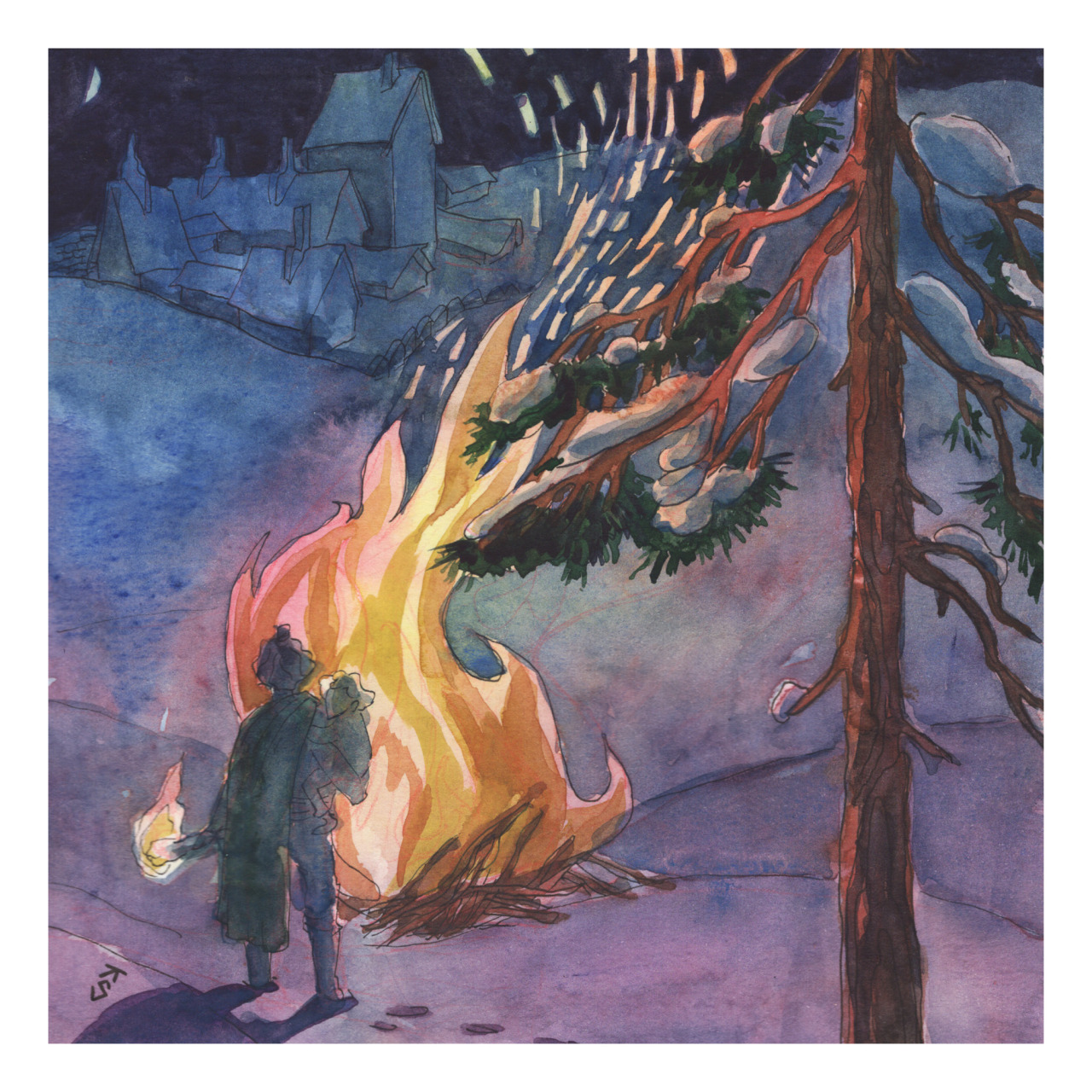
After a passage from an assassin’s instruction manual opining on the inherent cruelty of the profession, “Assassins” begins with Fitz killing the messenger that had reached him, musing that, despite the endorsement of the victim, it was his worst killing–and that he was involving Bee in the worst of his business. But with the killing accomplished, he bears the messenger’s body to a woodpile, Bee trailing behind him. The pair prepare the body and set the pile alight, making a pyre of it, and they confer about their cover story. They confer, too, if somewhat obliquely, about Fitz’s quiet work for the Six Duchies.
Fitz finds himself puzzling over the message the Fool had sent to him, trying to suss out the parentage of the Fool’s child. Garetha, who had provided flowers for LordGolden and thereby shown her knowledge of his identity, is offered as one possibility; she is not the only one. At length, Bee interrupts his reverie, and the two proceed back inside, Fitz rebuking himself for his many follies along the way. His thoughts turn dark, and Bee has to lead the pair of them back home.
Within, Fitz begins to see to Bee, considering ramifications of his actions, until interrupted by shrill screaming from Shun. She has woken form a dream in guilt and terror, and Riddle sees to her as Fitz searches her rooms. Finding himself dissatisfied with Shun and confused by Chade’s interest in her, Fitz stalks on to settle matters. When he returns to where he had left Bee, however, he finds her gone, and the search for her begins.
The present chapter is relatively brief, some fifteen pages in the edition of the book I am reading. I have yet to puzzle out any consistent pattern in the chapter-lengths, although I admit that I have not been doing enough work on that issue to have come to any conclusions. It is the kind of thing that could underpin a decent study, I know; I actually recommend it as an exercise for students when I write lesson plans as a freelancer (which happens less often anymore than I might prefer, although I’ve got a couple such jobs on my plate at the moment, so it’s fresh in my mind).
In those long-ago days when I had students and the audacity to think I was doing a decent job with them, I would suggest such an approach or a similar one to those of my pupils who thought there was no “real data” to be found in literary pages. (A few scholars, noted here, here, and here, might have been good to be able to reference then, as well, but I did not know about them at that point.) There is information in the paratext of a work no less than in the text, and that in one certainly influences the other. I’ve long known it, and Oliver, among others, cites a number of scholars in confirmation thereof.
As I’ve been getting back into more scholarly work–and I have been, and not only on the Fedwren Project–I’ve noticed my reading is shifting again. I am still decidedly affective when I read, something for which I know several of my professors would rebuke me were I still under their supervision. (Since I am not, I doubt they are aware of what I am doing. Such is life, I suppose.) But I have also begun to remember more as I write, which prompts me to review again those sources I have so often handled to find where it is I remember the remembered from and to link back to them (because this is an online composition, and linking is the preferred citation method, even when it is the case that many things thought stably and permanently online are…less so). I have begun to remember what I had wanted to make myself become, and I have begun to remember the joy and animation of it–strange as it might well seem to those who have not felt elation at puzzling out some knotty set of references or allusions or the like, who view the work of literary criticism as dry and dull and dreary.
Such long sustained me, though, and it is good to feel it move within me again.
If you like the way I write, you might hire me to write for you; get started by filling out the form below!
Read the previous entry in the serieshere. Read the next entry in the serieshere.
After a letter from Fitz to Nettle that discusses Verity in Kelsingra, “The Last Chance” opens with Fitz musing on the experience of his grief at Molly’s death. Amid his grief, life at Withywoods continues, and the effects on Bee are glossed to the extent that Fitz, consumed by his own sadness, notices them. His mourning and Bee’s persist past the observances of others, who have their own lives and affairs to attend to, but Fitz and Nettle do have a conversation about his Skill-imposed health. Nettle also attempts to persuade Fitz to send Bee to Buckkeep, which he refuses, and Nettle’s misconceptions about her sister are addressed. The conversation between the two is tense, but they reach an accord between them concerning Bee.
Kelsingra? Of course it’s Frozen History by MeetV on DeviantArt, here, used once again for commentary.
Nettle retires after her conversation with Fitz, and he and Bee confer at some length. Fitz is somewhat uneasy at the depths of Bee’s perception and understanding, and she makes clear that she can sense him in some ways through the Skill. Fitz considers the implications as they continue to speak together, and he puts his daughter to bed for what he realizes is the first time.
The next morning sees Fitz and Bee prepare for the day and for seeing Nettle off on her way back to Buckkeep. Nettle gone, the two proceed to their daily tasks. Fitz begins to work to catch up on what he has let slip in his grief, and a new routine begins to settle in for the pair of them.
Later, near the end of autumn, Fitz receives a summons from Chade. With some difficulty, Fitz makes arrangements to answer it, and he shows Bee part of the system of hidden rooms and corridors that pervade Withywoods. She takes to it readily, and Fitz finds himself reporting the circumstances of Patience’s death years before. Further conversation grows tense, but the tension eases in time, and Bee asks what will become of her after Fitz dies. The question staggers him, and he works to put his daughter, and himself, at ease.
The current chapter is another unusually long one, running to 51 pages. There is doubtlessly some kind of commentary to read into that, some assertion that the experience of grief dilates time, and it is the case that the present chapter glosses several months. Still, it could easily be the case that the chapter be broken at the seasonal shift; there is a narrower focus on the events of a day at that point, and it would have made sense to have the division at that point both to clearly delineate the passage in time and to highlight the shift in the pace of action. Some other narrative or editorial principle has to be at work, then, and while I have an idea about it, I would have to look farther ahead in the novel to confirm that idea–something I am not willing to do quite at the moment.
That I am not willing to look ahead in the novel is not a result of not wanting to spoil things for myself. I’ve read the novel before, after all, and deeply enough to write a review of it and to use it in at least one conference paper. No, the unwillingness comes from what I know tends to happen to me when I am going through the books about which I write: I start reading again. Indeed, occasionally, when working on earlier portions of the rereading series, I’d get to reading, and it would be hours later that I would look up, realizing I hadn’t written a damned thing and that I really needed to use the restroom. It’s a good thing to do as a reader, certainly, and when reading for the pleasure of reading. It’s not entirely helpful, however, when reading for the purpose of writing. So, while it is the case that I like doing the reading I need to do to be able to do this work, it is also the case that I am trying to get something done, and I can’t get it done if I let myself read ahead too much. I’ll lose track of what I’m supposed to be doing, and that makes doing hard.
So much said, the kind of confirmation I would need would come from something as simple as a page- or chapter-count. And I recall that, when I had students, there were more than a few who were surprised that any kind of literary analysis or interpretation could actually involve such things. I think either they did not have the kind of middle- and high-school English classes that I did, which involved counting lines and syllables in poems (something that, to be fair, I did a lot of in college and graduate school, as well); they did have that kind, but they did not realize that what can be done with poems can also be done with prose; or they did have that kind but regarded it as being something done by “lesser” students. So much said, there is quantifiable data in even the most “creative” work, although the quantitative is not and cannot be the sum total of such work or interpretations of the same; it offers one useful descriptor among many, and it serves as a useful way for those who are more quantitatively minded to get into the work of interpreting text.
Or so I found, anyway. It has, admittedly, been a while, and I am no longer doing work in the classroom.
If you like the way I write, why not hire me to write for you?
I had been reading Here She Comes Now, a collection of essays (edited by Jeff Gordinier and Marc Weingarten) that respond to the lives and works of a number of women in music. I enjoyed the reading thoroughly despite having read it only in fits and starts, most often while on the treadmill at my local gym. As I read the last few selections, slogging up a simulacrum of a hill, it occurred to me (not because it was some great revelation or deep insight on my part, but just because something popped up in my mind that ought to have done so earlier) that the book is a series of what were called “personal narratives” in the long-ago days when I had students and the longer-ago days when I trained to teach them.
The things I’ll use as a study hall… Photo by Pietro Saura on Pexels.com
Given that most of my teaching was either first-year composition or college-preparatory writing–even if, as often, under older and less kindly names–I was often asked (emphatically, with the weight of my too-small and too-needed paychecks behind the requests) to teach the genre. Given what I was taught about teaching, I tried to model the assignments for my students. Given my own experiences and the usual demands of the imposed assignment–leave it to a bunch of old English majors (not Old English majors, nor yet Olde English 800) to want literacy narratives–I struggled to do so.
That I did so, both on the specific literacy narrative and on the more general personal narrative, is a result of the kind of life I’ve led. Reading Here She Comes Now reinforced to me that the personal narrative–however focused or on whatever art it centers–relies upon a perceived or experienced pivot. That is, it has to center on a “life-changing” experience, a transformative encounter with some thing or another. For a literacy narrative, it’s often the first or most prominent formative experience of reading; for the essays in Here She Comes Now, it’s an encounter with the woman’s music that reorients the writer.
I don’t have many such experiences or encounters; my life has not been a series of sharp shifts so much as it has been a long, gentle slide, and if it is the case that I have felt myself to be jerked around on occasion, it is because I have been so accustomed to gliding along that any jostling seems rough. At this point in my life, I do not begrudge it; my skin has grown thin and my belly weak, such that upset now is as like to lead to some messy rupture as any revelation about which I might opine to some new adulation. No, for me, the staid and sedate suffice. They must; I’ve nothing else.
Such pivotal moments in my past as there are have not much been with art. Devoted as I am and have been to writing and music, engaged as I have been at times inn other arts, they have always been for me always beens. I entered into them so early I don’t remember doing so. I do have the clichés, of course: the first written death threat I received, the first time I fucked, when I realized I meant to marry my wife, the discovery of her pregnancy with our daughter, the ejection from or surrender of life in academe, that kind of thing. But of what seem so much to be common experiences not worn to cliché? Not a whole hell of a lot.
It’s honestly a good thing. My parents did well to provide me an upbringing in which it was simply a matter of course that there would be books on the shelves and in hands; that there would be music playing and instruments available on which to play it; and that I had enough food to eat and fair variety in it, as well as a stable, safe place in which to eat it. I’m not finding fault with them that I don’t have a particular, singular experience that compares with so many that I have seen reported. That said, I can’t help but wonder what I’m missing–but that’s nothing new.
I’m happy to write to order for you; if you’d like to have me do it, reach out through the form below!
My daughter, Ms. 8, has recently decided that she would like to run for student council at her elementary school. She’s noted to both of her parents her reasons for doing so, and they make sense enough; I’m glad she wants to take on more formal leadership roles, and I’m glad that she is confident enough in herself and in the regard her classmates have for her that she feels she has a chance of being elected by them. Too, she is willing to do the work to make that kind of thing happen, or at least to position herself where such a thing can happen, and I endorse my daughter pushing herself by actually getting out and doing the work to get something she wants and that is fit for her to have.
Sure, why not? Photo by Gustavo Fring on Pexels.com
One of the requirements to run for office is for each candidate to submit to school administration an essay that articulates the candidate’s reasons for running and qualifications for office. It’s not a bad idea, in itself; any candidate for any position ought to know why they are running and why they deserve to have the position, and it’s hard to convince others of either without being able to state it clearly and convincingly. (Yes, I know well that much electoral politicking moves entirely aside from that ideal. There’s a reason I use “ought,” here. I’ll also note that there are decided restrictions on the kind of campaigning that can happen at my daughter’s school; while I’m certain that there’s more as goes on than the staff realizes, I’m also certain I’m glad that what rises to the level of official attention gets regulated. The kids don’t need to be sniping at each other, with words or otherwise.) And, as someone who has been solidly invested in being able to put together essays, I found myself pleased that there was suddenly a call for such skill-set as I can reasonably claim to have.
Ms. 8, being young and having the educational background she has, was not entirely sure what to do in her essay–or even what an essay is. So that was a point of discussion for us, but she seemed to take in the information well enough, and we structured her argument together. Doing so, I walked her through something very much like my processes in putting together a formal essay (something I’m amid doing, given an upcoming presentation for me), and the two of us got a fair bit of text (for an elementary school student) roughed in. She still, as of this writing, has work to do on the essay; there’s more material to develop in the argument, proper, and both introduction and conclusion need to be drafted. I’ve already offered to review and proofread the work for her, and I hope she’ll avail herself of my services in those regards.
It’s a small thing, of course, the composition of a one-page essay for an elementary school student council application. I don’t know how the election will go, but even if it goes against her, it will not have much effect in the world–certainly not as compared to the many other things going on on campuses and outside them. But it has been a joy to share a bit of what I trained for many years to do with someone whom I value and who actually stands to see some good from the exercise of that training, and I am reminded in at least a tiny way of what it was that drew me to my field of study to start with. For so much, as for many other things, I thank Ms. 8.
My daughter’s not the only one whose writing I’m happy to review; send yours along, and I’ll help you make it show you at your best!




 Elliott RWI