A Robin Hobb Rereading Series, Entry 420: Fool’s Assassin, Chapter 30

Read the previous entry in the series here.
Read the next entry in the series
here.


All joking aside, following an excerpt from Fitz’s journals, “Collision” begins with Fitz moving to find Bee, whose absence he had had pointed out to him. Riddle advises Fitz as he accompanies him that his care for Bee had not been successful, that he would have to remove Bee from Fitz’s care for her own safety. Shun and Lant attempt to intervene and are decisively rebuffed as Fitz looks out, sees Bee and the beggar, and reacts violently.

Here we go again…
Image in source, used for commentary

Riddle scoops up Bee and affirms her safety as the victim of Fitz’s violence looks to him, revealing himself as the Fool. Fitz recognizes his error and the depths thereof and begins to attempt to address it, entrusting Bee to Riddle’s care as he plies his Skill on his old friend. Realizing the extent of the Fool’s injuries and illness, not all of which is the result of his own knife, Fitz pleads for assistance and purposes to take the Fool to Buckkeep via the Skill-pillars, sending ahead through the Skill to Nettle that he is coming; she reluctantly agrees to assist.

A frantic rush to the nearest Skill-pillars ensues, Fitz trying to get information from the Fool along the way. At Lant’s query, he offers some indication of his own plans, and final preparations for the magical transit are made. Taking one last look at Bee, and with Riddle’s assistance, Fitz takes himself, Riddle, and the Fool into the pillars.

The excerpt from Fitz’s journal comments on his inability to fully immerse himself in the now as Nighteyes had done. There is some commentary on mindfulness to be taken from the excerpt, I am certain, although I’ll readily note that mindfulness is not something at which I excel. I focus on things that need to be done, sometimes to the neglect of what I am doing, or I lose perspective on larger goals while attempting to take steps that I think conduce to them. It’s one of no few things that call for explication by others than me, others who are better suited to the specific tasks; I acknowledge there is much that lies outside my expertise.

The present chapter pretty clearly is the inflection point towards which the novel had been progressing increasingly quickly in the most recent several chapters–and it is quite an inflection, with Fitz potentially fatally wounding someone whose life he had restored and for whose company he had often longed after ragged parting. The irony, operating at several levels, is not lost on me. The chapter opens with opining on not acting in the moment, only to punish Fitz for acting in the moment without gathering additional information. The chapter brings back to Fitz someone he has wanted to see again, only to have him inflict injuries apt to be fatal. The chapter exposes more of Fitz than he would care to have shown, pushing him into reliance on official power structures he had often sought to escape. It also forces him to leave his daughter despite his ongoing efforts to keep her with him. And, as is easily inferred, it removes from Bee perhaps the best teacher that she could have, just as Fitz had removed her from others’ instruction due to perceived insufficiencies in them. So, yes, a lot going on.

And it’s Hobb, which means there’s more such to come…

I’m happy to write to order for you. Get more information, and get your writing started, by filling out the form below!

← Back

Thank you for your response. ✨

Warning
Warning
Warning
Warning.

Or you can send your support along directly!

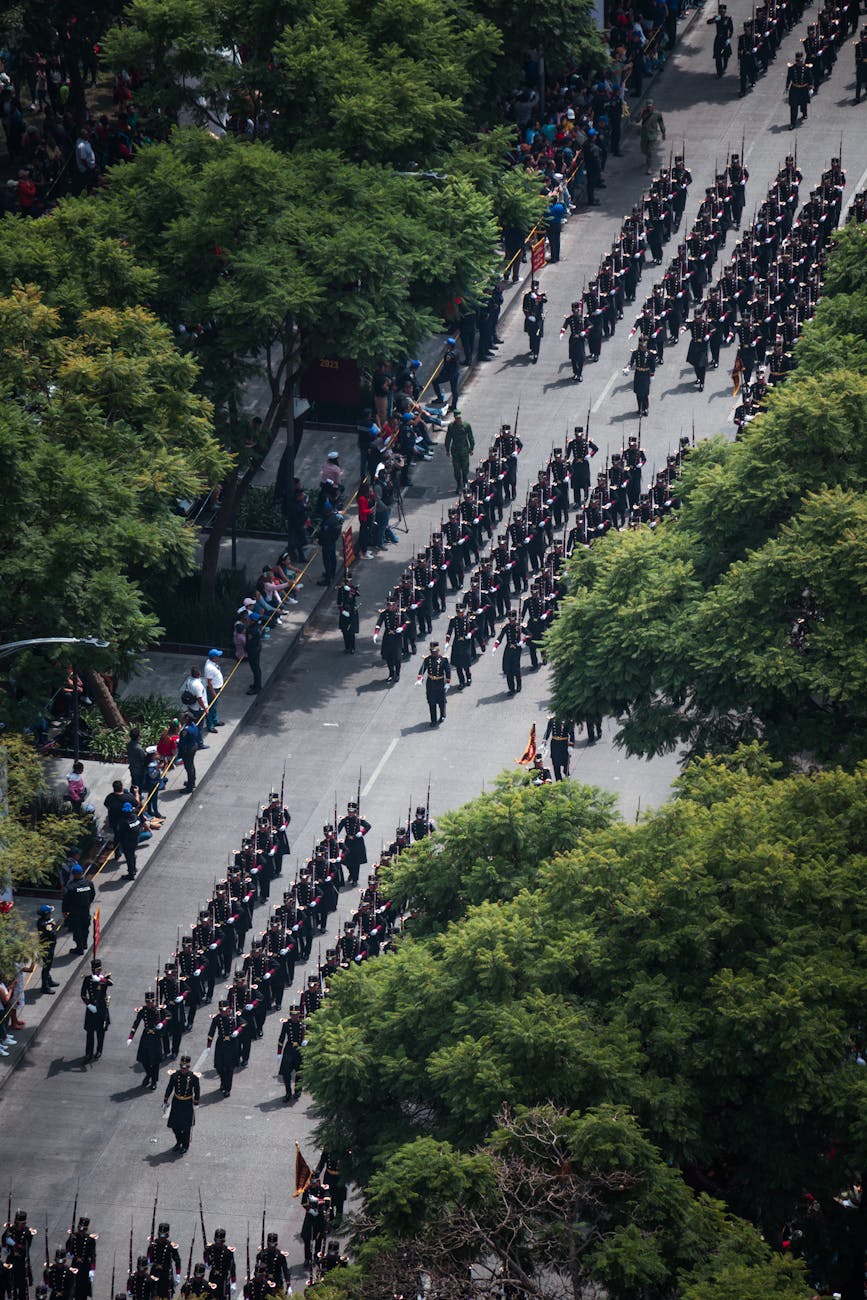
For You Heading off to Marching Contest

Snap to attention
Horns to the ready
Follow the cadence
The drummers beat steady
Draw a deep breath
The atmosphere heady
Step onto the field once again

Cue up Seitz…
Photo by Curioso Photography on Pexels.com

The minutes will pass
As you stride on the field
Turning and blowing
As you deftly wield
Your horns and your flags
For this, you are steeled
Step off of the field once again

The waiting is worse
The results are told
The fires that burned
Begin to grow cold
But their embers will linger
Give warmth to the old
Who would step on the field once again

March on to victory
And may Is await!

I’m happy to write to order; let me know what you need through the form below!

← Back

Thank you for your response. ✨

Warning
Warning
Warning
Warning.

Or you can send your support along directly!

A Robin Hobb Rereading Series, Entry 419: Fool’s Assassin, Chapter 29

Read the previous entry in the series here.
Read the next entry in the series
here.


Following an excerpt from Bee’s journals, “Mist and Light” begins with Bee musing on the disruption of her peace with her father and Riddle as Shun and FitzVigilant arrive and join them. She excuses herself from the table, wandering outside and enjoying the festive crowd. While there, she encounters again the particular beggar in whom she had had some interest before, and she helps him away from locals who accost him.

Both less staged and more.
Photo by Myriams Fotos on Pexels.com

Nursing her annoyance at Shun, Bee works to assist the beggar, and as she does, he exults in what he claims is the return of his sight as she is embraced by prophetic insights. The beggar warns Bee against acting on the insights that break upon her, and she becomes aware of sharing thoughts with him. The beggar voices a prophecy of his own, and Bee is left stricken in a world suddenly dulled and muted around her, aware now of the implications of any and every action she might take.

The present chapter is a scant six pages in the edition of the novel I am reading again, and while I do not (yet) have the set of information I need to do the kind of formal study I would (very much) like to do, I have the sensation that it is among the briefest “regular” chapters in the Elderlings corpus. The effect of acceleration continues; matters in the novel rush towards an ending, now, and, given the vantages of rereading, familiarity with Hobb’s corpus, and narrative structures more generally, that ending does not look to be a happy one. It could hardly be so for the first book in a trilogy, and it could hardly be so and be the work of Robin Hobb. (As to the rereading, well, that is something like cheating; I’ll get where I need to get with it in plenty of time.)

If I indulge myself in reading affectively (as opposed to being compelled into it by my own predilections), I find that I wonder how my own daughter, about whom I have made no few (and overwhelmingly appreciative) comments in this webspace, would react. I would like to think that my child would move to help those who present themselves as being in need; she’s expressed sympathies in that line no few times in the past, even if her cynical father has hurried her along more often than not, but that her heart is good is not a blameworthy thing. And I do note that she does get jealous about the focus of her caregivers on others, which is flattering as her caregiver even if it is sometimes…difficult to address. Of course, any comparison between a fictional character and a real person is fraught, and there is something to be said against spending as much time immured in studying writing as I have.

Less affectively, however, and more towards “looking for a moral” in the work (which is, after all, something that a lot of literary study and “literary study” attends to), the strong implication of Bee’s foresight presents itself to me. At the beggar’s insistence–and who the beggar is will become clear if it is not already so–Bee considers a variety of futures her potential actions would make available and begins to recognize that having her foresight does not guarantee that anything she foresees will necessarily occur, or that things she does not foresee will not. That there are so many possibilities as present themselves to her is not more true for her than for others in the text–or among the readership. Awareness of them imposes more responsibility for them, to be sure, but the lack of awareness of them does not mean they are unavailable to others–and that might be the lesson to take from the present chapter.

Maybe.

I’m happy to write for you; fill out the form below if you’d like me to start something for you!

← Back

Thank you for your response. ✨

Warning
Warning
Warning
Warning.

Or you can send your support along directly!

Another Rumination on This Kind of Thing

I‘ve opined once or twice on the observance made publicly today, which a bit of recent reading I’ve done tells me was only fully institutionalized in the late 1960s, despite less-formal observances in and by the United States prior to it. I’m minded that such is younger than my parents (and, if memory serves, even some of my cousins), and it’s not a hell of a lot older than my wife. She’s not (at the time I write this; who knows when you’re reading it?) an old woman, to be sure, so something less than a decade her senior is not, to my mind, especially ancient or to be revered on account of its age alone. (Indeed, there’re many things younger more deserving of laud and honor.) And my feelings on the matter have not changed overly much from a year ago or from four years ago (again, as I write this); I don’t think I’ve been obscure about them, truly.

Well, this rocks!
Photo by Ir Solyanaya on Pexels.com

The thing is, I’m not opposed to taking time off, as such. (I might not want to take a specific day off, and it may well be the case that I don’t do as well as I might with other days off, but that’s me and not necessarily a guide for others.) I’m not opposed to a formalization of time off, even if it is the case that those most likely to be in need of an extra paid day off are among the least likely to receive such a thing (something else about which I’ve opined at times in this webspace). I’m not opposed to the commemoration of historical events, although I am opposed to the lionzation of things that ought not to be lionized even as they ought well to be remembered across years. This year, given the timing and the work that I do as my day-job, I’m a bit more vexed by the specific observance than might be the case in other years, but I readily admit that so much is a personal concern, and while I value my personal circumstances, I know that few others will do so or should be expected to do so.

Again, I know I give more thought to this kind of thing than many people do. I give more thought to it than many people would think is good. They may be right who have told me, time and again over years, that I need to loosen up and lighten up about things. (Of course, it’s only the things about which they are loose and light that they think it’s okay for me to be so; the things I don’t care much about seem to occasion annoyance or more that I do not ascribe them the same importance…and there’re several observances that fall into that category, certainly.) But I cannot be the person I am and not do as I do, and there are enough people who show me they’re fond of who I am that I’m not entirely eager to change much of it. Some, sure, but not a whole lot, and certainly not at this point.

I’m happy to write to order for you! If you would like me to, fill out the form below, and we’ll get started!

← Back

Thank you for your response. ✨

Warning
Warning
Warning
Warning.

Or you can send your support along directly, like reader All Tied Up in Knots did (thank you, ATUiK)!

No, It’s Not about Crows

A murder descended on the young woman
Plumage bleached badly and out of symmetry
And I had no interest in seeing a spill after
I had already drunk my Earl Grey
Such carnage as I am certain befell after I left is
All too familiar to me
No rounds’ whistles so shrill as demands to
Speak to a manager who isn’t on site
And my tinnitus is too damned loud as it is

A fine dish…but not really the topic
Photo by Tom Swinnen on Pexels.com

Remember, written-to-order poetry makes a great gift!
Get a poem for yourself or a loved one;
fill out the form below!

← Back

Thank you for your response. ✨

Warning
Warning
Warning
Warning.

Or you can send your support along directly!

A Realization from a Piece of the Freelance Work I Do

I haven’t made any secret of the fact that, for some years now, I’ve done a fair bit of freelance work developing instructional materials, contracting for a company that offers a subscription service to month-long lesson plans and their associated activity and essay prompts, short-answer questions, and multiple-choice items. (Before that, I spent a lot of time and earned less money writing summaries and study guides. Both have their attractions and their drawbacks.) What I haven’t necessarily shared is a lot about how I generally go about doing that work–and for what I think is good reason; while my work is my work and takes me to do it, I don’t know that waxing loquacious about my methods is helpful for me staying in business. But a recent project has suggested to me that there are a few things I can share, such as are likely to be of help not so much to my competitors (because there are other people who do this kind of work, even if I think I do it better than they do), but to those who will still read and study, whether for the pleasure of it or because they justly oppose the outsourcing of their thinking work to the plagiaristic algorithms of putative machine intelligences.

It can scan the words more quickly, but it cannot find the meaning in them.
Photo by Designecologist on Pexels.com

Normally, when I do the work of drafting a month-long lesson plan (and its associated activities, essay prompts, short-answer questions, and multiple choice items), I start by reading, and I most commonly read for this purpose in electronic copy. I do so almost entirely due to concerns of portability; I’m able to take more materials to more places and engage with greater ease, even if it is still the case that I do not read as well from a screen as I do from a physical page. (Your results may vary; I’m discussing my practice and nobody else’s.) And when I read for such purposes, I do slide it in alongside other activities; I’ve reviewed a lot of text while walking on a treadmill at one gym or another, and a lot more while seated at odd intervals as nature bids me do. (Truly, some of what I’ve been paid to read and write about has deserved no better setting than surrounded by foul odors of one sort or another.) I do what I can to take advantage of the features of my e-readers (and, yes, it’s plural for a reason; I prefer to use one program, but I am often constrained or encouraged to use another, entirely, client demands and publishing disparities being what they are), marking up the text to the extent allowed, but even after years of doing such work in such ways, I find the electronic apparatus…unwieldy.

Recently, though, I took on a project that prompted me to pull down a physical copy of the subject text. (It was cheaper to get it in hardback than to get it electronically, if such a thing can be believed, and I had it in hand the next day.) Consequently, I did not read it in quite so many places as I am accustomed to reading my freelance-work texts, but did so with a pencil in hand, as if it were once again a text I was studying for my English classes a decade and more ago. Doing so, I found it easier to connect with the work as I was doing with the book as I was reading it; I had to repeat things fewer times (although distractions did ensure that there was still some repetition), and I was able to see things in the text and connections within it that I do not think would have occurred to me had I been dealing with an electronic version of the text. There is something faster about thumbing through pages, at least for me, than swiping left and right on the screen, and the added tactility of an actual page, the increased sensory presentation of it, do something to ease my reading admirably.

Perhaps it is merely an issue of my Millennial rearing reasserting itself. I am, after all, old enough that I was taught to read from books rather than tablets and telephones, and even as a graduate student in the 2010s, I worked with materials that had not yet been made available digitally in a way I could access them. (How much of that has changed, I am not sure at the moment. I could look, but that would mean I am not doing this, and this is what I want to do at the moment.) Perhaps it is the training I received in graduate school and which I practiced at some length in the years afterwards telling on me, even now. The habits developed over several decades would be expected to carry more cognitive force than those inculcated over one and a bit more, after all. So I am not suggesting that reading a physical text is some sort of intellectual panacea, nor yet am I decrying the use of electronic texts. (Again, I do make common and consistent use of them.) I am, however, saying that, for my reading for this purpose, it has been good to get back to the physical page for a bit, and, if it is the case that the opportunity to do so presents itself again, I think I might well take it.

Remember, I’m happy to write for you, whether it’s instructional and assessment material, poetry, ad copy, or something else entirely! Get your project started today by filling out the form below!

← Back

Thank you for your response. ✨

Warning
Warning
Warning
Warning.

Or you can send your support along directly!

A Robin Hobb Rereading Series, Entry 418: Fool’s Assassin, Chapter 28

Read the previous entry in the series here.
Read the next entry in the series
here.


A brief excerpt from a pedagogical treatise by Fedwren prefaces “Things Bought,” which begins with Fitz ruminating on the rarity of knowing he has done well with Bee. He reflects on the incident with the dog-seller just previously and its denouement until the arrival of Shun and Lant interrupts his reverie. They barrage him with details of things they wish to buy, and he considers that he might be unhelpfully rooted in the ways of his youth as they assail him with their demands. That Shun suffers from an entitlement mentality is reinforced, and Fitz sinks into annoyance as he gives more thought to the acts of the day.

Looks plenty good to me, though I know many who, like Shun, would complain.
Photo by tomateoignons on Pexels.com

Fitz becomes aware that conversation around him has ceased, and the attends carefully as Lant displays the same entitlement mentality Shun evidences. The revelation settles something in Fitz, and he determines “to pry out information” from Chade about the people laid into his charge, as well as to see to broadening Bee’s education himself. Shun interrupts him once again, and he lays out how matters will be with the three of them, moving forward. This upsets Shun and Lant, and argument begins to bubble up until Riddle points out Bee’s absence, which Fitz immediately moves to investigate.

The present chapter is another relatively brief one, only some ten pages in the edition of the text I am reading. Given the placement of the chapter near to the end of the book, it does have the effect of implying acceleration towards some pivotal moment–something that the action depicted in the chapter also suggests, Fitz’s sharp decision and harsh words for Lant and Shun indicating a shift in attitude on his part. And the Fitz-centric novels have shown that Fitz’s…abrupt decisions tend to have…consequences.

A couple of points of commentary come across to me in the present chapter, as well. The prefatory comment seems a bit…pointed, and I have to wonder if there is some experiential thing at work, some use by Hobb of Fedwren as a self-insertion. I know, of course, that biographical criticism is always fraught, but I also know that writers cannot help but write from their knowledge and experience, and I think I am not alone in having seen people resistant to formal learning. I acknowledge that formal education, particularly as it is commonly practiced in the United States, is not to everyone’s taste; I’ve been more heavily involved in it than most, I believe, and there’s a lot about it that is not to my own preference, so it stands to reason that those less devoted to it would have less favorable opinions of it. But I do think there is much to be said for teaching students early on that the subjects being studied are of worth and can well carry joy in themselves, and I do not know that that gets done enough (for reasons that make sense in context; I know where to direct my anger at such things).

The social-class comments that emerge in the present chapter also seem…pointed. Fitz’s annoyance at Shun’s presumptions of him and Lant’s accommodations thereto is, on the surface of it, right; the pair of them are upjumped and unpleasantly so, echoing Regal in uncomfortable ways, even if they do not know it. But Fitz is also somewhat disingenuous about his annoyance; he has made a point of remaining in his guise as non-nobility, avoiding any claim to his royal heritage–and doing so for his daughter/s, as well. And while it is the case that Nettle has a position at court (one earned rather than inherited), Bee does not have that particular social standing to shield her; even if Shun can be faulted for not figuring things out when information has been provided for her, Fitz can be faulted for being annoyed at being treated according to the public position he maintains. Yes, any public claim he might make to his Farseer heritage would be problematic, and for many reasons, but maintaining the pretense of being common-born…it’s as much his own fault as anyone else’s, and he is old enough to know it.

I’m happy to write to order for you. Fill out the form below to get your writing started!

← Back

Thank you for your response. ✨

Warning
Warning
Warning
Warning.

Or you can send your support along directly!

A Sonnet on Bookkeeping

As a note, the answer to the riddle posed in my previous post is “mockingbird.”

The window looks up to an open sky
That shades from blue to blue, and within, I
Must sit and stare at lines again and sigh
At all the work there is to do. My pen
Is poised above the ledger once again
And waits to journal. Ink drips from its end
To mar the page, command another sheet
Be taken out and marked so I can meet
Demands that clients have. From my fair seat,
I daily run the numbers, carry through
The math so that reports will report true–
So much is what I’m often paid to do.
I’ll not bemoan the work; it could be worse.
At least I have some time to write a verse.

Goals.
Photo by Yaroslav Shuraev on Pexels.com

We’re coming up on gift season, and bespoke poetry makes a fine gift!

← Back

Thank you for your response. ✨

Warning
Warning
Warning
Warning.

Or you can send your support along directly!

Not Quite a Fitt Thrown Here

First among five, I was by friends praised–
Moody work made me mighty of name,
A star shining brightly in places I sing.

Picture not related.
Photo by Vladimir Srajber on Pexels.com

One called after me, a man named like candy,
As did another around a camp,
Far after folk like foxes did so.

To many I talk in tongues like their own,
Gladly thus going throughout a great dwelling,
Bearing white bands; I brave many places.
Sages and scholars, say what I am!

I’m happy to write to your order. Place yours below!

← Back

Thank you for your response. ✨

Warning
Warning
Warning
Warning.

Or you can send your support along directly!

A Robin Hobb Rereading Series, Entry 417: Fool’s Assassin, Chapter 27

Read the previous entry in the series here.
Read the next entry in the series
here.


After an excerpt from Patience’s early writings about Fitz, “Time and Again” opens to Bee waking from a night of uneasy and unrestful sleep to the imprecations of her attendant, Careful. Changes to her appearance and presentation are noted, and the approach of Winterfest is marked. Bee reflects on her parents’ joy in the holiday, and she comes down to breakfast as Fitz and Riddle discuss the latter’s departure and travel plans. Shun and Lant join the trio at meal and insinuate themselves into the trip, which Bee dislikes, and Shun tarries long.

Something not unlike this, I think.
Photo by Oleksandr P on Pexels.com

The trip to a nearby market town is described, and Bee enjoys her part of it. In the town, Bee finds herself flattered at Fitz’s attentions to her, and she delights in the holiday atmosphere. At length, however, prophecy begins to overtake her, and Fitz begins to grow wary of those around. Amid his growing concerns, he notices Bee attending to dogs bred for sport, and rage begins to overtake him that Riddle cannot stop. Fitz emphatically rebukes the dog-seller and the crowd that had gathered to watch his gory antics, and the surrounding tension only slowly subsides.

As Fitz, Riddle, and Bee head off, Bee again notices a particular beggar. While they eat, Bee pointedly commends Fitz’s actions with the dog-seller, leaving the men somewhat taken aback.

There is, in the prefatory materials, something that provokes what I have found to be dangerous thoughts in me: the might-have-been. While I readily acknowledge the affect and imprecision inherent in such readings, I find myself verging on such considerations, myself, as I read the reported in-milieu words of Patience (implied to have been found by Bee on one of her excursions through Withywoods); while I do not necessarily look on what might have been had I taken a child into my life that I could have but did not–my daughter is my daughter, and I am fortunate to have had her in my life as long as she has had hers–I do find myself, and entirely too often, considering what might have been had I but done some thing differently, had I applied to one more graduate program, had I written one more paper instead of grading one more class’s worth of them, that kind of thing.

Less often, but not more helpfully, I have thought on what might have been had I been a better man than I am, had I gone with my family to do a given thing rather than staying home, sitting hunched over at my desk and working. There has too rarely been a “later” for me to get to it, but the work has always continued. Even now, there is work I could be doing and perhaps should be doing instead of typing out these words, and if I am alone in my home to type them now, how often have I held myself apart from what my wife and daughter were doing, from what those who might have been my friends were doing, in favor of getting some task or another done that somehow never shortened the litany of things I needed to be doing?

But I digress, again as often.

With the book approaching its end–there are only five chapters and an epilogue left in the present volume–it is clear that some massive action is coming. The return of Fitz’s immense capacity for violence is one sign of it. That the present chapter focuses on preparations for Winterfest, with which the main action of the novel begins, is another such sign; by echoing the beginning of the text, the present chapter suggests the end of it, a close of exposition that invites the onset of action. And the attention paid to the one beggar in town indicates that said beggar is (and I do not apologize for the pun in context) a catalyst for that action.

Even without the benefit of rereading, I think a sense of foreboding could be justified. Hobb is writing Fitz, after all, and while he is no Miles O’Brien, Fitz does seem to come in for a lot of suffering along the way.

If you like the kind of writing I do, maybe you could hire me to write for you!

← Back

Thank you for your response. ✨

Warning
Warning
Warning
Warning.

Or you can send your support along directly!