A Robin Hobb Rereading Series, Entry 410: Fool’s Assassin, Chapter 20

Read the previous entry in the series here.
Read the next entry in the series
here.


After an excerpt from a translated commentary on killing (one that Dargen seems to have studied), “The Morning After” begins with Bee waking late and ruminating on her displeasure at Fitz’s seeming valuing Shun over her. She also considers how others relate to her, and she fumes as she collects clothing that fits badly and changes in private before seeking Fitz.

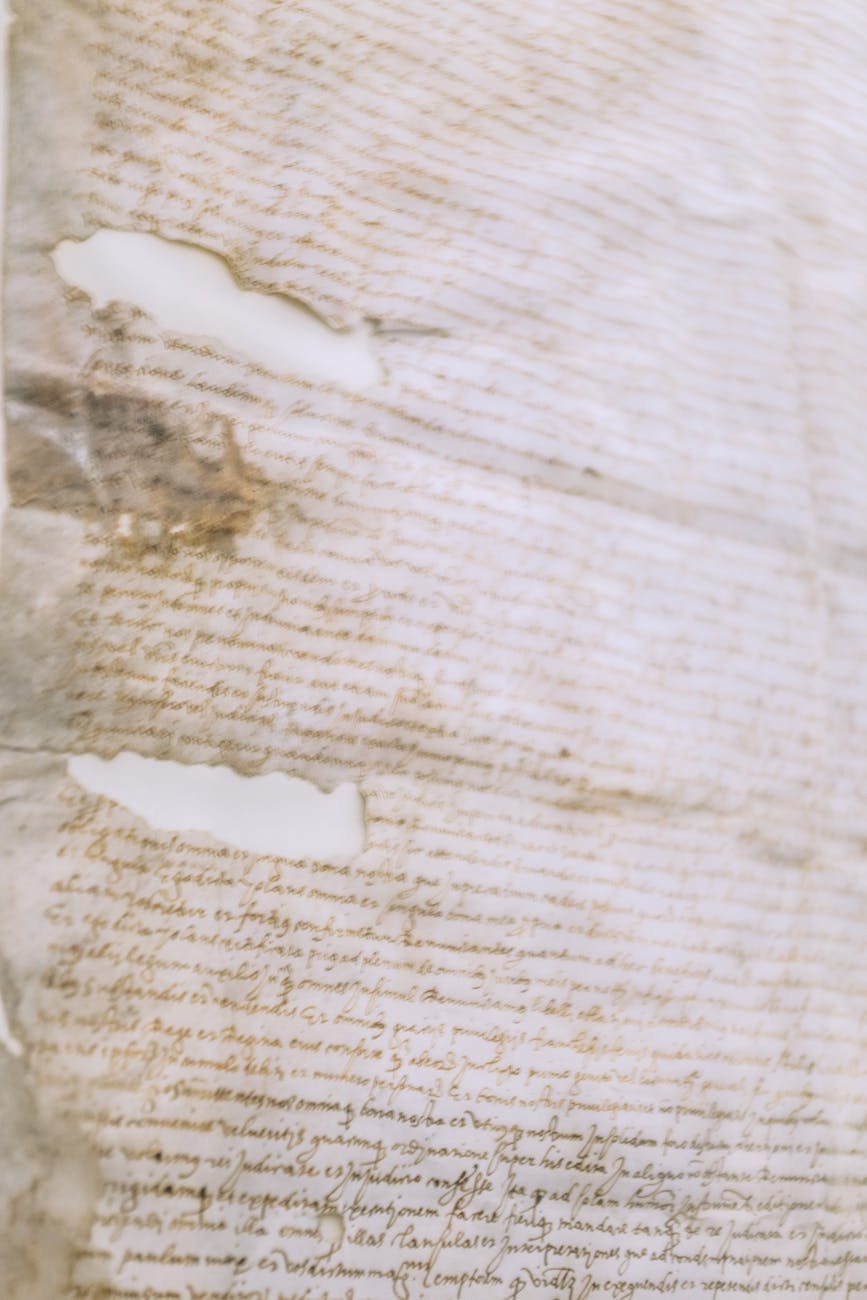
Not quite true to text, but you get the idea…
Photo by Wallace Silva on Pexels.com

Bee finds Fitz at table with Shun and Riddle, and she comments with some aspersion on him having eaten without her. Several barbed exchanges ensue, with Bee aiming at Fitz to some effect–though he does not respond in kind–and Shun to more of it, provoking anger from her. Fitz notes the impending arrival of FitzVigilant, which occasions mild upset from some present and curiosity from others, with Bee remembering his earlier visit to Withywoods. Shun’s continued barbs are shut down, and Bee becomes aware both of Fitz’s approval and the limits of others’ knowledge. More normal conversation follows, with Bee ruminating on preparations and on her status as she excuses herself from the table.

Later, Bee returns to the messenger’s pyre, rekindling the flame and ruminating on the messenger and on bits of prophecy of which she is aware. Returning to her home, she observes a cat at hunt. The successful animal notes the utility of autonomy, and Bee considers the lesson closely.

The present chapter is another brief one, less than ten pages in the edition of the novel I am reading. Again, I am not sure regarding any significance of the chapter lengths or patterns in them, and, again, I am convinced that going through the text and taking page-counts is something that could be done, with some tedium though not with difficulty.

It occurs to me that the idea of some significance associating itself with something like patterns of chapter-lengths runs into the notion of authorial intent. Wimsatt and Beardsley come to mind, of course, as do gallons of ink spilled on reams of paper about curtains being blue. That is, whether Hobb means anything by any patterns of chapter length that exist is immaterial; even if she has attested to it–and I do not know if she has; I’ve admitted that the Fedwren Project is not comprehensive, after all–the attestation would be itself a re/construction of events, a story told about them, subject to the frailties of human memory and perception in the recording and the relation.

What matters is the effect such a pattern has on readers, and whether that effect is in accord with the effects generated by the other features of the text. (Whether chapter length counts as text, proper, or as paratext is something that could be argued meaningfully. It likely has been in other contexts, but , if it has, references thereto do not come to mind.) For me, the shorter chapters stand out no less than the longer ones; the very difference marks them out for some attention. Whether those differences correspond to any particular points of narrative heft, I cannot say at the moment; I’d have to do the data collection and review my notes in a way that composing this entry in the rereading series does not really allow (and, honestly, I should have the notes for the entire body of work ready before I make the attempt). But I can say that anything that sticks out calls for attention, deliberately or not, and even if it is not a deliberate thing on the author’s part, there is some meaning to be gleaned–even if only a little.

I’m happy to put pen to paper or purpose some pixels for you; if you’d like me to do so, please fill out the form below!

← Back

Thank you for your response. ✨

Warning
Warning
Warning
Warning.

Or you can send your support along directly!

Another about Aestas

She performs so exuberantly
Every time she is in residence here
Shining brightly on the pale stage with its
Crooked wooden pillars and its
Fading verdant hangings
And the audience sweats in the lights held aloft

Looks like it’ll be a hot time…
Photo by Vishnu R Nair on Pexels.com

Those in attendance at her show
Must like what they get from her
Year after year
Seeming to invite her again and again
Although she rarely varies her set-list
And there are complaints when she does

Perhaps you want to purchase a poem of your own? I can provide it! Fill out the form below to begin…

← Back

Thank you for your response. ✨

Warning
Warning
Warning
Warning.

Or you can send your support along directly!

In Response to Kristina Busse and Shannon Farley

I did not stop work on the Fedwren Project when I addressed Matthew Oliver’s “History in the Margins” not too long ago. Indeed not; I have a number of other articles to read and annotate, bringing them into the bibliography I’m happy to be maintaining and to which I hope to make more contributions, both in itself and in producing items to add to it. One of them I read recently, Kristina Busse and Shannon Farley’s 2013 “Remixing the Remix: Fannish Appropriation and the Limits of Unauthorised Use,” is summarized in the Project here. As with other pieces I’ve read, the summary matters; the summary’s useful for other researchers, and I know that there are and have been some doing intellectual work on Hobb’s writing who make use of the Project–which is at least part of the point of my maintaining it. But, also as with a number of other pieces I’ve read, the summary is not enough on its own; I feel the need to offer some response–which I do, below, in the hope that it will be useful.

sound of record scratching
Photo by Victor Soto on Pexels.com

As with Oliver’s piece, I want to stress that I found Busse and Farley’s piece to be a good one. While I am not as up on fandom studies as, say, Kavita Mudan Finn (whose work I wholeheartedly recommend) or Shiloh Carroll (whose work I also wholeheartedly recommend), and I am not necessarily part of fandom communities as such (as I explain here), I found the piece to be well written and easy to follow. It’s never a bad thing for a specialist text–and, to be clear, academic journal articles are specialist texts, written by scholars to other scholars working in the same or in closely adjacent fields of inquiry–to be accessible to those outside its anticipated primary readership. (For reference, I follow Richard Johnson-Sheehan’s four-fold readership model. It seems to work pretty well.) As someone who, despite lapsing, works in fantasy literature, I am likely in one of the “closely adjacent fields of inquiry” to fandom studies, although I think they run more toward the sociological than the literary (I’m minded of reading Gary Alan Fine in the past), and there is a gap between the social sciences and the humanities, even if it is not so broad as some might want to make it out to be. But however that may be, the clear breakdown of topics Busse and Farley provide works well, it explains its terms and their use, and it offers manageable chunks of information, all of which argue in their piece’s favor.

I note above that I read the article recently to the time of this writing; it will also be close to the time of this post’s release into the world. Both are in 2024. The article dates to 2013, and it discusses an event in 2006. Consequently, there are things in the article that come across to a current reading as somewhat dated. For example, the article makes some reference to Tumblr, and while that platform is, to my knowledge, still extant as I write this (I certainly use it enough in my Hobb reread), it also–again, to my knowledge–does not function anymore in quite the same ways now as it did then. Busse and Farley do note that the community standards they reference–again, at length and with clarity–in their article are evolving and changing, so they allow for the possibility of datedness, and it is the case that it is not fair to fault an article for failing to address what occurred after it was published. (To be clear, I am not finding fault with the work.) So much said, I have to wonder if any of the authors’ conclusions would change when assessed against newer standards of conduct among the communities they investigate, and how.

This is, after all, a reaction piece, and I can only react as I have it to do.

In any event, the reason “Remixing the Remix” came to my attention to begin with is that it makes reference to Robin Hobb–specifically, the “Fan Fiction Rant.” Theirs is not the only article to do so, of course; indeed, one of the major threads of research into and commentary on Hobb’s body of work (with the understanding that the Fedwren Project is not complete; I have other articles to read and annotate into it, and there is doubtlessly more work being done in that line of which I am not yet aware) is specifically on that piece. Something about that blog post appears to have caught the interest of a number of commenters, some of them scholarly, and I think there’s more to it than simply the intersection of the fanfic and scholarly communities. (There is overlap, of course, but not congruity.) What that something is, I do not know; again, I am not a scholar of fandoms, nor yet am I a sociologist, and I think it would take a sociologist working in fandom communities to untangle it (or else an ethnographer with an interesting focus). That doesn’t mean I wouldn’t appreciate knowing, once it’s known.

If you need the kind of writing done that I do, go on and hire me to do it for you!

← Back

Thank you for your response. ✨

Warning
Warning
Warning
Warning.

Or you can send your support along directly!

A Robin Hobb Rereading Series, Entry 409: Fool’s Assassin, Chapter 19

Read the previous entry in the series here.
Read the next entry in the series
here.


A fragment of recorded prophecy regarding the Unexpected Son prefaces “The Beaten Man,” which begins with Fitz considering that fragment in detail. How the prophecy had been thought to apply to him is noted, and Fitz glosses his long friendship with the Fool. Amid his reverie, Fitz realizes that the Fool had reached out to him before, that he had failed to see it, and he sorrows deeply.

There are joys in working with such things.
Photo by Maria Orlova on Pexels.com

As Fitz considers further and prepares to still his mind for sleep, he is disturbed by a Skill-sending from Chade. FitzViglant, having narrowly escaped being killed, will be sent to Withywoods, and circumstances surrounding both the attempt on his life and his sending out are discussed. Chade also notes something is amiss with Fitz and asks after him, only to be deflected.

Taken wholly out of sleep by Chade’s Skilling, Fitz stalks through Withywoods, assessing its condition and his next steps. He makes some arrangement’s for Bee’s things, then finds himself in the kitchens. There, he eats and manages to fall asleep.

Fitz is woken the next morning by baking in progress. He confers with the baker, then takes himself off to bathe and shave. While bathing, he receives word of some itinerant campers on the land, and he frets about their intentions.

The present chapter is another brief one, some twelve pages in the edition I am reading, and I am reminded that I really need to do the intellectual grunt-work of tracing page-counts across the Realm of the Elderlings novels. It wouldn’t be hard to do, I know, just somewhat tedious–though it would have, for me, the concern of distraction. Often, when doing the kind of work I do, I find myself starting to read again–which seems like no big deal when working with books, but there’s a difference between reading to find something and reading to read, and I slip all too often into the latter while trying to engage in the former. It’s not a problem, as such; reading is good, after all, and even though I am in another line of work, now, it is the kind of thing I trained to do for years. But it is a distraction from work I try to do, sometimes even for money.

In terms of narrative effect, the present chapter seems to me to be doing two things. The first is to set up juxtaposition. Consider one antecedent (among many): Macbeth 2.3, the porter scene (to l. 44). Between intense moments of high drama, the play features a comic, bawdy passage; the function of it, as others have attested, is to highlight the intensity of the drama, the juxtaposition between a whiskey-dick joke and the revelation of a royal murder making the latter hit harder.

The second, more overt, is to bring back into the main narrative a character who had been discussed before. It had been a while, both in chapter-count and in in-milieu time, since Lant had been a factor in the text. That he would be bound to come back seems sensible enough; while there is some utility in introducing a concept or character and not bringing it up again in the same novel–I’m minded of comments about Tolkien’s Legendarium and the “deeper history” mentioned in passing at various points in Lord of the Rings–there is also the issue of Chekhov’s Gun, and FitzVigilant is resonant in a narrative centered on FitzChivalry.

Maybe you’re a teacher looking for instructional materials?
I’m happy to help; fill out the form below!

← Back

Thank you for your response. ✨

Warning
Warning
Warning
Warning.

Or you can send your support along directly!

Hymn against the Stupid God 222

How great the ill that Stupid God has wrought
All through its avatars, as might be thought,
And great the sorrow from those in it caught
Who sought to make their world a better place!
Yet though they strive, the ill still grows apace,
And still of hope there seems but little trace,
A scanty path that leads through looming wood
And by stark cliffs. Who would follow it should
Be wary as they work to do some good
Yet in a world, not fallen, diving down
Into the Stupid God; it tries to drown
Out light and thought and wisdom. Who can sound
The depths to which the Stupid God will sink?
O, none will find the bottom, so I think.

Deep, I know.
Photo by Blaque X on Pexels.com

Get your writing done at reasonable rates!

← Back

Thank you for your response. ✨

Warning
Warning
Warning
Warning.

Or you can send your support along directly!

Written in Idle Hours as Documents Are Assembled Elsewhere

I sometimes daydream of the cleansing flame
Calling in at the house I have made my home and
Poor guest, bringing no gift
Feasting past fulfillment not only on
What I would lay out for any at my door
Whom I would welcome in
But also on what I keep from my visitors
Things of which I am but a custodian
Keeping them for worthier hands than mine
Heirlooms laid up for those few I see
Who will come after or have arrived
Little enough of a legacy without
Flapping red tongues being put to it

It’s a hot time on the old blog tonight!
Photo by moein moradi on Pexels.com

It is not that I am eager
To lose so much
The results of the work of years
Decades
And not only mine
But the notion of starting again
Doing it right
This time
Has appeal
And a clean break is better than a ragged as
Leaves bone protruding through skin
Shards moving through flesh
Tearing and hemorrhaging
Killing in pain and quiet from within

I am not looking for matches
Brimstone striking to cauterize the wound
Or even for the knife to
Make the cut
But
I know where the cutlery is
And my whetstone is well used
And the matchbook is not so far from my hand as all that

← Back

Thank you for your response. ✨

Warning
Warning
Warning
Warning.

Or you can send your support along directly!

A Robin Hobb Rereading Series, Entry 408: Fool’s Assassin, Chapter 18

Read the previous entry in the series here.
Read the next entry in the series
here.


An incomplete letter from Fitz to the Fool precedes “Invisibility,” which begins with Bee fuming at Fitz’s attention to Shun. She changes into new clothes, noting her late mother’s handiwork upon them, and she stumbles onto a strange cloak left by the now-dead messenger. Taking it up, she finds another entrance to the hidden corridors of Withywoods. There, she attends to a cat that she had bidden hunt for her and secrets it away in her hiding-place. Fitz finds her there, and he takes her to what had been Molly’s sitting room, where they will both spend the night.

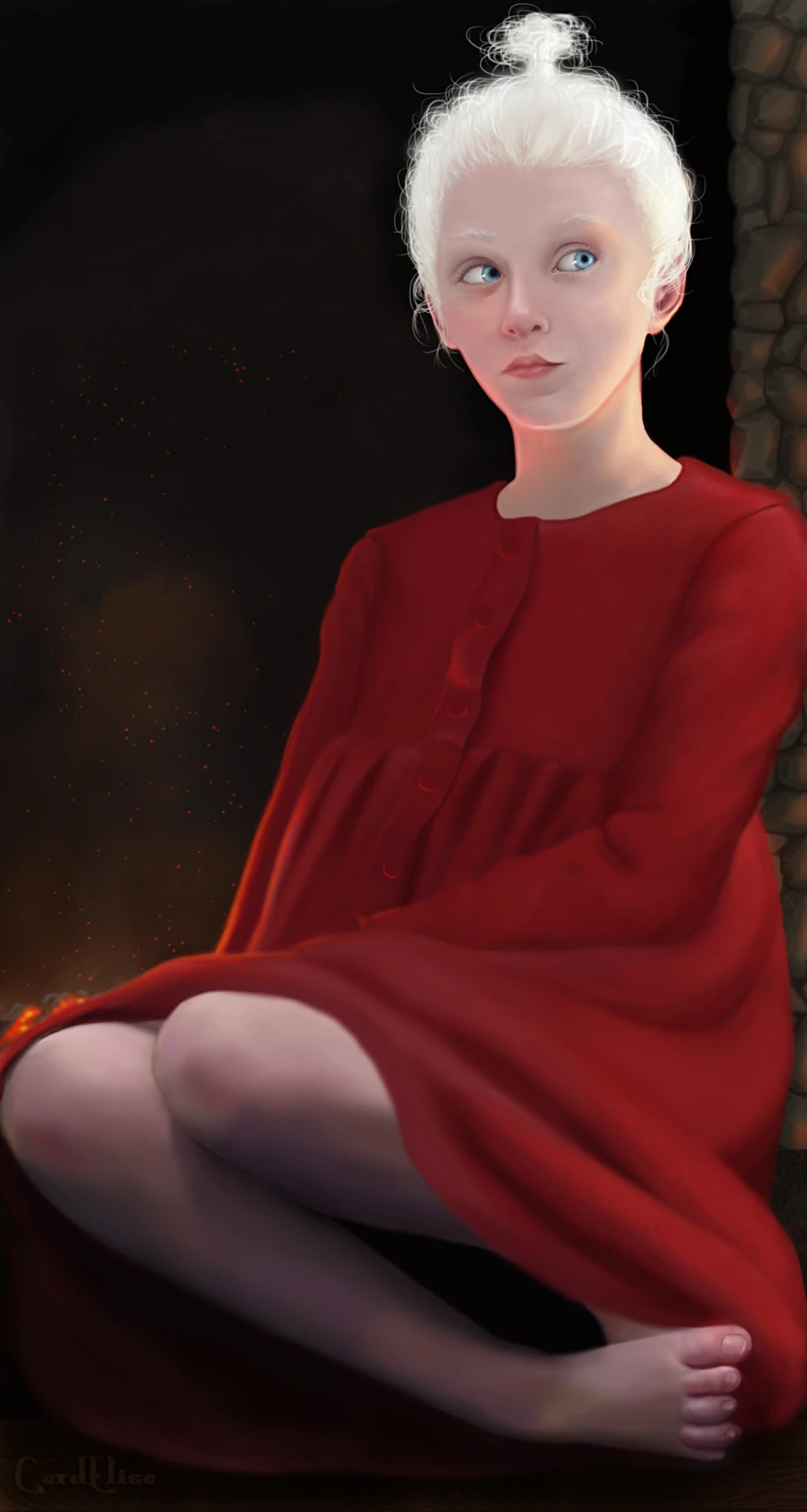
The girl of the hour.
GerdElise’s Bee on Robin Hobb’s Realm of the Elderlings Wiki, used for commentary

The present chapter is startlingly brief, only six pages in the edition I am reading. Following immediately after another brief chapter, it creates the impression of accelerating towards some event of import–sensibly enough, since the book is closer to its end at the end of the present chapter than it is to its beginning. To put it in terms of Freytag’s Pyramid, the falling action is clearly underway–although what the climax of the novel is in that sense is not entirely clear to my reading. Is it the arrival of the messenger? The arrival of Shun? Fitz’s agreement to take her on? The death of Molly, even? And, to expand to the whole of the Fitz-focused portion of the Realm of the Elderlings corpus, where is the overall climax? Is it even appropriate to apply Freytag’s pyramid to such an overarching narrative structure?

Many questions, of course, and it is good to have so many; it means there’s more work to do with the texts. So much is, perhaps, a self-serving assertion; I do, after all, do such work, and it is in my best interest to note there’s more of it to do. But the electrician who sees room for more circuits to be installed is not held to blame for it, nor yet the mason who sees where stonework could be built to benefit. And if it is the case that the work I do does not have the immediate benefit that that done by tradespeople carries, it is also the case that any ill done by my work is less harmful–while the good it does may well endure longer.

If you like the kind of writing I do, consider hiring me to write for you!
Fill out the form below to get started!

← Back

Thank you for your response. ✨

Warning
Warning
Warning
Warning.

Or you can send your support along directly!

Why Not another Sonnet?

I write to leave a record of my days
I write in hopes of earning people’s praise
I write that I might delight and amaze
All those who read the lines I leave each time
I put a pen to paper, whether rhymes,
Alliteration, free verse, prose, and I’m
Yet pleased to have the time to write I need.
That voice that says I’m privileged, I heed,
For having time to sit and write and read
Is luxury that many, sadly, lack.
It may well be that I remain a hack
Despite the written pages that I stack
On shelves of wood and bits and bytes, but still
I write, and as I do, I yet do thrill.

Truer than might be preferred…
Photo by Tony Zohari on Pexels.com

I’m happy to write for you, whether a sonnet or something else!
Fill out the form below to begin to get yours!

← Back

Thank you for your response. ✨

Warning
Warning
Warning
Warning.

Or you can send your support along directly!

Regarding a Library Book I Borrowed Recently

The due date was stamped in
Red ink, only the
Fourth such stamp to mark the
Slip stuck into the
Back of the book
And more than a decade
After the last one

If only…
Photo by Ivo Rainha on Pexels.com

Seeing the spread, I
Have to wonder who
Bought this book for the
Library in the first place
Who read it before I did
Who will read it next
And if they and I got
Something like the same thing
From doing much the same thing
Years apart

Bespoke poetry makes a fine gift; get yours started today by filling out the form below!

← Back

Thank you for your response. ✨

Warning
Warning
Warning
Warning.

Or you can send your support along directly!

A Robin Hobb Rereading Series, Entry 407: Fool’s Assassin, Chapter 17

Read the previous entry in the series here.
Read the next entry in the series
here.


After a passage from an assassin’s instruction manual opining on the inherent cruelty of the profession, “Assassins” begins with Fitz killing the messenger that had reached him, musing that, despite the endorsement of the victim, it was his worst killing–and that he was involving Bee in the worst of his business. But with the killing accomplished, he bears the messenger’s body to a woodpile, Bee trailing behind him. The pair prepare the body and set the pile alight, making a pyre of it, and they confer about their cover story. They confer, too, if somewhat obliquely, about Fitz’s quiet work for the Six Duchies.

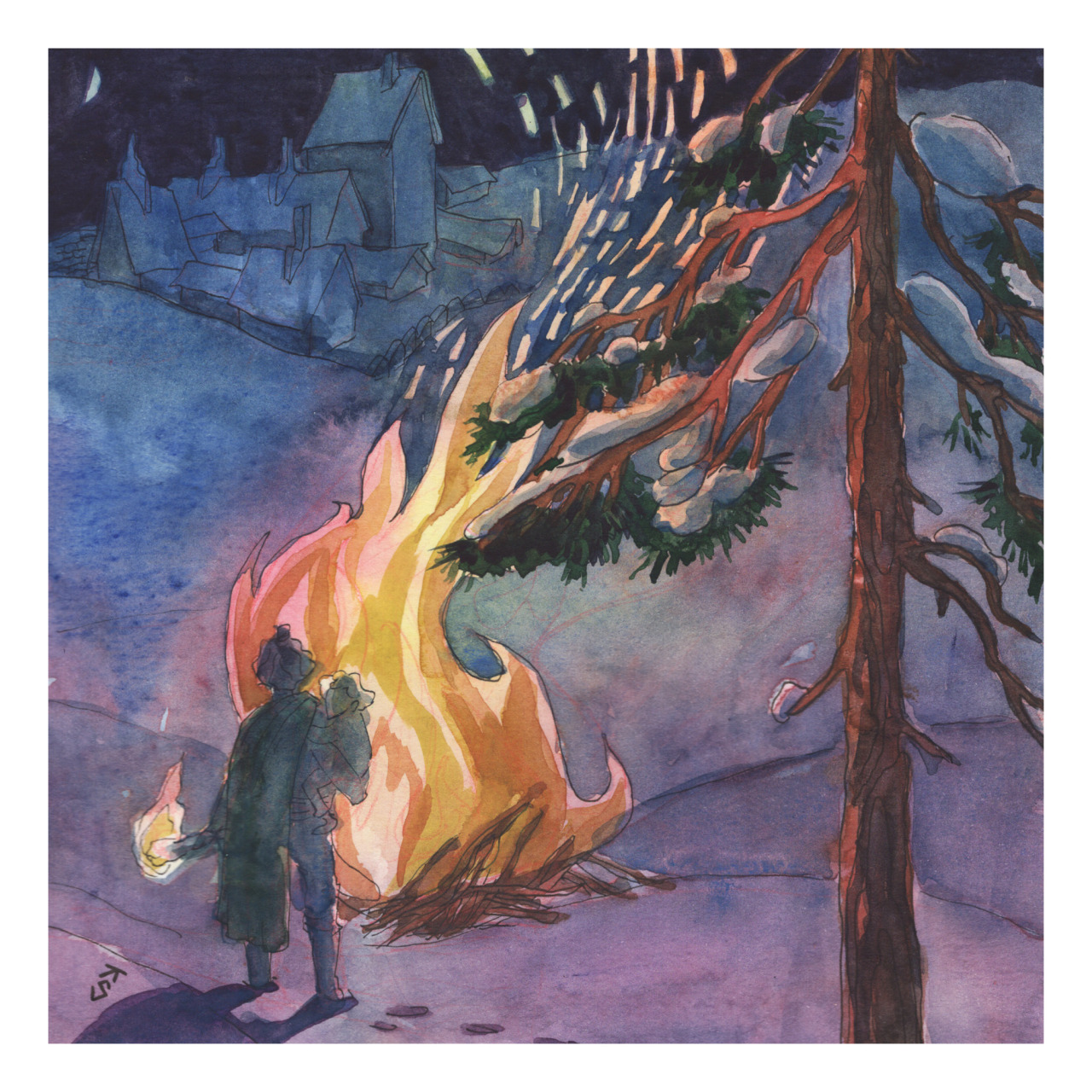
Picture related.
Katrin Sapranova’s The Messenger, from her Tumblr feed, used for commentary

Fitz finds himself puzzling over the message the Fool had sent to him, trying to suss out the parentage of the Fool’s child. Garetha, who had provided flowers for Lord Golden and thereby shown her knowledge of his identity, is offered as one possibility; she is not the only one. At length, Bee interrupts his reverie, and the two proceed back inside, Fitz rebuking himself for his many follies along the way. His thoughts turn dark, and Bee has to lead the pair of them back home.

Within, Fitz begins to see to Bee, considering ramifications of his actions, until interrupted by shrill screaming from Shun. She has woken form a dream in guilt and terror, and Riddle sees to her as Fitz searches her rooms. Finding himself dissatisfied with Shun and confused by Chade’s interest in her, Fitz stalks on to settle matters. When he returns to where he had left Bee, however, he finds her gone, and the search for her begins.

The present chapter is relatively brief, some fifteen pages in the edition of the book I am reading. I have yet to puzzle out any consistent pattern in the chapter-lengths, although I admit that I have not been doing enough work on that issue to have come to any conclusions. It is the kind of thing that could underpin a decent study, I know; I actually recommend it as an exercise for students when I write lesson plans as a freelancer (which happens less often anymore than I might prefer, although I’ve got a couple such jobs on my plate at the moment, so it’s fresh in my mind).

In those long-ago days when I had students and the audacity to think I was doing a decent job with them, I would suggest such an approach or a similar one to those of my pupils who thought there was no “real data” to be found in literary pages. (A few scholars, noted here, here, and here, might have been good to be able to reference then, as well, but I did not know about them at that point.) There is information in the paratext of a work no less than in the text, and that in one certainly influences the other. I’ve long known it, and Oliver, among others, cites a number of scholars in confirmation thereof.

As I’ve been getting back into more scholarly work–and I have been, and not only on the Fedwren Project–I’ve noticed my reading is shifting again. I am still decidedly affective when I read, something for which I know several of my professors would rebuke me were I still under their supervision. (Since I am not, I doubt they are aware of what I am doing. Such is life, I suppose.) But I have also begun to remember more as I write, which prompts me to review again those sources I have so often handled to find where it is I remember the remembered from and to link back to them (because this is an online composition, and linking is the preferred citation method, even when it is the case that many things thought stably and permanently online are…less so). I have begun to remember what I had wanted to make myself become, and I have begun to remember the joy and animation of it–strange as it might well seem to those who have not felt elation at puzzling out some knotty set of references or allusions or the like, who view the work of literary criticism as dry and dull and dreary.

Such long sustained me, though, and it is good to feel it move within me again.

If you like the way I write, you might hire me to write for you; get started by filling out the form below!

← Back

Thank you for your response. ✨

Warning
Warning
Warning
Warning.

Or you can send your support along directly!