Read the previous entry in the serieshere. Read the next entry in the serieshere.
A fairly lengthy message from Hest’s mother, Sealia, to him prefaces “City of Elderlings.” The chapter opens with Alise being disturbed from her investigations and recalling earlier interruptions with some annoyance. Alise recognizes her present disturber as Sylvie, who reports the return of the Tarman. Alise is briefed on recent events, and she takes some care with her appearance before deciding it does not matter. Alise also muses over changes among the keepers and dragons in the wake of the relocation to Kelsingra proper and the dragons’ ability to fly. Broader social changes and acceptance are also attested, and Alise finds herself happily racing to the approaching liveship.
Be it ever so humble… Photo by Yuri Meesen on Pexels.com
Aboard the Tarman, Leftrin considers the dragons’ interest in his pursuit and regards the struggles his ship faces in coming in to the new dockfront, which is described. The liveship comes into the docks, greeted by keepers, anchored, and tied up. Leftrin gives orders for the ship’s unloading, and he confers with the vessel as those orders are carried out. The ship notes that Phron remains in peril, something that unsettles Leftrin, but he lets it be.
Alise assists Malta in finding quarters for herself and her family and in getting them settled in. The Elderling city swiftly begins to have an effect on Phron, upsetting Malta, and the women confer about changes and developments. Malta continues to settle in, and Alise explains both what is known about the city and her frustrations with how the keepers themselves are despoiling it. Malta also becomes aware of the presence of others’ memories around her, and Alise advises Malta that she and Reyn are already figures of veneration in Kelsingra.
Alise leaves Malta to rest, considering Phron as she goes, and she manages to extricate Reyn from where the keepers ply him with questions. She considers changes to herself as she heads towards the docks, observing the work going on there, and her mind turns for a time to the logistics of refounding the city. But she is greeted warmly by Leftrin when she reaches the Tarman, and Leftrin dismisses his crew so that he and Alise can confer and reconnect.
The present chapter does, I note with some pleasure, speak directly to the promise of refounding for those who had previously been excluded or marginalized. The scandal Alise reflects on that would attend in Bingtown upon same-sex romances that are commonplace in and around Kelsingra and the easy acceptance if not outright privileging of those “marked” by the Rain Wilds attract my eye, and I cannot help but think that there is something of a utopian motion going on with it. Not fully, of course; it’s not in line with Hobb’s usual style for there to be no problems, and Rapskal’s burgeoning militancy is noted in the present chapter, as well. But it is still present, I think, and it is a fairly conventional move to make in a fantasy series.
The question of power is one that the present chapter raises, as well. It is noted in the chapter that Malta and Reyn are regarded as being leaders among the Elderlings–which is sensible, since for some years, they and the absent Selden were the only acknowledged to be of that people. That they come from previously prominent and already-wealthy families is something of a complicating factor; while it is made clear from the Liveship Traders novels that they did much to improve upon themselves and seize the opportunities available to them, it is also clear that many of those opportunities only presented themselves because Reyn and Malta started out in good positions. It becomes something of an open question, then, how much change they would be willing to permit, were they installed as rulers; even if they are “merely” firsts among equals, their influence could be considerable, and they would likely incline to replicating the structures that have empowered them. It has been demonstrated, after all, that the Elderlings are humans and all too human; it would not be out of line with such depictions.
I am aware that I am once again writing about a work of fiction and its characters as if it is real life and they are real people. I am aware, once again, of the strangeness of doing so, especially given all that is happening in the real world at this and at any given time. But I am also aware that stories are told and continue to be told, whatever else is happening in the world wherein they are told. And I am aware that looking at stories offers some possible insight into the world. What is not may yet in some ways be, and there is some hope to be found in that.
I’m happy to write to order for you; fill out the form below to get your piece started!
November tends to be a celebratory time for my family. For one thing, we like to eat, and November in the United States offers a holiday focused largely around sharing a large meal (as opposed to Christmas, which centers on buying lots of stuff, though it features a large meal). For another, many of the family’s birthdays are in November. My own is early in the month, I’ve got a cousin whose birthday follows promptly, and a late uncle came into the world later on in November, many years back.
Today, however, is my father’s birthday. By the time this goes live, I will have called him and made sure his gift is where he can get it. He’s a father well worth being a dutiful son towards, and more than that, he’s a solid human being, hardworking and personable, with whom most anybody ought to count themselves privileged to interact. I’ve gotten to be around him more than most, and I’ve certainly been in a position to learn more from him than nearly anybody else, even if I haven’t always been as good a student to him as I ought to have been.
Even so, I’m glad to be his son. And I hope he continues to have a happy birthday, today and for many todays to come.
I’m happy to write to order for you; fill out the form below to get your piece started!
Read the previous entry in the serieshere. Read the next entry in the serieshere.
After a letter from Keffria Vestrit to Jani Khuprus in which the former notes apprehensions about her younger children and reports news from Wintrow, “City Dwellers”,” opens with Thymara musing on the relocation into Kelsingra proper from the settlements across the river from it. Details of the relocation are provided, and findings in the city that are put to use are described. Thymara notes changes in Sintara since the latter gained flight, and the two confer about their association and the changes still ongoing in Thymara. Talk turns to Silver, about which Sintara muses longingly, noting its flows and power and raging at Thymara that she cannot recall them.
Something like this, but less happy, for Chassim. Photo by Yan Krukau on Pexels.com
Thymara recalls conversations with Alise that might be informative, and her thoughts turn to considerations of reestablishing settlement in Kelsingra itself. Tasks assigned and difficulties with other keepers, notably Tats and Rapskal, receive attention, as do factional divisions growing among them. Thymara adds what she is able to recall from the embedded memories in the city to their store of knowledge, which helps with planning for the future, and she muses on the implications of the memories she has gained. She ends up discussing as much with Tats, who insists in bringing Alise into the discussion, and they confer about how to proceed as they watch the work to restore the city go on. But their continued discussion is interrupted by dragons beginning to fight and Carson’s summons to address the same.
Elsewhere, Chassim confronts Selden, the latter of whom regards the former with questions about her hostility. Selden assesses his situation and asks Chassim for more details about it, learning of her parentage and the Duke of Chalced’s intentions towards him. Chassim’s own situation is explicated in some detail, and prospects for the both of them are poor, though they begin to reach an accord together.
The character of Chassim Kent, daughter of the Duke of Chalced, Andronicus Kent, calls for attention, despite how little she appears in the chapter. Her description echoes that of hijabi, and, with that description in place alongside long-standing descriptions of Chalced, I find myself put in mind of markedly unhelpful stereotypes at play in prevailing US cultural discourses antecedent to and contemporary with the publication and presumed composition of the text. I am not an expert on anti-Muslim prejudice, but it does seem to me that the linking of Muslim-coded things to an overtly, almost comically evil nation-state does smack of that kind of bias…and I am disappointed to see it. While there does need to be conflict in such a novel as Blood of Dragons–fantasy literature almost demands that there be some sort of international shenanigans–and much genre fiction benefits from clear antagonists, neither needs to reinforce real-world hatreds that were more than problematic at the time of publication and which have only gotten worse in light of recent execrable events at play. It’s a point against the novel, and a substantial one.
Once again, between the present chapter and some other reading I’ve been doing (you don’t think the novel is the only thing I’m reading, do you?), I come to the anticipated criticisms that “It’s just a novel,” that “It’s just a story,” that “It’s just make-believe,” and that “If you don’t like it, stop reading.” As to the first three, I have often in similar cases noted that the promulgation of material influences prevailing understandings of the world and therefore the actions taken in the world. That is, what gets put out into the world sets people up to think and believe those things and to act on them. The stories we take in help to shape who we are, just as the stories we tell show much of who we are; they matter for those reasons if for no others. (I do think there are others, clearly.) And as to the last of the four–I didn’t say I don’t like the novel as a whole. But liking a thing does not, or should not, mean blindness to its deficiencies.
I have fallen in some ways from my prime, partly because of increasing age, partly because of increasing distance from the kind of life of the mind for which I had trained, the loss of which I yet mourn. But I am not so fallen as to be incapable of seeing blemishes upon what I appreciate and still appreciating it. I did my dissertation on Malory; there is a lot in his work (and more in his life, so far as we know it) with which to find fault. I read Chaucer eagerly; the same is true for him as for Malory. I read Shakespeare, Milton, Asimov, Tolkien (yes, I’m a nerd); the same is true for each of them, as well. I have no doubt I could find similar issues in the other readings I do (again, there are many such). That I do does not mean I endorse all or even any of what they say, and it is perhaps a position of privilege that allows me to do such reading and not be harmed by it…clearly, I have more thinking to do on the matter.
I doubt I am the only one.
I’m happy to write to order for you; fill out the form below to get your piece started!
The time of the year has come around again when many people focus their attentions on generating the text of a new novel. It’s a worthy endeavor, of course; writing is a good thing to do, novels are good things to write, and I and others benefit from them existing in the world. The challenge of composing nearly two thousand words daily is a hefty one, and not everybody who sets out to address it meets it. Even so, even making the attempt earnestly and sincerely is a good thing to do. You’re on the right track as soon as you take the first step onto it.
Even the best writers, though, benefit from having another set of eyes on their work. Ultimately, nobody writes all alone. I’ve done a lot of writing across many years and in many contexts, so I’ve got experience with this: you always miss something. Maybe it’s because you’re in a hurry, buoyed along by the joy of having done the writing. Maybe it’s because you’re distracted, living in the world with all of the demands it makes upon a person. Maybe it’s because you know how it’s supposed to go, how glorious it looks in your head, and you see that instead of what’s on the page. Maybe it’s just an issue of skillset; you’ve got great ideas and you’ve got them on paper, but the fine-tuning and polishing is just not your forte. Whatever the reason for it is, the truth is that you’re not going to catch everything that’s on the page, even though you put it there. You won’t necessarily see that you forgot to make the connection between those two characters clear, or you might miss the notion that this other characters’ background seems really interesting and readers will want to know more!
That’s where I come in.
With nearly twenty years of experience reviewing others’ writing, ranging from middle schoolers to established scholars and in fields ranging from aerospace engineering to business, cybersecurity to education, fiction to literary analysis, poetry to psychology, I have the skills and expertise to help you hone your craft and be the best writer you can be. If you want to know if your story makes sense, if your characters are believable, if your quips are clever, or even only if you got your commas in the right places, I am here to help you. Whether you’d like chapter-by-chapter guidance and feedback or a whole-work review of what works well and what needs some support, I can offer in-depth, detailed reading and response so that you can put out the best possible product.
You’re already doing great just by taking on a project like this. Make the most of it; get set up for your consultation today! Fill out the contact form below to get started!
It’s not just for NaNoWriMo, either! I’m happy to work with writers on a variety of projects, as well as to write the kind of thing you need written; send me your details below, and we’ll begin!
A while back, I worked with a tutoring client to draft a response to Shakespeare’s Sonnet 130, “My mistress’s eyes are nothing like the sun,” and I wrote a post about how I went about helping the client that provided my own example of that kind of work. (Find it here.) In that post, I note similarities between the client’s assignment and the often-taught Marlowe-Raleigh-Donne sequence (“The Passionate Shepherd to His Love,” “The Nymph’s Reply to the Shepherd,” and “The Bait”), and in recent days, I had occasion to revisit my post on the Shakespearean subject. I was reminded of the events then discussed, and it occurred to me that it might be a useful exercise to put myself in the position of Donne to the already-existing Raleigh, the rebuttal to Shakespeare’s Sonnet 116.
Let me not to the marriage of true minds Admit impediments. Love is not love Which alters when it alteration finds, Or bends with the remover to remove. O no! it is an ever-fixed mark That looks on tempests and is never shaken; It is the star to every wand’ring bark, Whose worth’s unknown, although his height be taken. Love’s not Time’s fool, though rosy lips and cheeks Within his bending sickle’s compass come; Love alters not with his brief hours and weeks, But bears it out even to the edge of doom. If this be error and upon me prov’d, I never writ, nor no man ever lov’d.
My rebuttal thereto reads
You never writ, nor no man ever loved, If love is never love that, finding change, Stays as it is when it first ever moved Or strives not living patterns to arrange In hopes of bringing its love to the mark That looks on tempests and is not shaken. No, use will change the shape of every bark That plies the waves, whatever standard’s taken. Love’s not Time’s fool, oh no, but is its flow’r And fruit that ripens not all in one go, But in its season and appointed hour If tended well, made better, and let grow. No thing that is made better stays the same, And stasis gives the lie to goodness’s claim.
Following the pattern, to make this work, I’ll need to continue to use the Shakespearean sonnet structure of fourteen lines of iambic pentameter rhyming in three quatrains and a couplet, with a (somewhat shaded) turn into the couplet. Too, to stand in place of Donne in response to Raleigh, I will need to put myself in position to flirt with the narrator of the rebuttal–something, to follow the Shakespearean example, like making a pass at Beatrice after she has rebuffed Benedick. Further, the dominant metaphor will need to shift fairly substantially; Marlowe and Raleigh work in the pastoral, while Donne pivots to angling, so I would need to move from the nautical and agrarian to something else, entirely.
Farming and boating are both active, engaged ways to make a living. A deviation from that would be something like my once-intended line of work: professing the humanities. Fortunately, I know enough about doing that (or convinced at least a few people that I did) that I can discuss it convincingly. Too, the narrator being addressed has to be considered; what does such a narrator de/value? The rebuttal is a rebuke of hubris, the conceit on Shakespeare’s part that he is able to universalize in such a way as he purports to do; so much must be avoided in the new poem (to the extent possible, knowing as I do that there is arrogance in any act of writing, something of the “I have important things to say and you need to read them“). I fancy, as well, that the rebutting narrator values growth and change, which does raise the possibility of leaving things behind (which Shakespeare’s narrator really cannot consider with love as a set constant).
With such in mind, I come up with the following:
In no minds’ marriage would I interfere, Nor yet presume to speak of such with you, Who, though in but a moment, has made clear What thoughts are held on how to carry through A life of love. Instead, I turn a page I’ve read before and read again the words I have long known, and in my later age I hear in them what I’d not in youth heard. So may love be, itself a constant thing That is itself and e’er itself remains, While those who fall to Time’s long sickle’s swing Will alter in what they will from it gain. The book is open; read whoever will, And in the reading by love be well filled.
I hope the reading pleases.
I’m happy to do this kind of work on your behalf! Reach out below for details!
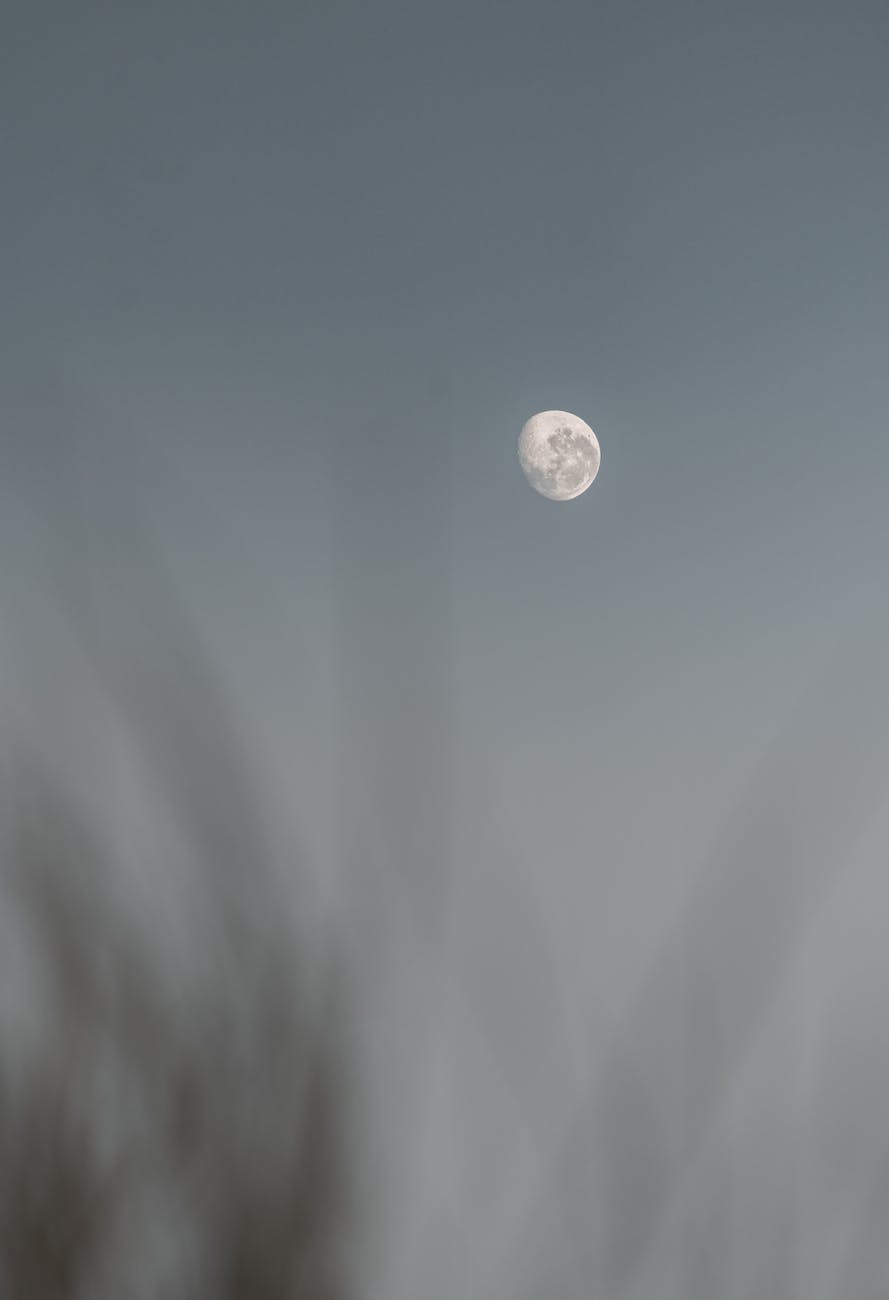
I do so love a chilly clear morning The moon off full staring silently down At crisping grass waving gently silvered In the quiet before the world wakes
That’s no battle station… Photo by Ben Mack on Pexels.com
It never lasts Arien running her appointed course as Tilion dallies yet again And the books demand my attention as they ever do Where a steaming mug awaits
I’m happy to write to order for you; fill out the form below to get your piece started!
Read the previous entry in the serieshere. Read the next entry in the serieshere.
Following a markedly acerbic message from Ronica Vestrit to the Cassarick bird-keeper, “Dragon Blood” begins with Ellik presenting the captive Selden to the Duke of Chalced, who comments dimly on Selden’s appearance. The situation of those present is described in detail, and Selden is abused once again before he identifies himself and what had been his intended purpose. Selden also lays out the betrayal that led him to his current situation, and he notes that he might well be ransomed. The Duke refuses, however, citing his seemingly draconic nature as a reason to keep him. Selden notes his heritage and is again abused. The Duke considers his options and the effects that having eaten of Selden had had upon him, and he determines to have Chassim tend to him. The Duke contemplates further, finding himself reasonably pleased.
Elsewhere, Tintaglia approaches Trehaug, happily anticipating being served by Malta, Reyn, and Selden. Arriving, she summons the three, occasioning panic among the Rain Wilders present. At length, Jani Khuprus addresses the dragon, confirming that Malta and Reyn are gone and resisting Tintaglia’s attempts at ensorcelling her. Others react poorly to the presence of the dragon in their midst, and, after some upset, Tintaglia is sent on towards Kelsingra, the location of which is known to her.
Aboard the Tarman, Leftrin eagerly anticipates arriving at Kelsingra as he and his crew and passengers approach it. Reyn starts at the sight of the outskirts, and the pair of them marvel to see so many dragons aloft as they do. Others aboard join them in the joy of the sight, and Leftrin is put ill at ease by the sudden interest of Spit in the liveship. He does consider, however, the pursuit that yet follows, and he watches with equanimity as the pursuing ship presumes to fire upon Spit. The dragons begin to harass the vessel before falling into a game of their own, and Lefrtin and Hennessey confer about the changes to them.
I find myself taken by Ronica’s message. I know biographical criticism is always problematic. I know, too, that affective reading is at least as problematic. I cannot help but be put in mind of a number of more experienced women I’ve known, however, and I cannot help but think that something of the author’s own annoyance at some delivery person or another bleeds over into the text. (Given the publication date of the novel, 2013, I find myself wondering if something like this was at work for Hobb as it had been for me.) Certainly, it rings of authentic experience to me, the lived real, and that is a helpful grounding in a book that makes much of flying, acid-spitting metamorphic reptiles and those they usefully and decoratively mutate for their own ends.
The cold conniving at work in Chalced also strikes me. Again, given the times involved in publication, I have to wonder if Hobb is responding in some ways to Martin and his swelling popularity, Game of Thrones being on screens and all. Admittedly, Hobb’s characters were prone to plotting ere ever Benioff and Weiss got going on the show (about which more here), with Shrewd, Chade, and Regal doing more than their shares of such in the Farseer novels, and none of it is particularly savory. Still, Shrewd and Chade at least presented themselves as acting in the interests of the realm rather than themselves, with Chade being somewhat belligerent on that score; reprehensible as no small part of what the elder Farseer half-brothers plotted was, it was not about them. And, reprehensible as no small part of what the elder Farseer half-brothers plotted was, it was not cannibalism.
Neither is the case with the Duke of Chalced. I believe I’ve commented on the almost cartoonish villainy in play with him, almost as if he joins Mumm-Ra in pleading directly with ancient spirits of evil. He is clearly The Bad Guy here, and he seems worse, somehow, than the Pale Woman of the Tawny Man novels; she, at least, had some vision to attempt to enact, and one not entirely unsympathetic, although the means used to attempt the ends are foul. The Duke, though, appears only to serve himself, and if a reader can feel pity for a person beset by age and illness, it is far harder to incline towards a slaver who will feast upon the flesh of the still-living.
I’m happy to write to order for you; fill out the form below to get your piece started!
Sitting in the corner Thinking up a song The bard awaits a summons Hopes it won’t be long Before the tune is called for And played to the delight Of souls in joy assembled Long into the night
Usually this kind of thing, right? Photo by Pixabay on Pexels.com
The scribe is at his desk He waits with pen in hand Eager now to answer The written word’s demand To leave behind a record That will for long remain And echo in the eye Longer than the bard’s refrain
If you’d like writing for your own–with no AI synthetics!–fill out the form below, and we’ll get you started!




 Elliott RWI