A Robin Hobb Rereading Series: Entry 164: Mad Ship, Chapter 26

Read the previous entry in the series here.
Read the next entry in the series here.


The succeeding chapter, “Compromises,” begins with Keffria and Rache working on a dress for Malta in preparation for a formal event. Malta complies willingly enough, although she chafes at their straitened circumstances. Conversation turns to Reyn and the lack of contact from the Khuprus family, and Malta finds herself obliged to consider the fact that every man on whom she has thought to rely has abandoned her when she has had need. She determines to enter the coming event, a ball at which she will be presented as a young adult, on her own; Keffria questions the propriety, but Ronica affirms the gesture.

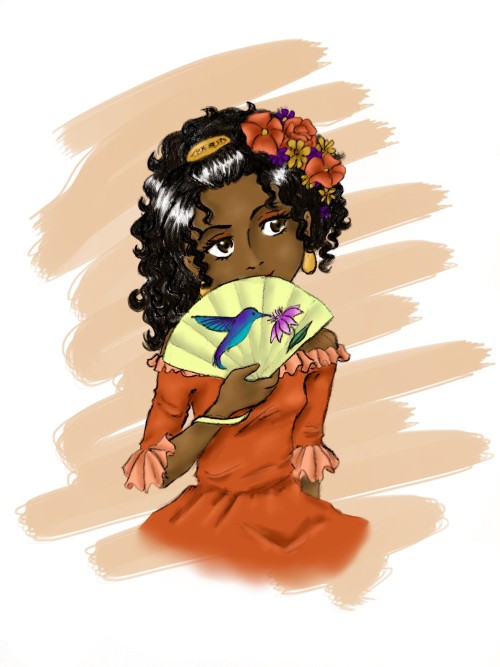
Jek, Althea and Amber
Uncertain cabinmates…
Jek, Althea and Amber by Lalawu29 on DeviantArt, used for commentary

Althea walks the liveship docks in Bingtown, hampered by the skirt she wears as a bare concession to propriety while in town. She and the liveship Kendry confer, the ship offering to take a message to Grag Tenira along the next run up the Rain Wild River. They confer regarding the Paragon, with the Kendry remarking that the general liveships’ opinion is that the Paragon is to blame for many of the troubles that have befallen the ship.

Althea reflects upon the work done to ready the Paragon, no small amount of it driven by Amber’s influence over various sectors of the Bingtown population. She also notes that Brashen has hired a first mate of his own choosing, a brute named Lavoy, and that she has been assigned as second mate in the meantime. Amber, too, will sail aboard the Paragon, having earned the right and been assigned as the ship’s carpenter; Jek, a woman from the Six Duchies, will also join the crew. Althea considers the strange and uncomfortable circumstances, which extend to the crew, as she boards the Paragon and reports to Lavoy. He orders her to see to stowing cargo with a crew of six; she takes it for the challenge it is, and goes below, working with her crew to arrange the incoming supplies to their best effect. She assesses the crew as she works, noting problems and bright spots, and Lavoy finds himself pleased with his subordinate’s work. When, at length, Althea is done, she reports to the captain, Brashen, noting her concerns; Brashen notes his plan to address them, with Paragon putting in darkly.

In the Rain Wilds, the Khuprus family confers, with Reyn rebuked by his older brother Bendir and Jani not entirely pleased with either. Bendir comments about the family finances, occasioning sharp comments from Reyn, in turn, and Jani steps in to reassert her authority over both of her sons. Some of the source of the Paragon‘s troubles is remarked upon; the ship was built from “mixed plank,” making it inherently unstable, and the likely over-loading of the ship by the Ludluck Traders did the rest. So is the threat of piracy coming to the Rain Wild River, with the Vivacia confirmed to be in Kennit’s hands and the Ringsgold rumored to be vanished. Reyn rages against the continued depredations of the Satrap and against Bendir’s reluctance to lead resistance. Jani, surprisingly, agrees with Reyn, and plans to foment rebellion begin. Reyn also tries to argue for access to the dragon that speaks in his mind, unsuccessfully, though an arrangement is reached that allows him some freedoms in exchange for his relinquishing claim on the last remaining wizardwood log. After Reyn agrees to the terms and departs, Jani confers with Bendir, bidding him dispose of the dragon once Reyn is away.

At night, Amber confers with the anchored Paragon. The ship voices concerns about being unable to see and asks about Amber’s work on the Ophelia‘s hands. Paragon presses Amber to recarve the figurehead into a new form that can see; she is hesitant to make the attempt, fearful of working badly or doing worse, but she agrees to consider the work.

The attitude towards blame in the present chapter is of interest. Malta notes that her father’s absence may not be his fault, but it is still felt, and she must still move away from relying on others. The liveships believe the Paragon caused the problems that befell, while the Khuprus family knows some of the blame for the ship and its situation is theirs–though they do not admit to all of it. Rereading, I am put in mind of the talk of “personal responsibility” that crops up every so often, usually when there is some motion towards addressing systemic inequities that have and have had generational impacts. And I remain uncertain how best to respond to such things, although I note that 1) not everyone has the capability of choosing well and 2) a person may well choose from a menu without being the one who sets the menu. You’re not likely to get sushi at a burger joint, after all, and if you didn’t drive…

I’ve also had to replace my computer; help offset the cost so I can keep doing this for you?
A Robin Hobb Rereading Series: Entry 163: Mad Ship, Chapter 25

Read the previous entry in the series here.
Read the next entry in the series here.


The next chapter, “The Launch of the Paragon,” opens with Brashen reviewing the final repairs and refitting conducted on the Paragon before the ship can be floated. He mulls over the question of disciplining the vessel, which he had discussed with Amber and Althea previously; their discussion is rehearsed. Their initial foray is also rehearsed. So is the plan for floating the ship and addressing likely further repairs. Brashen assigns Althea to monitor below-decks action; Amber will remain at the figurehead to handle the strange moodiness of the ship. That done, he signals for the plans to begin, and the ship starts to move.

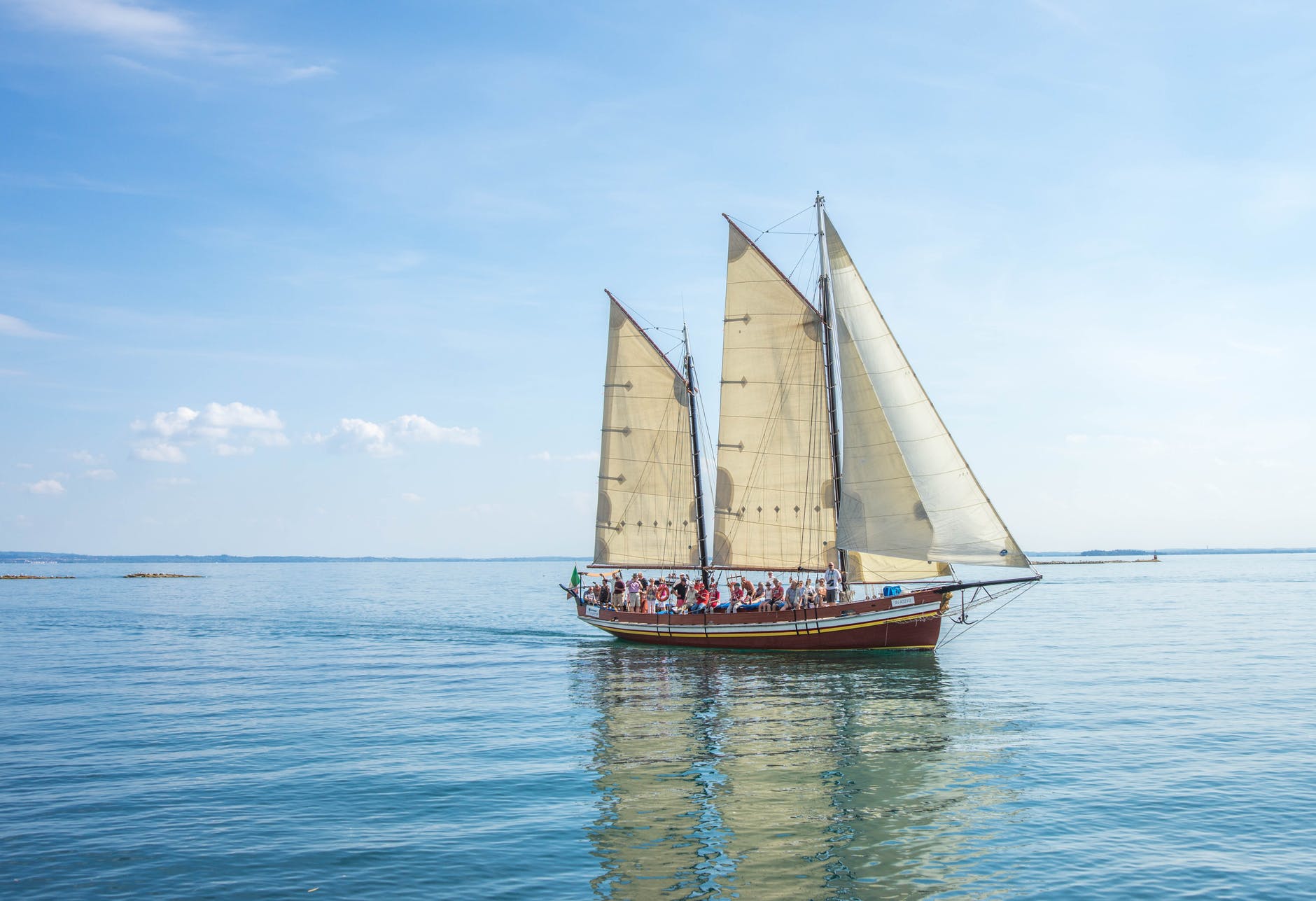
That’s more like it…
Photo by Pixabay on Pexels.com

The ship is disquieted by the return to the sea; Amber works to soothe the Paragon. The ship perceives obstacles to being floated and calls them out, initially to disbelief, but soon enough to acceptance, and the work of the on-shore crew and offshore barge pull the ship out from the beach into the surf. Pumping and caulking begin in earnest. The ship is righted, exulting in being afloat again even amid the fear of unseen dangers, and secured to the work barge as timbers align, planking swells, and caulking continues. The ship’s conversation with Amber grows strained, as if Paragon is a moody boy amid the throes of puberty, and as Amber withdraws, Clef approaches and reproaches the ship.

Below decks, the pump crews are rotated. Brashen and Althea confer about progress and prospects. After, she moves off to survey the damage occasioned by re-righting the long off-kilter vessel. Berthing receives consideration, both aboard the Paragon and for the ship; Brashen purposes to put in with the other liveships, while Althea expresses concern regarding that arrangement. He acknowledges is, put means to proceed, anyway, proud captain of a ship at last.

The Paragon remains aware of what transpires on and below deck. The process of realignment continues, considered closely. The ship begins to take a peculiar pleasure in being captained once again.

The Liveship Traders series makes much of anthropomorphism, obviously. Ships speaking through the mouths carved for them, noting thoughts and feelings much like those of their crews, is a blunt instantiation of the device. The present chapter, though, seems to be a better example of it than most. Something in it rings true to me; something in the depiction of a ship exulting in returning to sailing seems somehow right to me. I know it’s silly in the sense that I should not be an affective reader, and I know it’s fraught from the perspective of a rereading that knows whereof the liveships are made in milieu. Still, I find myself thinking “Yes, that’s it!” as I read the chapter again–as I have several times elsewhere in the book and in the corpus of which it is part.

I can always use your support.

A Robin Hobb Rereading Series: Entry 162: Mad Ship, Chapter 24

Read the previous entry in the series here.
Read the next entry in the series here.


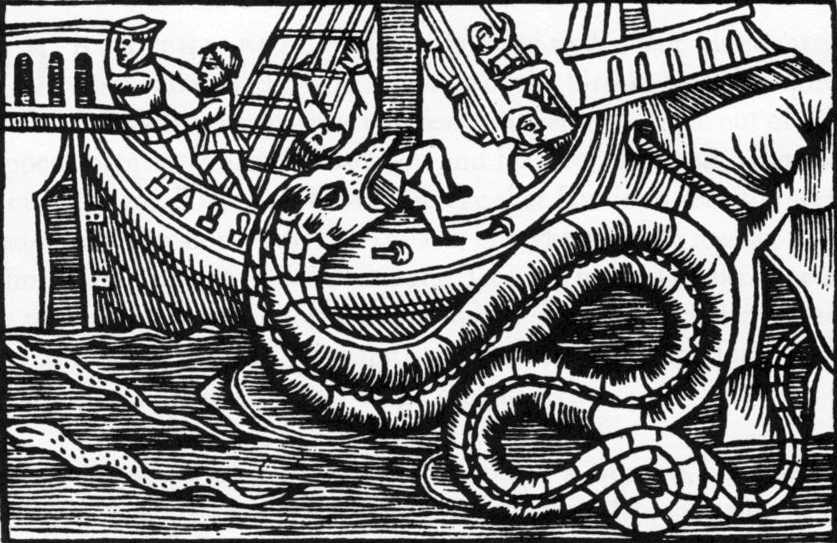
The succeeding chapter, “The Ringsgold,” begins with the serpents Maulkin and Shreever regarding their growing tangle. More serpents come to join them; some remain feral, some regain identities, and some languish between the two states. They confer about their progress and their needs; they also confer about “the silver provider” that has confused and assailed them. Conversation among the serpents leads to the idea that such as “the silver provider” have forgotten themselves much as many of the serpents had, and they purpose to make one such return to itself as they had to themselves.

Sea serpent.jpg
Something like this, maybe?
Woodcut from the 1555 History of the Northern Peoples by Olaus Magnus; I’m pretty sure it’s public domain.

The attempt goes poorly. Despite the serpents’ imprecations and assaults, the ship they pursue gives no sign of knowing them. The serpents drag the ship under, killing the crew–but reawakening the dragon within the wizardwood ship, which claims to speak with the voices of the dead. The ship tells what it knows of its history and the cataclysm that led to its situation. It asks to be consumed by the surrounding serpents, ended thus and freed from the torment and enslavement it has learned it suffers. The serpents oblige, and memories flood into them–including, for Shreever, memories of flight.

As before, the interludes focusing on the serpents serve to remind readers that other intelligences than human inhabit the Realm of the Elderlings’ milieu. The confirmation in the present chapter of the nature of wizardwood and the liveships is striking, perhaps, although, if memory serves, it has been amply foreshadowed by this point in the series. What it portends for the other liveships that have featured in the novels, the Vivacia and the Paragon, will be worth attention as the reread continues…

We’re still handling medical expenses and could use your help.

A Robin Hobb Rereading Series: Entry 161: Mad Ship, Chapter 23

Read the previous entry in the series here.
Read the next entry in the series here.

A content warning regarding sexual assault is in order here.


The following chapter, “Consequences,” opens with Serilla rehearsing her recent circumstances. Her efforts to resist the depredations inflicted upon her had been futile, and she had been abused with seeming nonchalance by the Chalcedean captain upon whose vessel she and the Satrap had embarked.

Maybe it’s worth the paper it’s written on…
Photo by Pixabay on Pexels.com

At length, Serilla is returned to the Satrap. He is filthy and ill, and Serilla upbraids him bitterly. She contemplates killing him before he opines that his death will only occasion her total surrender to the ship’s crew. She also notes that his current political position is fragile; he is away from his seat of power, and others doubtlessly plot to place themselves upon it in his absence. When he comments that he assumes she will have to be bribed, she agrees and begins to lay out some means of securing her independence and future security, holding the Satrap’s care against his agreement to do as she bids him.

The blithe disdain Serilla reports of her Chalcedean rapist and abuser is telling, speaking to a theme present in the Liveship Traders novels and elsewhere in Hobb’s Elderlings corpus: the idea of people as property dehumanizes those who presume to hold the “property” more than those who are held. That is, those who are enslaved may be dehumanized by their conditions, but those who enslave are made even worse; the former may be pitied and should be aided, but the latter deserve no such consideration, save only (and not necessarily even) in extreme circumstances. Serilla responds to her assaults in ways that those better informed regarding trauma theory than I might more meaningfully address, but those responses are not to be scoffed at or rebuked; what should be, and in the context of the novels is, is the (largely patriarchal and misogynistic) attitude that allows for such assaults to take place. It manifests to some degree in the Haven household, as depicted in Ship of Magic, with Keffria’s husband expecting deference even in error and physically enforcing his will–only on those who could not resist the physical attack. And it is evidenced in the deplorable words of the Satrap that claim rape is no crime, since what is infinitely supplied cannot be stolen. Ultimately, it is a cowardly practice, rightly abjured even as it is still entirely too prevalent in the readers’ world–but it deserves no less rebuke and opposition outside the novel than inside.

We’ve had some medical expenses pop up; care to help with them?

A Robin Hobb Rereading Series: Entry 160: Mad Ship, Chapter 22

Read the previous entry in the series here.
Read the next entry in the series here.


The next chapter, “A Change of Heart,” opens with Wintrow weathering the aggravated defiance of the liveship Vivacia. The ship has focused its attentions on Kennit, who has focused his on Etta, drawing the envious attention of and provoking pride in all aboard. Wintrow rehearses recent events, marking the ways in which Kennit continues to assess him. He also notes the revelation of Etta’s illiteracy and finds himself tasked with teaching Etta to read. Lessons are set to begin but are interrupted by the sight of a slaveship and the ensuing pursuit.

Vivacia design front
Something like this, perhaps, though the gun-ports are wrong…
Vivacia design front by 8Dimat8 on DeviantArt, used for commentary.

The Vivacia springs to the pursuit with a will, nearly subsuming Wintrow in her bloodlust. The Marietta joins her to take the slaver, and one of the crew of the slaver–the cook–attempts to bargain for his life with information about the hidden treasure of Igrot the Bold. Kennit takes charge of that particular situation, directing his own crew to see about cementing their hold on the ship and the disposition of the now-freed slaves. Kennit dispatches the cook, asserting repeatedly that Igrot’s crew had had no survivors, before ordering dispositions and scuttling the taken slaver.

Elsewhere, Althea meets with Grag Tenira, who seems to be comfortable in temporary exile. Althea’s path to him is noted, as are the concerns some have about her travel thither. Developments concerning Grag are also discussed; he is a wanted man with a substantial price on his head. Despite his need to depart soon, he states his love for Althea, and he asks her if she will marry him; she demurs, citing the need to reclaim the Vivacia before she can make any other major decisions. He acknowledges her choice and affirms that he will wait for her. The matter of Brashen Trell comes up between them, occasioning painful discussion that bespeaks a certain disregard by Grag for Althea’s agency. It dashes any thought she had had of a life with him, and she takes her leave.

Good Guy Greg
This guy…
Image from Know Your Meme, used for commentary.

The last passage is perhaps the most interesting. Until this point, Grag has been presented as a “good” character, and even with his failure to recognize Althea as being valid outside his understanding of gender roles, he comes across as more a benighted character than a “bad” one (such as Althea’s brother-in-law). And it is not out of line for him to want to find happiness on his own terms; the problem is that he expects Althea to defer to his views and his understandings, rather than that they will both have to accommodate each other’s. That, and the comment that because Brashen is a man, he is responsible and therefore to blame for Althea’s sexual expression, rather than Althea being in possession of her faculties and able to make her own decisions about sharing herself in such a way. As much a “good” guy as Grag might be–and “good guy Grag” does evoke some memes, even if likely unintentionally, but I read from who and what I am and where and when I have been–he suggests some problems inherent in even the “best” iterations of such systems as emerge from and reinforce strict gender dynamics. Saga Bokne has more to say on the matter, of course, and Goran Katavić’s work addresses similar concerns elsewhere in Hobb; Julia Hallgren Sanderson’s work also illuminates, and I would be happy to hear of others.

My anniversary was this past weekend; help me celebrate it?

A Robin Hobb Rereading Series: Entry 159: Mad Ship, Chapter 21

Read the previous entry in the series here.
Read the next entry in the series here.


A chapter titled “Salvage” follows, beginning with work to refit the Paragon ongoing under Brashen’s watch and with his help. Progress is noted, as is the difficulty the work faces of returning the long-beached ship to the sea. So is his continued difficulty addressing his addiction to cindin. And trouble emerges as the ship lashes out, frightening the work crews such that Brashen has to resort to threats to get work to continue. They extend to the ship, itself, despite the disapproval of both Amber and Althea, who look on. The three return to work, Clef joining them, and the sullen work crew resumes its own efforts.

image
We’re a ways past this…
Image from electropeach’s Tumblr, here, and used for commentary.

At the Vestrit home, Malta entertains her friend, Delo Trell. The latter passes along a missive from her brother, Cerwin, and Malta muses ruefully on her current situation. The contents of Cerwin’s missive are paltry, Malta contrasting them with what she has had to learn about the family finances. She asks about how the Trells stand and gets little useful information from it; Delo reports the argument between her father and Cerwin had echoed that between him and Brashen, frightening her. Malta mulls over what her friend says, recalling more of the events of intervening days and the sacrifices the Vestrits have been making, thinking on the increasing separation between herself and her peers. Malta retires to her chamber and considers her situation further. The room grows oppressive, and she finds herself ensnared in a dream. During it, the dragon speaks to her, demanding she help persuade Reyn to help her.

As night begins to fall, Brashen calls a halt to work on the Paragon as he wrestles with his longing for Althea, considering their strained relationship. As the work crews filter away, he pores over ledgers, tallying costs ruefully. He approaches her where she confers with Amber at the aft of the ship, and the three discuss the next day’s prospects. Althea notes updates from Grag; the Teniras’ situation is not improving. Brashen’s temper gets the better of him for a bit, and he is rebuked for it. He continues, confronting Althea with what he has intuited about her truth; Althea makes a perfunctory denial, and Brashen stalks off to where Clef has a cook fire going. He and the boy speak briefly about luck.

After Brashen leaves, Althea makes to depart. She rails against Brashen to Amber, who defends the man to her, in turn. Althea admits to the woodcarver that she would like more of a relationship with Brashen, and Amber encourages her in that desire.

Brashen’s addiction to cindin has been noted at several earlier points in the Liveship Traders books, and it joins with the problems identified in carris seed and elfbark in the Farseer novels to suggest a theme in Hobb’s novels addressing the perils of substance use. (From the vantage of a rereading, I can also note that others of the Elderlings novels speak to the issue, as well.) My own perspective, coming from administering a substance abuse treatment facility, predisposes me to look for such things, as might be expected, but even without that admitted bias, the inclusion of such things–not only the drugs and their intoxicating effects, but also their sometimes lingering aftereffects –does a fair bit to reinforce the verisimilitude of Hobb’s milieu. The drugs with mystical properties have all too mundane ones, as well, or else the mystical is only an extension of the mundane; they have the same narrative effect, really.

I shall appreciate your continued support.

A Robin Hobb Rereading Series: Entry 158: Mad Ship, Chapter 20

Read the previous entry in the series here.
Read the next entry in the series here.


The next chapter, “Piracy,” opens with Wintrow observing from the deck of the Vivacia as Kennit coordinates with Sorcor aboard the Marietta to seize another passing ship. Kennit exhorts the ship to the pursuit, and Wintrow considers the lead-up to it; the ship being pursued, the Crosspatch, had boasted of being able to evade Kennit and continue working as an elite slaver, and Kennit could not resist the open challenge.

Mr. Crosspatch | Mr. Men Wiki | Fandom
It’s an odd namesake…
Image taken from the Mr. Men Fandom,
used for commentary.

Action to seize the Crosspatch ensues, with most of the work done by the crew of the Marietta, Wintrow having warned of the peril of spilling more blood on the liveship’s decks. The former priest frets somewhat about the carnage he watches alongside Kennit, but the pirate captain replies with strangely philosophical musings that give Wintrow pause. The pirates take the slaver, and Kennit commands Wintrow to accompany him to survey the takings.

In Bingtown, Althea makes for the Paragon, considering the liveship in a new way after seeing the gifts Amber had provided. She takes in the alterations to and maintenance on the craft as she joins Brashen and Amber–and the freed slave, Clef–aboard. Once all are gathered and the parts others have played are noted, they confer with the ship about the possibility of undertaking the mission to recover the Vivacia. The ship is hesitant, but Amis Ludluck, the ostensible owner of the ship, accompanies them in the discussion, as does Restart. She affirms the sale of him to them, explaining herself bitterly. Restart receives his fee, and he and Amis withdraw. Clef moves to comfort the sullen ship.

Aboard the Crosspatch, Sorcor reports to Kennit as the latter boards and surveys the taken ship. Wintrow accompanies him on his slow tour of the seized vessel. Some of the slaves aboard aver a desire to be delivered to their intended purchaser, and Kennit opines on the evils of slavery. He and Wintrow also confer briefly about the latter’s future; Wintrow affirms his bond to the Vivacia.

That night, as the three ships sail off for Divvytown, Kennit rehearses the aftermath of the day’s actions. Etta prepares herself for Kennit and approaches Wintrow, where he sits with an injured crewman near the Vivacia‘s figurehead. They confer briefly, and Etta moves to Kennit, who confers with the ship about their plans. Shortly after, Kennit and Etta retire to his cabin for an intimate interlude.

Later, Wintrow reports to Kennit the death of the injured crewman. After dismissing the boy, Kennit confers with the charm on his wrist, which rebukes him for how he uses those around him. It is a bitter, unpleasant conversation, and it bodes ill for Wintrow.

The chapter does much to reaffirm Kennit’s manipulative nature, reminding the reader that Kennit is not a good person by any standard. It also does somewhat to highlight the problems with attempting to use intellectual argument to prevail upon a corrupt person; Wintrow searches for a flaw in Kennit’s arguments, only to have more piled upon him before he can adequately refute the points made–and it is not because Wintrow cannot make the argument, but because Kennit does not care about the flaws in his own reasoning. He is, rather, interested in having his will prevail–and in a way that leads Wintrow along, rather than occasioning overt resistance. It is the kind of thin veneer of intellectualism that is often prized among the disingenuous and discriminatory, a papering-over of vileness that more people would do far better to attend to than currently do.

Help me start this year off right?

A Robin Hobb Rereading Series: Entry 157: Mad Ship, Chapter 19

Read the previous entry in the series here.
Read the next entry in the series soon.


A chapter titled “Aftermath” follows, opening with Althea delivering Restart back to his home. It is a pleasant experience for neither of them, with Althea having to take charge of the situation while Restart fumbles about ineptly. He makes some noises of gratitude, provoking sharp rebuke from Althea for his trafficking in slaves; Restart begrudgingly releases one from his service.

Frans Hals 092 WGA version.jpg
Not unlike this, perhaps?
Frans Hals’s The Fisher Boy, which I am told is public domain

Meanwhile, Keffria considers a portrait she had had made of her husband, as well as the relationship she had had with him. She realizes she does not love the man, if she ever had, and muses on the parallels between him and Althea before making to join Ronica in what had been her father’s study. They are interrupted by Brashen calling on the house, accompanied by Amber; they purpose to speak about reclaiming the Vivacia. Keffria is uncomfortable at their arrival, but Ronica sees them in just as Althea arrives back at the Vestrit house.

Althea is accompanied by Restart’s former slave, a stable boy, as she mulls over her situation and her failures. Her physical condition is remarked upon, and she upbraids Brashen before moving off to bathe. Ronica overrules her dismissal of Trell, however, and discussion ensues after Althea washes and re-dresses in haste. Brashen and Amber voice a plan to purchase the Paragon, crew the ship, and sail off to reclaim the Vivacia. Althea opposes the plan, but the newly-arrived Malta asks about it. Objections to and concerns about the plan are voiced and addressed. Many center on expenses, with Malta pleasantly surprising Ronica by asking about them–and surprising the lot of them similarly by affirming her willingness to wed Reyn in the interest of staving off the debts owed to the Khuprus family.

Amid the planning, Brashen also notes the unrest at the Bingtown waterfront that the Vestrits had missed. Grag Tenira had been involved and has vanished, though not unhappily. And planning to retrieve the Vivacia continues, with the former slave volunteering to sail on the mission. Others begin to accept roles in the plan, and people begin to retire for the evening.

Althea delivering Restart home and taking command of his household when she arrives rings of a misogynistic trope that has received no small amount of attention: masculine domestic ineptitude. Also called creative incompetence or strategic incompetence, and related to learned helplessness, the pattern speaks to the perceived infantilization of men when it comes to doing domestic tasks such as are involved in maintaining a household. (Notably, Althea “suddenly felt [Restart] needed to be treated like a child” as she sees about directing his household.) That is, men are depicted–and, per no few comments, enact the depiction–as having no ability to manage household chores (unless, of course, there is some overt gain in it). The pattern obliges others to “take care” of them, in effect subordinating them–and while it is certainly the case that some people are truly unable to care for themselves, and others may negotiate divisions of labor within committed reciprocal relationships, the pattern often extends outside such sensible bounds–as is the case with Restart.

Help me move more confidently into the new year?

A Robin Hobb Rereading Series: Entry 156: Mad Ship, Chapter 18

Read the previous entry in the series here.
Read the next entry in the series here.


The next chapter, “Wishes Fulfilled,” opens aboard the Vivacia, with Wintrow grilling Kennit regarding the fate of the ship’s previous captain. Kennit deflects the inquiries, reminding Wintrow that he had asked his father be spared and put out of the way, before sharply returning to a voice of command. As Wintrow serves him at table, Kennit reflects upon his condition and recent exertions before dismissing Wintrow to commune with the ship.

Not quite this bad, but moving that way.
Image from Jean Léon Gérôme’s The Death of Caesar, which I am told is public domain; it’s used for commentary.

Wintrow confronts the Vivacia regarding her silence as her former captain was spirited away. The ship replies that she is glad to be free of him–and that Wintrow should be similarly glad. They turn their discussion to their relationships with one another and with Kennit, the ship urging Wintrow to draw closer to the pirate captain. As she is doing.

In Bingtown, Althea retrieves and considers her formal Trader’s clothing. She also rehearses the events of the day, and she muses on Brashen and Grag, both. Not long after, she and Malta confer, surprisingly amicably, regarding their conveyance to the coming meeting; Davad Restart is not entirely pleasing to either of them. When he arrives, Althea and Malta join Ronica and Keffria in swiftly entering his carriage and getting underway. Talk along the way is distractedly polite, in the main, and Restart reports the rumor that the Satrap is himself bound for Bingtown.

There is some tumult as they arrive at the Traders’ Concourse, and Althea is rocked by her brief conversation with Grag. She is similarly unsettled to find Brashen and Amber present. Being seated with the Teniras and welcomed openly by them does not help matters amid the pre-meeting politicking. The meeting is called to order and business conducted, eventually reaching the Teniras’ concerns regarding tariffs. Discussion is heated, and Althea interjects herself into it forcefully; not all are pleased at it, though some are, and Althea is ejected from the meeting.

Outside the meeting, Althea finds Restart’s carriage vandalized. Other Traders emerge from the now-recessed meeting, seeing the vandalization and isolating Restart; Althea pleads to help the man, though others argue against it, and she ends up driving him home.

Of note in the present chapter is the Vestrit women’s travel to the Traders’ meeting with Restart. There is much in the passage that rings of quiet toleration of repugnance because of long practice and familiarity; it reads to me of the “Oh, that’s just his way; he doesn’t mean any harm by it” that is too often used to cover over speech and behavior that should be rebuked in the old no less than the young, and perhaps more in the beloved and befriended than in the stranger. And it does highlight the tension inherent in confronting those who have been and still are helpful and friendly when they do and say things that bespeak inattention and disregard for human dignity. Is it cowardly not to make an open confrontation from a position of disadvantage?

Send a holiday present my way?

A Robin Hobb Rereading Series: Entry 155: Mad Ship, Chapter 17

Read the previous entry in the series here.
Read the next entry in the series here.


The following chapter, “Marooned,” begins with Kennit moving to follow through on a promise. The progress of his recovery and adaptation to his amputation is noted, as is the status of the crew of the captured Vivacia. The ship itself quizzes Kennit on his intentions, and he deflects the conversation as he goes about his intention, collecting Sa’Adar, the former captain, and a few others of those freed from enslavement aboard the Vivacia.

Drowning
Good bye, priest.
Drowning by Pretty-Angel on DeviantArt, image used for commentary.

The group takes the captain’s gig out to a hidden bay on a nearby island. The former captain attempts escape after making landfall, but he is quickly subdued and restrained. Kennit leads the group with some difficulty up a path to a small settlement where Kennit announces himself–to his mother. He surveys her situation and briefs her on what he has brought along–harshly. And when his announcements report that he is leaving the former captain–imprisoned, but alive–in the settlement as part of a promise to Wintrow, the boy’s father rages against his son. Kennit rebukes him sharply and tours the small settlement again, beset by memories. Some of his past–ruined by the pirate Igrot–emerges as he considers what was his childhood home.

As Kennit orders the former captain’s restraint, the latter asks for the pirate’s demands. Kennit reports that he has none, although he muses on possibilities as the other man is shackled and shut away. And he finds himself pleased when he returns to his mother, sitting to a brief meal before making to head out again. Sa’Adar resists being left behind, although he accedes to Kennit’s request for a blessing on his mother. When the two rejoin at the gig, Kennit is able to convince the priest to help him launch the boat; the pirate does not, however, help the priest into the craft, though Sa’Adar does heave himself in. After a tense conversation, Kennit pitches the priest into the sea and kills him. The charm on his wrist speaks wryly to him after, but Kennit sets it aside.

The nods towards Kennit’s past in the present chapter might smack of the kind of sympathy-building exercise I’ve noted elsewhere but for the fact that Kennit remains an asshole even with his mother–something for which he is rebuked, to no avail, in the text. The pirate, though clearly wronged, is not in the right, and he seems to acknowledge his error unapologetically; the Freduian excuse is not.

In truth, I am not certain how to feel about the chapter. I enjoyed rereading it, of course; there is a reason I keep coming back to Hobb, after all. And I appreciate the character development accorded to Kennit; while it does not excuse or justify his actions, the glimpse of his personal past provided does deepen and enrich the character, thus the milieu in which he exists. But, again, the man is clearly evil, and following him so closely is…not entirely comfortable. Then again, comfort is never guaranteed, and it is not always good…and there is hope in that I remain (at least) uneasy against the presentation of what is wrong…

There’s a week left; help out?