A Robin Hobb Rereading Series: Entry 87: Assassin’s Quest, Chapter 28

Read the previous entry in the series here.
Read the next entry in the series here.


The next chapter, “The Coterie,” starts by musing on the strange dearth of depictions of the Elderlings in the Six Duchies. It proceeds then to Fitz’s debriefing–punctuated by angry commentary from Kettle. Nighteyes expresses his concerns to Fitz through the Wit, and Kettricken examines the map Fitz has brought back from the strange city. With that information, they make to rest and ready for further travel to Verity, and Fitz becomes concerned for the Fool, who seems to be fevered. Fitz prepares elfbark for him, raising some mutterings from Kettle, and the two talk of the Fool’s health and physical nature.
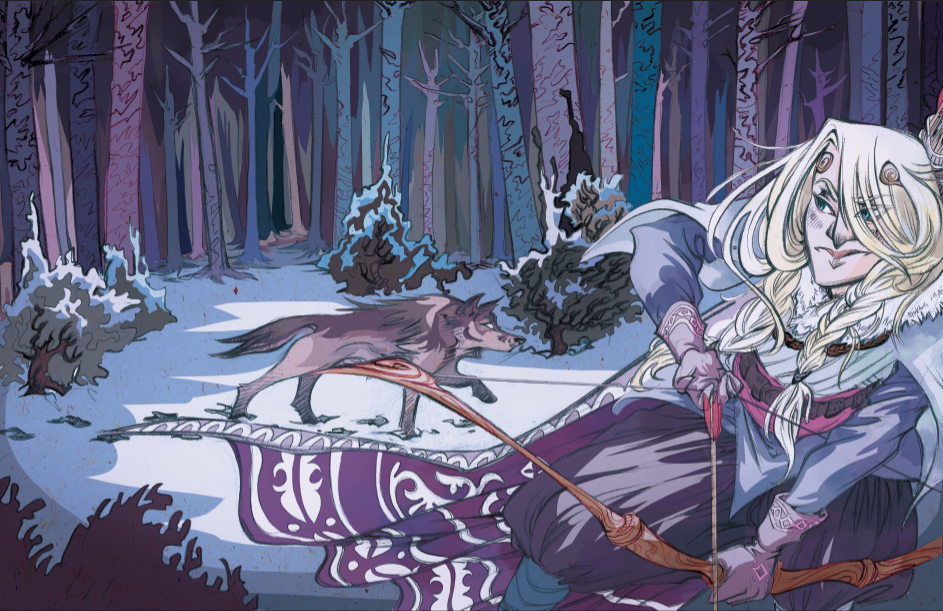
Arming up, indeed. Royal Assassin by MImi-Evelyn on DeviantArt, here, used for commentary.

Fitz wakes early the next morning, and Nighteyes stalks out to scout. The two determine that there are approaching riders, and the party makes for an armed withdrawal. They proceed until they encounter a rockslide they must cross; Nighteyes provides intelligence on their pursuit as they make to pass. The crossing is made with difficulty, and the illness that has taken the Fool is painfully evident as Fitz assists him.

In its wake, the party considers the intelligence relayed by Nighteyes and tries to puzzle out their pursuit’s intent. It becomes clear that Regal has sent pursuit to follow Verity and Fitz; surely, their work must have led to some end? Fitz purposes to backtrack and, with Nighteyes’s aid, ambush their pursuit; the rest of the party presses on, save Kettle, who surprises Fitz by volunteering to assist him. Their sortie is successful, eliminating half of their pursuers and acquiring their provisions. In its wake, Kettle asks Fitz about his assassin’s work and reveals to him that she had been exiled for killing a member of her own coterie through the Skill.

Among other things, the chapter offers a useful reminder that FitzChivalry Farseer is not a nice person; he is, in fact, rather the opposite, a by-blow acknowledged as necessary even as he carries out markedly distasteful duties. Early on in the rereading series, I remarked on the emblematic nature of his name; events in the succeeding books have not always reinforced the fundamental nature of the work for which Fitz is trained and at which, when he is thinking clearly and paying attention, he excels. The present chapter, however, does so, and it reminds readers through Starling’s reaction to Fitz’s open statement of his planning that Fitz is not a traditional hero, even if he partakes of that tradition in some ways.

The revelation about Kettle, though set up in previous chapters, does seem to be somewhat convenient, bordering on a deus ex machina. I’ve commented on the phenomenon before, and my comments remain in place; the presence of the device does not mean the writing is bad. But it does seem somewhat jarring in the present circumstance.
I could use a cup of coffee; pick one up for me?

A Robin Hobb Rereading Series: Entry 86: Assassin’s Quest, Chapter 27

Read the previous entry in the series here.
Read the next entry in the series here.


The following chapter, “The City,” opens with comments about a reported old road in the Mountain Kingdom. It moves thence to Fitz’s addled stumblings through a strange city that befuddles his senses–mundane and otherwise. It takes him some time to regain his bearings and begin to puzzle out what surrounds him, and even then, what he encounters confuses him.

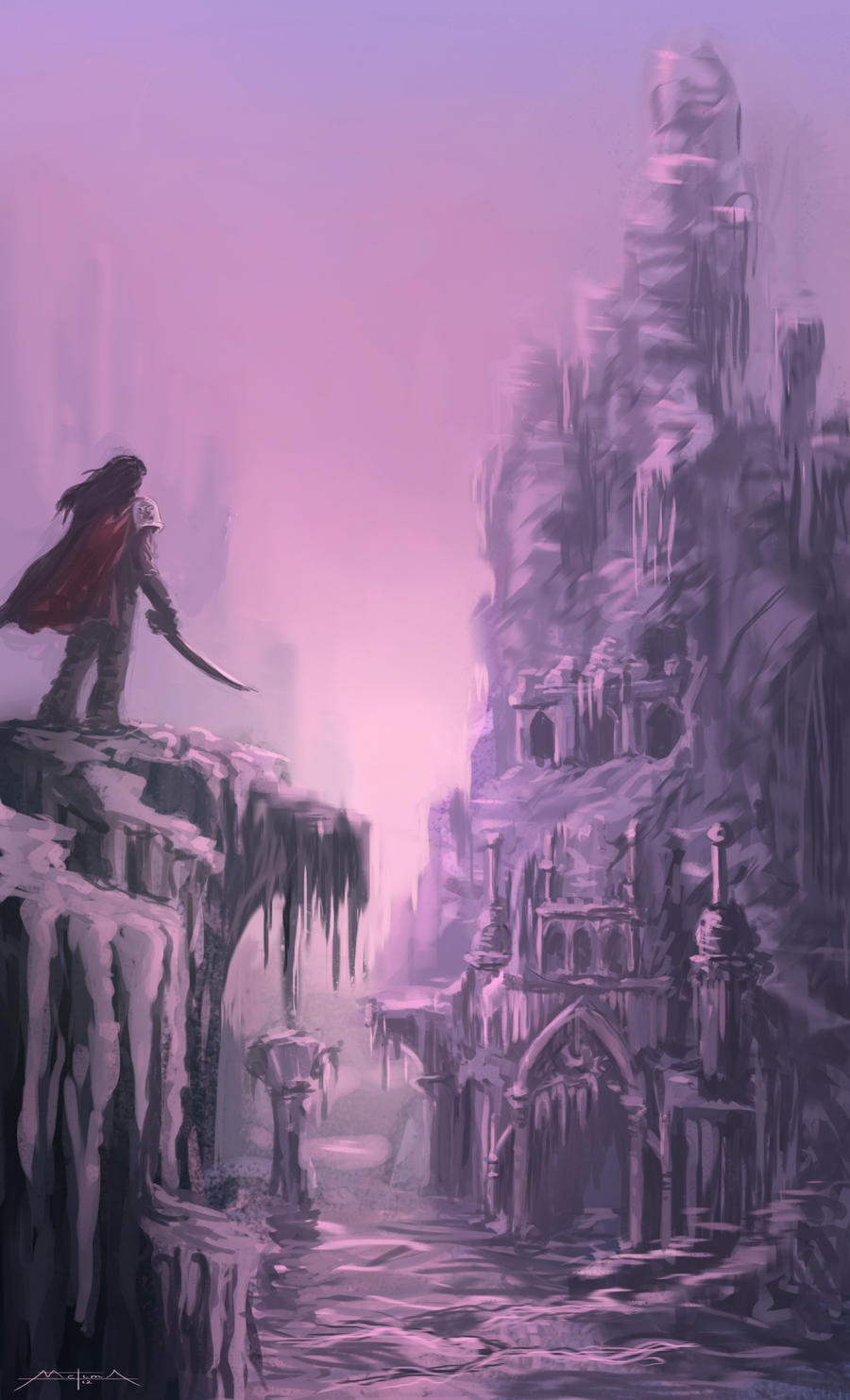
This would seem to be the kind of thing Fitz faces. Frozen History by MeetV on DeviantArt, here, used for commentary.

The day draws on, and Fitz finds himself growing chill; he builds a fire to warm himself, and its light reveals the decrepitude of his actual surroundings, different from the bustling city that presents itself to him from the past in images excited by his touch. At length, he begins to sleep and to dream in the Skill; he first sees Molly and Nettle, their daughter. He then sees Chade conferring with a lover and ally about Regal’s actions against the Mountain Kingdom; they seem to make little sense.

When morning comes, Fitz begins to explore again, moving through the recollected city in some awe. Among the images are dragons, and Fitz proceeds to find a position to survey his surroundings more thoroughly. The survey reveals the aftereffects of a cataclysm, as well as a map that Fitz realizes Verity will have used and copied. He scrambles to make his own copy before falling into Skill-visions again. Bewildered and frantic, he staggers back to where he had entered the city: a stone pillar. Passing through it, he emerges to find Nighteyes happily greeting his return.

This was another chapter where I found myself having difficulty following along. I begin to worry about it; I am supposed to be a damned good reader, and having challenges in rereading something I have read several times before–more than several times, really–does not suggest itself as a good thing. Admittedly, the action in the chapter is described as being confusing in itself, with Fitz shifting frames of perception from his present circumstances to those recorded and re-presented by the construction of the city without much obvious transition; my earlier comments that the reading should follow the action still obtain. I’m just taken a bit aback that I’m not used to it again by this point, is all.

Maybe that is more revelatory of me than of the text. I’ve noted, perhaps too often, that I am out of academe, moving from trying to earn citizenship in that strange country to being an expatriate from it to being now only an occasional vacationer therein. (I do still list as an “academic expatriate” in conference registrations, though perhaps “intellectual vacationer” might be a better label to use henceforth.) As I am farther and farther removed from daily work of reading and thinking and writing, it makes sense that my abilities to do such things fade. I am less than I was in those ways; I wonder what I have earned from the exchange.

Care to shower me with money to alleviate the drought of my wallet?

A Rumination on #WhanThatAprilleDay 2020

https://i0.wp.com/www.luminarium.org/medlit/chaucer1600.jpg
A different portrait of Chaucer, again from Luminarium.org, here, and used for commentary

A year ago, I wrote about the words with which the Canterbury Tales begin, as well as about the celebration of the day that focuses on the enjoyment of older languages and literatures. The comments I made then still largely hold true; there remains much of value in what was written before and what was said, even if such things are too often ignored and too often put to the purposes of too often obstinately wilful evil.

As I reflect on those comments now and on the words that spurred them, I do so from a far different place (mentally and emotionally; the physical location remains the same). I am more removed from academe than I was then; I had given up the search for tenure-line work, but I still taught part-time and did some small work to incorporate the medieval into that teaching. Now, though, even that work is set aside, even if I still present a conference paper now and again, and I still look at how various properties refigure and borrow from the medieval. (Insofar as there is “the” medieval, of course, but this is not an academic treatment and the level of nuance and detail appropriate to such is not necessarily fitting here.) Working outside academe and vacationing there (for want of a better term), I better understand why thoughts about the older world are often set aside; I am not so far removed from scrambling for things that I do not recall the efforts involved therewith and the level of exhaustion that accompanies those efforts–even for someone trained to the strange disciplines of the mind that academia imposes. Nor yet am I unmindful that there is much of value in the newer world, as well; indeed, my focus is increasingly on that world, even if I still attend to what it keeps of its predecessors.

Too, I understand better why there is so much resistance to enhancement and alteration of the views commonly held about the medieval as there is. Some is the already amply identified elitism that inheres in the classification of things as medieval; there are various execrable ideologies that have held sway and still do, if fortunately less now, that benefit from and have therefore propagated such classifications. They are embedded in institutions, and inertia alone would make change challenging even without the active reinforcement that still persists. Too, there is still an association of medieval/ist work with children; it is still regarded as a thing appropriate to assign to developing minds, and the things learned early tend to remain in place long. And, again, doing the work of learning is hard, and many people simply do not have the resources available to them to do it–even if they know where to find them–and even if they can get around the unfortunate discourses that often surround those who push for more authentic, nuanced, and ultimately accurate views of things.

I still celebrate, and I still work to spread better information, even if I am not as well positioned to do the latter as before. But I despair that any knowing rain can ease the drought that has seized the shared plain.

There is grace to be found in the giving of gold
To seekers of solace in summer and cold
And workers for wisdom who once thought themselves bold;
Give once again that you still grace hold.