In Response to Schaubert

On 29 January 2024, a guest-post to the Tales after Tolkien Society blog featured Lancelot Schaubert’s “Dear Tolkien Estate.” The poem is included in Dennis Wilson Wise’s series on new alliterative poets, and Wise comments at some length on the structure of the poem, itself. In truth, I don’t know that I have anything to add to his discussion of it, unless maybe to find something of Milton in it–the final line, “Pendragon’s poem I dare to complete” is, to my ear, a lesser echo of the claim that Paradise Lost will “soar / Above th’ Aonian mount…/[…]/And justify the ways of God to men” (1.13-26). I am certain, however, that others will be able to say more than is given to me quite at the moment.

Why not? It’s pretty.
Photo by MARTHA SALES on Pexels.com

I agree with Wise that the poem is good, both in itself and as an example of the kind of thing done by the poets of the alliterative revival / survival (there is some suggestion that the alliterative form preferred by early English poetry persisted in one way or another throughout the period in which it has traditionally been held to have lapsed; the dearth of records does not exclude the possibility, and it is not likely that a long-standing mode of transmission was given up altogether), I note that it does clearly mark out its expected primary and secondary audiences. The title and the final stanza attend to the former, particularly; the subject matter, invoking Arthuriana and Tolkien’s Legendarium, suggest that the kind of nerd I am is the anticipated secondary readership.

Being the kind of nerd I am, I read the poem and am motivated to my own response; Schaubert ain’t the only one who gets to do this kind of thing:

Through ages has Arthur attracted attention,
Gathered since Gildas glory, acclaim
Known well to Nennius and noted, too, in
Galfridian Gloucester-praise that might be a game.
The man bound, Malory, mated together
The tales that were told across times and lands,
Put together in prison the parchments’ burdens,
Set them where Spenser could sing to his queen,
Hortatory halted but heard down the years.
The Professor, peerless in popular eyes,
Put his pen to the praise of the one who pulled
The sword from the stone in the yard of St. Paul’s,
One of nine worthies. That work went unfinished,
As was seen to sorrow; it stands not alone
As titles can tell us. The truth is
No story or song is ever full-settled;
How many have told of the husband of Guinevere,
How many speak yet of the son of Uther,
Not all in accord about Agravain’s uncle?
The works of giants yet left in the world
Show there was more than is now to be seen;
Who would be like them must well show the work
The passage of years performs. Praise is not withheld
From the soup of which the stock’s source is unseen.
But if it will be that the book is completed,
The talent assembled and talk well taken,
Let one who loves it do the labor.

I’m happy to write to order–and without AI interference!
If you’re interested, fill out the form below!

Go back

Your message has been sent

Warning
Warning
Warning
Warning.

Or you can send your support along directly!

A Robin Hobb Rereading Series: Entry 384: Blood of Dragons, Chapter 18

Read the previous entry in the series here.
Read the next entry in the series
here.


Following an announcement from the Trehaug bird-keepers to those in Bingtown calling into question Kim’s good standing among the bird-keepers, “Seductions” opens with Hest attempting to persuade one of Leftrin’s crew to allow him the run of Kelsingra. Hest reflects on similar attempts with others in Kelsingra and his lack of success with them. When Davvie happens by, Hest turns his attentions to him, plying the inexperienced boy with some initial success.

Our hero?
Image from Hirundine’s Tumblr, used for commentary

In Chalced, Sedric continues to suffer at the hands of the Duke, tended by Chassim. The pair of them commiserate about their respective situations, assessing them coolly and considering their prospects. They begrudgingly move forward.

In Kelsingra, Leftrin and Alise confer about developments, noting the clear potential for Kelsingra’s growth. How the development will be managed receives comment, as do Rapskal’s increasing instability and the dragons’ desire for vengeance upon Chalced. Amid the discussion, Leftrin suddenly proposes an entirely unorthodox marriage, and, after some consideration, Alise agrees.

Hest continues to ply Davvie, surveying Kelsingra and calculating his potential profits from it. And he makes a sudden advance on the youth.

Carson begins to grow anxious about Davvie, and Sedric follows as he searches him out. He finds Davvie in Hest’s hands, and Sedric interposes himself. Hest attempts to seduce Sedric once again, but fails.

Sedric recognizes Hest’s attempt for what it is and rebuffs him forcefully. He returns to Carson to find him conferring with his nephew, and the three make to head off. They espy the approach of Icefyre as they do.

Hest, staggered by Sedric’s refusal, chases after him briefly before the approach of dragons frightens him. He seeks a bath to restore himself, in which he finds Kalo. Hest attempts to dominate Kalo, failing utterly, and being eaten for his arrogance.

In Hest’s death, I note a(nother?) parallel to Kennit. Both of them find themselves short of a leg (Kennit here). Although it would be a wonderfully tidy bit of writing to have the serpent that took Kennit’s leg be the one who became Kalo, it does not appear to be the case; even so, the amputation does put something of a neat little bow on the parallels between the two characters. Aside from their endings, both come from Trader stock, both have unfortunate relationships with their parents, and both have narcissistic and masochistic tendencies; they both speak to something of a type in Hobb’s writing (which extends to Regal Farseer, as I’ve remarked–here and here, for example). I’ve not done the updating on the Fedwren Project that I ought, certainly, so I am not as aware of whether others have explored the type as I ought to be, but if they’ve not, it seems a useful line of inquiry to follow.

Another thought occurs as I reread the chapter. If it is the case that the Traders are mimetic of the early US, absent some (but far from all) of the perversities that accompanied the settlement efforts, and if it is the case that the progress towards and into Kelsingra mimics the further colonization of the Americas (as I’ve suggested, here and elsewhere), what does the nascent Elderling civilization in and around the renewing city become? In some ways, it seems Kelsingra is moving towards something of a utopia; the romantic aspects of the present chapter and Sedric’s discourse seem to further comments made earlier, and the notion Alise voices of Kelsingra offering many the opportunity to simply start their lives anew, if at the cost of significant work, is certainly an attractive one. Indeed, as I think on it further, I am put in mind of the “city on a hill” rhetoric that is so often espoused. How “true” that rhetoric is in the real world is an ongoing question whose answer is almost always some nuance of “not so much,” but in the Realm of the Elderlings, is it perhaps being set up to be more true than in the historical and contemporary antecedents? It would not be the first work to present what might be taken as an idealized society, of course, although for whom it would be ideal, both in milieu and outside, would still take more than a little untangling.

I remain available and happy to write to order for you;
Fill out the form below to get started!

Go back

Your message has been sent

Warning
Warning
Warning
Warning.

Or you can send your support along directly!

Never Too Early

A month’s already passed away,
Already it’s been buried
After it to its fresh grave
Was all too swiftly carried

*insert Jaws theme here*
Photo by Tim Mossholder on Pexels.com

The war persists that, long-proclaimed
By who fight its defense,
Stresses the reason for the season,
If not e’er as intense

Who are assigned attacker’s roles
Much disclaim foul intent,
But those who angry voices raise
Do not believe them yet

Get ahead on your holiday and birthday shopping;
bespoke writing makes a great gift,
and you can get yours started by filling out the form below!

Go back

Your message has been sent

Warning
Warning
Warning
Warning.

Or you can send your support along directly!

Pankow, I Ain’t

Not fronting a hideaway
I still find myself presented with
Confronted by
Not a cowboy puppet
But other things
Snippets of songs and shows I remember
Seeing or hearing about
Because I did not listen or watch them
When I was young
So much as I was young
Being taken up by other things
Older yet than I am
And by some years

Not my instrument.
Photo by Teja J on Pexels.com

How can it be
That I long for things I never knew
Seeking in them for something new
Despite their age?

But there is this
At least
My longings are for things that were
Not for things that have never been
And I think little harm would follow
Did I get my wish

If you’re ready to take your next step forward,
Fill out the form below, and we’ll begin!

Go back

Your message has been sent

Warning
Warning
Warning
Warning.

Or you can send your support along directly!

A Robin Hobb Rereading Series: Entry 383: Blood of Dragons, Chapter 17

Read the previous entry in the series here.
Read the next entry in the series
here.


Another letter from Erek to his old master, Kerig, provides an update from the previous before “The Well” begins. As the chapter opens, Rapskal pleads with Thymara to accompany him after she and Tats have taken him aside. Thymara considers recent events, conferring mentally with Sintara as Rapskal continues to plead, his words not entirely his own. At length, Thymara is persuaded, and the pair walk Kelsingra, Rapskal speaking from memories he has taken in from it and plying Thymara further. He urges her to reach into her own ancient memories for the secret of restoring Silver.

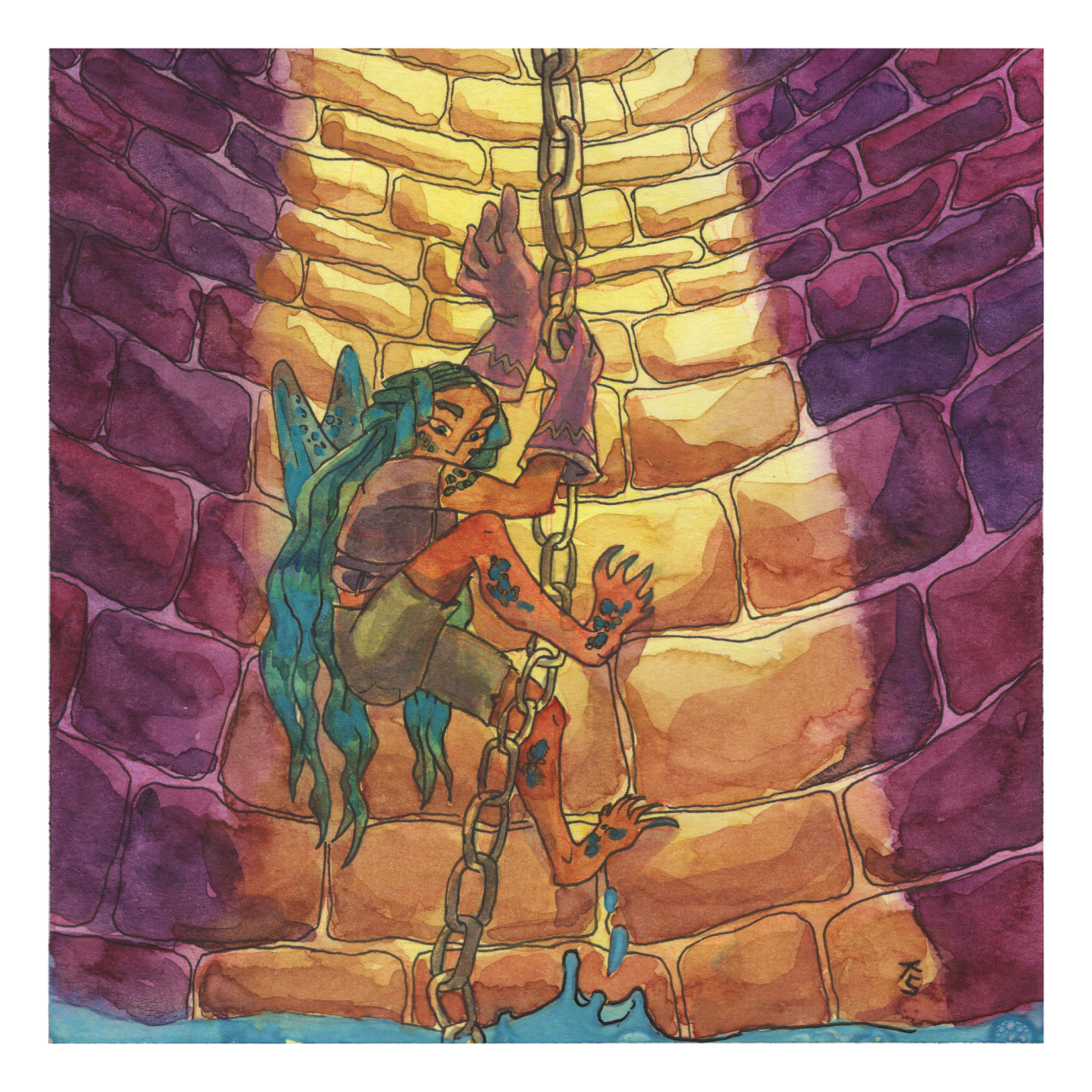
I do enjoy Katrin Sapranova’s work–here, Silver Well from her Tumblr page, used for commentary.

Elsewhere in the city, Reyn and Malta confer about their fortunes and those of their family and of Tintaglia. Malta places Phron’s hand upon the dragon and offers something not unlike a prayer.

Thymara resists the call to dive into memory, and she rejects Rapskal’s insistence harshly. Sintara pleads with Thymara, however, and she reluctantly descends into the well along with Rapskal. As she does, she feels the memories rising around her, and at the bottom of the shaft, she finds the remains of her past self. More memories rise within her, and she releases a hidden reservoir of Silver from which the dragons begin to drink.

Phron cries and Malta moves to feed him from her breast, the child’s parents exulting in the evidence of changes worked by Tintaglia upon him. Other dragons approach Tintaglia, shunting the Khuphruses aside as they bring Silver to Tintaglia, treating her. The elder dragon rises, hungry, and moves to hunt amid the joy of those surrounding her.

I remain pleased to see the chapter-prefaces used not only in the Asimovian style of providing greater context for the world and the events depicted in the pages of the chapters, but also to trace ongoing outside narratives. I know I’ve commented on the device before, but as it continues to be a source of delight for me, I feel I ought to remark upon it now and again. And it really is a treat to have the short little snippets–because the letters are rarely of any length, sensibly to them being carried by pigeons–do so much to illustrate what else is going on. More formally, by pointing towards events outside the main narrative, the letters assist Coleridgean willing suspension of disbelief by gesturing towards Tolkienian unexplored vistas that authenticate the act of sub-creation; more briefly, by making the presence of outside context within the milieu explicit, the letters deepen the verisimilitude of the main narrative. That is, they make the world in which the main narrative takes place “more real” than a work centering on metamorphosing dragons and their effects upon the world would otherwise be.

The depiction of the Silver in the present chapter continues to reaffirm for me the link between it and the Skill plied in the Six Duchies. I’ve commented on the perceived link a few times (such as here, here, and here), so I was already quite confident in the interpretation. Reading again of the manner in which the Silver-treatment occasions Tintaglia’s recovery offers more to bolster the interpretation; compare, for example, the dragon’s recuperation to that Fitz endures in his Skill-healing (see Golden Fool, chapters 20 and 21). The continued effort to “normalize” things across series taking place in the same milieu, relatively contemporaneously, is clear in the present chapter; it works better here than in some other places in the tetralogy, which is a pleasure to see.

The depiction of the Silver in the present chapter also continues to remind me of the EarthBlood in Donaldson’s Chronicles of Thomas Covenant the Unbeliever. (I write about it a bit here.) The tension between destructive force and creative power embodied in a markedly colored outflow from within the earth is telling, although I’d need to do some additional rereading to pull out the parallels more fully. Doing a bit of source-study remains tantalizing, of course, but that would require more of an investment of time, and I am not sure how much of it I am likely to have in the near future.

It’s for good reason, or reason good for me, at least. But I would still love to attend to the project, along with a great many others…

I’m still going; if you’d like to help me keep going by writing to order for you, please fill out the form below!

Go back

Your message has been sent

Warning
Warning
Warning
Warning.

Or you can send your support along directly!

With My Hammer in My Hand

The steam drills have long since won and
Been succeeded by diesel explosions and
Other fires, burning away at the fabric of the world,
Leaving less work to do for fewer and fewer hammers,
Driving the hands that would hold them and swing them
To other tasks and seemingly gentler where
The tick of a pen or pencil makes a single point and
The lives of others are saved or ruined while
Nobody notices and damned few care

That reminds me of a story…
Photo by Ken Thomas via Wikipedia, here, and used for commentary.

The diesel is not the only successor to the steam,
The hammer not the only tool being wielded less and less,
But there are more hands, and they demand more tasks
Because Adam’s curse is still held as blessing and
Calvin still commands much in the world despite
Matthew’s words to which he and many claim fealty,
Or James’s, or tales of apostolic acts
Passed down from hand to hand as
The next best thing to Gospel truth

The new successors have their heralds
Trumpeting them to the four winds and
Seeking to soar above the lot of them,
And no few glory in the ringing of those horns for now,
The booming of the covered copper bowls that
Covers the coming steps of new giants who
Need grist for the mills to make their flour;
They do not mark the tune as the dirge that it is,
Playing out for them soon enough as it
Already sings out for others

I’m still swinging, and I can help you drive your point home!
Fill out the form below to get started!

Go back

Your message has been sent

Warning
Warning
Warning
Warning.

Or you can send your support along directly!

A Robin Hobb Rereading Series: Entry 382: Blood of Dragons, Chapter 16

Read the previous entry in the series here.
Read the next entry in the series
here.


Following a missive from Reyall to Erek and Detozi in which he announces his engagement, “Expectations” opens with Alise asking to move inside as she rapidly assesses events and her place in them. Carson begins to take charge of the situation with the captives that have been brought to Kelsingra, and Hest presents himself before Alise. Alise considers the implications of his appearance against the events of the past months, pleading with her as Reyn and others rebuke him. Alise upbraids him for his deceit of her, disclaiming their marriage publicly, and when Hest protests, Sedric interjects, testifying to Hest’s perfidy. Carson commends Sedric for his declaration, and the group departs from a stunned Hest.

The man of the hour.
Carson by dianna-art, from Realm of the Elderlings, here, and used for commentary.

Later, Reyn rejoins Malta as those assembled in Kelsingra confer. The pair discuss Phron and his progress, noting the still-poor prognosis for their son. Reyn also comments on the proceedings regarding the captives and the relative youth of most of those involved in them. Various testimonies and perfidies are summarized, and Reyn and Malta consider their status among the new Elderlings. Their thoughts turn to Tintaglia, and Malta avers feeling her slow approach. Reyn tries to believe but cannot quite do so.

Within eyeshot of the city, Kalo urges Tintaglia along. She reaches the city, losing consciousness as she does so and the new Elderlings flock to her.

In Kelsingra, Tintaglia’s condition is assessed. Reyn and Malta plead with the dragon to drink what Silver is available, administering it to no obvious effect. Thinking they have failed, they ask for privacy for themselves, Phron, and the dragon, and they are given it–including by Leftrin, whose thoughts turn once again to Alise.

I note with some attention the comment Carson makes as he begins to take charge of the captives brought to Kelsingra: “let us act as befits who we are, rather than who we think they might be” (278). Being the age that I am and with my adult life therefore shaped by the events that have occurred, I have heard much in the line of “We have to do X, because those people are going to do it.” My response, when I have offered one (which I don’t much do anymore; it does me no good, and I rarely get traction with it), has been much in the line of Carson’s comment. It doesn’t matter what those people, whoever those people are (and it shifts; oh, does it ever shift!); what does matter is what we do–or what I do, because that is the only thing that falls under my control. With others, I can advise. I can argue. I can cajole. I can command. I can punish (perhaps). But I cannot compel; the choice always exists for others to do other than I would have done. For me, though, the only choice is what I would do; what I do is necessarily what I have chosen to do. That does not mean the choice is always what I would prefer, or that it is a good one; there are sometimes no good choices, which I believe Hobb comments (among many others). But only I can make the choice for me, and I can make the choice for only me. So I find I appreciate Carson’s remark, affective as my doing so might be.

I note, too, Sedric’s public testimony against Hest. Although it is the case that Kelsingra is a far more sexually permissive place than the other Traders’ settlements, that he is willing to out himself in the way he is is something that comes off as commendable; the abused rising against their abusers is a thing worth seeing. Not all real-life victims of abuse are so fortunate as to have situations in which they can do such things, of course; many who attempt something like Sedric does find themselves much less well off than he does in the present chapter. But then, one of the things that fiction can do is show what can be, more than what is.

If you’d like me to write for you,
the form’s below; you know what to do!

Go back

Your message has been sent

Warning
Warning
Warning
Warning.

Or you can send your support along directly!

Another Rumination on Martin Luther King Day

In the United States, today is given over to the commemoration of the Rev. Dr. Martin Luther King, Jr. It’s something on which I’ve remarked before, which is not necessarily I surprise; I’ve been blogging in this webspace for a while, now, and I’m getting old enough that things repeat themselves for me anymore. I stand by my remarks at that time; I am really not the person to comment extensively on the commemoration, and it is the case that we’re not near the ideal the man espoused, with many still kicking and screaming (and worse) as they are dragged, slowly, toward it.

It’s a good statue, so I’m using the image again.
Photo still by Gotta Be Worth It on Pexels.com

Why, then, make note of the day as the day?

Because it is a set aside holiday, and as a day set aside, it invites contemplation. Though I did not succeed in my career intentions (yes, plural), I remain a person given to contemplation. A sanctioned opportunity for it is therefore welcome.

Because it is a public holiday, and I am a member of the public, and so there is an effect on me even if I am not the target audience for it.

Because it is an event that will receive and has received much attention, if I do not make at least some comment about it, there will be some concern about me that is not warranted. (This leaves aside the concerns that are warranted, of which there are a few.)

Because I have had more substantive comments upon it, it seems fitting to consider whether or not they still apply. They do, more’s the pity, but a scant few years is too short a time to redress great wrongs without great upset, and such upset is likely to have unintended consequences that will work to the ill of those who ought, instead, to be supported.

There is ill enough in the world without adding to it. Perhaps the commemoration will help. I do not think it will hurt, save those who probably ought to be hurt.

I am still taking new writing clients; fill out the form below to get started!

Go back

Your message has been sent

Warning
Warning
Warning
Warning.

Or you can send your support along directly!

A Brief Pause before Something Else Happens

Staring out through the broad plate glass at
The clear blue sky cleared by
Notus groaning at an unexpected time and
Wondering when what is causing his ecstasy will
Make its way my way

It’s coming…
Photo by Harrison Haines on Pexels.com

For now
Nothing is where I can see it
But I can feel it in my bones
Becoming an old man as I am
And the ache is a distraction

Take a bold step forward;
Fill out the form below,
And get me started writing for you!

Go back

Your message has been sent

Warning
Warning
Warning
Warning.

Or you can send your support along directly!

What I Did over the Weekend

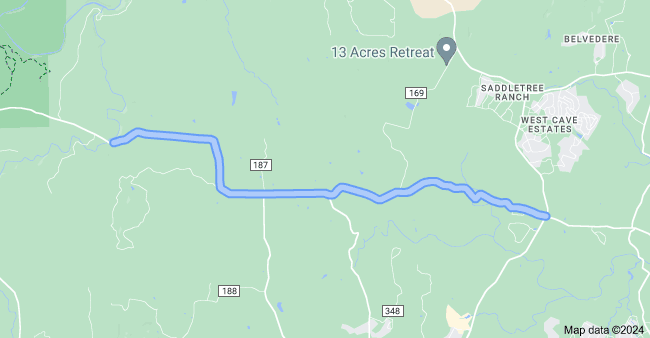
Yesterday (as this posts) was my fourteenth wedding anniversary. It having been a Tuesday, my wife and I knew that we’d not be able to do anything to commemorate the occasion on the day, itself. Both of us work, after all, and neither of us can afford to take the day right at that time. What we did, then, was to go out on the Saturday before. For a while, we had been looking at going out to check out some of the local wineries (the Texas Hill Country abounds in them) and breweries; on Saturday, we took the opportunity to do the latter, stopping off at a few places along Fitzhugh Road west of Austin.

A stretch of the road in question, shown on Google Maps for reference and commentary.

The first stop along our short tour was Jester King Brewery. The approach to it was a bit rough, and the facility shows that it was assembled in stages. Still, the wood-fired pizza looked and smelled good (we ate before heading out), and the beers I had were tasty. Too, there was something of a festival atmosphere about the place, with its open fields, goats, and such, and we were advised by staff of an upcoming event to which we are like to go–taking our daughter with us, weather and circumstances permitting, since it sounds like something she might enjoy. (There were a number of kids of various ages running about the place and petting the goats, as well, so I think there’ll be enough to catch her interest.) It was well worth going to, and I do hope things work out such that we can find our way back over to the place.

The second stop was not far up the road: Beerburg. Getting to it from Jester King was fairly easy, and we decided to eat while we were on site. I’m glad we did; the food was excellent. The beans and rice that accompanied our meals were quite good, the former solid and the latter finely spiced. My wife had a quesadilla she described as the best she’d had, and I very much appreciated my shrimp tacos. The beers were a bit quirky (the mugwort brew, in particular), although, in the brewery’s defense, they had been advertised as being such. I can appreciate experimentation when I know it’s coming, and I’d be willing to taste some of their other trials–as long as I can get more of those tacos!

Afterward, we put in at Fitzhugh Brewing. If Jester King is a festival and Beerburg a wonky local pub, Fitzhugh Brewing is an HGTV home makeover. My wife identified it as evoking the Gaines’s Magnolia in Waco in terms of aesthetic, and she notes it as catering to a demographic in which neither she nor I partake. The beers were decent enough, as was the pretzel we split between us, but none of them were exceptional. It was something of a letdown after the earlier experiences; perhaps if we’d done things in a different order or visited at a different time, we’d’ve enjoyed it more fully.

The last stop on our tour wasn’t on Fitzhugh Road, as such, but the road it becomes as a driver follows it west; it turns to Pedernales Falls Road and then becomes FM 2766. Just off of the intersection of FMs 2766 and 3232, hard by Pedernales Falls State Park, is the Pedernales Falls Trading Post. My wife had long noted wanting to check it out, and I was happy to oblige her (if later than ought to have been the case). The venue offers a vanishingly small indoor space. There is ample outdoor seating, however, and a grill that gives off the most succulent smells as it cooks burgers to go along with pulls from a scant few taps worked by a singularly jovial barman. It’s a hole-in-the-wall kind of place, perfect for a quiet couple of beers of an evening, and perfect for us to have closed out our day on. I think we’ll be going back there, too.

If you like how I write and would like me to write for you,
Fill out the form below, and we’ll get started!

Go back

Your message has been sent

Warning
Warning
Warning
Warning.

Or you can send your support along directly!