Read the previous entry in the series here.
Read the next entry in the series here.
A brief message from Erek and Detozi to Reyall notes upcoming action from the Bird Keepers’ Guild before “Icefyre” begins. As the chapter opens, the keepers in Kelsingra assess Icefyre, wary of him and noting his injuries. Debate about how to approach the elder dragon ensues, and Rapskal steps forward. Icefyre responds, reporting his situation; he calls upon the dragons of Kelsingra to aid him in exacting revenge. As many of the dragons move off to tend to Icefyre and hold counsel, Tintaglia notes acidly that Icefyre’s concern was absent when she was injured, and the keepers and Alise note that the revenge must be taken for the attacks. Chalced is identified as the likely culprit, and it is determined that the dragons will assail it. Preparations begin in haste.
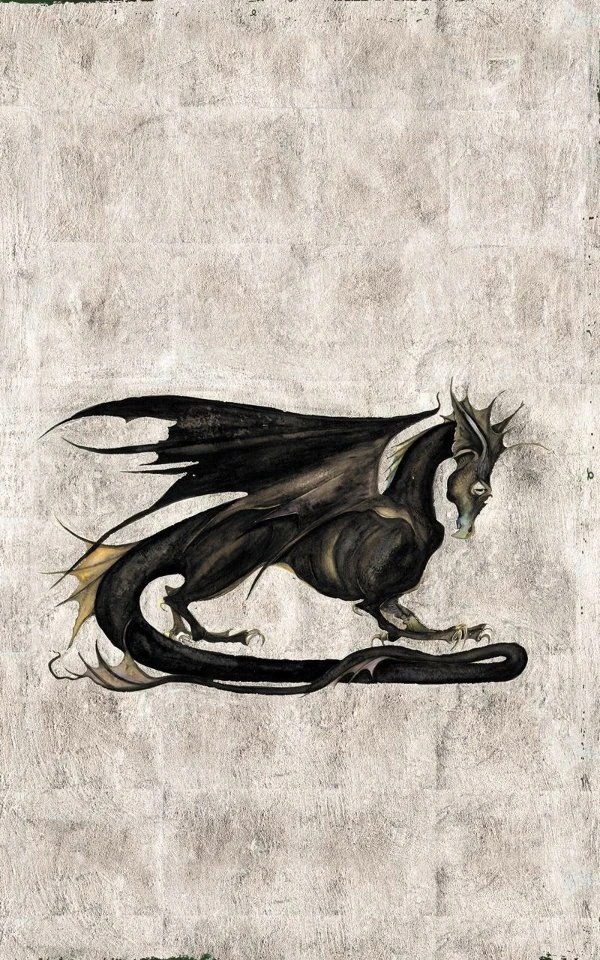
Jackie Morris’s Icefyre, hosted on Realm of the Elderlings and used for commentary
The dragons’ conference is related, Sintara and Tintaglia assessing the males among the Kelsingra dragons. Methods and the lack of memory are noted, and concerns of unintended consequences are raised. The indignity of attack prevails, however, though talk of effects does not end.
Leftrin and Alise confer, Leftrin noting that the Tarman must sail for Cassarick to inform the Traders of the dragons’ intent and possible blowback from it. Alise assesses the rapid changes that have befallen, and memories of the attack of Chalced on Bingtown rise up around her. She determines to accompany Leftrin, and she voices her concern about Hest, only to learn that he is missing. The pair put the matter of Hest aside, and preparations for departure continue.
Thymara returns to her room to find Rapskal awaiting her, acting more out of his inherited memories than from himself. She refuses him, and the two part in anger.
The next morning, the dragons as Kelsingra mass to fly against Chalced. Thymara and Tats confer about proceedings, and the arrayed host is described as it makes ready. Not all are eager who will sally forth, and goodbyes are said as the dragons and their company begin to depart. Current statuses are noted, as well, and work on Kelsingra resumes.
The present chapter, near the end of the novel and of the tetralogy, has something of a rushed feeling to it, something I’ve noted about several of the Realm of the Elderlings novels in this rereading series, as well as about this novel in another place. I continue to be somewhat put off by it, although that may well be nothing more than a matter of my personal tastes at work; there is always a concern in offering critique about how much is merely individual preference and how much is broader assessment of literary craft. As it might well be argued that I have literary pretensions at best, I can understand that my own comments on such matters could well tolerate more than one of proverbial grain of salt. But then, there’re many folks who like a lot of salt in what they eat.
As I reread the chapter, particularly the passage in which the dragons and some of their keepers make ready to depart Kelsingra and do so, I found myself in mind of scenes from Peter Jackson’s Lord of the Rings movies, namely those in which the people of Rohan ready themselves at Helm’s Deep. The depiction of such of the keepers as Sylve seems to me reminiscent of that of the children of Rohan, plodding forward fearfully in armor too big for them–but it’s a common enough thing, not only in Tolkienian-tradition fantasy literature, that it might simply be dipping at the same well rather than filling a cup from a bucket already pulled up.
As I reread my review of the book, though, close to eleven years on, I note there’s been some consistency in my approach to the text across time. I’m not necessarily sure how to regard it; was I more or less right all that time ago, or have I stagnated in the more-than-a-decade since? I’m gratified that the gender- and queer-studies approaches I’d noted as being open have been followed up on–indeed, so far as I can tell, they’re among the dominant threads of scholarly work done on Hobb’s writing. (Translation studies has a lot to do with her work, as well.) It’s clear, then, that I got at least something right in my early assessment of the novel; I don’t know, though, and wouldn’t much hazard to guess if I was (or am) quite right in looking at antecedents / sourcing (among others, for reasons noted in the paragraph above). I think I was (and am), of course, or I’d not’ve written as I did (then or more recently), but I’d really like some outside confirmation…
If you’d like me to write for you, fill out the form below!


 Elliott RWI
[…] the previous entry in the series here.Read the next entry in the series […]
LikeLike
[…] from Kerig to Erek “unofficially” noting the latter’s impending elevation to Master status precedes […]
LikeLike