To continue from last week, the group of middle-school-aged kids for whom I’m running a Dungeons & Dragons game at my local library left off between rounds of an ongoing fight, being in the process of rescuing a child about to be sacrificed by cultists for some clearly nefarious end. They seemed initially to have taken the discussion of ponerology to heart, which gratified, and play proceeded from that point to go…sideways. Some of that is to be expected in any TTRPG, of course; things move in ways not expected. Some of it, however, is going to require some redirection and resetting; the group as a whole is aware of it, so when next week’s session begins, I do not think it will be a surprise that things will start as they will have to start.
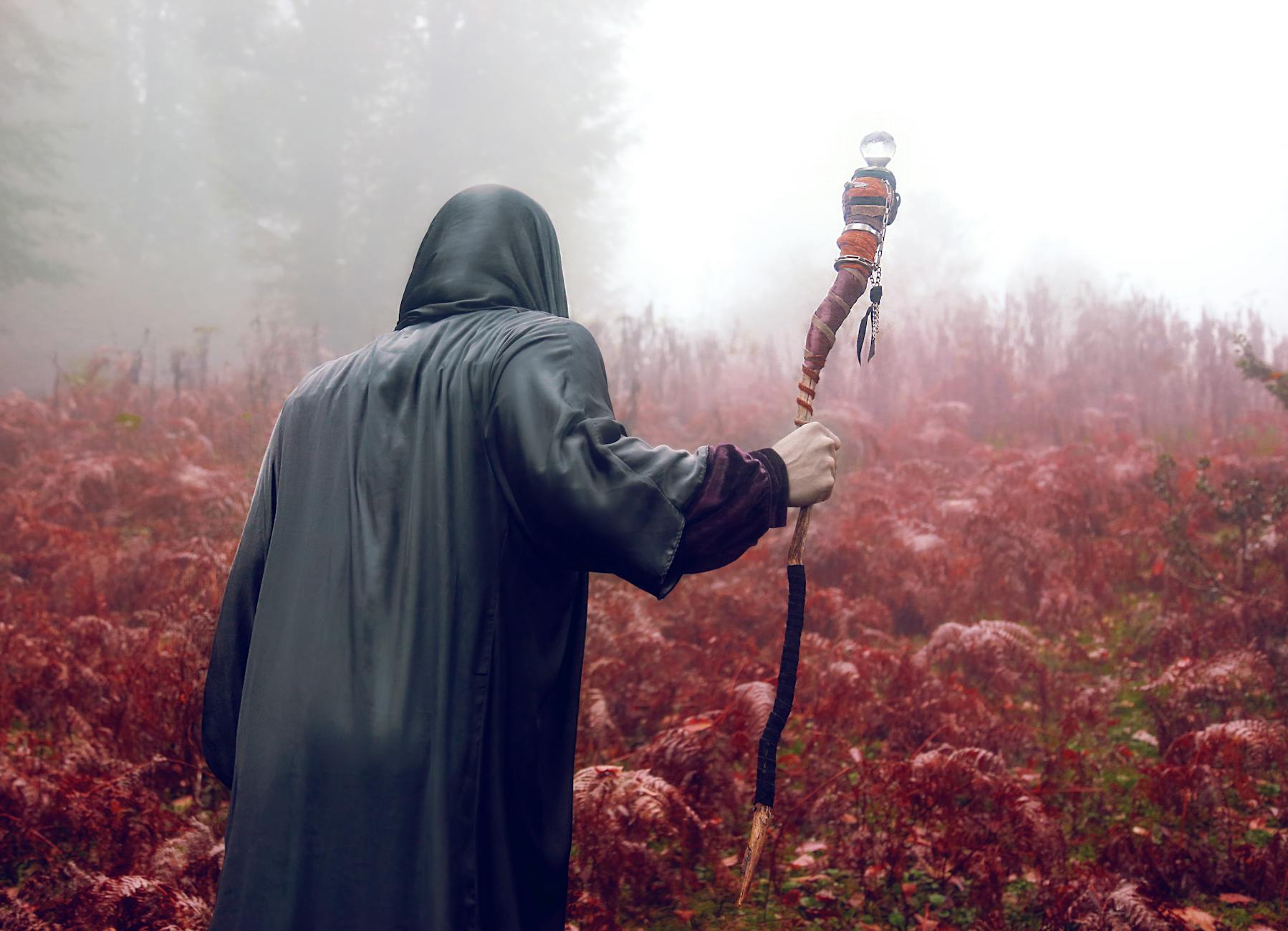
Photo by Fariborz MP on Pexels.com
For the overtly educational portion of the session, I brought in an idea I’ve meant to talk about for a while: the tension between plot- and character-focused narrative. To gloss, in the former, the story is largely about outside events and reactions, while in the latter, the story is largely about internal events and how they shape the outside world. I don’t think any narrative is exclusively one or the other, although each is primarily one or the other; that is, there is always some outside event prompting response, and there is always some internality on display, although there will definitely be an emphasis of one over the other.
Within the setting of a TTRPG, the narrative will actually straddle such line as exists between the two fairly evenly. Because the story being told is a collaborative one, with the audience being the group doing the storytelling, the overall presentation is plot-driven. The collective creating audience will respond to the outside events presented to them. Each collaborator, however, will have access to the internality of the character they portray, so for each audience member, the narrative will be emphatically character driven.
This is, of course, a very surface-level treatment; more has been said about the topic, as I am already aware, Mackay having treated it, as well as Gary Alan Fine, and I know there have been other works about it that I do not have on my shelves from long ago. (One of my regrets from the attempted academic life is that I was not more honest with myself and so did not pursue such ludic concerns; I needed the formal “legit” grounding I got, but I really ought to have leaned more into my “side” interests. That the latter have stuck with me even absent institutional affiliation is telling.) But, while the kids at my table are bright, they’ve got other concerns–and so, admittedly, do I, among which are a great many other scholarly somedays.
My calendar is full. I suppose it’s a good thing; I’ve always got something to look forward to doing.
Even on spooky days such as this, I am happy to write to order, and with no AI slop!


 Elliott RWI
[…] noted last week, this week’s session of the Dungeons & Dragons game I am running for middle-school-age […]
LikeLike