I have noted in another place that my wife and I started taking the main San Antonio newspaper, the Express-News, not long before the recent US Thanksgiving holiday. In that other place, I’ve taken to doing with the Express-News what I used to do with the New York Times, back when I lived in The City and had subscription access to that newspaper through my then-institution or through that shrine to human knowledge, the New York Public Library.
If there is a temple at which I might pray, this might well be it. Image from nypl.org.
The thing is, I do not live in San Antonio. I work there, currently part-time, as I think I’ve made clear (here, for only one recent example), and my brother and his family live there, but I do not. My wife does not. As such, the Express-News is not my local paper. And if it is the case, as I’ve elsewhere noted, that part of the reason for reading a newspaper in the current environment of rapidly produced, rapidly accessed media is in aligning with a community, then my taking the Express-News instead of the six-days-a-week main newspaper of my hometown, or the weeklies in the town and the county of which it is the seat, says something about how I view myself.
San Antonio is the seventh most populous city in the United States, per the city’s website as of 30 November 2018, although it does not, in many cases, act like a large city. It does not have the self-importance of New York City, to be sure, nor the high profile of Los Angeles or Chicago. It does not have the self-aggrandizing tendencies of even smaller cities such as Austin (which, given the state capitol and several other things less polite to name, appears to have an inferiority complex), nor has it the social cachet of Dallas/Ft. Worth or Houston. Yet it still exerts substantial influence on the nation, hosting some of the best trauma- and burn-treatment centers on the planet, as well as the US Air Force’s Basic Training Command. Surprisingly, it also serves as a center of medieval studies, with the online version of the Annotated Chaucer Bibliography hosted at UTSA and the current-to-this-writing Chaucer Bibliographer, Dr. Stephanie Amsel, a graduate of the same institution.
Knowing such things, what it might mean that I align myself to San Antonio, as opposed to, say, my hometown is something I might guess at, but none of us see ourselves clearly in mirrors. There is always some defect in the surface, some impurity in the air, some imperfection in our very eyes that prevents a view as good as we might hope to have. I do not think it prudent to analyze myself in such a way. But I imagine that others might take a turn at doing so; I wonder what the biographical tidbit my subscription betokens might do to add to such a critique.
After addressing a procedural concern and asking about questions from the previous week and before, discussion turned to concerns of theses and integrating sources in support of the present week’s writing assignment.
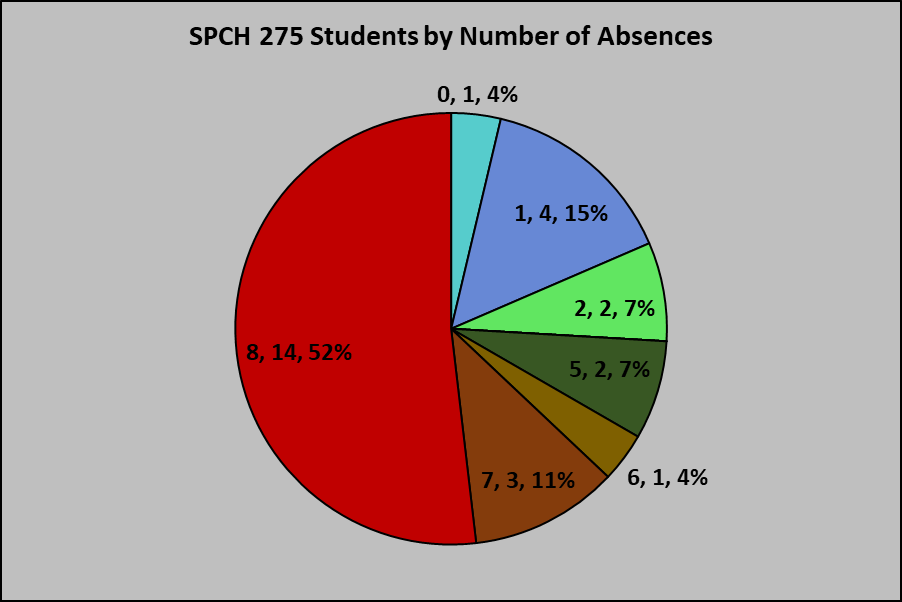
The class met as scheduled, at 1800 in Room 106 of the San Antonio campus. The course roster showed 11 students enrolled, unchanged from previous weeks. Eight attended; student participation was good. An online office hour was held on Monday, 3 December 2018; no students attended.
Students are advised that the office hour scheduled for Monday, 10 December 2018, at 6pm Central Standard Time is canceled against an event the instructor must attend. Students are also reminded that the following assignments are due before the end of day (Mountain Standard Time) on 9 December 2018:
Discussion Threads: Position-based Writing and Integrating Research in APA Style (3 posts/thread, rubric online)
To continue on from earlier work (here, here, here, here, and here), I will go further along the assignment sequence expected of the students in ENGL 112: Composition and develop the assignment students in the class are asked to do for their sixth week: a draft of a commentary paper. I continue to hope that my efforts will assist in my students’ work and others’ to write better and help still others to do the same.
From teachingenglish.org.uk, which seems reasonably appropriate for discussing discussion in a college English class…
For the assignment, students are asked to generate the first three pages (excluding title page and references) of a five-page commentary essay–in effect, a position paper of the sort I’ve taught in one form or another before (here, here, here, and here, among others). Introduction, thesis, and an at-least-cursory overview of current discussion of the topic are requested, as is the beginning of the argument’s development. More will follow, of course, but three pages should be enough to establish the idea to be borne out, to provide it context, and to start developing it. Additionally, the project is a continuation of last week’s work, so what was done previously should still fit the current purpose.
To begin my response to the exercise, I opened my proposal and summary from the previous week. I also opened a new document, formatting it for submission; I set up a title page, main text, and references list, putting the whole into double-spaced 12-point Times New Roman type with one-inch margins on letter-sized paper. The title page, running heads, and page numbers were set as they ought to be, while the internal title and references note were centered horizontally, and lines for references set up with half-inch hanging indentations.
With the formatting set up, I began to bring things into the new document from the old. The specific issue, the balance of appropriation and appreciation in my topic, was the first to come over; although not a thesis, as such, I copied it twice, highlighting the second in green and positioning it to serve as a moving target as I developed further materials. I also stubbed out space in which to position the thesis to come, as well as for some items I knew from the earlier work that I would want to put in place: definitions of terms relevant to the discussion. Those were highlighted in teal to remind me to attend to them.
From there, I moved to fill in context for my discussion, giving a description of my topic. I looked through earlier work done in the present session to begin with, since I could reasonably include that material in my current work without trouble. Some details in that line were forthcoming, and I was happy to incorporate them into my work to offer background. I supplemented them with my own experience, as well, since I have it to bring to bear.
A passable attempt at an introduction started, I moved to insert my relevant definitions, working from the two sources identified in the previous exercise. Citations pulled earlier also made their ways into the appropriate part of the paper, developing a short references list. I found that I needed more material for my definitions to make sense, so I ran another search for material in Academic Search Complete and found a particularly useful piece, which I incorporated similarly to the other pieces I’d noted.
It also occurred to me that I would need to incorporate primary source materials into my project. Knowing that I would be making use of it–a thing cannot be discussed without reference to that thing, particularly in a scholarly context–I incorporated the primary source into my references list. And with that done, I used the materials to offer an overview from which to conduct further discussion.
With context reasonably established, it came time to begin to reason out the argument and to work towards a thesis. When I entered the project, I did not know how the matter would fall out, so I began writing with the intent to learn as well as to convey information and understanding to my audiences. And I had to address what I saw as a glaring issue; it seemed to need doing, and it seemed to emerge well from the way in which I had established context. Too, it allowed me to meet the requirements of the exercise and position myself to undertake the next.
The content made ready, I reviewed my document for style and mechanics. After making the adjustments that needed making and eliminating highlighted passages, I rendered the document into an accessible format, which I present here: G. Elliott Sample Commentary Draft. May it, like its predecessors, be helpful!
Following up on the previous report, students were asked to assess each other’s work and to submit an expanded draft of their ongoing projects for instructor review and feedback. Much the same thing is asked of them presently, though a presentation rather than a static paper is requested.
The course roster showed 21 students enrolled, a loss of one from last week’s 22; 17 participated in online discussion during the week. An online office hour was held on Monday, 26 November 2018; no students attended.
Students are reminded that another office hour is scheduled for tonight, Monday, 3 December 2018, at 6pm Central Standard Time. Students are also reminded that the following assignments are due before the end of day (Mountain Standard Time) on 9 December 2018:
On 9 November 2018, Mark Garrett Cooper and John Marx’s “Why We Love to Hate English Professors” appeared in the online Chronicle of Higher Education. In the piece, Cooper and Marx argue that prevailing disdain for English as an academic discipline–depicted in the article, as one commentator (unoso) notes, as largely equivalent to literary studies–emerges from professorial myopia and self-centeredness. They do so though noting contemporary screeds against English departments’ tendencies to position themselves as insidiously interdisciplinary before moving into a gloss of the recent historical circumstances that have conduced to the departments’ attempts to broaden their sphere of influence amid conflicting demands placed upon them. The authors move on to note the fallacies of the various approaches take to solve the problems of English departments (including an acknowledgement that there are multiple lines of study within English programs already) and conclude with a relatively weak call to collaboration that ultimately reads unsatisfyingly.
The image comes from the article to which I respond. It seems fitting. It is also Martin Elfman’s originally, and is used here for commentary.
There is some substantiation for the authors’ claim that English departments tend to see themselves as something like the centers of university study. As both the authors and one commentator on the article, BrainyPirate, motions towards, English is one of the few common areas of study, although the Cooper and Marx note that the commonality is diminishing. They echo Timothy Carens’s 2010 College English article, “Serpents in the Garden: English Professors in Contemporary Film and Television,” which notes, among others, that the experience of first-year composition is one of the few commonplaces across majors and colleges. As such, per Carens, English classes can be used synecdochally for college as a whole, accounting for the prevalence of English professors in media. Since media tends to reflect the tastes of those with disposable time and income to consume it (i.e., college students and those not long out of college, in common conception), those professors are often figured as antagonistic if not predatory. In addition to some scholarly justification for figuring English as the center of the university, then, there is also some explanation for the prevailing disdain or distaste for those who would be scholars of it. In effect, Cooper and Marx are correct–though they are not new in making their assertion.
The thing that gives me cause to wonder, though, is that the same does not hold true for math professors. They are not so roundly disdained as English professors, though sitting for college math classes is at least as common an exercise as sitting for English classes is, math is seen as a thing people “just aren’t good at” as much as formal English is, the kind of math typically associated with college math classes is seen as perhaps less vital to daily life than even literary study is (I see signs bragging about it being “Another day I didn’t use algebra,” but never boasting of “Another day I didn’t read”). There is less romanticism about math professors, I find, and less a concept that they are threatening–though I will note that the only professors I have ever seen come to blows were math professors, save for those who taught combat arts (but the latter fought in a contest setting, while the former brawled in the hallway).
I am not saying math professors should operate under an onus. They should not, any more than English professors should. It is simply strange to me that they do not, when others do.
Following the cancellation from last week, class resumed with consideration of earlier meetings’ events and the exercise from the online presentation that replaced the previous class meeting. It turned afterward to a review of formatting before plunging into discussion of upcoming assignments. Students were afforded time to work on their projects.
The class met as scheduled, at 1800 in Room 106 of the San Antonio campus. The course roster showed 11 students enrolled, unchanged from previous weeks. Eight attended; student participation was adequate. An online office hour was held on Monday, 26 November 2018; no students attended.
Students are reminded that another office hour is scheduled for Monday, 3 December 2018, at 6pm Central Standard Time. Students are also reminded that the following assignments are due before the end of day (Mountain Standard Time) on 9 December 2018:
Discussion Threads: Beginning Research and Introduction to APA (3 posts/thread, rubric online)
Proposal and Summary, due online as a Word document
To continue on from earlier work (here, here, here, and here), I will go further along the assignment sequence expected of the students in ENGL 112: Composition and develop the assignment students in the class are asked to do for their fifth week: a topic proposal and source summary for a commentary paper. As previously, I hope that my efforts will assist in my students’ efforts and others’ to write better and help others to do the same.
If only it were so simple a choice… Image from Giphy.com.
For the assignment (which aligns fairly neatly with the ENGL 135 Topic Selection assignment), students are asked to answer a series of prompts in advance of drafting an essay. The prompts–identify a topic and outline personal involvement in it, summarize two perspectives on it–are meant to help students identify a current, complex topic in which they have some personal investment and to refine their understanding of the topic and the ongoing conversation of which it is part before moving into writing a commentary-style essay on that topic. The University explicitly discourages topics “overly emotional or rooted in religious or moral subjects,” to which proscription my teaching traditionally adds political ideology, gun control, abortion, and the legalization of marijuana.
The first challenge in addressing such an assignment is to identify a field of inquiry. Experience teaches that students, particularly students in first-year writing classes, will try to treat too broad a topic and one for which they are not necessarily well-equipped–not because they are stupid, but because they believe they have to treat major philosophical and cultural concerns to do “real” work. The truth is that working on a narrow topic will yield better results than trying to grapple at a pass with questions that have been debated for millennia without resolution; it is more true in the short sessions at DeVry than at many other schools.
I decided to address the matter by falling back on the topic I seem to have been treating throughout the sample responses I’ve been developing for the present session: roleplaying games, specifically the Legend of the Five Rings Roleplaying game, with which I have ample experience, as I’ve attested. It is, admittedly, not a topic of serious heft, but it is one I am confident is little treated, which will help me produce an example for my students–both because it will help me to show them that they can move beyond simple reporting and that they can pursue topics relevant to their interests even when those interests seem to be relatively minor concerns.
With a general topic in mind, I set up my response document. As with the other planning materials I’ve developed during the session, I eschewed the template provided by the University in favor of addressing the prompts directly. I pulled up the most recent planning sheet–that for the Rhetorical Analysis from the third week of the session–and mimicked its formatting in the new document. I then transferred the prompts from the University’s materials into my own, formatting them for ease of reading. This included setting up hanging indentations for the sources the assignment needed summarized.
The document set up, I proceeded to address the prompts provided as I could from my own background knowledge and understanding. Those identifying the topic and my engagement with it were the easiest to address, being closes to me and longest established in my mind. (Too, since I was working as what amounts to an extension of previous work, I felt justified in borrowing from the earlier work I had done–something that I have had students ask after doing. It is a fairly common practice, although anything that is formally published will need to be cited and attested if it is used in another work.) Audience was also addressed fairly easily, as I have been working with a clear idea of whom I am addressing throughout the session.
The matter of the specific angle for me to treat was a more difficult one to address. There are many concerns attendant on roleplaying games, dating back at least to Michael Stackpole’s Pulling Report (I’ve noted addressing roleplaying games in my academic work before, and across a fair span of time, I believe.) While the ire of popular culture towards roleplaying games has largely cooled, it remains present, and those of us who were on the receiving end of that fervor remain wary of it. Too, games which concern themselves with emulations of cultures not necessarily those of their players always run into questions of appreciation versus appropriation–but it seemed that that issue beckoned for attention in the current project. It was therefore to that issue and angle that I attended; I will admit that my engagement with the material biases my angle and approach to it.
Consequently, I asserted a specific issue and angle to treat in my coming commentary essay, working toward what might well serve as a tentative thesis–namely, that the Legend of the Five Rings Roleplaying Game is more an issue of appreciation than appropriation, although there are certainly problems to be found in the manner in which it goes about incorporating materials into its narrative milieu. I knew, though, that my own opinion might well change based on research I would do, so I did not advance the idea as a formal thesis quite yet.
Instead, I went then to search the University library for materials regarding my prospective project. I first searched Academic Search Complete, pre-limiting my search to full-text peer-reviewed journal sources from 200 onward and searching for “cultural appropriation” in the hopes of finding a useful definition of the term. The search yielded 534 results, which was unworkable for the scope of the project and the time available to it, but I was fortunate that one of the early results was a philosophical piece–and such pieces often make much of asserting definitions before engaging with them. I pulled that source, taking its citation data and summary into my own document.
I then looked into the other term most germane to my treatment: cultural appreciation. A search of Academic Search Complete for the term with the same restrictions yielded 469 results; no stand-out among the early results was forthcoming, so I narrowed my search to “cultural appreciation definition.” Only 13 results returned, which was a small enough number to survey sources individually. One source was culled from that set of results, cited, and summarized into the document.
The content made ready, I reviewed my document for style and mechanics. After making the adjustments that needed making, I rendered the document into an accessible format, which I present here: G. Elliott Sample Proposal and Summary. May it, like its predecessors, be of good service!
Following up on the previous report, students were asked to analyze sample arguments and to submit portions of their early drafts of the full course project for peer review. The latter were to be submitted for review and instructor feedback, as well.
The course roster showed 22 students enrolled, a decline of one from last week; all participated in at least one online discussion during the week. An online office hour was held on Monday, 19 November 2018; one student attended.
Students are reminded that another office hour is scheduled for tonight, Monday, 26 November 2018, at 6pm Central Standard Time. Students are also reminded that the following assignments are due before the end of day (Mountain Standard Time) on 2 December 2018:
In working on one of the other projects I have going on at the moment, I had occasion to look back over some of my older work in it. (This webspace isn’t the only ongoing concern I have, to be sure.) Doing so occasioned the usual wincing at some of the much earlier writings, the rue that I had once thought some of the dreck I pushed out was worth pushing out. (It’s not as if I were being paid for the work and faced a deadline. And now I have to wonder about such being said about some of my other writing…) It also reminded me and prompted me to discuss some of what took me into the pursuit of a scholarly job in the first place; it’s something I can return to without worry at this point, which was a relief.
It came up on a search for “rumination.” Image sourced from Psychology Today.
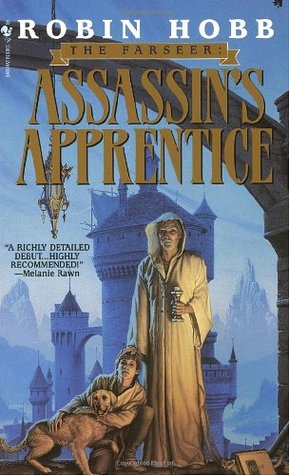
It’s quickly evident that such scholarly agenda as I have had has focused on medieval English literature and the practice of teaching English. More of the work I’ve ended up doing, though (and not all of which shows up on my CV), has been of what might be called a lighter nature. I’ve worked with fantasy literatures, chiefly Robin Hobb’s writings, as well as with RPG materials (of which I’ve discussed some in recent weeks in this webspace), and I have a healthy strain of taurascatological work under my belt. (I am aware that all work in the academic humanities can fall under that rubric. I’m not going to have that argument right now, though.) I’ve not always been ready to admit to it–and even now, when I am more or less out of academe and largely free to pursue such studies (amid the limitations imposed by my restricted institutional affiliation), I find that I talk about it in terms of admitting to the work, rather than celebrating it.
As I’ve noted elsewhere, I do enjoy working with medieval materials. They’re neat, and there’s something about holding objects hundreds of years old that thrills. I do not regret doing the work on the materials themselves–at least, not more than I regret much of the experience of academe. But I do think that focusing on them ended up being to my detriment in terms of finding full-time academic work. I’ve noted elsewhere that I am but one of many, many medievalists; I am one of far fewer scholars of fantasy literature and RPGs. And I think that I would have been a “sexier” candidate working with less…formal materials than Malory’s Le Morte d’Arthur. And I think that I would have ended up showing more joy in my work had I allowed myself to focus more on the “lighter” work I tend to do anymore. I’d’ve gotten more enjoyment from following more jokes than I have, and I think it would have come out in the work, helping me both to do more of it (so I’d be more likely to get hired) and to do better at it (so I’d be more likely to get hired).
If academic work is a calling, I heard more than one, and I answered one of the quieter calls made to me.
Owing to tomorrow’s holiday, DeVry University opted to close all of its campuses as of 1800 CST today. My section of ENGL 112 normally begins at that time; it was concomitantly cancelled. A slide presentation was emailed to students and announced in the course’s Canvas site; an exercise embedded in it serves as the equivalent of attendance for the cancelled meeting.
Students are reminded that another office hour is scheduled for Monday, 26 November 2018, at 6pm Central Standard Time. Students are also reminded that the following assignments are due before the end of day (Mountain Standard Time) on 2 December 2018:
Discussion Threads: Revising & Refining and the Role of Truth in Advertising (3 posts/thread, rubric online)
Rhetorical Analysis Essay, due online as a Word document