A Robin Hobb Rereading Series, Entry 391: Fool’s Assassin, Chapter 1

Read the previous entry in the series here.
Read the next entry in the series
here.


Following a letter from Chivalry to Burrich dating to just after the former’s abdication, “Withywoods” begins with Fitz looking out over guests arriving for Winterfest amid falling snow. Molly chides him for his delay in getting ready for the event, and he, grumbling about changes to fashion, starts to dress. Banter between the pair continues, and Molly leaves to attend to guests as Fitz ruminates upon his situation in life. Festivities continue in earnest as Fitz finishes getting ready, and as he makes to join them, he is pulled aside by his steward, Revel, who warns of uninvited guests acting suspiciously and of a messenger whose arrival was announced and unheard. Fitz issues directives to see to each, and he joins the revelry.

This kind of thing, yes, if not exactly this thing.
Photo by KATRIN BOLOVTSOVA on Pexels.com

The festivities are described as Fitz joins them, and though he is not an adroit dancer, he does what he can in the midst of things. Molly and Fitz confer about events and about Patience, who yet lives with them. Patience then takes Fitz aside, and they confer until interrupted by the arrival of Web and Swift, whom they welcome warmly. Fitz considers Web’s continued insistence that he bond through the Wit again, not wanting to replace Nighteyes, and the two confer about the uninvited guests who seem not to show up to their Wit.

As festivities continue, Fitz steps quietly aside for a moment before resuming his conversation with Web. Web urges Fitz to seek a new bond, and Fitz demurs, considering what he has and what he has lost. But his answers seem to satisfy Web, and matters between them are eased. Further conversation between the two is halted by an urgent summons from Molly, delivered by one of her sons; Fitz hastens off to attend to his wife.

The present chapter, first in the novel and in the series, carries out well its expected explicatory role. The novel is situated in the larger chronology of the Six Duchies, with explicit references back to both the Farseer and Tawny Man trilogies. Changes most relevant to Fitz and the characters most closely connected to him from the previous series are noted in passing in a way that lays them out sensibly without being heavy-handed, and explanations for the current state of Fitz’s life are provided without them seeming abusive or insulting. (Both are often problematic, if the readings I have done of other books in continuing series are any indications. There’s a challenge in setting things up to reward returning readers while not confusing new ones. Not everyone addresses that challenge well.)

The chapter also begins to hint at a driving conflict, something gestured towards in the prologue of the novel: the perils of complacency. Fitz is in a position in which he could be expected to be at some ease–and he is, in fact, at ease, perhaps overly so. The neglect of the messenger and the not-very-hesitant admission of the uninvited and clearly lying guests to his holiday celebration both speak to a certain desultory or lackadaisical attitude at odds with Fitz’s presentation in the earlier novels, although it might well be argued that a decade of married life as the petty noble of a country estate, a life that is a retirement from intense and fatally perilous public service, justifies so much. It is no small thing, after all, to remain properly paranoid across years of little happening, and my own experience suggests that the pleasantry of life with an agreeable spouse is decidedly softening–and it is not a bad thing, in itself, to be soft.

So much said, this is a Six Duchies novel, and it is Fitz. He has to find trouble, or it him, one way or another. (Honestly, there wouldn’t be quite so much story, else.) And it is clear in the present chapter that there are at least two sources of trouble waiting for him, if not more (although, since this is a rereading, I may be remembering rather than anticipating). There’s a lot of novel to go, though, and a lot of rereading yet to do–and I find, again, that I look forward to doing it!

If you like how I write, maybe you should hire me to write for you!
Get started by filling out the form below!

← Back

Thank you for your response. ✨

Or send support along directly!

Written while Waiting for Clients

It is not only the susurrations of my own air conditioner as it
Strips the water out of the air that
Holds too much of it in lowering clouds that
Hesitate to relieve themselves
Not thinking the oak and cedar and mesquite here
Mildew growing atop limestains
But the low hum of the neighboring office’s coolers
Singing as they hold the flowers
Pitches changing as hands reach in to pluck out
What those same hands lodged inside

It is that time of year, and I do so enjoy seeing them…
Photo by nagaraju gajula on Pexels.com

The music on in the background
Trying to balance engagement and nonannoyance
Because there are differing tastes that come in the door at odd whiles
And some of us have to sit and hear the songs all day
Never does manage quite to cover up those noises
Or those of the highway just outside
People racing past what are just barely not residences
And all too often finding obstacles they did not expect

Maybe you need some writing done?
Maybe you need me to do it for you?

← Back

Thank you for your response. ✨

Or send a little help my way at paypal.com/paypalme/ElliottRWI!

I Heard from an Old Friend Yesterday

She sent me a message
Let me know that someone we’d known
Someone I’d worked with
Had retired
And we chatted for a while afterward
She noting that she was going
Up for a job
Me noting that I have one
Each remarking that things are going well
And they are
And it was good to be back in touch

Image related and still mine.

There is some talk of getting together again
Marking the decades that have passed since we met
Since we parted
Some of us staying where we had been
Others flying away
Still others lingering around for a time until
Circumstances changed and we were
Called away to other lives

They aren’t bad words to have said or heard
Even as the years have passed and
Paths have been trod that will never open again
There is some comfort in being recalled
Fondly enough to be seen again

Remember: written-to-order poetry makes a fine gift, and I’m happy to help you give it!

← Back

Thank you for your response. ✨

Or contribute here: https://www.paypal.com/paypalme/ElliottRWI

A Robin Hobb Rereading Series, Entry 390: Fool’s Assassin, Prologue

Read the previous entry in the series here.
Read the next entry in the series
soon.


Following front matter that includes a pair of maps and the text of a letter from Queen Desire to Fennis of Tilth, the prologue begins with Fitz rehearsing his early experience of hating and fearing Desire. The circumstances of his finding the letter receive some attention, as do Fitz’s changing attitudes toward the woman. Fitz also reflects upon his early impressions of Withywoods, contrasting them with the reality of the place he encountered when he moved there.

I know it needs work…and the room does, too.
Image is mine. Clearly.

Fitz continues, shifting to a far more melancholy musing that expresses some sympathy for Desire’s position and begins to bewail his own inattentions and infelicities (7):

Lessons learned too late. Insights discovered decades later.
And so much lost as a result.

As I noted in the previous entry, I’m moving directly into the Fitz and the Fool Trilogy, rounding out what is currently the main line of the Realm of the Elderlings novels before going to pick up other things (such a s the Soldier Son novels and some shorter works). I’ve got a couple reasons for doing so. One is simple momentum. Another is that I have a coming conference paper that will need me to have looked at the books again, and moving directly into treatment of them helps me to do the work I need to do for that paper. Yes, it might come off as a bit of laziness, but I’m doing this in and around working outside academe; I have to make time to read when I can, and I need to make it count for as much as I can when I do it.

As might be expected, this is not the first time I am reading the book–nor rereading it. I comment about my first experience with the book here, close to ten years ago, when I’d completed reading the signed copy I was lucky enough to get. Too, I have written at least one paper that deals with the series of which the present volume is the first, doing that some years later so that I have to have reread the text at least the once. (I often fall into the trap when writing academic papers of getting into reading when I’m looking for citation and argumentative materials, which does not speed the process of composition.) So it’s not with wholly fresh eyes that I’m coming back to this text–but it has been a while. The volumes of the Fitz and the Fool trilogy are substantial, and I haven’t had the luxury of as much time to read as I would like; as I note above, I have to fit it in when I can–and this isn’t something I can really read to my daughter quite yet.

And as to the text itself…the foreshadowing is quite deep. It promises great ill for FitzChivalry Farseer. But then, that’s par for his course…

Help me keep this going by hiring me to write for you!
Get started by filling out the form below!

← Back

Thank you for your response. ✨

Or you can send your support along directly!

Þisses swa Mæg

Harken and hear how the old poet sang,
The Heodening hearth-man Heorrenda replaced,
Of troubles that took place in times ere his own,
Found in them and faith for himself some ease,
Knowledge that nobody is not without troubles,
And others will often endure far worse,
Recited a refrain that rings down the years.

Pretty!
01. The Lady Chapel by Ella Foster at the Exeter Cathedral website, here, used for commentary

Dear child, delightful in all of my days,
Cold is the comfort in moments of conflict
That words can work, however well made,
But better a blanket that bears the night’s chill
When put on than none, for when it is worn
And the longer it’s lifted, the less is the cold,
The greater the gain of good warmth in it.

My body has borne that blanket not seldom,
Sought for solace in scribe-works of old
And makings of words from more modern days.
It gave to me gifts, the greatest I have,
And treasures far truer than troubles in life,
Even the evils that evince themselves.
Those passed away; so too may this one.

If you need some bit of verse as a comfort or a challenge, a compliment or a cut-down, I can help.
If you’re ready to take the next step, fill out the form below!

← Back

Thank you for your response. ✨

Or you can send your support along directly!

Composed in Haste on a Lunch Break

Sitting in a comfortable enough chair and
Looking out the window at the
Sun-drenched world that
Basks in glowing warmth while I
Feel my skin prickle ever so slightly at the
Thermostat’s setting not quite getting it right because
My desk is just too far away from it

It’s a neat setup, but not mine.
Photo by Element5 Digital on Pexels.com

The sudden chime rings out and
I lean forward from where I had been leaning back
Looking outside in an idle moment now gone by and
Reminded that there are tasks before me that
Only I can do
Because there is nobody else here
And I set myself to them once again

I am and remain happy to write to order–and without AI plagiarism!

← Back

Thank you for your response. ✨

Or you can send your support along directly!

A Robin Hobb Rereading Series: Entry 389: Blood of Dragons, Epilogue

Read the previous entry in the series here.
Read the next entry in the series here.


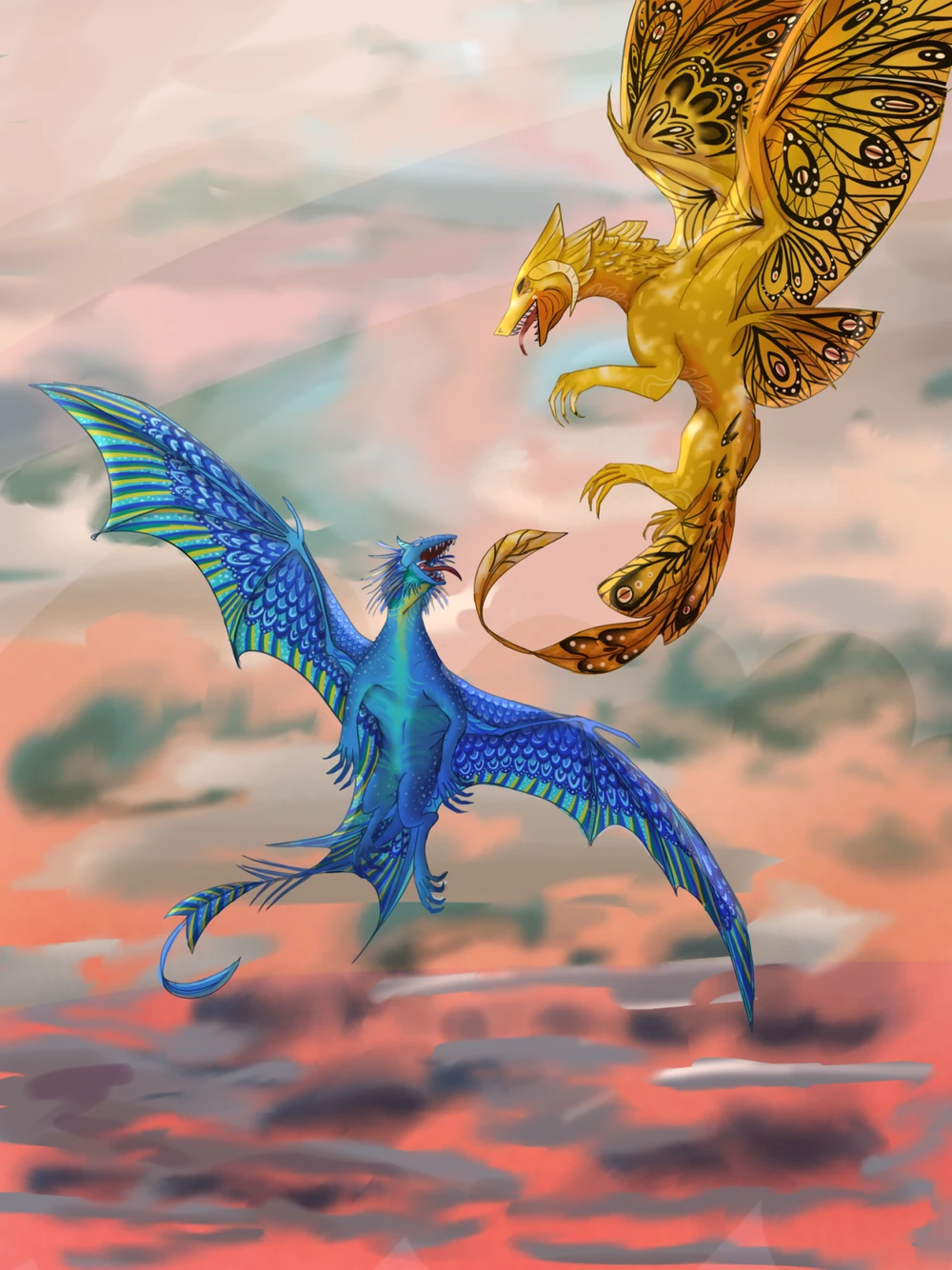
“Generation” begins with Tintaglia waking near Kelsingra, recovered from her earlier ordeals. Kalo and Icefyre fly nearby, the latter rebuking the younger dragons for their deviations from older ways, and they, in turn, assert the need for change against a world unlike that which Icefyre remembers. A brief argument and exchange of insults ensues, and Tintaglia thinks ahead to what may come for the eggs she is soon to lay and the serpents and dragons that will proceed from them. Below, in Kelsingra, Selden leads a cheer for the departing dragons and the new generation promised, and Tintaglia flies away.

Probably not quite what’s in mind, here…
Photo by Pixabay on Pexels.com

The epilogue is brief, as epilogues are wont to be, and it focuses on the non-human inhabitants of the Rain Wilds, as the Trader-centered novels tend towards doing. The view into other inhabitants of the Realm of the Elderlings remains a welcome thing, and there is something to be said for having what seems to be a happy ending for the characters who have managed to make it through the pages of the series. It’s nice.

A couple of notes about the rereading probably need to be made here. I’m not really doing this in a strict chronological order, at least in terms of what got published when. I skipped the Soldier Son novels to treat the Rain Wilds Chronicles, and I’m going to put them off until after I get through the Fitz and the Fool Trilogy, to which I’m turning next. There’re also some one-off things and shorter projects that might get addressed in the interim; I’m not sure on those yet. I do know, though, that when I can situate a given text within the broader context of what I’ve already reread, I’ll do that (that is, if I know something happens around the time of oh, Verity rising against the Out Islands, I’ll make that comment). There’s still a lot of rereading to do; I’m looking forward to doing it!

If you’ve liked reading what I’ve written, consider having me write for you!
It’s easy to get started; just fill out the form below!

← Back

Thank you for your response. ✨

Or you can send your support along directly!

A March, First

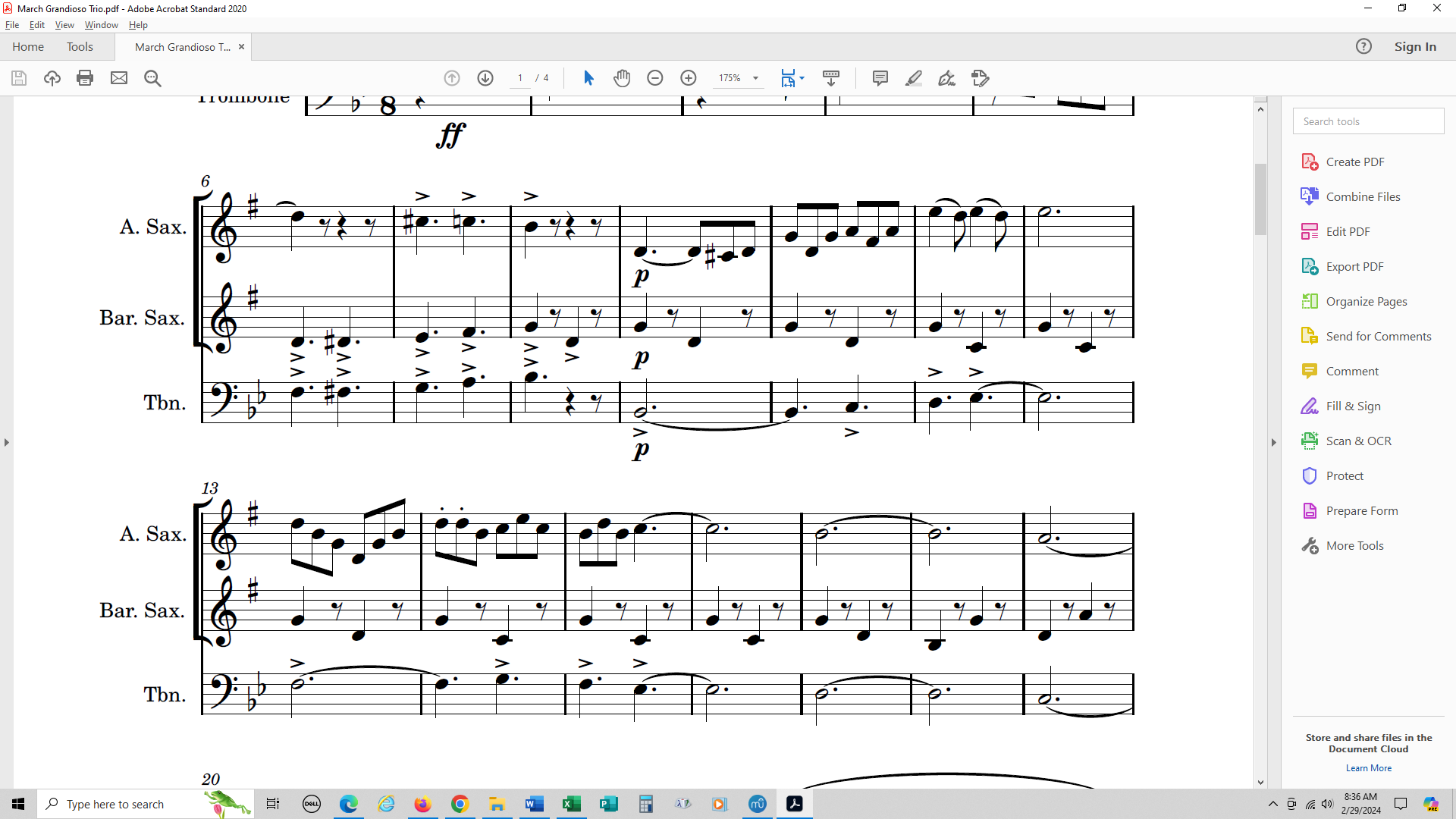
I may have mentioned previously that I wanted to be a band director when I grew up. I may have also noted that I was, for at least a while, involved in local band initiatives that ended up centering on a high school alumni band. I was not able to keep putting into that project what it needs, and so I had to step back from it, but I remember it fondly and enjoyed my time doing that work.

A little bit of the piece in question.
Image is mine.

Part of that work involved putting together pieces for the irregular ensembles that would turn out. Most of the time, it ended up being a trio: two saxes and a trombone. As might be imagined, there’s not a lot written specifically for that setup, and even stuff that might kind of fit needs some…adjusting before it will work well for such a group. I’m fortunate that I have some tools to use to do that kind of thing, and it seemed appropriate on this first of March to post an arrangement of a march my high school band used to play that seemed to go over well when the alumni group played it: Seitz’s “March Grandioso.”

I’ve got a few other pieces I put together for that arrangement. I might well post some of them in time to come. Maybe someday I’ll have things set up that I can upload audio, even!

I write in many modes; if you’d like me to write in one of them for you, fill out the form below, and we’ll begin!

← Back

Thank you for your response. ✨

Or you can send your support along directly!

Another Bit of Ad Copy

You want me just to dance and sing,
To gather up the words and string
Them into some melodious thing,
An ornament to ears

Well hung, a rough-cut stone is still worth the time.
Photo by Noelle Otto on Pexels.com

You want me to apply my art,
Such as it is, to take your part,
Such as it is, and help you start
To wipe away your tears

You want for me to write your verse
And lay down lines you will rehearse
To break through talk that’s all too terse,
The words becoming spears

You want me to do many things
With words: to plead, to shout, to sing,
To tilt and take the hanging ring;
I’ve wanted it for years

If you need some writing done, I’m your guy! Get in touch below to get started!

← Back

Thank you for your response. ✨

Or you can send your support along directly!

A Robin A Robin Hobb Rereading Series: Entry 388: Blood of Dragons, Chapter 22

Read the previous entry in the series here.
Read the next entry in the series here.


A letter from Selden to Keffria and Ronica in which he glosses developments in his life precedes “Summer,” which opens with the continuation of discussion between the crews of Tarman and Paragon. Events in Chalced are glossed, and some future plans are floated. Difficulties are also attested. The dispositions of the dragons after the defeat of Chalced are also attested, and Chassim’s installation as Chalced’s ruler receives remark. Selden’s condition is also reported, and thoughts of his future are voiced.

Looks about right…
Mating Battle, by Toad, from the Realm of the Elderlings Wiki, here, used for commentary

Sedric and Carson see to the disposition of messenger birds that have been sent to Kelsingra. Neither has much experience with the birds, but they do find a message appended to one of them. Opening it, they find a request for news of Hest and a reward for information about him. After a brief conference, the two set the message aside as irrelevant and return to their work.

Tats and Thymara confer as they look out over Kelsingra and its surroundings. They note, too, the continued enthusiasm for mating fights and flights among the dragons, now that matters have settled. The pair are surprised to see Sintara at the center of such a tangle, from which she and Mercor emerge in union. And in exultation, Thymara, herself, flies, and she at last accepts Tats’s entreaties.

The present chapter, last in the book (there’s an epilogue, though) and thus the last in the tetralogy, does a good job of summarizing and resolving a number of plot points that earlier chapters had not quite addressed. It’s a sensible enough thing for the chapter to do, given where it is, even if I do still think it’s a bit rushed. Still, that much of the resolution is presented as a thing done previously and only reported some time after the fact does a fair bit to help it sit better with me, and there’s doubtlessly some determination to the effect of “Readers won’t be interested in seeing, oh, Selden and Chassim falling more fully in love, and the novel’s already long enough, thank you” involved in glossing developments.

(Look, I’m a sucker for some of this kind of thing. And I remain a nerd–obviously, since I’m writing about the book and about this kind of thing in the book more than a decade after the fact–so I want details and information, even if I can’t spend time on them the way I used to could.)

I will note that I appreciate the passage with Sedric and Carson in particular. That Hest has simply gone without a trace, or an obvious one, and that it’s accepted along the lines of “Eh, what you gonna do?” is something of a playful thing; that there is a clear implication that the pair know what happened, even without more or less direct evidence, only enriches it. Petty as it is, though, and subject to deconstruction (seriously, follow the implications), it’s a little bit of amusement for me, and I appreciate it.

If you like the kind of interpretation and analysis I bring to bear, why not commission me to do some for you? Fill out the form below to get started!

← Back

Thank you for your response. ✨

Or you can send your support along directly!