A Robin Hobb Rereading Series: Entry 251: Golden Fool, Chapter 1

Read the previous entry in the series here.
Read the next entry in the series here.


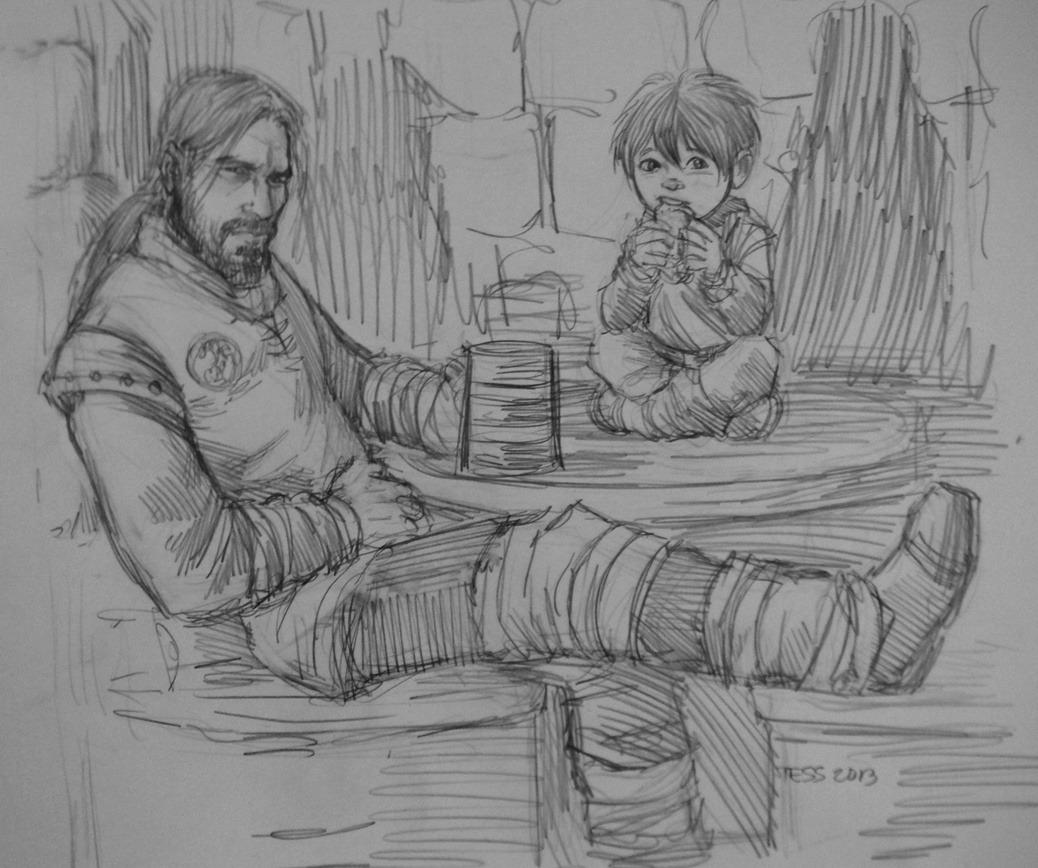
The first chapter of the novel, “Piebalds,” opens with in-milieu commentary detailing the groups origins, propaganda, and practices. It moves then to pick up directly where the previous novel ends, with Fitz-as-Badgerlock ending the night in Jinna’s home, waiting for Hap to return; Fitz muses on circumstances, including the revelations each has about the other. At length, Hap returns, exulting in Tom’s unexpected presence; he briefly seeks to relate his deeds and doings before being reminded that he has work in the morning, and he goes off to bed. As Tom makes to leave, Jinna again warns him about Hap’s dissolution.

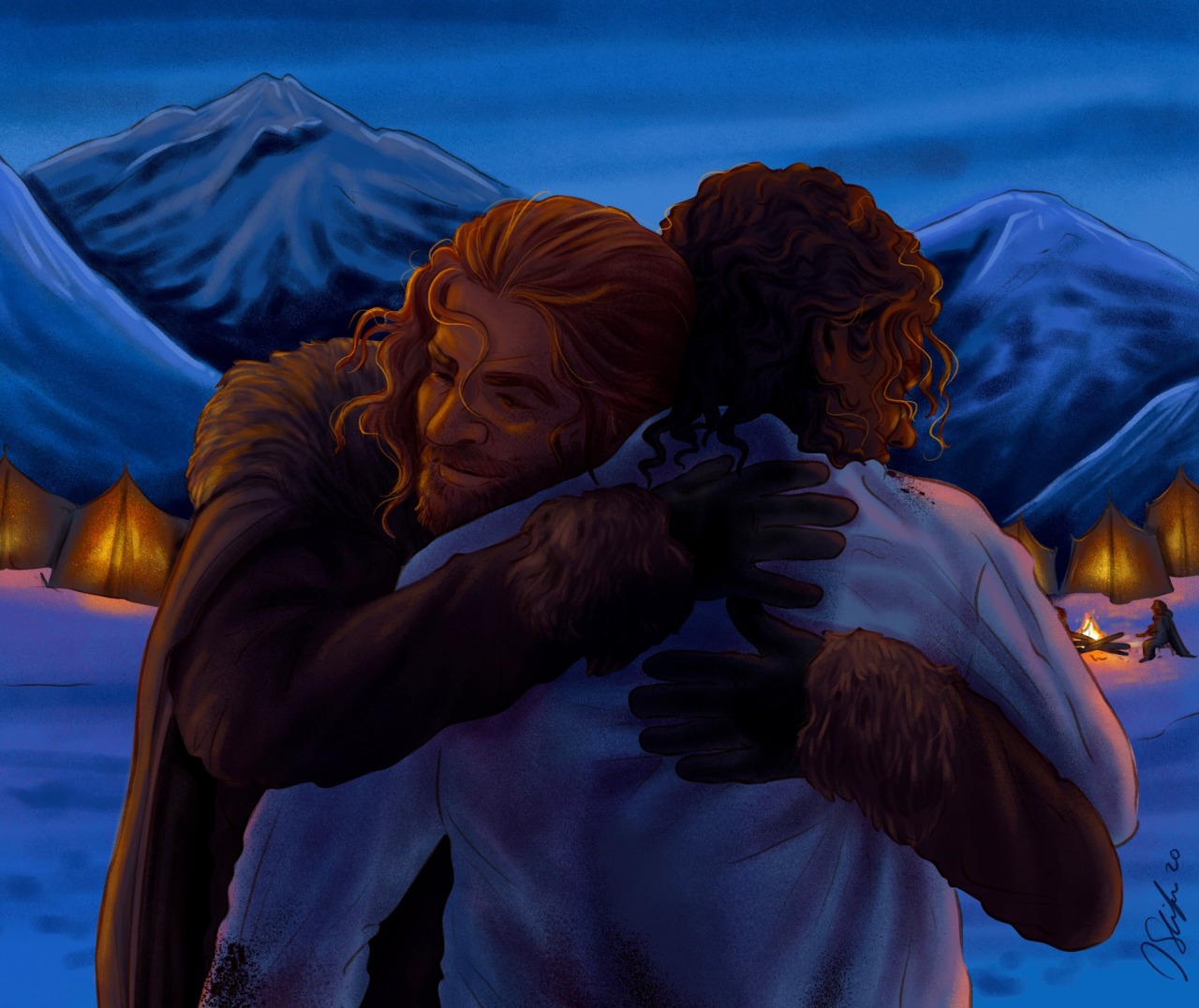
Fitz’s sudden worry…
Image from friendly ghost on Tumblr, here, used for commentary.

As Fitz makes his way back to the castle, he is pursued and accosted by Pieblads who mock and taunt him. He is unassailed, however, and recriminates himself for his oversights as he proceeds back. The annoyance becomes anger as he reaches the castle gates and accosts the guards on duty, though he soon realizes his error. Swiftly enough, he returns to the duties he has as Badgerlock to Lord Golden, reporting events to him there. Golden notes Chade’s actions from the previous night, and as the two confer about all that must be done, Fitz realizes he has left his notes in his cottage–where any could find them. The Fool urges caution against Fitz’s sudden concern. Fitz accedes and makes preparations for the day to come.

The present chapter does an admirable job of explicating the events of the previous novel, catching up readers who either began the series on the second novel (I’ve had to do it several times for freelance work, so I know it happens for good reason) or who had had some time between reading Fool’s Errand and starting Golden Fool. And it does a good job of laying out the central conflicts of the present novel, hinting towards tensions surrounding homosocial and homosexual relationships as well as pointing out the problems of the Piebalds and of Dutiful’s training–in addition to motioning towards the cultural friction between the Six Duchies and the Out Islands. In brief, the first chapter does all of what a first chapter ought to do, which makes for helpful rereading; even if it’s not been long since I finished Fool’s Errand again, it’s been a while since I’ve been able to read Golden Fool for more than citation-mining, and it’s a welcome return.

Help me make a happy Thanksgiving for my family?

A Robin Hobb Rereading Series: Entry 250: Golden Fool, Prologue

Read the previous entry in the series here.
Read the next entry in the series here.


The second novel of the Tawny Man trilogy begins with abortive in-milieu comments from Fitz about the loss of Nighteyes before pivoting to Fitz’s ruminations about his efforts to compile a history of the Six Duchies. He notes the repeated intrusion of the personal into what he had intended as the general. He also notes his utter bereavement in the wake of the wolf’s death and the strangeness of his choice of isolation thereafter.

Tawny Man Trilogy: The Golden Fool by Robin Hobb (2003, Hardcover) for sale  online | eBay
The edition I’m reading…
Image taken from an eBay ad, used for commentary.

Fitz then turns to reminisce about his time with the Lady Patience, noting remarks she’d shared with Lacey about the fixed attitudes of those unwed by their thirties; he notes that he falls under their rubric, having confessed as much to the Fool. He marks the Fool’s reply–respectful disagreement–and moves into ruminations on the bonds of family. Freedom, he notes, means a severing of ties; isolation is the price of self-determination, but the choices that lead to it can be amended.

As I noted before, I did not make the mistake of skipping the hardcover as the Tawny Man trilogy continued, but picked up Golden Fool as soon as I saw it on the shelves. At that time, I was an undergraduate at the University of Texas at San Antonio, commuting from Kerrville to San Antonio five days a week to go to school and delivering pizza evenings and weekends, so I had low expenses and cash in my pocket, as well as access to bookstores–so I saw it soon after it hit the shelves. If memory serves, I read it cover to cover in a night, a delirious experience that has stuck with me strangely; I miss having the luxury of giving so much time to something at a stretch and having the focus to sit and read for hours, immersing myself in the synthesis of written word and feel of page and smell of it. Even now, when I can sit at my desk at home–and I suppose I need to do another office piece–I have many concerns to command my attention; I have to take such chances as this to read what I like to read, as they are rare unless they are made to be present. But I think it’s doing some good that I do so; certainly, there’re people reading what I write about what I read, and I hope it’s helping.

As to the philosophical import of the prologue: it is present, certainly, and those who are more studied in such matters can well discuss the ideological tensions that are at work in it. To my eye, there is something to read into it of the US idealization of self-determination, of rugged individualism; being Texan, I am surrounded by the idea that a person ought to stand on their own, entirely, rather than prizing the community. At the same time, I am aware of my own isolation from a great many things; like many people who spend a fair amount of time online and/or writing, I am removed from events even as I am affected by them, and like many men in the United States, I find it difficult to make new connections. That so many of those I have had have fallen away over time–as they are wont to do if not actively maintained–leaves me in a small world.

Perhaps that is part of why I read; I get some sense of connection by seeing into the lives of even fictional others. And perhaps that is part of why I reread; by turning the pages again, I can maintain some sense of connection back to who and what I have been, and if not at my best, it’s better than none at all…

Would you help me make more of these chances present?

A Robin Hobb Rereading Series: Entry 249: Fool’s Errand, Chapter 29 and Epilogue

Read the previous entry in the series here.
Read the next entry in the series here.


The final chapter in the novel, “Buckkeep Town,” begins with in-milieu comments on fennel before turning to Fitz waking in his chamber after a long sleep. He and the Fool trade comments, and he resumes his guise as Badgerlock and makes his way out into Buckkeep Town. Badgerlock considers the townsfolk he passes as he moves through the bedecked city, musing on Dutiful’s circumscribed life along the way to Jinna’s. There, she greets him, welcoming him in from the weather and conversing with him about her concerns for Hap before inviting him to stay a while longer.

Jinna
Illustration series for the Fool’s Errand by Robin Hobb
Once again…
Katrin Sapranova’s Jinna, here, used for commentary.

The brief epilogue, presented as a retrospection by Fitz, sees him muse on his efforts to compile a history of the Six Duchies and the overturning of those efforts by weather and passers-by. His comment near the end that “the past had broken free of my effort to define and understand it” is a telling one, I think. There is a tendency to view history as a fixed, immutable thing, and while it is the case that the events that happened in the past happened and cannot be changed, their presentation–which is what history is: the report and record and transmitted understandings of events and their importance–can and do shift and evolve over time. In part, this is and should be a reaction to the revelation of more and better information; new sources are found, new physical evidence emerges from the ground and from people’s holdings, and so knowledge changes, forcing interpretations to change along with it.

Of course, even so much gets opposed by a great many people, who want to think that history is what they were (badly) taught in their own histories, and that what their teachers told them (ineptly and in a rush, while they themselves listened far less than attentively) is Truth, immutable and Good; when new tools and rubrics for processing and assessing the information emerge, as they will as long as more people apply themselves to the study of the subject, they react even more strongly, perceiving the questions (rightly) asked about the narratives they imbibed not as critical questions aimed at generating better understandings, but instead as attacks on them, personally. Few of us are as important as that, truly–and Fitz, who is as important as that in his own milieu, seems to recognize it, offering a lesson many of us would do well to learn better than we have.

Help me make a better Thanksgiving for my little girl?

A Robin Hobb Rereading Series: Entry 248: Fool’s Errand, Chapter 28

Read the previous entry in the series here.
Read the next entry in the series here.


The penultimate chapter in the novel, “Homecoming,” begins with in-milieu comments from Fedwren about the relationships between the Six Duchies and the Out Islands before turning to Dutiful’s party arriving at Buckkeep Town. Fitz-as-Badgerlock notes the shifting social arrangements among the party as they make their return, feeling some pique that Laurel only speaks to him because the Fool-as-Golden is occupying the Prince’s attentions.

Narcheska
Illustration series for the Fool’s Errand by Robin Hobb
I do so love her art!
Image is Katrin Sapranova’s Narcheska, used for commentary.

As they approach the capital, Badgerlock notes that the town seems to be decked out for revelry; he learns that the expected arrival from the Out Islands of a delegation–including Dutiful’s intended–has come early. Golden and Laurel ride ahead, and Badgerlock takes Dutiful aside to a clandestine entrance to the castle so that the ruse of his private meditations may be maintained. Rain begins to fall, and Chade uses the cover of it to spirit Dutiful into the castle, leaving Badgerlock to conduct their horses through more normal means back into Buckkeep proper. He watches the procession from the Out Islands along the way, and he sees to the horses once he is finally in the keep itself.

So much done, Fitz takes himself circuitously up to Chade’s tower, where a meal and a bath await him. He indulges in both and falls asleep, only to be woken later by Chade. The two confer about events, exchanging reports, and Fitz is shocked to note that Chade has ceded a position to him.

I don’t normally make much of the hero’s journey paradigm. I know it’s often used in teaching, and it does provide a convenient entry into looking at plots, but it is also not as applicable as many of its proponents claim it is. One former colleague of mine–former because I left the institution, not because she did–was notable for trying to read all works through that lens, something that even a number of undergraduate students recognized was not especially helpful. In the present chapter, there is perhaps something of the hero’s return and accommodation to a changed world; Fitz is taking a new position, and he is changed in advance of his taking that position. But he does not return to (public) accolade, and he is very much not a hero, although he is clearly the protagonist of the current novel. At best, the paradigm is an imperfect fit; it would be better, perhaps, to say that Hobb’s rendition is a more nuanced and authentic one than much of the escapist fantasy that is published and read.

I continue to appreciate your kindness.

A Robin Hobb Rereading Series: Entry 247: Fool’s Errand, Chapter 27

Read the previous entry in the series here.
Read the next entry in the series here.


The next chapter, “Lessons,” opens with in-milieu comments regarding training in the Skill before pivoting to Dutiful’s convalescence following the trauma of his bonded beast’s loss–and Fitz’s numbed endurance of his own bereavement. They are in foul mood and not much better form as they make their way back to Buckkeep, somewhat circuitously. At one stop, Fitz-as-Badgerlock is obliged to call on the performing minstrel, Starling Birdsong, despite misgivings. She offers to take him back into her bed for the night; he refuses again, meeting her harsh rebuke.

Morning toilet…
Image from leafykat’s Tumblr, used for commentary

After, while the Fool-as-Golden is out, Dutiful and Badgerlock confer about his true origins, the Prince guessing at Badgerlock’s Farseer blood but utterly misidentifying its source. They also commiserate over the losses of their bonded beasts, and Fitz ponders deeply until he falls asleep. He wakes to find the Fool back in their rooms–despite the door having been locked from the inside. The two confer briefly before Dutiful wakes, and Golden excuses himself so that Dutiful and Badgerlock can confer. Dutiful asks Badgerlock to be his teacher for both his magics, and Badgerlock reluctantly and partially agrees; he recognizes that the Prince has been remarkably isolated, which facilitated the Piebalds’ efforts against him. Further conversation is interrupted by the arrival of Laurel, who marks the resumption by the Prince of his dignity, and, upon Golden’s return with the news that matters are arranged, Dutiful bids the group be off, and Golden pledges himself to Dutiful as he had to Verity and Shrewd before.

The present chapter does much to mark out the homoerotic tensions between Fitz and the Fool that scholars have commented upon; several of them are noted here, their works far more erudite than anything I do and therefore all the more worthy of consideration. The last passage, particularly, does so, with the detailed descriptions of intertwining hands and touch-driven magics at work. The passage also runs to homosocial bonding, with Fitz noting the particular lack of it in Dutiful; given the Prince’s report of his upbringing and his noted status as an only child, it makes sense enough that he would feel isolated. There is certainly peril in such isolation, not only in making Dutiful susceptible to the influence of the Piebalds, but also in creating such figures as Regal, whose jealousy of Chivalry and Verity a generation back occasioned so much harm. And while it is to be expected that a ruler will be alone in some ways–leadership always imposes some distance–to have had no close contact has to have been a heavy burden for the boy.

Yes, I’m reading affectively again. But I’m reading, still.

I’ve had a shift in employment status; can you lend a hand?

A Robin Hobb Rereading Series: Entry 246: Fool’s Errand, Chapter 26

Read the previous entry in the series here.
Read the next entry in the series here.


The subsequent chapter, “Sacrifice,” opens with a selection from Chivalry Farseer’s treatise “Of the Mountain Kingdom” before pivoting back to Fitz facing down the Piebalds as Dutiful is overtaken by Peladine. Fitz points out exactly what is happening, and Dutiful makes an impassioned plea that seems to move some of the Piebalds, but not their leader, Peladine’s twin brother, Laudwine.

Nighteyes
Illustration series for the Fool’s Errand by Robin Hobb
May we all be so lucky.
Katrin Sapranova’s Nighteyes, used for commentary.

Dutiful makes to accept his fate, but the cat to which he is bonded turns and attacks Fitz, calling for him to kill her and trying to force him to do it. Fitz succeeds, and the ruse that Dutiful has maintained is broken. Laudwine attacks, and Fitz cuts off his hand. Melee ensues, from which Fitz and Dutiful are extricated by the timely return of Laurel and Lord Golden. Those accompanying Laurel and Golden, local Old Blood, tend to Dutiful, who mourns for the lost cat.

As Fitz feigns sleep, he listens to the talk that unfolds, the Old Blood explaining the rise of Laudwine within the Piebalds to Lord Golden. As sleep begins to overtake him in fact, he hears the negotiations between Lord Golden and the Old Blood elders there assembled; an uneasy agreement is brokered, with the Old Blood holding the secret of Dutiful’s Wit against better treatment for their people from Kettricken and the Six Duchies.

Fitz finally finds sleep and dreams with Nighteyes. In the dream, the wolf is young again, and he goes out to hunt, leaving Fitz behind to rest. He dissipates into the wider world, and Fitz wakes to find the dead wolf in his arms.

Yes, I cried. Again. As I do every time. Do you find fault with me for it?

I appreciate your support!

A Robin Hobb Rereading Series: Entry 245: Fool’s Errand, Chapter 25

Read the previous entry in the series here.
Read the next entry in the series here.


The following chapter, “Ransom,” opens with a brief note about recognizing children who have the Skill before moving into Fitz and Dutiful arriving through the Skill-pillar back whence they had fled. Fitz reassesses their situation, finding it suboptimal, but is surprised that his horse, Myblack, awaits them. He hustles Dutiful along, the horse following, until he can get the Prince astride the steed. As they proceed, Fitz hums to himself, speaking to Dutiful about his magics; Dutiful notes that the woman is with him, raging at his inability to attack Fitz through the Skill-command. He also speaks of his cat and the ways in which the woman in the cat would not allow the cat to be a cat.

Australian Mist.jpg
Here, Kitty, Kitty, Kitty…
Regis2007’s picture of an Australian Mist Cat, hosted on Wikipedia, here, and carrying a CCBYSA3.0 license; used for commentary.

Fitz becomes aware of pursuit and of the suffering of his wolf, and the Prince’s abductors emerge. Fitz threatens Dutiful, and pursuit pauses, one pursuer questioning why Fitz stands against others of the Old Blood; Fitz lays out his reasoning, and the pursuer rages against the Farseers. Dutiful hears it, and Fitz learns the underpinnings of the plot against Dutiful; the deaths of the Witted at the hands of the Six Duchies and their Farseer monarchs. Fitz manages to dicker for time and the release of the Fool and Nighteyes, a thin hope for all involved, and they are taken to where the abductors hold Lord Golden and Nighteyes. Fitz directs the Fool and communes briefly with Nighteyes, sadly so, and Dutiful begins to be possessed by the dead woman, Peladine, but he offers some resistance.

Things just do not seem to improve for Fitz, do they? At least he recognizes his own complicity in creating the current situation, although he had no way to expect that many or any of his entanglements would occur as they have in the novel. And it is not as if he had not already given his life in service to the Six Duchies…but even that does not mean that his actions did not give rise to what befalls now, as well as what is portended. Because the deal Fitz has struck with the Prince’s abductors, the Piebalds, is a tenuous one at best, and he has to expect that it will not be honored. As suspicious as Fitz is even of those closest to him, he can hardly not believe that others, less kindly disposed toward him, will be forthright…

Send some money my way?

A Robin Hobb Rereading Series: Entry 244: Fool’s Errand, Chapter 24

Read the previous entry in the series here.
Read the next entry in the series here.


The next chapter, “Confrontations,” opens with a story about the Others related in-milieu before pivoting to Fitz dreaming of Verity’s tower, Verity, and Jinna; it is an unpleasant dream. Fitz soon tumbles into communion with Nighteyes; the wolf offers a dire report of the circumstances in which he and the Fool have found themselves. Nighteyes also notes on the interpenetration of a deceased woman in the cat with which Dutiful is bonded. The Fool is assailed, and Fitz loses the connection to his wolf.

Something like this, perhaps?
Kristine W’s Rooster Crown Feather on ArtStation, used for commentary.

Fitz wakes and reassesses his situation and Dutiful’s. It has not improved, and he makes to wake the Prince. Dutiful responds harshly, and Fitz’s own anger rises in response. He stalks off to gather food, finding more wooden feathers as he does, and he makes to cook them as Dutiful returns. The Prince’s abductors work through him, and he attacks Fitz, only to be subdued swiftly and with ease–at first. The woman interpenetrated with the cat uses the boy recklessly, however, and Fitz is forced to fight more forcefully, inadvertently laying a Skill-command on the boy not unlike one Chivalry had laid on Galen before. He considers events in the wake of the command, forced to assess the situation again, and he makes to reconnoiter, securing the feathers as he does so and as he and Dutiful eat and wash.

Searching, Fitz comes across a number of alcoves filled with treasures; curious, he investigates further. The treasures defy him, and he scouts more, finding nothing. He notes as much to Dutiful, and the two confer about the Prince’s magic and how he has been trapped by it. Dutiful disbelieves to the extent he can, but Fitz has the right of it, and as the proceed, Dutiful stumbles upon a treasure showing a figurine of a woman on a fine chain. An Other soon confronts them, demanding the surrender of the treasures they have found; Fitz refuses, and they escape through the Skill-pillar, emerging in a ruined Elderling city. They transit again in haste, and Fitz wonders if Dutiful’s mind can endure it.

I appreciate the references back to earlier works in the Elderlings series, the attempt to harmonize the various series. It’s not necessarily an easy thing to do, of course, and fandom can be (often is) punitive about such things. I have not been immune to commenting on such things, of course, and some earlier comments I have made are not necessarily as I would have them be–although it is the case that narrative consistency from an author who asserts the importance of verisimilitude, whose work does much to foster a Tolkienian inner consistency of reality, is a subject of fair critique. Here, though, the connections are clear enough to readers who have been doing their reading, and they do not conflict of run into retcon–which makes things all the better, although retconning may not be the worst thing. We are supposed to revise ideas when new information emerges, after all…

Remember, remember, the fifth of November, and send me some cash for my pot?

A Robin Hobb Rereading Series: Entry 243: Fool’s Errand, Chapter 23

Read the previous entry in the series here.
Read the next entry in the series here.


A chapter titled “The Beach” follows, opening with a brief statement regarding the Skill before noting Fitz and Dutiful’s emergence from a Skill-pillar into the surf. Disoriented, Fitz struggles to preserve the Prince and to bring them above the surface of the water; the task proves challenging but is accomplished. The enormity of their situation breaks upon Fitz, and he rages as he drags Dutiful along to higher ground, away from the incoming tide. Dutiful presses him with questions and accuses him of being a Farseer bastard as Fitz further assesses their situation.

Sea Skill Pillar
Illustration series for the Fool’s Errand by Robin Hobb
All washed up…
Katrin Sapranova’s Sea Skill Pillar, used for commentary.

As Dutiful realizes their situation, Fitz grows disappointed in him, then shunts aside the feeling in favor of securing food and rudimentary shelter. He reaches out via his magics to Nighteyes and the Fool, finding neither, and gruffly tends to Dutiful. He finds that the Prince has slipped into a Skill trance and plunges into the magic after him, very nearly losing himself amid the magics and distracting thoughts of others. A strange being within the Skill reassembles him and Dutiful both, chiding them gently as they are reconstructed.

In the wake of it, Fitz wanders across the beach, finding a strangely carved wooden feather; he secures it as he further assesses his situation. With fatigue pressing him, and with nothing else to do, he sleeps.

It’s clearly a bad situation the pair are in in the present chapter, in an uncertain location, far from friends and support, and with no clear means of return to their accustomed locations. Once again, I find myself reading with affect, feeling for Fitz as he is confronted by Dutiful’s relative incapacity. I work with teenagers, and I know from that work they tend to think themselves apt to any task they fancy; I also know they are not so apt as they think themselves, and I know the vexation of seeing clearly what will befall them even as they fail to heed any semblance of warning about it. (Indeed, as I write this, I’ve not long since completed a round of grading, in which several students failed to heed the advice I gave them. It annoys.) So, yes, I find myself in sympathy with Fitz, who had to be far more capable at Dutiful’s age than Dutiful seems to be, and who confronts once again youth as youth, which is not easy for those who no longer have their own youth.

My birthday’s tomorrow; send a present?

A Robin Hobb Rereading Series: Entry 242: Fool’s Errand, Chapter 22

Read the previous entry in the series here.
Read the next entry in the series here.


The subsequent chapter, “Choices,” opens with a short piece about the White Prophet and Catalyst before resuming narration with the retrieval of Dutiful. The Prince queries Lord Golden about Badgerlock and avers his lack of desire to return to Buckkeep. He tries to act upon it, but Badgerlock restrains him swiftly and decisively; the Prince pleads to return to his beloved. Badgerlock denies him, and Golden plies him more gently. They learn of the Prince’s intentions; he knows himself to be possessed of the Wit and seeks to remove himself from leadership in the interest of preserving the Six Duchies. Badgerlock rebukes him, and Nighteyes’s arrival occasions an outburst from the Prince.

Escape
Illustration series for the Fool’s Errand by Robin Hobb
Something like this, yes.
Escape by Katrin Sapranova, used for commentary.

Fitz and Nighteyes confer about the matter as Fitz makes to prepare camp, the strangeness of the woman Dutiful regards being seemingly absent coming up again. Fitz presses the matter with Dutiful, infuriating him with his crudeness and leaving openings for Golden to press more subtly. Nighteyes makes snide comments in the Wit as Dutiful shows himself to be an infatuated young man.

After, Fitz and the Fool tend their horses, conferring about Dutiful as they do and as Nighteyes watches over the youth. Fitz takes up watch, from which he is later summoned by Nighteyes; Dutiful is out of his body, and Fitz follows him through the Skill. With the combination of that and his Wit, he realizes that Dutiful is dangerously entwined with his bond-beast, a cat–and that the cat is interpenetrated with the psyche of a woman, one who approaches with companions in anger. Nighteyes realizes that the woman is in the cat, and Fitz breaks off the magical connections, pain blooming inside him. The party prepares to flee again, under extreme duress, and they proceed raggedly until they can flee no further. There, they make a stand as they can, their backs to a Skill-pillar upon the barrows they had passed before. Surrounded, they are assailed, and Fitz drags Dutiful through the Skill-pillar to an uncertain destination, leaving the Fool and Nighteyes behind.

I once again find I cannot help but read affectively, this time with more than my usual sympathy for Fitz. I’m not much older now than he is in the text; I also deal with teenagers on a regular basis, being a high school teacher, and I find myself confronted just as much by the naivete of their infatuations–and chagrined by my recollections of my own. Admittedly, I’m not in danger of my life that I am aware of at any given time, nor am I possessed of strange magics that blend uncomfortably within me, although I do have a predilection for stimulant use to accentuate what powers of mind I do possess. (They are not as many or as extensive as once they were; age works upon all who survive to see it.) Even so, I’m used to dealing with teenage shenanigans, and I find it trying at times; I can only guess how one less schooled to such things feels in having to deal with them.

It’s not a comforting thought.

My birthday yet approaches; send a give?