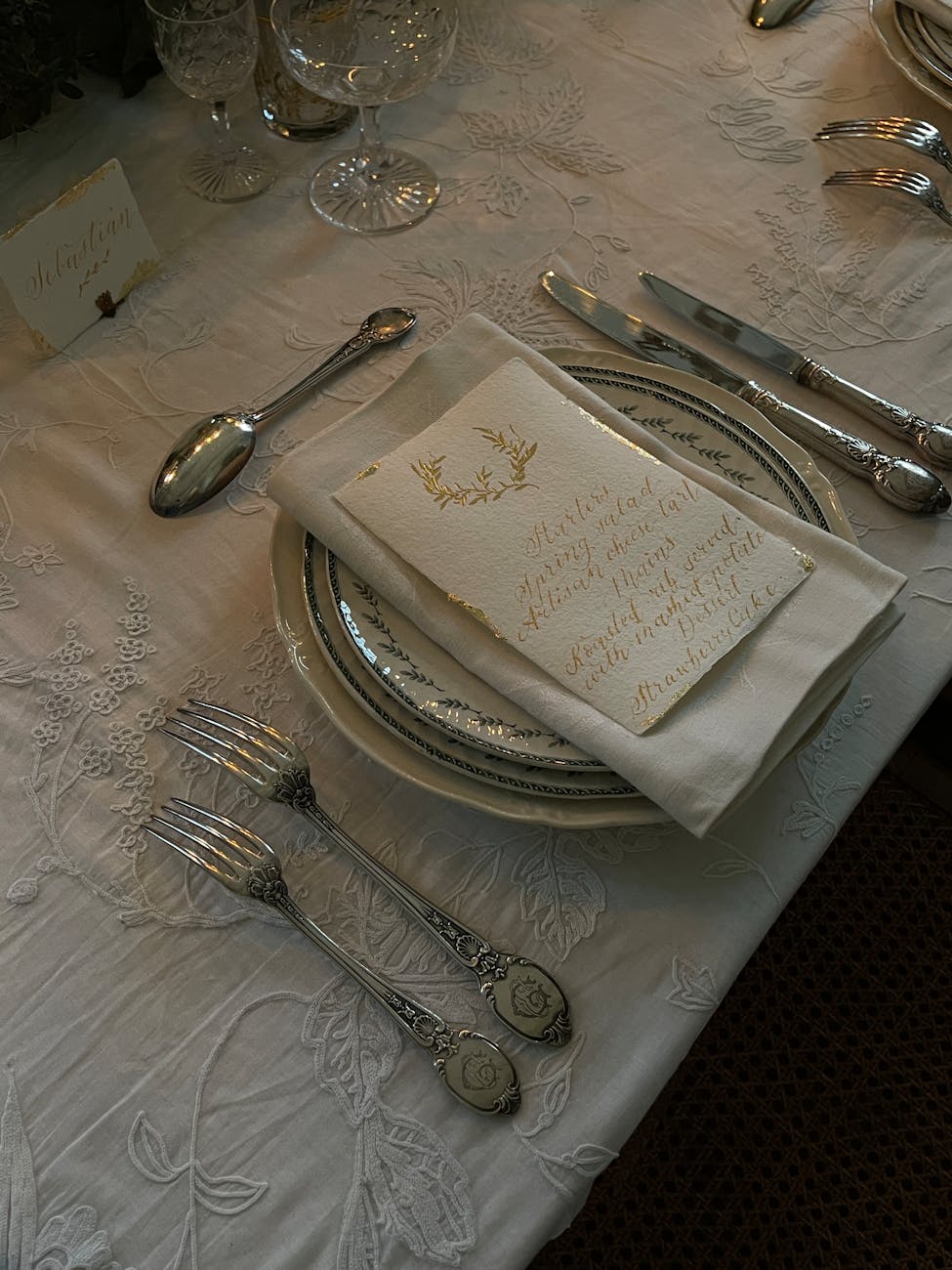
With Apologies for the Delay

There are some times I find that I
Am up to my elbows or to my eyes
In work; it’s always a surprise
Despite how often it happens.

Closer than many things to the truth…
Photo by Josh Sorenson on Pexels.com

Alas that this is such a day
When I would rather be at play,
But I’m at work, and so I pray
For strength, as often happens.

Like my little bit of verse? Want some of your own? I can help with that!

Go back

Your message has been sent

Warning
Warning
Warning
Warning.

Or you can send your support along directly!

A Robin Hobb Rereading Series, Entry 472: Assassin’s Fate, Chapter 13

Read the previous entry in the series here.
Read the next entry in the series
here.

This is another chapter that discusses sexual assault and torture.


After an excerpt from Bee’s dream journals, “Full Sails” begins with a return to Bee as she remains Dwalia’s captive. She assesses her situation aboard ship and her confinement, noting overheard conversations and plotting to escape Dwalia and her company. Part of the plot involves accommodating Vindeliar, who reveals more of Clerres’s organization and beliefs. Bee almost exposes herself to his magics in a moment of inattentive compassion, but she masters herself and learns more of the limitations of his abilities.

Probably not so nice as this…
Photo by Kseniya Kopna on Pexels.com

As Bee considers further what she has learned and overhears yet more, some news of the Pirate Isles and what faces merchants traveling through them, Vindeliar makes to join her. Bee presses the man for more information, and he reluctantly admits that the Unexpected Son is a potential threat to Clerres. Vindeliar comes to believe Bee is using the information to change things unacceptably, however, and soon has Kerf restrain her, taking her below. In confinement, she challenges Dwalia again, only for Dwalia to relate what she did do the Fool and what awaits Bee in Clerres.

The ship on which Bee travels as Dwalia’s captive, beset by weather, pitches, knocking Vindeliar unconscious. Bee attempts to suborn Kerf and attacks Dwalia. Vindeliar regains consciousness, however, and resumes control of Kerf, who removes Bee from Dwalia. In the ensuing fracas, Bee escapes into the bowels of the ship.

The present chapter is helpful in laying out more of the structure of Clerres. The detail that the Servant in the north tower passes down a name is of interest–although it must be noted that the character providing the information, Vindeliar, is not wholly reliable as a narrator. The novels in which he appears make clear that his perceptions and understandings are sharply limited and curated, so it is not necessarily the case that what he says can be taken entirely at face value, even aside from Vindeliar being Bee’s direct captor, whose words should not be trusted for that reason alone.

I am reminded as I reread the chapter of the idea of the butterfly effect. It’s a common enough concept that I don’t think I need to elucidate it here, but, as I have looked back over the bits of this rereading, I find that I have not noted it earlier, and I really ought to have done so. The Fool, as memory serves, remarks at many points throughout the Realm of the Elderlings novels that small changes end up making big differences; a metaphor used at one point (where, exactly, escapes me at the moment; there are many conversations between Fitz and the Fool) is a small rock put in the path of a wheel that forces the wheel’s path to shift (with admitted unpleasantness for the rock). That is, the Fool makes much of small changes exerting ongoing effects–the butterfly effect, in brief.

There’s enough related imagery in the novels to further the reading, of course. There is, for one example, Bee’s whispered verse to Fitz in “My Own Voice” in Fool’s Assassin, and there’s Nettle’s handling of Tintaglia at the end of Golden Fool; both associate Fitz’s daughters with butterflies, their wings making storms happen far away and later on. The life-cycles of the dragons are strangely mimetic of butterflies (and, admittedly, other insects), and I recall that the Fool seems to employ such imagery from time to time. I’ll admit that I wasn’t reading for such details and that I probably ought to have been…but I doubt this is the last time I’ll work through the Realm of the Elderlings novels, so I may well return to it again.

I remain pleased to go to work for you; fill out the form below to get your own custom work started!

Go back

Your message has been sent

Warning
Warning
Warning
Warning.

Or you can send your support along directly!

A Robin Hobb Rereading Series, Entry 471: Assassin’s Fate, Chapter 12

Read the previous entry in the series here.
Read the next entry in the series
here.


Following some commentary by a Bingtown Trader about the origins of the liveships, “The Liveship Paragon” begins with Fitz considering his own image on the figurehead of the eponymous vessel. The Fool as Amber claims to be able to explain, something about which Fitz expresses doubt before returning to his contemplation of Trehaug as he approaches it aboard Tarman. The liveship barge docks alongside what had been the Ludlucks’ ship, and Amber, the Paragon, and the ship’s crew exchange greetings.

Oh, yes, this again.
Image remains “Give me a face you could love” by Katrin Sapranova on Tumblr, still used for commentary

As the Paragon makes to take Fitz and his company aboard, Fitz examines the figurehead closely, his magics taking in the liveship and his thoughts returning to his journey to the Out Islands with Thick. Perseverance finds himself rapidly integrated into the ship’s company as Fitz and his other companions are taken into conference with Brashen and Althea, with whom introductions are made. After a brief talk, in which Spark is easily accommodated, Althea is called away by ship’s business, leaving Brashen to give something of a tour of the vessel to his passengers. Fitz learns some of the crew’s background and histories, including some of the tensions ensnaring the Vestrit family, and he finds himself uncomfortably the focus of the ship’s attention.

Afterward, Fitz returns to conference with Althea and Brashen, and more of the liveship’s history is rehearsed to him. He accepts rebuke for his carelessness, and he confides in the Fool his increasing propensity towards error. The Fool offers some comfort, but Fitz continues to berate himself for his perceived follies. The Fool, however, accepts the finality of their quest together.

There is more to say about chronology in the present chapter. The Paragon asks Amber “Where have you been for the last twenty-odd years?” (214), a reasonable question that offers a useful but inexact report of the time that passed between the end of the Liveship novels and the present chapter. The question of Fitz’s age emerges again, as well (229), giving some explicitly inexact indication of how many years have passed (note this and this). There is some use in having a general sense of time, of course; there is also some use to the author in keeping things general. Fandom can be…difficult…as I’ve noted in passing. (I’m minded of Jeffrey Ford’s “The Fantasy Writer’s Assistant,” as well; it’s a good read, worth the time.) Pegging down exact dates for events in the main narrative invites readers to look for places where they do not line up, and even if verisimilitude would suggest that keeping track of specific dates is not always doable, such misalignments are hooks upon which complaints can be hung easily. Avoiding them reduces some negative commentary by denying the opportunity for it to arise.

The actions of the liveship Paragon in the present chapter also bring to mind some of the earlier work I’ve done, looking (in perhaps less detail than deserves to be done, but there’s only so much that fits into a conference paper) at sites of memory in the Elderlings corpus. I make the argument, among others, that the liveships themselves function as ongoing memorials, but in a particularly fraught fashion. The Paragon, given the circumstances of the ship’s construction and the treatment of the last Ludluck crew aboard (for information about which, see the Liveship Traders novels, my rereading of which begins here), is even more fraught than the rest of the liveships, and the fact that decades do not seem to have eased the ship’s being may have uncomfortable implications. (I had the sudden thought of comparing the liveships, generally, and the Paragon in particular, to the creature in Frankenstein. If someone’s beaten me to it, please let me know.)

Would you still like me to put my pen to work for you? Fill out the form below; I’ll see what I can do!

Go back

Your message has been sent

Warning
Warning
Warning
Warning.

Or you can send your support along directly!

So, Here It Is, Tax Day, Again

So, here it is, tax day, again,
The end of that extended time that
Many beg to do the homework that remains
Even after school has ended
(For some, not all, of course,
Because there are classes in session even now
And Friday night’s lights and Saturday’s contest schedule beckon),
And once again, many have waited until the last to submit,
Fearing the fees and fines as they once feared the Fs that
I am pretty sure bedecked some of their report cards–
Which is to say
Not at all
Until suddenly and sharply

You can tell when the photographers were interested in the topic…
Photo by RDNE Stock project on Pexels.com

Today, or any day, I’m happy to write to order for you!

Go back

Your message has been sent

Warning
Warning
Warning
Warning.

Or you can send your support along directly!

Not Quite 440

They say
That nebulous they
That so many say they
Hear but so few say
They are among, that they,
That the kids in this day
And age can barely play
Except upon their screens, though they
Themselves will scarce look up. (Okay,
I’m no better for this than they
Are, as is as clear as day,
Since I use a screen, myself, to say
What I will to my angst allay.
But I see so many in the fray
Of life, proceeding day to day,
And, yes, it’s not untrue that they
Spend great parts of every day
On screens–although, again, they
Are not alone in doing so, but, hey,
We’ve got to find bad things to say
About the ones succeeding us, claim decay
In what they do and are so that we may,
Perhaps, feel better for our past heyday–
Just as was done for us. We must relay
That baton from our own parents’ day
As they did theirs, and thus assay
To keep them in their place, make them pay
For what they never purchased.

Related? Maybe.
Photo by NO NAME on Pexels.com

I am, as ever, happy to write for you; fill out the form below to get a piece started with me!

Go back

Your message has been sent

Warning
Warning
Warning
Warning.

Or you can send your support along directly!

Hey, Look, It’s another Weekend Piece!

I‘m no stranger to reporting here what my family and I do on weekends from time to time. Whether it’s taking a bit of a brewery tour, going to a private museum, vacationing out in the hills, tooling around the state capital, doing service and meeting family, vacationing out in the hills again, or some other thing I find myself unable to link conveniently at the moment, such exploits as I and mine have are not exactly strange to this webspace. (I don’t think they’re terribly strange in the world outside, either, but I’m hardly a reliable judge of any of that.)

The site of the event…
Image from UTSA, here, used for reporting

In any event, this past weekend offered another such small excursion. On Saturday, after Ms. 8 had done her rehearsal (she remains active in a nearby theatre program, among many other things), she, her mother, and I met my in-laws for a bit of a birthday celebration. That much was nice to do, and I was pleased to leave with a belly full of food I didn’t have to cook. After that, though, we had the excursion of note. (We eat with my in-laws pretty commonly, as it happens.)

Said excursion took us back to a place where I’d once spent a lot of time: the downtown campus of what is now UT San Antonio. When I became an English major (more than twenty years ago, now), I spent one or two semesters more or less exclusively on that campus, surrounded by what was then not one of the more developed parts of town (that has changed) and studying in buildings markedly different from the prevailingly brutalist architecture of the Main Campus. (That’s also changed; the older buildings are still as they were, but the newer construction has moved away from that model; it is lighter, generally, than the Downtown Campus, but more like it than like the brutalist basis of the John Peace Library.) It took longer for me to get to it, admittedly–I was commuting in from Kerrville, then–but it also gave me space away from where I felt I had embarrassed myself, space in which I could get re-grounded and from which I could move ahead into what I thought would be better things.

The event that attracted us downtown was a production of The Tempest being put on at the Buena Vista Theatre, one of the larger indoor spaces at the Downtown Campus. Actors from the London stage put on the show, something that has happened annually (save the height of the coronavirus pandemic) for decades and in which I had participated in my time as an English major. (Traditionally, the English honor society provides ushers for the event, and I was very much a member of that society in my undergraduate days.) It was something I remembered fondly from my own time–I got to see Much Ado about Nothing because of it–and so when I found out it was on again, I thought my wife, our daughter, and I should go and attend.

The production, as could be expected and as I had hoped, was excellent. The actors’ physicality as they moved among the parts–there were five on stage playing all of the roles, so they swapped in and out among characters throughout, specific costume pieces helping to indicate who was where and when–impressed, and the ease with which the lines were delivered brought the three of us, at least, into the performance. It was pretty much what watching live theatre should be, what watching Shakespeare staged should be, and I’m glad both to have gotten to see it and to have taken my daughter to see it.

I’ll hope I hear about when it happens again.

If you’d like to have me write for you, fill out the form below; we’ll talk!

Go back

Your message has been sent

Warning
Warning
Warning
Warning.

Or you can send your support along directly!

A Robin Hobb Rereading Series, Entry 470: Assassin’s Fate, Chapter 11

Read the previous entry in the series here.
Read the next entry in the series
here.


A lengthy passage relating one of Bee’s dreams precedes “Passage,” which begins with Bee delighting in Dwalia’s seasickness after her recapture from incarceration. Bee notes her own earlier problems, as well as her explorations of the ship on which they travel. Bee also observes closely and notes her own shifting goals.

Perhaps something like this?
Photo by Pixabay on Pexels.com

How Dwalia’s company, more generally, fares is noted amid Bee’s gloss of shipboard life, and she notes that Vindeliar takes particular care to keep Kerf docile. Bee reaches out with her magics to see the extent of Vindeliar’s work and gently plies him for information. He surprises her with evidence of his own machinations, but he also relates information to her about his own prophetic dreaming–and others’, which notes the fulcrum for the world that is the Unexpected Son.

Vindeliar composes himself for sleep, and Bee ruminates on what she has learned. Considering it, however, leads her to a dark conclusion from which she realizes only she can extricate herself.

As I reread the present chapter, I am put strongly in mind of Magnifico Giganticus–and not the one from the television series (I don’t have that particular streaming service, thanks). I’ve made explicit reference to Asimov’s psychohistory once or twice in the course of rereading Hobb, and I continue to think that the Realm of the Elderlings novels do make some use of what might be termed psychohistorical concepts–although, as with the Tolkienian tradition, Hobb moves somewhat aside from the Asimovian while retaining enough of its features to be considered conversant with it. (I’d be interested in seeing if others have already done explicatory work in this regard; please let me know in the comments below if there’s something I need to put into the Fedwren Project about it.)

Here, the dreams of the White Prophets are…vague, probabilities only. They may or may not come to pass, coming down to inflection points that Asimov refers to as Seldon Crises and that the Prophets term…less concretely. Here, one of the perceived inflection points–the Unexpected Son–can disrupt or maintain the whole structure of future prophecy. This, to me, (partially) echoes the Mule, whose gangling and surprisingly athletic frame (a description that applies to the Fool and, to a lesser extent, Bee) conceals a powerful mind that can directly manipulate the emotions of others (which seems something that the Skill and similar powers such as Vindeliar’s can do, and Bee is Skilled).

It’s not an exact parallel, I’ll allow. The Mule is something of an anomaly; Bee and the other Whites are rare outside eugenicist programs, but they are not anomalous. They are also not sterile as the Mule purports to be. And the inflection point that Bee represents is anticipated, while the Mule is distinctly not; the Mule is an object lesson in the need to verify assumptions, while Bee is, to my reading, more. But even with the variances, there is a case to be made that Hobb does borrow from Asimov in this (as in a few other things; I’ve long commented on at least one).

(And, yes, there may be some Herbert in there, too. I’ve mentioned it before. It seems I have more and more that I can do…)

Would you like me to put my pen to work for you? Fill out the form below; I’ll see what I can do!

Go back

Your message has been sent

Warning
Warning
Warning
Warning.

Or you can send your support along directly!

Another Reminiscence for Early #Bandtober

In my most recent post to this webspace, I write of how I got into band. I note that I grew to love it, a love I think clear from the several efforts I’ve made to remain involved with it. But it was not a linear thing, and there have been times I’ve not been very pleased with how things went, even in that part of my life when being a band nerd was more central to my self-concept than it has since become. (It’s still there, but it’s far from the biggest or most forward part of it.)

Welcome, but not conducive to marching bands…
Photo by Pixabay on Pexels.com

I’ve noted, I think, that I was in marching band in high school. Between my freshman and sophomore years, for reasons I am not going to get into here but which are at least partly matters of public record, the high school I attended found itself with a new head band director. Said band director made a number of changes to how things were done in the band program, and many of them were good, although my arrogant little shit of a self pushed back against a number of them. (Then, as now, change for the sake of change was not something I appreciated, and I saw the changes taking place as being in that line. I was wrong, as I realized later, but I was still an ass who deserved a lot worse than I got.) Rather than being a time and space to goof off and act out, band began to be something to take seriously and take some pride in, and from what I remember, there were more than a few in the program who did just that. (Some, of course, had already been doing so.)

Consequently, when Bandtober came around, the band was ready to go. We did a couple preliminary contests, doing better than we had expected to do in each of them, so that when UIL Region Marching Contest was set to happen, we felt ready for it. And on the morning of that contest, despite overcast skies, we assembled at the high school early on, ran our show one more time, then checked our equipment and uniforms and loaded onto several school buses and a rented truck or two, heading east on Interstate 10 to face the judgment of experienced clinicians, educators, and assessors–a judgment I recall being confident would be much in our favor.

As we drove east, however, the clouds that had been hanging above us began to lay down their burdens. By the time we reached the intersection of Interstate 10 and Loop 1604, we had heard the news: the contest had been postponed due to lightning observed and rain expected to last throughout the day and into the evening. We drove around the awkward cloverleaf that the meeting between the two highways was then–it has since been rebuilt, with construction not complete as I write this, into a massive directional interchange–and started back for home, quiet not in focused anticipation as we had been on the way down, but in stunned disappointment.

It was some days later that the rescheduled contest met, or at least our portion of it. It was not at the originally scheduled site, but at what was then the rival school to the one I attended. (As with many other things, matters have changed since; the schools do not, at this point, compete directly with one another, and they have not for some time.) And the rain that had postponed the contest continued not just for the day, but for several days, so that the field was still wet when we stepped onto it, and we were not the first to compete on it that afternoon. We may, however, have been the worst; people didn’t have all of their materials ready, pieces of instruments fell off and got kicked to the sidelines, and a member of our color guard who would go on to compete in and even to coach Drum Corps International events slipped on a patch of mud and slid across part of the field.

With the performance ended, the lot of us marched sullenly off to the side, clearing the field and the track numbly. The results, when we got them, were much as expected–bad–and it was not easy to make the case in the following weeks that we deserved any consideration, any chance to excel. Because that’s one of the things about marching bands that those outside them do not often realize: there’s really not a next chance this season. There are preliminary contests, invitationals and the like, that matter because they offer practice and assessment, but at each stage of the real contest–region, area, and state where I was and am–there is one chance to make it, eight minutes of playing time and sharply limited time to get onto and off of the field before and after. There’s always next season, sure, but in each year, it’s one and done–unless you do well enough to move ahead, which is never a given.

That year, we missed our chance. That year, we had tried and faltered. That year, we had put more focused effort into a few weeks than we had exerted the full year before, and we ended up doing worse than previously. It was the kind of thing that, had we not just had the upheaval in the program that we had had–and to which I and others responded poorly in more than one way–might well have resulted in some changes to the faculty. As it was, there was a lot of doing to make sure we didn’t lose more than a contest; in more recent years, a program cut might have been in the offering, but even then, the performance made it hard to argue for additional funds to support the program.

But there was a next year, and in that year, despite some other challenges away from the marching field, we did better. We did much better. And about that, I might well write another time.

Want some writing done? I can help with that–authentically, with no AI slop involved! Fill out the form below to get yours started today!

Go back

Your message has been sent

Warning
Warning
Warning
Warning.

Or you can send your support along directly!

A Reminiscence for the Beginning of #Bandtober

As this month of October begins, marching bands in many places are gearing up for several weeks of intensive practices and weekly competition performances. They will rehearse, rehearse, and rehearse some more before piling onto school buses and driving for hours in lingering heat to other schools’ stadia to play in the bleachers and at halftime, only to pile back on, drive for hours, unload and unpack and air out their uniforms so that they will maybe be dry in the morning when they return, rehearse, and pile into school buses for more hours on the road in advance of one final run-through and a single shot to perform and maybe, maybe win out over all of the other bands in their class that day. It’s the kind of thing I spent years doing, it’s the kind of thing I still volunteer to help others do, and it’s at least one kind of thing that I love.

Ooh. Pretty.
Photo by Jean-Paul Wright on Pexels.com

Such wasn’t always the case, however.

When I was much younger than I am now, as I was moving into sixth grade, I was presented for the first time with options for classes I would take. I had the choice to take art, band, or choir. Art, at least at the school I attended (which does not exist anymore, not even in a successor campus), was a half-year course; band and choir were full-year courses. Sixth grade also had a required health class and a required gym class–but for students in art, health class was paired against art, so they had a full year of physical gym. For band and choir students, the health class was paired against the gym class; taking either band or choir meant getting out of half a year of gym.

For me, then, being at the time skinny and looking decidedly down on the paltry concerns of physical education (I’ve said I was a little shit when I was younger), it was clear that band or choir would be the choice for me. And since, at that time, my voice had not found its resonance and clarity (I’m told I have a good voice for radio; I’m told the same about my face, if I’m being honest), and I had even more trouble carrying a tune then than I do now, but I grew up among performing musicians and had ready access to a number of wind instruments, there was little question that I would take band over choir.

I…was not a good student in band. In my defense, I did have some physical issues that got in the way of some things; I had some rather interesting braces at that point in my life, and there is a reason I was in motor skills labs when I was in elementary school. More pertinently, though, I was, if it can be believed, arrogant, thinking that because I came from the family I did that I was above doing the exercises that my classmates did, putting in the practice that at least some of them did, and it was the case that some measure of natural talent carried me further into things than I had any right to go at that time. It caught up with me soon enough, and I made some shifts in response–but those will be stories for another time. (I have to have something else to write about, don’t I?)

It took a while for me to find my love for playing, to find the passion for it that would more or less carry me through high school (although I am certain I romanticize some things to an unhealthy extent) and into the beginnings of my college career. (It’s why I minored in music, in the event.) I’m glad it did, and I’m glad that I can still pick up a horn and play a tune on it (although I know I ought to practice more, but I don’t play publicly at this point, probably for good reason), but I have to acknowledge that what I’m glad of now came from a then I’m very much not glad of. But I think many look back at who they were at the age I was then, the age Ms. 8 is now, and are not pleased with what they see, and I take some comfort from the idea that I am not alone–as I hope that my reminiscing will help others know they are not alone, and perhaps find comfort therein.

In any month, I’m happy to write for you; fill out the form below to begin!

Go back

Your message has been sent

Warning
Warning
Warning
Warning.

Or you can send your support along directly!

A Robin Hobb Rereading Series, Entry 469: Assassin’s Fate, Chapter 10

Read the previous entry in the series here.
Read the next entry in the series
here.

A content warning regarding torture applies.


Following a brief note on torturous punishment from one of the Four at Clerres, “Bee’s Book” begins with Fitz adapting to the Tarman and the liveship’s strange resonance with his magics. Despite concerns, he determines to Skill to the Six Duchies and reviews preparations for doing so with the Fool, whose condition he considers. When he reaches out into the magic, he finds Chade waiting for him, seemingly striving to immerse himself within the Skill, and Fitz thrusts the old man into the waiting presences of Nettle and Dutiful. Leaving only a message that he will send word by mundane means, he returns to himself, rattled, and his condition startles the Fool. The two confer uneasily for a time, and the Fool, adopting the persona of Amber, departs.

Something like this, perhaps?
Photo by Osmany Mederos on Pexels.com

After, Fitz and the Fool quarrel over Bee’s journals, Fitz wanting to keep something of his daughter to himself, as well as his shame at not being more present for her early on. But he relents and discloses Bee’s dreams to the Fool, and the pair bemoan her loss.

Fitz notes difficulty sleeping aboard the Tarman, contrasting the experience to sleeping alongside Nighteyes years before as he marks the continued passage down the Rain Wild River. One morning, Spark confers with Fitz about her part in his quarrel with the Fool. Fitz finds his anger at her dying away, and the conversation ends in an awkward quiet.

Later, the Tarman reaches a settlement on the Rain Wild, the setting described. Rain Wild architecture is explained to Fitz. Some of the social tensions at work along the Rain Wild River are noted, as are entanglements surrounding Althea, Brashen, and the Paragon. Fitz finds himself again desiring and unable to send his companions away.

At length, the Tarman pulls into Trehaug, and the liveship’s crew begins to bid farewell to Fitz and his companions. The city is described as Fitz encounters it, and he sights the waiting liveship Paragon. Seeing his own face upon it, he starts, and the Fool as Amber notes that all can be explained.

The present chapter, glossing travel that in earlier volumes takes many chapters to enact, serves principally to relocate Fitz and his companions to a more “useful” location. The travel is not the important thing in itself; what the travel allows is. One thing it allows is a suggestion not only of the passage of time among the various components of the Realm of the Elderlings series, but also of the progress and development of various areas within it. While the seemingly swifter passage from Kelsingra to Cassarick and thence to Trehaug is doubtlessly partly a result of going downstream rather than up, more of it is likely to be greater familiarity with the waterways involved, which is something that can only come about with repeated round trips between the settlements over time. Too, the noted population density suggests that Rain Wild society is growing and prospering, and even the noted tensions between Cassarick and other settlements along the river are suggestive; the people on the river have the luxury of being at odds with one another. All of this suggests, at least to my reading, that the Rain Wilds are doing better than they previously had, and as I reflect on it, I wonder if I can tie so much back to the parallels to the early United States I’ve identified as being at work in the Liveship Traders and Rain Wilds novels. I suppose it adds another to my sprawling collection of scholarly somedays.

On the topic of tensions surrounding Cassarick: I appreciate seeing that they are, in fact, in place. It is too much to expect that so loose a polity as the Traders seem to have would be united in the absence of an overt outside threat (perhaps another parallel to the early United States under the Articles of Confederation applies); it is entirely fitting that the various city-states, even if having commonalities of culture, would find themselves at odds with one another from time to time. From its early introduction, Cassarick is not exactly the nicest of places, and some of its leadership does present itself as unacceptably predatory and aligned with adverse interests, so it makes sense, too, that it would find itself under some opprobrium. There’s not a nice, neat “and they all lived happily ever after” here; we see the after, and it’s not entirely happy, although there is happiness to be found in it. It’s a good bit of verisimilitude in a series that, despite being clearly fantasy, makes much of such things.

I’m happy to put my pen to work for you!

Go back

Your message has been sent

Warning
Warning
Warning
Warning.

Or you can send your support along directly!