Harken and hear how the old poet sang, The Heodening hearth-man Heorrenda replaced, Of troubles that took place in times ere his own, Found in them and faith for himself some ease, Knowledge that nobody is not without troubles, And others will often endure far worse, Recited a refrain that rings down the years.
Pretty! 01. The Lady Chapel by Ella Foster at the Exeter Cathedral website, here, used for commentary
Dear child, delightful in all of my days, Cold is the comfort in moments of conflict That words can work, however well made, But better a blanket that bears the night’s chill When put on than none, for when it is worn And the longer it’s lifted, the less is the cold, The greater the gain of good warmth in it.
My body has borne that blanket not seldom, Sought for solace in scribe-works of old And makings of words from more modern days. It gave to me gifts, the greatest I have, And treasures far truer than troubles in life, Even the evils that evince themselves. Those passed away; so too may this one.
If you need some bit of verse as a comfort or a challenge, a compliment or a cut-down, I can help. If you’re ready to take the next step, fill out the form below!
Sitting in a comfortable enough chair and Looking out the window at the Sun-drenched world that Basks in glowing warmth while I Feel my skin prickle ever so slightly at the Thermostat’s setting not quite getting it right because My desk is just too far away from it
It’s a neat setup, but not mine. Photo by Element5 Digital on Pexels.com
The sudden chime rings out and I lean forward from where I had been leaning back Looking outside in an idle moment now gone by and Reminded that there are tasks before me that Only I can do Because there is nobody else here And I set myself to them once again
I am and remain happy to write to order–and without AI plagiarism!
Read the previous entry in the series here. Read the next entry in the series here.
“Generation” begins with Tintaglia waking near Kelsingra, recovered from her earlier ordeals. Kalo and Icefyre fly nearby, the latter rebuking the younger dragons for their deviations from older ways, and they, in turn, assert the need for change against a world unlike that which Icefyre remembers. A brief argument and exchange of insults ensues, and Tintaglia thinks ahead to what may come for the eggs she is soon to lay and the serpents and dragons that will proceed from them. Below, in Kelsingra, Selden leads a cheer for the departing dragons and the new generation promised, and Tintaglia flies away.
Probably not quite what’s in mind, here… Photo by Pixabay on Pexels.com
The epilogue is brief, as epilogues are wont to be, and it focuses on the non-human inhabitants of the Rain Wilds, as the Trader-centered novels tend towards doing. The view into other inhabitants of the Realm of the Elderlings remains a welcome thing, and there is something to be said for having what seems to be a happy ending for the characters who have managed to make it through the pages of the series. It’s nice.
A couple of notes about the rereading probably need to be made here. I’m not really doing this in a strict chronological order, at least in terms of what got published when. I skipped the Soldier Son novels to treat the Rain Wilds Chronicles, and I’m going to put them off until after I get through the Fitz and the Fool Trilogy, to which I’m turning next. There’re also some one-off things and shorter projects that might get addressed in the interim; I’m not sure on those yet. I do know, though, that when I can situate a given text within the broader context of what I’ve already reread, I’ll do that (that is, if I know something happens around the time of oh, Verity rising against the Out Islands, I’ll make that comment). There’s still a lot of rereading to do; I’m looking forward to doing it!
If you’ve liked reading what I’ve written, consider having me write for you! It’s easy to get started; just fill out the form below!
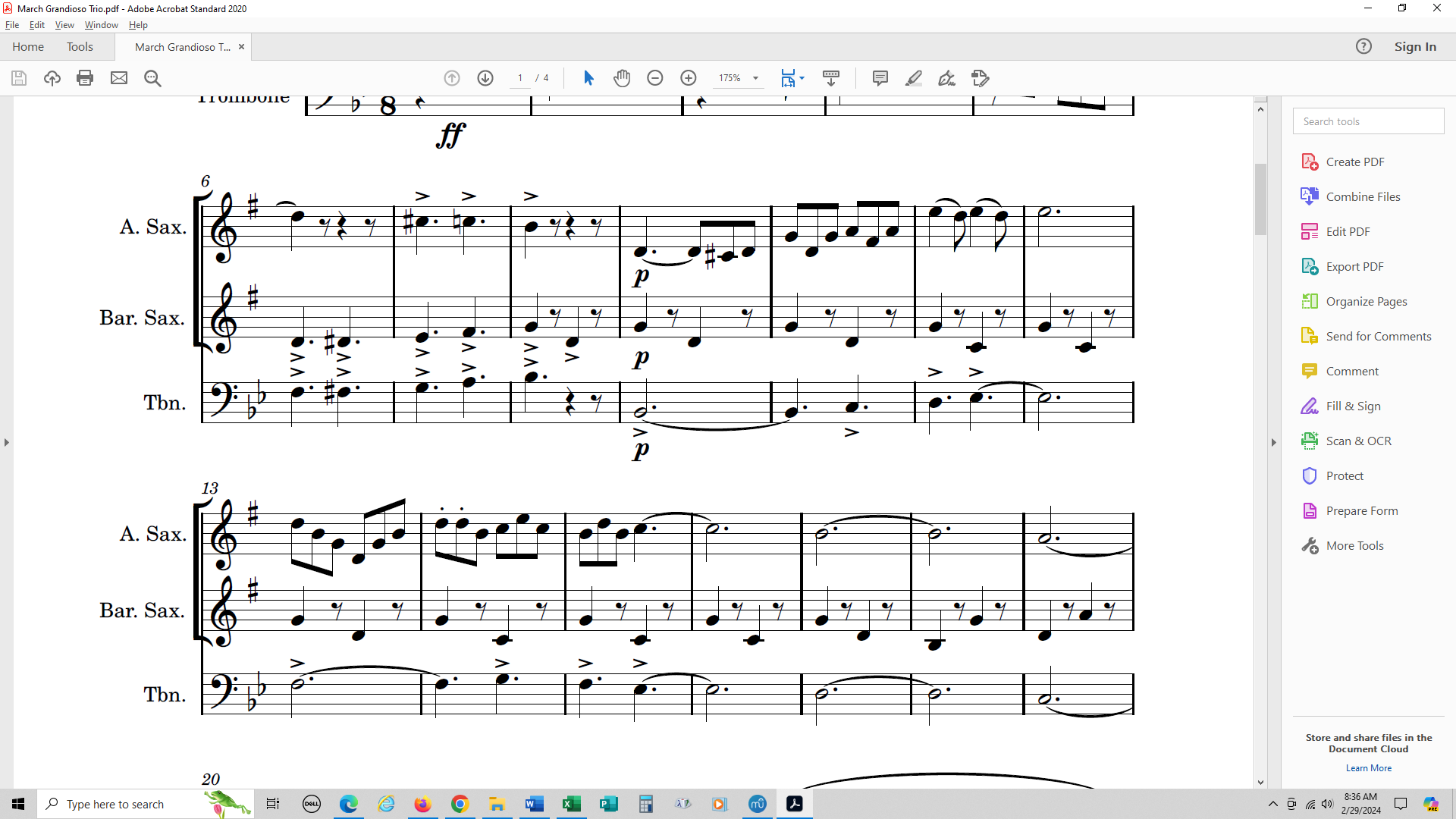
I may have mentioned previously that I wanted to be a band director when I grew up. I may have also noted that I was, for at least a while, involved in local band initiatives that ended up centering on a high school alumni band. I was not able to keep putting into that project what it needs, and so I had to step back from it, but I remember it fondly and enjoyed my time doing that work.
A little bit of the piece in question. Image is mine.
Part of that work involved putting together pieces for the irregular ensembles that would turn out. Most of the time, it ended up being a trio: two saxes and a trombone. As might be imagined, there’s not a lot written specifically for that setup, and even stuff that might kind of fit needs some…adjusting before it will work well for such a group. I’m fortunate that I have some tools to use to do that kind of thing, and it seemed appropriate on this first of March to post an arrangement of a march my high school band used to play that seemed to go over well when the alumni group played it: Seitz’s “March Grandioso.”
I’ve got a few other pieces I put together for that arrangement. I might well post some of them in time to come. Maybe someday I’ll have things set up that I can upload audio, even!
I write in many modes; if you’d like me to write in one of them for you, fill out the form below, and we’ll begin!
Read the previous entry in the series here. Read the next entry in the series here.
A letter from Selden to Keffria and Ronica in which he glosses developments in his life precedes “Summer,” which opens with the continuation of discussion between the crews of Tarman and Paragon. Events in Chalced are glossed, and some future plans are floated. Difficulties are also attested. The dispositions of the dragons after the defeat of Chalced are also attested, and Chassim’s installation as Chalced’s ruler receives remark. Selden’s condition is also reported, and thoughts of his future are voiced.
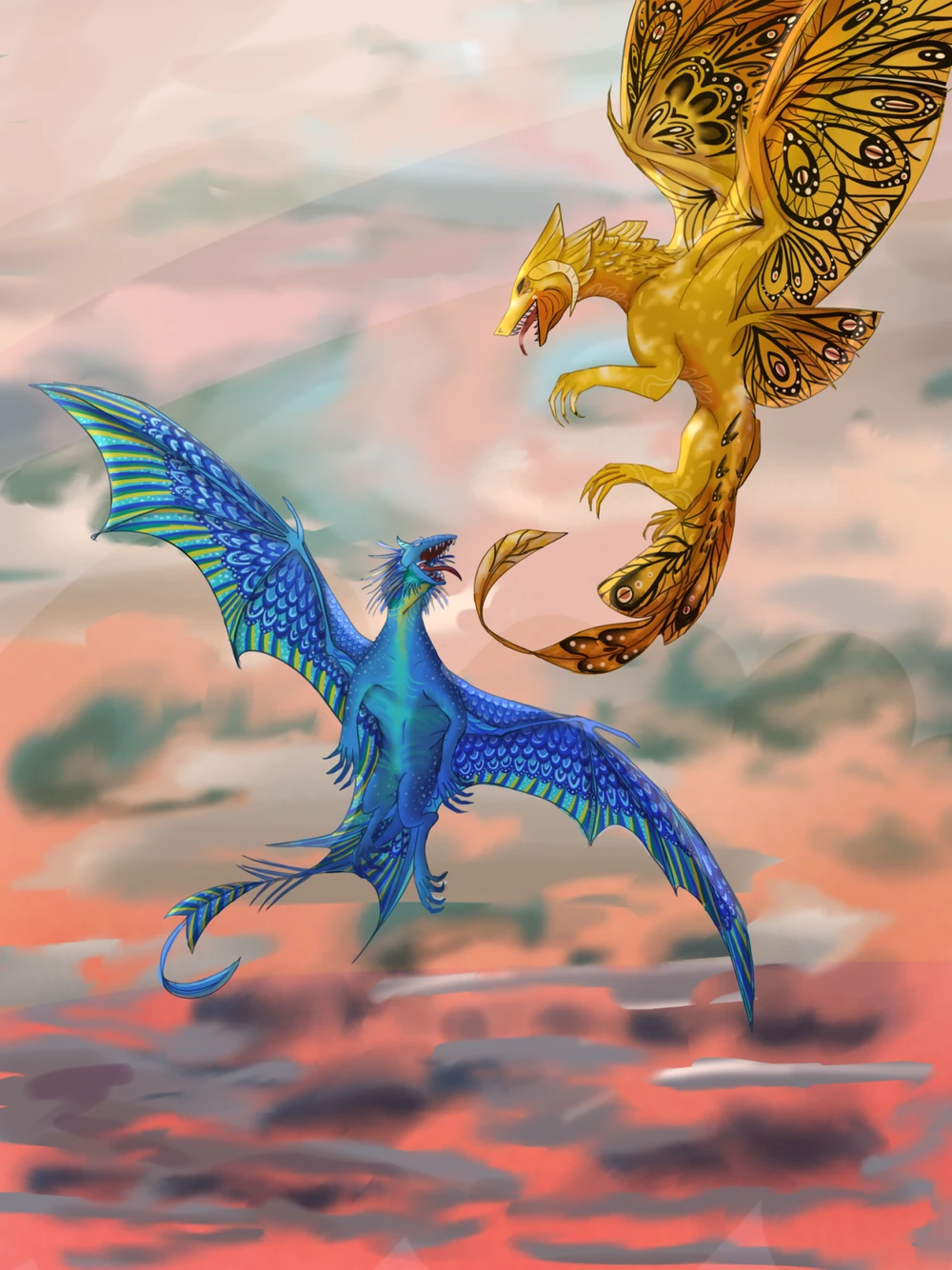
Looks about right… Mating Battle, by Toad, from the Realm of the Elderlings Wiki, here, used for commentary
Sedric and Carson see to the disposition of messenger birds that have been sent to Kelsingra. Neither has much experience with the birds, but they do find a message appended to one of them. Opening it, they find a request for news of Hest and a reward for information about him. After a brief conference, the two set the message aside as irrelevant and return to their work.
Tats and Thymara confer as they look out over Kelsingra and its surroundings. They note, too, the continued enthusiasm for mating fights and flights among the dragons, now that matters have settled. The pair are surprised to see Sintara at the center of such a tangle, from which she and Mercor emerge in union. And in exultation, Thymara, herself, flies, and she at last accepts Tats’s entreaties.
The present chapter, last in the book (there’s an epilogue, though) and thus the last in the tetralogy, does a good job of summarizing and resolving a number of plot points that earlier chapters had not quite addressed. It’s a sensible enough thing for the chapter to do, given where it is, even if I do still think it’s a bit rushed. Still, that much of the resolution is presented as a thing done previously and only reported some time after the fact does a fair bit to help it sit better with me, and there’s doubtlessly some determination to the effect of “Readers won’t be interested in seeing, oh, Selden and Chassim falling more fully in love, and the novel’s already long enough, thank you” involved in glossing developments.
(Look, I’m a sucker for some of this kind of thing. And I remain a nerd–obviously, since I’m writing about the book and about this kind of thing in the book more than a decade after the fact–so I want details and information, even if I can’t spend time on them the way I used to could.)
I will note that I appreciate the passage with Sedric and Carson in particular. That Hest has simply gone without a trace, or an obvious one, and that it’s accepted along the lines of “Eh, what you gonna do?” is something of a playful thing; that there is a clear implication that the pair know what happened, even without more or less direct evidence, only enriches it. Petty as it is, though, and subject to deconstruction (seriously, follow the implications), it’s a little bit of amusement for me, and I appreciate it.
If you like the kind of interpretation and analysis I bring to bear, why not commission me to do some for you? Fill out the form below to get started!
When wordsmiths no more will wonders attest; Pen-pushers finding their pages no longer, Leaving off leaf-work, the labor of scribes Put forth as prayers in previous days; When singers are silent, their stages left empty; And all that emerges in every art Is a mishmash made up of masters since lost, Nothing new coming, noting made fresh; Will people weep and wail in their mourning, Start forming seas from their souls’ windows, Or will they instead, inured to the injury Done them for dollars in deepening hoards, Grin and go on and gladly set by What once they valued, held worthy as treasures? Might well those many, motion eschewing, Sigh once and settle, sullen in mind, Fearing to fight, fates accepting That others will offer, put off their own?
Gather who will in greed their gold… Photo by Pixabay on Pexels.com
Graduations will be happening soon, and custom poetry is a fine way to mark an important occasion! To get a wholly unique gift for your graduate going, fill out the form below!
Read the previous entry in the series here. Read the next entry in the series here.
A missive from Kerig to Erek “unofficially” noting the latter’s impending elevation to Master status precedes “Chalced,” which opens with Reyn borne aloft by Tintaglia again and considering the differences between the earlier experience and the present one. The dragons’ progress in anger towards Chalced is described, and the changes that have continued to overtake Rapskal are noted. The relative dispositions of the keepers and the dragons are attested, as well, with tensions emerging. Reyn also notes the differences between the mores that have grown up among the keepers and those with which he still holds, considering how they will affect him and his family. Talk of the coming battle is held, as well, as is talk of Thymara.
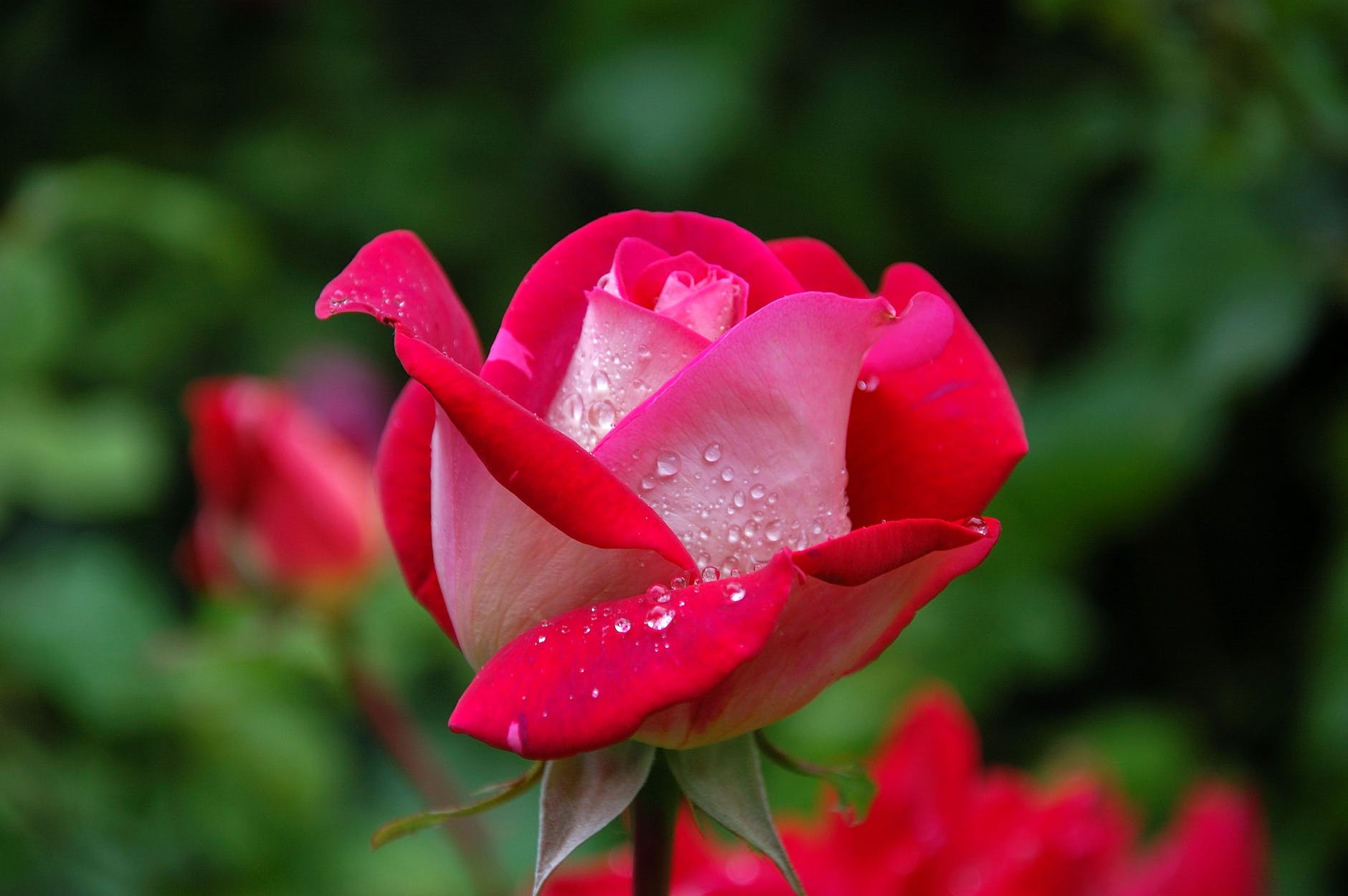
…by any other name would smell as sweet… Photo by Pixabay on Pexels.com
In Chalced, Chassim wakes Selden, bidding him rise and eat. The two talk together fatalistically, planning their mutual exits. Their discussion is interrupted by the sound of horns in the city.
The dragons approach Chalced in haste, preparing their attack. Plans that had been made are related, along with the discussions that surrounded them. Messengers go out, noticed but unchased, and the attack commences.
Sedric, riding Relpda, urges the dragon to caution, only to be mocked for it. The dragons project fear onto their oncoming victims as they approach.
Selden and Chassim continue to eat and confer, and Chassim begins to notice the tumult in the city below. They watch the oncoming attack, and Selden recognizes the approach of death. Chassim joins the recognition, and the two, believing themselves condemned, kiss among the spreading ruin. Seeing the dragons’ intent, Selden calls out to Tintaglia again.
Reyn watches sickly as the attack continues and flesh melts against dragon venom. He marvels at the dragons’ precision for a time until Tintaglia turns beneath him and races to an unknown target.
Selden sings Tintaglia’s praises as she comes for him, and both he and Chassim are lifted away from the ruin of Chalced. Reyn rejoices in the recovery of his brother-in-law, and Chassim introduces herself to him.
As befits a chapter focused on an instance of combat–slaughter, really–the present chapter is fragmented and disjointed, shifting with increasing speed among its focal points as the dragons fall upon and lay waste to the fortress of Chalced. While it does make the narrative harder to follow–at least for me as I reread the chapter at this point, probably more tired than I ought to be to do such a thing–it also works toward the ultimate unutterability of a fight. Others, unfortunately more learned than I in the matter, might well be able to say more, but from the experience I have had in fights, I can attest to the ways in which conscious memory fails to fully encompass any physical contest, and words do not suffice to the task of making real what happens to those who are not there for it. Given the fiction that dragons are, readers must look for parallels in their own world, of which there are far too many and far too readily applied to populations that do not deserve it. And perhaps that is the greatest fiction at work in the present chapter, that the onrushing forces work so diligently to contain the damage they do, even if only out of self-interest, as the dragons themselves comment in their approach to Chalced.
The exchanges between Selden and Chassim in the present chapter sit strangely with me as I reread the chapter. It is not the fatalism both display, to be sure; both of them have reason, as the chapter begins and continues, to expect that they do not have much time left living, and Chassim certainly has reason to expect that, if life continues, it will not be a good thing for her. Rather, it is the sudden motion towards what seems to be romance between them as the dragons make their attack. I know that the imminence of death does strange things to people; so much is amply attested. And it is not necessarily the case that a kiss is romantic, although it is overwhelmingly coded as such in the dominant social paradigms in which Hobb writes and, presumably, the majority of her audience reads. (Indeed, I believe I’ve remarked upon Hobb’s more or less explicit use of such coding, and not only in the Rain Wilds novels. Others have, as well.) Still, the specific reaction seems a bit odd to me; I can’t necessarily pin down why, but then, this is not a formal paper that requires I do so. Nor is it necessarily a bad thing; even for things for which I am very much part of the expected primary audience (and after having written and published on Hobb’s work even before the novel hit print, I think I solidly established myself as part of that audience), it is too much to ask that all parts of such things cater to my specific interests.
If you’d like to have custom writing done to your order, without the dishonesty that comes from AI use, fill out the form below, and we’ll get started!
Did I bring you as much pleasure as a cup of coffee does? Half a cup? Could you kick in as much for me so that I can keep doing it? Click here, then, and thanks!
So many of the threads show blue where Some might have expected to see red Looking again on something seen in August days And first in February But time and distance have shown that The blue is a better color The threads more tightly woven and The fabric better fitted Than any other hue To cover the yellow underlying it all
Sure. Why not? Photo by Steve Johnson on Pexels.com
It hangs on display yet Showing to all the world For whatever reason Even though few eyes will look And those that do are often bored Searching soon enough for More dynamism Which is hardly hard to find
If you need something written, and without the plagiarism of AI, fill out the form below!








 Elliott RWI