A Robin Hobb Rereading Series: Entry 334: Dragon Haven, Chapter 1

Read the previous entry in the series here.
Read the next entry in the series
here.


After more of the ongoing exchange among the bird-keepers of Bingtown and the Rain Wilds, the first chapter of Dragon Haven, “Poisoned,” begins with Alise watching Leftrin and conferring mentally with Sintara. Alise asks after the copper dragon, Relpda, and is informed by Mercor that she is beset by parasites and suffering; he maintains watch to ensure the integrity of dragons’ dealings. Alise allows herself to be led aside by Leftrin, considering her husband as she does, and the two confer briefly about their situation.

It’s an obvious connection…
Penny-Dragon’s Maulkin and Mercor on DeviantArt, used for commentary.

Sedric considers his own situation as he confers with Carson, the latter commenting on the former’s seeming illness and moving to offer some aid. Sedric suffers aftereffects of having drunk dragon blood, and Carson quietly broaches the topic of same-sex liaisons with him, and Sedric finds himself unsettled and anxious about the hunter.

Thymara and Sylvie confer about their situation, Sylvie remarking on Greft’s willingness to set aside a number of the conventions under which the Rain Wilders had lived. Thymara finds herself considering the dragons, and Sintara approaches her with demands for care and attention. Thymara addresses the atrophy of her wings, provoking annoyance, and a parasite is discovered on the dragon. The discovery prompts examination of the other dragons, and more such parasites are found–and the wound inflicted on Relpda is also laid bare, along with several of the parasites. Efforts to purge Relpda of the beasts begin in earnest.

Thymara finds her regard for Alise shifting amid the work they do together, and she recalls her own work to rid Sintara of parasites. Sintara sends her after Greft and Jerd. As Thymara works to obey her dragon, she considers the compulsion to do so that has been laid upon her. She becomes aware of another presence in her mind and persuades it to leave her, after which she comes upon Greft and Jerd amid an assignation and a conversation about selling off parts of Relpda’s carcass to fund the foundation of their own society. Thymara considers the implications of what she sees and hears, and she flees when she is seen by the rutting pair.

Aboard the Tarman, Sedric continues to suffer from having tasted dragon blood.

Something comes to mind as I reread the chapter for this write-up: Dungeons & Dragons. That the primary example of RPGs would come up isn’t a surprise, especially given some of my recent posts (here and here), but what brings Dungeons & Dragons to mind, specifically, is the association of specific dragons’ behaviors to their phenotype. The gold dragon, Mercor, is presented as particularly wise and unusually considerate of humans, for example, while the sapphire Sintara is dismissive. Such depictions seem to line up with information about dragons presented in core rulebooks of various editions of Dungeons & Dragons. (That contemporaneous to the novel’s presumed composition would be either 3.5 or 4.)

The extent to which Hobb is or was familiar with Dungeons & Dragons is not known to me as of this writing; I’ve not done the work to look into it as yet, and it’s not certain I ever will. It may be that she was heavily involved in the game at various times; so much would account for the parallels. But even if she was not, given the amount of overlap between fantasy readership and the Dungeons & Dragons playerbase, the parallels suggest that the game has informed popular understandings. And that might well inform an interesting project to pursue.

I’d be happy to put my talents to work for you; let me know what all you need written, and we’ll talk!

A Robin Hobb Rereading Series: Entry 333: Dragon Haven, Prologue

Read the previous entry in the series here.
Read the next entry in the series
here.


Following front matter–including another list of characters–and an exchange among bird-keepers in Bingtown and Trehaug, the prologue of the second volume of the Rain Wilds Chronicles begins with Sintara musing on the activities of the humans that accompany her and the failing health of the copper dragon in their midst. Sintara notes Mercor’s vigilance and nurses her grievances against him, including the revelation of her true name. She also reflects on the circumstances that force her into prolonged company with humans. 

Looks like the one on my shelf, yeah…
Image from any number of sources, used for commentary.

The progress the dragons and their keepers have made up the Rain Wild River towards Kelsingra is noted, and Sintara considers the absence of Elderlings from the world. Noting the departures of Jerd and the mistrusted Greft, Sintara arrives at an idea she settles in to contemplate.

The present chapter does a number of things, and it does them well. For one, as explication, it functions admirably; readers are reminded or informed of the previous novel’s events in a manner that seems authentic and sensible instead of forced, and enough information is given that re/reading the previous volume in the series is not necessary to enjoy the current. (It should be noted, however, that details matter; doing the reading rewards.)

Too, as the prologues and epilogues of the Liveship Traders novels do, the prologue reminds readers that the intelligences at work are distinctly nonhuman. They may be able to communicate, but their orientation and understanding are different; that difference needs to be kept in mind as the reading proceeds.

Finally, there is no small amount of foreshadowing at work in the prologue. Major conflicts are already being suggested, and some indication of the specific nature of some of them is given. How much happens when, the continuing rereading will tell.

And I will note that I am glad to be able to put some time to getting back to this project. I’ve missed it!

I’d be happy to put my talents to work for you; let me know what all you need written, and we’ll talk!

A Robin Hobb Rereading Series: Entry 332: Dragon Keeper, Chapter 17

Read the previous entry in the series here.
Read the next entry in the series
here.


Following a message between bird-keepers, the final chapter of the novel, “Decisions,” begins with Leftrin glossing days of the journey upriver. His increasing infatuation with Alise receives some attention, and he notes the changes to both dragons and keepers that have occurred. To his eyes, the keepers are becoming a community, and he finds himself wondering whether he must enforce the Rain Wilds’ customs regarding romance.

For a little extra variety…
Photo by JJ Jordan on Pexels.com

Leftrin’s reverie is broken by Sedric’s approach, and his appearance is detailed. Sedric berates Leftrin for his conduct towards Alise, which accusations Leftrin denies, but Sedric’s explications of the social consequences takes him aback. Sedric presses on Leftrin to send him and Alise back downriver in haste, but their conversation is interrupted by a cry from shore, where the keeper Sylve notes the rapid decline of the copper dragon she had tended.

The other keepers attempt to comfort Sylve, and Mercor asserts the claim of the other dragons to the flesh of the soon-to-be dead copper. He urges the keepers other than Sylve to depart, and he tells Thymara Sintara’s true name. Sintara is displeased, but Mercor presses ahead.

Alise considers her situation in some distress, mulling over possibilities and her own growing infatuation with Leftrin. The paucity of her relationship with Hest contrasts with those possibilities, but she is shaken from her reverie by the tumult ashore. Setting aside Sedric’s protests, she makes to observe the proceedings, and Sedric is left to mull over his own fading possibilities. His continued attempts to take pieces of dragon for sale are noted, amid which, he tastes the dragon’s blood. Its effects begin to show upon him.

A frantic missive from Alise’s father and comments between bird-keepers about the same conclude the novel.

The romance novel tropes–at least, those of them I remember from my grandmother’s voluminous readings in the genre and the comments she made about them to me as I grew up–are out in full force in the present chapter, most notably the pull to act on forbidden loves and the distancing between love and higher social strata. Hest, as recalled by both Alise and Sedric, becomes less a stand-in for homosexuality, generally, and more an embodiment of the wealthy elite–although the associations between the two remain in place, certainly. I’m still not entirely sure what to make of it, honestly; it needs more time for thought than I have been able to give it of late.

As I continue reading, though, moving into the next novel in the series, I imagine I’ll find more to say.

I’d be happy to put my talents to work for you; let me know what all you need written, and we’ll talk!

A Robin Hobb Rereading Series: Entry 331: Dragon Keeper, Chapter 16

Read the previous entry in the series here.
Read the next entry in the series
here.


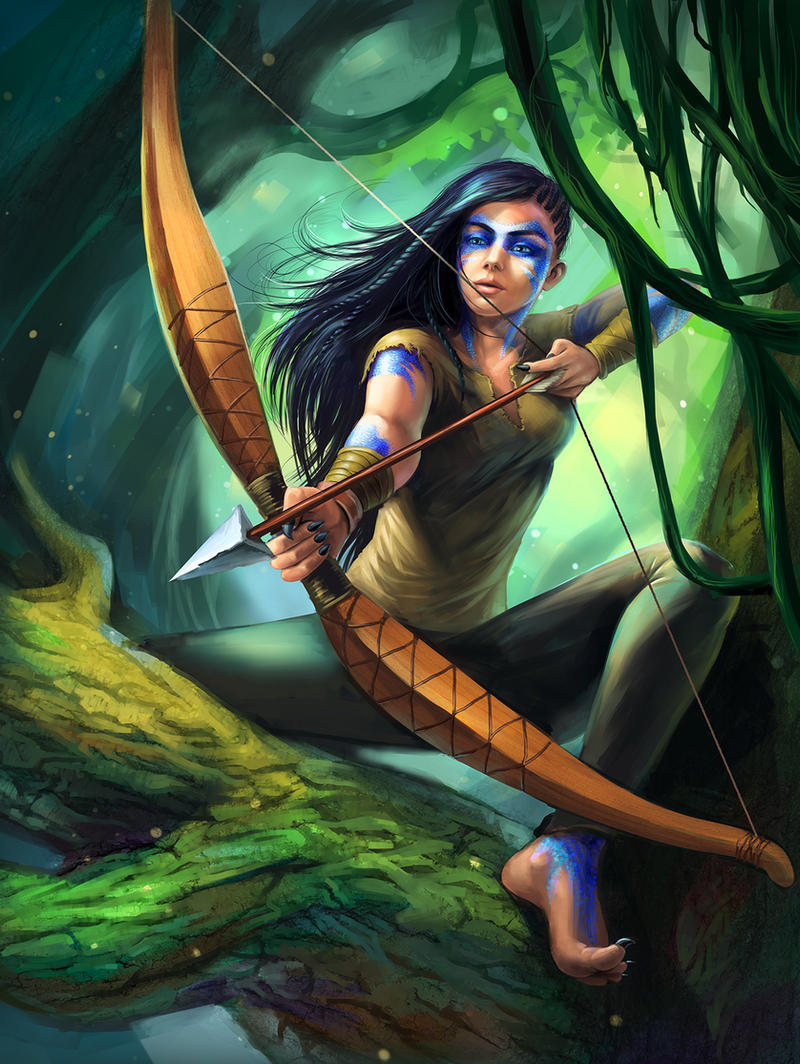
Ater a message being sent from Jess to Sinad Arich, the penultimate chapter of the novel, “Community,” starts with the dragon expedition at rest for the evening. The keepers confer quietly aboard the Tarman, and Thymara considers their progress and the various groups forming among the keepers. Thymara also considers her infatuation with “Skymaw,” and she mulls over what she has been learning of dragons from accompanying so many at such length. Greft and Kalo present themselves to her as being something of a threat to the rest, and Thymara takes herself off into the tree canopy to hunt, taking a marsh elk and struggling to bring the meat back to camp. As she labors to that end, she is confronted by Greft, who contrives to assist her.

The mighty huntress…
Thymara by Daria-Ts on DeviantArt, used for commentary

Alise reflects on what she has been able to learn from “Skymaw” and is interrupted by an anxious Rapskal who searches for Thymara. Aided by Sedric, Alise continues her documentary work, and mention is made that Rapskal has ridden Heeby. “Skymaw” rails at the news, offended, and Alise works to calm the dragon as Rapskal escapes.

Greft presses upon Thymara despite her unease and rejection, and Thymara hastens back to camp to deliver the first batch of elk. She finds Tats engaged in treating the injured dragon, and she enlists help to retrieve the remaining meat. The group she assembles finds Greft and his companions carrying it back already, and a tense exchange follows that is defused only by the need for haste. Confusion and factionalism begin to arise among the keepers, and discussion of the threat Greft represents continues. The need to adjust their social rules to their new situation also arises.

Thymara’s group returns to the dragons, distributing meat. One dragon, a copper, is weak and has to be persuaded to eat; the dragon’s condition improves upon doing so, and matters seem better for the group.

Ah, factionalism, inevitable consequence of human association and plague of all! But it is not as if the divisions among the keepers was not foreshadowed; Greft has been a fractious presence since his introduction, and he made no secret of his selfishness and willingness to manipulate others even then. I find myself wanting once again to read the novel against current events, to look for parallels to his character, which I know is not an ideal reading but does suggest to me that 1) the cultural moment in which Hobb writes is not ended and 2) the presence of the kind of people on whom Greft appears to my eye to be modeled argues in favor of the continuing value of Hobb’s writing.

I’d be happy to put my talents to work for you; let me know what all you need written, and we’ll talk!

A Robin Hobb Rereading Series: Entry 330: Dragon Keeper, Chapter 15

Read the previous entry in the series here.
Read the next entry in the series
here.


A brief missive regarding payment for peas precedes “Currents” beginning with the continued progress upriver of the dragons, their keepers, and the Tarman. Thymara chafes somewhat at Tats having accompanied Jerd and being constrained to accompany Rapskal, and she notes the disposition of the other keepers. Thymara and Rapskal confer about events, and she begins to warm to him.

Charming young man, this…
Rapskal by FloorSteinz on DeviantArt, used for commentary.

Leftrin considers shifts to plans as the Tarman and others shove off to follow the dragons upstream. He is interrupted in his preparations by the appearance of hunters and their gear on his decks: Carson, Davvie, and Jess. The former is an old associate of Leftrin’s, and he is introduced to Alise. Alise takes to her cabin to get out of the way and considers her earlier rebuke of Sedric and its implications, and they end up conferring about events and their mutual situation. After, Sedric considers his own relationship with Hest, rehearsing its beginning in some detail.

Sintara struggles upstream with the other dragons, some of whom fare worse than she does. Old memories rise within her, and she and the other dragons confer about what they recall. They are disturbed from their reverie by the emergence of riverpig, and a hunt for the creatures begins, Sintara killing one and devouring it in joy. Emboldened by their successful hunts, the dragons press on, Mercor leading them.

I remain troubled by the ways in which Sedric and Hest seem to be playing into stereotypes of homosexual behavior. It calls to mind depictions of Oscar Wilde, as well as more general negative presentations of male-male sexual relationships. There are several scholars who have addressed homosexuality–and queerness, more generally–in Hobb, as I have noted; their works are far better to consult on the matter than anything I might add. But I will note that I know Hobb knows better than to rely upon the stereotypes; same-sex intimacy is addressed earlier in the Elderlings corpus than the present novel, and with far greater nuance and authenticity. So there has to be a purpose here; it escapes me at the moment, but that does not mean it cannot be found…

I’d be happy to put my talents to work for you; let me know what all you need written, and we’ll talk!

A Robin Hobb Rereading Series: Entry 329: Dragon Keeper, Chapter 14

Read the previous entry in the series here.
Read the next entry in the series
here.


After an ostentatiously “official” note from Detozi to Erek, “Scales” opens on Sintara fighting her way to provided meat, gorging on it to the extent that she can even as she notices the close regard of the Traders surrounding her and the other dragons. She assesses her progress with Alise and Thymara, finding their attentions to other dragons annoying, and finding other dragons’ insistence upon the superiority of their own keepers no less so. The dragon Mercor forestalls outright conflict, reminding them of their destination of Kelsingra and beginning a call to head away that the rest take up, speeding upriver from Cassarick.

The valiant postal service…
Photo by u0411u043eu0440u0438u0441 u041bu0443 on Pexels.com

Meanwhile, Sedric, Alise, and Thymara attempt to provide medical treatment to one of the dragons who shows injuries healing poorly. The dragon’s appearance and condition are detailed, and treatment begins–with Sedric taking the opportunity to secret away some portions of the dragon’s flesh and scales. Tats offers assistance as the treatment continues, but it is interrupted by the dragons–including the one under treatment–starting their upriver race. The keepers and others involved in the relocation efforts follow as best they can–and Sedric considers how he can make use of the bounty he has secured from the dragon he has helped treat. Efforts to persuade Alise to leave off–allowing him also to return to Bingtown–are futile, and Sedric finds himself compelled to come along.

Increasingly, I find myself appreciating the side-narrative in the missives among bird-keepers. It’s a nice little bit of world-building, and it allows for commentary not only on events in the novel, but more generally. For instance, with the present chapter’s prefatory materials, I find myself put in mind of Fredalian bullshit, the idea of those in power giving lip-service to standards of politeness or outright using them as abuse, with which idea I’ve done some work; Detozi’s outright citation of “official capacity” comes off as a sneering rejoinder to Kim’s officious rebuke, and one not undeserved. Warms my cockles, it does.

Hire me to write for you!

A Robin Hobb Rereading Series: Entry 328: Dragon Keeper, Chapter 13

Read the previous entry in the series here.
Read the next entry in the series
here.


Coming after Kim’s response to Detozi’s imprecations, “Suspicions” begins with Leftrin waking happily aboard the Tarman, assessing his situation and his infatuation with Alise. Setting aside what he views as idle fantasy, Leftrin prepares himself for the day’s work, and he is disturbed therefrom by his liveship’s awareness of an interloper. Investigating, Leftrin finds a scroll in his stateroom, which he reads with unease, realizing it has come from Sinad and musing over the predicament in which he finds himself as a result. Leftrin muses, too, on how things could have differed, but he sets such aside infavor of addressing what confronts him in his now.

The world runs on them…
Photo by Brett Sayles on Pexels.com

Elsewhere, Thymara is awakened by the demand to escort the dragons away, joining the other keepers in some confusion and considering what others have told her and the implications of the same. She confers with her peers about the event, and she finds herself somewhat annoyed at the prospects of travel that face her. Her traveling companion, Rapskal, chatters away about his dragon, and Thymara marks Greft’s greediness–and that of his followers. Discussion of the dragons ensues, with several of the keepers agreeing to take on additional duties, and more of their backgrounds emerges in ongoing discussion.

Sedric, joining Thymara, finds himself in an uncomfortable situation, not least concerning Greft. He forces his thoughts away from Greft and Hest and confers with Thymara, learning of the condition of some of the dragons and offering to assist in treating one of them. Meanwhile, Alise considers her own lack of progress with the dragons, particularly Sintara, who, as Skymaw, rebuffs and deflects Alise’s lines of inquiry. Despite the misgivings, however, she purposes to persist in her work.

I remain convinced of the romance-novel tropes at work among the Traders. I wonder what it is about that particular part of the milieu that prompts such; perhaps it is that the Traders are not quite as engaged in existential crises as the Six Duchies, despite the threats from Jamaillia and Chalced…

The thought occurs that, if Bingtown and the Rain Wilds are stand-ins for the nascent United States–as I’ve suggested–then Jamaillia is necessarily a stand-in for Hanoverian England; what, then, is Chalced? I don’t know that I have a good answer, really–but then, I don’t have to have one. That there are correspondences that facilitate reading and analysis does not mean they must be all of one piece. At one level, they cannot be, simulation necessarily never equaling the complexity of the thing being simulated. At another, accuracy is…fraught, as has been noted by a number of people whose opinions I esteem (for example, Kavita Mudan Finn and Helen Young). There is a tension between being “true” and telling particular stories, and while there is peril in straying too far from “truth” (Paul Sturtevant speaks to it, for instance, and I’ve motioned toward it, at least), this is perhaps somewhat less true in fiction than in “nonfiction,” given that fiction admits it is not true…or factual, which may be a different thing.

So that’s where this reading of the present chapter leads me. Whither next, I do not know–except that it will be to the next chapter!

Wouldn’t you like to have my work done for your needs? Get in touch!

A Robin Hobb Rereading Series: Entry 327: Dragon Keeper, Chapter 12

Read the previous entry in the series here.
Read the next entry in the series
here.


Following a scathing rebuke by Detozi of the complaining bird-keeper, Kim, “Among Dragons” opens with Sedric seething at Alise’s conduct and actions. He plots their return, expecting that Alise will soon tire of the expedition, and his thoughts turn to Hest and to maudlin longing for him.

So juicy sweeeeeet…
Photo by Egor Kamelev on Pexels.com

Sedric is interrupted by Alise’s part of the conversation with Sintara and her request that he take notes of their conversation. He retrieves his writing implements, which are detailed, as well as specimen bottles he means to use in pursuit of his more clandestine mission. Sedric balks as he follows Alise out into the muck to confer with the dragons, and he feels the ire of the Tarman directed at him.

Sedric’s discomfort continues as he observes the dragons’ attendants working with them, and Alise becomes aware that he cannot hear the dragon’s speech as speech; he confirms as much with disdainful words. Thymara joins in rebuke of Sedric, and Alise dismisses him back to the Tarman, and she finds herself jealous of Alise, whom she sees as “Skymaw’s” preferred choice of keeper.

Thymara’s thoughts turn to Tats and rehearses the shape of her trip with the dragons so far. Disgusted on several fronts, she stalks off to hunt and fish. She spears one fish but almost falls, caught by Tats coming to assist her unexpectedly. As she regains her footing, she asks Tats after his intent, and he notes Sedric’s presence out away from the rest of the group, and Sedric explains his presence as having followed Thymara to confer with her. Introductions are made, and Sedric expresses surprise at the continued talk of conversation between the keepers and their dragons. He flatters her as he asks her to translate for “Skymaw” to him, and she begins to make arrangements to that end.

I’m not entirely sure what to write about the present chapter. I have to wonder, once again, about the tropes being deployed in it; for one, Sedric certainly does not come off well, and he fails to come off well in ways that ring of stereotypes that, although historically attested, are better left behind. Again, though, I feel as if I am coming up against the shrinking limits of my familiarity with the relevant critical theories and practices, being long removed from academe; I do not know that I have the language anymore, if I ever had it, to be able to speak to the matter in the way it really ought to be addressed. And it’s a frustration to come up against my own limits, knowing that they used to be further out, and not have the resources anymore to address the growing lack…

I’d be happy to put my talents to work for you; let me know what all you need written, and we’ll talk!

A Robin Hobb Rereading Series: Entry 326: Dragon Keeper, Chapter 11

Read the previous entry in the series here.
Read the next entry in the series here.


After another missive between bird-keepers in which one–Detozi–complains of earlier rebuke to the other–Erek–“Encounters” begins with Sintara struggling alongside the Rain Wild River, following along with the others with whom she hatched and musing in annoyance at her current status. Her attempts at grooming have been less successful than might be hoped, yet she persists in attending to herself as best she can.

Something of a namesake, even if not something normally visible?
Image is from the Smithsonian, here, used for commentary.

Sintara regards the other dragons with whom she travels and forces a place among them. Soon, the group is distracted by the arrival of their new tenders with meat, and the dragons fall to feasting. As Sintara sates herself, she finds herself addressed by Thymara, who suddenly recognizes the enormity of the task she has undertaken. As other tenders meet with their dragons, Thymara and Sintara confer, the latter haughtily rebuking the former for human presumption, and gaps in knowledge and changes to local geography are discussed.

Continued conversation goes awkwardly, and Sintara finds herself wondering why Thymara is not enchanted by her, searching her faltering ancestral memories for information and parallels. Testing her abilities, Sintara–“Skymaw” to Thymara in the absence of her true name–manages to get some service from her.

Meanwhile, Alise looks on from the deck of the Tarman, Leftrin explaining the arrangements that have led to the current state of affairs. He also comments on the employment of the young to tend the dragons, noting the Rain Wild propensity to kill such children by exposure. Sedric’s acerbic interjections are met with equanimity and more explication, and Alise reflects on the justifications for his aspersion. She considers, too, the effects of exposure to dragons on the people of the Rain Wilds, including Malta and Selden Vestrit, mulling over the connections among humans, Elderlings, and dragons. Her agreement to bring information back to Malta is rehearsed, as well, as is the tour of Cassarick that followed her striking that agreement–in Leftrin’s company.

Arrangements for Alise’s continued travel are made, and Sedric’s objections to the same are noted. So is Alise’s forceful address of those objections, and as the Tarman proceeds, Alise finds herself in unexpected conversation with Sintara.

The present chapter, although well into the book, offers a fair amount of useful explication for the reader. And that makes sense; the Traders books make much of working at length with nonhuman intelligences, and it could hardly be the case that they would be understandable without extended efforts to lay out information overtly. That the dragons are recently returned from a long absence, long enough that records could decay, allows for an authentic setting for that explication, which is to the good.

The present chapter also returns once again to the issue of constraints on women’s behavior among the Traders, something with which the Liveship Traders novels are greatly concerned and which continue to be of no small moment not only in the presumed time of the novel’s composition but also of their ongoing reception. I remain convinced there’s quite a bit of work to do in pulling out an overall idea in this line, but I do still need to do more reading, so…

I’d be happy to put my talents to work for you; let me know what all you need written, and we’ll talk!

A Robin Hobb Rereading Series: Entry 325: Dragon Keeper, Chapter 10

Read the previous entry in the series here.
Read the next entry in the series
here.


Following an exchange of messages in which one bird-keeper rebukes two others for carrying on private correspondence at public expense, “Cassarick” begins with the Tarman pulling into the docks of that city after nightfall. Leftrin advises Alise and Sedric to remain aboard until morning, and, overruling Sedric’s objections, Alise agrees. She muses over Leftrin’s treatment of her and Sedric’s annoyance thereat, considering the prospect of being found attractive.

Yep, this again.
Source remains the same as last time; it’s noted in the text, thanks.

Alise reflects on information Leftrin gives her about the state of the dragons at Cassarick and the proposal to help them move upriver, noting some misgivings about his disclosure but relishing the experience of the upstream journey. Sedric’s attitude is quite contrary thereto, voices with some emphasis to her amid his imprecations of Leftrin, and Alise works to soothe him somewhat as she retires to her cabin.

Elsewhere, Sintara wakes, thinking of Kelsingra again and musing over the dragons’ manipulation of the humans of Cassarick to aid them in journeying thereto. Malta’s involvement in the discussion and negotiation of the effort is noted, as well, as she knows that the local Traders intend and that it will likely work to the dragons’ detriment. Sintara muses once again on what she should have been and is not, determining to travel onwards despite the known futility of doing so.

Alise wakes the next morning as Leftrin calls at his cabin, noting that the local Traders are hastening their arrangements and have summoned him as part of it. She determines to accompany him and dresses to that end, and as they proceed after breakfast, Leftrin extolls the Tarman to her, and Alise marvels at their surroundings. She also notes the appearances of those among whom she moves, marked by the Rain Wilds to varying extents.

Alise and Leftrin arrive at the Traders’ meeting, where Malta continues to wrangle against the local government’s machinations regarding the dragons. The local Traders inform Leftrin that they seek to hire him to assist the relocation effort, and Leftrin immediately begins to find terms and conditions, to bargain for best effect. Alise, having been present when the initial arrangement between the dragons and Traders had been made, speaks up, and, at Malta’s prompting, gives something of a lecture on the topic at hand. Her discourse confirms the existence of Kelsingra for the local Traders, and she volunteers to accompany the relocation efforts–though she is aware of hindering machinations as she does so. Leftrin and Malta both affirm the suggestion.

This is not the first time I’ve been put in mind of romance novels by Hobb’s writing, and I do not know that it will be the last. But the present chapter certainly is a time I’ve been put in mind of what my late grandmother read (and abundantly!), and some of the other work I do–I’m available for hire!–reminds me that I ought not to fall into the trap of genre snobbery. It’s clear that such writing meets needs, somebody’s needs; it wouldn’t keep happening if it didn’t. Too, I like to feel appreciated, to feel like I’m important and desirable for a number of things, and it’s nice to see that presented. So let the romance novel be! That it’s there doesn’t mean the rest of it isn’t, and back when I had students, one of the lessons I tried to impart to them was that the ability to sustain multiple discourses is one of the marks of artistic success…

I could really use your help right now!