A Robin Hobb Rereading Series: Entry 174: Mad Ship, Chapter 36

Read the previous entry in the series here.
Read the next entry in the series here.


The next chapter, “Dragon and Satrap,” begins with Malta languishing in the damp underground cold. She calms herself, pressing onward to follow a sound she is uncertain she hears and a light she is uncertain she sees, soon coming past the cave-in that had trapped her and igniting magic lights that show her the fallen glory from which the Rain Wilds derive their wealth. The setting is familiar to her from dreams with Reyn (here, here, and elsewhere), and she finds herself confused by both the motion of the ground and the fleeting visions of others she sees around her. Pressing on, Malta comes to a chamber carrying the crowned rooster of the Khuprus family; sounds of merriment reach her from behind it. The sounds are illusory, though, as Malta finds when she breaches the chamber, accidentally lays her hands on wizardwood, and hears the voice of the dragon in her mind again.
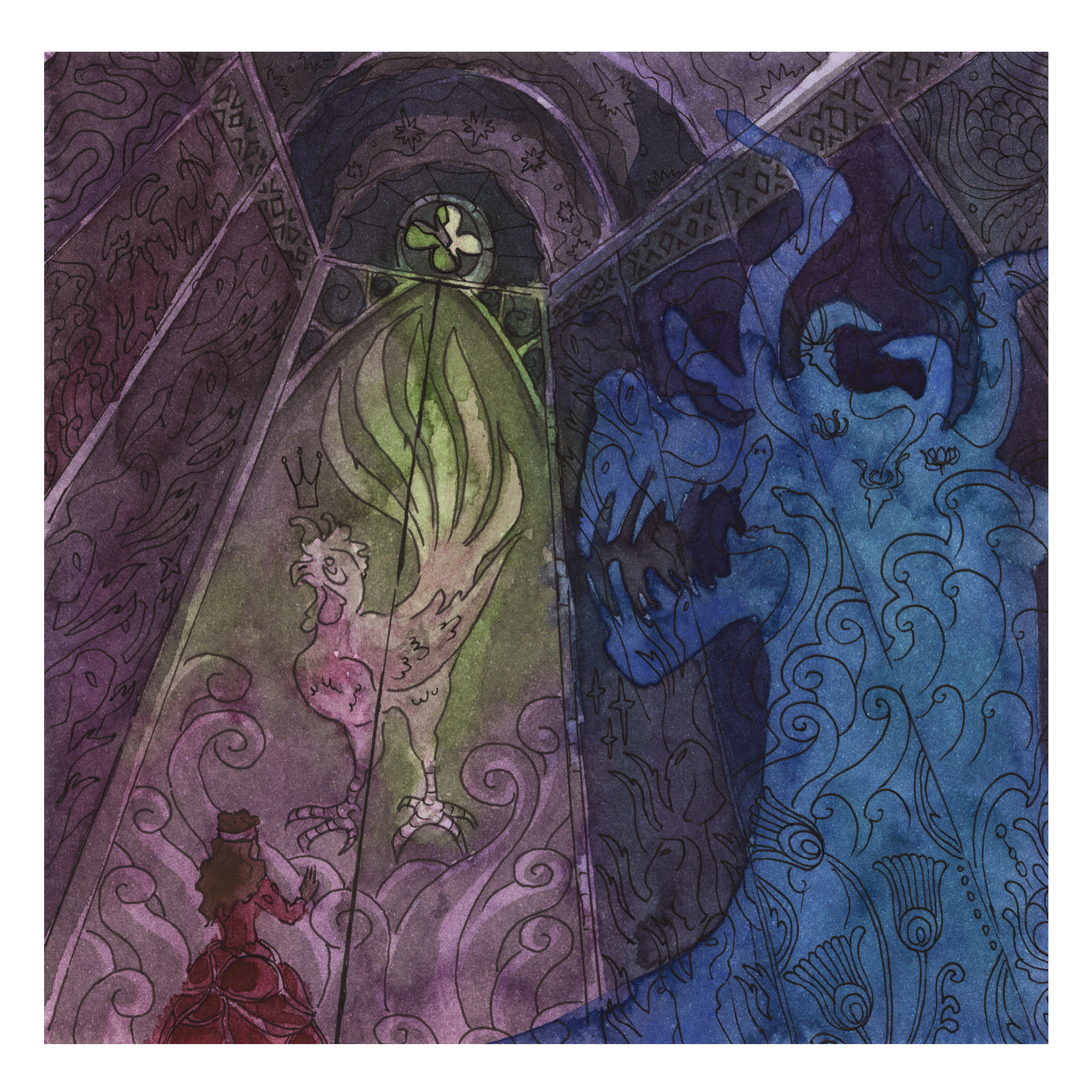
I’ve been waiting to use this.
Image is from Katrin Sapranova, here, used for commentary.

Elsewhere in Trehaug, Jani and Bendir Khuprus confer about Reyn and the wizardwood log they do not realize Malta has found. His status and scandal are remarked upon, and Bendir offers to send him back to work in the city; Jani refuses, and the two head to Reyn’s chambers. They find him frantic and restrain him as he raves that the dragon has Malta and has abandoned him. Jani manages to calm him, along with the effects of sleeplessness and drink, and she and Bendir steal out of his chamber.

Meanwhile, Malta has been dickering with the dragon for noninterference after retrieving her father. She manages to wrangle the dragon’s name, Tintaglia, and a solemn promise to do the things named. Tintaglia communicates the need for her release and conveys a method for effecting it, sharing memories with Malta and guiding her to yet others. The input overwhelms her until the dragon drags her back into herself, and Malta attempts to open the chamber to the outside world. The initial effort is unsuccessful, and Tintaglia dispatches Malta to retrieve Selden to assist; as Malta makes to obey, she encounters the Satrap and his Companion, Kekki. In disdain, they move off; Malta corrects their course, bringing them with her as she begins to effect her own escape from the unstable city.

Among the other things going on in the present chapter is reference to the Farseer books, namely the stone garden where Verity carves his dragon (here and following). In earlier readings, I had seen the matter as something of a retcon, evidently having glossed over the present chapter in memory when I did the earlier reading; the present chapter bids me reconsider that somewhat. If nothing else, Hobb noted the divergent dragons earlier than I had remembered, which is my problem and not the author’s. I am not pleased to have been wrong, as such, although I do appreciate the opportunities afforded by rereading; getting more things right is always a pleasure.

The comments from Tintaglia about the inadequacies of males of her species and Malta’s are of interest, especially against the ongoing feminist critique the Liveship Traders novels offer. The assertion that “Males are timorous creatures at best. They think only to feed and breed….Males will quiver in the shadows, fearing their own deaths. [Females] know that the only thing to be feared is the end of the race” presents an entertainingly divergent perspective that puts me in mind of LeGuin’s later Earthsea materials–although I do not recall them well enough to be able to speak to more direct connections than my having read both. Others who know more would doubtlessly have somewhat to say about it, and I would happily listen.

Care to send some help my way?

A Robin Hobb Rereading Series: Entry 173: Mad Ship, Chapter 35

Read the previous entry in the series here.
Read the next entry in the series here.


T he following chapter, “Trehaug,” opens with Keffria, Malta, and Selden in the titular city on the Rain Wild River, Selden exulting in the new location and what it offers. Malta is less sanguine, musing on the political situation–Bingtown is under a blockade–and environmental hazards–serpents cluster around the mouth of the Rain Wild River. She notes that her skin is changing, but the healer who calls in on her bids her be up and about to recover. Malta voices agreement but muses on her inward refusal and rehearses recent events, assessing her surroundings. Trehaug is described in some detail, some of it sinister.

Trehaug sketch
A view of the titular city…
Trehaug sketch by liara-renard on DeviantArt, used for commentary.

Malta is roused by the touch of a gloved hand on her face; it is Reyn, and she is not pleased. He pleads his case with her, and she rails at him. He takes a knee and apologizes for his error, frankly and without evasion; it takes her aback, and she avers her forgiveness of him as she reassesses him. At her insistence, he offers information about the status of Bingtown–it is not good–and she cuts him off as she recalls her trip form Bingtown to Trehaug through a fog of injury and memory. After a pause, conversation resumes, with Reyn offering more details about how things are going and what preparations are being made against the attack that is expected to come. In effect, the Rain Wilds and Bingtown are caught in an internal Jamaillian conflict.

The pair are interrupted by the intrusion of the healer’s assistant, who had come to ensure that Malta rose and walked. Reyn noted that he would address the matter, acknowledging the scandal that would attend on his doing so–and his having intruded upon Malta’s convalescence. He proposes to her anew, and she defers. She asks him about his “drowning in memories,” which takes him aback; he explains why, linking it to the dragon Malta also heard in her dreams and noting the arrangement he has made as a result–which frees the Vestrits from their debt for the Vivacia. Malta finds herself continuing to reassess Reyn and accompanies him on a walk.

Elsewhere in Trehaug, Traders confer about the fate of the Satrap, whom they hold hostage. Keffria is among them, internally questioning her inclusion, and she speaks up in support of the Khuprus position amid the ongoing arguments about what to do with Cosgo: trade him soon, chastise him before trading him, or send him back to Jamaillia and let the nobles there fight over him. As discussion continues, Keffria volunteers to be an emissary and scout for the Rain Wild Traders in Bingtown, citing her situation as useful cover. After some more discussion, her plan is approved, with some minor modifications.

That evening, Malta prevails upon Selden to take her into the underground parts of Trehaug; he hesitates but agrees. She soon passes him up, pressing further underground than he dares, and she is soon separated from him, alone in the damp darkness.

Early in the chapter, the idea of urinating on wood to protect it against the water of the Rain Wild River is noted. It is an interesting detail, not least because of the scatological humor it necessarily provokes (and, indeed, is seen in the chapter as being, among other things). It suggests that the waters of the Rain Wild River are exceptionally acidic; urine tends to be more alkaline than acid, so it would neutralize acids and mitigate their corrosive effects more than would be the case if the Rain Wild was corrosively alkaline. While water is often slightly acidic naturally, and there are areas where life has adapted to relatively high levels of acidity (here, for example), more acidic water tends to be worse for life. That said, peculiarly acidic water can be found in an area that might generously be included within the Pacific Northwest, the coincidence helping to align the Realm of the Elderlings with North America rather than more “typical” fantasy milieux. So there is that.

New month, new need for support.

A Robin Hobb Rereading Series: Entry 172: Mad Ship, Chapter 34

Read the previous entry in the series here.
Read the next entry in the series here.


The next chapter, “Oracle,” begins with the Vivacia expressing her dislike of the situation as Wintrow lies upon her foredeck, recovering further from his earlier injuries and recalling the current state of affairs. He affirms the ship’s dislike of being moored at Others Island, with the Marietta not far off, and he comments regarding his ambivalence towards prophecy. The ship voices some recollection of the place, and they posit that Kennit’s earlier visits have entered her memory from his blood soaking into her wizardwood planking. They are further discussing the matter when interrupted by Etta summoning Wintrow to board a ship’s boat and go ashore.

creature from the black lagoon
I always imagined the Others looking like this, or close enough.
Image from this page on Universal Monsters Universe, used for commentary.

As the ship’s boat makes for shore, Kennit observes Wintrow and muses over the disposition of his crew and followers, focusing on his provisions for Divvytown. Sorcor’s surprising depths and reaffirmed tie to the place receive attention, and, as they make landfall and Kennit orders those other than Wintrow and Etta to remain with the boat, he reflects on Wintrow’s similarities to his earlier self. The pirate realizes that the Others do not want him present, and he sends Wintrow ahead to collect an item, noting that he and Etta will be present for the revelation. After a brief hesitation, Wintrow obeys, and Kennit and Etta follow after, Kennit puzzling over why the charm at his wrist had insisted he bring her with him.

As Wintrow obeys Kennit, he muses over his earlier instructions and the events surrounding Divvytown and its reconstruction. As he presses on across the island, he comes across detritus that he rejects as unimportant before happening upon a treacherous path that leads him to a barred cave. A stunted serpent is constrained within it, and Wintrow finds himself examining its confines, looking for a way to free it, working against the stone that has been built up around it.

Etta and Kennit continue across the island, trailing him; neither can see him for a time, and Kennit grows impatient. He demands Etta help him hurry along, and she does. Meanwhile, Wintrow continues working against the serpent’s cage, making some progress as the tide begins to come up. The serpent surges against the incomplete opening, sharing the experience of pain with him, and he struggles to complete his work of opening the serpent’s enclosure. He frees the serpent, sustaining substantial injury in the process, and remains in mental communion with the serpent as she makes it to the water–“The Plenty”–and purposes to rejoin her kind.

Etta and Kennit are summoned by the screams of pain and proceed towards their source. The Others seek to interdict them, and the pair press on as rain begins to fall. Kennit and Etta reach the gravely injured Wintrow as the Others attack, and melee is joined. The serpent flees, as do Kennit, Etta, and Wintrow, who make for the Vivacia, scrambling aboard the ship’s boat. The crew begins to tend to Wintrow in awe as he drifts in his mind and worries about what the ship will learn from him. Kennit defies the storm, and the freed serpent pushes the ship’s boat swiftly towards the liveship; the Vivacia calls out to her kindred serpent, recognizing herself and her in the same moment. And in the aftermath, as Wintrow rests and begins to recover from the new exertions, Etta and Kennit realize that she is pregnant.

If “The Storm” is the climax of one narrative thread in the book, this chapter is for the pirates and serpents. If nothing else, the revelation of Etta’s pregnancy denotes a major change; becoming a parent certainly changed my life enough, and if Kennit purports to be a king, he has a decided interest in ensuring the continuation of his dynasty. That there is an apparent heir serves to secure his ambitions–at least to some degree; the perils of pregnancy, childbirth, and youth still wait, of course. More, Etta seems herself to undergo something of a transformation in the chapter, although there is some critique to be read into her reliance upon Kennit’s urging and Wintrow’s exigency to enact it; increasingly removed from academe as I am, I am not positioned to do the work myself, but I can see that it needs to be done. Too, a looked-for messianic figure (noted here and here, among others) has emerged, which seems pretty solidly climactic.

If there have been climaxes, though, and ones into which some lewd humor might be read, what Freytag calls falling action is soon to follow–and falling down is not always or even necessarily often a pleasant thing.

Your kind contribution to my ongoing efforts is greatly appreciated.

A Robin Hobb Rereading Series: Entry 171: Mad Ship, Chapter 33

Read the previous entry in the series here.
Read the next entry in the series here.

A content warning regarding sexual assault is in order.


A chapter titled “Proofs” follows and opens with Etta entering Kennit’s cabin. The pirate reflects on recent events and his work drafting a plan for Divvytown, thinking back to his childhood; amid his reverie, the charm at Kennit’s writs upbraids him for his desire for control over others, and he retires. When Etta joins him in bed, Kennit chides her; she reports that Wintrow had taken more injury ashore than had been thought, and that she had tended to him while asking him about her continued readings. She professes her faithfulness to Kennit, which takes him aback and prompts him to urge her toward him; she notes that Wintrow professes a belief that he is divinely ordained to follow Kennit, and the pirate exults in the revelation. He purposes to take Wintrow to Others Island for soothsaying before engaging Etta intimately.

I can see this going badly, yeah.
Source in image, used for commentary.

Aboard the Paragon, Althea sees to the completion of a task–finding and treating a soiled cask of salt pork–she had assigned to crewmen Lop and Artu. When she rebukes them for lazing about rather than doing their work, Artu attempts to rape her, and a melee ensues. Althea prevails, if narrowly, and drags Artu above deck, where Brashen is incredulous and Lavoy almost smug as Althea reports. Lop emerges from below decks with the rotten meat and begins to put it overboard when a serpent attacks. Defying Brashen’s orders and Althea’s urgings, Haff rushes forward to fight the creature and is badly injured. A more general melee breaks out against the serpent, and it is driven off injured, although several of the crew are also harmed; the Paragon exults in memories suddenly returning.

Back at the Vestrit estate, Ronica ponders over changes as she prepares herself and her family for flight. Their return to the estate after the attack is glossed, and Malta’s note that the attackers had sought Cosgo and the Companions recalled. Reyn arrives, and Ronica realizes that he has been involved in the ongoing upset; she bids him leave, but he instead makes to abduct Malta. Ronica relents and sends Keffria, Malta, and Selden with Reyn, who says he can get them to the Rain Wilds and safety. Ronica remains behind with Rache as the rest of them depart.

Later, aboard the Paragon, Brashen summons Althea from her cabin. As she makes to report, she considers events since the attack, and when she reports, she is taken aback at the injuries Brashen has sustained. As she eases herself, he briefs her on crew and ship status, including injuries to Haff and reassignment of Artu–who has pled for it in abject fear of her. Brashen makes to examine her injuries and kisses her, which gesture she returns before leaving his cabin to a wry comment from Clef, who has been peeping in on them.

If the previous chapter was the narrative climax, this chapter is decidedly part of the falling action. Matters move forward from the climactic encounter, certainly, and in response to the changes occasioned by that encounter–although the effects of it have yet to be felt aboard either the Vivacia or the Paragon. That the liveships are not concerned with that climax (yet, perhaps) might be taken to indicate that the narrative threads centering on them are not the main ones, as such–although such a reading necessarily assumes a hierarchical relationship among the narratives in play and thus among the characters upon which they center. How accurate that assumption is is subject to question, however, certainly now if not necessarily at the time and in the circumstances of the novel’s composition and initial publication. But that is one of the things about good writing that marks it as good: it sustains multiple readings, multiple interpretations that can and do change over time.

Even the North Star moves, in time.

Assistance is still appreciated.

A Robin Hobb Rereading Series: Entry 170: Mad Ship, Chapter 32

Read the previous entry in the series here.
Read the next entry in the series here.


The succeeding chapter, “The Storm,” opens with Keffria retrieving Malta and Delo for their formal presentations; the girls had been gossiping amiably as more of the preliminaries of the ball went on. Malta purposes to reflect well on her absent and elided father as she is announced and formally presented to the Bingtown Traders. She does well enough until Restart ostentatiously signals her over as the music, set to begin, waits, and Malta finds herself being presented by Restart to Satrap Cosgo–and she is humiliated to be associated with him thus.

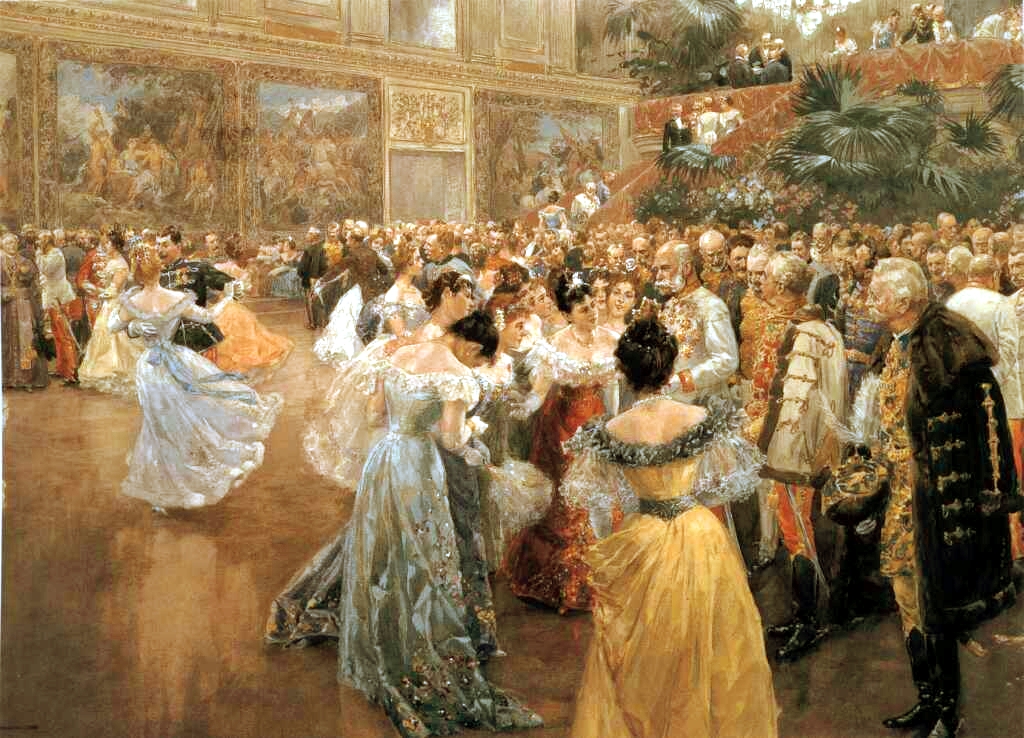
Perhaps something like this?
Image is Wilhelm Gause’s Hofball in Wien, which I am told is in the public domain and which I get from here

After a brief, somewhat barbed exchange, the Satrap descends from his dais to dance with Malta; she is struck by his differences from her and from what she has known, and she is taken aback by the innuendo he voices as they dance together. But as he withdraws and she casts about afterward, Reyn encounters her; after a brief query, he escorts her back to Keffria at her own insistence. As they confer about what has just happened, Reyn threatens to kill Cosgo, and Malta rebukes him sharply. After a moment, Reyn offers a considered apology for his overreach; it is not accepted, and Malta finds herself in mind of her father again, thinking about the lapsing opportunities before her. As attention accrues to them, they spin off into the next dance, and they are almost at accord when Reyn offers what Malta recognizes as “patronizing words”; she extricates herself from him and fumes briefly before Delo’s brother, Cerwin, sweeps her into another dance.

Cerwin suffers in comparison to Reyn, and Malta continues to fume internally about the affair as she pays compliment to her dance partner, watching Reyn confer closely with his own–Serilla. She accepts a glass of wine and finds a seat.

Reyn, for his part, had been advised by the disguised Grag Tenira that a conspiracy brews against Cosgo, one in which the Chalcedean mercenaries are complicit and which will be used as a pretext to assail Bingtown and bring it under not just its current economic colonization, but under overt dominion. As Reyn dances with Serilla, he is briefed on such details as she has puzzled out; she suggests that he take Cosgo, herself, and the other Companion hostage as a way to thwart the coup. After, Reyn tries to convince Malta to leave the ball as he begins to make his way out to see to the abduction; she refuses, not understanding the reason for his urgency, and he departs, not without effort.

Malta continues on at the ball, dancing repeatedly with Cerwin before Keffria recalls her. Keffria presses for departure, noting that many of the Bingtown and all of the Rain Wild Traders have left. Restart hinders their departure, in part by requiring a formal farewell to the Satrap, which leads to the Satrap inviting himself to depart along with the Vestrit family. The ensuing departure is cramped and awkward, with Cosgo treading the line of boorishness all too closely until the party is beset by attackers.

In the fracas, Restart is killed, and Ronica struggles for her family. Keffria is injured but present and alive; Selden is in shock at the event. Malta is alive, as well, though others have died; the carriage in which they had been riding had rolled at least twice as a result of the attack.

It is only as I look back to compose this entry that I recall the title of the preceding chapter and the joke embedded therein; it was the calm before the storm. I delight in such things, of course, but I am somewhat annoyed not to have recognized or recalled the joke sooner. Then again, it has been an interesting few days, so…

Far less humorously, the promise of the previous chapter that the narrative climax was coming is fulfilled–and emphatically. The outbreak of violence, begun and not hindered, is a clear marker of the shift in power going on. The fallout therefrom cannot help but be severe; how much it will be, and for whom, will be seen.

I should note that I write this as more-than-winter conditions prevail across the part of the world where I live; the Hill Country is far, far from accustomed to such snowfall as I see from my window today, and I even had to abandon a car. (“Don’t go out unless you have to” still leaves “have to,” after all.) I hope to have another post up as scheduled on Monday, 22 February 2021, but I cannot make such a promise…it’s a hell of a way to mark my daughter’s seventh birthday, to be sure.

Anything you can put towards helping recovery will be appreciated.

A Robin Hobb Rereading Series: Entry 169: Mad Ship, Chapter 31

Read the previous entry in the series here.
Read the next entry in the series here.


The following chapter, “The Calm,” opens with Keffria confronting Malta and musing on her own thwarted expectations for Malta’s first formal event as an acknowledged woman. The two confer, Keffria remarking on what appears to be a bruise on the back of Malta’s neck, Malta considering questions of identity. Keffria attempts to set her concerns aside in favor of the larger events facing Bingtown with the Satrap’s presence. After conversation on that point, the two resume their preparations to attend the coming formal ball.

For some perspective…
Robin Hobb Map by Crooty on DeviantArt, used for commentary.

Serilla stews as her machinations with Cosgo are undone by events. She also muses on the strange status of Bingtown, the sole known surviving settlement on the Cursed Shores. The Rain Wilds receive some attention from her as she plots to relocate permanently to Bingtown, and Serilla continues to muse on the political situation in place in the region. Steadying herself against the recollection of her traumas, she makes ready to join the day’s festivities.

Reyn and Grag, veiled, confer. They are informed of the present situation–Grag is still wanted, with a price on his head–and make their own preparations for the ball.

At length, the Vestrit women and Selden make their way to the ball, the scene for which is described in detail. As matters get underway, Malta confers with her childhood friend, Delo, and the two take a turn about the venue, gossiping almost idly as they do. Meanwhile, Restart considers his situation and his plans to see Malta engaged to Cosgo; he offers what he thinks are kind words toward Serilla, offering insult that is returned with more aplomb.

It is clear from the structure of the chapter that the Summer Ball will be a major turning point in the narrative–perhaps the climax in Freytag’s pyramidal narrative structure or the vertex in Frye’s parabolic narrative structure. With such focus accorded to the lead-up to the Ball, it has to be important. Has to. And given the usual trilogy structure in which the Liveship Traders novels operate, the turning point is likely to be the primary such point for the series as a whole.

The chapter, too, serves as another commentary on gender norms. Keffira and Malta, Serilla, and even Reyn and Grag all act in ways that highlight the disparities in “traditional” gender roles–those present in Bingtown and its contexts as well as in the Anglophone world that is the clear primary audience for the books. (I am aware that translations exist, and that many of them are well considered, thank you. But.) The women, capable as they are and are becoming, are constrained by expectations placed upon them; the men, however admirable in some ways, act with blithe disdain of the women in their lives–because they have been allowed to learn to do so. There are lessons therein that might well be applied by a great many readers–but that likely will not be by many of those who most need to learn them.

My daughter’s birthday is coming up; send her a present?

A Robin Hobb Rereading Series: Entry 168: Mad Ship, Chapter 30

Read the previous entry in the series here.
Read the next entry in the series here.


The next chapter, “Shakedown,” begins with Amber grousing about the cramped quarters she shares with Jek and Althea aboard the Paragon. Althea offers some wry counsel before lapsing into musings on her own difficulties. The ship is sailing well enough, but the crewman Haff is presenting her problems. Althea and Amber confer about their respective problems–Amber’s are less prosaic than Althea’s–finding little ease therein.

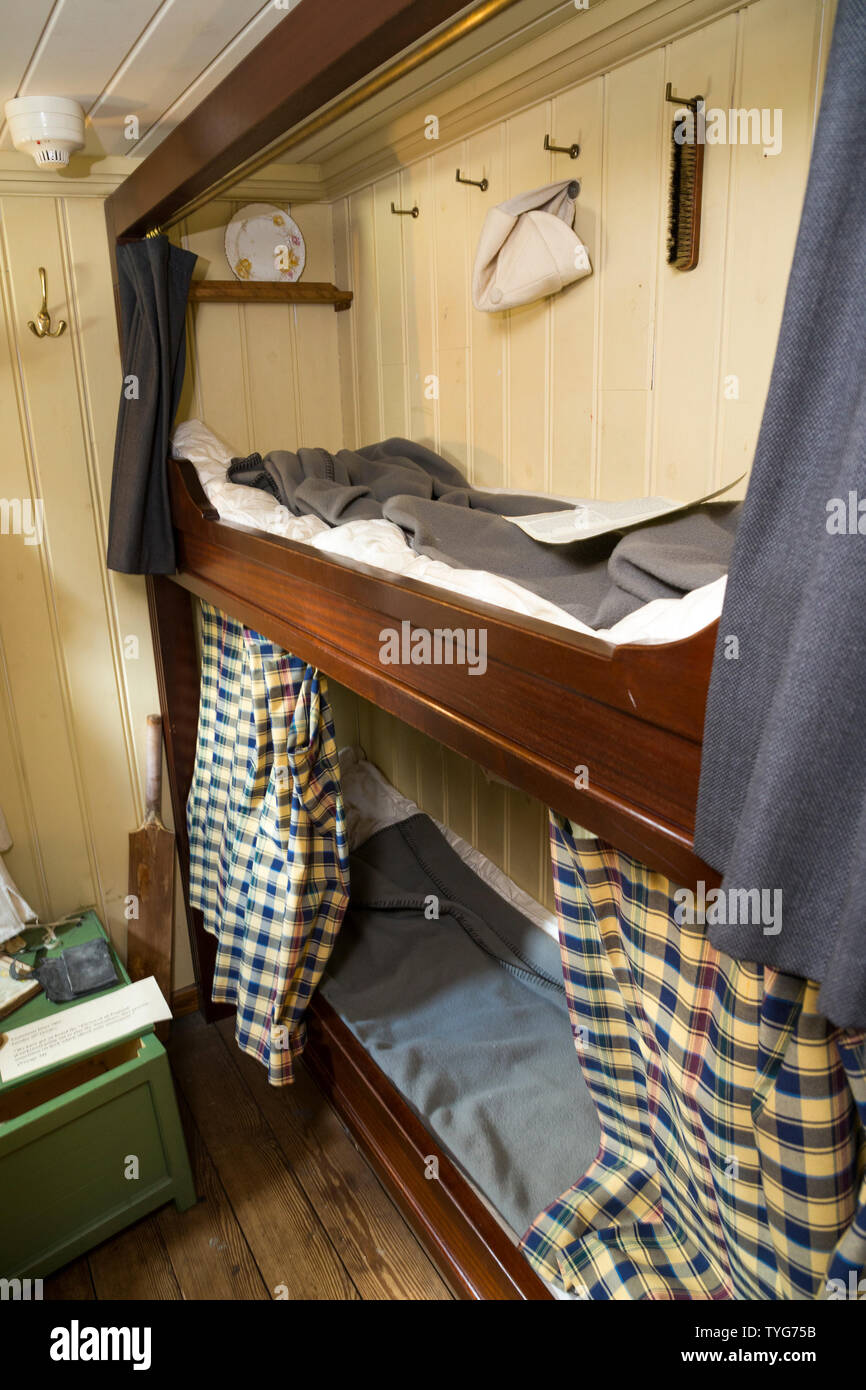
Image result for sailing ship bunks
This kind of cozy thing…
Source in image, used for commentary.

Aboard the Vivacia, Gankis reports to Kennit that there is trouble in Divvytown; Kennit realizes the town has been raided. As he makes for the deck, he is harangues by the wizardwood charm at his wrist, which reminds him that such events have happened for him before. He surveys the damage and, somewhat reluctantly, puts in at the ravaged town, Sorcor and the Marietta joining him. The survivors begin to show their displeasure with Kennit, and matters grow quite tense; both Etta and Wintrow position themselves to defend him from them. Surprisingly, Wintrow speak up in Kennit’s defense, rebuking the survivors who want only to hide from the next depredation. The crowd begins to rally to Kennit–for the most part; one of the leaders attacks Wintrow, who responds with lethal force, provoking a brief melee that leaves the pirate crews victorious.

As Kennit begins to take his crew away, they survivors plead with them–and Wintrow again rebukes them. Compelled by his voice and words, the survivors agree to follow his and Kennit’s direction–and Kennit ensures that it is forthcoming as he begins to cement his nascent kingly status.

The present chapter seems to present a change in Wintrow–not so much in his use of violence, really, as in his adoption of Kennit’s ideas. Whether this is Kennit corrupting the boy, Wintrow growing further into adolescence–with its absolute certainties of how to make the world better–or perhaps some legacy of his religious training bidding him believe that he is better than the ragged survivors of a ruined shantytown is unclear to me as I read the chapter again. Perhaps it is some combination of the three; certainly, it serves Kennit’s plans, redeeming his failures in the situation–failure the pirate himself acknowledges–and helping him to secure yet more renown for himself as he works toward putative kingship. But at least his ideas range past those of hereditary monarchs Regal and Cosgo, whose ideas about rule seem to center on self-gratification…

Send a little love my way?

A Robin Hobb Rereading Series: Entry 167: Mad Ship, Chapter 29

Read the previous entry in the series here.
Read the next entry in the series here.


The following chapter, “Bingtown Convergence,” begins with Serilla considering the Satrap’s situation and her own among the Chalcedean fleet. She has managed to gather a fair bit of power to herself, although she yet feels the trauma of her experiences with the Chalcedean captain. She does, however, exult in being in position to command the Satrap.

No disco in Bingtown…
Source in image, used for commentary

In Bingtown, the ringing of the town bell occasions tumult as Traders’ families rush to answer its summons. One Trader reports having seen an incoming Chalcedean fleet, and the town begins to prepare against attack; Selden and Malta make to report to the bucket brigades that begin to form, and Malta muses sourly on the wasted opportunities and missed chances of her life.

Aboard the liveship Kendry, Reyn Khuprus and Grag Tenira confer. They commiserate regarding the Vestrit women they love before turning to politics. Grag voices the thought of leaving the Traders’ life behind, earning some rebuke from Reyn. Grag goes forward to confer with the liveship, and Reyn muses on his circumstances. The dragon continues to trouble him, aggravated by his having violated his agreement with his mother, and works to overwhelm his being with visions of crafted memory. The liveship on which he sails as he mulls over ancestral wrongs also regards him differently, and the crew marks the change.

Serilla greets the Bingtown fleet in the Satrap’s name and is taken aboard a liveship. After she voices her concerns for the Satrap, Restart offers her the hospitality of his home, and Serilla begins to plot against him for his assumption about her helplessness.

I am struck in the present chapter, as I perhaps ought to have been previously in the reread, by the parallels to the United States that Bingtown and the Rain Wilds offer. Both colonies long exploited for economic gain that begin to chafe under the changing terms of remote rule, both with troubled settlement and immigration histories, both based on genocide of which a great many people remain ignorant–and with other strong North American parallels, to boot–they offer an (inexact) coincidence I really ought to have noticed or remembered noticing before. And I’m sure that someone more up on colonial history than I am would have a fair bit more to say about the matter; I think it’d be an interesting read.

It’s coming up on my daughter’s birthday. Send her a present?

A Robin Hobb Rereading Series: Entry 166: Mad Ship, Chapter 28

Read the previous entry in the series here.
Read the next entry in the series here.


The next chapter, “Departure of the Paragon,” opens with Amber, Althea, and Brashen conferring about their status and that of the Paragon. They fall into an old pattern before Amber changes the subject to Lavoy, whose conduct has brought the flaws in their ill-matched crew to the fore. The ship fares little better, having reacted timorously to every change in course during sea trials, and the ship’s fear infects the crew.

Tall Ships Set Sail in Galveston at New Maritime Festival | THC.Texas.gov -  Texas Historical Commission
Pretty close…
The Elissa, from the Texas Historical Commission, which I believe makes it public domain.

Ashore, Restart conducts Ronica, Keffria, Malta, and Selden to see the Paragon off. Malta muses on the disjunction between her station’s demands and the restrictions of her family’s penury. The family greets the liveships they pass before coming before Paragon, where Brashen–now Captain Trell–greets them and welcomes them aboard. Malta considers the crew, including her aunt and Amber, and marks an exchange between the two as she remains above deck while others go below. Malta converses somewhat uneasily with Amber, unsettled by her oddness.

The Paragon is brought into the conversation and prophesies Malta’s death. She suddenly finds herself in a strange void, pulled between opposing forces and struggling to remain herself amid them. Outwardly, though, there is no show of the struggle, and onlookers think only that she is somewhat addled by the excitement of the liveship’s launch. Soon after, however, boats from the surrounding liveships are sent to help tow the Paragon out where sails can be set and the ship can get fully underway; the crew and well-wishers say goodbye to one another, and the ship leaves, sped by the Vestrits’ prayers.

As I have written the rereading entries for the Liveship Traders novels, I have found myself concerned with pronouns. More than usually, they are an issue of concern, and I find myself caught between tradition and accuracy. Traditionally, ships take feminine pronouns in English, including ships with masculine names. But this also only applies to inanimate vessels, which the liveships are not quite. Although they are not alive, as such, they do seem to have their own personalities and existences, and while sex is not necessarily a concern for the vessels–being built, the applicability of the term is questionable–gender identity certainly is. But how much of that gender identity is imposed upon the liveships by virtue of their construction–and the process of their quickening, which requires the deaths of family and is not always of a unified gender identity–and how much of it is accepted and adopted by them is unclear.

It might well be thought that I am worrying too much about the issue with the books. I can already hear objections being raised, many of which are…unkindly put. (I live and have lived where I do, with and among whom I do, and while I know stereotypes are not reality, I also know there are some folks who seem to do their damnedest to enact them. Pardner.) But I know that it is important that I get things right in the world in which I live, where people do suffer indignity from having their preferred forms of address ignored. I do not want to show disrespect in such ways, so I need to practice. How fortunate, then, that I have fiction with which to do so!

I can still use your help!

A Robin Hobb Rereading Series: Entry 165: Mad Ship, Chapter 27

Read the previous entry in the series here.
Read the next entry in the series here.


A chapter titled “Kingdom’s Foundation” follows, and it opens with the Vivacia considering recent events with Kennit, her hold full and his designs in progress. The ship relishes Wintrow’s accounts of happenings ashore as Kennit tours his burgeoning fleet, but she even more relishes Kennit’s attentions to her, and she watches eagerly as he reviews the settlement at Askew, where the Fortune is harbored. Wintrow is not so sanguine when he speaks with her about Kennit’s growing governance, and the ship is somewhat put off by his skepticism of Kennit. But Wintrow absents himself from the foredeck before Kennit returns to the ship and calls upon her at the figurehead again; they confer about Etta and Wintrow before Kennit beguiles the ship with a gift.

Perhaps not quite what was intended…
Jan Steen’s Argument over a Card Game, which I believe is public domain at this point…

Wintrow and Etta confer over seized manuscripts in Wintrow’s cabin aboard the Vivacia. He has her read, and she succeeds, although she has not come to that success easily; Wintrow rehearses teaching her, which had led to some decidedly uncomfortable thoughts and conversations. But the success is elation for him, and for her.

When Kennit retires to his cabin after seeing to his cargo, he finds Etta waiting for him. When she reads to him, noting her ability and Wintrow’s advice to read more widely to practice–without guidance–he is taken aback; he intends that the two spend more time together, and the seeming completion of the assigned task of teaching Etta to read inhibits that. Kennit directs Etta to spend more time with Wintrow, to “teach him,” implying that she should offer herself to him sexually. What Etta does, instead, is begin to teach Wintrow how to fight, coming to his room in the night to give him a knife and to begin their lessons.

For someone who is as perceptive as Kennit often is, he seems in the present chapter to have woefully misjudged Etta. There is perhaps irony to be found in it, especially that he is depicted as making much of Etta being more than her background to Wintrow even as he expects she will be with Wintrow as her background suggests she should be, that he has sought to be beloved and then does not expect that others will act towards him as if they love him. This is not to say he should be pitied, of course; he should not. But it is interesting to see such a failure in Kennit, something that could be taken by a new reader as a foreshadowing of his end. Whether it is or not, this rereading may discuss–later.

New month, old request: I can still use your support.