A Robin Hobb Rereading Series: Entry 20: Assassin’s Apprentice, Chapter 20

Read the previous entry in the series here.
Read the next entry in the series here.


A chapter titled “Jhaampe” follows. It opens with a blurb from a fragment that Fitz swiftly after reports reading later on. It proceeds to Fitz’s first impressions and description of the city itself, as well as the awkwardness of the entrance of the Six Duchies party into it. They end up being carried into the city, at which Fitz chafes.

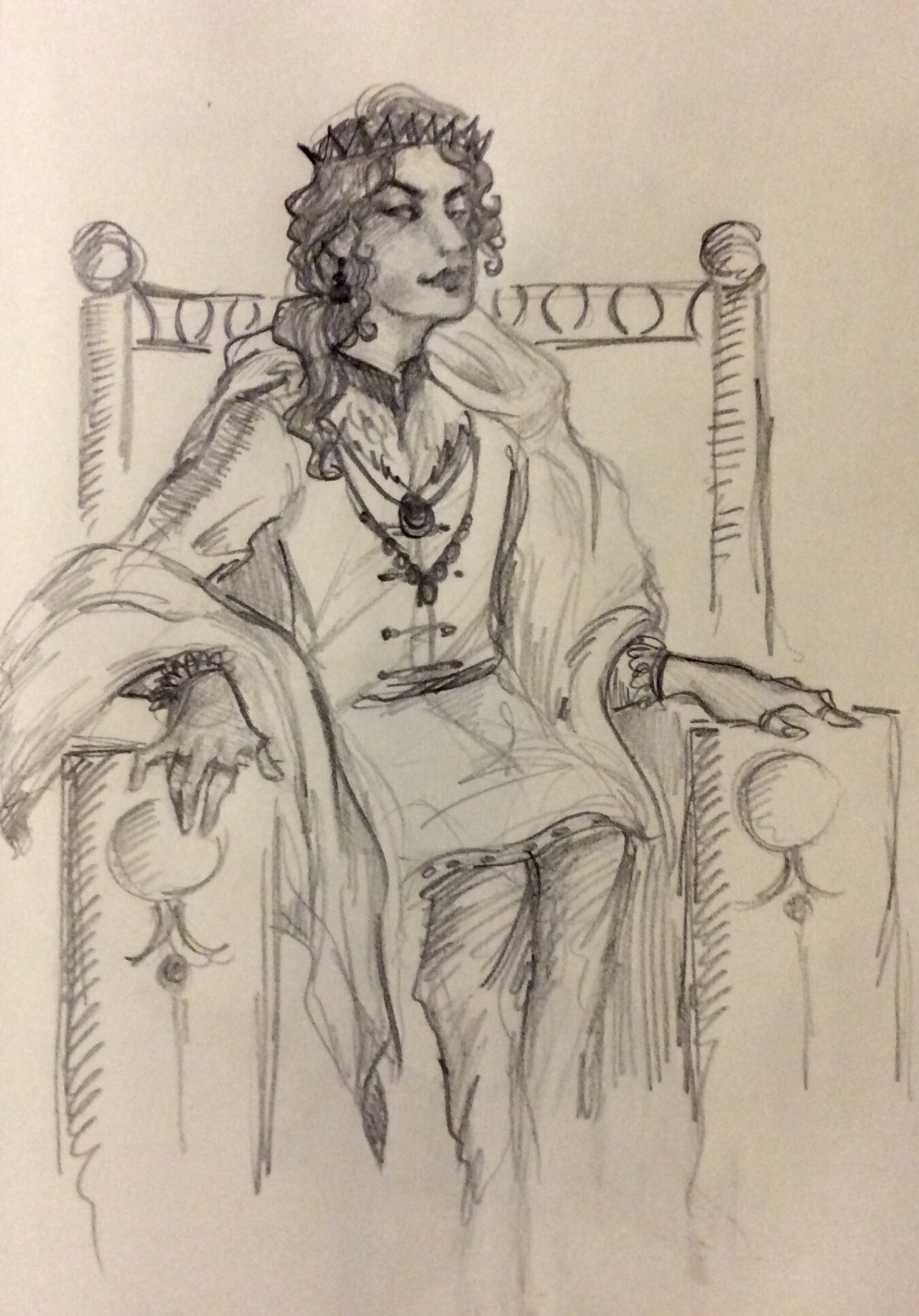
Robin Hobb: Jhaampe by Starsong-Studio
Robin Hobb: Jhaampe by Starsong Studio on DeviantArt, used for commentary

Fitz does what he can to make the best of the situation, studying the surroundings with clear delight and practicing what he knows of the local language. It attracts the attention of Jonqui, with whom he converses, if haltingly, along the way.

He and the rest of the Six Duchies party are shown into the main hall of Jhaampe, which Fitz describes amid an inner lament for how exposed he will be as he attempts to carry out his assigned work. The ruler of the Mountain Kingdom and his children, Rurisk and Kettricken, are introduced, and Fitz realizes to his chagrin that such royal family as the Mountain Kingdom has has tended to him and those he accompanied.

Gifts are exchanged, and Fitz, to his surprise, finds himself presented to the Mountain royals. Rurisk notes his grief at Chivalry’s death, and the two talk briefly of Fitz’s father. Kettricken interrupts with questions about his training as a poisoner, which greatly unsettles Fitz, before leading him out into the gardens surrounding the royal hall. The two converse reasonably amiably, and Fitz takes the chance to speak well of Verity as he had been asked. Kettricken lays bare that Regal has been creating poor impressions of Verity and of Fitz in the lead-up to the nuptials. Fitz pleads misunderstanding her words, and she makes to re-explain when she is summoned away.

It is not long afterwards that Fitz becomes aware of having been poisoned. He takes such corrective measures as he can after the fact, with no small regret, but he survives–and looks forward with unease to what will come next.

A thought occurs as I reread the chapter and look at Starsong Studio’s art, above. One of the things that promotes bright colors in nature is the presence of poison. Monarch butterflies, for example, are noxious eating–and signal it by their bright colors. Any number of species of frogs do the same, as do no few sea creatures. Even many of the flowers Fitz compares Jhaampe’s buildings to are themselves toxic. Looking back on the beginning of the chapter after reading the end, the appearance of the town foreshadows its peril for Fitz. It is perhaps a subtle thing, but that does not detract from the quality of the writing; instead, it increases it that the foreshadowing is subtle.

Something else that calls attention to itself is the strange misunderstanding of the Six Duchies party’s entry into Jhaampe. Being carried in litters or palanquins can be seen as an indication of status; it seems the Six Duchies party, generally, regards it so. But it is also, as is noted in the chapter, a thing done for those whose mobility is limited–and the appearance of incapacity, however inaccurate, can be damaging. What other signs are interpreted in such ways as to cause confusion make for interesting investigation…

A new school year starts soon; help me buy supplies, please!

A Robin Hobb Rereading Series: Entry 19: Assassin’s Apprentice, Chapter 19

Read the previous entry in the series here.
Read the next entry in the series here.


The chapter that follows, “Journey,” opens with an in-milieu reflection on the general history and politics of the Mountain Kingdom, whence Verity’s chosen bride, Kettricken, hails. It is a harsh land with harsh ways that work well for it, if not for other places.

cropped-logo_fools-room-lowshot.jpg
Image of the Fool’s Room by Anya Elvidge, used for commentary

The chapter moves on to summarize the state of the Six Duchies–which is increasingly bad. Red-Ship raids and Forgings continue, with people carrying poison to kill themselves rather than being Forged. Discontent with Shrewd’s policies grows, both among the people and among the Dukes, themselves, with a schism growing between the coastal and inland Duchies. Shrewd seeks to quiet unrest with the royal wedding, and details of its arrangements–Regal traveling to Jhaampe, the seat of the Mountain Kingdom, to pledge for Verity, and Kettricken pledging at Buckkeep later–are noted. Galen leaves Buckkeep with Regal, stopping off in an inland Duchy, and Fitz finds himself at something of a loss.

To ease it, Fitz seeks the Fool, looking for him in his private chamber. The chamber is described in detail, as is its strange effect upon Fitz. So is the later summons Fitz receives from Chade. During their conference, Fitz asks Chade after his assignment to kill Rurisk; uncomfortable silence falls, broken by Chade’s note that Verity has interceded with Shrewd on Fitz’s behalf. Chade reminds Fitz that all are expendable against the need of the Six Duchies.

The next morning, Patience summons Fitz. He responds as bidden, and, after a brief and confusing exchange, Patience pierces his ear with an earring that had been Chivalry’s. She reminds him of his heritage and sends him off.

The following day sees Fitz line up for his part in the caravan to Jhaampe. The Fool offers him a purgative and a warning, and Fitz apologizes for having intruded into the Fool’s chamber. Fitz also receives new clothing for the journey, complete with a new crest assigned by Verity. Verity himself charges Fitz to speak well of him, and Fitz finds several of Regal’s men, Burrich, and Verity’s cousin, August, in the procession, as well.

Fitz glosses the progress of the caravan towards Jhaampe, noting its comforting familiarity. He also mulls over his coming mission. At length, the caravan is greeted by people from the Mountain Kingdom and sped in happiness to Jhaampe.

There is something a bit colonialist in the opening description of the Mountain Kingdom, an attitude that tacitly contributes to Tolkienian-tradition readings of the Elderlings corpus. Looking at a more itinerant people’s ways as “quaintly barbaric” speaks of an ethnocentrism that lines up with entirely too much of observed history. The reluctance of several members of the caravan to associate with the Mountain folks when they arrive at the Kingdom speaks similarly. It’s something I had not noticed in earlier readings of the novel, but something that comes across to me as I read now, and I think it speaks to some of the social changes that have marked nearly twenty-five years that the novel’s been in print and the personal changes of some twenty years of my reading it.

I wonder what will change in the next twenty to twenty-five.

A/C’s expensive. Help me pay for it?

A Robin Hobb Rereading Series: Entry 18: Assassin’s Apprentice, Chapter 18

Read the previous entry in the series here.
Read the next entry in the series here.


The next chapter, “Assassinations,” opens with notes about Chade’s efforts to rehabilitate a Forged One and to ascertain the causes and process of Forging from her. They are ultimately unsuccessful.

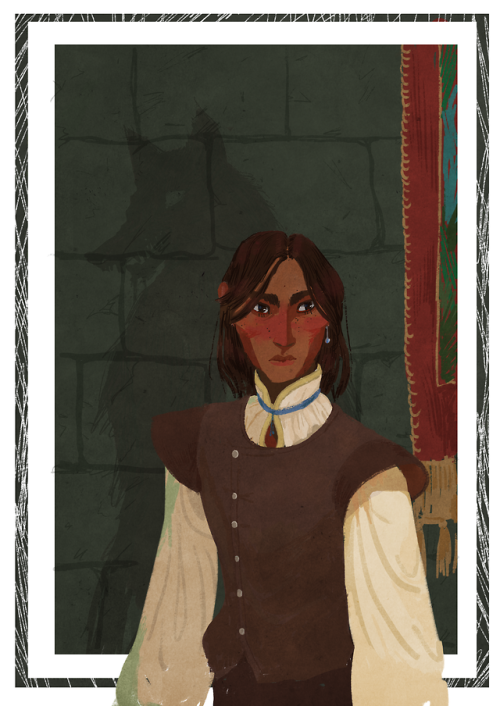
Fitz by FionaCreates
The young man ready to work
Fitz by FionaCreates on DeviantArt.com, used for commentary.

Fitz then begins to relate his disconnection from the stables at Burrich’s order, and the dislocation of his own life as a result. The Red-Sip Raiders grow bolder, as Fitz notes, and the people of the Six Duchies more restless. At length, Chade summons Fitz to his chambers and offers some apology for his earlier lack of engagement. He also rebukes Fitz for his dissolution before accepting his report of events and tasking him with part of Verity’s care.

Fitz ruminates on Verity and Regal, and he and Chade confer, before Chade delivers Shrewd’s assignment to Fitz. Fitz glosses over the work, offering only sketchy details of mercy killings and colder-hearted workings of justice against petty tyrants.

Fitz spends more time relating his work in caring for Verity. The older man, king-in-waiting after his brother’s abdication, has been expending himself in the exercise of Skill against the Red-Ship Raiders, aided minimally by the Skill-users Galen trained. Fitz begins to bond with his uncle, and Vertiy begins to understand what has been involved with Fitz’s training. He also reveals to Fitz what Chivalry had done to Galen, as well as what Galen had done to Fitz–but he commands patience in favor of unity within Buckkeep.

Fitz assents and offers his further assistance to Vertiy–who takes it through the Skill. Fitz suffers for it, and Verity explains by way of apology. He also notes that it was he who affirmed Fitz as a member of the Farseer family before dismissing him back to his other tasks.

Resistance to the Red-Ship Raiders, unrest occasioned by them, and preparations for Verity’s wedding all continue, as do heated discussions about them while Fitz is present. Verity’s admissions at one such discussion are heartfelt and disarming, and Fitz’s assignment to go with the wedding party is surprising. Less so is the implied assassination mission with which he is tasked, the elimination of the heir apparent to the neighboring Mountain Kingdom, which will result in Verity’s bride-to-be, Kettricken, ascending to that position.

There is something of a rite of passage, informal though it may be, in Burrich’s exiling Fitz from the stables. He has been a father-figure, after a fashion, to Fitz, and a young man leaving his father’s house is a fairly common feature of not only fantasy, but other kinds, of literatures. And, leaving, he goes through a period of dissolution commonly attributed to youths striking out on their own, as any number of complaints about “kids these days” attest. Soon after, he enters–re-enters, really–the working world for which he has been trained, even if the work is not always to his liking. But how many of us are actually always happy with our jobs?

It is interesting, too, the ways in which more of Verity’s character emerges in the present chapter. His recognition that he is not fit for the position he must discharge is one that doubtlessly resonates with many, if the myriad discussions of impostor syndrome are to be believed. It’s a wonderfully humanizing trait, and I recall being taken by it when I first read the novel. Anymore, it reads as another bit of verisimilitude among the many in Hobb’s work, but before…it informs, at least in part, my continued work with what Hobb writes.

Help me get through the sultry summer days?

A Robin Hobb Rereading Series: Entry 17: Assassin’s Apprentice, Chapter 17

Read the previous entry in the series here.
Read the next entry in the series here.


The chapter that follows,”The Trial,” opens with a description of a coming-of-age ceremony in which Fitz participates. It then shifts to Fitz conferring with Burrich about the upcoming Skill trial, which he is certain to fail due to Galen’s animus; Burrich offers some small comfort, and Fitz tends his animals before sleeping in his bed once again.

https://upload.wikimedia.org/wikipedia/commons/b/b9/Caspar_David_Friedrich_-_Wanderer_above_the_sea_of_fog.jpg
Caspar David Friedrich’s Wanderer above the Sea of Fog seems to catch the right flavor.
I’m told it’s public domain, hosted on Wikipedia, here.

The next day sees Fitz report for his trial. He is taken out away from Buckkeep and left near Forge. Fitz immediately grows nervous, and he spends the day waiting apprehensively for either an attack or for the message from Galen he knows will not come. When he falls asleep and dreams, he dreams of an attack upon him and Burrich; he wakes, realizing it was a sending from Smithy through the Wit, and he immediately begins to make his way back to Buckkeep.

As he does so, he tries to puzzle out the attack. His ruminations distract him, and he comes under attack by Forged Ones. He manages to fight his way clear of them, fleeing and, at length, succumbing to exhaustion. When he wakes from it, he resumes his progress toward Buckkeep, finding Red-Ship Raiders making use of Forge for resupply. After tense minutes of hiding, he makes his slow way away, resuming again his return to Buckkeep–and finding himself beset by Forged Ones again.

As the Forged Ones face him, Fitz feels Smithy die through their Wit-connection. In despair and rage, he kills his attackers brutally, dumping their bodies into the sea. Drained, he returns to Buckkeep and immediately calls on Burrich. They have a falling-out over Fitz’s continued use of the Wit, and Fitz falls into a depressed, mechanical routine as Galen’s coterie begins its work. He pushes those in his life away from him, and loses track of Molly until he believes it is too late to resume his relationship with her.

The opening interlude attracts some attention from me. The ceremony described in it–“detailed” would be an overstatement–marks a rite of passage, certainly, and much is made in fiction, generally, and fantasy fiction, particularly, of rites of passage. Such rites generally do receive more overt narrative attention than the Man Ceremony does, though, and I do not recall that the thing pops up elsewhere in the Realm of the Elderlings corpus. (I could be wrong in my failure to recollect, though; getting older hasn’t helped my retention.) But what is revealed in the throwaway passage is an interesting view of masculinity as performed in the Six Duchies, and I have to wonder at its contrasts with what was going on during the writing as well as with what is going on as I read the passage again. I’m not up on the kind of gender construction/performance theory that such explication would need to rely upon, so I’ll not speak to it here–save to note that accepting a choice not to kill and not to offer food to others therefore would not necessarily play well in my part of the world, or a number of others.

As I think on it, I wonder about the rites of passage I’ve gone through. There’ve been enough of them; if nothing else, I’ve been graduated more times than most people, so there’s that. The one at the end of high school marked an ostensible passage into adulthood, but offering entry into one particular community or another…not so much. I am a member of no elite brotherhood, no pseudo-secret society that may or may not stretch back decades or centuries. (Or am I? Muwahahaha!) And I wonder sometimes what it would be like to be so. But it is an idle musing, of little moment.

Send a bit my way, please?

A Robin Hobb Rereading Series: Entry 16: Assassin’s Apprentice, Chapter 16

Read the previous entry in the series here.
Read the next entry in the series here.


The next chapter, “Lessons,” opens with an in-milieu rumination on prior and then-contemporary practices of Skill instruction. It then pivots to Fitz’s resumed Skill lessons, in which he endures the hatred of his fellow students and surveys the healing injuries Galen had suffered. Fitz also notes his beginning suspicion that Galen’s instruction is nominal only and not sincere.

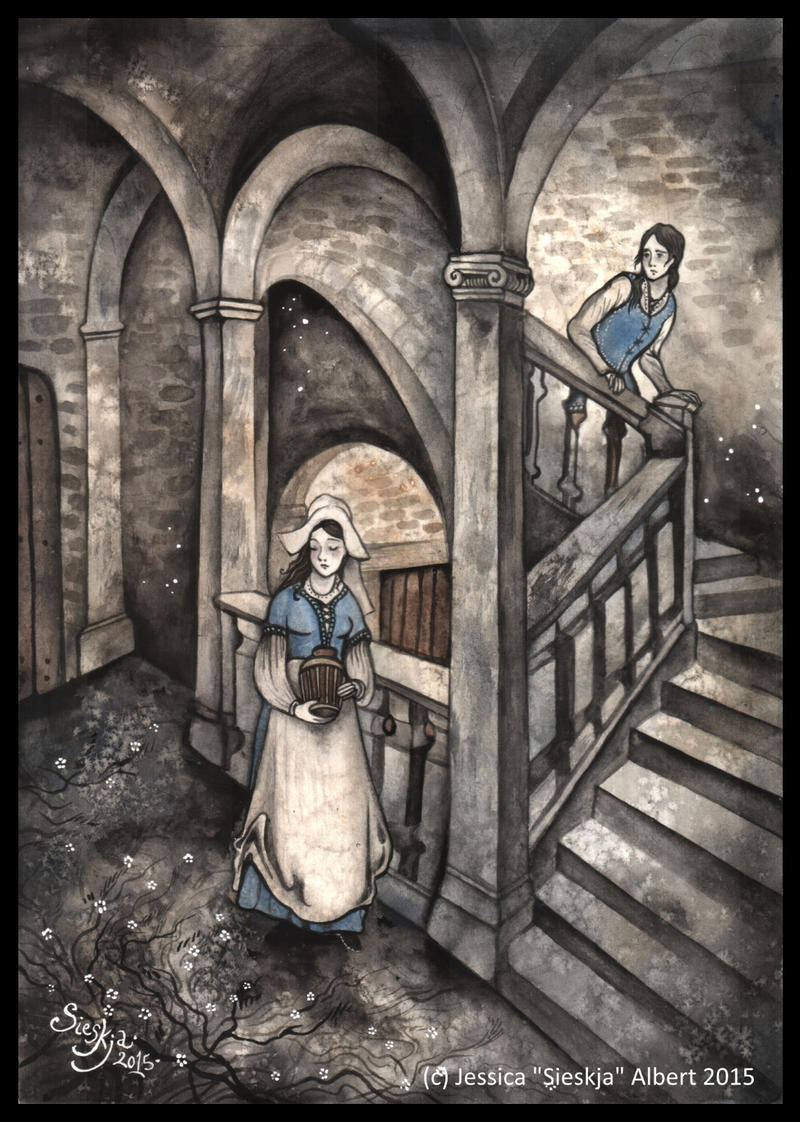
On the Ledge: sketch 2 by Crooty
On the Ledge: Sketch 2 by Crooty on DeviantArt;
image used for commentary.

Fitz then goes out for a bit, taking Smithy on a walk and calling on Molly. Molly comments to Fitz on Verity’s upcoming nuptials, which Fitz had not been aware of. Regal is to select Verity’s bride, and Fitz muses on the disparities between the two men’s noted interests in women. He waxes philosophical on desirable traits, and he misses an opportunity to cement his love and Molly’s in his youthful folly.

After, Fitz begins to reintegrate himself into the life of Buckkeep outside of Galen’s harsh restrictions. He also considers the relative political merits of potential brides for Verity, listening to the castle’s occupants discuss such matters and feeling shame at having, with Galen, dismissed them as ignorant fools of little account.

Fitz continues in his lessons, finding his abilities in the Skill erratic and frustrating, though present. He also continues with Molly, doing just as well with her. And the Forgings of the Six Duchies’ population continue, too, keeping people afraid and less than in awe of their rulers.

At length, Galen announces a final test for his students. They will be taken out into the Duchies and left to await a summons through the Skill. Those who answer appropriately will become a new coterie; those who do not, will not. Fitz knows he will not be, and Galen attempts once again to compel him to suicide. Smithy saves him from it.

Being as I am, I find a comment on academe in the passage wherein Fitz ruminates on Galen’s disdain for working folk. Many of the prevailing impressions of academia are…less than pleasant. (Some comments I’ve made elsewhere come to mind, as do some others I’ve made here, as well as Timothy Carens’s “Serpents in the Garden,” from an issue of College English.) There are many who view those who choose to stand at the front of the classroom in higher grades and in higher education as joyless, sadistic, hateful people who disdain all that is not their own field of study. There are many who so stand who are so, of course; it is not for nothing that the tension between town and gown is traditional. I’ve been guilty of it myself; there’ve been places I’ve been where I was far from the friendliest person, if it can be believed.

I cannot help but read in Fitz’s post-fight interactions with Galen an echo of a teacher with no love for a particular student, one who happened to be gifted and with covert prestige but not the political connections often prized, one who ran afoul of a particular parent and who continued to take petty revenge against the student. And I feel like I’ve been the teacher and the student in the situation; I wonder how long it will be before I am the parent, as well…

Can you kick in? Will you?

A Robin Hobb Rereading Series: Entry 15: Assassin’s Apprentice, Chapter 15

Read the previous entry in the series here.
Read the next entry in the series here.


https://theplenty.net/wiki/images/a/ad/GF-Stone-port.jpg
One of the Stones, image source in image, used for commentary

The chapter that follows, “The Witness Stones,” opens with musing on the Skill before pivoting to Fitz’s continued training with Galen. How the students progress is noted, as is how the seasons do, and Fitz reflects on his separation from others and his connection to Smithy.

Fitz considers his initial contact with the Skill and his certainty that he would be able to learn it. Galen is incensed by it, and more so by Fitz’s success at hiding from him such things as Chade, the Fool, Smithy, and parts of his youth. He also reflects on a meeting with the Fool not long after making that first contact. In that meeting, the Fool warns Fitz about Galen once again, noting that the Skillmaster is ruthless enough to put an end to Fitz altogether. Fitz, arrogant as youth can be, proclaims himself ready for the challenge.

In the event, he is not. During training, Galen attempts to take over his mind with the Skill. Fitz defends himself until he is wept up by the magic’s intoxicating effects; Galen uses the chance to batter him physically, bloodying him badly. The other students, seeing only that Fitz has succumbed to the Skill, join Galen in his obloquy.

In the wake of the attack, Fitz manages to drag himself to his chambers, seeking comfort from Smithy. Burrich comes to him in the night, and, when Fitz wakes, he finds that he has been tended by the stablemaster. Burrich asks Fitz what has happened, and the boy replies as he can before taking the medicine Burrich offers and falling asleep.

Fitz wakes to find Burrich in a good mood, and the mood remains in place as Fitz convalesces. At length, Fitz ventures out into town, meeting Molly and hiding his melancholy from her. Later, Burrich examines Fitz and bids him get back to his training in the castle; Fitz demurs, but a later encounter with the Fool, in which the latter explains how Burrich battered Galen into relenting in his dismissal of Fitz from Skill lessons, convinces him to resume the lessons.

One of the focal events of the chapter is one that is presented only in the Fool’s report to Fitz, that Burrich bested Galen in combat before the Witness Stones and thereby won for Fitz the right to resume his training in the Skill. Trial by combat is a mainstay of medievalist fiction, of course; a notable instance marks Katharine Kerr’s Deverry series, for example, and much is made of it in Martin. Jacqueline Stuhmiller notes in Iudicium Dei, iudicium fortunae: Trial by Combat in Malory’s Le Morte Darthur” (Speculum 81 (2006), pgs. 427-62) that it was a historically common practice, as well, at least for a time. She also notes that it was problematic; it should produce justice independent of personal ability, but it does not (any more than modern legal standards bear out guilt or innocence without regard to the parties’ pocketbooks and access to legal counsel). “God, wherever he may be, does not fight on anyone’s side in these contests,” she writes (460).

Neither, it seems, do the Witness Stones as Burrich beats Galen. This is not to say that Galen did not deserve substantial punishment for his conduct; even aside from his battering Fitz, he imposes harsher discipline on his students than is acceptable, and his uneven treatment of them by gender is far from admirable. This is also not to say that Burrich has no justification in enacting revenge for Fitz; he is as close to a dad as the bastard boy has, and, as a dad, I feel the impulse to hurt anything that causes my kid harm.

There is a clear implication that Burrich is doing something heroic, or is regarded as doing so, by administering the beating; the Fool’s narrative valorizes him, and earlier depictions of Galen make him out to be a not-entirely-petty tyrant worthy of censure and repudiation. That implication, though, is problematic in ways I have long recognized. It is not the case that the person in the right is the one who will be the victor in a fight; indeed, the very idea is repudiated as the ad baculum fallacy. Too, as someone who has been right but not in a position to prove it by arms, I am all too familiar with the disjunction. Burrich may well have been in the right with Galen–Galen was certainly in the wrong with Fitz–but his victory in the fight does not make it so.

I can still use your help.

A Robin Hobb Rereading Series: Entry 14: Assassin’s Apprentice, Chapter 14

Read the previous entry in the series here.
Read the next entry in the series here.


Related image
Not quite right, but the right idea.
Image from Alamy.com, used for commentary.

The next chapter, “Galen,” opens with a brief discussion of the eponymous character’s background. It moves thence to gloss over the progress Fitz and Patience make with one another before Fitz’s Skill lessons begin. Fitz also notes his time with Molly, citing it as pleasant and helpful.

The night before his lessons begin, Fitz is summoned by Burrich. The stablemaster cautions Fitz about Galen and reminds him that his use of the Wit may well be revealed by the Skill. He relates a story of Galen having accused a girl of the Wit, having beaten her to death, and having it proven acceptable by way of the Witness Stones.

The next morning sees Fitz report for instruction. The other students, including one of his legitimate cousins–August–are noted, and Galen, upon his entrance, is described in detail. It is not a pleasant description, and Galen soon demonstrates himself to be an unpleasant person, more than a strict taskmaster and desirous of total control over his students’ lives.

Training begins and continues harshly, abusively. Fitz finds himself on the receiving end of the cruelty more than once. The Fool offers him some help with Smithy and a cryptic warning as the chapter ends.

A few things stand out for me in this reading, appearing below in no particular order:

  • There is a clear implication from the initial background information and from earlier materials in the novel that Galen is himself a bastard and a royal one, the illegitimate child of Shrewd’s second queen and one of her staff. It makes the comments about bastards, particularly Farseer bastards, being denied training in the Skill all the more ironic. Fitz wears his bastardy openly; he can hardly not. Galen’s is hidden, and he perhaps overcompensates for that in his treatment of Fitz–although trying to assess the psychology of a fictional character is not perhaps the most apt thing.
  • In the present chapter, there is also reinforcement of the implications of a closer relationship between Burrich and Chivalry. As Burrich seeks to warn Fitz of the threat Galen poses, he speaks of loving the late King-in-Waiting–and of Galen’s obsession with Chivalry. The connection between the stablemaster and Fitz’s father seems to be set in the same mode as that of Sam and Frodo in The Lord of the Rings, but that relationship is also frequently read as homoerotic. (A 2004 issue of Modern Fiction Studies addresses the matter, for example, as do any number of other scholarly works.) So that is of interest.
  • The Witness Stones emerge as being of note in the present chapter. They are seen as a site offering divine, final justice for those who pleased their cases before them. They play larger roles later in the novel and throughout the Realm of the Elderlings corpus, but having them noted as they are offers yet more foreshadowing, following along with one of the major themes of Hobb’s series.
  • Galen’s name invites comment. Though it does not function as such within the milieu, it does evoke a figure revered in medieval European conceptions of antiquity; it contributes to the medievalism that invites reading the Six Duchies as a refiguring of medieval northwestern Europe in the Tolkienian tradition, though other readings remain far better. Hobb’s Galen is no healer, certainly; the opposite is true, offering another bit of irony in the character. He does pass on stagnant teachings, though, which offers at least some point of correspondence.

Don’t be so severe; send some support here!

A Robin Hobb Rereading Series: Entry 13: Assassin’s Apprentice, Chapter 13

Read the previous entry in the series here.
Read the next entry in the series here.


The chapter that follows, “Smithy,” opens with a compiled assessment of Patience’s character before shifting to her attempting to instruct Fitz. The efforts go oddly, and Fitz is struck by the visual cacophony of her chambers, but recently occupied. Patience suddenly gives Fitz a puppy, to which he takes an instant liking and by which he is distracted as she continues to quiz him about himself.

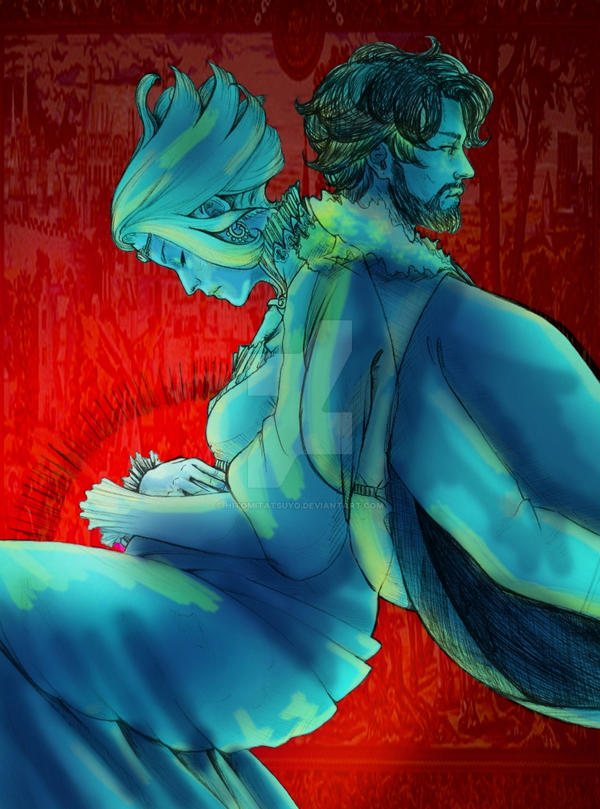
Untitled (?) piece by Marta on Tumblr, used for commentary.

Patience dismisses Fitz for the day, and Fitz mulls over what to do with the dog, encountering the Fool along the way. The two confer, first about the dog’s name–which will be Smithy–then about Patience and Chade before the Fool absents himself. Fitz considers Smithy more closely, then, and resumes his lessons. Patience’s attendant, Lacey, urges him to do something to please her, and Fitz ends up painting pictures of Smithy that take her aback. She continues to quiz him, though, and remains dissatisfied with his answers. She realizes, too, how much like his father Fitz is, and is taken with sorrow at his loss.

I am not certain I know what to say about the chapter. It does a fair bit to explain the character of Patience, certainly, but I find the character difficult to understand. That is perhaps my positions of privilege at work, though; I have not suffered what she is reported to have suffered, and my still-too-affective reading sympathizes with her even as it does not allow me to empathize with her. I do take some comfort, though, in the fact that the narrating Fitz is as confused by her behavior as I am, though it is not much; if I am not more perceptive and insightful than an adolescent, being far beyond my own adolescence, I have other problems altogether.

The confusion brings up the issue of engagement, though. I press on with reading because I know it has rewards, even with writing that’s not as good as Hobb’s. I know that many don’t, though, and that encountering confusion in the writing turns people away from it. I’ve had enough students make the comment to me that I cannot help but believe it. My response to them, as it is in many circumstances besides, is that if there is no challenge, there is no reason to improve. That I am challenged, even now, by understanding a character, that tells me I still have room to improve. I have places still to grow, even in what I am supposed to be able to do well. (And, with three degrees in English and years of teaching college English, I ought to be able to read pretty well, right?) Instead of letting that be a rebuke to me, and I could let it be a rebuke to me, I see it as a hopeful sign. There is more for me in what I have long loved, there is more for me to find, and searching for it makes me a better person.

It’s not the only thing, either.

Hammer out some support for me?

A Robin Hobb Rereading Series: Entry 12: Assassin’s Apprentice, Chapter 12

Read the previous entry in the series here.
Read the next entry in the series here.


Untitled (?) piece by dancynrew (Annie) on Tumblr,
used for commentary

The next chapter, “Patience,” opens with an in-milieu reflective musing on the Red-Ship raiders before moving into Fitz’s continued encounters with Patience–during which he is ignorant of her identity. In one of them, he is intoxicated although not fully drunk when she finds him; in the next, the next morning, she quizzes him over his learning and finds his responses unsatisfactory.

Burrich returns from a trip and has Fitz report events to him. That, and a tour of the stables, reveals to Burrich that Patience is present, and he relates an anecdote detailing Patience’s eccentricities. He also remarks to Fitz that he does poorly to try to conceal his follies, and adds with some aspersion that Fitz has a talent for attracting attention he should not.

Chade rebukes Fitz similarly later on. The older man then waxes eloquent about Patience’s character and the strange match between her and Chivalry Farseer. He also notes that Patience has sued Shrewd to ensure Fitz’s appropriate education, which Chade sees as a mixed blessing. It does gain them the chance to have Fitz learn the Skill, the ancestral Farseer magic. It had been forbidden to Chade because of his own bastardy, and Fitz guesses–wrongly–that Chade is Shrewd’s son. He is, in fact, Shrewd’s brother.

Fitz’s prospective teacher, Galen, is discussed; reports do not paint a good picture of him. And Fitz lets slip that he talks with the Fool at times before receiving warnings from Chade that Galen hates Fitz utterly, and that Chade cannot see where the instruction in the Skill will take place.

As I read the chapter again, noting a passage wherein Fitz considers the Skill against the Wit in what Burrich had told him, I find myself considering the juxtaposition of the two Hobb sets up. While it is certainly the case that what is reported is not the same as what is, even within Hobb’s texts, there is something to be said about asserting that Wit and Skill are antithetical. There is some sense in it, admittedly; what the novel has shown of the Wit to the present chapter is that it is an innate thing, much as the ability to respond rapidly and with aplomb usually called “wit” is, and the implication that the Skill takes no small amount of training to deploy corresponds there, as well.

The thing is, though, that wit relies for its effectiveness on the respondent having a large base of knowledge from which to draw, both to see connections and from which to formulate responses. Similarly, skill requires a fundamental facility with the thing to be trained. Neither is wholly independent of the other, in the end (and more about the entanglements emerge later in the Elderlings novels). So that dichotomy is frustrated, even from the beginning.

Too, there is the issue of the Wit as metaphor for homosexuality. Again, I think it breaks down as the novels progress, but I begin to see some breakdown even here. If the Skill is the opposite of the Wit, if what is trained is the opposite of what is innate, well, then, what is the opposite of homosexuality? The obvious answer would be heterosexuality, but that does not appear to be quite as constructed as the metaphor would position it as being. A better answer might be asexuality, though I do not believe that to be any more constructed than homo- or heterosexuality is. (Or less, to be fair.) Perhaps celibacy, though that is also…frustrated (if the pun may be forgiven). It’s something to be considered–if the metaphor is to be maintained. It may well not be, though.

Can you show me some love?

A Robin Hobb Rereading Series: Entry 11: Assassin’s Apprentice, Chapter 11

Read the previous entry in the series here.
Read the next entry in the series here.


The next chapter, “Forgings,” opens with an extended musing on the legend of the Pocked Man in the Six Duchies; the figure is one cursed by El, one of the two gods the Duchies appear to acknowledge, made into an undying harbinger of pestilence whose appearance is a portent of doom. It pivots to comment on Fitz’s return to Buckkeep from his mission to Kelvar, which is onerous and highlights Chade’s skill in maintaining the fiction of Lady Thyme.

Image by way of The Wertzone, here, used for commentary

There is some comfort for Fitz, though; his efforts with Lady Grace meet resounding success and acclaim. Verity’s bachelorhood is noted, with Burrich commenting that Verity having a wife will do much to comfort the people of the kingdom. Verity himself, however, is distracted by the increasing Red-Ship raids and more Forgings. Popular responses to the attacks are sometimes harsh but understood as inevitable and necessary. The lack of a cohesive response from the Kingdom, however, sits ill with the populace, as Chade notes to Fitz during one of their late-night sessions.

Chade also comments with some aspersion about the politics in the Farseer dynasty, noting Verity’s deficiencies against the current situation (he “was raised to be second, not first,” and it shows) and Regal’s continued pampering. And Fitz’s regular lessons continue as Buckkeep girds for war, even if it does not yet strike out at its attackers.

Fitz is, however, able to resume his friendship with Molly. They talk together of the popular reaction in Buckkeep to the Forgings, as well as the anger building against Shrewd for his inaction. And in the wake of a conversation with her, when Fitz returns to the castle and scrounges a meal against the budding growth of his adolescent body, he encounters a noble woman not known to him. They make one another awkward, and Fitz leaves the encounter feeling a fool.

There is a fair bit of foreshadowing in the chapter, some of it working over longer terms within the novel than others. (Little if any of it extends to the other novels in the series.) Again, the idea of prognostication is one that pervades the Realm of the Elderlings novels, so its appearance in the present chapter is not a surprise. The cliffhanger of the meeting with the noblewoman, though, which is an instance of foreshadowing is somewhat annoying; it reads to me at present as a division-spanning item that might have done better in another place. Then again, strange events occur at jarring times, and the inclusion in its present position may well be a nod to that.

To return to the comment in the previous entry about the parallel between the Red-Ship raiders and current-to-this-writing perceptions of immigrants, there is a point in the chapter at which Molly notes to Fitz that local merchants have banded together to hire their own guard-ships. She comments that it may be a clever move on the part of Shrewd to allow them to do so, since they spend the money and he does not, and it may well be that. But there is also a parallel to near-current events, such as the ultimately racist and too-often too-close-to-Nazism militias that currently work ill on the southwestern border of the United States (and it’s always that border, not the much longer one at the north; I wonder [sarcastically] what the difference is). The book is decades old at this point, so there is no way it can be commenting on such events, but the parallels in the present reading are a bit much to ignore.

Realizing such is the case, I’m beginning to be uncomfortable with the novel in a way I was not before. I’m going to continue the re-read, of course; I try to carry through the projects I begin, although I am not always as good about that as I would like to be. But I have to acknowledge the shift in how I regard the work. I am not the reader I was when I first encountered the book; I am not even the reader I was when I was an aspiring scholar, working on the series for my master’s degree or turning to it again for conference papers and book chapters while I was working on my doctorate. I know more things than I did then, and I know differently the things I knew then. The opinions I form upon re-encountering things cannot help but differ, therefore. Many people seek to deny that they do; they try to regard things as settled when, ultimately, they are not. The failure to recognize such undergirds or informs a great many problems; I am glad to have the reminder, however small, that I ought not to make that particular mistake again.

Like what you’re getting? Go ahead and send some help along so that I can keep giving it to you!