A Robin Hobb Rereading Series–Entry 3: Assassin’s Apprentice, Chapter 3

Read the previous entry in the series here.
Read the next entry in the series here.


The next chapter in Assassin’s Apprentice, “Covenant,” continues the pattern of opening with a passage from an in-milieu reference text before musing on the reestablishment of normal patterns. Fitz glosses over his integration into the daily childhood life of Buckkeep and its town, noting his reluctance to let Burrich know more of them and commenting on relationships with members of his family and people about the castle. Regal and his mother were to be avoided. Verity was distant but kind when remembered the boy. A few friends were to be sought, and several others were annoyances or dangers.

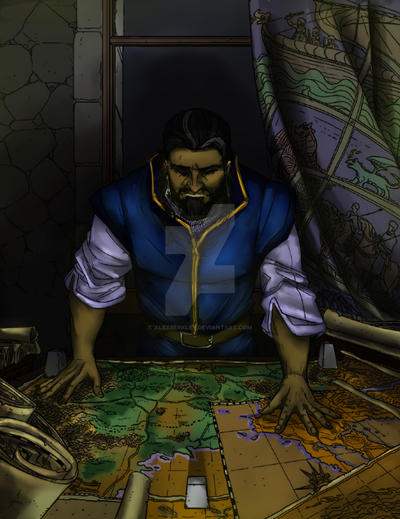
Shrewd and Fitz by sherwin-prague
It is hard to find images of Shrewd Farseer.
Shrewd and Fitz by Sherwin-Prague on DeviantArt, used for commentary / reporting.

Perhaps the most important, though, was the beginnings of his arrangement with his natural grandfather, Shrewd, King of the Six Duchies and father to Chivalry, Verity, and Regal. Shrewd makes him an object lesson for Regal, openly declaring his intent to use his bastard grandson for the benefit of the kingdom–and specifically in those ways a legitimate prince could not be used. He also swears the boy to his service, young as he is, and smilingly indulges what he hears as a petty exhalation from Regal.

At length, Fitz returns to Burrich, where he learns that the pattern of his life will be changing yet again. He will no longer be a relatively free boy at play, but will instead be put to training at the King’s behest and ultimately, for his service. Fitz is upset by the changes, and Burrich offers him some small comfort.

Fitz then glosses over the forms of change in his life, touching on the various forms of instruction in which he must now engage. He learns a bit more of what is nosed about the castle about himself, his family, and Burrich. He begins to study combat, and he is given his own room, which is described in some detail and compared to his previous lodgings in the stables with Burrich as he finds his way to sleep.

Some things stand out in the chapter:

  • The focus on the way in which Shrewd claims Fitz is of interest. He makes a point of hiring Fitz’s service–he says to him “You need not eat any man’s leavings….If any man or woman ever seeks to turn you against me by offering you more than I do, then come to me, and tell me the offer, and I shall meet it. You will never find me a stingy man, nor be able to cite ill use as a reason for treason against me,” situating his loyalty in terms of economics rather than consanguinity–rather than on accepting him as a member of his family or commanding it as his due. (Indeed, Fitz comments on it, that Shrewd “could have declared himself [Fitz’s] grandfather and had for the asking what he instead chose to buy.”) And he does so after making a point to Regal that Fitz’s heritage is both clear and something that makes him particularly useful. It has to be wondered if the terms are a misreading on Shrewd’s part of Fitz’s character or a reminder to the young Fitz, who seems neither to need it nor to understand it in the moment, of his status as an outsider–or perhaps part of a performance for Regal and any others who might be observing that the boy is marked as of use but not necessarily beloved.
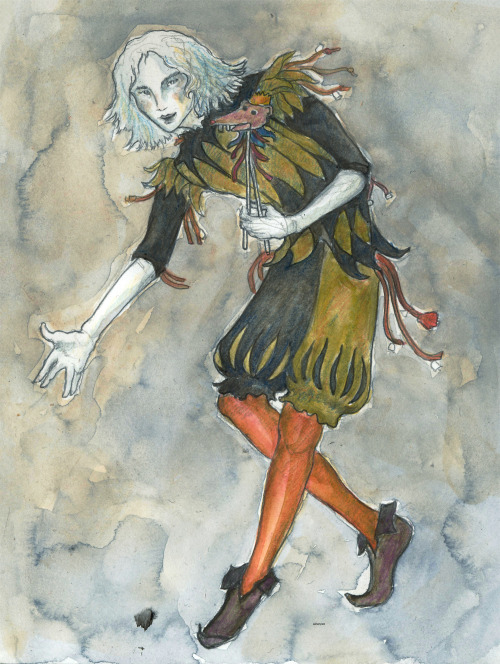
  • The chapter is the first introduction of the Fool, whose presence suffuses the main line of the Realm of the Elderlings novels. The character receives attention that is denied to many others in the narrative, marking importance, but that importance is left to be imagined at present. Several of the works in the Fedwren Project focus on the Fool, and what they say about the character is more erudite and eloquent than can necessarily be reported here, but this is where the character begins in the narrative, so it is worth attention.
  • The chapter also introduces the connection between the Six Duchies and the Elderlings, which becomes an important point in the narrative. Buried amid a flood of other details, it escapes notice at first, but it is a common point of reference in many of the succeeding novels. It is a sign of Hobb’s attention to narrative detail and a commendation of her writerly craft that the image is presented without being made obtrusive, there where readers can find it but not so overtly that it smites them with its presence. More writers could stand such subtlety.

Please help me keep the website going.

A Robin Hobb Rereading Series–Entry 2: Assassin’s Apprentice, Chapter 2

Read the previous entry in the series here.
Read the next entry in the series here.


The second chapter, “Newboy,” follows the first chapter in opening with an in-milieu historical document, to which the narrator, Fitz, responds in the main text. He gives a brief overview of the ruling dynasty, the Farseers, and their central holding, Buckkeep, before detailing his own initial billeting at Burrich’s command. A press of people triggers an adverse reaction in him, one that prompts him to hide away until he returns to Burrich in the evening.

Image result for buckkeep
One of John Howe’s takes on Buckkeep
Image used for reporting/commentary.

As the chapter progresses, Fitz settles into life at Buckkeep, noting the events at large as he does so and describing both the keep and its town. He also describes meeting Molly, the daughter of a drunkard who makes his onerous presence known. Fitz reacts adversely to him, as well, and betrays his juvenile lack of understanding before falling in with other children and passing an idly delinquent summer with them.

At length, Fitz encounters Burrich while about his delinquency. Burrich moves to take him in hand and uncovers that Fitz has the Wit, a magic that allows him to commune with animals–and that is widely regarded as perverse and unnatural. Burrich takes from Fitz the pup with which he had bonded, Nosy, and Fitz falls into depression from the sudden loss.

The second chapter builds upon the first, setting up a pattern of loss for Fitz. He is bereft of familial ties, and those bonds he tries to set up in place of what should be innate connections are threatened by the inflicted loss of one of them. While it is true that psychoanalyzing characters in a story is something of a fallacy, the affective reading I still cannot help applying to Hobb’s novels tells me that such things happening cannot help but traumatize a child, instilling fears and problems that may never be resolved.

Perhaps more important to the overall Elderlings corpus is the introduction in the chapter of the Wit. The inborn magic is one that exerts substantial influence throughout the novels, and its social regard is a matter of much consideration. It is easy to read it as a metaphor for homosexuality, given its depiction in the novels and peripheral materials, though doing so introduces some problems (the association with animals, for one; it is a mistaken commonplace that homosexuality leads to or is closely akin to bestiality, which commonplace is often used to oppress and abuse homosexuals). Later novels destabilize the metaphor further, as I found and will doubtlessly discuss, though I seem to recall it being clear enough for me at the time.

I’d also note that there is some clear foreshadowing at work in the chapter. The first female character to receive any substantial narrative attention, Molly, could be assumed to have…particular roles later in the novels. How fully Hobb engages those expectations remains to be seen in later parts of the reread, and exploring them–as well as many other things in the novels–promises to be enjoyable.

Help me keep this going?

A Robin Hobb Rereading Series–Entry 1: Assassin’s Apprentice, Chapter 1

Read the previous entry in the series here.
Read the next entry in the series here.


The first entry into the Elderlings Corpus is Robin Hobb’s 1995 Assassin’s Apprentice. It is not the first of the Elderlings novels I read, though. In time, it has also become other than the first work to take place chronologically in the milieu. But it remains the first book in the main narrative arc of the Elderlings Corpus, introducing characters whose deeds occupy most of the stories Hobb has told as of this writing. It remains, therefore, the best place to start rereading the novels again.

I have this one, yes.
Image from RobinHobb.com, used for reporting/ commentary.

The text of the novel opens with a chapter titled “The Earliest History.” Its first paragraph is an excerpt from a piece being composed within the milieu, not unlike the Encyclopedia Galactica from Asimov’s Foundation novels. It moves thence swiftly into the recollections of the piece’s author, who muses on the indulgences shown to him and the enthusiasm of his earlier teachers before beginning his own recollections.

The narrator–and the Farseer books, as well as the series that follow them, the Tawny Man and Fitz & the Fool trilogies, work in first-person narration–asserts that his memories begin on a day when he was some six years old, and he questions their validity and their source. I recall it being a point at which I fell into what I would later learn to call affective reading; I identified wit the narrator at that point, having little if any recall of what happened before I was six, and wondering if what I remember is what happened or what I was told happened, my family repeating the same stories again and again until my perspective on the events cemented as if I were there and could bring them to mind.

Too, I find I cannot escape sentimentality; I cannot help but feel for the narrator as he describes being taken by his grandfather from his mother and delivered, without affection, to a keep over which his illegitimate father was king-to-be. He is taken to his uncle, named Verity, and thence dispatched to the care of his father’s footman, Burrich. Burrich takes the boy in hand, calling him Fitz for his bastardy, and the narration passes over some time until an incident in which Verity and Regal confer, with Burrich attending, on his fate. Regal proposes killing him; Verity ignores the suggestion, but heeds the command from their father, the king, that his illegitimate nephew is to be brought to the royal court at Buckkeep. In advance of Fitz’s arrival there, his father abdicates his claim to the throne; Fitz never sees his father in the flesh. It’s not something I can comfortably imagine, either as a son or as a father, though I know it is the case for many, many people.

I’ve remarked before, I believe, that Fitz’s beginning is hardly the most auspicious. He is a bastard, and one effectively abandoned by his closest kin. While his more extended family does take some measures to bring him in, they are hardly kindly ones, and it is not to be wondered at that things proceed as they do for Fitz as the novel–and, indeed, the Elderlings corpus as a whole–proceeds.

A couple of other thoughts on the chapter to close out:

  • It occurs to me that Chivalry, the narrator’s absent father, is “supposed” to be the hero. The name suggests that he is an embodiment of honor, and descriptions of the character reported by others generally confirm it. That he fathers a bastard son whom he never appears to see or to acknowledge (though others in the family do) suggests either a failure on his part or a comment by Hobb about the ultimately flawed nature of chivalric constructions. There is no end of scholarship on the latter idea, as even a casual Google Scholar search shows–and there are better searches to run, to be sure, though those rely on more restricted resources.
  • Following up on the idea of commentary, if Fitz is the bastard by-blow of Chivalry, does the profession he enters–foreshadowed by the title of the novel, really–serve as the sign of chivalric failure? That is, does Fitz’s formal profession serve as the illegitimate but seemingly inevitable product of putatively upright conduct? For many or most chivalric narratives admit readily of bastards; in Malory, even the most noble of knights–Galahad (since he achieves the Grail)–is the illegitimate child of the most worshipful Lancelot, and Mordred is the natural son of Arthur. How necessary is such a thing, then, given the tension between what should be and what is? I’m not yet sure, but it’s something on which to think.

I could still use funding for this project!

A Robin Hobb Rereading Series–Entry 0: Background and Context

To follow up on the material in the last post, some background and context for my proposed series of posts working through a rereading of Robin Hobb’s works seems in order. As noted before, I’ve long been an avid reader of Hobb’s works; I began reading them in the later 1990s, having had the Liveship Traders novels suggested to me by the owner/operator of a local bookseller, Books to Share in Kerrville, Texas. I plowed through the novels greedily, almost salivating as I waited for the last one to come into print, and I soon found myself picking up the earlier-authored Farseer novels, chewing through them with the same relish.

When later novels in the same milieu emerged, I again and again found myself buying them without counting the cost and losing myself for joyful hours among their many pages. It was the kind of reading that pushed me to become an English major when I had to give up on the goal of becoming a band director, the kind of reading that made grad school seem a good idea.

It was the kind of reading that I did not get to do as much as I would have liked in the intervening years. Even though I did my master’s thesis on Hobb’s works, becoming one of the earliest to make a formal, academic study of them, reading for academic work is not the same as reading for love of it. And though there are things that the focused, interrogative reading rewarded by academic humanistic study reveals that no other reading can, I missed reading for the love of the words.

I was not the best student when I was doing the initial reading–at least not of the world outside the classroom. I have since worked to keep a journal, but I did not do so then, not in any way the is currently helpful. My memory is not as good as it used to be. So I am not in a position to do as Luke Shelton did in his own work recalling Tolkien; I do not recall many of my first impressions of the books. (There are a few such things, admittedly: here, here, here, here, here, and here. I am more proud of some than of others.)

Consequently, I will not be giving first impressions, except incidentally as I may end up remembering them while I read. Instead, I will be reading the novels again, following the main narrative arc and going back after to pick up some of the incidental and subsidiary materials. I generally don’t do fandom studies; I don’t much engage fandom anymore, for reasons I’ve noted. I might welcome comments from those who do engage such materials; I would love for a discussion to be ongoing. But I can hope that the reflection on such things from years after my first readings will offer some insights that those initial readings would not have done, and I can hope that they will be of some value other than just to me.

Read the next entry in the series!

Please help fund this project!