Read the previous entry in the series here.
Read the next entry in the series here.
The first chapter of the Solder Son trilogy, Shaman’s Crossing‘s “Magic and Iron,” opens with the narrating protagonist, Nevare Burvelle, joining his father on a trip to relatively nearby Franner’s Bend. The approach to the location, its general appearance, and its significance are explained. Nevare confers with his temporary tutor, Corporal Parth, about some details thereof and is answered tersely. Nevare’s father adds details about local indigenous populations as Nevare considers economic details and his family’s fortunes. Nevare’s father explicates some family roles, and Nevare muses on others, including shifts to his own education.
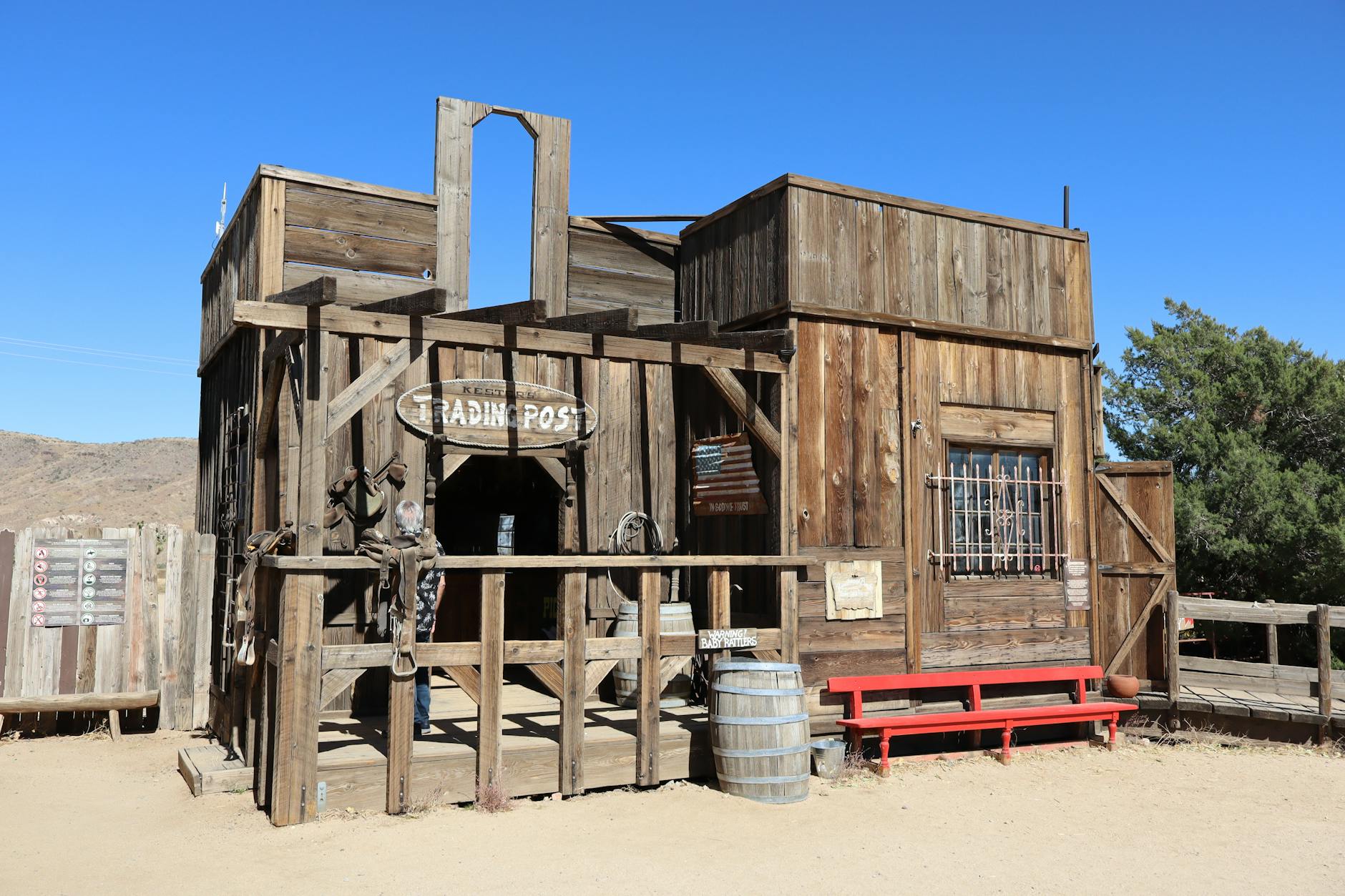
Photo by Alex Trinh on Pexels.com
Arriving at the military headquarters in Franner’s Bend, Nevare’s father gives instructions to Parth for Nevare’s education and proceeds inside to confer with the local commander. Parth offers only a desultory compliance with the instructions before tucking into the local canteen for beer and gossip, turning Nevare out to play with local boys, including Carky and Vev’s son Raven. Nevare watches the rough play among them until the arrival of Scout Halloran and his daughter attract attention. The scout, his situation, and his daughter are described, with Nevare recalling his mother’s disparaging comments and prevailing disparaging attitudes about mixed-heritage unions and their progeny.
Halloran leaves his daughter to make his report to the local commander, and Nevare is startled by his willingness to do so, contrasting it with the treatment his sisters, Elisi and Yaril, receive. The local boys urge Nevare to guide the scout’s daughter to them, citing her evident collaring with iron as proof of her restraint, and Nevare, not fully understanding their intent, makes to comply. The young woman deflects Nevare from aiding in entrapping her, but the local boys press them, and Nevare finds himself taken aback by their disrespect and assaulted by them along with Halloran’s daughter. She demonstrates that she is not as restrained as had been thought and works magic against her attackers. The event sends Raven and Carky sprawling, and Raven’s brother Darda flees.
The attack dissuaded, Raven upbraids Halloran’s daughter, Sil, until Halloran returns and pointedly rebukes him. The commotion attracts attention, including from Vev and Nevare’s father. The latter dismisses the clearly inadequate Parth, and the local commander finally arrives, questioning Halloran about events. Nevare makes his report of events, which stymies grumbling for a moment before the local commander rebukes Halloran for having brough Sil with him. A fracas ensues, leading to Halloran laying Vev out in the street; Nevare’s father reminds the local commander that Vev struck an officer, leading to Vev’s banishment from Franner’s Bend. Nevare’s father, Keft, asks Nevare what happened and receives as full report as a boy can give. The local commander attempts to smooth matters over, to little success.
Leaving Franner’s Bend, Nevare and his father discuss events. The latter’s distaste for what had happened is given context; the local commander, Hent, is not good at his job, and Halloran has, in his estimation, erred via miscegenation. He also offers Nevare an opportunity to reflect by way of punishment.
Given the many times when rereading the Realm of the Elderlings novels that I expressed a desire to have a cohesive edition of those novels to read and look at page-counts by chapter, I am pleased to note that I do have such cohesion among my copies of the Soldier Son novels. Each is printed by Eos, and each is a first edition, so I should be able to take them as a reasonable set of writings from which to do the kinds of things I’d wanted to do with others of Hobb’s writings. The present chapter is 24 pages in length, out of 590 in the novel (including 13 pages of front matter), thus approximately 4.07% of the total main text (to the front matter’s 2.20%; this is roughly proportional (rounding happens), given that there are 24 chapters in the novel (again, plus front matter).
Also, for indexing purposes, the following: Bejawi, Carky, Commander Hent, Dancing Spindle, Darda, Elisi Burvelle, Franner’s Bend, Gernia, Halloran, Iron, Keft Burvelle, Kidona, Nevare Burvelle, Parth, Raven, Scout, Selethe Burvelle, Sil, Sisi, Varnia, Vev, Widevale, Yaril Burvelle. I’d noted in some of the comments I made rereading the Realm of the Elderlings corpus that I’d wished I’d indexed things better. Starting a new series seems a good time to start a better practice.
Less…stiltedly, the opening chapter of the series does a lot of explication, which it ought well to do. The overall setting is glossed smoothly, presented as distinctly different from the mainstream Tolkienian tradition of fantasy literature. An ambiguous feudalism seems to be in place, admittedly, with references to inheritable lordships and the like, as well as the older mythological / legendary commonplace regarding the magic-inhibiting properties of iron, but there is also a clear demarcation of military ranks immediately recognizable as belonging to later periods, as well as the presence of firearms. The latter two, the ranking and weapons, move far afield from Lord of the Rings and, indeed, most mainstream fantasy literature, going away from the medieval/ist towards the modern; Colonel and Corporal, the referenced ranks, are both noted by Merriam-Webster as first used in the 1500s, and after even a late reasonable idea for the end of the medieval, and cannon appear rarely if ever (about which I’ve remarked once or twice in this series).
Other details of the setting emerge, and quickly, that make clear why Carroll and Young both found things to say about the series. There is, in the comments of Nevare’s father and others, a clear if convoluted honor culture at work in Gernia; there is also in those comments a decided sense of colonialist entitlement that brings to mind Kipling and many even less gracious commentaries about indigenous populations. There are also, as is the case with the Liveship and Rain Wilds novels, concerns of gender norms presented early, which contribute to marking the milieu as a thinly veiled pastiche of the post-Civil-War United States, as I’ve argued. (A scholarly someday re-suggests itself; I really ought to expand the old conference paper and post it. But the fact of the argument itself serves to show that I have read the Soldier Son novels before, even if it has been a while.)
I’ll readily admit that my (re-)reading of the material is heavily influenced by my having grown up in the Texas Hill Country, which makes much of its Old West background and heritage. In the town where I grew up, Kerrville, there is the Museum of Western Art to consider, as well as a fair bit of local history (on which current mayor Joe Herring, Jr., is something of a leading expert); nearby is Camp Verde, the site of the US Army’s camel experiment; not much further off is the Cowboy Capital OF the World, Bandera, Texas (yes, the OF is emphasized); also-nearby Fredericksburg, Texas, hosts Fort Martin Scott; and there are many other sites in the area that report and celebrate (and, yes, occasionally mourn) the frontier spirit. Having spent my formative years there (and going often to San Antonio, with the Alamo, the Missions, and the like), I grew up with a lot of that mythology and self-fashioning in mind (for good and ill); I read even in the opening chapter of Shaman’s Crossing a lot of words I heard in my youth, or a lot of words damned close to what I heard, and I expect I’ll have more to say about things as I read on again.
One other thing comes to mind at the moment: the narrative perspective. Much of the Realm of the Elderlings novels are written from a first-person retrospective stance; Fitz recounts what he remembers of his experiences at various points, as Bee does hers. Nevare is set up to do much the same thing…which does lead a reader to wonder if Hobb might expect lightning to strike again or if she is getting locked into particular patterns. I’ve not read the novels in a while, so I don’t remember fully how Nevare compares to Fitz, although it is clear that he has a more wholesome beginning than his predecessor, being legitimate and actively parented, even if with some difficulties already made clear. Perhaps yet another scholarly someday presents itself; I look forward to the continued rereading to find out again!
Maybe you’d like some materials for your own summer enrichment? I can help! Fill out the form below to get yours started!


[…] the previous entry in the series here.Read the next entry in the series […]
LikeLike
[…] while fictional, clearly partake not only of the real, but of real with which I am familiar, as noted, but the Kidona, although described in terms reminiscent of Native American peoples, are far more […]
LikeLike
[…] is true whether that familiarity rises from experience growing up in particular parts of the world (for example) or from doing a lot of reading, whether of history or of Western fiction (although readers of both […]
LikeLike
[…] the novel I’m rereading, runs 24 pages in length, approximately 4.16% of the novel. As with the first chapter and the second, the present chapter is roughly proportional to the novel as a whole, being one of […]
LikeLike
[…] Bridge” and “Journey” already linked above, as well as comments regarding “Magic and Iron.”) In the case of the Skill, practitioners are admonished to be wary of giving into the […]
LikeLike
[…] he knows he is supposed to do; he knows he is supposed to report wrongdoings he observes, something demonstrated early on in the novel. (Given that Nevare finds rebuke, perhaps obliquely, for having done so, he might be forgiven for […]
LikeLike
[…] from Home” (already linked above) and, in a more metanarrative sense, both “Magic and Iron” and “Harbinger” (also already linked above). Too, while there is value in […]
LikeLike
[…] at least one version of it with some derision. Given the gender politics at work in the novel (see “Magic and Iron,” “Letters from Home,” and “Séance” for notable examples; there are others), […]
LikeLike
[…] like others, I’ve pointed out some comparisons between Nevare and Fitz. For examples, see “Magic and Iron,” and “Journey,” as well as “Crossing the Bridge,” “Sword and […]
LikeLike
[…] return to average. It might have been a nice touch to have the last chapter mimic the first, “Magic and Iron,” in heft; the symmetry would have been somehow satisfying. But such was not to be, it seems. […]
LikeLike
[…] Read the previous entry in the series here.Read the next entry in the series here. […]
LikeLike
[…] might also be expected, contrasting the current first chapter with the previous first chapter, Shaman’s Crossing‘s “Magic and Iron,” suggests itself. (That there will be a number of such backward looks is exceedingly likely.) A […]
LikeLike
[…] the vandalizing youths apply iron to the magical locus (see Shaman’s Crossing‘s “Magic and Iron” for one reference; there are several others). That the magic presents itself to him, a […]
LikeLike
[…] present at the beginning of the Soldier Son novels (see Shaman’s Crossing‘s “Magic and Iron“), and the shift in character sits oddly as I reread. I have to wonder if the feminist […]
LikeLike
[…] though more the latter than the former. Having grown up in the Texas Hill Country (see this and this, for example), I’m familiar with the notion of relocating to otherwise somewhat inhospitable […]
LikeLike
[…] the Soldier Son series being influenced by growing up in the Texas Hill Country (see my remarks on Shaman’s Crossing‘s “Magic and Iron”); one of the things for which some of the small towns I drive through fairly often are noted is the […]
LikeLike
[…] as I can tell, he has not been back there since the very beginnings of the Soldier Son novels (see “Magic and Iron” in Shaman’s Crossing), and he makes much of the changes that have taken place in the area since he last visited it. Many […]
LikeLike
[…] of comparisons to FitzChivalry Farseer, such as I’ve noted in Shaman’s Crossing‘s “Magic and Iron,” “Journey,” “Crossing the Bridge,” “Sword and Pen,” “Carnival,” and […]
LikeLike