A Robin Hobb Rereading Series: Entry 211: Ship of Destiny, Chapter 32

Read the previous entry in the series here.
Read the next entry in the series here.


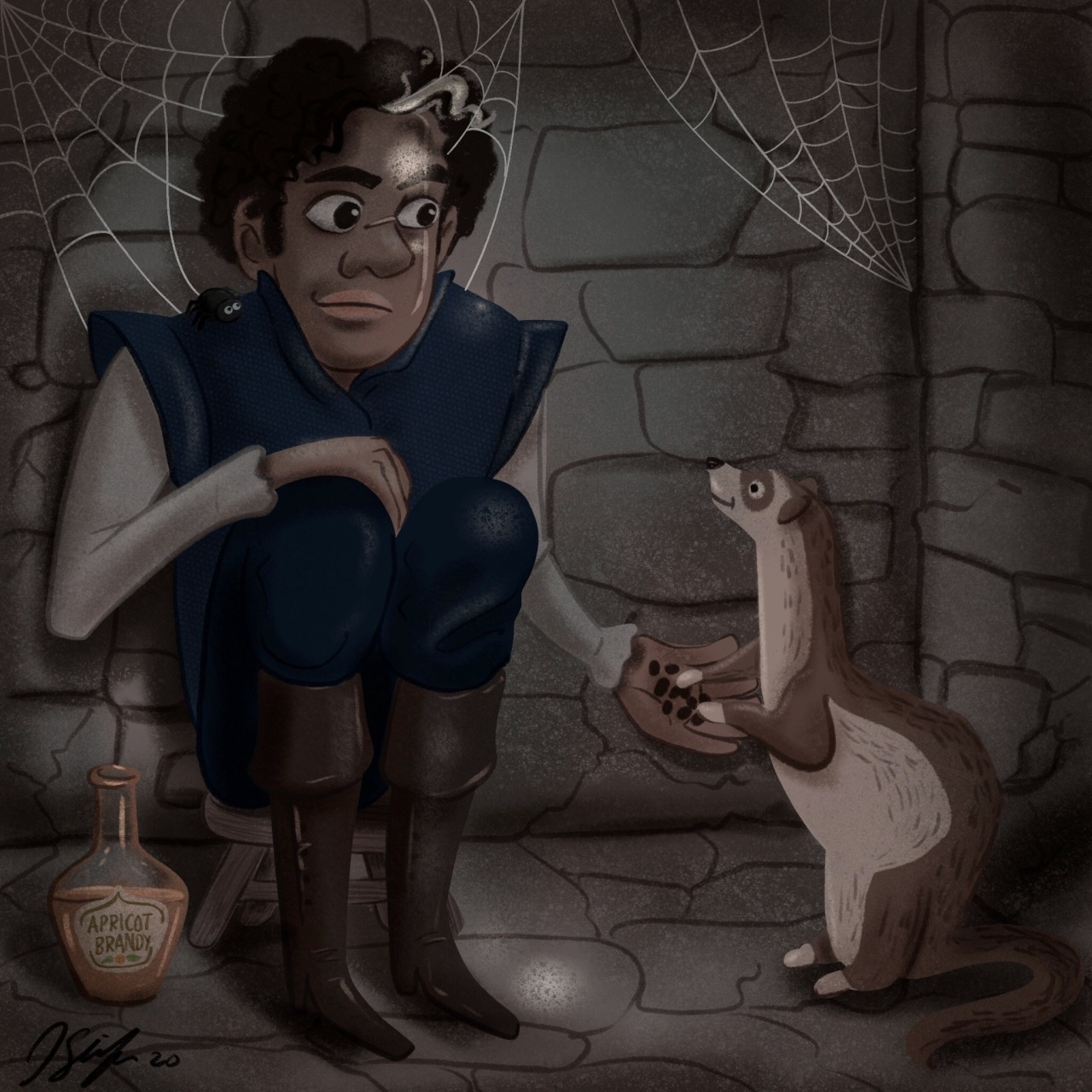
The following chapter, “An Ultimatum,” starts with Wintrow ushering Althea, Malta, Jek, and the Satrap belowdecks, bringing them food; he shortly excuses himself and overhears the Vivacia conferring with Kennit about heading north with the serpents. Kennit dickers for more time to conclude his arrangement with the Satrap and deliver him back to Jamaillia; the ship notes that the serpents have no time for that, and Kennit reluctantly accedes to the ship’s terms.

The Liveship Traders: Volume 3 - Ship of Destiny: Tintaglia
Seems to fit.
Source in the image, used for commentary.

Wintrow returns to the cabin where the others wait in annoyance and reports the status of the ongoing negotiations. After a terse exchange, the Vestrits begin to swap stories of their travels. Events are glossed, and the group, sans the Satrap, determine to kill Kennit once the ship is made aware of who and what he truly is. Their further conversation is interrupted by the ship summoning the serpents, after which, with the Satrap sleeping, Malta relates her tale; reactions from the others are noted. Wintrow again goes out on deck to observe.

All the while, Kennit waits, watching the other ships and considering their likely actions and what he will do in response. The Vivacia reports the unrest and division among the serpents, as well as the threats they have issued, and Kennit orders what serpents will to attack the Jamaillian fleet as Wintrow joins him. They both note the diminished but still substantial capacities of the serpents as they go about their destructive work. After one of them is injured, the others rage against the Jamaillian fleet, and Kennit summons Etta back from the Marietta.

Aloft, Tintaglia continues to bear Reyn onward. She hears something and cries out; the serpents with the Vivacia hear the cry and turn towards it, as does the ship, and Malta notes that the dragon and Reyn are coming. After a brief pause, the group goes out on deck to see Kennit horrified as the dragon summons the serpents away; Tintaglia drops Reyn in the water as she withdraws, and the boat ferrying Etta to the Vivacia draws him up before he drowns.

The present chapter feels somewhat rushed as I read it again, with multiple narrative threads twining together in rapid succession. I suppose part of that is my own present feeling of haste; I have a lot going on at the moment, which should be no surprise. Part, though, likely stems from narrative necessity; the book is getting close to its end, and with it, the series. As such, things that will be wrapped up have to be wrapped up, and while it is the case that leaving things open-ended helps to foster the verisimilitude Hobb identifies as necessary to fantasy fiction–readers’ lives do not wrap up neatly, after all–there is an expectation that novels will close off at least some of the narrative lines they begin. There is some value in thwarting readerly expectations, to be sure, but there is only so far a work can go in doing so and have the author get more readership later on–and while art for the sake of art is a fine and noble thing, the lights have to stay on…

Help me get my family moved?

A Bit Taken from Ongoing Work

I maintain several lines of income aside from the day-job I’ve been lucky to have these past few years. Among them has been work on readers’ guides to a number of books, done as contract labor on a piece-by-piece basis for different companies. As I write this, I am working on a guide to FC Yee and Michael Dante DiMartino’s 2019 novel, The Rise of Kyoshi, and, as often happens, I find I have things to say about the book that do not fit neatly into the kinds of things my contract asks me to discuss. Fortunately, I have outlets such as this to indulge myself–and I hope you will follow along with me as I do, dear reader.

Avatar, The Last Airbender: The Rise of Kyoshi (The Kyoshi Novels Book 1)
The novel in question, its cover image coming from the publisher, Amulet, and used for commentary.

There’s a passage in the chapter “Honest Work,” near the end, in which Kyoshi and other characters in the novel find themselves extemporizing poetry (39-41). After an initial poor effort from a side-character, one of the major early characters, Kelsang, deploys ” a well-known shanty popular with sailors and field hands, where you improvised raunchy words from the perspective of your unrequited affection. It was a game for others to guess who you were singing about, and the simple rhythm made manual labor more pleasant” (40). In form, the shanty-verses are quatrains alternating between tetrameter and trimeter, with the first line beginning with a trochee (the “I’ve” with which the verses typically begin calls for emphasis) and the remainder being largely anapestic or iambic; they rhyme ABCB, with an internal rhyme in the third line (the second and fourth feet rhyme).

The form is relatively intricate, although not excessively so; it shows enough consistency and refinement to be plausible as a culturally transmitted form, but it is accessible enough to meet the stated purpose of easing manual labor among populations that, intelligent and diligent as they are, are not like to have the luxury time to spend on more convoluted forms. So that much comes off as verisimilitudinous, something that is always a concern for works of speculative and similar fiction such as the novel.

I note, also, that the alternating line-length and somewhat erratic metrical pattern lend something of a surging, pulsing motion to the text (in addition to seeming to call for a brief cæsura at the end of the second line). Given the description of the verse-form as calling for raunchiness (even if the examples present in the text are not quite raunchy–“bawdy” might well apply, and “lewd”), it is not much of a cognitive stretch to read the form as mimetic of penetrative sex. How much of that can be discussed openly in an avowedly young-adult work is an open question, of course, but teenagers are apt to see such things, and some folks don’t grow out of the tendency. And there is a long history of sublimating eroticism in verse and other arts, of course, amply attested and deeply felt; the versification in the novel is but one more example thereof, and one I admit to enjoying seeing.

Even aside from the pay for work, I’d wanted to read the novel; I was among the early watchers of Avatar: The Last Airbender when it premiered, even if I might not have quite been part of the presumed primary audience, and my daughter and I have enjoyed watching the series and its sequel series together in recent months. I’m glad to have had the opportunity to do so (and to make money from it!) and to have been able to spend some time thinking about it for my own purposes. I get to do such things a fair bit, of course, but another chance is always welcome.

We’re still working on the move and can still use your help.

A Robin Hobb Rereading Series: Entry 210: Ship of Destiny, Chapter 31

Read the previous entry in the series here.
Read the next entry in the series here.


The next chapter, “Bargaining Chips,” opens with all on the Vivacia‘s foredeck paying rapt attention to the figurehead. Malta balks at having been addressed, at having attention called to herself, as she assesses the others and finds Kennit perilous. The Satrap responds in her place, speaking to the ship as though he had been addressed; he also greets Kennit, who responds in kind, and several of them depart.

Even thus, she remains a compelling figure…
Malta Vestrit by Starving Designer on Blogspot, used for commentary

After being left on the foredeck, Althea wonders aloud about the arrival of her niece aboard the ship; Jek’s swift reply is unhelpful, but conversation with the ship takes an unsettling turn. What can be offered to secure Kennit’s aid is unclear–save for Althea.

Kennit sends Wintrow ahead to prepare a room for discussion; Sorcor accompanies Wintrow. The pirate considers Malta and the Satrap, rehearsing what he knows of those involved and their offers as negotiations commence–and Kennit understands himself to be in control.

Aboard the Paragon, Brashen dozes as he considers his situation along the approach to Divvytown. He is roused by the ship’s singing, and when he approaches the figurehead, he is informed that the ship has decided to support efforts enthusiastically; he questions it internally, but does not voice his concerns. He also receives a report from Clef that Jamaillian ships are in sight, which he confirms by going aloft; rumors about tensions between Jamaillia and Bingtown are noted, as are some of Brashen’s fears.

Wintrow muses over the progress of negotiations as they drag on, wearying all present save Kennit. He notes pride in Malta as he rehearses events, most of which involve the Satrap ceding more in anger than would have been advised by a calmer head. Wintrow longs to confer closely with his sister, and he sees a chance to do so in the tumult that accompanies the sighting of a number of Jamaillian ships by the Vivacia‘s crew.

I’m uncertain how to parse the chapter as I read it this time, honestly. It’s written well, as is the rest of the novel, and the events that make for…uncomfortable reading for me are not as present, but that doesn’t mean I really know what to make of things going on. Maybe I’m falling victim to the peril of having spent so much of my life in literary study as I have, trying to pull from a passage messages that may not really be there. A closer reading than I can do at the moment might yield more; as I used to tell students, back when I had them, every word on the page is a choice made, and not only by the author, so there is something to find. But, being accustomed to finding things easily, I sometimes balk at not doing so; I am being a lazy reader this time, I guess.

I’m not sure that that’s necessarily bad, though. As I’ve had occasion to reflect on recently, I got into doing this because I enjoy it; I moved into the studies I did from love of and appreciation for the things studied. Letting that be enough for now…it should be fine. Right?

We’re moving, as I’ve noted; I could still use your help, if you’ll give it.

A Robin Hobb Rereading Series: Entry 209: Ship of Destiny, Chapter 30

Read the previous entry in the series here.
Read the next entry in the series here.


A chapter titled “Convergence” follows, opening with Amber conferring with the Paragon about some final bits of woodcarving. Her progress and the final portion–a silver earring with a blue jewel, matching one she wears, and familiar in description–are rehearsed, as is the process of the ship recovering memories from logbooks and reintegrating them into the dominant personality that has emerged as an amalgamation of the dragons whose cocoons were used in the ship’s construction and the blood-borne memories of those who have died aboard. Comments are made about the face Amber has carved for the ship as more of her work is detailed, and Brashen offers some rebuke for her working unsecured by a line.

«Give me a face you could love»
Illustration series for The Liveship Traders Trilogy by Robin Hobb
I have been waiting to use this one…
“Give me a face you could love” by Katrin Sapranova on Tumblr, used for commentary.

Brashen also regards the work done on the ship, noting details of the face and recarving–including a broken nose and some scarring, as well as an axe-harness. He confers with Amber and Kennit’s mother about their plans for once they reach Divvytown, and he notes that Wintrow’s father is of no use to him. Talk turns philosophical, leaving Brashen out of depth.

Elsewhere, Malta sits with the Satrap and Captain Red, serving as an intermediary in negotiations between the two. The Satrap surprises the others with a sudden surge of emotional maturity, and negotiations proceed well until interrupted by sighting of the Marietta and the Vivacia.

Kennit, accompanied by Sorcor, receives Captain Red aboard the Vivacia, considering his situation and the several directions in which his attention is pulled. Althea continues to resist him to the extent she is able, although that is not as much as she would prefer, and Kennit delights in the continued denial. Althea also continues to reject Wintrow’s overtures, and Kennit notes Wintrow’s fitness for command even as he inwardly laments a lack of more individual time with Althea. He further notes Malta’s appearance with interest.

For her part, Althea muses on her anger at her surroundings and situation, and she frets about her separation from the ship she had thought would be hers. The Vivacia speaks with her, both psychically and aloud, and Althea tries to parse her feelings.

Malta approaches the Vivacia with some trepidation, willing herself to composure. She is startled to see Wintrow, hopeful to see her father, and marks that it is Althea who helps her aboard. Greetings are exchanged, and Kennit contemplates his success as the wizardwood charm he wears rebukes him. Malta feels her hopes for her father dashed, and she is shocked when the ship speaks to her, calling her “Dragon-Friend.”

If it had not been clear before, it is abundantly clear in the present chapter that Amber is an alias for another character present in the Realm of the Elderlings. Others speak to the issue more eloquently than I, and there are overt discussions of the aliasing later in the novels, so I will not go much into detail at this point. For now, it will suffice to say that Hobb seems to have made up her mind by this point, and that decision sets up an awful lot of narrative motion moving forward–as well as helping no small amount of scholarship to happen, as my Fedwren Project seeks to represent.

Too, from the length of the chapter and the number of perspectives presented in it, it is clear that matters hasten towards their conclusion. Major characters in the series are being brought back into proximity, suggesting that major events are soon to happen (as is obvious from the decreasing number of pages left for me in my reread; the chapter ends on page 622 of 789 in the edition from which I am working). It is time for narrative threads to be gathered together and woven neatly, a point of divergence from the readers’ world where matters rarely settle, but still a satisfying one.

Our day draws closer; help me keep this going?

Another Story Recalled

I have a tendency to tell stories about my past in this webspace, often doing so on Wednesdays so that my Mondays and Fridays can generally be given to the Robin Hobb reread on which I continue to work. (As I write this, I am approaching the end of the Liveship Traders series; there’re three more series in the Realm of the Elderlings, along with several shorter works, as well as the Soldier Son trilogy and some miscellany to plow through, so there’s no shortage of work left on that project.) Given some events, both those I’ve discussed and others I’ve not, I’ve had more cause than usual to look back and reflect; that means it’s storytime again.

Koebel.jpg
You know you need it.
Image from Wikipedia under a CC BY-SA 3.0 license, used for commentary.

Back when I was in the high school marching band, I was one of a great many people who were…irreverent, given to assing off instead of showing the discipline to do good work and get things done well. (For the most part: I had my moments.) But as much of a cut-up as I was–quipping, often lewdly, about things the director or other members of the band said, or making odd noises with things other than my horn–I was as nothing compared to one of the older percussionists, a guy I’ll refer to here as DB. (Those who know, know, but initials offer at least some pretense of deniability). Among others, DB had laid out an interloping kid in the bandhall, one who was in the room for a required speech class and who did not heed the friendly warning not to mess with the percussion equipment that was left out; I am told it took removing the carpet from the room entirely to get rid of the bloodstains.

Anyway, DB would, from time to time, be observed walking through the bleachers at other schools’ football stadiums, taking with him a cowbell and a drumstick. He’d take a few steps, hit the bell a few times, listen, and usually shake his head before repeating the process. Over and over again, until at last, he’d smile and nod and come back to where he was supposed to be. And he’d do this while the rest of us were loading in, week after week, occasioning…comments from the rest of us.

But there was a reason DB did his noisy little walk. My second year of high school saw us get a new band director; a scandal had, rightly, forced the one in place my first year to resign (he should’ve been fired and prosecuted, really), so a replacement was sought in haste and found. Said replacement was…less indulgent than his predecessor had been (which was to the good, really; the next year, the band finally started doing well again), and he…disapproved of certain songs in the band’s bleacher repertoire–among which was “Low Rider,” a student favorite. Copies were smuggled out to the students who needed them, and DB would make his way to his smiling little spot, cowbell in hand, and hammer out the opening measures of the song–a cue that I was not alone in following.

Admittedly, it’s a stupid little story, and I probably tell it badly. And it’s not mine, as such; I was never the person to step out first, although I’d follow gladly. Still do, most of the time; make of the example what you will.

The move continues, and more help is appreciated!

Not in the DSM

Spending years chasing dragons and
Finding the high just often enough to
Let me taste the eternal uncanny and
Whet my appetite for it again but
I lost my access to the steady supply
Suffered the pangs of withdrawal from
The intoxicants rolled up in those papers and
Taken in through eyes and hands and nose
Eased by grinding through the baser stuff
Enough to keep me going through the pain but not
Enough to ease the longing that
I still feel
The methadone with which I dose myself now
Does not stop the cravings that wrack me and
I need no naloxone to end the high
That ended long ago even though
I still chase it across the world and
Sometimes one of the few hits I can get
Will bring a touch of that old joy again but
There is no treatment program for this addiction and
There is no cure for it for any of us
Who have taken this thing into us across the years and
Tried to make it our lives
Freebasing in the basement of the ivory tower and
Unable to ascend from its lower floors to where
A steadier supply can be had
Even if it, too, is cut with other things

Care to send some help my way?

A Robin Hobb Rereading Series: Entry 208: Ship of Destiny, Chapter 29

Read the previous entry in the series here.
Read the next entry in the series here.

And a content warning regarding sexual assault and related concerns is in order.


The succeeding chapter, “Kennit’s Women,” starts with the serpent Shreever considering the tensions between She Who Remembers and Maulkin. Neither seems to have decided anything as the group follows Bolt through the waters, and Shreever voices some small criticism to Sessurea, and Maulkin inserts himself into the conversation. He notes the peril of the sex-imbalance among the serpents, noting Bolt’s reticence and pointing to Wintrow as a possible help to them all.

Simpering little shit, sometimes…
Image from gil-estel on Tumblr, used for commentary.

Kennit approaches Althea’s cabin aboard the Vivacia, contemplating both his assault upon her and resuming it; the exercise of power entices him. Althea assaults him as he enters her cabin, trying to escape; he has his crew restrain and return her to her quarters; Wintrow is one of the restraining crew and hears her allegations against Kennit as Etta makes to tend the pirate captain. An argument ensues, and Wintrow suffers his aunt’s imprecations as he sees to Kennit’s orders. Kennit realizes he is losing control of the situation, and he tries to reassert it as Bolt summons him; the wizardwood charm on his wrist mocks him and notes Kennit’s coming doom.

Not long after, Wintrow tries to comfort Etta, who is acting strangely to his understanding in the wake of the encounter with Althea. Etta rebukes his folly, and Kennit intrudes upon them, demanding service and ordering Etta to the Marietta. He also rebukes Wintrow, expounding on his control of matters aboard the Vivacia. They are interrupted by the outcry of the ship, to which Kennit responds at length. After he does, Wintrow tries to comfort Etta again, and she avers her belief of Althea’s accusation against Kennit, accepting her supplanting in Kennit’s affections by Wintrow’s aunt.

Kennit makes slow progress across his deck to the figurehead, and the ship demands to see Althea and Jek on the foredeck. Kennit demurs, and the ship accuses him of raping Althea; he deflects the accusation, turning discussion towards Etta before the Vivacia returns it to the destruction of the Paragon. Kennit deflects there, too, and the ship accepts his dissimulations as Kennit has Wintrow bring Althea and Jek on deck. The latter is angered as she tends to the former, who moves through a drug-induced haze to confer with the ship and be told that she is no longer needed. Wintrow tries to offer some comfort and is rejected, and Jek conducts Althea back to her quarters.

There, Jek and Alteha confer, Jek raising some doubts as to Althea’s story. Wintrow again attempts to offer comfort and aid, only to be rebuked; he chides her, in turn, and considers circumstances.

Well.

The gaslighting going on in the present chapter is astonishing, and Etta is right to rebuke Wintrow’s folly. Honestly, it’s infuriating and distressing to read the chapter this time around, knowing what I know now that I did not in many of my earlier readings; I suppose it marks me as having grown as a person that I react to events in the book the way I do now. And I suppose that they’re to my chagrin both that it took me so long to arrive at such reactions and that I do not react more forcefully and emphatically to such things in real life.

It’s one of the values of literature and of literary study that reading the stories others tell helps us to reflect upon ourselves and our understandings of and place within the world. Literature is, among many other things, a means of self-examination; what we read and how we read it show parts of who and what we are. What I see in its particular mirror is not necessarily to my liking, and I know I will be taking some time and expending some effort to improve the image by improving the thing reflected.

We’re moving; lend a hand?

A Rumination on an Opportunity that Never Arose

Around two months ago, I wrote a bit about a missed opportunity in my classroom. I’ve been thinking about such things again recently, not least because I’ve noted a lot of people looking at the syllabus for the hypothetical course on mainstream fantasy literature I developed back when I was actually looking for college–level teaching jobs. In it, I note that

texts included [in the required readings] exist in an uneasy tension. They do contribute to what prevailing understandings of fantasy literature as a genre is, to be sure, and they do try to strike some balance between male and female authorship. But they also fail to reflect the engagement of dominant traditions in the genre with authors of color. It is in part to work against such failure, and the failure of dominant tendencies in fantasy literature to engage with persons of color, that the major assignment sequence in the course is oriented as it is. Further, the specific failures of the required texts to treat and reflect persons of color will comprise a recurring thread in the required online discussions. (2)

Truth.
Image from PHD Comics, here, used for commentary

The problem I do not mention is, of course, that I do not flesh out those assignments. I’d meant to do so, I think; it’s been a while. But after I gave up the search for continuing work, it became less of an issue; I was still teaching, but I was teaching required syllabi, as is common enough. As with many things, returning to the project slipped my mind; perhaps it ought not to have done, and it does not excuse my failure that I am aware of it.

There’s more involved in assignment design than many realize, of course, and more than I can necessarily address in a single post (especially given the other stuff that I have going on in and around composing it; I’m moving, as might’ve been noted, and I continue to freelance and to participate in an NEH institute). But it might be a good starting point to follow up on the suggestion made already; the major assignment sequence in the syllabus, which results in a conference-length paper, (was meant to have) aimed at 1) looking at canon-formation and 2) suggesting what works / authors should be included in a future iteration of such a course. That is, students would have been asked to examine how “standard” bodies of work grow up, identify an author or work that seemed to fit that pattern, and then argue that said author / work should be included in the body of work studied as “standard” for the genre.

Considering the matter further, I am not sure I would still require an annotated bibliography from students. I taught or “taught” the genre at multiple institutions across many years, and it was always a struggle to get students through it; I am not sure it still carries the kind of traditional heft it seemed to when I was going through undergraduate coursework and being taught how to teach college English, although it certainly has come in handy in the years since (and I still work on one, obviously). Nor yet am I sure about all of the details; the summative exam included in the syllabus is a nod to what I’ve seen of institutional requirements, and the minor assignments mentioned are largely preparation for the exam, following my teaching practices at the time. (When I had the “luxury” of writing my own quizzes and tests, I’d pull the tests straight from the quizzes. It seemed to help.) But such things are dreams, really, glimpses of a life that never will be; I have enough to do with the life I do live, and with that, I should be content.

For now.

Care to help underwrite my efforts?

A Robin Hobb Rereading Series: Entry 207: Ship of Destiny, Chapter 28

Read the previous entry in the series here.
Read the next entry in the series here.


The following chapter, “Dragon Dreams,” begins with Tintaglia landing badly with Reyn; he sends her off to hunt as he surveys their landing site, rehearses his routine, and reviews his present circumstances. He thinks of Malta, and, as he falls asleep near the dragon and a large fire, he dreams of her. In the dream, she hears his call, and Tintaglia starts awake with it. The dragon notes both the lowering barriers between them and his transformation into an Elderling.

Malta
The woman of the hour…
Malta by HazelFibonacci on DeviantArt, used for commentary.

Malta, still aboard the pirate ship, muses on thoughts of Reyn and considers her own circumstances–which she believes leave her socially ruined. She rehearses her plans for freedom, and she manages to convince the waning Satrap to go out on deck. He muses on his own background and circumstances, and he presses Malta for details about it. When they are forthcoming, they bode ill for them both; he realizes he is worth more dead than alive, as his death allows another to take the Satrapy. Malta presses him further, and they dicker over details of how to proceed; Malta comes out of the exchange with a fine deal and a finer idea.

The present chapter shows Malta well, certainly; she’s come a long way from being the vain and petty girl she was when her role in the series started, and, though done with difficulty, it is a good progression. She suffers, as characters must, from limited knowledge; it’s clear she is ignorant of events in Bingtown, for example. But, given what she knows, she is making excellent use of her situation and the resources available to her–and in ways that make sense from the character’s background and history. It’s a fairly rare thing, actually, and its presence–a consistent presence in Hobb’s writing, really–does much to bespeak the quality of the novel. More writers would do well to read such things.

Let’s keep this going!

A Robin Hobb Rereading Series: Entry 206: Ship of Destiny, Chapter 27

Read the previous entry in the series here.
Read the next entry in the series here.

A content warning: there’s discussion of suicide here.


The next chapter, “Key Island,” opens with the Paragon sailing with the tide–uneasily, but with determination. Amber confers with the ship, learning more of the history of the dragons, the region, and the Ludluck family along the way. The ship also notes the amalgamation of memory and personality that animates the figurehead, as well as musing on the desire for death and noting the approach to the island of the chapter’s title.

Satellite view of Niuafo'ou, 2005-03-19.jpg
Not unlike this?
Image is of Niuafoʻou Island, Tonga, per NASA, which makes it public domain, I think.

Brashen commands the crew aboard the Paragon, assessing their status and the ship’s progress. Clef reports the anticipated course and progress to his captain, and Brashen goes forward to confer more closely with Amber and the figurehead. They arrive at the intended destination, and Brashen takes a large contingent ashore, guided by the ship’s report from Kennit’s memories. They encounter the small settlement in which Kennit houses his mother and some others, meeting some resistance and more suspicion, but Kennit’s mother is fetched. Brashen relates to her that he means to take her aboard the Paragon to Kennit, and she agrees to come–along with a chained captive who has to be hoisted aboard as if cargo. Kennit’s mother restores the ship’s logs, and the captive, recognizing Brashen, announces himself as Wintrow’s father and asks to be taken home.

I note, with some interest, that Bingtown and the Cursed Shores are depicted as having access to whiskey. Although the typical spirit associated with piracy in mainstream United States popular culture is rum (with all of the unfortunate associations thereto appertaining), it could be argued that whiskey is more fully piratical, being so often a spur to smuggling and rebellion as it is. The latter becomes particularly important in line with my contentions that the Realm of the Elderlings partakes more of the Americas than of Europe and that Bingtown seems to parallel the early United States (as witness here); the Whiskey Rebellion was a thing, certainly, if not one that gets a lot of attention anymore. (Too, whiskey is a drink of choice in the distinctly-US Wild West; it’s another reinforcement.) I’ll admit that the point’s not a particularly strong one to argue in favor of my earlier assertion, but it’s not exactly a counter-argument, either.

Help support my continued endeavors?