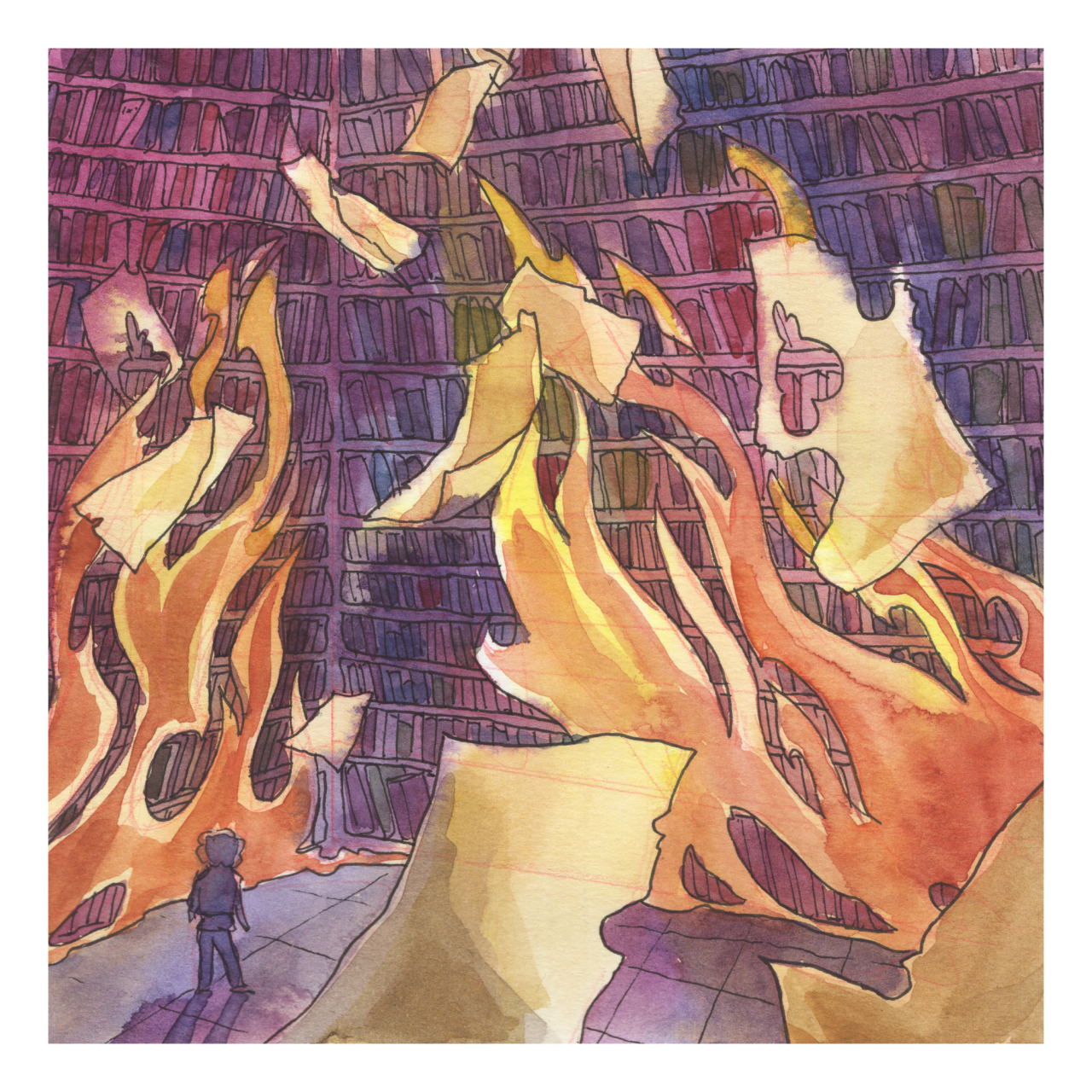
A Robin Hobb Rereading Series, Entry 478: Assassin’s Fate, Chapter 19

Read the previous entry in the series here.
Read the next entry in the series
here.

The chapter discusses genital mutilation and other objectionables.


A “Report to the Four” regarding the Fool precedes “Another Ship, Another Journey.” The chapter proper begins with Bee rehearsing her situation and the changes to the same as she is forced to accompany Dwalia and Vindeliar towards Clerres aboard ship. The deception they work upon the ship’s crew is noted, as is Vindeliar’s lessening power in the wake of his being dosed with serpent saliva, and he bemoans the work he must do for her. Bee unsuccessfully resists the impulse to sympathize with her captors as she learns more of Vindeliar’s personal history, and she finds him in her mind.

Matters proceed…
Photo by Felix Mittermeier on Pexels.com

Wolf-Father moves within her to defend her, presenting memories of Nighteyes’s earliest torments. It is successful, but Wolf-Father cautions Bee against allowing further intrusions. Bee takes the lesson she learns from the exchange and applies it to Vindeliar, lashing out at him through the Skill. They are interrupted from further tumult by a summons from Dwalia, which they move to answer. As they complete their assigned tasks, Vindeliar claims to Dwalia that Bee has stolen power from her, which Dwalia denies before beating Vindeliar again.

Bee realizes as Dwalia confronts her that she does, in fact, have the Skill, and she attempts to ply it against her as Dwalia makes to assail her again. At Wolf-Father’s urging, Bee feigns defeat, and Dwalia’s abusive attentions soon return to Vindeliar. Bee learns yet more of her captors and begins to slot that information together, including how Dwalia had come to know of her father and begun to move against them. She also realizes that she has made an enemy of Vindeliar, more than he already was.

I‘ll note that, as I was doing the rereading for this write-up, I got lost in doing the reading again. It’s something that happens to me fairly often when I am doing work with Hobb’s writing; I often find myself swept along by the prose, and I have done so for years. It complicated the work of writing my master’s thesis, in fact; I’d be looking through the Farseer or Tawny Man novels for quotes from which to construct my argument and realize, chapters and an hour or so later, that I’d gotten entirely sidetracked. That ease of immersion is one of the reasons I keep returning to Hobb’s writing, all these years later; it continues to draw me in. It’s nice to be so drawn; I don’t let it happen as often as I used to and as often as I probably ought to do, one of the changes in my life occasioned by my leaving academe.

I’ll also note that the explicit mention that Vindeliar is a eunuch is 1) unsurprising in the context of a society that practices eugenics (note here and elsewhere), and 2) an invocation of a standing trope of eunuchs as evil (and not seldom associated with magic powers). While there is some motion towards sympathy with Vindeliar, both within the narrative and between it and the reader, I have to wonder about the figuration at work in this case. As noted, the trope makes sense in context, and for the (dehumanizing) reasons the text has asserted directly and less so throughout discussion of Clerres. Still, I have to wonder how much, if any, is a response to Hobb’s contemporary, George RR Martin, and his use of the trope in Varys. I also have to wonder if Vindeliar is somehow being used as an inversion of Thick…something that makes more and more sense to me as I think on it again. Both might be true, of course. And it might well be true that the deployment of the trope serves other functions, perhaps helping to keep the Realm of the Elderlings connected to the Tolkienian tradition from which it has decided distinctions…among others.

More scholarly somedays await, it seems.

Scant weeks remain, but there is still time to get your bespoke writing for the holidays!

Go back

Your message has been sent

Warning
Warning
Warning
Warning.

Or you can send your support along directly!

Another Rumination on Black Friday

For a few years, now, I’ve made a point of making some comment or another at this point in the year, remarking about the USian practice of engaging in a lot of buying on the day following Thanksgiving. The comments have varied in length and form, ranging from pompous prose to some alliterative verse I think I did decently. In that, I suppose they’re representative of my writing. I get prolix, I know, and I do still enjoy compiling verses, even if I haven’t been doing nearly as much of it lately as I might like. (Between work and having been sick recently, I haven’t had the energy to give to it, which I lament.) They’re perhaps more acerbic than average for me, but I do get…on…about more than a few things, so maybe that’s not really the case.

Apt.
Photo by Karola G on Pexels.com

I had meant to continue the “tradition” (how “traditional” something can be that one guy does for a few years, I’m not certain) with this entry into this webspace, finding something else about which to gripe at some length. But I really don’t have it this time around. To my understanding, it’s simply not as big a deal anymore as it used to be. A lot of things aren’t, honestly. While some of my outside engagement has me involved in holiday festivities, those don’t seem to be attracting as much attention and demanding as much engagement as they previously did. Perhaps I am projecting, and I’ll admit that may not be the best thing, but it seems there is more apathy afoot. It could just be me, but I don’t think it is; what I see suggests as much, although, here as elsewhere, I’ll admit that my experience is probably not entirely representative. Even so, I’m subjected to advertisements like anyone else, and there seem fewer for holiday stuff than I remember.

What to make of all of it, I have no real idea. I don’t necessarily trust my own perceptions on the matter; as noted, I’ve been taken up with other things for a while, so it’s possible it’s all going on as normal and I’m just not looking at where it is. It may be that there is increasing recognition of the…disjunctions I’ve noted on occasion. It might be that the prevalence of consumption culture means there is no effective difference between the day before Thanksgiving and the day after in terms of how much and what people want to buy; being able to get things delivered in a day makes waiting for a holiday less an issue, I think. It’s also possible that it’s simply a matter of people having less money to spend–and everybody knowing it; no point spending money to bring in customers who aren’t, after all.

Of course, there’s irony in my saying that last, since I would like to have some more work coming in…

If you’ve got the need, I can write for you!

Go back

Your message has been sent

Warning
Warning
Warning
Warning.

Or you can send your support along directly!

Following up on an Earlier Comment about TTRPGs

In a piece last week, I make the comment that “At my tables, XP also result from making things better for the other people at the table, something I’ll talk about in more detail later on (but probably not today).” This, being a different day (although today on whatever day you read it), seems a good one for talking about one of the “making things better for other people at the table” I have tended to reward with additional XP; I have often had players vote for the player other than themselves whom they felt did the best job of roleplaying at the table that session, and I’ve awarded that player premium XP for the commendation of their fellows (usually something like one-fifth to one-third of the “regular” reward for the session).

I’ve seen messier tables.
Photo by Will Wright on Pexels.com

In practice, it was a small thing, just a collection from those at the table of slips of paper with someone else’s name on them and counting up who got how many votes. In effect, however, it proved a powerful motivator. As I remark in the earlier piece and as is clear to most who have sat to table, the promise of a reward spurs quite a bit of effort and action; most any time XP are up for grabs, players pay attention and go out of their way to get the reward. As is also clear from experience, in many if not most cases, people are motivated by the acclaim of their peers; having evidence that those in a person’s acquaintance value the contributions made does a lot to spur more such contributions. Since in this case the “contributions” being rewarded were particular at-table behaviors, those at the table largely regulated themselves to that end, pushing further into character development and narrative engagement, even if occasionally at the expense of mechanical effectiveness. That is, they would go further into role-play as opposed to the roll-play that I have seen take over tables and towards which many who come to the older tabletop roleplaying game from the more ubiquitous and younger massively multiplayer online roleplaying game or from similarly structured single- or limited-multiplayer games tend.

I’ve not implemented it with my Hanlon players yet. I think I’ve remarked before that the program that has given rise to Hanlon is something of a pilot; there’s one more session to play that I know of, and I do not know if matters will continue afterward. I hope they do, and if they do, I think I will put the practice back into practice at my table. It’s a good one, and with such young players as I currently have, I think it will do much to help them learn to do more than come up on the rules (which is not a bad thing to do, in itself, but the game is more than the rules, really). I think it will help them get better at finding and filling their roles, and it will make them better players at the next tables they join.

I try to be helpful. Sometimes, it even works.

I’m happy to write RPG materials for your table; fill out the form below to get yours going!

Go back

Your message has been sent

Warning
Warning
Warning
Warning.

Or you can send your support along directly!

A Robin Hobb Rereading Series, Entry 477: Assassin’s Fate, Chapter 18

Read the previous entry in the series here.
Read the next entry in the series
here.


An old letter from Shrewd to Desire regarding the Fool precedes “Silver Ships and Dragons,” which opens with Fitz ruminating on the comparison between meetings of his family and the assemblage of the intertwined Vestrits and rulers of the Pirate Isles. Fitz assesses and describes those present at the meeting, and conversation about events and the coming changes to the liveships ensues. The looming end of Brashen and Althea’s mercantile careers is also reported.

This may not be too far off…
Photo by Pixabay on Pexels.com

Conversation is interrupted by the arrival aboard the Paragon, not entirely welcome, of Paragon Kennitsson. The brash heir to the Pirate Isles is described as he arrives, and after a tense exchange, the young man is summoned by the ship to the figurehead. Althea and Brashen confer over her difficulty with Kennitsson, due to Kennit’s mistreatment of her, and the whole group moves to the prow of the ship. There, they find Kennitsson and the ship plotting for the former to sail with the latter, and Wintrow argues against it, joined by Sorcor.

Kennitsson takes his leave, and the others confer about him, noting their failures with the young man. Fitz observes and ruminates on the difficulty and undesirability of having so much companionship on his errand of destruction. Conference continues until interrupted by the arrival of Etta, herself, in a royal dudgeon. It is quickly clear that she is aware of the current situation surrounding the Paragon and her son, and she voices her displeasure with how events are unfolding. Brashen pleads for assistance in sending along what can be sent of the goods they had carried in trade to their originally intended destinations, to which Wintrow agrees, but the notion of sailing without Kennitsson provokes anger from the Paragon; the threat to Althea and Wintrow provokes the Vivacia to anger.

In the ensuing tumult, Fitz offers to find another way for he and the Fool to proceed, but he is rebuffed, the Fool citing aspects of his prognostication in support of his assertions. This occasions upset among Fitz’s party, and Fitz voices his anger, but the Fool persists nonetheless. Fitz absents himself from the ongoing discussion between the liveships, considering Silver and trying to sort out more of his understanding of the Skill. Implications of using such of the substance as he carries occur to him, although his reverie is disturbed first by Lant, then by the need for his labor, and finally a sending from Tintaglia, whose approach is imminent.

As often, I find my attention taken by the prefatory materials of the chapter. For one thing, the revelation of an aspect of Shrewd’s character is a welcome thing. When he appears directly in the Farseer novels, he is a necessarily remote figure; it makes sense that a child and youth of disfavored parentage would not be terribly close to a ruling king of a grandfather, and even in closer relationships along family lines, there is often a distance between children and adults that is not easily bridged. To get a glimpse into Shrewd, then, is informative. It is also revealing, showing how besotted the man was with Desire–and it speaks again to the delight of emblematic naming in the Realm of the Elderlings, here making the clear point that desire can overwhelm even a shrewd mind, ultimately to bad ends.

The prefatory materials also connect back to the very beginnings of the Realm of the Elderlings novels, with the Fool’s first recorded words to Shrewd being a maxim Regal complains to Verity of him repeating upon his first meeting Fitz–to paraphrase, don’t do what you can’t undo without knowing what you can’t do after doing it. There are some minor variations in phrasing between what Shrewd gives in his letter and what Regal quotes his father as saying, differences between contractions and not, so nothing that much alters the meaning of the quip…which is, itself, very much in keeping with the Fool’s prognostications and recognition of the butterfly effect in enacting and avoiding them. To my rereading, it comes off as a nice bit of binding-up, a back-threading that makes a more cohesive narrative whole, and it’s something I appreciate seeing.

On the topic of prognostication, I note the Fool’s insistence that he cannot guide Fitz, that Fitz’s foreknowledge would taint his actions and skew the Fool’s visions. Here, again, the resonance with Asimovian psychohistory comes out for me, an older correspondence. While it’s been a while since I reread the sequence of the Robot, Empire, and Foundation novels, it used to be the case that I would reread them (and The Hobbit and The Lord of the Rings) annually, doing so starting at age ten or so; they’re in me pretty deeply, even now, and so they do inflect my readings of other works. That’s to be expected, however; we all exist in a multilayered environment, and any interactions with any part of that environment will necessarily be influenced by the other parts of it–including the legacies of environments that were but no longer are. That I see a thing is a result not only of something being present to be seen, but also my predilection to look for that kind of thing; that I understand a thing in a given way means not only that the thing is available for that understanding, but also that I am apt to apply such an understanding. It does not mean other things are not present and other ways cannot be followed, which is something that I think many people run into, but I am digressing more than I ought to at this point.

There will be other days.

The holidays continue to draw closer, but there is still time to get your bespoke writing!

Go back

Your message has been sent

Warning
Warning
Warning
Warning.

Or you can send your support along directly!

More about Hanlon

To continue on from three weeks ago, the week before last and last week, in which I discuss running a Dungeons & Dragons (D&D) role-playing game (RPG) for some middle schoolers at my local public library (for pay!), I’ll note that the party in question continued its work against the thief that had stolen a particular ceremonial object from the town from which the members hailed. Progress was made, and the party has a good one-session return to their home town, one session because the program will have but one more meeting. I’ll hope for renewal, of course, but I cannot count on it.

That’s an…interesting way to treat dice…
Photo by Anete Lusina on Pexels.com

I try to do more in these discussions than simply give a gloss of in-game events. The practice of composing recaps of games, however, is one that I’ve found useful in running tabletop games. (The play-by-post forum games I’ve mostly involved myself in function differently; while the tabletop game is, as an artistic object, ephemeral–here, again, I borrow from Mackay’s The Fantasy Role-playing Game–the forum-based game is not, but creates a stable [-ish] textual object by its very nature. Recaps still help in such cases, but they necessarily function differently in them.) I’ve not done it with the middle-schoolers yet, although if there is some kind of return to Hanlon, I think I will employ it.

The practice is in fact much as it is labeled. One or more players will volunteer or be assigned to take notes on party deeds and doings and compose a summary of what happened in the previous session or sessions so that everybody at the table is operating from a common understanding of events thus far. When a player has to miss a session, that player can come abreast of events easily. When the person administering the game has to refer back to something, there is a stable record for them to use to that end. From a narrative perspective, then, it is a helpful thing; the record allows for more internal consistency and easier access, both of which increase immersion and therefore improve the narrative flow and engagement with the same, enriching the RPG experience.

Getting players to do such things can be easy. Sometimes, particularly motivated players will take it upon themselves to do so–and it’s fine to let them, although the person administering the game should keep an eye out against the tendency to self-aggrandize (and, less commonly but still an issue, the tendency to run down other players and their characters). It is easy, when doing the writing, to make one’s self look better than events actually bear out; “history is written by the winners” is an old adage for a reason. When multiple players are thus inclined, the recap of events can be a bit more fraught; the question of whose vision of history is the “right” one becomes an immediate concern, and while negotiation is possible, it can also lead to tension at the table that helps nobody sitting at it.

(Having the record be an in-character thing offers a possible workaround, and there are many character types for which it might be an appropriate option. Sometimes, however, action is obliged to stop in the middle of things, and it would break narrative sense to have a completed record of an uncompleted action. It does, at least, make any disagreement an issue of the character instead of the player, which experience suggests is easier to address; players are a lot more likely to tolerate Meador of the Rock Wall trumpeting himself than they are Bob, playing Meador, doing so.)

When players are perhaps less eager to do the work of compiling such a record (and even when they are quite eager), there is an easy remedy: give a meta-game award. To use the example of D&D: characters advance by means of acquiring experience points (XP), an arbitrary and nebulous measure of having done things. Most commonly, XP are acquired by defeating opponents and overcoming challenges. At my tables, XP also result from making things better for the other people at the table, something I’ll talk about in more detail later on (but probably not today). Compiling and presenting a solid record of party events is something that does make the game better for the other people at the table, and while it is the case that everybody at the table should have that as one goal of play, it is also the case that composing such a record requires work away from the table. (It’s writing, and I’ve talked about writing processes before at some length–such as here, here, and here. The remarks still largely apply, if with adjustments for medium and context.) It’s outside effort, and that kind of thing deserves some acknowledgment; a small bonus to XP for the session in which the record is presented isn’t out of line in such a case. Such has been my experience, at least; others’ may well vary.

Now, again, I’ve not put this into practice at the middle-school table. Given the players and what I know of them (and I know quite a lot about one of them: my beloved Ms. 8 is one of the players), I don’t know that any of them would be keen on the task, and given the nature of the program, I’m not sure there will be a return to the present game as such. I can hope for such things, but I cannot be assured of them. Still, I expect that some time will come when I run another in-person table, and when I do, I may see if I can get a party scribe started. Because there is one other thing that such tends towards…the player willing to put in the extra outside work is also one who is apt to take on administering a game, in turn, and much as I enjoy running a game, I do look forward to playing in one again sometime.

I’m happy to write content for your RPG use; fill out the form below to get yours begun!

Go back

Your message has been sent

Warning
Warning
Warning
Warning.

Or you can send your support along directly!

One of Several Shower Thoughts

The echoes of old acquaintances ring in
The hollows left behind by their absence
My absence
And the insuperable Planck gap between
What we were
And what we now are

One wonders what might have been…
Photo by Paul Basel on Pexels.com

Melancholy or otherwise, I’m happy to write to your order; place yours below!

Go back

Your message has been sent

Warning
Warning
Warning
Warning.

Or you can send your support along directly!

A Robin Hobb Rereading Series, Entry 476: Assassin’s Fate, Chapter 17

Read the previous entry in the series here.
Read the next entry in the series
here.


After a report from Rosemary to Dutiful, Elliania, and Kettricken that follows up on Fitz’s work in Kelsingra, “Serpent Spit” returns to Bee in her captivity. The effort of Dwalia and her followers, with Bee still captive, to depart from Sewelsby is reported, and Bee begins to be taken by her dream-visions. Vindeliar attempts to offer some comfort to Bee, and she steels herself against it as best she can.

A vivid image from the chapter…
Photo by Klaus Nielsen on Pexels.com

Vindeliar continues to suffer under Dwalia’s attentions, begging for magical aid, as Bee watches and considers the straits in which she has found herself. She notices that, underneath her flaking skin, she is paler than she had been before. At length, Dwalia finds a victim upon which to focus her attentions for passage to Clerres, and she harshly pushes Vindeliar to work upon that victim. As he does, Bee becomes aware that he plies the Skill, and he pulls from her for his working. It succeeds, however, and the group finds a ship to take them onward.

Aboard, Dwalia plies Vindeliar with an intoxicating substance that amplifies his abilities. Vindeliar reaches out through the Skill to Bee, and she reaches into him in turn, learning much of his background. She begins to be moved to sympathy for him but rejects the notion as she is dragged onward.

The present chapter returns to an idea that has come up before in the series, that more successful White Prophets become less white as they increase in success. I believe I most recently address it, if perhaps only glancingly, here (and I am again confronted with my lack of proper indexing!); the idea is noted at several points in the series that, as a White Prophet moves the world closer to their vision, they darken as their skin peels away. The Fool shows it several times, and the present chapter presents the inversion. Bee cannot be considered to be advancing towards the future she envisions, or does not seem to consider herself doing so (prognostication is always a tricky thing), so she grows whiter as she goes. Again, the inversion of the usual trope is present, and, again, it makes things more interesting than a more common treatment would be apt to be. It’s one of those details I appreciate in Hobb’s writing.

I should comment, I think, that I do not think the use of tropes in themselves to be bad things. I don’t think I’m the only one who remarks that what works gets used until it doesn’t anymore, and for reason. I also don’t think I’m the only one who appreciates having the touchstones that many tropes represent; I like that there are “straight” productions of Shakespeare, for example, and that there are unironic re-presentations of standard fare. I sometimes return to such things for comfort. I also find them useful; having a baseline for comparison, however arbitrary, is necessary for much discussion, and while I can certainly acknowledge the fraughtness of asserting that any one work is the standard, I still find a measuring stick a good thing to have.

The holidays draw yet closer, and bespoke writing still makes a great gift–that I can help you get!

Go back

Your message has been sent

Warning
Warning
Warning
Warning.

Or you can send your support along directly!

More about an Ongoing Project

I‘ve mentioned, most recently at about this time last week, that I’m running a Dungeons & Dragons (D&D) game for middle schoolers at my local public library–for pay. The game is progressing well enough; the third 90-minute session was yesterday, with six players in attendance. The party continued along the path I’d laid before them, making headway towards their assigned objective (some social structures within the game have emerged from play and improvisation, which makes some things easier than others). Fun seemed to have been had all around, so I count it as a good evening of play.

This ain’t too far off…
Photo by Stephen Hardy on Pexels.com

One of the things that I’ve used to keep the party moving while allowing them both agency and a means to work around failure is something I’ve taken from my experience participating in play-by-post forum games, something about which I’ve written before (for example, the piece referenced here, as well as this piece, referenced here). That thing is employing levels of overall success based on racking up a certain amount of individual success before incurring a certain amount of individual failure.

To explain a bit: in D&D and many other tabletop role-playing games (TTRPGs), tasks that characters face are often adjudicated by a single roll of dice. In D&D rules current to this writing, the player whose character must face a task with an uncertain outcome rolls one twenty-sided die and adds (or subtracts!) modifiers, comparing the result to a set difficulty, a minimum number that must be arrived at for the character to get the task done. In other games I’ve played, things generally work similarly; the player rolls once for the character’s attempt at a task, success or failure results, and the story moves on.

The method has the advantages of being simple and quick. The die roll is what it is, the result is what it is, and consequences can flow from it with relatively little interruption of the narrative flow around which the game centers. It has the disadvantage, however, of being more or less entirely up to chance; players can build characters to stack modifiers and roll scads of dice, but there are times when the dice simply fail to deliver a success, and staking a whole story on one such shot can leave players feeling unsatisfied. In some cases, those administering the games will “fudge” numbers a bit, altering things where the other players cannot see so that they succeed at pivotal tasks, but in such cases, one might well ask what the point was of rolling dice.

The issue, for me and for more than a few others I’ve known, is that some things admit of reattempts, and some things are better represented as progressions than one-off events. In such cases, what I and some of my acquaintances and friends do is set up tasks for players that ask them to make a series of rolls in which they have to accumulate a certain number of successes before incurring a certain number of failures, say three successes before three failures. (Threes work well for reasons that others expound upon at great length across quite a few years.) Getting that done allows a superior overall outcome, while failing before succeeding still allows progression, if with some additional challenges thrown in. And it mitigates the feeling of frustration that comes from one thing going against a character, even when it flatly doesn’t make sense that that character would falter at the test in question.

Admittedly, such a setup necessarily takes longer than the traditional one-off model; there are more die rolls involved, and more things to do take longer than fewer things to do when the same number of people address them. Too, there are some tasks that probably should be one-off events: much of the combat in which characters engage in games hinges on single actions, and rightly so. But for a number of tasks, spreading out success helps to mitigate failure in ways that help keep players engaged (checking out after one failed roll is sometimes an issue, and not only for less experienced players; it happens to most or all of us), and it is something that allows for more players to be engaged in keeping things moving along, since more die rolls necessarily offer more opportunities for each player to roll, to have their character contribute to the overall success of the party in which they find themselves.

In the game I’m running at the library–which I’ve taken to calling Hanlon for ease of reference–the kids at my table found their characters in pursuit of a thief who went out into the countryside surrounding the characters’ home village. In some games, in many, there would have been a single roll or set of rolls: one to track the thief, one to pursue at speed, one to apprehend the thief. And that would work well were it time to wrap up a story arc, to conclude an episode…and if the thief escaping had no other effects on the story. None of that is the case in Hanlon, however, and so I opted to arrange matters to require a series of cycles of rolls. The characters who are best in the party at each stage–tracking, pursuit, apprehension, and foraging along the way–each get the chance to try their hand at things, contested by the thief whom they pursue. Their increasing numbers of successes bring them closer to the thief; their increasing numbers of failures leave them farther behind. If they fail enough times, they will find themselves obliged to retrace their steps, but they can still pursue the thief, if not as ably. And they can decide along the way what they do and how they do it, giving them more agency, giving the players more familiarity with the rules in which they are playing, and giving me more time with the materials I drafted to lead the players and their characters through.

There will be things for them to do that are one-and-done events. I know what’s waiting for the players’ characters, and I know what they’re capable of doing. But I also have a pretty good idea what it is the players’ characters can do, and I know well that the players, themselves, will think of things that never occurred to me…which is part of the fun I get to have running games.

It’s nice to enjoy the job.

I’m happy to generate materials for your tables, too–all without AI slop plagiarism! Fill out the form below to get yours started!

Go back

Your message has been sent

Warning
Warning
Warning
Warning.

Or you can send your support along directly!

My Head Is Full

My head is full
Less now of words
Than of allergies’
Lin’gring curse
Or of some illness–
It were worse
Were it thus–
So I am terse

Yep. It’s that time of year, here.
Photo by Pavel Danilyuk on Pexels.com

Even with a runny nose, I can write for you!

Go back

Your message has been sent

Warning
Warning
Warning
Warning.

Or you can send your support along directly!

A Robin Hobb Rereading Series, Entry 475: Assassin’s Fate, Chapter 16

Read the previous entry in the series here.
Read the next entry in the series
here.


Following an excerpt from Symphe’s papers, “The Pirate Isles” begins with Fitz mulling over his continued voyage aboard the Paragon as the liveship obliges Althea, Brashen, and the crew to proceed past their intended and agreed-upon destination towards Clerres. The ill regard in which the crew holds him and his company is noted, and the routines into which Fitz and his company settle further are described.

An oldie but a goodie…
Photo by Suzy Hazelwood on Pexels.com

One evening, Fitz disguises himself in Elderling garb and reconnoiters the liveship. Unseen by the crew, he overhears Clef teaching Per, as well as Lant and Spark discussing romantic entanglements. The latter gives Fitz cause to ruminate, and he retires.

The voyage continues, and matters worsen aboard the Paragon. Fitz confers with the Fool about the matter, as well as about how he feels himself treated by the Fool as Amber. The conference leaves Fitz angry, and he walks the decks to try to ease himself. An earlier argument with the liveship is rehearsed, and Kennit’s exploits are glossed to Fitz as the Paragon enters the Pirate Isles and is spotted by one of their ships. A conference about that ship is begun among Amber, Fitz, Althea, and Brashen, and the perils that present themselves at that juncture are noted.

The liveship shudders and shifts as the other ship approaches, and Paragon determines to make for Divvytown. Matters grow tense as the other ship draws closer, and the liveship consents to follow it, finding mooring near the Vivacia. As the ship is tied off, Fitz urges Lant to take Spark and depart, but is rebuffed once again. Fitz prepares messages for Buckkeep as ship’s matters are conducted, and he is aboard as the Paragon makes to confront the Vivacia. The two liveships confer at some odds, and Fitz is nearly overwhelmed by the magical energies that flow between the craft, and he is roused by a messenger bespeaking the return of Amber, Althea, and Brashen to the Paragon. Althea and Brashen’s son joins them, and Fitz muses on the complications that surround them all.

The present chapter is one of the longer ones in the novel thus far, running to thirty pages in the printing I am re-reading. The length does allow for a fair amount of material to be presented in a way that makes sense, in context; exposition is always a challenge to address well, but using time aboard ship with little else to do to address it picks up the gauntlet with relative ease.

That noted, I do find the introduction of the romance between Lant and Spark a bit abrupt. It does seem to surprise Fitz, admittedly, so I can accept it as a thing that had been going on “off-screen,” as it were, but I think I would have liked a bit more lead-up to it, a bit more foregrounding. In a series of novels that largely predicates itself on prognostication, I don’t think that’s too much to ask. (At the same time, I note something of a back-handed joke in the relationship, a spark setting off a lant[ern]. [Yes, it’s FitzVigliant, not Lantern, but still…]) Not that I could do better, admittedly; I do not claim to be able to do so much, and I do not want to be understood as doing so. But that does not mean I cannot point out what I see–or what I would have liked to have seen, even in a series of works I have repeatedly affirmed and demonstrated that I very much enjoy and appreciate.

I’ll note that my issue with the romance is not the romance itself. It makes sense that those who are in close proximity for extended periods of time would get to know one another better the longer they are together, and it does not exceed belief that that greater knowing would lead to greater affection leading towards love. Hell, I met my wife in graduate school, and while that’s not quite as sequestered an environment as Spark and Lant have shared, being in a post-baccalaureate program together does mean you see an awful lot of a relatively restricted number of people, the more so when you share office space as my wife and I did (about which a bit here). And it’s not like amorousness is new to the Realm of the Elderlings; Fitz has had his share, as have Althea and Brashen, as well as others who figure prominently in the milieu. It’s part of life for many people (I see you, aro folks), so it should be present in the work of an author who prizes verisimilitude, even if it’s not the protagonist’s focus at any given point in that work.

The holidays draw closer, and bespoke writing still makes a great gift–that I can help you get!

Go back

Your message has been sent

Warning
Warning
Warning
Warning.

Or you can send your support along directly!