A Rumination on a Ritual

I believe I have mentioned that I have had occasion to work with the band at the high school I attended more than twenty years ago, now. I had a good time of it, and I had had plans to do more work with that band in the spring session now ended–but closures due to COVID-19 quashed them. There are plans to resume in the fall, and there is some hope that those plans will be able to go forward, though I have to keep in mind that a resurgent virus might quash them as it did the spring plans.

For your thoughts?
Image taken from the US Mint and used for commentary; I’m pretty sure it counts as public domain

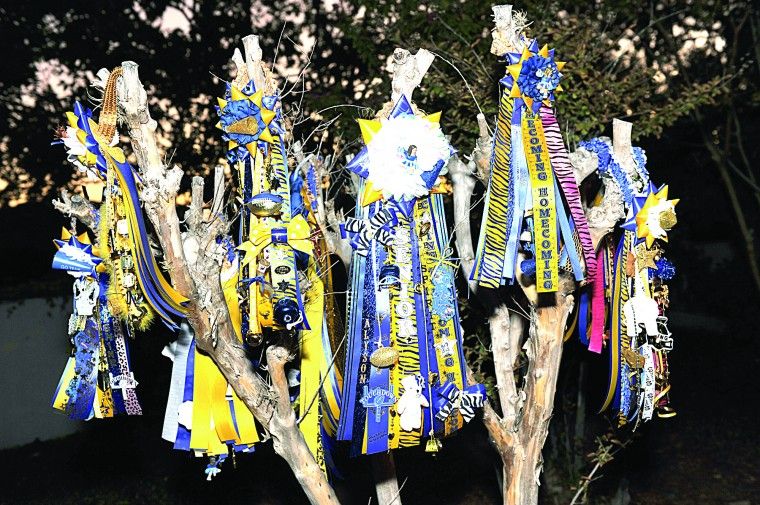
Being put in mind of that work, however, I was also put in mind of my experience as a member of the high school band–something I have noted was among the very few good parts of high school for me. (I acknowledge that much of the bad was my own damned fault; I might’ve had it coming, but that doesn’t mean it was pleasant.) As a bandsman, I took part in any number of quirky little rituals, practices that were expected of people when I joined up and which I passed forward without actually thinking about them. Of course, as I have noted, I am prone to superstition and ritual, so it was not a difficult thing for me to fall into that part of the group’s culture.

One such ritual that reminded me of itself was that of putting money into our marching shoes before marching contests. I remember drum majors going up and down the lines of band nerds in their uniforms with bags of coins, giving one to each of us–usually pennies, but occasionally nickels or higher, especially if we were at a more important contest. Ostensibly, it was for luck, borrowing from the tradition at weddings (that I am not sure my wife followed at ours). I do not know if it worked, of course; there were some contests at which the band I was part of failed miserably, but I do not remember if we had pennies in our shoes then or not. It has been more than twenty years, after all, and I do not think many people remember everything they had in their shoes after twenty weeks or twenty days, let alone twenty years.

I don’t know if the kids in band now still do such things. I know that some of the rituals I did, they do; I have seen them do much the same dismissal drill I used to do, for example. But I also know that some of what we did, they do not; bleacher tunes I inherited seem not to be current with them. And that’s okay; things have to change to improve, and the band I saw last year is far and away better than the one in which I played. (We barely made area once; they made state.) Too, I know that the days of my youth are gone away, never to return; to try to make them do so is folly. Even so, knowing that some things remain helps me feel a bit more connected to the larger world, and knowing that some things do not that at least did no harm…Whitman is right that “every atom belonging to me as good belongs to you,” and Donne that none of us is an island, but more than a clod feels as if it might have been washed away.

Giving still makes for a good ritual!

A Robin Hobb Rereading Series: Entry 108: Ship of Magic, Chapter 7

Read the previous entry in the series here.
Read the next entry in the series here.


The following chapter, “Loyalties,” begins amid the continuing funeral rites for Ephron Vestrit, who is buried at sea. Wintrow looks on uncomfortably throughout, not understanding the customs of the Traders. He largely escapes the notice of his family until Kyle sees him stumble and disdainfully assigns him to the new second mate, Torg. Torg puts Wintrow to work to keep him out of the way, and Wintrow struggles with the busywork.

One of the focal characters…
Wintrow Westrit by Chidori-aka-Kate on DeviantArt, used for commentary

After, when the family makes to depart the Vivacia for their home, the ship complains. More familial drama threatens to erupt, and Ronica stems it with a few quiet words to the ship and to Kyle. Wintrow is tasked to remain aboard the ship for the night after he escorts Ronica to the waiting carriage. She speaks to him of the ship, though he claims not to understand her. His unease with the quickened ship stems from his religious convictions, and the regard in which others hold him creeps into his mind. He moves to confront members of the crew and Torg, and while things go passably with the crew, Torg is another matter, entirely.

Wintrow leaves Torg and finds himself in conversation with the ship. He finds himself strangely stirred by her words.

Elsewhere, Althea drunkenly muses over her failures and regrets, and she mourns her father. Her family’s handling of the Vivacia rankles her, and she has trouble when she makes to leave. Fortunatley, Brashen is in the same tavern she is, and he makes to escort her home.

Once again, I find myself rereading affectively, sympathizing with Wintrow Vestrit in a way that was likely desired of audiences–and a fairly easy sell for the “typical” readership of fantasy novels. I have made no secret of being a nerd; if nothing else, I maintain this webspace and others (here and here), which is often regarded as being nerdy. Too, I got into grad school (and not for medicine or an MBA), which is nerdy, and I did so off of roleplaying games, which is even nerdier. And in keeping with that, I spent a lot of time in cloistered study–not unlike Wintrow, nerdy boy removed from “real” “manly” life that he is. (Yes, I have issues with it. Go figure.)

Consequently, the interactions with Torg struck something of a chord with me. I’ve known the type, as I think many have; I’ve been on the receiving end of the type, as I know too many have. And I continue, even now, to wonder how such people so often end up in positions of petty authority that they then use to berate and belittle and bedevil those about them. For they do, in life as in art, though art at least tends to offer their comeuppances for the audience’s view; the real world is less giving in that, often in keeping the comeuppance from ever happening.

Is it any wonder that I and those like me read what we do?

Can you help me make my nerdery pay?

Reflective Comments about the Fifth Year

It has been just over five years since the first post to this webspace went up, five years that I have been working on Elliott RWI. As I write this, I have published 902 posts to the blogroll (this will be post 903), and I have posted many individual pages, collecting 25,930 views from 10,511 visitors as of this writing. In the last year, therefore, I have made 155 posts and collected 4,881 views from 2,398 visitors (based on “Reflective Comments about the Fourth Year”). Performance seems to be slightly up from last year and continues the general upward trend in my blog’s performance (see the figures below), which I ascribe to continued regular posting and integrating images into most of my online writing. I do note, however, that I had fewer unique visitors–but they seem to be looking at more things when they come by.

Figure 1 is posts per year by year of blogging.

Posts per Year of Blogging, Year 5

Figure 2 is views per year by year of blogging.

Views per Year of Blogging, Year 5

Figure 3 is visitors per year by year of blogging.

Visitors per Year of Blogging, Year 5

I am pleased to be able to continue doing this kind of work, and I look forward not only to another year of it, but many other years of it. I hope I can count on your help to do that work; I’d appreciate you sending a little bit my way here.

A Robin Hobb Rereading Series: Entry 107: Ship of Magic, Chapter 6

Read the previous entry in the series here.
Read the next entry in the series here.


A chapter titled “The Quickening of the Vivacia” follows, opening with Ephron being brought aboard the ship on a litter, as if cargo rather than the long-time captain of the vessel, while Brashen watches in pain. He helps Althea lay the man directly on the deck, and he springs to Ephron’s order to aid Althea in retrieving the peg from the figurehead, the older man praising him. They are able to return the peg to Ephron just in time to give it him before he dies, choking, and amid the revelation that the Vivacia will go to Keffira rather than to Althea.

Althea is soon wrapped up again in her grief at the loss of both her father and what she had thought was her birthright. The family fracas continues, with Kyle ranting about the incapacity of his elder son and Althea returning the peg to its hole to quicken the Vivacia, aided by Brashen. After she briefly confers with the now-wakened ship, she hears Brashen put off her decks, and, after another small fracas, she follows.

https://theplenty.net/wiki/images/8/8d/Ship-of-Magic-port.jpg
A take on the Vivacia, source in the image, used for commentary

For his own part, Brashen pulls his discharge pay and tries, without success, to get a ship’s ticket–a reference for his skills at sea. He plots his next course of action with no eagerness, regretting earlier lack of thrift, but he is interrupted by Althea storming by, and he follows her once again.

I am minded as I read the chapter again of funerals I have attended, in which I have participated or to the foci of which I have been close. There have been more than a few, if less than there have been for all too many of my age, who reached adulthood just before 9/11 and the jingoistic fervor that followed it, dragging many into service and into early graves or worse. It has often been the case for me that I have acted…badly…at such events and in the days and weeks surrounding them. I am given to understand that it is not uncommon, that many people are at their worst when dealing with the deaths of others, particularly those who had been close to them as an indulgent father is to a beloved daughter. (My daughter is beloved; I do not know how indulgent I am.)

I have asserted before, I think, that one of the strengths of Hobb’s writing is its nuanced authenticity. Her characters act like people rather than like roles, and even the protagonists of her novels display behaviors and attitudes that are other than optimal. They are certainly on display in the present chapter, with the family fracas surrounding Ephron Vestrit’s death showing most of the Vestrit family other than at their best. It is still clear that readerly sympathy is directed away from Kyle Haven–the slut-shaming in which he indulges after Althea re-seats the figurehead peg is hardly a valorization–but even with that, he is not the only one acting badly.

Avoiding Mary Sue is a good thing.

Can you spare something to help me keep doing this for another year?

A Robin Hobb Rereading Series: Entry 106: Ship of Magic, Chapter 5

Read the previous entry in the series here.
Read the next entry in the series here.


The next chapter, “Bingtown,” opens with Althea rehearsing her circumstances since her confinement to quarters. She has come to feel a deeper connection with the Vivacia and with her ancestors who have died on her decks, and what she learns from the connection leaves her with a greater appreciation for the ship–and for all ships.

She figures heavily in the novel.
Althea Vestrit by FleurStolk on DeviantArt, used for commentary.

The ship’s second mate, Brashen Trell, comes to check up on her, having heard that she fares poorly. Althea sets his concerns aside, but, when the Vivacia begins to come into her home port of Bingtown and Althea dresses to disembark, she sees the truth of those concerns in herself. She is further disheartened when Brahsen arrives, under orders, to remove her possessions from her cabin. An uncomfortable trip to the Vestrit home follows.

Althea’s arrival at her childhood home is not more comfortable. Her sister, Keffira, effectively ignores her, and the household staff does not recognize her. Ronica greets her, though, if bluntly, and sends her to visit Ephron in their bedchamber. He greets her as best he can, but he is in the final stages of his final illness, and he knows it, bidding her take him to the Vivacia. She rushes off to have the ship made ready to receive him, meeting with some small resistance along the way.

The rest of the family follows, Wintrow not understanding what he is to do with himself in the strange situation. The changes to his family in his absence strike him strangely, and his own liminal status as a priest makes fitting in harder for him than needs to be. And he is swept along by the family’s preparations for Ephron’s death.

Brashen wakes Althea from where she has succumbed to her grief aboard ship. As she rouses, he considers the older sailors aboard her decks and how many of them have no other home. Including him.

Hobb demonstrates a preference for emblematic names in works focused on the Six Duchies; it is not outside expectation that she would do something of the sort in other novels in the same milieu. Certainly the Divvytown that gives the previous chapter its title is something of a description of the place; it is a town in which spoils are divvied up, clearly. So I thought I would take a look at meanings for “Bingtown”; one of them I found attested is…interesting, certainly, being cited as a euphemism for intoxication. Of course, that definition postdates the novel by a few years, and even if it can be accepted that a term is in use before it is attested, it seems a bit of a stretch to think that being stoned is the image that most fits the actions of Bingtown.

Perhaps a more apt reference is to a piece in Ed Blair’s Kansas Zephyrs, “The Bingtown Band.” While the poem itself is perhaps best taken as a send-up of amateur rural musicianship, the line that “‘CASH IS KING’ is their new motto,” with the capitalization in the original and therefore prominent to even a casual glance, seems apt enough for a city founded and governed by self-styled Traders.

I continue to appreciate your backing.

A Robin Hobb Rereading Series: Entry 105: Ship of Magic, Chapter 4

Read the previous entry in the series here.
Read the next entry in the series here.


The following chapter, “Divvytown,” starts with Kennit fancying himself up as the Marietta pulls into the harbor of the titular settlement, which is given a glossed description. He confers with Sorcor as the ship is towed into port, speaking of ambitions for leadership; Sorcor comments aspersively on the notion, remarking on the desire of those in Divvytown to be free people.

r/dndmaps - Dock town/Pirate bay encounter map
Something like this for the setting, perhaps.
Dock town/Pirate bay encounter map by glennjitsu on r/dndmaps, used for commentary.

As the Marietta continues into port, Kennit considers her and her history. Against it and his ambitions, the ephemeral desires of the crew become as nothing in his mind, and their indulgence of those desires makes all his victories shallow. But his career continued, as does his reminiscence over it until the Marietta is safely moored; at that point, he makes his standard offer to the crew regarding their shares of the ship’s booty. Some take it; more do not, and Kennit grouses about it to Sorcor after the crew has disembarked. Sorcor reminds Kennit that such has always been the way in Divvytown, and Kennit disembarks in anger.

The anger sustains and distracts Kennit as he proceeds through the dockside crowds and barters the bulk of the Marietta‘s takings. And it continues to sustain him as he returns to a familiar brothel, seeking the prostitute whose services he prefers–Etta–and accommodations for the night. Despite some protests, they are provided him, and Kennit avails himself of them, some musings and awkward conversations intermingling.

After, Kennit gives one of the treasures he had taken from Others Island, the ruby earring, to Etta and stalks out angrily. While he does, the wizardwood charm on his wrist speaks with him, and Kennit calls on a tattoo artist he favors. The artist rebukes him for perennially employing and destroying his work, but he proceeds after being paid, Kennit reveling in the pain as a price paid for a bad decision and looking forward to removing the tattoo as a way to put the bad decision behind him.

The chapter is useful in laying out more context for the characters, particularly Kennit and Sorcor, and for introducing Etta. Kennit’s musing on and conversations with Sorcor about governance seem to follow the more overtly political bent of the Liveship Traders novels, though I am not quite as up on political theories as I need to be to trace the implications further than noting their existence. And I find myself frustrated at that, that I know enough to see that something is there but that I do not know enough to know what that something is, even if I have the nagging sensation that I used to know enough to know.

Something else comes to mind as I read the chapter again, as well. As Kennit voices ideas about Divvytown to Sorcor, one of the things he mentions is placing defensive weaponry at strategic points–specifically pre-gunpowder weaponry. It is a strange anachronism, given common depictions of pirates. I’ve commented elsewhere on the admixture of pirates in medieval/ist settings, and the Realm of the Elderlings certainly is medievalist in its overall shape (again, with large caveats); it seems a common enough thing that I should not be surprised to see it here. I do have to wonder, though, why so many fantasy authors steer clear of gunpowder…

Summer’s coming, and A/C is expensive. Help?

Some Things Overheard

Always watching…
The reverse of the Great Seal of the United States, as on the Washingtons in your pockets…

I‘m very familiar with law
I’m very familiar with politics
I’m not trying to bullshit you
I’m not an idiot
I’m not crazy
There’s a church shaped like a snake’s head
Why is there a church shaped like a snake’s head?
Can you explain it?
Look it up
You can’t not believe me if you don’t look it up
I’m not pulling your leg
There are spells in spelling and curses in cursing
The New World Order is pulling the strings
And they are out to get us all

Help me get some soundproofing?

A Robin Hobb Rereading Series: Entry 104: Ship of Magic, Chapter 3

Read the previous entry in the series here.
Read the next entry in the series here.


The following chapter, “Eprhon Vestrit,” starts with Ronica Vestrit tending to her titular husband in his final illness and grousing about the servant, Rache, that had been sent her by Davad Restart and who had tended Ephron poorly. She mentally rehearses their life together and the plans that Ephron’s illness has halted. She also recalls arguments they had had regarding their daughter, Althea, and notes the shift in practice in Bingtown towards “keep[ing] one’s womenfolk free of such tasks” as estate management before musing on the falling fortunes of the Vestrit family and public shits towards slave labor and trading in Bingtown.

This might be the kind of thing on which the chapter ends.
Image from the Pennsylvania Department of Conservation and Natural Resources by way of the Pittsburgh City Paper, which I think means it’s public domain, and used here for commentary

Ronica is roused from her reverie by Davad calling at her home. Amid likely unintentional rudeness, he carries an offer from another Trader family to buy some of the Vestrit holdings. Ronica’s refusal carries the weight of tradition and history, of which she reminds Davad (and allows Hobb to inform readers, a smooth bit of exposition). Davad rebuts with assertions that the old ways his family and hers had followed are ending, and Ronica’s own refutation grows emotionally charged and fraught for them both. They retreat a bit, laying the blame at the feet of the governing Satrap, as Ephron wakes and asks for pain medication.

Ronica takes the chance to escort Davad out. Despite their earlier argument, they reaffirm their friendship and their common legacy of suffering. And as Ronica looks out over Bingtown afterwards, she muses yet further on the changes already in progress–changes that look as much like depredations as anything else to her old eyes.

While the previous chapter, treating Althea, made some motions toward it, the present chapter, where it focuses on Ronica, presents something of a feminist vision–not of feminine dominance, but of parity. This is something that Hobb’s Farseer works treat, certainly, as noted by both Bokne and Katavić, among others, but it is more prominent a concern in the Liveship Traders books. Given what I know about large, loud sections of the fantasy-literature fanbase, particularly those who focus their devotions on the Tolkienian tradition of which Hobb partakes to a limited degree, it is likely the cause of the lesser attention given the Liveship Traders books; a damned lot of readers (yes, I mean “damned”) mislikes “politics” in their reading, with “politics” being “a position I do not espouse and from which I do not benefit” in such minds, and questioning patriarchy as the Liveship Traders books begin to do in earnest in the present chapter reads as such a position to entirely too many people.

Perhaps related to the burgeoning feminist thread, too, are certain Marxist leanings–Ronica makes much of the shifting economic base, though she remains in the employer’s position rather than the laborer’s, so perhaps some other term than “Marxist” applies–and ecocritical possibilities–Ronica also makes much of the balance between the Bingtown Traders and their environment, noting the changes to that balance occasioned by the shifting labor conditions. Being out of academe, I am out of practice with such theoretical approaches, so that I am not the best person to follow up on their implications, but it is clear even to me that they are there to follow–which is another argument, among many, in favor of Hobb’s writing.

I continue to appreciate your support.

A Robin Hobb Rereading Series: Entry 103: Ship of Magic, Chapter 2

Read the previous entry in the series here.
Read the next entry in the series here.


The next chapter, “Liveships,” opens with Brashen Trell waking from a dream of sea-serpents to familiar surroundings aboard the liveship Vivacia. He considers his situation, now diminished after the illness of his former captain, Ephron Vestrit, and the demotion to second mate under his new captain, Kyle Haven. His history as a son of a leading Trader family receives a gloss, as does his first encounter with a sea-serpent as a junior sailor–and his realization that the serpent worked some strange compulsion upon him.

One of the titular liveships, but not the only one…
Vivacia by FloorSteinz on DeviantArt, used for commentary

Althea Vestrit, also aboard the Vivacia, considers her situation and the changes to it as she is summoned to Kyle’s cabin. He upbraids her for her initiative aboard ship and for her desire to captain the vessel, noting that she will be replaced by one of his sons when the Vivacia next sets sail. He also confines her to quarters for the remainder of the trip back to their home port of Bingtown. He also strikes her for words spoken drunkenly in a tavern, and he slut-shames her.

In her cabin, Althea considers what she knows of the ship’s history, the enlivening effects of family deaths upon the Vivacia‘s decks. She contrasts the familial tie with Kyle’s mercenary tendencies–pronounced even among trading families–and arrives at the conclusion that any defiance from her would only hurt the crew before looking ahead to returning to her home.

Ashore, the liveship Paragon listens as a pair of people–Davad and Mingsley–approach him on the beach and discuss selling him off. Mingsley is taken aback by Paragon‘s condition, which Davad explains as peculiar to the wizardwood of the ship’s construction; it holds up far better than regular wood, and some ships made of it are able to speak and move of their own accord. Paragon does not do so while the men are present, but after they leave, the ship voices his interest in Mingsley’s plan to wreck him for salvage rather than refit him.

Brashen’s story of his encounter with the sea-serpent recalls Verity’s work with the Skill against the Red-Ship Raiders prior to his expedition to the Skill-quarry. It is another tie between the series, made early on, and one the points toward other Elderlings works that have come into print since Ship of Magic and the Liveship Traders novels. I am in doubt that those novels were intended when Ship of Magic was in draft, but I did read my Wimsatt and Beardsley, thanks.

I’ll note, also, that there seems to be less fanart that deals with the Liveship Traders novels than with the Farseer, Tawny Man, or Fitz and Fool books. Some of that is understandable; the Farseer novels are older and have had more time to accumulate fan-works. But the Tawny Man and Fitz and Fool novels are younger, and they seem to a casual search to have as much or more, and the Dragon Keeper books seem to have even less. As I write this, I’m not sure the implications, but it might be worth commenting on at another time.

My parents’ anniversary is tomorrow; help me get them something nice?

One Fine Hill Country Morning

I‘ve lived in the Texas Hill Country more years than I haven’t since 1988, and it’s a fact of life that, even in the “civilized” suburbs of the large cities like San Antonio, nature’s not too far away. The part of the Hill Country in which I live–just outside Kerrville–is not one of those suburbs; Kerrville is not a large city by any stretch, at least not by today’s standards, and it makes much of “still being” a small town. It follows, then, that nature is even closer in Kerrville than in a place like Leon Valley or Helotes–and even closer outside the city limits.

https://wildlifecenteroftexas.org/wp-content/uploads/2009/08/opossum-teeth.jpg
Yeah, about like this.
Image from the Wildlife Center of Texas, used for commentary.

Sometimes, it gets even closer than that.

A little while ago, now, I was woken from a fitful sleep by the sound of something crashing around in the bathroom right off of my bedroom. Grumbling about the cat my wife and I have causing trouble, I groggily staggered towards the room, and, just as I flipped on the light switch, I saw the cat come out of the cabinets under the bathroom sinks. His tail was held high, as was his head–and, dangling from his jaws like a kitten in its mother’s mouth, was a juvenile opossum. It was maybe nine inches from nose to haunches, its naked tail limply dragging close to the same length, and I was reminded of noises from nights before of small, clawed feet scurrying in or on the ductwork underneath the mobile home where I live with my wife and daughter.

We’re outside town, not far from a creek, so we get a fair amount of wildlife on the double lot we rent. Deer are in the yard most nights, and I’ve seen signs of armadillos in the yard. There’s a colony of feral cats near us, too, to judge by how many of them I see in and around the place, though I’m not sure where all it is. And we’ve had opossums before; our dog has gotten pretty good at snatching them up the two or three times she’s found them in the dog run. So, in one sense, it wasn’t a surprise to see the cat come up with one, in turn. But in another, it’s damned shocking to have one of them pop up in the house and in the cat’s mouth at a quarter to five in the morning.

I guess I wasn’t quite awake enough yet to be properly startled, though, because I remember being pretty calm–if annoyedly grumbling–as I told the cat to drop it (which it did, as I realize now should’ve been a surprise) and got some bags set up to take the opossum out, as well as the broom and dustpan. By the time I got back to the bathroom with the lot, though, the opossum had roused and backed itself into a corner under a cabinet-lip. The cat was poking at it, of course, and the opossum was not only hissing, but growling, baring its little goblin teeth at the much bigger murder machine that stared intently at it. When I set down the bags and nudged it with the broom to try to get it into them, it turned and growled its little goblin growl at me, in turn; the cat looked at me as if to ask “You gonna eat that?”

The opossum wasn’t the smartest creature; as I nudged it, it turned, backing out away from the corner–and into the bags. I could tell it wasn’t hurt much if at all, so, after I got it bagged up, I took it out to the far corner of the yard and let it go. So it was a happy ending, more or less, but still not the way I’d like to wake up again.

Fund me getting some traps set up?