It Seems I’ll Look for More Hanlon

Not much less than a week ago, I noted wrapping up my local library’s pilot program of running a game of Dungeons & Dragons for middle schoolers. I continue to think it was a good experience for them and for me, and I continue to think that what the game taught us is worth having learned or having been brought back to mind.

More to come…
Photo by Will Wright on Pexels.com

I’m particularly pleased, therefore, that the program looks like it will resume next month. That is, I will continue to run Dungeons & Dragons games for middle schoolers at my local library. I rather expect, based on the feedback I got from participants, that those who have already been at my table will return to it, and that will be good; I have things to do with them (including walking them through character advancement / improvement, which I had meant to do at the end of the last session but which events and time constraints prohibited), and there is value in having stories continue.

There is some talk, too, of the program expanding, whether to a second session of middle schoolers or to a session of high school students is not yet clear. Either would work well, although each presents different challenges. With middle schoolers, there are more concerns of maturity than with high schoolers, although the ones with whom I’ve worked thus far did decently well being redirected when they needed it; really, the issue was all of them wanting to talk at once, most of them wanting to be the focus of attention. It’s not bad in itself, but taking turns being the star is still something they’re working on; they’ll get there, I’m sure. High schoolers will, in some ways, be easier; there’s more they can do and can be expected to do. But there’s also more concern about their needs; middle schoolers are still largely children, while high schoolers are more nearly adult and will have more things going on that are potentially problematic for me to address.

I know who and what I am, after all, and I am aware that my addressing particular issues is fraught.

That said, I am looking forward to resuming play in and around Hanlon. I’m looking forward to deepening my understanding and insights, as well as to seeing what else from my past experiences still holds up in current play, when I am so many years older and my players do not have the shared experience and cultural immersion–including the (internalized?) shame at pursuing a hobby that used to earn scorn, derision, and an uncomfortable amount of suspicion from religious leaders and law enforcement officials–I shared with my earlier play-groups. Also, to be sure, I’m looking forward to passing on some of the more “academic” parts of what I know about all this; there is scholarship on the matter, in addition to the ways in which tabletop roleplaying games do have educational value. After all, to play, players have to read, they have to navigate rules sets and so learn index use, they have to do quick arithmetic, and they learn quite well that random chance isn’t always, but that no roll depends on the last one made. Narrative theories can be explored, as can philosophies, and it might be that I include some short reflections on why characters take the actions they do or somesuch thing.

There’s a lot to do, and it will be good to do it.

I’m happy to write stuff for your table, too; fill out the form below to get yours started!

Go back

Your message has been sent

Warning
Warning
Warning
Warning.

Or you can send your support along directly!

Wrapping up Hanlon (for Now?)

Yesterday, as this piece makes its way into the world, I presided over the final session of the initial Dungeons & Dragons for middle schoolers program at my local library. (It’s discussed here, here, here, and here.) In it, the party sought to make its way back to Hanlon, its objective achieved; they were sidetracked by player actions and the will of the dice into an unexpected, ultimately successful encounter. I also, in fact, put into practice my player-commendation bit that I remarked upon last week. Even if things do not resume–much as I hope they will, I cannot rely upon it–I’m glad to have done it; I like to set good expectations with my players, even when they are not so young as the kids with whom I worked these past weeks, and I think it’s important to ground children well.

Not bad looking…
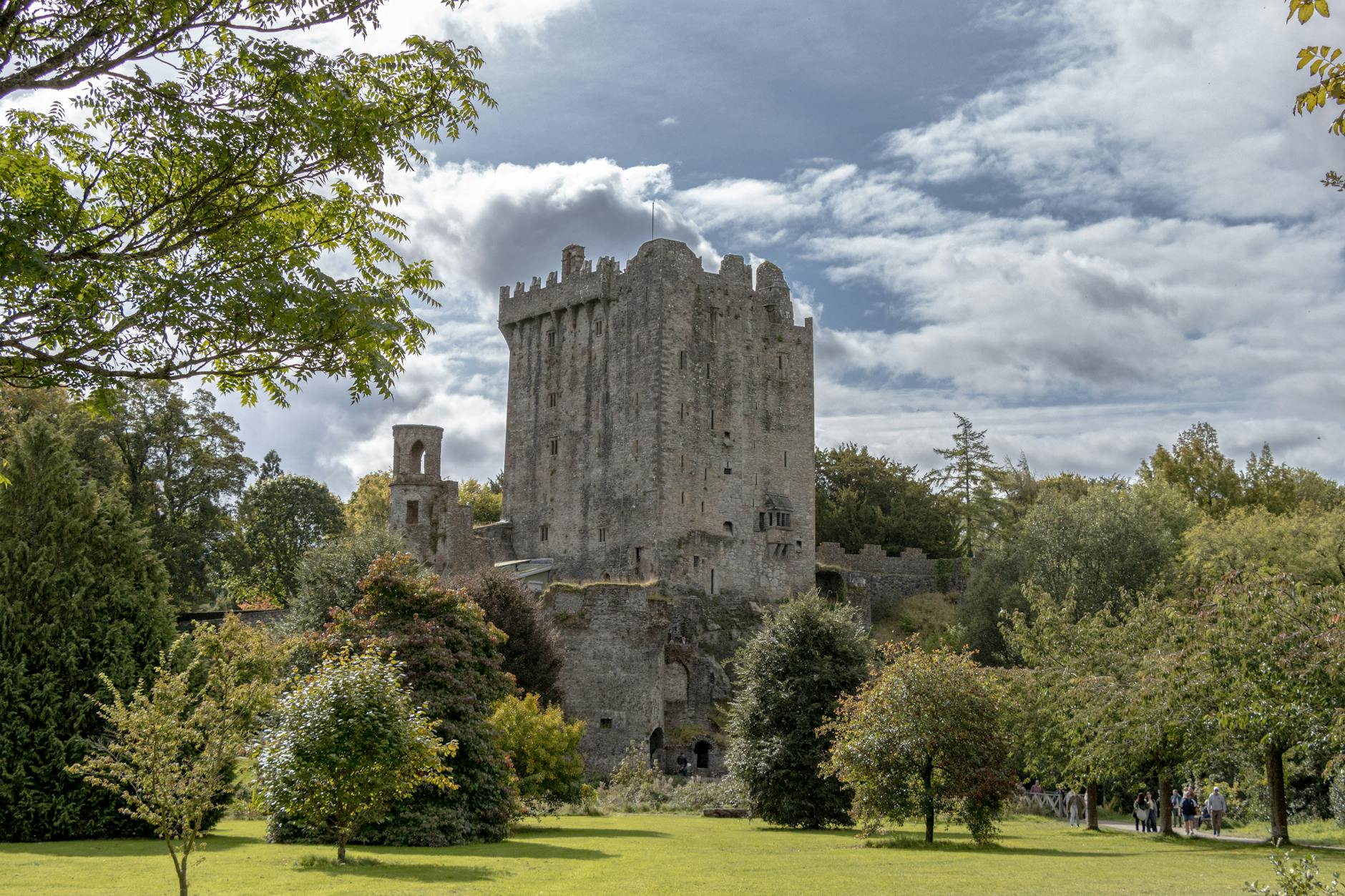
Photo by Stephen Hardy on Pexels.com

There are, of course, things I would do differently if I had them to do again. With a bunch of newer players–and most of those at the table were, in fact, brand new to tabletop roleplaying games–I think it might be good to have a more overt authority in the game with them, something of a mentor figure who can, within the context of the game, offer some guidance. I am aware of the perils of the GMPC, to be sure; I’ve seen it go badly and have been guilty of making such a thing happen. But with a markedly novice group, I think it might be a good idea to have, nonetheless.

I think, also, I would try to work in more non-combat encounters and mechanics. I know, with a bunch of kids, that “getting to the good stuff” is a concern. I also know that combat can drag easily, especially if one or more of the opponents actually thinks through the fight (and if one or more of the PCs gets annoyed at the antics of another and vents their spleen). Perhaps a puzzle or two, going back to the old dungeon-delving model, might work.

Some things went well, though. Having the new players address the non-mechanical stuff is almost always to the good, and my players leaned into it even without much in the way of overt background knowledge; I’ll be doing that again, to be sure. Too, going ahead and rolling with them for (most of) their shenanigans resulted in laughter around the table, and since a large part of the reason to play any game is to have fun, things that promote such laughter are to be encouraged. And, finally, I think bringing together people from different experiences was good for everybody involved; if I can, I’ll do that much again.

In all, it was a good experience. I needed the practice in running a game at a table, and I’m glad to have helped some new gamers begin to get grounded in the hobby. After all, the children are the future, and I’d like to keep having one of rolling dice and telling lies…

If you’d like me to write gaming material for you–with no generative AI slop involved!–fill out the form below!

Go back

Your message has been sent

Warning
Warning
Warning
Warning.

Or you can send your support along directly!

Following up on an Earlier Comment about TTRPGs

In a piece last week, I make the comment that “At my tables, XP also result from making things better for the other people at the table, something I’ll talk about in more detail later on (but probably not today).” This, being a different day (although today on whatever day you read it), seems a good one for talking about one of the “making things better for other people at the table” I have tended to reward with additional XP; I have often had players vote for the player other than themselves whom they felt did the best job of roleplaying at the table that session, and I’ve awarded that player premium XP for the commendation of their fellows (usually something like one-fifth to one-third of the “regular” reward for the session).

I’ve seen messier tables.
Photo by Will Wright on Pexels.com

In practice, it was a small thing, just a collection from those at the table of slips of paper with someone else’s name on them and counting up who got how many votes. In effect, however, it proved a powerful motivator. As I remark in the earlier piece and as is clear to most who have sat to table, the promise of a reward spurs quite a bit of effort and action; most any time XP are up for grabs, players pay attention and go out of their way to get the reward. As is also clear from experience, in many if not most cases, people are motivated by the acclaim of their peers; having evidence that those in a person’s acquaintance value the contributions made does a lot to spur more such contributions. Since in this case the “contributions” being rewarded were particular at-table behaviors, those at the table largely regulated themselves to that end, pushing further into character development and narrative engagement, even if occasionally at the expense of mechanical effectiveness. That is, they would go further into role-play as opposed to the roll-play that I have seen take over tables and towards which many who come to the older tabletop roleplaying game from the more ubiquitous and younger massively multiplayer online roleplaying game or from similarly structured single- or limited-multiplayer games tend.

I’ve not implemented it with my Hanlon players yet. I think I’ve remarked before that the program that has given rise to Hanlon is something of a pilot; there’s one more session to play that I know of, and I do not know if matters will continue afterward. I hope they do, and if they do, I think I will put the practice back into practice at my table. It’s a good one, and with such young players as I currently have, I think it will do much to help them learn to do more than come up on the rules (which is not a bad thing to do, in itself, but the game is more than the rules, really). I think it will help them get better at finding and filling their roles, and it will make them better players at the next tables they join.

I try to be helpful. Sometimes, it even works.

I’m happy to write RPG materials for your table; fill out the form below to get yours going!

Go back

Your message has been sent

Warning
Warning
Warning
Warning.

Or you can send your support along directly!

More about an Ongoing Project

I‘ve mentioned, most recently at about this time last week, that I’m running a Dungeons & Dragons (D&D) game for middle schoolers at my local public library–for pay. The game is progressing well enough; the third 90-minute session was yesterday, with six players in attendance. The party continued along the path I’d laid before them, making headway towards their assigned objective (some social structures within the game have emerged from play and improvisation, which makes some things easier than others). Fun seemed to have been had all around, so I count it as a good evening of play.

This ain’t too far off…
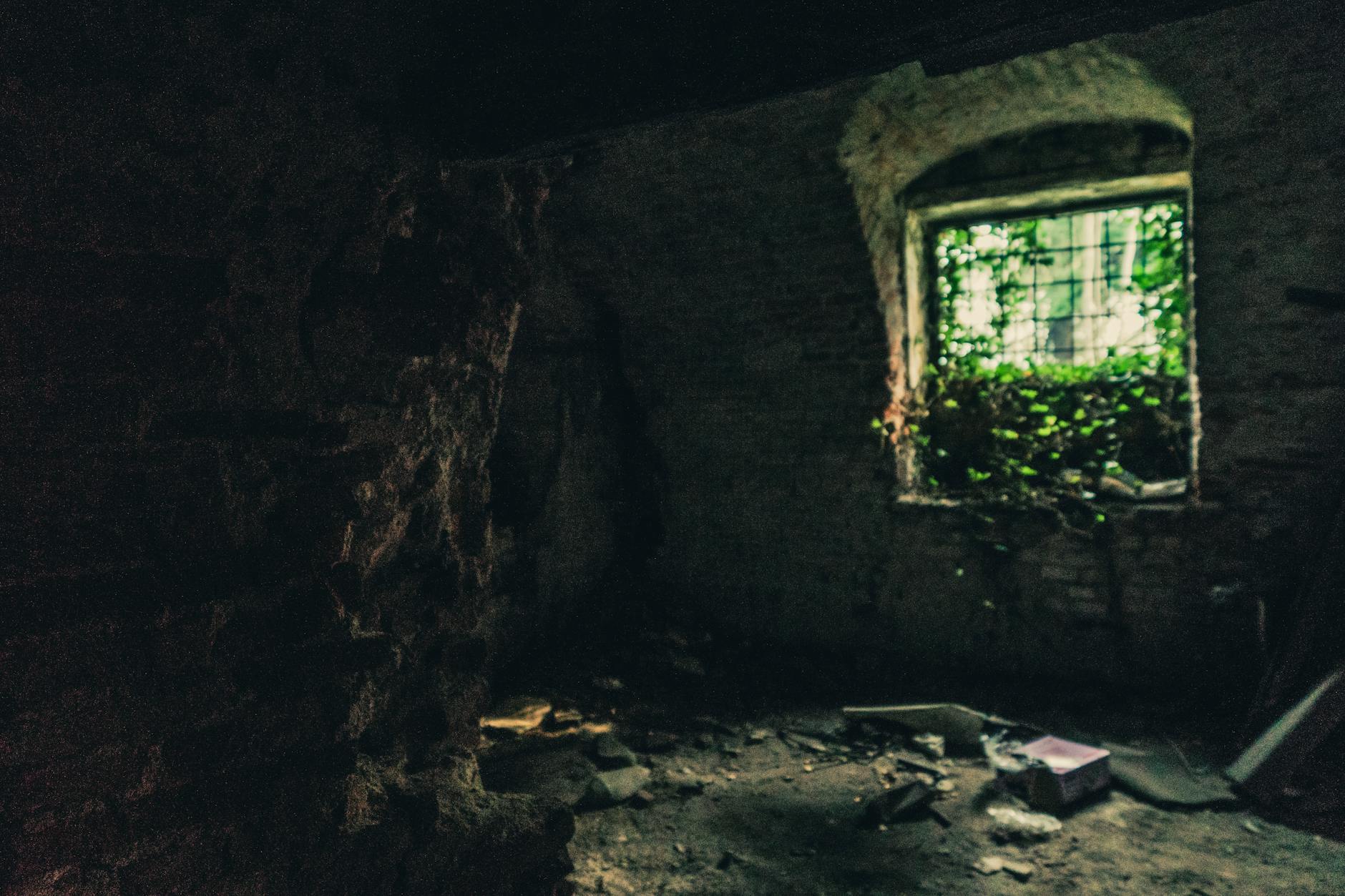
Photo by Stephen Hardy on Pexels.com

One of the things that I’ve used to keep the party moving while allowing them both agency and a means to work around failure is something I’ve taken from my experience participating in play-by-post forum games, something about which I’ve written before (for example, the piece referenced here, as well as this piece, referenced here). That thing is employing levels of overall success based on racking up a certain amount of individual success before incurring a certain amount of individual failure.

To explain a bit: in D&D and many other tabletop role-playing games (TTRPGs), tasks that characters face are often adjudicated by a single roll of dice. In D&D rules current to this writing, the player whose character must face a task with an uncertain outcome rolls one twenty-sided die and adds (or subtracts!) modifiers, comparing the result to a set difficulty, a minimum number that must be arrived at for the character to get the task done. In other games I’ve played, things generally work similarly; the player rolls once for the character’s attempt at a task, success or failure results, and the story moves on.

The method has the advantages of being simple and quick. The die roll is what it is, the result is what it is, and consequences can flow from it with relatively little interruption of the narrative flow around which the game centers. It has the disadvantage, however, of being more or less entirely up to chance; players can build characters to stack modifiers and roll scads of dice, but there are times when the dice simply fail to deliver a success, and staking a whole story on one such shot can leave players feeling unsatisfied. In some cases, those administering the games will “fudge” numbers a bit, altering things where the other players cannot see so that they succeed at pivotal tasks, but in such cases, one might well ask what the point was of rolling dice.

The issue, for me and for more than a few others I’ve known, is that some things admit of reattempts, and some things are better represented as progressions than one-off events. In such cases, what I and some of my acquaintances and friends do is set up tasks for players that ask them to make a series of rolls in which they have to accumulate a certain number of successes before incurring a certain number of failures, say three successes before three failures. (Threes work well for reasons that others expound upon at great length across quite a few years.) Getting that done allows a superior overall outcome, while failing before succeeding still allows progression, if with some additional challenges thrown in. And it mitigates the feeling of frustration that comes from one thing going against a character, even when it flatly doesn’t make sense that that character would falter at the test in question.

Admittedly, such a setup necessarily takes longer than the traditional one-off model; there are more die rolls involved, and more things to do take longer than fewer things to do when the same number of people address them. Too, there are some tasks that probably should be one-off events: much of the combat in which characters engage in games hinges on single actions, and rightly so. But for a number of tasks, spreading out success helps to mitigate failure in ways that help keep players engaged (checking out after one failed roll is sometimes an issue, and not only for less experienced players; it happens to most or all of us), and it is something that allows for more players to be engaged in keeping things moving along, since more die rolls necessarily offer more opportunities for each player to roll, to have their character contribute to the overall success of the party in which they find themselves.

In the game I’m running at the library–which I’ve taken to calling Hanlon for ease of reference–the kids at my table found their characters in pursuit of a thief who went out into the countryside surrounding the characters’ home village. In some games, in many, there would have been a single roll or set of rolls: one to track the thief, one to pursue at speed, one to apprehend the thief. And that would work well were it time to wrap up a story arc, to conclude an episode…and if the thief escaping had no other effects on the story. None of that is the case in Hanlon, however, and so I opted to arrange matters to require a series of cycles of rolls. The characters who are best in the party at each stage–tracking, pursuit, apprehension, and foraging along the way–each get the chance to try their hand at things, contested by the thief whom they pursue. Their increasing numbers of successes bring them closer to the thief; their increasing numbers of failures leave them farther behind. If they fail enough times, they will find themselves obliged to retrace their steps, but they can still pursue the thief, if not as ably. And they can decide along the way what they do and how they do it, giving them more agency, giving the players more familiarity with the rules in which they are playing, and giving me more time with the materials I drafted to lead the players and their characters through.

There will be things for them to do that are one-and-done events. I know what’s waiting for the players’ characters, and I know what they’re capable of doing. But I also have a pretty good idea what it is the players’ characters can do, and I know well that the players, themselves, will think of things that never occurred to me…which is part of the fun I get to have running games.

It’s nice to enjoy the job.

I’m happy to generate materials for your tables, too–all without AI slop plagiarism! Fill out the form below to get yours started!

Go back

Your message has been sent

Warning
Warning
Warning
Warning.

Or you can send your support along directly!

About an Ongoing Project

At around this time last week, I noted the start of my work as a contract programs teacher at my local library, running a Dungeons & Dragons (D&D) game for a group of middle-school-aged students. As reported, the first session went pretty well, so I spent some time in the following days developing materials for the next session, scheduled to take place yesterday afternoon into early evening as this reaches the internet. I’d planned on bringing in one more player, signed up for the program but absent on the day of the first meeting, and I’d planned on moving the whole group ahead from the introductory session into the main plot, and so I wrote with all that in mind.

There are arts I do decently, and there are others.
Image is mine.

One of the things I did, because I am often helped by doing so, was to sketch out a map of the local area. I am well aware that my pen-hand leaves a lot to be desired, and I am more than a little out of practice as a cartographer; it had been a while since I’d put together materials for a tabletop game, after all. But it was helpful for me, nonetheless, to begin to gesture towards a wider world into which Hanlon Village falls, to have a visual idea of what area is dependent on Hanlon and what Hanlon, in turn, depends upon. And it was helpful for me to have some idea of where shenanigans could take place, as well; hills and woods offer many opportunities for that kind of thing, and having some variety, some options, is a good thing.

I’ll admit to being influenced in what might be called map-making by the maps present in a lot of fantasy novels, mostly following the Tolkienian tradition; Lord of the Rings does it, but then, so do the Chronicles of Thomas Covenant and its successor series, the Wheel of Time novels, the Song of Ice and Fire novels that have managed to make it into the world, and (near and dear to my heart) Robin Hobb’s works. I’m also marked by having grown up in the Texas Hill Country; there have been times I have directly taken from maps of towns and cities in my part of the world to make towns and cities in other worlds, entirely, although I did not directly do so for Hanlon (although there were definitely local features in my mind as I did my sketch.) I’ve also benefited from reading Karen Wynn Fonstad’s works of fantasy cartography, although I’m not in any way claiming the talent or expertise she deployed. I do think it’s important to acknowledge my influences, though, even if I do not live up to their inspiration.

I’ll note, too, that I deliberately did not “fill in all the blanks,” that I left things open and did so on purpose. While I do tend to plan a lot for the games I run, I also know from experience playing and running games that the narrative does not always go as planned. There always needs to be room for players to take their stories in their own direction, and if there is a direction to go, there has to be something in that direction for them to uncover. Admittedly, there is a fair bit of manipulation that can go on; an opponent who had been hiding in a tree or behind a rock can be concealed in tall grass or in a shallow depression. But even aside from that, if the intended plot would move players east and they go west, it’s good to have a west for them to explore–and taking notes can make what is extemporized (again, I make a lot of use of Mackay’s The Fantasy Role-playing Game) more permanent, giving players some agency in creating the world in which their characters exist.

The map was not the only thing I did, of course, and could not be for me to do a decent job running the game. If I was going to send them off chasing something or other, I had to figure out who was doing the sending and what that something or other is…as well as where it ended up being. That much, at least, the map made easier; I had my idea, if one that player actions influenced somewhat. And in my earlier notes, I’d jotted down some ideas about what the something would be: a horn, passed down across generations. As to how it got from where it should be to where it was…I can’t give everything away, you know, at least not all at once.

I’m happy to generate content for your games, original and without AI plagiarism; fill out the form below to get yours started!

Go back

Your message has been sent

Warning
Warning
Warning
Warning.

Or you can send your support along directly!

About a Project Just Begun

Among the many things of which I have made no secret is my long time playing, running, and studying tabletop roleplaying games (TTRPGs). I’ve got a whole tag about them for this webspace, for example, and the subject has popped up in other writing I’ve done, such as the piece linked here. It should be clear at this point, with my having been involved TTRPGs for more than twenty-five years, that I’m fond of them, and it makes sense that, being thus fond, I would want to share with others and bring more people into the hobby. If nothing else, doing so means I have more people to play with, and more people to play with makes it more likely there will continue to be games to play. I delight in the prospect and the (admittedly small shred of) hope for the future it represents.

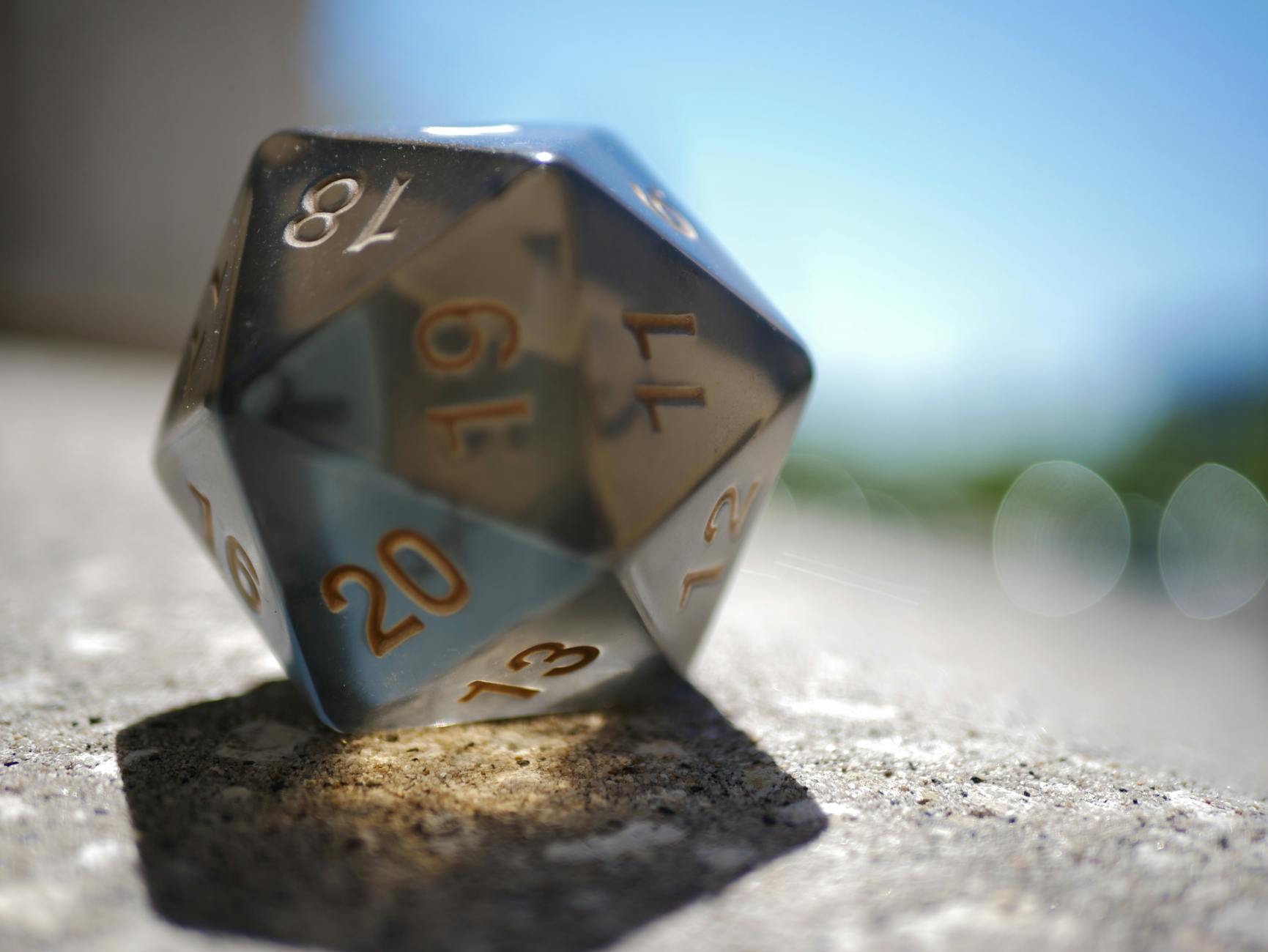
Shiny math rocks go clack clack clack.
Photo by allthings real on Pexels.com

To do a little bit more to advance the cause, as it were, I’ve recently taken up a contract position with my local library. (I even put it on the resume, here.) Given who I am, that I would work for a library should not be a surprise. (Indeed, when I was job-searching, I even put in for a full-time clerking job at another library. It didn’t work out, clearly, but it was one of the few applications I put in that didn’t provoke the “Why would you want this job?” response I got an awful lot.) But that that job is explicitly to run a D&D game for middle-school-age kids might be a bit of one, even if it is entirely welcome. (On my part, it very much is. There are at least a few others who welcome it, clearly, since other kids than mine are enrolled.)

There are details I cannot share, of course. I am still learning names, for one, and even when I learn them, since minors are involved, I’m not going to include that in my reports. Even my own daughter, whose name I do have some right to make free with, gets elided; there’re reasons I refer to her as Ms. 8 in my public writings. And, because it is possible that my players will actually look at my writing here (I should be so lucky as to have the readership!), I’ll not go into details about future plans, even though I have them. But I can, and almost certainly will, report on what happens in the game and with my players, doing so partly to cement my own memories of things, and partly in the hope that what I do will prove useful for others, whether as an example of what to do or as one of what to avoid.

The first session of what is, at least initially, a limited run began with a sort of Session Zero. For those unfamiliar, Session Zero is a preliminary meeting of a gaming group in which comments about basic assumptions to be observed at the table are discussed. Conduct among participants, general expectations about the game, and character formation are common topics, and those got addressed (at least in passing; there’s more that can be said and more will almost certainly need to be said as matters progress); I also gave a bit of a working definition of TTRPGs (for which I borrow from Mackay’s The Fantasy Role-playing Game, which has informed my previous work).

The Session Zero stuff done and time remaining in the planned session–the library can only offer so much space for so long at a time, after all–the players began to enjoy events at the Childsend Festival of Hanlon Village, a manor town in the fief of the imaginatively-named Lord Hanlon. I used Curio Solus’s “Festival Activities” from GM Binder, with a few quick edits for age-appropriateness, finding the games easily accessible to the several new-to-the-game players and manipulable by the few with experience, as well as a way for all of us to start to get a feel for how the system works and how the characters work. The players chose a few carnival games to play, enjoying each and doing well with them, and how they relate each to the others began to emerge before time ran out on the session.

The kids seemed to enjoy themselves, and I was pleased to be able to run an in-person game again. It’d been a while, and while I’m aware of myself as being rusty, I’m also aware of the rust as already starting to break off. Another session is planned for this coming Thursday, and I already know there will be a couple of events to come…which I need to sketch out. It’s a kind of writing I’ve done at length before, albeit in different systems than that in which I’m running a game now (the 2024 version of Dungeons & Dragons, largely for reasons of accessibility); I imagine I’ll find my way clear to doing it, and to giving the kids a good game to play.

I am, of course, open to ideas. If you have them, I’d love to hear them–and if you’d like to get mine a little bit quicker, drop me a line!

I’m happy to write content for you; reach out via the form below to get yours started!

Go back

Your message has been sent

Warning
Warning
Warning
Warning.

Or you can send your support along directly!