A Robin Hobb Rereading Series: Entry 343: Dragon Haven, Chapter 11

Read the previous entry in the series here.
Read the next entry in the series here.


Following yet more of the exchange among bird-keepers in Bingtown and Trehaug, “Revelations” begins with Alise waking Leftrin from their sleep together after their assignation. They confer about their dreams briefly before dressing and parting, and Alise considers her situation and the experience. For his part, Leftrin questions his ship, but the Tarman gives no answer.

Can’t you just hear Peer Gynt?
Photo by Oleksandr Pidvalnyi on Pexels.com

Downriver, Carson leads Sedric and Relpda back to the Tarman and the other dragons and keepers. Sedric chafes slightly at the situation but has no choice but to accepts it, and he reconsiders his long entanglement with Hest. Thinking about who may have supplanted him in Hest’s affections, Sedric finds himself pleased at how matters are changing.

Thymara stalks out to look for food for the group, unexpectedly accompanied by Tats. As they proceed, they discuss the possibility of return to Trehaug and the need to prove themselves. Thymara relates her experience growing up working alongside her father and the insufficiency of that in the eyes of her people. Relative risks of childbearing are also noted, and Thymara finds herself wearied by the recollection of Greft’s insistence that she pick a mate. Tats finds himself challenged on that very point, and Thymara denies both Tats and his challenger, injuring herself as she falls and flees.

Carson, Sedric, and Relpda return to the others. Alise, happy to see her friend return, is reminded by Sedric’s arrival of her responsibilities and entanglements in Bingtown, and she longs for his safe departure.

There is interesting commentary about what it takes to prove one’s self, something with which adolescents and young adults are (justly?) concerned. Given how often fantasy literature is assigned to younger readerships–even now, even in this time and after decades of serious academic treatment of the genre–this is perhaps understandable. Given Hobb’s insistence upon verisimilitude in the non-fantastical elements of her work, it is also understandable; I am not so far removed from my youth that I have forgotten the craving to prove myself, not seldom by mastering some obscure set of trivia, however useless it has been for me to do so. It might also be noted as an ongoing theme in Hobb’s Elderlings works. After all, Fitz spends a fair bit of time trying to find and assert his identity, and he wrestles with Hap’s doing the same; Althea, Brashen, and Wintrow also struggle to define who they are and oblige others to recognize the same, as do Malta and Reyn. Nor is as much restricted to Hobb; not for nothing is the Bildungsroman a commonplace.

Still, the specific questions raised about how to prove one’s self are of interest, the kind of thing I would be apt to point out to students if I had any:

  • Is breaking a rule a means of proving one’s worth? Is it so even if the rule is in place for good reason? What does it prove about a person to break a rule that protects others?
  • What does it mean to be a woman or a man? Why does it mean that, in the context of the novel and / or of the reader?
  • To whom is it needful to prove one’s self? Why?

I used to nurture, and I have not at this point forgotten, the idea of teaching a course on Hobb’s work. I have taught Assassin’s Apprentice, long ago, now, and it went over well. I am not as good a classroom instructor now as then, obviously, but I have gotten better at structuring lessons and developing assignments…I wonder if it might yet work.

I’m happy to write to order; fill out the form below for details!

← Back

Thank you for your response. ✨

Or, if you like this kind of work, help fund it!

A Robin Hobb Rereading Series: Entry 342: Dragon Haven, Chapter 10

Read the previous entry in the series here.
Read the next entry in the series here.


Following news of a message from Hest cutting off financial support to Alise and Sedric and a comment on the scandalous nature thereof, “Confessions” begins with Relpda eating and Sedric considering his increasing entanglement with the dragon. Carson’s return and his work to assist are noted, and Sedric wonders if Carson will also offer to help kill Relpda, as Jess had done and as Sedric had earlier desired. Sedric and Carson confer, and Sedric finds himself looking forward to simple pleasures and chastising himself for being so willing to resign his autonomy. Carson lays out his plans and explicates his reasons for having joined the expedition; the upriver journey will allow him to leave a mark on Rain Wild history that he would not earlier have been able to make. Sedric compares Carson to Hest, finding the latter lacking, and Carson comments with some aspersion on the intended machinations of some in the expedition. He comments, too, that Sedric need not return to Bingtown, noting his appreciation for the other man. But the moment of intimacy passes, and more of the truth of events emerges, and Carson finds himself considering matters more deeply as he and Sedric turn in for the evening.

Gotta love a map…
Crooty’s Map of the Rain Wild River: Colour on DeviantArt, used for commentary.

Aboard the Tarman, Leftrin stands watch while his crew sleeps. He considers approaching Alise in the absence of Sedric and chides himself for the thought, conferring with his ship in the darkness. Leftrin ruminates on his ship and his family’s long work thereupon, including the refit that had given the Tarman limbs and a tail. The betrayal of trust that brought Jess aboard rankles both ship and captain, and they make their plans for the coming days. Tarman notes to Leftrin that Alise is awake, and the ship chivvies the captain as he makes to approach her. The two swiftly fall into an assignation, in which both delight.

The romance-novel conventions seem once again to be at play in the present chapter, and on the parts of both Sedric and Alise–which is itself good to see. Admittedly, it sits somewhat less comfortably with me that Sedric is getting them than that Alise is; Alise is (largely) an innocent, while Sedric is not so, and not because of Jess’s death. As I think on it, I suppose it might be a redemption arc in progress (as opposed to the self-actualization arc occurring with Alise), and there is certainly value in such things. I’ve certainly done many things I regret, some of which have been in the attempt to bring in more money, and I would like to think there is something I can do to make things, if not right again, at least better.

Too, as I think on the matter further, it is clear that both Alise and Sedric are in abusive relationships with Hest, relationships to which they therefore ethically need not be bound, even if there are legal/istic entanglements they must address. And maybe that is what is going on: commentary on the right of release from abusive relationships. It’s certainly foregrounded in the chapter’s prefatory materials, and it’s been clear that Hest is…unpleasant. So there’s probably something to explore, there, for those versed in such things.

If you like this kind of work and want some done for you, reach out below!

← Back

Thank you for your response. ✨

Or you can send your support along directly!

A Robin Hobb Rereading Series: Entry 341: Dragon Haven, Chapter 9

Read the previous entry in the series here.
Read the next entry in the series here.


Another chapter, “Discoveries,” begins after a continuation of the exchange among bird-keepers, sending condolences and an invitation. As it does, Relpda wakes Sedric, to his annoyance, and he assesses his situation. Sedric tends to the dragon, if haltingly, and he tends to himself amid the injuries incurred fighting Jess. Communion with the dragon leaves him unsettles and uncomfortable, and Sedric begins to recognize increasing closeness with her, not entirely unpleasantly.

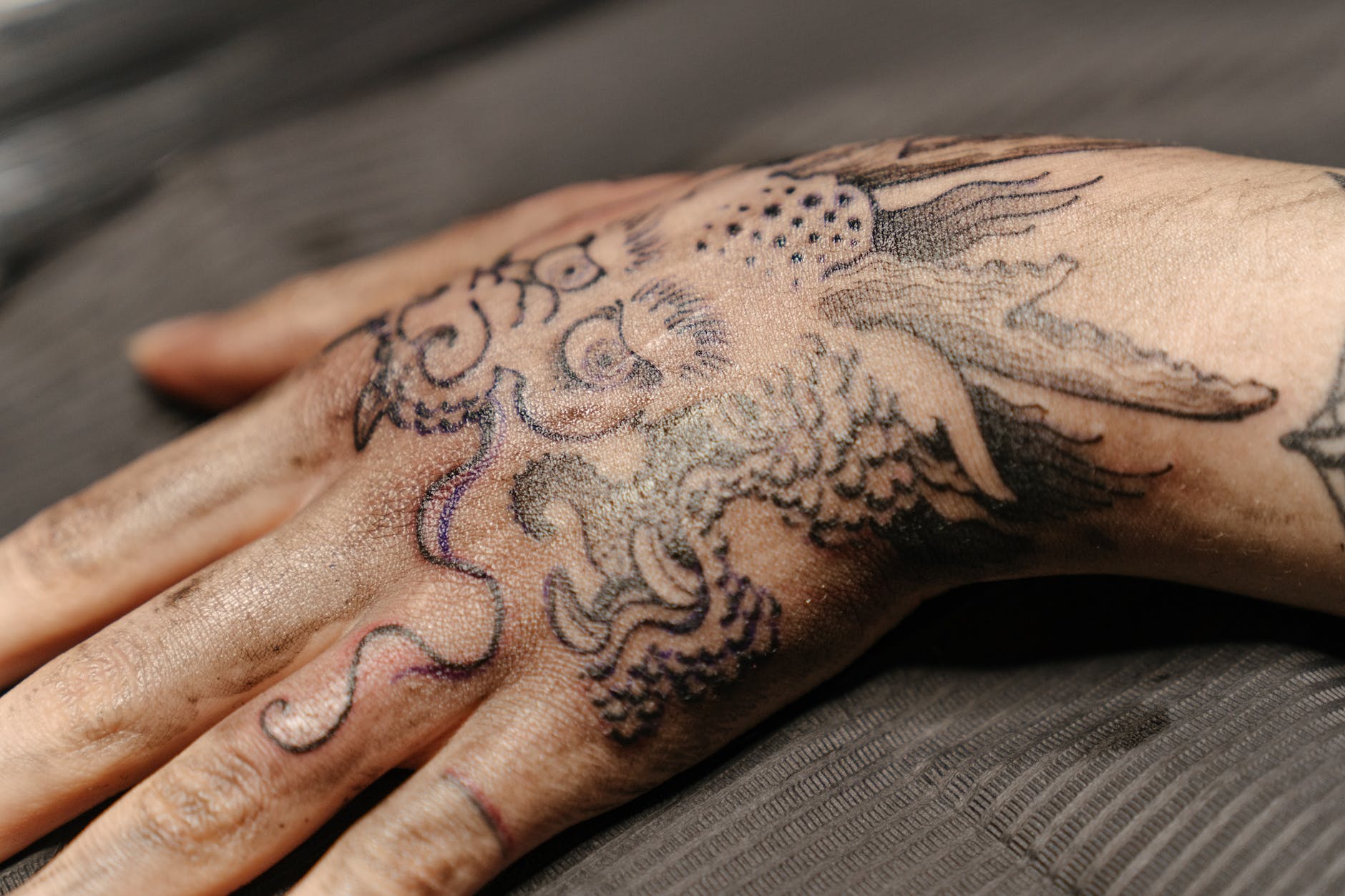
Not quite what the novel means by being marked by a dragon, I think…
Photo by cottonbro studio on Pexels.com

Aboard the Tarman, Alise emerges on deck to find Thymara and Jerd conferring, and she begins to muse both on friendship and on the locket she found in Sedric’s goods. Turning away from such thoughts as are provoked, she moves about the ship and continues to muse on the differences between her situation and those of others, musing on Leftrin and the feelings he provokes in her. Soon enough, Leftrin joins her, and the two confer about developments. The likelihood of finding additional survivors and supplies is noted as rapidly diminishing, though Leftrin notes that Carson, who is searching, will have reason to find Sedric.

Thymara and Jerd confer about their own situations and the latter’s sexuality. Thymara is wounded by the conversation, and she moves away from Jerd, thinking uncomfortable thoughts.

Sedric continues his efforts on Relpda’s behalf, enjoying some success, if at the cost of some pain from the caustic waters and the unfamiliar exertion. The dragon grows somewhat panicked and petulant, and Sedric angrily pushes back. His doing so clarifies matters for Relpda, and the pair have something of a breakthrough. They work together for a time, and Relpda makes to rest. Sedric hears the call of a horn and calls out in response to it, being greeted by the searching Carson. Overjoyed Carson works to tend to Sedric and Relpda, and he reports developments among the dragons and keepers before pressing on to continue the search a bit longer.

Sintara muses on her situation, as well, conferring with Mercor about events and her responses to them. The other dragons are less sanguine about Mercor’s philosophizing, and they determine together to press ahead rather than die in sucking mud. Conversation among the dragons grows tense and approaches violence, but is defused partly by Mercor and the revelation that they are developing as dragons. The fragile truce brokered is broken by the silver dragon, now recovered, who proclaims himself–Spit–and asserts a place among the rest. Sintara watches for a time before settling in to sleep, joined soon by the other dragons.

It’s clearly been a while since I put myself to work on this long project, and I have no excuse. I can only say that I have been greatly busy with a number of other things, and that it is good to come back to Hobb’s writing once again.

As I return to the reread, I find myself questioning some sympathies I have had with the various characters. I’ve noted before that I tend to read with more affect than ought to be the case, something that my schooling would have had me leave behind but that I never have been able to shed fully. (Perhaps it is part of why I was never able to secure a tenure-line job. Ah, well!) I feel for the characters more than is seemly, something for which I have been teased and more by a number of people in my life. (It is a bit silly, I acknowledge.) I contend that it’s part of the quality of Hobb’s writing that the characters are so easy to feel with, even when they are not necessarily good or nice people.

Returning to the text, though, after so long away and in such an awkward position in the book–nine chapters in to twenty–I am not having trouble picking the narrative threads back up. (There’s a reason to write summaries.) The feelings, though, are not springing back as quickly as the memories are. I’m not sure what’s going on with it, really, whether it’s in me or in the text. (Some of each, perhaps?) Maybe it has to do with the fact that I’m fighting off a head-cold at the moment.

Be that as it may, however, I do note that the current chapter would appear to reward feminist reading, as I believe I have noted that the Bingtown-centered series tend to do. The “frontier” aspects of the work also continue (?) to attract my attention as I read; there is something decidedly pioneering about the keepers and their progress upriver, with much less of the baggage that so often associates itself with such narratives as they apply to the United States. There are no people living in the areas where the keepers travel and to which they are bound, although there once were (something of a commonplace, really); the keepers and their dragons are therefore not on track to impose the kind of oppressive settler colonialism so often seen in the readers’ world. But then, fantasy is supposed to show something of an idealization, an “other way” that could have been, had things been different.

I’m happy to write to order for you; reach out below and let me know what all you want me to work on!

← Back

Thank you for your response. ✨

Of course, your continued support is also appreciated!

A Robin Hobb Rereading Series: Entry 340: Dragon Haven, Chapter 8

Read the previous entry in the series here.
Read the next entry in the series
here.


With more tidings passing between bird-keepers, these unpleasant, “Horns” begins with Alise rousing to the sounds of active dragons. The sounds of the approaching Tarman soon follow, and the reuniting groups compare notes about who has been found–and who has not. Greft again attempts to assert some measure of control, finding himself annoyed not to be lauded, and again nettled when Alise points out Thymara’s efforts to provide for the keepers.

Not the worst choice…
Image is Tats by FloorSteinz on DeviantArt, used for commentary

Leftrin, hearing Carson’s signal, exults as he rehearses findings to that point. He urges the Tarman to caution and the barge-crew to action as the ship reaches the keepers and their dragons. Greft, when he comes aboard, attempts to forestall further searching, only to be reminded that Leftrin, not Greft, is the captain of the Tarman. After Greft’s dismissal, Leftrin hastens to welcome Alise aboard, but their reunion is shadowed by concern for Sedric, Leftrin’s own guilt, and the crew’s questions about provisions.

Alise retires to her cabin and considers the likely loss of Sedric, as well as her complicity with the same. Her guilt at feeling for Leftrin emerges, as well, and she assesses herself. After, she determines to set Sedric’s possessions in order, finding among them a locket that turns out to be from Hest. Her mind shies away from possibilities.

The keepers and dragons confer, somewhat tensely, over the disposition of the fallen. The dragons assert their right to consume the corpses of their keepers, with the keepers refusing. Leftrin notes that any bodies would have to be given to the river, and the keepers agree to be given to their dragons–save Thymara, who argues against Sintara’s claim. She watches and considers her place and ill fit as rites are conducted, and she and Tats confer about relative standings and politics among the keepers. Tats echoes some of Greft’s rhetoric, occasioning upset no less than his reports of more of Greft’s decision-making. Their continued conversation is interrupted by the return of another dragon and keeper, and Thymara finds herself considering Tats closely. She kisses him suddenly, leaving him uncertain of her intent.

My comments about Greft that accompany my summary of the previous chapter…do not go far enough in the event. He’s not some image of the putative evolutionary biologist or incel, but of a cult leader of the sort depicted in Netflix series and true-crime documentaries. The manipulation of events to ensure the “protection” of a younger woman among the keepers is…chilling. Despite the usual publication disclaimer–“Any resemblance to actual events or persons, living or dead, is entirely coincidental”–it is all too easy to find real-life parallels, and ones recent to the context of composition for the novel, as well as close enough to where Hobb lives (near Seattle/Tacoma, per her website over the years). Too, Hobb is open about working from real-life inspiration, not on a person-per-character basis, but certainly with an eye toward how things are in her readers’ world (here it is). So there are enough parallels to point out.

There are more than enough.

Time’s running out to get your custom work done by the holidays! Let me know, below, how you want it to go!

← Back

Thank you for your response. ✨

Maybe you’ll send me a present, instead?

A Robin Hobb Rereading Series: Entry 339: Dragon Haven, Chapter 7

Read the previous entry in the series here.
Read the next entry in the series
here.


Following another part of the ongoing exchange among bird-keepers, “Rescue” opens with Thymara assessing her situation, which is described in detail. The losses the keepers have suffered begin to tell upon them, fatigue setting in, and Thymara goes out to forage for food. Her efforts yield some success, and she brings a small load back to her fellow keepers, who are themselves at work ensuring food is available for them. Thymara does have a tense exchange with some of her fellows as she goes about her business, and arguments about how to divide what provisions are available ensue. Greft attempts again to assert authority and is met with stubborn resistance by some. Distraction from the conflict is welcome, and Alise suggests asking the dragons if they know the whereabouts of their fellows as some keepers anguish over not being able to feel their dragons.

A comfort amid the chill damp.
Photo by Oussama Elhaidi on Pexels.com

Alise assesses herself and her situation as she remains among the keepers in the wake of the flood. She eats and frets about what has been lost, but she takes some comfort from conversation with Thymara. Others join in on the conversation, and the group begins to take stock of how it will proceed. Various alternatives are proposed, and the decision is set aside in favor of attending to immediate needs. More tension emerges over who will accompany Thymara as she goes out to forage again, and Alise becomes aware that more is going on among the keepers.

Elsewhere, Jess presses upon Sedric for aid in slaughtering and processing Relpda. Sedric decides to aid the dragon, and melee ensues. Sedric acquits himself ably for one with limited experience, but Jess soon gets the better of him and begins to throttle him. Relpda saves Sedric, however, eating Jess and delighting in the meal.

As Thymara stalks out to forage, she considers the romantic entanglements at work among the keepers and assesses her own feelings toward those involved. The pair return to where the keepers, rejoined by the dragons, are bivouacked for the night. Accommodations are described, and in the night, Greft approaches Thymara again. He broaches the topic of who she will take as a lover, brusquely explaining his reasoning and noting that he and Jerd are expecting. Thymara rages at the implications, but Greft presses, on citing ostensibly biological justifications for his policies as he proposes founding a new settlement where the flood has marooned them. Sintara, however, commends Thymara’s thoughts on the matter.

As happens so often, I find myself reading with current events in mind. The exchange between Greft and Thymara at the end of the chapter is…chilling in light of putative evolutionary psychologists and the incels who idolize them. It is the kind of rhetoric–coercive if not outright threatening, and presented as a “natural” inevitability not far out of line with Hobbes–that is all too frequent among execrable groups and people. It is the kind of rhetoric that points toward (young) men being owed sex, an attitude that is unfortunately common and all too often reinforced by the works of media consumed and held up as being worth consuming.

Given what else is in the chapter and what else is in Hobb’s work, and given the usual separation between authors and the narrative personæ they necessarily adopt, it would be folly to ascribe to Hobb the kind of belief Greft presents. (More indication of that incorrectness will emerge as the reread continues, as well.) But it is also the case that many who make arguments in favor of the kind of rhetoric and underlying beliefs that Greft voices refuse to recognize larger contexts; it doesn’t matter that the next sentence is “And that is wrong,” only that the present one is something they can use. They’re not alone in such things, certainly, but the fact of prevalence isn’t proof of correctness. Nor is it proof of goodness, maugre the heads of many who would say otherwise.

I’m happy to write to order. Let me know what you need below!

← Back

Thank you for your response. ✨

If you’d rather just contribute to my efforts, it’d be appreciated!

A Robin Hobb Rereading Series: Entry 338: Dragon Haven, Chapter 6

Read the previous entry in the series here.
Read the next entry in the series
here.


After a missive that remarks on the flood and its effects, “Partners” opens with Sedric coming to his senses in the mouth of the dragon Relpda as she swims upon the swollen, caustic river. The two continue their mental communion, and Sedric begins to despair as he assesses their situation. Sedric prevails upon Relpda to put to shore, albeit with some difficulty on both their parts, and as they struggle to reach land, Relpda presses upon Sedric for more, effectively making him her keeper.

Source is in the image, I believe, but just to be sure, it’s from the blackandwhitemotley Tumblr feed, here, which I’ve used for commentary before

Aboard the Tarman, Leftrin gives orders to secure against the results of the flood and maintain both a vigil and a signal for survivors not yet recovered. Assessing the losses–which appear to include all the keepers and Alise–his thoughts darken, and Carson offers to assist in the search for survivors. Carson heads out to search, and Leftrin and his crew continue their efforts, Leftrin berating himself against the flood and its effects.

Sedric and Relpda continue to struggle together, Sedric realizing that the effort of preserving him is costing the dragon dearly. Sedric shunts aside thoughts of returning to Bingtown and bends his mind to how he might help his benefactor, making some headway to that end despite his overall physical ineptitude. As he does, however, he is surprised to be encountered by Jess. The two assess their improved prospects, and Jess discusses killing Relpda to sell her parts–alongside Sedric. Sedric takes some time to realize the proposal being made to him, and when he does, Sedric considers the offer, moving to pacify Relpda as Jess approaches.

The present chapter certainly makes much of pathos, emphasizing it through the burgeoning connection between Sedric and Relpda. As I reread, I find myself in mind of animals being led off to die, and the thought occurs to me that the present text might well be read as a musing on animalism or sentientism. As with many, many things, however, I am insufficiently versed in either philosophical approach to do more than recognize that they might apply; I must leave to others the work of explicating any such thing.

More and more, such is the case. I am some time away from academe at this point, and it is increasingly clear to me that I should be away from it. Even recognizing as much, however, I am called to continue such projects as this (even if with some pauses and hitches and false starts). I know there are still things for me to say about these works and about works like them, things that I can recognize and point out to others so that they can build upon what I find to learn yet more about the works and about the worlds they depict and in which they exist.

Such action, looking at what people make to better understand the made, the maker, and the world, is a goal of literary study, generally. Even though I no longer participate in that field professionally, I still think it is a worthwhile thing.

Need something written? Reach out below!

← Back

Thank you for your response. ✨

Or simply send support my way!

A Robin Hobb Rereading Series: Entry 337: Dragon Haven, Chapter 5

Read the previous entry in the series here.
Read the next entry in the series
here.


Following more exchange among bird-keepers and indications of the clear concerns of some members of Alise’s and Sedric’s circles, “White Flood” opens upon Leftrin trying to kill Jess amid bad weather and the unraveling of the latter’s plans. Floodwater and debris sweep over them, and Leftrin begins to give himself up for dead. The Tarman makes shift to retrieve him, though, and he waits for rescue.

Not so gentle as this…
Pudsey Beck by Martin Rankin is licensed under CC-BY-SA 2.0

Sintara unceremoniously deposits Thymara with Alise, and the two women orient themselves amid the tumult, taking stock of their situation. The Rain Wild River is swollen in the wake of a flash flood and running a milky acidic white. The dragons, heeding Mercor, struggle for the riverbanks, Thymara urging Sintara along.

Sintara struggles, and Alise and Thymara urge her along more vocally and fully, and they join other keepers to secure their dragons against the continuing flood. The keepers confer about damages and losses, and Thymara begins to blame herself for the loss of Rapskal and his dragon, Heeby. Alise attempts to offer comfort, but more comes from other keepers who speak to the current billeting of Sintara and others. The loss of much material in the flood is noted, however, but a grim resolve to continue settles upon the keepers.

As I reread the chapter, I was put in mind of an experience more than twenty years gone, now. In the summer of 2002, I was commuting from my parents’ home to my undergraduate school, moving back in after a year in the dorms and a year in on-campus apartments. And I had been laying on the couch for a fair bit of the time I was not in class, rereading a different series of novels on the days when I was not working. My doing so attracted some commentary from my parents, to which I replied with some angry crack about things being boring otherwise.

I have said before that I have mellowed out in my old age.

The day after I made the comment, a tropical system decided to seat itself over the Hill Country and dump feet of rain upon us. Two dams upstream of my parents’ house failed, and in the time it took us to look out the back door, out the front door, and turn back to look out back, the creek rose a dozen feet. It didn’t stop there, either, flowing into the house and through it.

We all got out safely, but it was a long time getting things back in order from the flood. Not everybody in town has, even now; some houses were flatly washed away, and their foundations still stand in lots overgrown with weeds.

We had support, though, and even then, it was a hard thing. For people isolated and already living under onus, it can only be worse.

Like the writing that I do? See what I can do for you!

← Back

Thank you for your response. ✨

Additional support is and continues to be welcome!

A Robin Hobb Rereading Series: Entry 336: Dragon Haven, Chapter 4

Read the previous entry in the series here.
Read the next entry in the series
here.


Following more of the ongoing exchange among bird-keepers, “Blue Ink, Black Rain” begins with Alise sitting quietly and contemplating the insights offered by her burgeoning friendship with Bellin, a crewmate aboard the Tarman. Leftrin interrupts her as she writes, and she reports that she is recording conversations with the dragons, describing her progress with them. Leftrin inquires about her scholarly apparatus, which she describes in some self-deprecating terms, and an offhand comment leads her to a new realization about the work. When she tries to write of it, though, she realizes she is out of ink, and she makes to call on Sedric for more.

Cramming this much into a smaller space would be…difficult. And my library is reduced from what it was…
Image is mine.

Sedric stirs to consciousness, disturbed by the intrusion, and cries out. Alise, startled, explains herself, and Sedric panics at her going through his goods. He responds snappishly to her, and she stalks out, equally snappish. After, Sedric considers his situation and the continuing communion he has with the dragon Relpda. The changes the dragon’s blood have wrought on him are noted, and Carson calls on him. The tensions of his interactions with Carson are rehearsed, as are the doubts about his life with Hest that they prompt in him. Carson confers about Davvie with Sedric, the two arriving at an understanding regarding the boy and Carson urging Sedric to out himself.

In a boat together, Thymara and Rapskal proceed together in the dragons’ wake, Thymara rehearsing recent events and their fallout. The pair bring their boat ashore along with the other keepers, setting up camp for the evening, and Rapskal heads off in search of of food. After he leaves, Tats approaches Thymara, and the two confer about their situation. Noting the closeness among some of the other keepers, Thymara grows jealous, and discussion of sex among the keepers ensues. Rapskal returns amid it, making discussion uncomfortable in the detail he provides. Thymara stalks off, encountering Sedric, and the two talk together briefly before Thymara stalks off again. This time, she encounters Alise and Sintara in an argument about herself. The dragon rebukes both Alise and Thymara, and the two work to comfort one another afterward.

Leftrin comes off watch and considers his situation before he meets with Jess. Jess proposes harvesting parts from a dragon he has cultivated and sedated, and he suggests absconding with their prize together. Melee ensues.

Sintara considers Thymara and Alise briefly before becoming aware of an incoming flood. The dragons and their keepers scramble towards safety, but to no avail, and Sintara is taken by the flood. She recovers, but Thymara is swept away, and Sintara recovers her at Alise’s urging, claiming her triumphantly.

I find myself struck by the easy acceptance of same-sex attraction among the hunters that accompany the Tarman and the dragon keepers upstream. It is something at odds with my own experience; growing up in rural central Texas I was, and living in rural central Texas I am surrounded by people who do a lot of hunting and fishing. Many of them profess homophobic sentiments with varying degrees of vehemence; few of them avow acceptance of same-sex attraction or acting thereupon. Admittedly, I am not sufficiently acquainted with many people for them to confide their views in me, so there may be great differences between the performances made publicly and those made privately. And in any event, part of the nature of fantasy literature is that it is escapist; it can easily be aspirational, and the argument might be made that it both inherently is and that it ought to be so. (To be sure, that would have some interesting implications for such works as Donaldson’s. But that’s a discussion for another time and place, as well as another student than me. I have enough to do with this project without taking on others. Yet, oh! how they beckon!)

Indeed, the social commentary Hobb offers, consciously or otherwise, is striking. Perhaps it is because I am looking for such things, anymore. Many will oppose such things, calling for me and others who read with intent to “let a story be a story.” But stories are human products, and the people who make them are enmeshed in their systems of governance and culture. The stories told cannot help but be reactions to and engagements with the same–and with those that follow, as they continue to be told and written and heard and read.

Do the write-ups help? I’m happy to do custom work! Let me know what you need below!

← Back

Thank you for your response. ✨

As ever, I appreciate your support!

A Robin Hobb Rereading Series: Entry 335: Dragon Haven, Chapter 3

Read the previous entry in the series here.
Read the next entry in the series
here.


After another component of an exchange among bird-keepers, “First Kill” turns to the occurrence of an earthquake on the Rain Wild River as the dragons, their keepers, and the Tarman proceed upstream. Thymara considers the experience, and she notes changes among the dragons as they continue in the wake of the event, their order of travel described.

Matters are uneasy in the evening, Greft lashing out after his earlier embarrassment and Jerd joining him shortly after he stalks off into the night. Thymara funds herself musing on possibilities and the development of customs and social mores. Potentials captivate her, and she resolves not to act upon them without deliberation.

The next morning, Thymara wakes and considers her situation and that of her colleagues. Tending to her morning ablutions, she confers with Sintara and reflects upon what she has seen and understood. As she seeks food, Alise comes upon her, and the two confer, Alise admitting to doubts and asking Thymara to teach her rudimentary woodcraft. She also notes having stumbled upon Greft and Jerd’s intimacy, and abruptly shifts the topic back to fishing. Alise tries her hand at the task successfully, and the two talk of the dragons as they continue to fish.

Alise stumbles onto larger prey and subdues it while Thymara and others struggle to make the kill. Thymara is struck by Sintara’s wing and knocked into the river, from which Mercor retrieves her. She is tended, and she realizes Sintara’s total disdain for her, excusing herself quietly from the gathered dragons and keepers. Alise tracks her departure with sadness, and she listens as Mercor discusses the fish that she and Thymara secured.

After, Leftrin and Alise confer, the captain comforting the passenger. He also ensures that she has what she needs to sluice the acidic river water from herself. Sintara, for her part, stalks away and muses on human foolishness and whether or not she ought to make Thymara into an Elderling. The mental communion between the two irritates Sintara, and neither finds the other in high regard.

I appreciate that the present chapter does more to lay out the relationship between dragons and their keepers–nascent Elderlings. The contrasts among dragons’ attitudes are also worth attention, Mercor’s treatment of the keepers standing in sharp relief to Sintara’s frankly adolescent conduct. And Thymara’s rumination on the basis of social mores seems to be of a piece with the democratizing impulses at work in the later portions of the Liveship Traders novels (here and elsewhere). I note, though, that the Traders’ renegotiation of their position with respect to Jamaillia seems more an attempt by the privileged to retain their privilege than the dragon keepers’ contemplations of establishing their own heritage after having been outcasts from their own families. Power dynamics are decidedly different, and I’m sure there’s some historical parallel that escapes me as I write this. (That it does is my problem and not that of the parallel that I cannot bring to mind at the moment; that I am not informed about a thing does not mean that said thing in unworthy, despite the protestations of too many to that idea.)

I’d be happy to put my talents to work for you; let me know what all you need written, and we’ll talk!

A Robin Hobb Rereading Series: Entry 335: Dragon Haven, Chapter 2

Read the previous entry in the series here.
Read the next entry in the series
here.


Following another exchange between bird-keepers (and one of a gossipy sort), the second chapter, “Tricky Currents,” begins with Hest regarding Sedric harshly, berating him for his timidity and turning to another lover. It is a dream, however, and Sedric startles awake, considering his situation and the likelihood that what he has dreamt will come to pass.

Soon after, Alise calls on him, finding him still abed. She expresses concern about his continued convalescence, and he attempts to deflect her conversation. Alise offers to take him back downriver, which offer he refuses, citing concerns about incoming seasonal changes. Sedric notes the changes to Alise’s appearance occasioned by their upriver trip and considers that Hest may not take her back, and Alise leaves him to rest and recover. After, Sedric mulls over their situation further, rehearsing the political and economic entanglements that ensnare him and turning aside from them mentally to confer with the copper dragon, Relpda, whose blood he has tasted. The implications of his ability to do so are not lost upon him.

After leaving Sedric’s bedside, Alise repairs to the galley aboard the Tarman, considering the workings of the liveship around her and musing on her distaste for the hunter, Jess. She reports Sedric’s condition to Leftrin, and their conversation turns to the local geography. Challenges posed by what is known of the geography are discussed, and Jess interrupts with complaints about pay. Leftrin is provoked, and Jess makes an exit, leaving Alise confused.

Leftrin considers the implications of the outburst and his eagerness to retain Alise’s regard. He embraces Alise before being able to stop himself, though she seems eager for it, and he forces himself to separate from her. Taking his leave of her, he strides out on deck and confers with his ship before lapsing into thought and ruminating on his entanglements with Chalced, realizing that Jess is a Chalcedean agent. His manipulation of Greft receives attention, as do its implications. So do the implications of Leftrin’s choices regarding the Tarman and the liveship’s crew, and he confers with Swarge briefly among considerations of the same before turning to thoughts of murdering Jess.

The Tarman alerts Leftrin to an incoming earthquake, and Leftrin calls out orders to secure the craft against it. Alise, joining him, asks after the event, and Leftrin lays out likely effects with which they will have to contend, as well as how to address them. Their talk turns to the possibilities of their mission’s failure and Leftrin’s motives for taking it on. And Leftrin finds himself again considering life with Alise.

The present chapter is another expository one, spending a large portion of its pages rehearsing events from the previous novel in the series and laying out context of the milieu in which it takes place. So much is to the good, of course; one of the challenges faced by readers of novels in series is coming into the series after its beginning, and getting caught up takes some doing. (As someone who has gotten to read a lot of novels other than the first in a series, I understand this concern well.) A good recap is therefore quite desirable, and it’s good to have seen one in the present novel.

The present chapter also lays out more major conflicts to come. It has been a while since I read the present novel, I admit, so my memory of events within the pages is faded, but it seems to me Jess is not well placed to make it into the next novel, while Alise, Sedric, and Leftrin are. Whether or not I am remembering well or guessing correctly, though, will be seen as the rereading progresses.

I’d be happy to put my talents to work for you; let me know what all you need written, and we’ll talk!