A Robin Hobb Rereading Series, Entry 396: Fool’s Assassin, Chapter 6

Read the previous entry in the series here.
Read the next entry in the series
here.


After an admonishment for Masters of the Skill to observe solo practitioners closely against the possibility of destruction, “The Secret Child” begins with Fitz considering his newborn child and thinking ahead to glorious futures for her. Fitz laughs at himself for his doubts as he pictures how matters will unfold around his second daughter, but his laughter soon dies as he considers further implications; his daughter is another Farseer, and that begins to raise uneasy possibilities in his mind.

Well, yes, of course.
Photo by Pixabay on Pexels.com

The next morning sees Withywoods begin to adjust to the presence of a new child, however strange to many people’s eyes, among them. Fitz’s Wit-borne instincts see threats, but more of his attention is given over to marvel at his daughter and his wife who bore her. In a dream, he recalls his youth in Buckkeep, seeing the Fool made sport by the other children in the castle, and he is unable or unwilling to intervene as the other children assail him.

Fitz wakes from his dream and is afraid he has harmed his small child, against which Molly soothes him. He considers the reality of his treatment of the Fool in his childhood, as well as that of the other children in the area, and he realizes that his daughter will be as alone as the Fool was, possibly abused as he was, if he does not act to hinder such a thing.

The opening commentary on Skillmaster Clarity and the Cowshell Village Tragedy points, for one, to a possible horror story set in the Six Duchies. Whether or not Hobb will write such a thing, fleshing out an incident originally mentioned in passing as with the Piebald Prince, I do not know. I can hope for such a thing, however; I am not normally a horror reader, but the kind of deconstructive exploration that the commentary suggests possible is very much the kind of thing I enjoy seeing in those properties for which I can still be said, in some ways, to be a fan.

That same commentary also bespeaks the United States-ness from which Hobb writes. Perhaps it is another of my affective readings, but I cannot help but see a parallel between what is suggested–not only in the current chapter, but elsewhere in the corpus–about the developed community of Skill users and the US Judiciary. I also cannot help but note that there is, in the present chapter as elsewhere in the corpus, an explicit check on political power. The monarch of the Six Duchies loses the ability to appoint a major court and governmental functionary, and the body undertakes to police itself by adopting policies that explicitly constrain its highest member. The dangers of autocracy, growing greater as the power to enforce autocratic dicta and views of morality and ethics increases, are clear; how much of a comment on the world of the novel’s composition, or on the ongoing world of its reception, is to be found is an open question, but that there is one to be found is certain.

And as far as affective reading goes…my own daughter was born small, though she was born early (rather than after a two-year gestation, as Fitz and Molly’s second daughter is). I recall, and I read in my own journals, thoughts about my daughter not unlike Fitz’s about his. I still have some of them; I worry about how the other children in our part of the world do and will regard my girl. But I think it’s not something that needs forgiving that I do. There’s much in my life as does beg forgiving, but that’s not part of it.

If you like what you see here, consider hiring me to write for you–original content with no AI plagiarism!

← Back

Thank you for your response. ✨

Or simply send support along to https://www.paypal.com/paypalme/elliottrwi!

A Robin Hobb Rereading Series, Entry 395: Fool’s Assassin, Chapter 5

Read the previous entry in the series here.
Read the next entry in the series
here.


Following a discourse on menopause and aging, “Arrival” begins with Fitz musing on the seeming sense in Molly despite what he perceives as her disordered thinking regarding her pregnancy. Prior discussions about fertility are glossed, as is the continued management of Withywoods amid what Fitz regards as his and Molly’s declining years. The death of Patience receives small comment amid the changes befalling Molly and her family and her long protests of being pregnant despite reason and the evidence available to others.

Good to be back…
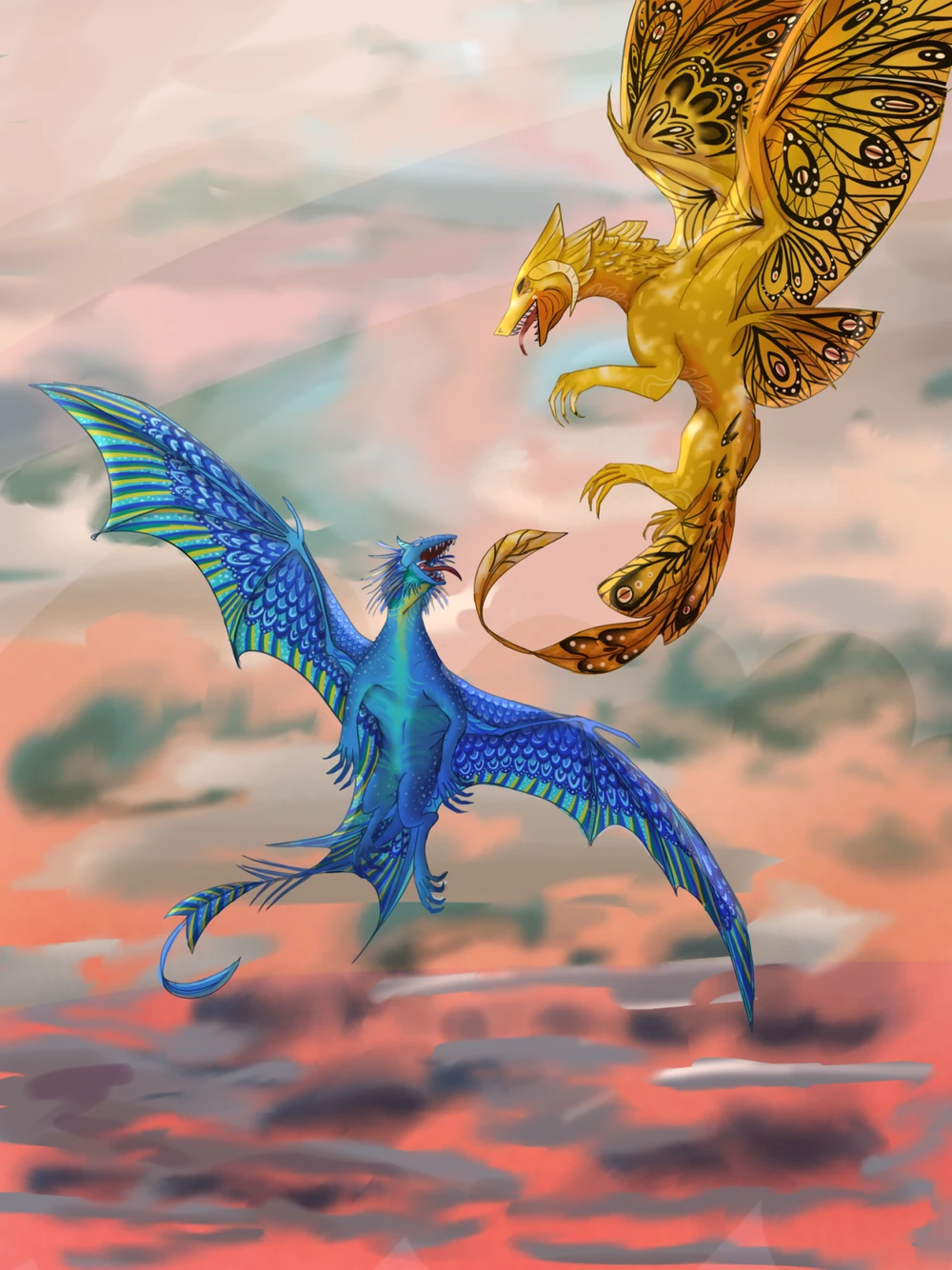
Once again, Robin Hobb: Jhaampe by Starsong Studio on DeviantArt, used for commentary

Dynastic matters also proceed in the world around Fitz, and he finds himself carried along by them once again. As he goes, he notes the changes that have taken place in Buck Duchy and the Six Duchies since the unrest of his youth. The needs of the kingdom take him to the Chyurda and Jhaampe, and he sees again the house where the Fool had dwelt in that city. The sight puts him to musing on his past once again, and Fitz confers with one who had known the Fool for a White Prophet. The conference leaves Fitz somewhat stung, though eased to know the Fool yet lives, and he ruminates upon the matter for a time–until his reverie is interrupted by Nettle, who comes to check on him.

Fitz and Nettle travel together, conferring at length, and he learns much of the state of the Six Duchies and of people he has known from her. Notably, dragons are beginning to become a problem for the Six Duchies as they range in from Chalced, and how to deal with them is an open question. No few other topics are treated, and the pair grow closer together than they had been before, leaving Fitz saddened that their travel together must end as it does. But they arrive at Withywoods in good order and better humor, and they are welcomed warmly by Molly, with whom they exchange news at length.

Fitz and Nettle are also obliged to confront Molly’s continued insistence on her pregnancy and the extent of her preparations for a new child. In a moment of Molly’s absence, they talk together of the seeming ending of her sanity, but they do not conclude their talk before she returns and reacts with indignation neither can claim inappropriate. After some time, though, Fitz and Molly arrive at an accord and more.

In a new section, winter arrives at Withywoods, and Fitz makes a point of commending Revel for his excellent service. Soon after, Molly presses upon Fitz in his study, saying that the pregnancy she has harbored for years is ending, that she is going into labor. After some dithering and rebuke from Molly, Fitz makes himself useful against the event, and he returns with supplies to find Molly has delivered a small, small girl. Molly places the child into Fitz’s hands, and he finds a protective instinct that is partly Nighteyes well up in him as he considers the child. Fitz’s magics tell him that the child is and will be well, and he is greatly eased and enheartened.

The present chapter is unusually lengthy; Hobb’s chapters in the Realm of the Elderlings novels are usually around twenty pages as printed, while the present chapter approaches forty (109-46). Some of the unusual length can be explained by the chapter doing much to situate the novel in the broader scope of the Realm of the Elderlings corpus. I’ve noted before, I believe, the challenge later novels in a series face in introducing new readers to characters and milieu; for a novel such as Fool’s Assassin, published nearly twenty years after the first member of its series and with more than a dozen earlier works to synthesize and address, the challenges are particularly strident. To take a double-length chapter to address a number of points that would be expected to come up, to make notes of what has happened with characters who received more or less attention in earlier works and whose situations could well be expected to matter to the protagonist directly and to the setting in which the protagonist operates, is not out of line. For readers who started their journey in the Realm of the Elderlings with the present novel, I can believe that the extended exposition is helpful. For me, it was a reasonably pleasant reminiscence; even though I have been working on this rereading more or less consistently for some time, it has been some time since I’ve looked at some parts of the corpus. (I do occasionally have to do other things, after all–and I even get to do other things now and again!)

As I reread, I find myself doing so affectively once again. The novel was published in 2014, the same year as my daughter’s birth, and while my wife was not pregnant so long as Molly, our child was born small (and early, by some weeks). I admit to having been worried about her young life (and more than once, in the event; she took pneumonia at a year old, which did not help matters), and I think I am far from alone among fathers in feeling a great sense of duty to protect well up once I saw my child. I also do not think I am alone in seeing no small amount of sass in my newborn daughter’s gaze when she looked at me for the first time. The present chapter speaks to such things, or my reading of it does–although, again, I concede that I read affectively more often than I ought, and no readers fail to bring their own biases to bear on what they read when they read it. We cannot help but do so, of course; we read as an aspect of who we are, and who we are is necessarily a product in part of what we have done and seen. Each of our experiences shapes our understanding in some way or another, and the application of that understanding is itself an experience that helps shape the next–recursive, yes, but not necessarily a bad thing, all told.

As I reread, too, I find myself thinking again about biographical criticism. Just as readers necessarily bring their experiences to the act of reading, such that each will find something different from the other in the same words on the same pages, writers bring their experiences to the act of writing. While it is certainly true, as I recall remarking and as I know many others have, that writers can write of things outside their direct experience, there is a reason “Write what you know” remains advice given to them. Knowing what I do about Hobb’s biography (and while I will admit that that knowledge is incomplete, it does offer enough for me to do simple math), I can readily guess than an author in her late fifties to early sixties as the novel was brought into being would be familiar with such concerns as are attributed to Molly, and I do not think I would be wrong to make such a guess. I do not go so far as to say that it is only that experience that informs the character–I do not believe so much is the case–but I do not think it fitting to ignore that experience, either. Something about a baby and bathwater comes to mind–but, again, that’s my experience showing up in my writing.

If you like the kind of writing I do, know that I’m available to do it for you!

← Back

Thank you for your response. ✨

Or support this ongoing endeavor: https://www.paypal.com/paypalme/ElliottRWI

A Robin Hobb Rereading Series, Entry 394: Fool’s Assassin, Chapter 4

Read the previous entry in the series here.
Read the next entry in the series
here.


Following an excerpt from an autobiography by Chade Fallstar, “Preservation” begins with a Skilled conversation between the old assassin and his erstwhile apprentice. Fitz takes care to let Molly sleep where the Skilling from Chade had awakened him as he stalks through hidden corridors to his private study. Conversation between the Skilled assassins turns to writing and potential regrets about it, and Fitz muses on the matter somewhat wryly as Chade lays out his reasons for asking.

So often, such a thing…
Photo by Min An on Pexels.com

An offhanded comment stifles further inquiries about the writing, and Fitz marks the shift in the tone of conversation as Chade asks after the Fool. Fitz reflects on his relationship with the Fool as Chade relates a report of strange visitors in Buckkeep Town who seemed to be searching for the Fool or someone very much like him. Another report ties the pursuit to the messenger Fitz had failed to receive or recover, and Chade leaves Fitz to consider matters.

Ruminating bitterly, Fitz considers Verity’s sword that Dutiful had given him in fulfillment of a promise, and his thoughts turn to other gifts. One of them, the memory-cube given him by the Fool, attracts his attention, and Fitz considers his present situation deeply before returning quietly to bed. There, Molly, having woken to find him absent, invites him to intimacy, after which interlude, she announces her pregnancy to him, and Fitz fears for the coming loss of the woman he has long loved.

The beginning of the chapter is quite the metanarrative commentary; that is, the writing is about writing, something with which a writer must necessarily be concerned. (This webspace is an example of that concern, for reasons I think are obvious to any who look at it for any length of time.) The focus on it is something that has pervaded the Realm of the Elderlings works, not only in Fitz’s own ruminations (attested in no few chapter-beginnings throughout the Farseer and Tawny Man trilogies), but also in the correspondences at work in the Rain Wilds Chronicles and, as I’ve noted, in the novella “Words Like Coins.” There’s not necessarily a consistent position espoused in the metanarrative, to be certain; there are valorizations of the act and demonstrations of the need for record-keeping, of course, but there are also warnings against leaving clear records, admonishments that doing so can lead to ruin. I suppose that, if there is a single underlying message to be found in the thread of discussion about writing that weaves through the Realm of the Elderlings tapestry, it is that writing is a useful tool and a neutral one, affording power to who will use it but imposing no morality upon those who do. And I’m not certain what all to make of such a thought.

I will note, though, that the revelation of Molly’s pregnancy once again struck me oddly, even though I knew this time that it was coming. (It’s a rereading, after all.) Now, the use of what seems to be deus ex machina is not itself a bad thing, as I’ve noted, especially for a work in an avowedly medievalist genre. (Even if there are other readings that might actually be better-supported, as I have argued and will argue again, there’s more than enough in place to sustain a reading of the Six Duchies as partaking of the prevailing Tolkienian tradition of fantasy literature; certainly, she acknowledges her indebtedness thereto, even as she is clearly not circumscribed by it.) But it is certainly a surprise upon first reading.

If you like the kind of work I do here, why not support it by hiring me to do some for you?

← Back

Thank you for your response. ✨

Or send your support directly to https://www.paypal.com/paypalme/elliottrwi!

A Robin Hobb Rereading Series, Entry 393: Fool’s Assassin, Chapter 3

Read the previous entry in the series here.
Read the next entry in the series
here.

Evidently, too, this is the 1500th post to this webspace. Hooray!


After a brief quotation regarding secrecy, “The Felling of Fallstar” opens with a shift in season from Winterfest to summer on a day years after that finds Fitz seated in a tavern and reflecting on news from Hearth and Just, two of Molly’s children with Burrich. He considers gifts for family until interrupted by a Skill-sending from Nettle expressing concern for Chade, who has evidently fallen and is comatose. The sending contains a summons from Dutiful, now fully King of the Six Duchies, and an order to travel by portal-stone. Fitz balks, citing earlier experience, but the order is reiterated, and he makes arrangements to comply.

This again…
Image source still in image, still used for commentary

Fitz reluctantly leaves Molly behind to answer his king’s summons and goes trepidatiously through the nearest Skill-stone. He arrives at Buckkeep in as good an order as could be expected and hastens in.

Fitz, in his guise as Tom Badgerlock, reaches Chade’s side, where the halting coterie of which he had been part is assembled, along with Nettle and her half-brother, Steady. Fitz, overstepping, issues orders that Dutiful echoes, compelling compliance, and he assesses Chade’s situation, finding it grim. He confers with those present to learn more details, finding Chade sealed off from the Skill much like Burrich had been. Fitz posits reasons for the action and begins to puzzle at how to address the issue. Kettricken joins the conversation, and suggests that Fitz likely knows or can most likely guess the answer. Fitz makes an initial attempt and fails, after which he and Dutiful confer.

Attempts continue into the night, and Fitz stumbles into the answer to his problem amid continued conversation with Dutiful. Finding it, he pulls Skill-strength from those in his company and works to Chade’s healing, guiding it with the expertise of long anatomical study. Chade regains consciousness and makes some complaints before lapsing into sleep, followed soon by Fitz.

Fitz wakes to Thick tending Chade, and he reports to Dutiful and Kettricken. Kettricken again urges Fitz to spend more time at Buckkeep, which he refuses, and Fitz calls back on Chade. The two converse together for a time, both of them much as they had always been together. Fatigue begins to tell on the old man, and Fitz takes his leave.

The comment from Chade at the beginning of the chapter is an interesting one. The old man is correct, of course, even if it is something of a pat statement; the more people who know a thing, the less of a secret it can be. And I am put in mind of earlier events in Fitz’s narrative, such as noted here, pointing to how much knowledge is and can be lost simply because it is never made available to someone who might keep it. But then, that’s one of the things for which fiction is good; it prompts rumination, and thinking is always a useful thing to do and have done.

Something I notice the chapter doing is musing on the approach of age. There are motions toward it in earlier chapters, of course, explicit mention of Molly passing her childbearing years (to which Fitz’s slowed aging is explicitly juxtaposed) and Patience’s own advancing age. The maturing and going-out of Molly’s younger children is also attested

The present chapter makes note of Kettricken going entirely gray, although the remark is made that it is seemingly early. Chade, on whom the present chapter focuses, had always been older in the series, having been the older brother of Fitz’s grandfather, Shrewd; there had been several comments made about his fading powers in the Tawny Man trilogy, for example. To have him fallen and be unable to rise again, however, points directly toward a commonplace of aging (LifeCall and similar products having made much of it for many years in the consumerist programming typical of the last decades of the twentieth century); even more than in previous entries in the Realm of the Elderlings novels, Chade’s situation in the present chapter comes across as something of a shock. Donne’s Holy Sonnet 6 comes to mind.

Biographical criticism is always fraught–authors can well write of things not in in their direct experience, after all–but it is irresponsible to assert that the circumstances of writers’ lives will have no impact upon the writing they do. I note that the novel is published in 2014, at which point, Hobb was in her 60s. I grew up in Kerrville, Texas, a town that boasts a large population of people at or past retirement age. My own parents, even now, are in their 60s. Experience suggests to me that no few people in that age range give no small thought to their advancing years and the decline of physical and mental capacities that often attend thereupon. I have to wonder the extent to which such was on Hobb’s mind as she composed the text, though I know it is an idle wondering; whether it was, and how much it was if it was, doesn’t much change the effect of the text on the reader or how it is achieved, and that’s really where the focus of criticism has to be.

If you like the kind of writing that I do
Fill out the form below; I’ll do some for you!

← Back

Thank you for your response. ✨

Or send your support directly to https://www.paypal.com/paypalme/ElliottRWI!

A Robin Hobb Rereading Series, Entry 392: Fool’s Assassin, Chapter 2

Read the previous entry in the series here.
Read the next entry in the series
here.


Following introductory commentary from an older scribe about the magics in use in the Six Duchies, “Spilled Blood” begins with Fitz rushing to assist Patience, whom he thinks has fallen again. He finds that it is Molly who is in need, however, and attended by both Nettle and Patience. Fitz assists Molly to their bedchambers and into bed amid her apologies, and after she lapses into sleep, he quietly retreats to his private study to contemplate matters.

I do always love to reference Katrin Sapranova’s art, such as the piece here, which is used for commentary.

Fitz is interrupted by Revel, sent by Riddle, who shakingly reports violence in the home. Fitz dispatches him to guard Molly’s room and stalks into a more public study, where he finds Revel amid signs of violence and upset. Fitz issues orders and begins a search that ends up being fruitless, and he confers with Revel again, getting more details about the messenger whose presence he has missed.

The search of Withywoods continues, Fitz communing through the Skill with Nettle as he proceeds. He confers with Riddle, who joins him in the hunt as he offers some rebuke for Fitz having long set aside his recommendations regarding security. The search takes them outside, where queries to staff yield additional details but nothing of immediate use.

Further search yields sign of further infiltration already departed, and Fitz finds himself swept up in his magics by a careless handling of a cube of memory stone that the Fool had carved for him. The experience confirms for him the fate of the messenger he has missed, and he begins to seethe in anger at the violation. But there is nothing to be done at the moment, and Winterfest continues as if nothing had been amiss, time passing ever onward.

The present chapter is still firmly in the explicatory phase of the novel, the first act in Freytag’s Pyramid familiar to many from high school English classes. To my rereading, it does more to lay out social particulars than the previous chapter–but then, it has the luxury of doing so. The first chapter has to do more to establish the broader milieu; the second chapter can be more local because the more global view already motioned towards affords it a context in which to exist. Or, again, so it seems to me; I readily admit to having preferences in my worldbuilding, as well as approaching this novel from a position of familiarity with it and with the broader literary contexts in which it exists.

(I may well be among the expected primary readership, but I do not know that I am necessarily representative of that readership. I would probably be arrogant to suggest as much, and to a degree excessive even for my often-hubristic self.)

I do, as I consider the present chapter, find myself put in mind of the beginning of the Tawny Man trilogy. Here, as there, Fitz has been living a life away from the intrigues of court, out in the country and away from many of the dangers he had previously faced. Here, as there, the habits of mind to which he was trained in his youth have fallen away, and he moves about his day-to-day existence. There is the pleasant counterpoint that his present life is one that, while perhaps not offering more ease, does offer more comfort; he is part of a community, respected and honored, and he is with the woman he has long loved.

But, here as there, there remains an undercurrent of violence in Fitz; when confronted with the threat posed by the infiltrators, although he is unable to meet it, his mind immediately returns to how to do such things. The statement being made about early training is something that can be teased out, I am sure; perhaps those more current in their scholarship than I could attend to such things.

If you’d like me to put my writing skills to work for you, reach out below!

← Back

Thank you for your response. ✨

Or send your support along at https://www.paypal.com/paypalme/ElliottRWI

A Robin Hobb Rereading Series, Entry 391: Fool’s Assassin, Chapter 1

Read the previous entry in the series here.
Read the next entry in the series
here.


Following a letter from Chivalry to Burrich dating to just after the former’s abdication, “Withywoods” begins with Fitz looking out over guests arriving for Winterfest amid falling snow. Molly chides him for his delay in getting ready for the event, and he, grumbling about changes to fashion, starts to dress. Banter between the pair continues, and Molly leaves to attend to guests as Fitz ruminates upon his situation in life. Festivities continue in earnest as Fitz finishes getting ready, and as he makes to join them, he is pulled aside by his steward, Revel, who warns of uninvited guests acting suspiciously and of a messenger whose arrival was announced and unheard. Fitz issues directives to see to each, and he joins the revelry.

This kind of thing, yes, if not exactly this thing.
Photo by KATRIN BOLOVTSOVA on Pexels.com

The festivities are described as Fitz joins them, and though he is not an adroit dancer, he does what he can in the midst of things. Molly and Fitz confer about events and about Patience, who yet lives with them. Patience then takes Fitz aside, and they confer until interrupted by the arrival of Web and Swift, whom they welcome warmly. Fitz considers Web’s continued insistence that he bond through the Wit again, not wanting to replace Nighteyes, and the two confer about the uninvited guests who seem not to show up to their Wit.

As festivities continue, Fitz steps quietly aside for a moment before resuming his conversation with Web. Web urges Fitz to seek a new bond, and Fitz demurs, considering what he has and what he has lost. But his answers seem to satisfy Web, and matters between them are eased. Further conversation between the two is halted by an urgent summons from Molly, delivered by one of her sons; Fitz hastens off to attend to his wife.

The present chapter, first in the novel and in the series, carries out well its expected explicatory role. The novel is situated in the larger chronology of the Six Duchies, with explicit references back to both the Farseer and Tawny Man trilogies. Changes most relevant to Fitz and the characters most closely connected to him from the previous series are noted in passing in a way that lays them out sensibly without being heavy-handed, and explanations for the current state of Fitz’s life are provided without them seeming abusive or insulting. (Both are often problematic, if the readings I have done of other books in continuing series are any indications. There’s a challenge in setting things up to reward returning readers while not confusing new ones. Not everyone addresses that challenge well.)

The chapter also begins to hint at a driving conflict, something gestured towards in the prologue of the novel: the perils of complacency. Fitz is in a position in which he could be expected to be at some ease–and he is, in fact, at ease, perhaps overly so. The neglect of the messenger and the not-very-hesitant admission of the uninvited and clearly lying guests to his holiday celebration both speak to a certain desultory or lackadaisical attitude at odds with Fitz’s presentation in the earlier novels, although it might well be argued that a decade of married life as the petty noble of a country estate, a life that is a retirement from intense and fatally perilous public service, justifies so much. It is no small thing, after all, to remain properly paranoid across years of little happening, and my own experience suggests that the pleasantry of life with an agreeable spouse is decidedly softening–and it is not a bad thing, in itself, to be soft.

So much said, this is a Six Duchies novel, and it is Fitz. He has to find trouble, or it him, one way or another. (Honestly, there wouldn’t be quite so much story, else.) And it is clear in the present chapter that there are at least two sources of trouble waiting for him, if not more (although, since this is a rereading, I may be remembering rather than anticipating). There’s a lot of novel to go, though, and a lot of rereading yet to do–and I find, again, that I look forward to doing it!

If you like how I write, maybe you should hire me to write for you!
Get started by filling out the form below!

← Back

Thank you for your response. ✨

Or send support along directly!

A Robin Hobb Rereading Series, Entry 390: Fool’s Assassin, Prologue

Read the previous entry in the series here.
Read the next entry in the series
soon.


Following front matter that includes a pair of maps and the text of a letter from Queen Desire to Fennis of Tilth, the prologue begins with Fitz rehearsing his early experience of hating and fearing Desire. The circumstances of his finding the letter receive some attention, as do Fitz’s changing attitudes toward the woman. Fitz also reflects upon his early impressions of Withywoods, contrasting them with the reality of the place he encountered when he moved there.

I know it needs work…and the room does, too.
Image is mine. Clearly.

Fitz continues, shifting to a far more melancholy musing that expresses some sympathy for Desire’s position and begins to bewail his own inattentions and infelicities (7):

Lessons learned too late. Insights discovered decades later.
And so much lost as a result.

As I noted in the previous entry, I’m moving directly into the Fitz and the Fool Trilogy, rounding out what is currently the main line of the Realm of the Elderlings novels before going to pick up other things (such a s the Soldier Son novels and some shorter works). I’ve got a couple reasons for doing so. One is simple momentum. Another is that I have a coming conference paper that will need me to have looked at the books again, and moving directly into treatment of them helps me to do the work I need to do for that paper. Yes, it might come off as a bit of laziness, but I’m doing this in and around working outside academe; I have to make time to read when I can, and I need to make it count for as much as I can when I do it.

As might be expected, this is not the first time I am reading the book–nor rereading it. I comment about my first experience with the book here, close to ten years ago, when I’d completed reading the signed copy I was lucky enough to get. Too, I have written at least one paper that deals with the series of which the present volume is the first, doing that some years later so that I have to have reread the text at least the once. (I often fall into the trap when writing academic papers of getting into reading when I’m looking for citation and argumentative materials, which does not speed the process of composition.) So it’s not with wholly fresh eyes that I’m coming back to this text–but it has been a while. The volumes of the Fitz and the Fool trilogy are substantial, and I haven’t had the luxury of as much time to read as I would like; as I note above, I have to fit it in when I can–and this isn’t something I can really read to my daughter quite yet.

And as to the text itself…the foreshadowing is quite deep. It promises great ill for FitzChivalry Farseer. But then, that’s par for his course…

Help me keep this going by hiring me to write for you!
Get started by filling out the form below!

← Back

Thank you for your response. ✨

Or you can send your support along directly!

A Robin Hobb Rereading Series: Entry 389: Blood of Dragons, Epilogue

Read the previous entry in the series here.
Read the next entry in the series here.


“Generation” begins with Tintaglia waking near Kelsingra, recovered from her earlier ordeals. Kalo and Icefyre fly nearby, the latter rebuking the younger dragons for their deviations from older ways, and they, in turn, assert the need for change against a world unlike that which Icefyre remembers. A brief argument and exchange of insults ensues, and Tintaglia thinks ahead to what may come for the eggs she is soon to lay and the serpents and dragons that will proceed from them. Below, in Kelsingra, Selden leads a cheer for the departing dragons and the new generation promised, and Tintaglia flies away.

Probably not quite what’s in mind, here…
Photo by Pixabay on Pexels.com

The epilogue is brief, as epilogues are wont to be, and it focuses on the non-human inhabitants of the Rain Wilds, as the Trader-centered novels tend towards doing. The view into other inhabitants of the Realm of the Elderlings remains a welcome thing, and there is something to be said for having what seems to be a happy ending for the characters who have managed to make it through the pages of the series. It’s nice.

A couple of notes about the rereading probably need to be made here. I’m not really doing this in a strict chronological order, at least in terms of what got published when. I skipped the Soldier Son novels to treat the Rain Wilds Chronicles, and I’m going to put them off until after I get through the Fitz and the Fool Trilogy, to which I’m turning next. There’re also some one-off things and shorter projects that might get addressed in the interim; I’m not sure on those yet. I do know, though, that when I can situate a given text within the broader context of what I’ve already reread, I’ll do that (that is, if I know something happens around the time of oh, Verity rising against the Out Islands, I’ll make that comment). There’s still a lot of rereading to do; I’m looking forward to doing it!

If you’ve liked reading what I’ve written, consider having me write for you!
It’s easy to get started; just fill out the form below!

← Back

Thank you for your response. ✨

Or you can send your support along directly!

A Robin A Robin Hobb Rereading Series: Entry 388: Blood of Dragons, Chapter 22

Read the previous entry in the series here.
Read the next entry in the series here.


A letter from Selden to Keffria and Ronica in which he glosses developments in his life precedes “Summer,” which opens with the continuation of discussion between the crews of Tarman and Paragon. Events in Chalced are glossed, and some future plans are floated. Difficulties are also attested. The dispositions of the dragons after the defeat of Chalced are also attested, and Chassim’s installation as Chalced’s ruler receives remark. Selden’s condition is also reported, and thoughts of his future are voiced.

Looks about right…
Mating Battle, by Toad, from the Realm of the Elderlings Wiki, here, used for commentary

Sedric and Carson see to the disposition of messenger birds that have been sent to Kelsingra. Neither has much experience with the birds, but they do find a message appended to one of them. Opening it, they find a request for news of Hest and a reward for information about him. After a brief conference, the two set the message aside as irrelevant and return to their work.

Tats and Thymara confer as they look out over Kelsingra and its surroundings. They note, too, the continued enthusiasm for mating fights and flights among the dragons, now that matters have settled. The pair are surprised to see Sintara at the center of such a tangle, from which she and Mercor emerge in union. And in exultation, Thymara, herself, flies, and she at last accepts Tats’s entreaties.

The present chapter, last in the book (there’s an epilogue, though) and thus the last in the tetralogy, does a good job of summarizing and resolving a number of plot points that earlier chapters had not quite addressed. It’s a sensible enough thing for the chapter to do, given where it is, even if I do still think it’s a bit rushed. Still, that much of the resolution is presented as a thing done previously and only reported some time after the fact does a fair bit to help it sit better with me, and there’s doubtlessly some determination to the effect of “Readers won’t be interested in seeing, oh, Selden and Chassim falling more fully in love, and the novel’s already long enough, thank you” involved in glossing developments.

(Look, I’m a sucker for some of this kind of thing. And I remain a nerd–obviously, since I’m writing about the book and about this kind of thing in the book more than a decade after the fact–so I want details and information, even if I can’t spend time on them the way I used to could.)

I will note that I appreciate the passage with Sedric and Carson in particular. That Hest has simply gone without a trace, or an obvious one, and that it’s accepted along the lines of “Eh, what you gonna do?” is something of a playful thing; that there is a clear implication that the pair know what happened, even without more or less direct evidence, only enriches it. Petty as it is, though, and subject to deconstruction (seriously, follow the implications), it’s a little bit of amusement for me, and I appreciate it.

If you like the kind of interpretation and analysis I bring to bear, why not commission me to do some for you? Fill out the form below to get started!

← Back

Thank you for your response. ✨

Or you can send your support along directly!

A Robin Hobb Rereading Series: Entry 387: Blood of Dragons, Chapter 21

Read the previous entry in the series here.
Read the next entry in the series here.


A missive from Kerig to Erek “unofficially” noting the latter’s impending elevation to Master status precedes “Chalced,” which opens with Reyn borne aloft by Tintaglia again and considering the differences between the earlier experience and the present one. The dragons’ progress in anger towards Chalced is described, and the changes that have continued to overtake Rapskal are noted. The relative dispositions of the keepers and the dragons are attested, as well, with tensions emerging. Reyn also notes the differences between the mores that have grown up among the keepers and those with which he still holds, considering how they will affect him and his family. Talk of the coming battle is held, as well, as is talk of Thymara.

…by any other name would smell as sweet…
Photo by Pixabay on Pexels.com

In Chalced, Chassim wakes Selden, bidding him rise and eat. The two talk together fatalistically, planning their mutual exits. Their discussion is interrupted by the sound of horns in the city.

The dragons approach Chalced in haste, preparing their attack. Plans that had been made are related, along with the discussions that surrounded them. Messengers go out, noticed but unchased, and the attack commences.

Sedric, riding Relpda, urges the dragon to caution, only to be mocked for it. The dragons project fear onto their oncoming victims as they approach.

Selden and Chassim continue to eat and confer, and Chassim begins to notice the tumult in the city below. They watch the oncoming attack, and Selden recognizes the approach of death. Chassim joins the recognition, and the two, believing themselves condemned, kiss among the spreading ruin. Seeing the dragons’ intent, Selden calls out to Tintaglia again.

Reyn watches sickly as the attack continues and flesh melts against dragon venom. He marvels at the dragons’ precision for a time until Tintaglia turns beneath him and races to an unknown target.

Selden sings Tintaglia’s praises as she comes for him, and both he and Chassim are lifted away from the ruin of Chalced. Reyn rejoices in the recovery of his brother-in-law, and Chassim introduces herself to him.

As befits a chapter focused on an instance of combat–slaughter, really–the present chapter is fragmented and disjointed, shifting with increasing speed among its focal points as the dragons fall upon and lay waste to the fortress of Chalced. While it does make the narrative harder to follow–at least for me as I reread the chapter at this point, probably more tired than I ought to be to do such a thing–it also works toward the ultimate unutterability of a fight. Others, unfortunately more learned than I in the matter, might well be able to say more, but from the experience I have had in fights, I can attest to the ways in which conscious memory fails to fully encompass any physical contest, and words do not suffice to the task of making real what happens to those who are not there for it. Given the fiction that dragons are, readers must look for parallels in their own world, of which there are far too many and far too readily applied to populations that do not deserve it. And perhaps that is the greatest fiction at work in the present chapter, that the onrushing forces work so diligently to contain the damage they do, even if only out of self-interest, as the dragons themselves comment in their approach to Chalced.

The exchanges between Selden and Chassim in the present chapter sit strangely with me as I reread the chapter. It is not the fatalism both display, to be sure; both of them have reason, as the chapter begins and continues, to expect that they do not have much time left living, and Chassim certainly has reason to expect that, if life continues, it will not be a good thing for her. Rather, it is the sudden motion towards what seems to be romance between them as the dragons make their attack. I know that the imminence of death does strange things to people; so much is amply attested. And it is not necessarily the case that a kiss is romantic, although it is overwhelmingly coded as such in the dominant social paradigms in which Hobb writes and, presumably, the majority of her audience reads. (Indeed, I believe I’ve remarked upon Hobb’s more or less explicit use of such coding, and not only in the Rain Wilds novels. Others have, as well.) Still, the specific reaction seems a bit odd to me; I can’t necessarily pin down why, but then, this is not a formal paper that requires I do so. Nor is it necessarily a bad thing; even for things for which I am very much part of the expected primary audience (and after having written and published on Hobb’s work even before the novel hit print, I think I solidly established myself as part of that audience), it is too much to ask that all parts of such things cater to my specific interests.

If you’d like to have custom writing done to your order, without the dishonesty that comes from AI use, fill out the form below, and we’ll get started!

← Back

Thank you for your response. ✨

Did I bring you as much pleasure as a cup of coffee does? Half a cup? Could you kick in as much for me so that I can keep doing it? Click here, then, and thanks!