A Robin Hobb Rereading Series: Entry 306: Fool’s Fate, Chapter 29

Read the previous entry in the series here.
Read the next entry in the series
here.


The next chapter, “Feathers in a Fool’s Cap,” opens with an in-milieu folk-tale before turning to Fitz’s experience in a mental world created by his donning the Rooster Crown. Fitz is aware of other personae inhabiting him, performers much as the Fool had masqueraded as being, and he contemplates the experience amid his awareness of the Fool’s death and bodily decay. The nature of the personae–performers favored of dragons in the days of the Elderlings–is made clear to Fitz, and he hears the Fool’s own voice, coming from his blood in the Crown itself.

Here it is…
Image from Faceless Frey’s Tumblr, used for commentary.

The performers in the feathers attempt to expel the Fool from the Crown, and Fitz recalls his experience being taken from Nighteyes’s body back into his own. The recollection gives him insight into what he can do now, and he plies his magics in tandem to bring the Fool back to life as himself. The exercise gives Fitz substantial insight into his long-time friend, and in the wake of the working, the two are exhausted. The Fool’s convalescence begins, Fitz nursing him along as gently as he can, contrasting the Fool’s experiences with his own. At length, the Fool is able to eat and drink, and he and Fitz confer about events, the Fool voicing some misgivings about how Fitz arranged matters. And Fitz continues to offer what comfort he can against what his friend has endured.

I remember, back when I was working on my master’s thesis, my advisor, Chris Healy, told me he had read the books about which I was writing–and that the present chapter had stood out to him as doing much to advance the idea of what might then have been and would certainly now be called a queer studies approach to the text. It’s far from the only thing that would, as the Fedwren Project attests and as I’ve commented on more than one occasion before. Somehow, I find myself in mind of the conversation again–perhaps because it has been a decade since my doctorate, now, and fifteen years since mastery.

I don’t have as much to show for either as might once have been hoped.
I’d be happy to put my talents to work for you; let me know what all you need written, and we’ll talk!

A Robin Hobb Rereading Series: Entry 305: Fool’s Fate, Chapter 28

Read the previous entry in the series here.
Read the next entry in the series
here.


The following chapter, “Catalyst,” begins with a note about wizardwood before turning to Fitz’s efforts to reenter the Pale Woman’s domain. He finds a path inward, if with some difficulty, and makes his way through the labyrinthine facility. Among others, he finds the flayed skin of the Fool’s back, and he swoons; when he comes to, he leaves the marred skin behind, although he takes the piece of the Rooster Crown he finds.

Here it is.
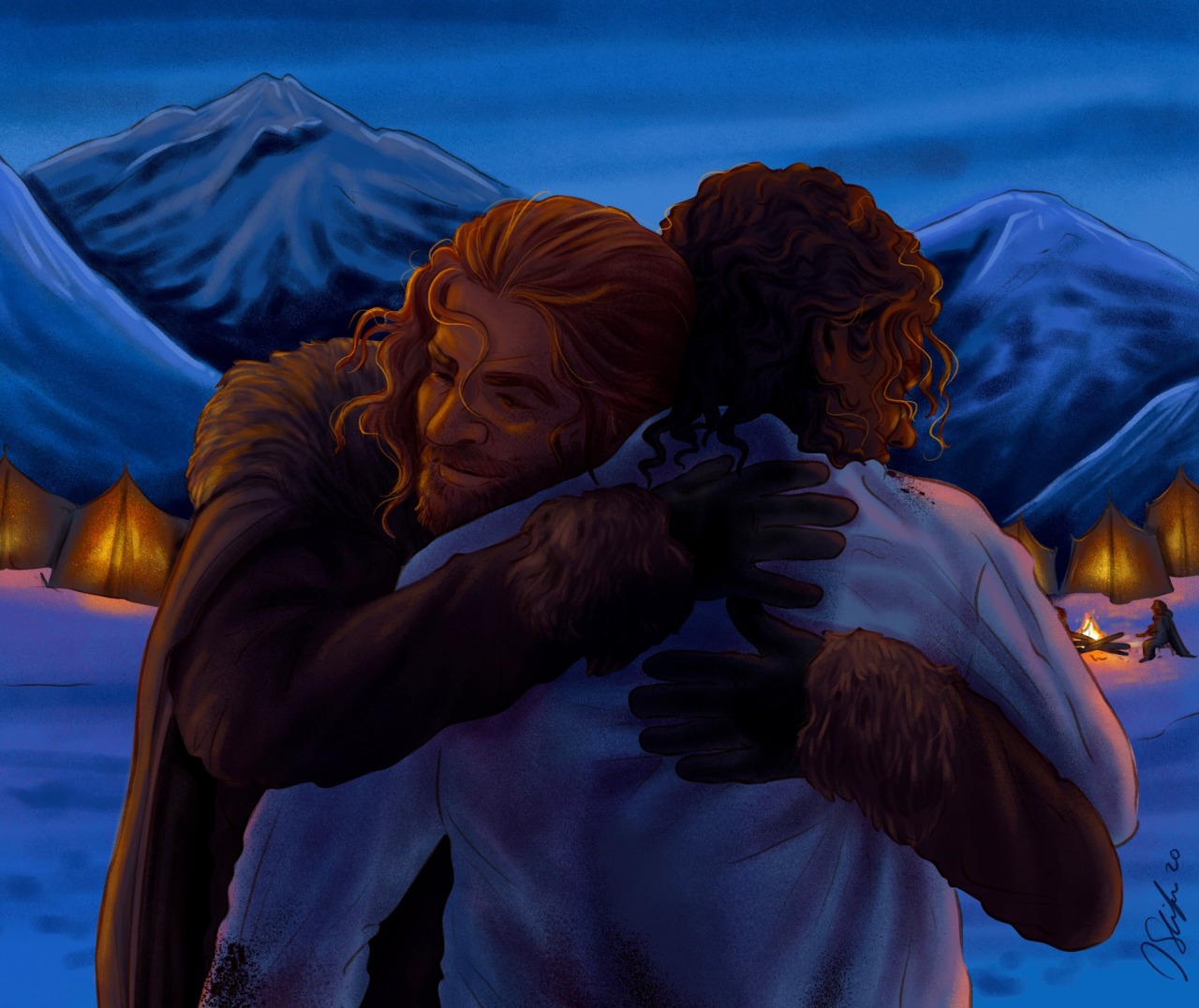
TeodoraLaessa’s Fitz and The Fool on DeviantArt, used for commentary.

Pressing on, Fitz finds scrolls and records that had been sold away from Buckkeep, musing on it but leaving it behind as he continues to search for the Fool. He finds one of his erstwhile companions along the way and makes a pyre for him, and then he finds the Fool, dead among filth. Fitz attempts to Skill into the body to bring it back to life, but even with the help of the whole Skill coterie, he cannot do so. Chade and Dutiful offer such comfort as they can, little enough in the wake of the Fool’s death and the announcement to him of Burrich’s.

Fitz closes off Skill contact and recovers the Fool’s body, mulling over where to bear it when interrupted by the maimed Pale Woman. She taunts him, seeking to provoke him into killing her, and he refuses; she attempts to negotiate with him, and he walks away.

Wandering, he comes to a room with a map detailing the geographical extent of the Realm of the Elderlings and marking Skill-pillars. Another room contains a Skill-pillar, and Fitz takes the Fool through it to a plaza in a ruined city. There, he lays the Fool out and tends to the body, repairing the broken Rooster Crown and inserting the wizardwood feathers into it. Before placing it on the Fool’s head, Fitz hesitates, placing the crown upon his own head in an attempt to change what has happened.

I note with some interest the exchange of names mentioned by the Pale Woman as a custom of the Fool’s native people. The significance of the custom is noted explicitly, if in mockery, as the Pale Woman asks Fitz “Did you ever call [the Fool] by your name, to show him that he was as dear to you as your own life?” It joins the comments about hair-cutting as mourning that appear at intervals in the novels treating the Six Duchies to increase the verisimilitude of the milieu; such small things pepper lived experience, and having them appear in fiction adds richness to the fictional worlds in which they appear. And in the case of Hobb’s Fool, the recollection of how many times the character called Fitz “Beloved” becomes all the more poignant…

Send a little support my way?

A Robin Hobb Rereading Series: Entry 304: Fool’s Fate, Chapter 27

Read the previous entry in the series here.
Read the next entry in the series
here.


The succeeding chapter, “Doors,” opens with an in-milieu spy’s report before returning to the retrieval of Dutiful’s party and those they have recovered from Aslevjal. Those aboard celebrate the return and recovery, but Fitz lays out his purpose to Swift; he means to return to the Pale Woman’s domain to cremate the Fool and to confirm the death of the Pale Woman. He affirms as much to Dutiful when the Prince speaks with him as the rest board, adding that his return as himself will occasion problems in the Six Duchies.

The man of the hour…
Leanna Crossan‘s depiction of the Black Man, used for commentary

Unbeknownst to either Prince or Fitz, Thick remains behind on Aslevjal with Fitz. His emergence startles Fitz, though his cleverness in remaining behind and easy acceptance of Fitz’s intent prevent the latter from sinking into depression. Thick also reports on Nettle’s status in Buckkeep, which displeases Fitz; she is not in a situation he would choose for her.

In the morning, Fitz sets out to find a way into the Pale Woman’s holdings, Thick trailing him. Progress in that line takes some days, and Fitz grows closer to Thick. In his sleep, Fitz communes with Nettle through the Skill, and in the morning, he wakes to find signs that the Black Man has been present. Pressing on, Fitz and Thick find their way to the home of said Black Man, who welcomes them in warmly and offers cryptic advice to Fitz. He also notes that he was once a White Prophet, relating some of his history on Aslevjal to Fitz as he sends him on to recover the Fool.

If I think about narrative structure, I am not certain how to regard the present chapter. I suppose this might be the beginning of what Freytag would call the denouement, what my musician self is inclined to call not a coda (that’s the epilogue), but another movement. Themes long heard in the work are being woven together, even if the main line of the melody is something other than what is being presented now. Something like a shift to another mode or a pivot into a minor key or a blues pattern begins to emerge…I think. After all, I wasn’t able to make it as a band director; my education in that line is truncated, so I might well have it all wrong.

If you like it, rather than put a ring on it, put some cha-ching on it!

A Robin Hobb Rereading Series: Entry 303: Fool’s Fate, Chapter 26

Read the previous entry in the series here.
Read the next entry in the series
here.


The next chapter, “Healings,” begins with in-milieu commentary by Fedwren regarding Chalcedean slave tattooing and manumission. It pivots to Fitz musing on what the battle recently ended has left behind it as the combatants attend to themselves and he, himself, begins to take in the death of the Fool as he makes his way to Burrich. As Fitz reaches the man who raised him, Burrich dismisses the rest–including Swift–and lays out his final intent to Fitz; he bids his erstwhile ward take care of his family and wed Molly at long last. Swift is summoned back, and the rest move to comfort Burrich in his final pains as best they can as they strike camp and return to the shore of Aslevjal.

You’ve come a long way, baby…
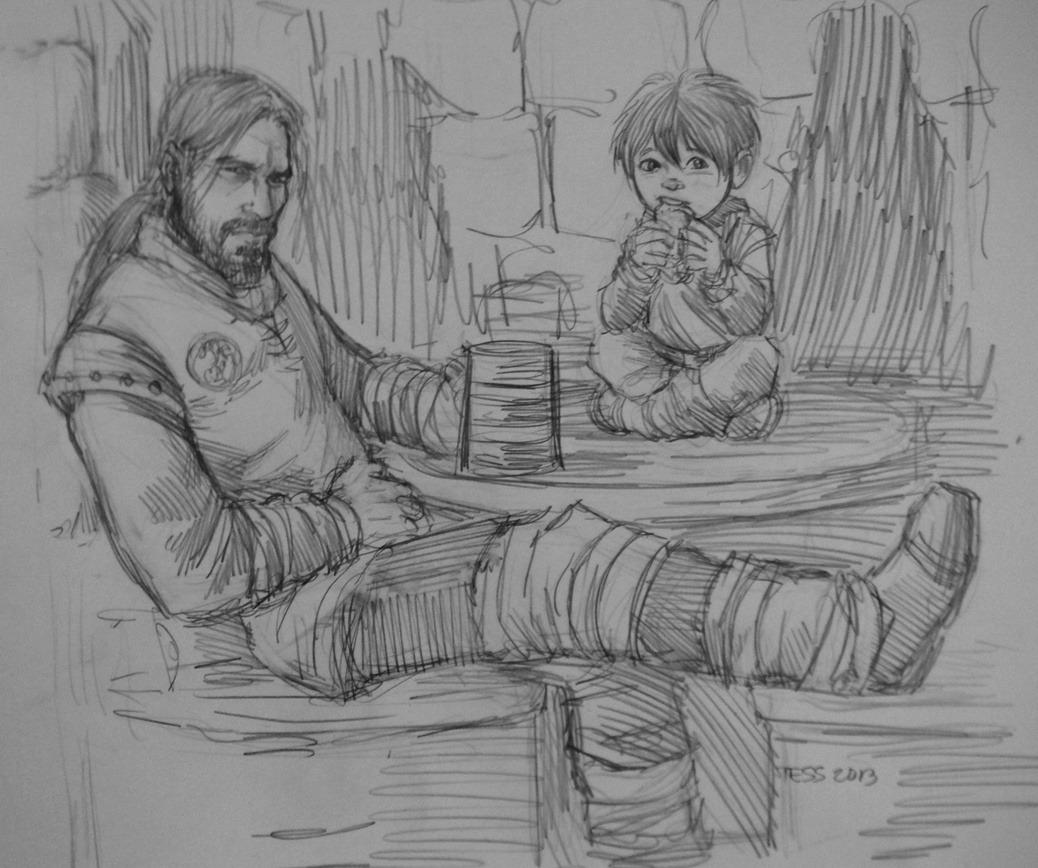
Image is from Tess Fowler on Tumblr and is used for commentary.

Fitz assesses the losses and confers with the guard captain that had accompanied Dutiful. They laugh bitterly together, and Fitz sees to Thick, who has been billeted with the captain. More conference follows, and, in the morning, Fitz asks if the Skill coterie can attempt to heal Burrich. The attempt is made, and it does not succeed, but the energies that are marshaled to that effect are directed by Thick into the other injured. Those efforts succeed, and Thick is acclaimed by all who witness.

Reports are exchanged afterward, Fitz learning much of what had transpired on the island under the tyranny of the Pale Woman. Fitz and Swift also confer at length, largely about Burrich, as their descent to the shore proceeds. More reports follow, chiefly from Riddle, and the party reaches the shore to await retrieval. And on the shore, Fitz guides a slow healing of the Narcheska, directing the Skill of others to remove the tattoos that had been inflicted upon her by the Pale Woman, completing it just as the ships arrive to bear the party away.

It strikes me as of interest that the chapter leads in with tattooing as a marker of enforced servitude. That the Fool and Elliania are both tattooed and compelled does not escape me; that they are both tattooed with the forms of dragons to mark their compulsion–as is Wintrow, even if it was not widely known at the time–does not, either. (Admittedly, the motif is somewhat frustrated in the milieu by Patience’s tattooing, although that case might well be understood as a divergence of cultural practice and Patience’s own repeatedly attested eccentricities.) The practice and its emergence in several places within the milieu would seem to link that milieu more firmly to itself, which is a good thing from a worldbuilding standpoint; one of the things that mars a text is when the world it depicts does not work the same way consistently, while seeing things kept in place serves to bolster the narrative quality of a fantasy world.

Help me move into the summer in style!

A Robin Hobb Rereading Series: Entry 302: Fool’s Fate, Chapter 25

Read the previous entry in the series here.
Read the next entry in the series
here.


The following chapter, “Dragons,” begins with brief in-milieu commentary regarding the depredations of Kebal Rawbread on his own people before turning to the ongoing conflict on Aslevjal, which is joined by Tintaglia. Icefyre struggles to go aloft, and Rawbread, as a dragon, heeds the Pale Woman’s instructions to focus his attentions on a single dragon, attacking Tintaglia. Fitz urges flight for Dutiful and his party, and Dutiful spies the returning Elliania and Peottre–and her mother and sister, Forged. Dutiful rushes to aid them, bringing Fitz into melee–which the others of their party soon find thrust upon them as the Pale Woman’s forces attack.

Brave youth…
Swift and Rawbread, based on Robin Hobb’s Fool’s Fate, chapter 25, from perplexingly’s Tumblr, used for commentary

The melee continues, with Tintaglia falling and Rawbread advancing upon her, goaded on by the Pale Woman. Burrich and Swift interpose themselves between the two, Burrich attempting to attend to the dragon, Swift standing guard with bow and arrows. Burrich moves to defend his son, assailing Rawbread with a massive outpouring of the Wit and being struck down in return. Swift looses a wizardwood arrow at Rawbread, killing him, and those who had been Forged into the dragon that yet live begin to be restored. Reunions begin, and the dragons begin a mating flight. Fitz realizes that the Fool might yet live, but he is called away to Burrich’s side for his final moments.

I admit to beginning to tear up as I reread the chapter this time, whether from relief at so much of the narrative tension easing or in sadness at once again seeing a character I’ve read over decades take his deathblow in the service of fatherhood. And it occurs to me, now or again, that one of the glories of a book is that it allows engagement across years, that the characters and their thoughts and words and deeds are on the page every time the book is opened, that they can be lingered over again and again, a cologne that never fades; but one of the things that is part of that, too, is that their sorrows afflict the heart again and again, a stink in the nose that, once first encountered, remains a wisp in the cologne ever afterwards.

Clearly, I put on the cologne again and again, breathing deeply of it and sighing in pleasure. Sometimes, though, that little bit of lingering stink chokes me, and my eyes water from it. But it is good to feel, sadness no less than joy, even if it is for ink upon a page only.

Send a little something my way?

A Robin Hobb Rereading Series: Entry 301: Fool’s Fate, Chapter 24

Read the previous entry in the series here.
Read the next entry in the series
here.


The subsequent chapter, “Tintaglia’s Command,” opens with an in-milieu story about the enchantment of dragons before turning to Fitz returning to Dutiful and his company, where he is upbraided for his choice to preserve and even awaken Icefyre. In his upset at the event, Chade lets slip that Fitz is himself, rather than Tom Badgerlock, and questions are threatened but delayed. Reports of events are exchanged, and work to free the dragon begins–spurred on by the titular draconic demand. Dutiful assesses the power of the command upon his mind, but most of the rest of his company rush to free Icefyre.

Bang.
Photo by Pixabay on Pexels.com

Chade takes charge of the excavation efforts, leaving Fitz to consider the consequences of his actions for the Fool, as well as to confer with Burrich. The latter reveals his intentions, having thought mostly to assuage his daughter’s fears but having been wrapped up in events. The absence of Peottre and Elliania is marked, and conference about the ramifications thereof undertaken. And Fitz and Burrich confer privately as it all goes on, easing many of the long pains between them; Burrich’s relation of the underpinnings of his personal hate of the Wit are detailed.

Preparations are completed, and Chade and Fitz make to place the blasting powder, Fitz and Burrich still conferring about events. Fitz lights the charges, and after a misfire, explosions begin to go off in earnest. Icefyre panics in the tumult, and Tintaglia rages as Dutiful’s group reassembles, injured from the concussions and debris. More efforts to free Icefyre get underway, and Web presses Burrich towards reconciliation with Swift. A final charge explodes, and Icefyre emerges, emaciated, into the free air.

Fitz is forced to reassess his place in the world, faced with a greater predator, and his considerations are disrupted by the revelation that the Pale Woman’s ice-hold is crumbling under the strain of the explosions and the dragon’s struggles. And to make matters worse, the Pale Woman’s stone dragon emerges, ravening and raging, and attacks.

There is a lot going on in the chapter–fittingly enough, given its location in the book and in the series; it’s time for things to begin wrapping up. Of interest to me as I reread this time is the expression of generational trauma surrounding Burrich in regards to the Wit. His animus against the magic he himself possesses is attested throughout both the present series and the Farseer novels, beginning early on, and it can be explained as Burrich aligning firmly with a prevailing attitude in the Six Duchies. The present chapter makes it more personal for him, though, with the story of his family’s enslavement and the note that it came about “Because the man who should have made his primary bond to his wife instead chose a horse over her and his children” (408); it becomes much harder to condemn Burrich for his attitudes in that light, although it does not necessarily excuse him in his perpetration of that trauma on Fitz and on Swift.

Fitz has long internalized that trauma and Burrich’s reaction thereto, while Swift seems to resist it as social changes occur in the Six Duchies–and the changing attitude does lend itself to interpreting the Wit, again, as a metaphor for homosexuality in the United States, even as the direct presentation of homosexuality in the novels tends to undermine the metaphor. (I continue to contend that reference doesn’t work with what is actually present.) As I’ve noted at several points earlier in this series, though, others do far better at attesting and explaining so much than I; even absent that, though, the chapter points to a lot of work that needs doing, because we all carry the burdens of our pasts and the pasts of those around us.

Help me keep doing this?

A Robin Hobb Rereading Series: Entry 300 (yay!): Fool’s Fate, Chapter 23

Read the previous entry in the series here.
Read the next entry in the series
here.

There is some discussion of suicide in what follows.


The next chapter, “Mind of a Dragon,” opens with brief in-milieu commentary from Fedwren about the Elderlings before pivoting to Fitz setting to work with Chade’s blasting powder. At Dutiful’s direction, he proceeds to the location appointed for the blast, his thoughts turning to Burrich, Molly, and Nettle as he goes, and he begins to lay out the required materials. The pair struggle to get the required fire started, and Fitz sends Dutiful away to help Burrich. His mind wanders, and Icefyre communes with him through his magics.

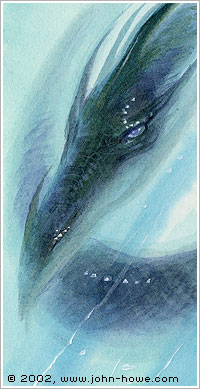
The dragon in question.
Source in image, used for commentary.

The dragon conveys his long-held intent to die in the wake of the undoing of his species (about which some here and here). Fitz understands that Icefyre had come to Aslevjal for a quiet, dignified death, from which human efforts and his own flesh prevent him. In the wake of the revelation and the retreat of Icefyre’s mind from his own, Fitz assesses the situation, thinking through implications as he has long been taught how to do. The assessment convinces him to turn away from killing Icefyre, and he reaches for the dragon through the Skill, calling out to Nettle for aid and holding Chade at bay in his mind. Nettle is overwhelmed by the dragon, as is Fitz, and Thick’s power in the Skill recovers them both.

Fitz returns to himself to find chaos. The dragon is beginning to rouse, Dutiful’s party is in a frenzy, and the Pale Woman announces through the Skill that she will begin to work her worst upon the Fool.

A couple of things come to mind as I reread the chapter this time. One is that the time scales involved in the Elderlings novels are…substantial. Geologic change and the progress of glaciation are not rapid things, and even if such cataclysms as befell the Realm of the Elderlings themselves work quickly, the erasure of so much as is noted to have been lost suggests an even longer time than does the linguistic drift suggested in a number of the prefatory comments in Fitz’s narrative. (I’m sure there’s some paper to be written there, honestly. Maybe I will be the one to write it.)

The other is a return to something that I’ve noted in the Elderlings novels previously. Hobb once again motions towards circumstances in which suicide would be an acceptable outcome. Fitz had earlier been involved in such considerations, as had the liveship Paragon. Icefyre, facing what seems to be a lingering existence as the only member of his species, would seem to have good reason to give up. But then, the dragon’s understanding of circumstances is incomplete–as had been that of Fitz and others. So maybe there is something to consider there, too…

Like the writing I do? Get in touch, and see what I can do for you!

← Back

Thank you for your response. ✨

Or simply send support my way today!

A Robin Hobb Rereading Series: Entry 299: Fool’s Fate, Chapter 22

Read the previous entry in the series here.
Read the next entry in the series
here.


“Reunion,” the following chapter, begins with an excerpt from a letter from Queen Desire detailing her reaction to the introduction of Fitz to Buckkeep at Shrewd’s behest. It moves on to follow Fitz’s progress from the Pale Woman’s caverns to Dutiful’s encampment, beleagured by the cold and guided briefly by the Black Man. He is brought back in and treated as he is debriefed, and he learns how Thick had been found–both by Dutiful’s company and by Burrich, whose own arrival is detailed.

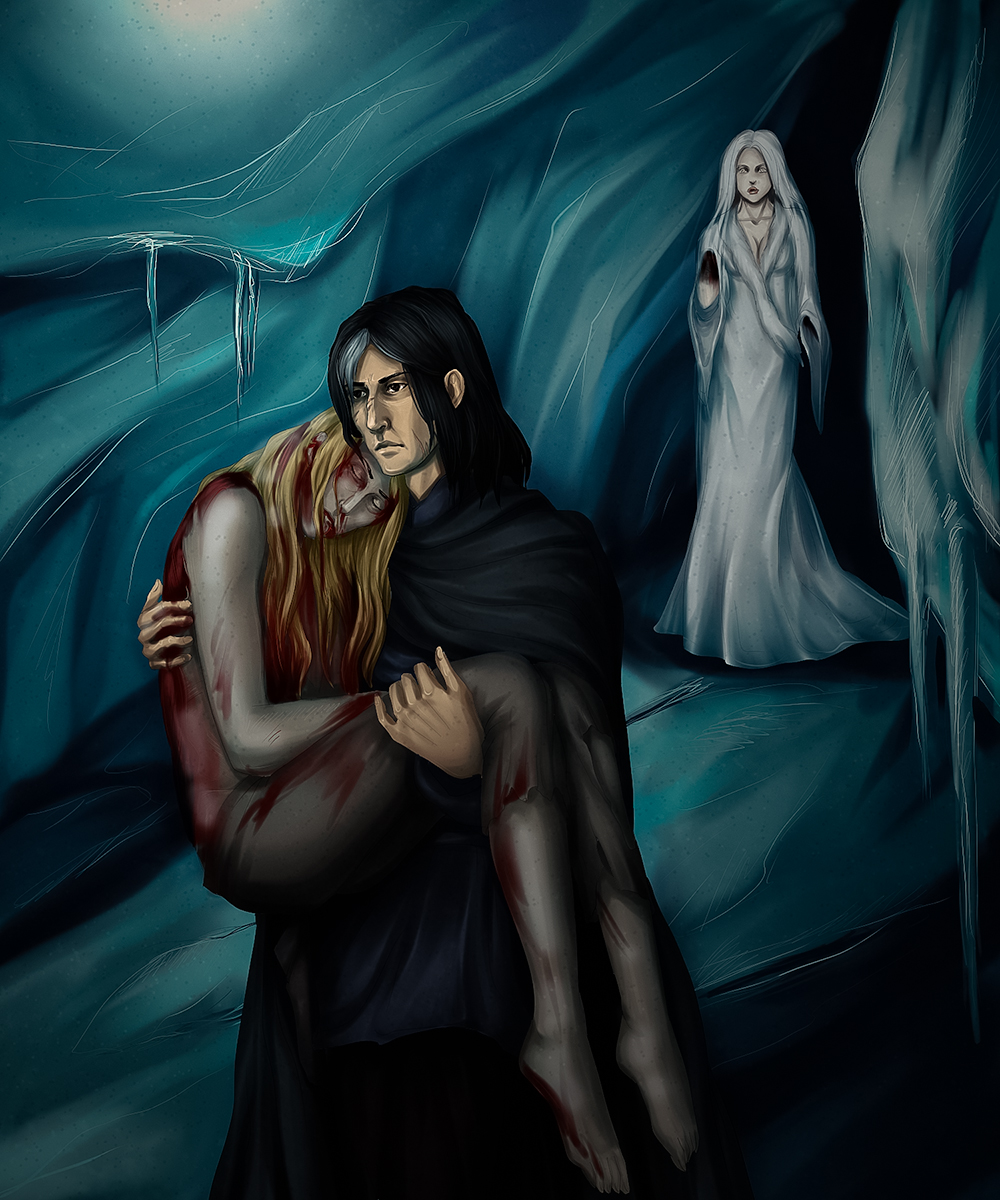
Another image from Faceless Frey, used here for commentary.

The Witted coterie joins the throng with food and further aid, and Web marvels at Burrich’s use of the Wit to help treat Fitz; his comments provoke the other man, and Web leaves. Conference about what has been learned and its implications commences, and Dutiful summons Peottre and Elliania. When they arrive, Peottre flatly begs for aid, joined by Elliania, and more of the Pale Woman’s perfidy is laid bare. Plans for how to proceed with killing Icefyre and destroying the Pale Woman are noted, involving Chade’s blasting powder, Fitz volunteering to spare Dutiful and despite Burrich’s protests. And as Fitz goes about his work, Burrich takes him aside and says words to him that he has long needed to say, that Fitz has needed to hear–with a promise of more to come.

The rush I noted earlier seems to be accelerating, pieces being slotted into place in evident haste because they need to be in place. I continue to be somewhat put off by it, even all these years later–because I have been reading this novel for years, since it was published, and hungrily though I did so and do so, this morsel is not necessarily to my taste.

And I am not sure how to regard the content of the chapter in light of what has happened in the world recently. I know that it is not “fair” to assess a given work by the standards of times other than its own, and even eighteen years (the book was published in 2004, and I reread it for the present writing in 2022) occasions quite a bit of change. But I also know that one of the ways in which a work’s quality is borne out is that it continues to speak to audiences well after it emerges into the world, and while it may be the case that I read the work with nostalgic longing–my later undergraduate years were not bad ones, though they were not as good for me as grad school was–I cannot help but think that it would still show up well even had I not the prior experience with it. I am a different reader now than I was then, though, and not only because I have much, much more in the way of formal training; the eighteen years of lived experience has a lot to do with it, as well, and the reading now…I do not know.

How much longer the world in which I live will allow for such things is unclear. I fear it will be less long than might be liked.

I continue to appreciate your kind support!

A Robin Hobb Rereading Series: Entry 298: Fool’s Fate, Chapter 21

Read the previous entry in the series here.
Read the next entry in the series
here.


The next chapter, “In the Realm of the Pale Woman,” begins with commentary about the White Prophets before turning to Fitz regaining consciousness in captivity, bound and brought before the Pale Woman. She is described as Fitz and the Fool are presented to her amid her gathered servants, a dragon in the midst of being carved, and the feral figure of Kebal Rawbread. The Pale Woman laughingly explicates his situation and theirs to Fitz before having them separated and taken to individual cells.

“I am so very sorry. So very sorry.”
Image is from facelessfrey on Tumblr, used for commentary.

Fitz surveys his cell as he is thrown into it, but he is not held there long. Instead, he is conducted to the Pale Woman’s chambers, where she is attended to as he looks on. Reluctantly, he washes and is shaved before sitting to table with her at her bidding, and after the meal, the Pale Woman expounds upon her ideas to him, interleaving her plans with no little inveighing against the Fool. Fitz feels his Skill begin to return among the discourse, and the Pale Woman moves to work her own Skill upon him to seduce him. He resists, however, and attacks her–ineffectively, in the event–when he sees what has been done to the Fool.

Enraged, the Pale Woman has Fitz and the Fool brought to her throne room again, where she sacrifices one of her prisoners to the nascent dragon and to Kebal Rawbread’s hunger. She has the Fool bound for his own sacrifice and tasks Fitz with the killing of Icefyre–to which he agrees, even as the Fool is tortured before him. Fitz is turned out into the snows on Aslevjal and left to find his way again.

There is more than a bit of fanservice in the present chapter, and as I reread it again, I found myself wondering why it was there, why it was so overt. I mean, I get why the Pale Woman would want to seduce Fitz into doing her bidding; a willing participant is better than an unwilling one, the later being likely to look for ways to subvert and suborn even amid coerced compliance. But having the heavy-handed attempt seems…out of keeping for a prophetic figure who would normally be expected to be both long-lived and long-seeing; it doesn’t seem very thought out or thought ahead, and that seems to be at odds with the whole thing of the White Prophets. Perhaps it is a part of what I’ve seen as the primary point where Hobb’s writing falters–the rush to the end, about which I have commented on occasion (April 2013 and August 2015). It’s as if Hobb has an “Oh, shit, I have to finish the novel!” moment, and it still sits less than well with me, a decade later (and more, really). And that’s a shame, because I clearly like how Hobb writes–well enough to write my MA thesis on her work and to return to it after giving up on being a “real” academic.

Loving something doesn’t mean being blind to its problems, though. But at least the problems are as they are and not worse ones…

I do always appreciate your support!

A Robin Hobb Rereading Series: Entry 297: Fool’s Fate, Chapter 20

Read the previous entry in the series here.
Read the next entry in the series
here.


The succeeding chapter, “Corridors,” opens with a brief note about Aslevjal Island before turning to Fitz and the Fool investigating the first dungeon, the door to which is described in some detail–as are its inmates, including the two who had been dispatched to retrieve supplies. One of them is dead, the other Forged–along with the three other inhabitants of the cell. The Fool pleads with Fitz to aid them, but Fitz refuses, noting that he would be as likely to be killed as to kill them and that their essential humanity is already lost.

Fitz and the Fool proceed, finding other prisoners and additional signs of habitation beneath the ice. They find a tidal chamber in their explorations and are turned back, and they manage to find where Icefyre lies, with evidence that someone has already tried to kill the dragon, without success. The Fool espies the Black Man and gives chase, along with Fitz, and while they are in pursuit, they are themselves taken captive, Fitz knocked unconscious.

I note with some interest a small detail at the end of the chapter. As he and the Fool are ambushed, Fitz notes that he “plunged [his] blade into the wolf-hide tunic of the first man who leaped upon” him. It could have been reindeer-hide, bear-hide, seal-skin, or any number of other things; it was, instead, a wolf. A character who had himself inhabited the body of a wolf and who had long enjoyed a psychic bond with one stabs another lupine-associated figure–justifiably so, certainly, but still…I’ve seen the comment made that Hobb delights in being cruel to her characters, and while I cannot speak to its accuracy (though I think not), it is another insult piled upon Fitz, who, despite the many, many bad decisions he has made, does not deserve quite so many as he has received.

Maybe you could send something my way?