A Robin Hobb Rereading Series: Entry 347: Dragon Haven, Chapter 17

Read the previous entry in the series here.
Read the next entry in the series here.


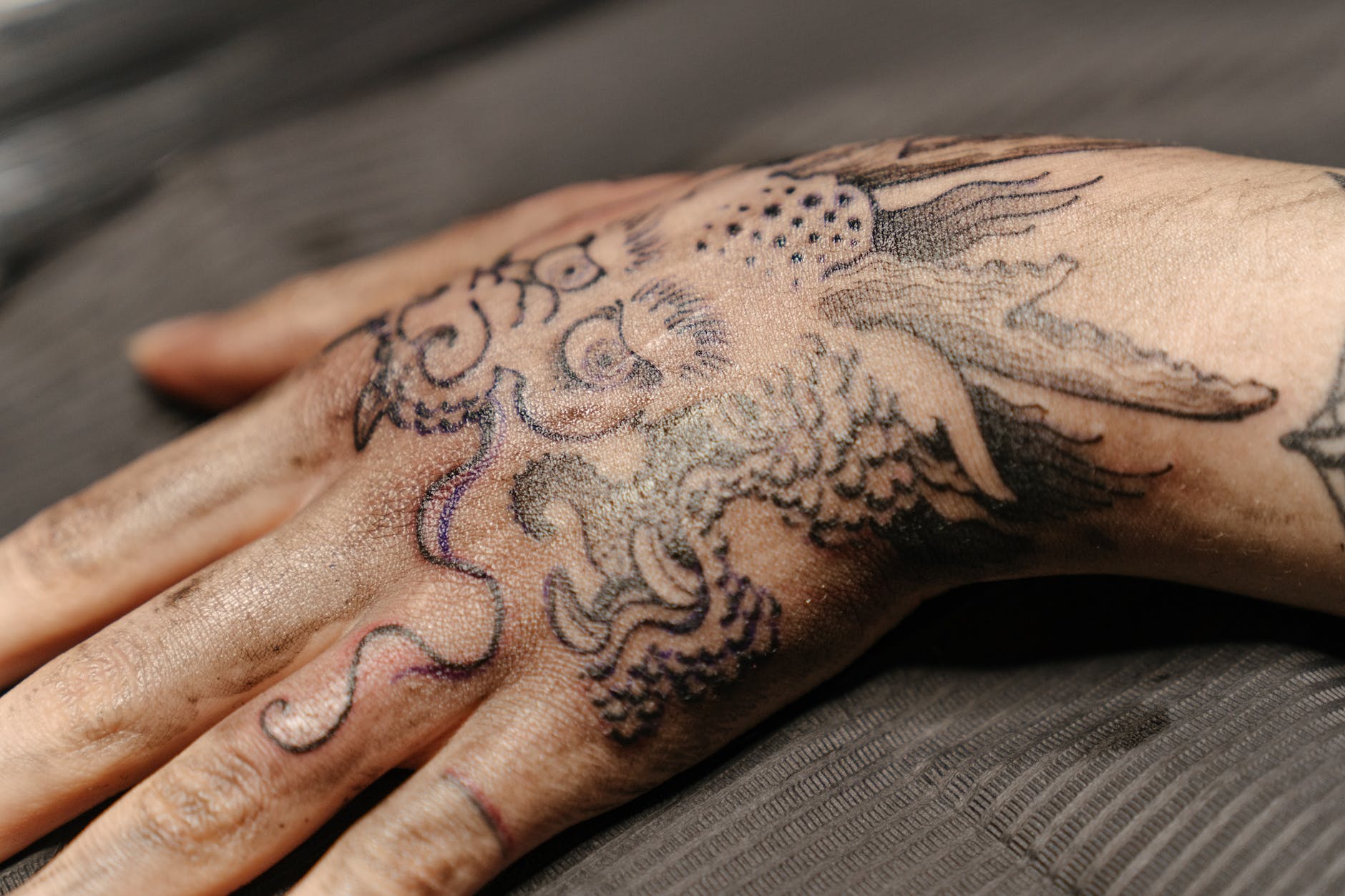
Another message in the ongoing exchange between Detozi and Erek sent along with official business between Traders’ Councils precedes “Changes.” As the chapter begins, Sedric paddles and considers the changes going on in him, on which Carson remarked the night before. Their conversation about those changes is rehearsed, and Sedric mulls over the need to keep parts of himself hidden from his lover. Relpda intrudes upon his reverie, noting the coming of changes.

It’s a good look.
Firehorse Glass‘s Sintara via Coffee and Captured Moments, used for commentary

Sintara muses over her current situation and that of the other dragons with her. The changes going on in her own body please her. The changes going on among the keepers do not, and she looks on as Mercor and Kalo summon the keepers to attend. The dragons’ actions provoke ire from Leftrin at the treatment of the Tarman, and Kalo demands a keeper to replace Greft. A scuffle among the dragons breaks out, which Mercor swiftly subdues. Discussion proceeds, more calmly but not without tension, and Carson’s nephew, Davvie, volunteers to the task of keeping Kalo, and Carson finds himself conscripted to aid the belligerent Spit. Sintara considers the changes occurring in Thymara, finding herself startled at some of the particulars, and determines to guide their further course. The dragons set out, compelling the rest to follow.

The dragons are long noted in the Elderlings novels as being mirrors to humans, the Fool making the parallel explicit more than once. If that is the case, and if, in a more “literary critical” sense, the dragons are metaphors for (certain) people, then I have to wonder what comment is being made with the casual assumption of authority over humans on the dragons’ part. Admittedly, it is persistent throughout the Rain Wilds Chronicles–and in earlier Elderlings novels–but it seems more prominent at present than elsewhere, with the offhanded consideration of eating Greft and the assertion that new keepers will make themselves available to the dragons. There are reasons for the new keepers to agree, of course; desire and fear are powerful motivators, as no shortage of advertising demonstrated. But even so, there is an arrogance in the dragons that…I wish I could say I see it rarely in the world around me and the people in it.

My wishes are many. Not many are granted.

It will, of course, be the case that some will complain of striving toward such a reading. “It’s just a story,” some will say. “Why do you have to make it political?” or some other purportedly objectionable thing. The thing is, though, that I’m not making it any way. The words are on the page, whoever reads them. All of us who do read, though, approach the text from the perspective/s we inhabit, and those perspectives emerge from our own orientation. When I had students, I explained it to them as a combination of where we’re from, when we’re from, and who we’re from. Even if we place ourselves into the positions of other, we do so only to the extent that we are able to imagine those positions, and those imaginings are themselves constrained as we are. And, all of those constraints reflect the circumstances in which we have lived; they are all necessarily already political, whether in terms of party alignments, demographics, ideological orientations, or other factors.

Reading is always a communal act. Any community will necessarily have “politics.” The questions become whose are reflected and in what ways.

Like how I write? Want me to write for you? Fill out the form below!

← Back

Thank you for your response. ✨

Or maybe send me some support?

A Robin Hobb Rereading Series: Entry 348: Dragon Haven, Chapter 16

Read the previous entry in the series here.
Read the next entry in the series here.


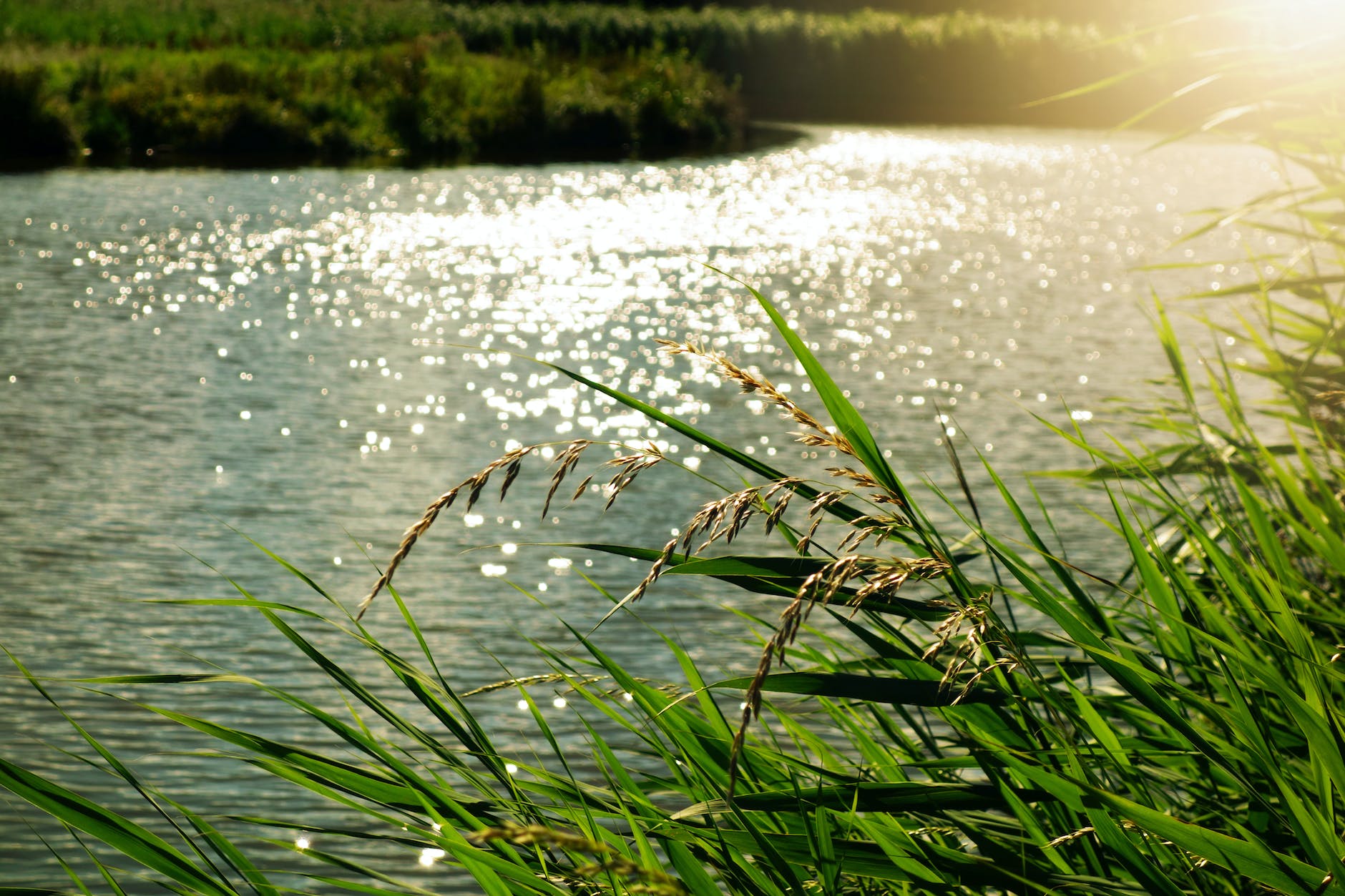
A trio of missives coming in rapid succession note the concerns and lack thereof of Trader families in Bingtown for Alise and Sedric; they are accompanied by continued messages from the bird-keeper Erek to Detozi. They precede “Reeds,” which opens with Leftrin surveying the continues progress of the Tarman upstream as night begins to fall upon the expedition to Kelsingra. The local flora and fauna receive no small consideration, and Leftrin notes the acceptance of Alise by the liveship he commands. Leftrin’s thoughts turn to his continued affair with her before his reverie is halted by her questions about their course along the river. After some discussion, they note the presence of clearly artificial elements in their surroundings.

Something like this, perhaps?
Photo by Mabel Amber on Pexels.com

Discussion and investigation follow, with Alise charging ahead despite objections from Sedric and Leftrin’s concern. She finds structures not far under the surface of the water, and the dragons move to investigate further. Mercor pulls on something beneath the surface, triggering a reaction that startles Alise, and as she is pulled back aboard a boat from the Tarman, the dragons move to avail themselves of what Sedric explains they have found: guest accommodations for dragons, built by Elderlings before. Alise and Leftrin both purpose to record findings, and despite their intent, the decision is made to press ahead the next day.

Later, Thymara breaks off a budding assignation with Tats, citing concerns about pregnancy. Tats reacts poorly to the decision, for which Thymara upbraids him. They fall into an argument that is interrupted by loud upset from the dragons, Kalo raging against Greft. Greft falls into the water and is retrieved, brought aboard the Tarman, and restored to consciousness. Leftrin questions him, harshly, and learns that Greft had asked Kalo for blood and to be made into an Elderling, but had been refused vehemently. Sylvie reports that Kalo had suspected Greft of wanting to take blood to sell, which Greft admits before noting that many in the expedition had been put to that purpose to secure an alliance with Chalced. Violence erupts, and secrets come out. Greft confesses the changes working ill upon him, changing him in ways that will kill him, and Leftrin notes the extent of his complicity in the matter.

The present chapter is another place where I find myself reading with affect and the recollection of my decades-gone adolescence. The argument between Thymara and Tats is all too close to more than one I recall having in the long-ago days before I met the woman who is now my wife. I am not proud of it, that I acted such, but I doubt very much that I am alone in having done it. So much does not excuse the behavior, and I have worked to be better since. How I will address such things with my daughter–because I do not doubt that she will have the experience of similar arguments, and I can hope she will be as certain of herself as Thymara is, although I will hope she is better informed–is a matter of increasing concern for me as she gets older. But I do not think I am alone in being concerned for a growing child. I know I am not alone in worry for Ms. 8.

(Again, I must note that I do not approve of Tats’s behavior. I understand it, I sympathize with it, but I also recognize it as wrong. That the pot has been patinaed does not mean it errs to note the kettle’s hue.)

In terms of narrative structure, the present chapter seems to be something of a Freytagian (is that the word?) climax. Part of this are the positions in the book of the chapter and in the series of the book; the Rain Wilds Chronicles is a tetralogy, and the present chapter is near the end of the second book. Being nearly the middle of the overall narrative arc, the present chapter is a good place to move into climax. Moreover, the revelation of secrets and explication of tensions, bringing them to the forefront so that they must be acted upon, is, if not itself a turning point, a clear set-up for one. Things that are allowed to remain secret can be ignored, and keeping things secret can itself be a useful plot, an early act setting up for a new one. The reinforcement of a time-limit upon the characters, both in Mercor’s note about the advancing seasons and in Greft’s openness about the physical changes befalling him, also serve to provide motivating factors for continued action.

And I am led to another thought. I’ve remarked before that some of the magics at work in the Elderlings novels can be read as commentaries on social issues, even if those readings do end up breaking down later (I find it hard to accept something as a stand-in for a thing that presents itself openly in the corpus, but that may just be my own limitations at work). If the Wit can be read as queerness (for admittedly variable types of queerness), as what can the Skill be read? Or the work of the Rain Wilds and the dragons in the world? I do not have ready answers at this point, not being the scholar I once was anymore (and not having improved, really; quite the opposite from my expatriation or expectoration). But I think there is something there to consider, and I would welcome seeing how others address that topic (perhaps again; I forget too many things anymore).

Like what I do? Want me to do it for you? Fill out the form below!

← Back

Thank you for your response. ✨

Or simply send support!

A Robin Hobb Rereading Series: Entry 347: Dragon Haven, Chapter 15

Read the previous entry in the series here.
Read the next entry in the series here.


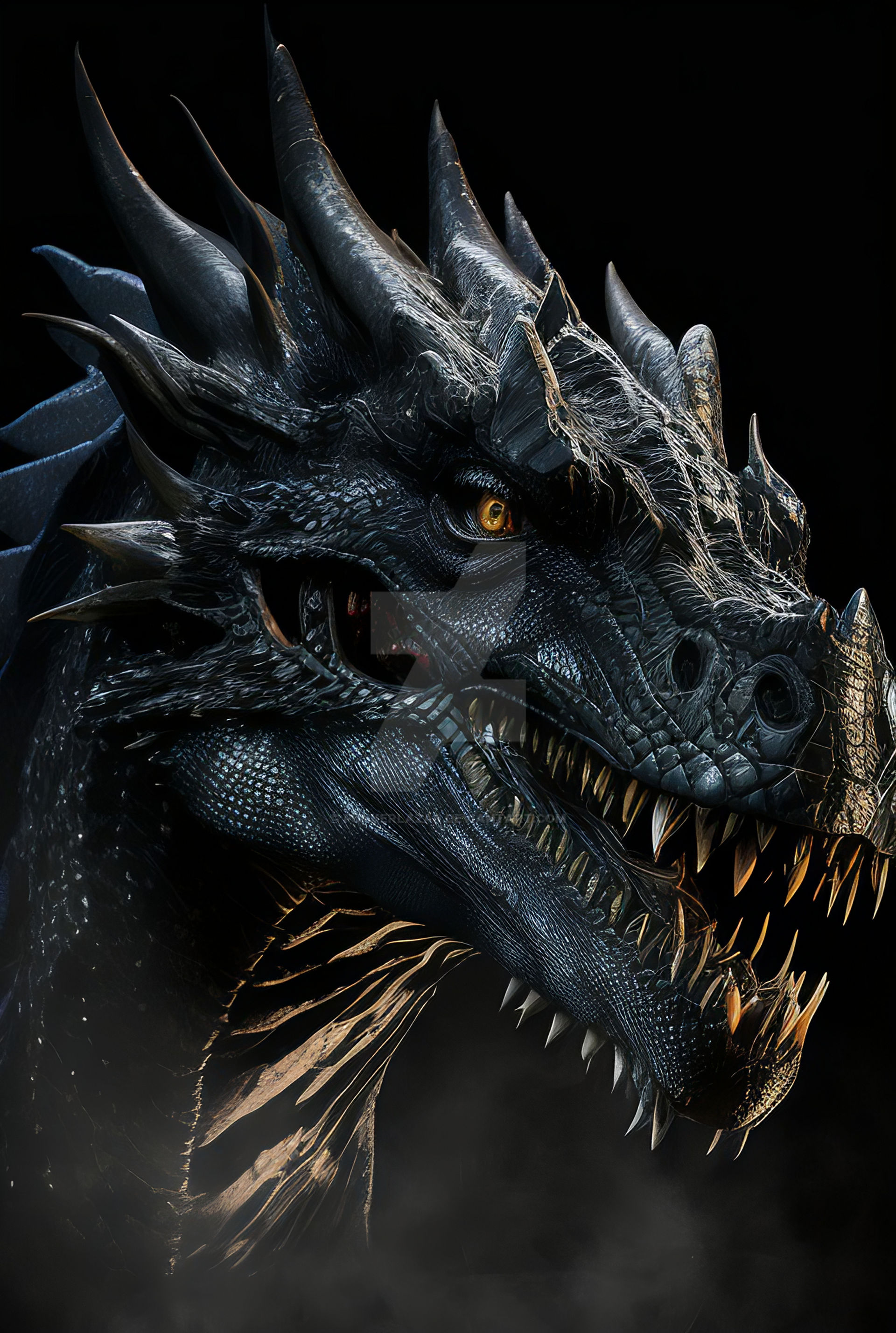
Following more of the ongoing exchange among the bird-keepers (with complaints about public spending priorities), “Tarman” begins with Thymara bringing food to Sintara, to the Dragon’s begrudging approval. Thymara inquires about Sintara’s effects upon her, and Sintara answers somewhat cryptically. Mercor puts into the conversation and rebukes Sintara for her lackadaisical attitude toward her keeper. Sintara responds to the rebuke with anger, provoking upset among the dragons that is only narrowly stopped from becoming violent. Sintara stalks off, nursing her embarrassment.

Not the friendliest, no.
PunkerLazar’s Black Dragon (3) on DeviantArt, used for commentary

Leftrin and Skelly confer about the ongoing reluctance of the Tarman to get back underway. Annoyance with the ship’s resistance to efforts to resume travel is noted, and the motivations of the ship are theorized. Leftrin puzzles over the matter for a time before recalling that the liveship is made of the stuff of dragons. The Tarman seems pleased with the recognition and shifts to realign the course to be taken; Leftrin delights in his ship’s renewed compliance, even as Greft questions him aspersively.

Thymara and Sintara, returning from where the former has tended to the latter, see the liveship’s reorientation. They confer with Sedric and the other dragons about the same, and the dragons begin to talk together about the liveship and the nature thereof. Another argument ensues among the dragons, threatening violence until it is stopped by Kalo. Kalo recalls having been Kelaro, a follower of Maulkin who became Mercor. Kalo calls for forbearance with the Tarman, and Thymara sees the modifications that were made to the ship. The dragons and the Tarman depart, heading upstream on the correct course and leaving the keepers scrambling to follow.

Sedric finds himself conducted along by Thymara and Sylvie, assessing the condition of the waterway as they go and noting the differences from the main flow of the Rain Wild River. Sedric’s thoughts turn to Carson and warm him. At length, Sedric offers to spell one of the keepers at the oars, and Thymara notes willingness to accept the offer, surprisingly, but citing a back injury. Discussion turns to the changes befalling each of them, as well as their sources in the dragons. Conversation lapses thereafter into uncomfortable silence.

There are interesting parallels between Sintara and Thymara in evidence; the one brought to attention by the present chapter is their vexation with being the focus of others’ reproductive desires. It is an understandable thing, if one I’ve commented on with any number of other chapters–at least insofar as it relates to Thymara. For Sintara to show similar attitudes is of interest, however–although this is far from the first time Hobb shows such things among thinking members of different species.

Of more moment is Sylvie’s comment that “Elderlings were a form of art for the dragons of that time. They found humans they thought had potential and developed them. That was why they cherished them. Everyone cherishes what they create. Even dragons” (392). It is a chilling thought, the idea of being made an artwork for some other thing; for some reason, I am thinking of Hellraiser and the less savory parts of Berserk…Given the implications of the chapter, that many of the dragons who are “developing” Elderlings do not really know what they are doing…body horror comes to mind. Even with “beneficial” changes, it’s chilling, to indulge litotes.

I’m available to write to order; fill out the form below for details!

← Back

Thank you for your response. ✨

Or just send your support along!

A Robin Hobb Rereading Series: Entry 346: Dragon Haven, Chapter 14

Read the previous entry in the series here.
Read the next entry in the series here.


After a more extended passage in the ongoing exchange between bird-keepers, in which economic and marital prospects are discussed, “Divergence” begins with the weather shifting on the dragons, their keepers, and the Tarman as they proceed upriver. Leftrin voices doubts about the dragons’ memories and ruminates at length on his situation, musing on Alise and their entanglements. His management of the throng in his care receives attention, as does his recognition of building tensions among the groups and their members. And, at length, Leftrin is jolted from his reverie by the Tarman running aground, entirely unusually for the eldest liveship.

Something like this, yes.
Photo by Blaque X on Pexels.com

The keepers aboard the Tarman are summoned to assist the crew in plying poles to push the liveship off of the sandbar on which the ship has become grounded. Thymara assesses matters as she does her part, noting the changes to the keepers and crew since setting out on the expedition, not all of which are to the good. Alise also comes under attention, as do Sedric and the dragons, and Thymara notes tensions among the latter. Efforts to free the Tarman fail, however, as the liveship actively resists them.

Leftrin tries to gather information from his ship, only to be told things are “wrong” with no further detail. Efforts to free the Tarman are left off for the day, and Leftrin feels satisfaction from the ship at remaining in place.

Thymara goes out to scout for food, and Alise asks to accompany her. The two go off together, conferring as they do, and Alise becomes more than usually aware of the differences between her and the keeper. The shock of learning about Hest and the notion that Leftrin would trade in dragon parts sit ill with her as she thinks upon them, and she fumes at the doubts growing in her mind. She is surprised, however, to find solid ground in the Rain Wilds.

Leftrin retires for the evening, considering the events of the day. He mulls over Tarman‘s quirks and strange behavior, and he dreams of walking in Kelsingra with Alise, waking as she calls on his cabin in the night. She enters, and they talk together about the dream of Kelsingra they both had before falling into another assignation. Afterward, she remains in his cabin for the night, and they talk briefly together of others before he steps out to breakfast while she sleeps in. At table, Leftrin’s niece greets him, talking briefly about Alise, and Leftrin begins to consider ramifications of his actions. Over coffee, the two look ahead to the coming day together.

I have commented before, I think, on Hobb’s use of chapter-prefatory materials, noting the tendency in the Farseer and Tawny Man novels to do something akin to Asimov’s Encyclopedia Galactica entries in the early Foundation novels to provide context to and commentary on the events in the chapters they precede. I have also commented, I believe, on the ongoing exchanges among bird-keepers in the Rain Wild Chronicles novels, noting that they follow the general form of the earlier insertions. The noted enclosures, although only glossed rather than presented, offer insight into the broader goings-on of Trader society, as well as particulars of specific people not always directly seen. In so doing, they do the usual work of implying a greater world in which the events of the novel exist, lending to the “inner consistency of reality” necessary to sustaining a secondary sub-creation (to use Tolkien’s terms from “On Fairy-stories”) and to the verisimilitude Hobb has noted being at pains to produce in her work.

If I have remarked on it before, though, I find myself prompted to do so again by the more extended commentary between Erek and Detozi at the preface of the present chapter. The attention to the details of the work the two do, refining their trade and looking for means to expand their economic clout (not to be wondered at in a society that predicates itself on commerce; they are not called Traders for nothing), seems to me to deepen and enrich the overall narrative. That the personal relationship between the two is clearly growing stronger, as well, strikes my fancy. Not only does it play into some of the romance-novel tropes I’ve pointed out as being at work in the Traders-focused novels before, it resonates with me; my wife and I conducted a fair bit of our early romance through letters, and both of us feel our relationship is stronger than it otherwise would have been because of our epistolary courtship. Seeing others, even in fiction, feel the same is nice.

If you like the kind of work I do, let me know below, and we can talk about what I can do for you!

← Back

Thank you for your response. ✨

Or you could fund my endeavors!

A Robin Hobb Rereading Series: Entry 345: Dragon Haven, Chapter 13

Read the previous entry in the series here.
Read the next entry in the series here.


This one needs a content warning about suicidal ideation.


After yet another part of an exchange among bird-keepers, this one working to refine their craft as well as to trade news, “Choices” begins with resumed progress up the Rain Wild River, the straitened circumstances of the dragons, their keepers, and the crew of the Tarman detailed. Greft continues to be an annoyance to Thymara, as do the boys competing for her affections. She and Tats put themselves to work fashioning replacement oars, if awkwardly, and they talk together as they do so. Tension between the two is clear even as they reaffirm their friendship.

Useful things to have on a boat…
Image is Motmit’s on Wikipedia, used under a CC BY-SA 3.0 license

Meanwhile, Carson emerges from the isolation in which he has wallowed in self-pity. He steps out on the deck of the Tarman to find keepers and dragons at play in relatively clean water flowing into the Rain Wild, and he assess their situation and his own as he stalks to the galley and procures a scanty meal for himself. Alise confronts him there, and a tense conversation ensues between them regarding his earlier revelations. At her prompting, Sedric explicates some of the gay culture of Bingtown, and Alise reacts relatively poorly thereto. She determines to break off her marriage with Hest, and Sedric cautions her away from Leftrin, citing his arrangement to sell dragon parts to Chalced. Alise stalks off, and Sedric finds himself changing and comforted by Relpda after she does. Faced with the dragon’s regard, Sedric considers suicide and is halted by Carson, to whom he confesses much and with whom he proceeds to an assignation.

Thymara stalks off into the night, considering how matters have fallen out among the keepers. She considers remaining in place in solitude, but she is joined by Tats, and she allows herself to accept his physical attentions until Greft interrupts. In the wake of his interference, Thymara again rejects Tats’s suit.

I am not surprised at Alise’s reaction to Sedric’s unfolding of gay culture in Bingtown and her duping thereby; being lied to, and for years, is not a happy thing. I suppose there is some homophobia in her reactions, but I am not necessarily in a position to be able to address it in any particular way. Others with more vested interests in such things, whether from experience or from more focused scholarship, would be able to say more; there is at least a paper in such a thing, if not more, and it is partly for such reasons that I continue to return to Hobb’s writing.

Sexual politics do seem very much to be at play in the expedition up the Rain Wild, though. I suppose it is not unexpected; a small group in isolation, particularly one largely composed of teenagers and young adults, can hardly be expected not to experience sexual tensions and to act on them, in many cases foolishly. The overt sexuality and the efforts to control and constrain it–for varying reasons, some of which appear on the surface of things to be more legitimate or acceptable than others–do heavily mark the narrative. It’s another thing that invites at least a paper, if one written by a better scholar than I know myself to be as I am now.

Perhaps someday I will once again be the kind of scholar who can grapple with such ideas meaningfully and well. Perhaps.

If you like the kind of work I do, let me know below, and we can talk about what I can do for you!

← Back

Thank you for your response. ✨

Or simply send support along!

A Robin Hobb Rereading Series: Entry 344: Dragon Haven, Chapter 12

Read the previous entry in the series here.
Read the next entry in the series here.


After a sad entry in the ongoing correspondence among bird-keepers, “The Locket” begins with Relpda exulting in having eaten Jess as she returns to the other dragons. She also notes that Sedric has drunk her blood, which occasions upset among the others. Amid the tumult, Sintara questions Relpda about events, and Mercor notes one means through which the dragons formerly created Elderlings. His comments occasion more agitated discussion among the dragons, and Sintara considers the tattered memories she holds, that all of them have. Relpda asserts herself, which comes as some surprise to the other dragons, and Mercor presses Sintara for details that are only begrudgingly given.

Of such sort are more memories than dragons’, stained and tattered and perhaps pretentious
Photo by Poppy Thomas Hill on Pexels.com

Sedric, returned to the Tarman, delights in restoring some semblance of civility to himself and his situation, and he reflects on his recent experiences. The distance between him and Alise receives attention, and he notices the locket he had had from Hest as he dresses. Taking it up, he considers his relationship with the man whose image graces the locket, and his thoughts turn warmly toward Carson. Sedric also considers that Leftrin might have been in league with Jess, which gives him some concern.

Alise’s return disturbs Sedric’s reverie, and the two confer together about their respective situations, carefully avoiding some topics but lunging headlong into Hest. She voices her doubts of her husband, and Sedric affirms that Hest does not love her. She is about to press Sedric about Hest further but is distracted by the recognition that he is beginning to take on the features common to the Rain Wilds, which he denies. As Alise presses about the locket, however, he relents and admits his relationship with her husband, expecting scorn and finding only compassion from her. Alise departs, and Sedric ruminates further on what he had with Hest, and the touch of Relpda’s mind on his offers some strange comfort.

Elsewhere, Carson and Leftrin confer closely about events, the former confronting the latter about the notion of harvesting dragon parts. Leftrin admits his involvement and lays out the situation, and Carson accepts Leftrin’s remarks that he is done with such dealings.

The present chapter is surprisingly illuminating about the Elderlings and their origins, as well as about the Others–some fairly deep links back into the Elderlings corpus, such things as I tend to appreciate amid sprawling narratives. (I like things to follow the rules they set out. It’s a preference that gets me into trouble in real life, where exceptions are the norm–and I lie outside it.) I am minded of the adage that “You are what you eat,” and I note that Hobb has long established that so much is true for the dragons–they take on memories from what they consume. It is of some interest that the reverse appears also to be true, that by eating of dragons people take on something of the draconic–and that there is some peril in it for both humans and dragons.

I note, too, that Sedric begins to come out in the present chapter, although only privately and only partially. What queer theory has to say about the narrative, I do not know, not being versed in it as I perhaps ought to be. I do know that the work done on Hobb’s writing in that line has focused not on Sedric, but upon Fitz and the Fool, and I cannot help but wonder at why (except that Fitz has been out in the readers’ world longer and more abundantly). Admittedly, Sedric seems more in line with stereotypes than Fitz and the Fool, which makes for less interesting scholarship–although there may be something to gain from contrasting Hobb’s handling of the characters…

Ah, to have the time to pursue ideas about books again!

Want me to do this kind of work for you?
Fill out the form below, and we’ll see what we can do!

← Back

Thank you for your response. ✨

Or just help me keep going–I’ll thank you!

A Robin Hobb Rereading Series: Entry 343: Dragon Haven, Chapter 11

Read the previous entry in the series here.
Read the next entry in the series here.


Following yet more of the exchange among bird-keepers in Bingtown and Trehaug, “Revelations” begins with Alise waking Leftrin from their sleep together after their assignation. They confer about their dreams briefly before dressing and parting, and Alise considers her situation and the experience. For his part, Leftrin questions his ship, but the Tarman gives no answer.

Can’t you just hear Peer Gynt?
Photo by Oleksandr Pidvalnyi on Pexels.com

Downriver, Carson leads Sedric and Relpda back to the Tarman and the other dragons and keepers. Sedric chafes slightly at the situation but has no choice but to accepts it, and he reconsiders his long entanglement with Hest. Thinking about who may have supplanted him in Hest’s affections, Sedric finds himself pleased at how matters are changing.

Thymara stalks out to look for food for the group, unexpectedly accompanied by Tats. As they proceed, they discuss the possibility of return to Trehaug and the need to prove themselves. Thymara relates her experience growing up working alongside her father and the insufficiency of that in the eyes of her people. Relative risks of childbearing are also noted, and Thymara finds herself wearied by the recollection of Greft’s insistence that she pick a mate. Tats finds himself challenged on that very point, and Thymara denies both Tats and his challenger, injuring herself as she falls and flees.

Carson, Sedric, and Relpda return to the others. Alise, happy to see her friend return, is reminded by Sedric’s arrival of her responsibilities and entanglements in Bingtown, and she longs for his safe departure.

There is interesting commentary about what it takes to prove one’s self, something with which adolescents and young adults are (justly?) concerned. Given how often fantasy literature is assigned to younger readerships–even now, even in this time and after decades of serious academic treatment of the genre–this is perhaps understandable. Given Hobb’s insistence upon verisimilitude in the non-fantastical elements of her work, it is also understandable; I am not so far removed from my youth that I have forgotten the craving to prove myself, not seldom by mastering some obscure set of trivia, however useless it has been for me to do so. It might also be noted as an ongoing theme in Hobb’s Elderlings works. After all, Fitz spends a fair bit of time trying to find and assert his identity, and he wrestles with Hap’s doing the same; Althea, Brashen, and Wintrow also struggle to define who they are and oblige others to recognize the same, as do Malta and Reyn. Nor is as much restricted to Hobb; not for nothing is the Bildungsroman a commonplace.

Still, the specific questions raised about how to prove one’s self are of interest, the kind of thing I would be apt to point out to students if I had any:

  • Is breaking a rule a means of proving one’s worth? Is it so even if the rule is in place for good reason? What does it prove about a person to break a rule that protects others?
  • What does it mean to be a woman or a man? Why does it mean that, in the context of the novel and / or of the reader?
  • To whom is it needful to prove one’s self? Why?

I used to nurture, and I have not at this point forgotten, the idea of teaching a course on Hobb’s work. I have taught Assassin’s Apprentice, long ago, now, and it went over well. I am not as good a classroom instructor now as then, obviously, but I have gotten better at structuring lessons and developing assignments…I wonder if it might yet work.

I’m happy to write to order; fill out the form below for details!

← Back

Thank you for your response. ✨

Or, if you like this kind of work, help fund it!

A Robin Hobb Rereading Series: Entry 342: Dragon Haven, Chapter 10

Read the previous entry in the series here.
Read the next entry in the series here.


Following news of a message from Hest cutting off financial support to Alise and Sedric and a comment on the scandalous nature thereof, “Confessions” begins with Relpda eating and Sedric considering his increasing entanglement with the dragon. Carson’s return and his work to assist are noted, and Sedric wonders if Carson will also offer to help kill Relpda, as Jess had done and as Sedric had earlier desired. Sedric and Carson confer, and Sedric finds himself looking forward to simple pleasures and chastising himself for being so willing to resign his autonomy. Carson lays out his plans and explicates his reasons for having joined the expedition; the upriver journey will allow him to leave a mark on Rain Wild history that he would not earlier have been able to make. Sedric compares Carson to Hest, finding the latter lacking, and Carson comments with some aspersion on the intended machinations of some in the expedition. He comments, too, that Sedric need not return to Bingtown, noting his appreciation for the other man. But the moment of intimacy passes, and more of the truth of events emerges, and Carson finds himself considering matters more deeply as he and Sedric turn in for the evening.

Gotta love a map…
Crooty’s Map of the Rain Wild River: Colour on DeviantArt, used for commentary.

Aboard the Tarman, Leftrin stands watch while his crew sleeps. He considers approaching Alise in the absence of Sedric and chides himself for the thought, conferring with his ship in the darkness. Leftrin ruminates on his ship and his family’s long work thereupon, including the refit that had given the Tarman limbs and a tail. The betrayal of trust that brought Jess aboard rankles both ship and captain, and they make their plans for the coming days. Tarman notes to Leftrin that Alise is awake, and the ship chivvies the captain as he makes to approach her. The two swiftly fall into an assignation, in which both delight.

The romance-novel conventions seem once again to be at play in the present chapter, and on the parts of both Sedric and Alise–which is itself good to see. Admittedly, it sits somewhat less comfortably with me that Sedric is getting them than that Alise is; Alise is (largely) an innocent, while Sedric is not so, and not because of Jess’s death. As I think on it, I suppose it might be a redemption arc in progress (as opposed to the self-actualization arc occurring with Alise), and there is certainly value in such things. I’ve certainly done many things I regret, some of which have been in the attempt to bring in more money, and I would like to think there is something I can do to make things, if not right again, at least better.

Too, as I think on the matter further, it is clear that both Alise and Sedric are in abusive relationships with Hest, relationships to which they therefore ethically need not be bound, even if there are legal/istic entanglements they must address. And maybe that is what is going on: commentary on the right of release from abusive relationships. It’s certainly foregrounded in the chapter’s prefatory materials, and it’s been clear that Hest is…unpleasant. So there’s probably something to explore, there, for those versed in such things.

If you like this kind of work and want some done for you, reach out below!

← Back

Thank you for your response. ✨

Or you can send your support along directly!

A Robin Hobb Rereading Series: Entry 341: Dragon Haven, Chapter 9

Read the previous entry in the series here.
Read the next entry in the series here.


Another chapter, “Discoveries,” begins after a continuation of the exchange among bird-keepers, sending condolences and an invitation. As it does, Relpda wakes Sedric, to his annoyance, and he assesses his situation. Sedric tends to the dragon, if haltingly, and he tends to himself amid the injuries incurred fighting Jess. Communion with the dragon leaves him unsettles and uncomfortable, and Sedric begins to recognize increasing closeness with her, not entirely unpleasantly.

Not quite what the novel means by being marked by a dragon, I think…
Photo by cottonbro studio on Pexels.com

Aboard the Tarman, Alise emerges on deck to find Thymara and Jerd conferring, and she begins to muse both on friendship and on the locket she found in Sedric’s goods. Turning away from such thoughts as are provoked, she moves about the ship and continues to muse on the differences between her situation and those of others, musing on Leftrin and the feelings he provokes in her. Soon enough, Leftrin joins her, and the two confer about developments. The likelihood of finding additional survivors and supplies is noted as rapidly diminishing, though Leftrin notes that Carson, who is searching, will have reason to find Sedric.

Thymara and Jerd confer about their own situations and the latter’s sexuality. Thymara is wounded by the conversation, and she moves away from Jerd, thinking uncomfortable thoughts.

Sedric continues his efforts on Relpda’s behalf, enjoying some success, if at the cost of some pain from the caustic waters and the unfamiliar exertion. The dragon grows somewhat panicked and petulant, and Sedric angrily pushes back. His doing so clarifies matters for Relpda, and the pair have something of a breakthrough. They work together for a time, and Relpda makes to rest. Sedric hears the call of a horn and calls out in response to it, being greeted by the searching Carson. Overjoyed Carson works to tend to Sedric and Relpda, and he reports developments among the dragons and keepers before pressing on to continue the search a bit longer.

Sintara muses on her situation, as well, conferring with Mercor about events and her responses to them. The other dragons are less sanguine about Mercor’s philosophizing, and they determine together to press ahead rather than die in sucking mud. Conversation among the dragons grows tense and approaches violence, but is defused partly by Mercor and the revelation that they are developing as dragons. The fragile truce brokered is broken by the silver dragon, now recovered, who proclaims himself–Spit–and asserts a place among the rest. Sintara watches for a time before settling in to sleep, joined soon by the other dragons.

It’s clearly been a while since I put myself to work on this long project, and I have no excuse. I can only say that I have been greatly busy with a number of other things, and that it is good to come back to Hobb’s writing once again.

As I return to the reread, I find myself questioning some sympathies I have had with the various characters. I’ve noted before that I tend to read with more affect than ought to be the case, something that my schooling would have had me leave behind but that I never have been able to shed fully. (Perhaps it is part of why I was never able to secure a tenure-line job. Ah, well!) I feel for the characters more than is seemly, something for which I have been teased and more by a number of people in my life. (It is a bit silly, I acknowledge.) I contend that it’s part of the quality of Hobb’s writing that the characters are so easy to feel with, even when they are not necessarily good or nice people.

Returning to the text, though, after so long away and in such an awkward position in the book–nine chapters in to twenty–I am not having trouble picking the narrative threads back up. (There’s a reason to write summaries.) The feelings, though, are not springing back as quickly as the memories are. I’m not sure what’s going on with it, really, whether it’s in me or in the text. (Some of each, perhaps?) Maybe it has to do with the fact that I’m fighting off a head-cold at the moment.

Be that as it may, however, I do note that the current chapter would appear to reward feminist reading, as I believe I have noted that the Bingtown-centered series tend to do. The “frontier” aspects of the work also continue (?) to attract my attention as I read; there is something decidedly pioneering about the keepers and their progress upriver, with much less of the baggage that so often associates itself with such narratives as they apply to the United States. There are no people living in the areas where the keepers travel and to which they are bound, although there once were (something of a commonplace, really); the keepers and their dragons are therefore not on track to impose the kind of oppressive settler colonialism so often seen in the readers’ world. But then, fantasy is supposed to show something of an idealization, an “other way” that could have been, had things been different.

I’m happy to write to order for you; reach out below and let me know what all you want me to work on!

← Back

Thank you for your response. ✨

Of course, your continued support is also appreciated!

A Robin Hobb Rereading Series: Entry 340: Dragon Haven, Chapter 8

Read the previous entry in the series here.
Read the next entry in the series
here.


With more tidings passing between bird-keepers, these unpleasant, “Horns” begins with Alise rousing to the sounds of active dragons. The sounds of the approaching Tarman soon follow, and the reuniting groups compare notes about who has been found–and who has not. Greft again attempts to assert some measure of control, finding himself annoyed not to be lauded, and again nettled when Alise points out Thymara’s efforts to provide for the keepers.

Not the worst choice…
Image is Tats by FloorSteinz on DeviantArt, used for commentary

Leftrin, hearing Carson’s signal, exults as he rehearses findings to that point. He urges the Tarman to caution and the barge-crew to action as the ship reaches the keepers and their dragons. Greft, when he comes aboard, attempts to forestall further searching, only to be reminded that Leftrin, not Greft, is the captain of the Tarman. After Greft’s dismissal, Leftrin hastens to welcome Alise aboard, but their reunion is shadowed by concern for Sedric, Leftrin’s own guilt, and the crew’s questions about provisions.

Alise retires to her cabin and considers the likely loss of Sedric, as well as her complicity with the same. Her guilt at feeling for Leftrin emerges, as well, and she assesses herself. After, she determines to set Sedric’s possessions in order, finding among them a locket that turns out to be from Hest. Her mind shies away from possibilities.

The keepers and dragons confer, somewhat tensely, over the disposition of the fallen. The dragons assert their right to consume the corpses of their keepers, with the keepers refusing. Leftrin notes that any bodies would have to be given to the river, and the keepers agree to be given to their dragons–save Thymara, who argues against Sintara’s claim. She watches and considers her place and ill fit as rites are conducted, and she and Tats confer about relative standings and politics among the keepers. Tats echoes some of Greft’s rhetoric, occasioning upset no less than his reports of more of Greft’s decision-making. Their continued conversation is interrupted by the return of another dragon and keeper, and Thymara finds herself considering Tats closely. She kisses him suddenly, leaving him uncertain of her intent.

My comments about Greft that accompany my summary of the previous chapter…do not go far enough in the event. He’s not some image of the putative evolutionary biologist or incel, but of a cult leader of the sort depicted in Netflix series and true-crime documentaries. The manipulation of events to ensure the “protection” of a younger woman among the keepers is…chilling. Despite the usual publication disclaimer–“Any resemblance to actual events or persons, living or dead, is entirely coincidental”–it is all too easy to find real-life parallels, and ones recent to the context of composition for the novel, as well as close enough to where Hobb lives (near Seattle/Tacoma, per her website over the years). Too, Hobb is open about working from real-life inspiration, not on a person-per-character basis, but certainly with an eye toward how things are in her readers’ world (here it is). So there are enough parallels to point out.

There are more than enough.

Time’s running out to get your custom work done by the holidays! Let me know, below, how you want it to go!

← Back

Thank you for your response. ✨

Maybe you’ll send me a present, instead?