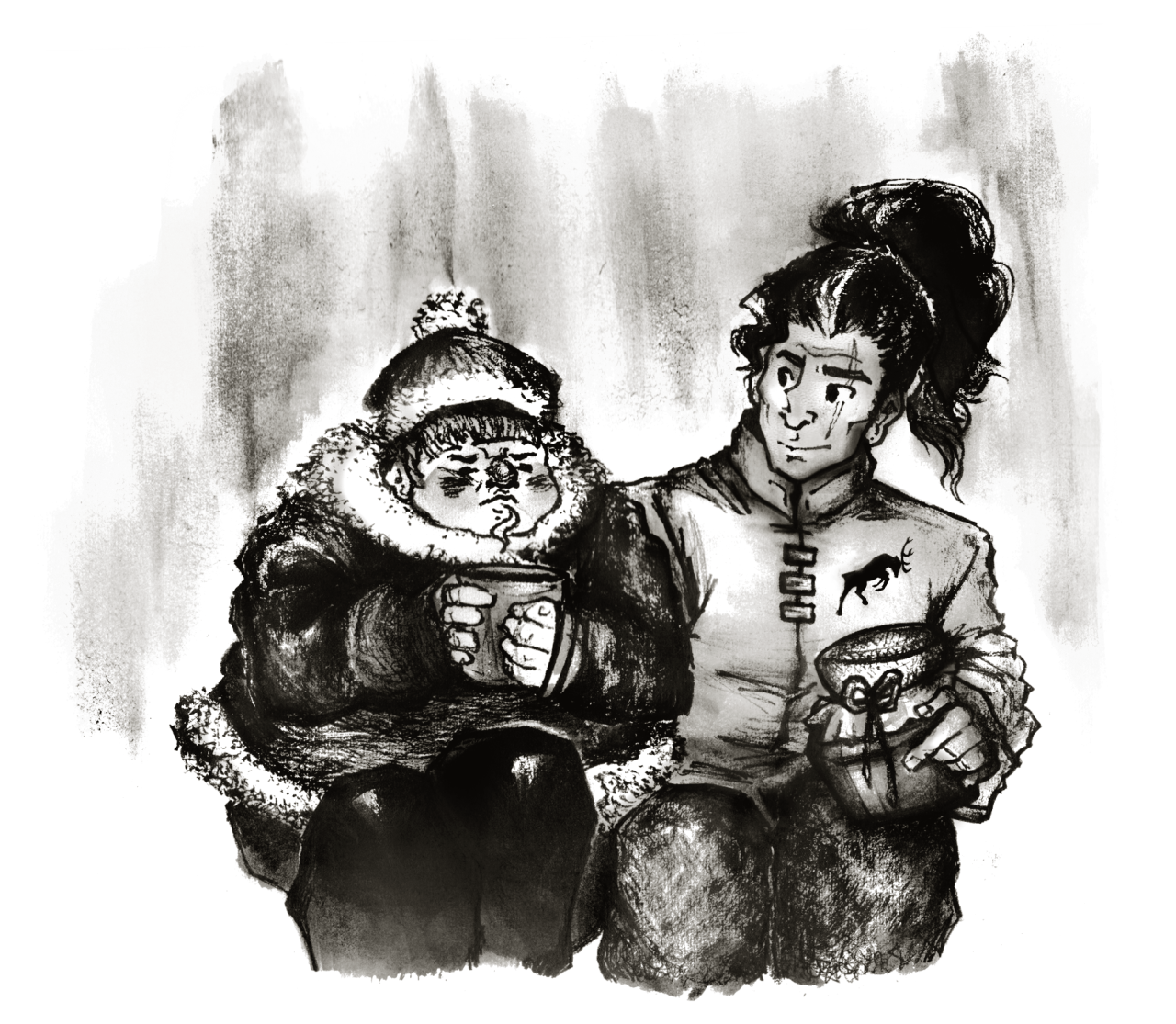
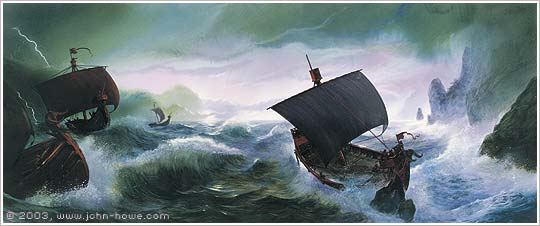
A Robin Hobb Rereading Series: Entry 296: Fool’s Fate, Chapter 19

Read the previous entry in the series here.
Read the next entry in the series
here.


The following chapter, appropriately titled “Below the Ice,” starts with in-milieu historical comments from Fedwren before returning to the excavation work. Dutiful, Elliania, and Peottre all join in the heavy work, as do the Witted who have accompanied Dutiful, the Fool, and the Hetgurd representatives. Chade sends for more supplies, although Peottre is dubious about the errand, and Fitz notes the striated layers that indicate annual snowfalls, pondering the ancientry of the dragon in question.

Even the NSF gets it…
Image is Kendrick Taylor’s on an NSF page, which makes it public domain, I believe.

Fitz also considers relative strengths in the Wit, as well as Thick’s infatuation with the dragon. The perils of Skill use are recalled, and Fitz’s own talent with the magic remains quiet. Dutiful makes contact with Nettle through the Skill, and Fitz is given more reason to regret his decisions to keep her away from Buckkeep earlier in her life. His lessons in the Wit with Web also continue, if quietly.

Chade expresses his worries about the pair sent to retrieve supplies and decides to dispatch Fitz, Thick, and the Fool to retrieve the pair and the supplies. Fitz agrees, and he persuades the Fool to accompany him along the way. Their trip goes pleasantly enough at first, with Fitz noting Thick’s improvement–done via the Skill–and that they are observed. The group does encounter difficulty with their trail, the glacier opening before them, and Fitz and the Fool are swallowed into it.

Fitz and the Fool find themselves in an icy cavern that they begin to search out. At some length, they come into ice-caves that have been worked; signs of occupation are clear to Fitz. The Fool grows apprehensive as they proceed and come “to the first dungeon” as the chapter ends.

There’s nothing ominous about that ending at all, is there?

It is, of course, time for this kind of thing to be happening. The present chapter is in the last half of the final book of the trilogy; the final conflict that has been foreshadowed–and how!–for quite a while, even going back to an early chapter in the second Elderlings novel, is imminent from the genre (which remains Tolkienian epic fantasy even if there are some adjustments in sourcing from North America and focus on a less-noble character) and the position in the book. Dropping the deuteragonists down a hole may seem something of a deus ex machina, I admit, but I have opined about the utility of the device, and, well, the books that involve the Fool do tend to center around questions of predestination (even if translation and gender studies seem to be the dominant threads in criticism at this point), so perhaps some machination will necessarily be at work in them. (Maybe, someday, I’ll develop the project. But this isn’t the day for it; I’ve got too much other work to do.)

Maybe I can do some of that work for you?

← Back

Thank you for your response. ✨

Or maybe you can help me?

A Robin Hobb Rereading Series: Entry 295: Fool’s Fate, Chapter 18

Read the previous entry in the series here.
Read the next entry in the series
here.


The next chapter, “Ice,” opens with a letter from the Old Blood to Kettricken. It moves then to initial efforts to tunnel to Icefyre, the manner of which is described in some detail. Fitz works throughout the day, and in the evening, Chade and Dutiful confer with him about Thick’s seeming distraction by the dragon and Fitz’s own continued absence in the Skill. The Prince and his advisor purpose to reach out to Nettle via the Skill, and their talk turns to the Hetgurd representatives before ranging to the Fool, and Fitz finds himself pulled between the Fool and his old mentor until Dutiful expressly charges him to follow his conscience in the matter.

Cool.
Image from Sharon Mollerus under CC BY 2.0 license, used for commentary.

The three continue to converse, Dutiful noting Elliania’s reluctance to keep him on the appointed task. They try to puzzle out the source for the command and the compulsion, and Fitz is dismissed, his lack of Skill making him no help to what must come next. After some brief survey, he calls upon the Fool, hearing the latter’s tale of arriving at Aslevjal–including a trip through Skill-pillars and aloft astride Girl-on-a-Dragon once again. Fitz drifts off amid the tale and wakes to find himself at peace with the sleeping Fool.

The present chapter makes reference to Fitz’s investiture of Girl-on-a-Dragon with a number of his own more painful memories, an excision of pain from himself. It is an adolescent fantasy, of course, to be able to simply pull out of one’s own mind memories of trauma and torment; they inhere in the mind and body far too deeply to be so treated, unless by some strange magic to which the readers have access only through the reading. And it is one I find I still indulge; there’s enough in my past that I’d forget if I could, certainly, but I cannot do so. (Admittedly, most of it consists of reminders of my own poor judgment. It’s part of why I don’t do a lot; I’m worried about screwing up once again.) But I am obliged to wonder what I have forgotten and what I have lost because I have forgotten what I have–and I have no Fool to my Fitz, though I would not be happy to put myself into his position, certainly.

Affective as my reading is and tends to be, I know better than to think that I would do well in such situations as the books I read depict. Years of sedentary study and of trying to live the life to which they tend do not prepare a body well for adventure, after all…

Maybe contact me below to help with your writing needs?

← Back

Thank you for your response. ✨

Or simply send your support!

A Robin Hobb Rereading Series: Entry 294: Fool’s Fate, Chapter 17

Read the previous entry in the series here.
Read the next entry in the series
here.


A chapter titled “Icefyre” follows, opening with an in-milieu translation of an Out Island story before turning to Fitz continuing to suffer the aftereffects of his unexpected dosing with elfbark. When he finally comes to, he finds Web attending him. The older man quietly notes that he has sussed out Fitz’s loss of access to the Skill, and the two converse, Web making clear his distaste for the use of such drugs as elfbark.

The titular dragon, as imagined by Jackie Morris; image used for commentary.

Their conversation continues, Web enjoying having the chance to speak with Fitz regarding his magics and the community of which he can be part because of them, until they are distracted by a strange swelling within the Wit. At Fitz’s question, Web begins to offer instruction in uses of the Wit other than those Fitz had instinctively known, giving Fitz some practice as they arrive in the company of the others in Dutiful’s party.

They arrive with them to find an argument in progress regarding Icefyre and how to approach the task of his destruction. Information about the dragon is offered, and aspersion heaped upon Dutiful and upon the Narwhal Clan that has caused his challenge to be in place. The Witted members of Dutiful’s party confirm that Icefyre is present and lives, thought they do not understand how it can be so, and Dutiful himself asks Narcheska to release him from the promise made rashly. She does not, and more argument about the manner of taking Icefyre proceeds, leaving Fitz to consider many unfortunate possibilities and the likely need of his clandestine skills. Meanwhile, the Witted coterie finds the place in the ice where the dragon is most likely to be, and a plan to dig to him is begun.

The present chapter is just shy of halfway through the novel. It is clear that a turning point in the narrative has been reached, both in terms of the physical object of the book (I am reading a print copy) and of the sense of story; the present chapter reads as a sort of narrative pause. Matters will soon accelerate–and I look forward to being swept along by the novel once again!

I’m always grateful for your support!

A Robin Hobb Rereading Series: Entry 293: Fool’s Fate, Chapter 16

Read the previous entry in the series here.
Read the next entry in the series
here.


The succeeding chapter, “Elfbark,” opens with a brief passage from an in-milieu herbal that reinforces the addictive nature of the plant. It turns then to Fitz reporting to Dutiful and Chade after a night of poor sleep, reporting the Fool’s suppositions about Civil’s erstwhile fiancée. They purpose to set up Skill-communication with Nettle at Buckkeep, and, after a tense exchange, Fitz excuses himself from his prince and his mentor.

This kind of thing again…
gabbyworks’s art on Elderling Magic is used for commentary.

Fitz sees to Thick and learns from him that bad dreams were broadly afoot the previous evening, such as even Nettle could not address. Fitz considers it as camp is struck and the journey up Aslevjal continues. Talk with the Fool commences, soon turning to the Elderlings and such of their nature as the Fool has been able to uncover and determine. Progress up Aslevjal is slow and tiresome, wearing on Thick, and at length, he lashes out through the Skill at Fitz. Fitz walls himself off from the Skill and realizes in short order that the magic is being used against not only him, but the whole party; Thick comes to the same realization shortly afterward. The two reach an accord and join the rest at length.

Fitz and Thick are summoned to attend on Dutiful and Chade, and Fitz reports as he is able, warning of the Skill being deployed against them. They are interrupted by Peottre arriving, offering cakes laced with elfbark–which herb Fitz is aware of too late to help himself, though he prevents Thick from taking any, and he gives a coded warning to Chade. Chade heeds it, joining Fitz in preventing Thick from eating any of the drug, and he dismissed Fitz, intimating that he should try to purge himself.

Fitz makes the attempt, with little success, and he finds his way to the Fool for aid. The Fool takes him in and is taken aback at the effects of the elfbark upon him: “It’s never affected you that way before.” The effects are detailed, including pulling at his hair and lip–and the melancholy that sets in on elfbark users begins to take hold of Fitz, to the Fool’s chagrin.

This is not the first chapter in an Elderlings novel to bear the title “Elfbark,” clearly, though Hobb can be forgiven for recycling a title more than two hundred chapters later. I can imagine that comparing the two chapters directly might make for an interesting short work–alas, that I have not Marvell’s world enough and time! I do, however, note the greater attention to the drug’s immediate effects in the present chapter than I recall being the case previously, and I am reminded of particular experience in my work at the substance use treatment center. Again, Hobb does well at putting forth the verisimilitude with the mundane she cites as necessary for effective fantasy–and I am glad of it, even if I am a bit uncomfortable at the reminder of things I have seen.

I can always use your help!

A Robin Hobb Rereading Series: Entry 292: Fool’s Fate, Chapter 15

Read the previous entry in the series here.
Read the next entry in the series
here.


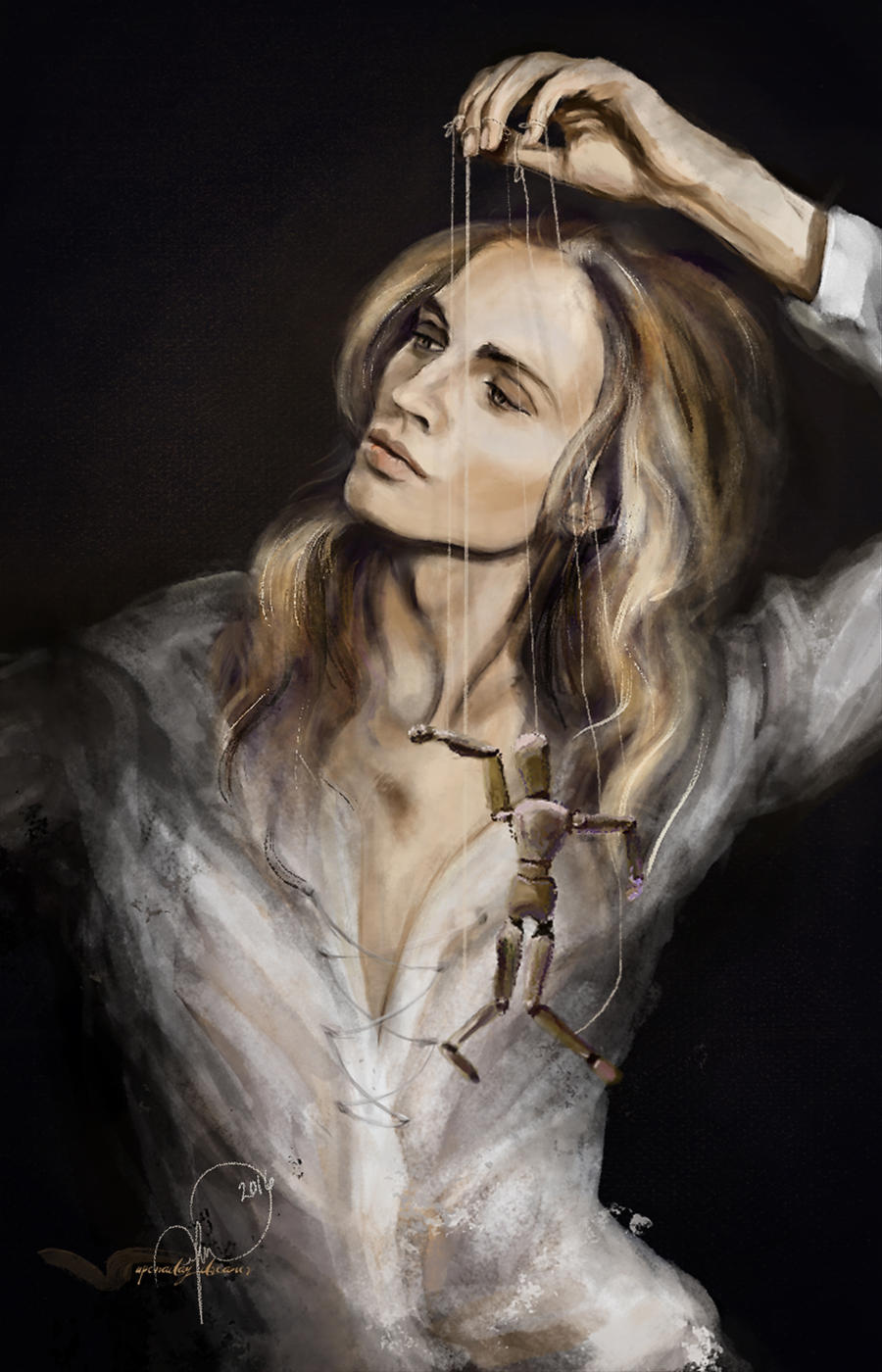
The following chapter, “Civil,” opens with a passage detailing the White Prophet Hoquin and his Catalyst, Wild Eye, before moving to Fitz calling on the Fool in the evening. He finds Swift with him, entertained by the Fool’s puppetry, and realizes he has made a gaffe by entering, but he cannot find a way to extricate himself politely or with discretion. The Fool opines on his tent and possessions, remarking at some length on Tintaglia and his need to save dragons. Swift rebels at the idea that the Fool, whom he knows as Lord Golden, would oppose Dutiful’s mission.

Not quite right, but telling…
The Fool by uponadaydreamer on DeviantArt is used for commentary.

Conversation is interrupted by the intrusion of Civil Bresinga, who believes an unseemly assignation is soon to commence. That conversation is interrupted by the call of a guard, challenging a passer-by whom Peottre remarks is the Black Man, occasioning unease. After it is settled, Civil challenges the Fool, still upset about Golden’s earlier manipulations. The Fool is not blameless, and Fitz recognizes his own complicity in what has become the shame of Civil’s former fiancée. Melee ensues, with the Fool swiftly gaining control of the fight and restraining Civil with little evident effort. Amid his assertion that the matter is and should be closed, the Fool claims his status as White Prophet and Fitz’s as Catalyst, and Dutiful calls an end to proceedings.

Fitz tends to the Fool after, and the two confer quietly about Civil’s former intended and Piebald entanglement. Talk turns to the Black Man, the Fool noting the pronounced portentousness about him. Talk pivots to fate, and Fitz asserts that he cannot be as he is and stand by while the Fool faces death. And, at the Fool’s request, Fitz bunks in his tent that night.

I find myself once again, yet again, still, reading affectively as I reread the current chapter. I note with some concern the accusations of grooming voiced in the chapter, given prevailing public discourse as I write this; yet another reactionary drive to boycott Disney is but one symptom of a larger problem in the world, and I admit that there is something somewhat silly about my continuing this project as if it matters in any way against the troubles of the world. But that’s been something of a concern for me for some time; it’s nothing new, really, and I should be more accustomed to it at this point than it seems I am. And in any event, the accusations are false in the book; there is that much, at least, though those in the readers’ world cannot be so easily addressed as are Civil’s against the Fool.

I am minded of one of the truisms about fantasy fiction: it is escapist. And I’m minded that there’s nothing wrong with that, in itself; I’m reminded of Tolkien asking in “On Fairy-stories” “Why should a man be scorned if, finding himself in prison, he tries to get out and go home? Or if, when he cannot do so, he thinks and talks about other topics than jailers and prison-walls?” I may not be in a prison such as eats too many people, and in the United States, disproportionately people of color, and I acknowledge that I occupy a number of positions of privilege–there’s a lot in my life that makes it easier, and a lot more that doesn’t make it harder. But that doesn’t mean there isn’t a fair bit wrong, and it is pleasant at times to see visions that, even in a fallen world and with flawed characters, a better resolution is possible.

Help me make this Friday a good one?

A Robin Hobb Rereading Series: Entry 290: Fool’s Fate, Chapter 13

Read the previous entry in the series here.
Read the next entry in the series
here.


The following chapter, “Aslevjal,” begins with an in-milieu comment from Fedwren about Forging. It turns thence to the approach to the titular island and to the Fool who waits upon it for the Six Duchies’ party to arrive. Fitz is tasked with assisting Thick, Chade contriving thus to keep Fitz and the Fool apart. Ships are unloaded and camps set up, the voyagers’ arrangements described.

Remember these?
Source in image and here, used for commentary.

Taking advantage of Riddle’s offer to attend to Thick for a while, Fitz, scouts out the campground, noting the presence of memory stone in the area, as well as signs of work done upon it and with it. He finds a partly-sculpted stone dragon and summons Chade and Dutiful to examine it; Akron remarks that it is not the dragon they seek, but “one of the Pale Woman’s follies,” before Peottre silences him.

After, Fitz confers with Chade and Dutiful via the Skill about the Fool, and Fitz is charged with caution as he gathers more information. The memory stone receives more examination, and Fitz perceives a number of memories contained within it, linking the work done on Aslevjal’s shores to the work Verity and others had done carving their dragons. Fitz notes the problems that would inhere in a dragon thus made, and he reports his findings to Chade, who considers a strange repatriation.

Fitz returns to Thick, who asks for honey. Fitz takes the opportunity to call on the Fool, visiting the Fool’s tent and finding it empty; he avails himself of the honey he finds there, being sure to leave clear sign of his presence so as not to present himself as attempting deceit. Returning with the honey mollifies Thick, and he notes to Fitz Nettle’s anger at him, spurred by Burrich’s departure and her own obliged relocation to Kettricken’s court. The news offers Fitz some comfort, although he frets somewhat as he muses on his daughter’s situation and his own.

From the vantage of rereading, I can affirm the foreshadowing in the present chapter; there are signs here of what is to come. Even among them, though, I find links back to earlier parts of the Realm of the Elderlings series that I appreciate; I noted to students when I had them, and I reaffirm in the lesson plans I write for contract work, that one of the things that argues in favor of artistic quality is the way a given work hangs together. It’s not much of a stretch, if any at all, to read a series of novels as a single work rather than as separate entities (particularly as concerns fantasy literature in the Tolkienian tradition, which the Realm of the Elderlings is despite making abundant use of other sources and backgrounds). As such, it is not out of line to apply the same artistic standards to a series as to an entry in it–not obligatory, certainly, and not without the caveat, for logical and other reasons (I am aware of the fallacy of composition, thank you), that some parts can be better than others, but not impossibly or even without good cause. And the work done to unify the Realm of the Elderlings novels as they proceed, although not without flaw, helps with that. At least for me, anyway…

Toss a coin to your scholar?

A Robin Hobb Rereading Series: Entry 289: Fool’s Fate, Chapter 12

Read the previous entry in the series here.
Read the next entry in the series
here.


The next chapter, “Cousins,” offers a snippet of translated in-milieu verse before moving to the continued progress of Dutiful’s errand. Political arrangements are noted, and preparations are made to depart Wuislington for Zylig. They include drugging Thick and bringing him aboard ship unconscious, which results in a substantial upset when he wakes, as well as Fitz’s shame. He reports as much and makes his recommendations regarding Thick to Chade and Dutiful when he reports to them aboard ship while they are underway. And he finds himself the object of Dutiful’s anger.

Dutiful demands from Fitz the truth about Nettle. Asked bluntly by his prince, Fitz answers as openly and honestly as he can, Chade exulting in the revelation and noting his own objection to the arrangements that had been made. Dutiful upbraids both Chade and Fitz for their parts in the deception, but he agrees that Fitz should be the one to inform Nettle of her origins. Discussion continues, Fitz and Chade falling into open and pragmatic discussions that scandalize Dutiful, and the conversation soon draws to a close.

After, Fitz checks up on Thick, finding himself subjected to the other man’s ire through the Skill, and he surveys the other passengers on their ship. Later, he tries to contact Nettle through the Skill, failing to do so and suffering for the remainder of the trip to Zylig.

Once in port, Fitz goes to work gathering information, gaining a general sense of the situation Dutiful’s party faces. The question of Thick arises again, and Fitz learns that the Six Duchies delegation that had remained in Zylig had done well for itself. He also learns the terms on which the Hetgurd agrees to allow the challenge of Aslevjal to take place as he and Chade confer. The next morning, though, sees more trouble from Thick as the party makes to depart for Aslevjal, and Web notes in an idle aside to Fitz that he has sent Swift to retrieve Thick as a sort of test of his ability in the Wit. Web offers once again, a final time, to teach Fitz, as well, and Fitz is dilatory in availing himself of it as the voyage gets underway.

At length, the party arrives at Aslevjal, which is described–and the Fool awaits them on the shore.

As I reread the chapter this time, I found Web’s comments about Fitz not finding time to learn more of the Wit resonant. I am not possessed of any magics, certainly, nor of any particular power or importance. Even so, there seems always to be some task or another to which I can devote my attention, to which I should devote it, and they all seem to get in the way of something else. I know that something else is important, certainly, and I know I ought to attend to it. At the same time, the tasks that present themselves to me are ones that need doing, and it is easy to set aside the nebulous for the concrete.

All too easy, in fact.

Care to send a little something my way?

A Robin Hobb Rereading Series: Entry 288: Fool’s Fate, Chapter 11

Read the previous entry in the series here.
Read the next entry in the series here.


The succeeding chapter, “Wuislington,” opens with commentary about Outisland social structures from Fedwren before turning to Fitz’s gloss of Dutiful’s party’s stay in Wuislington. He notes Thick’s convalescence and displeasure with him, which Chade notes he must endure. He notes, too, his continued tutelage of Swift, as well as the omnipresence of observation, And he notes a strange camaraderie growing between himself and Peottre over their mutual work to chaperone Dutiful and Elliania.

Something not unlike this…
Coniston Water by Mick Garratt is licensed under CC-BY-SA 2.0

Fitz also becomes aware of the agricultural underpinning of the Narwhal Clan’s wealth, the geography that enables it described in some detail. But as he follows Dutiful and Elliania on an excursion out into that farming country, he uncovers Henja spying on the pair, though he cannot pursue her. It informs his report to Chade later, as well as their discussion.

That night, Fitz is drawn into a dream where Nettle and Tintaglia confer. The dragon demands information from him, but Nettle manages to cast the dragon out of her dream and chides Fitz for his timorousness. Dutiful interrupts via the Skill, but he is also cast aside after a heated exchange through that magic. Nettle absents Fitz from her dream, as well, and he wakes suddenly to Dutiful’s insistent Skilling; the prince is angry at having Nettle concealed from him, and summons Fitz to account.

When Fitz, Thick trailing, answers the summons, he finds himself bidden through the Skill to stand and wait. He watches Dutiful and Elliania confer about sex until they are interrupted by Peottre. Peottre dismisses the Narcheska, and Dutiful expounds his situation to him, earning some respect from Elliania’s uncle. The exchange leaves Fitz and Thick both homesick, though Fitz knows the home he seeks no longer exists.

Dutiful’s comment that “I am a man but…I am a man” has long resonated with me. Reading it now, I acknowledge the heteronormativity in the comment, but I also note the clear tensions under which Dutiful operates. I have been an allosexual teenage boy, and though it was many years ago, it was not so many years ago that I do not recall the discomfort of its associated urges–or the tensions surrounding multiple ideas of what should be. And I have to wonder if that is not somehow an indication of the expected primary (or perhaps secondary) readership of the series, that it does depict such things as it does, and from the perspectives that it does. Yet another paper project idea that I may never develop…seems I have a lot of those, really. Too many.

I’d appreciate your support–no fooling!

A Robin Hobb Rereading Series: Entry 287: Fool’s Fate, Chapter 10

Read the previous entry in the series here.
Read the next entry in the series here.


The following chapter, “The Narcheska,” opens with an in-milieu discourse on social structures. It turns thence to a detailed description of the Narwhal mothershouse as Fitz and Swift are admitted. Those already in attendance are described in brief, and Fitz marks the absence of Elliania among them. An elderly woman, the Great Mother, is brought out and surveys matters before making several sharp remarks and showing the effects of age upon her. Elliania emerges at that point, taking charge of the situation and noting, after the Great Mother has been taken away, that she is newly come to menarche. Ritual greetings follow, commendations from the other Narwhal women.

The woman of the hour.
Image is from here, used for commentary.

Following that ceremony, another begins that reaffirms the betrothal of Elliania and Dutiful. Dutiful betrays some confusion through the Skill as the assembled Outislanders celebrate, and a feast is brought in as a formal presentation is done, and Fitz observes, starting somewhat as something of a shivaree takes Dutiful. Fitz surreptitiously pursues and finds the event in progress, centering on Elliania rather than on Dutiful, and she acquits herself admirably. In the wake of it, FItz and Chade confer through the Skill, Dutiful being somewhat addled by his own exchange with Elliania.

At length, celebrations wind down, and Fitz makes his way back to his quarters, conferring with Swift and Web along the way. As Fitz enters, he notes Riddle in attendance on Thick, as well as a “robber-rat,” which is described. Swift evidently attempts to form a Wit-bond with the creature, earning a rare rebuke from Web and a dismissal. Riddle’s following question allows for some explication, and Fitz finds himself ill at ease with what might have been.

The “robber-rat” in the chapter is part of why I argue for the North American sourcing of the Elderlings milieu. The description seems to me nothing so much as a raccoon, an animal of North America. It’s not the only piece of evidence, of course, but it is one that comes to mind, given the chapter.

More important is the warning occasioned by Swift’s incaution. The Elderlings corpus repeatedly inveighs against the Old Blood bonding too early or too deeply with their animal companions, Fitz remarking no few times that his co-being with Nighteyes was far more thorough than that experienced by other Wit-users. It occasioned problems for him in his youth, certainly, and continues to be a source of tension in such relationships with others of the Old Blood that he has. That Swift is warned away from it–but not away from the experience of the Wit itself–is perhaps a generational marker; he receives much the same instruction as Fitz in his youth, but his later teaching is done more thoroughly and with greater understanding. I would not presume to trace out social parallels, myself; I am concerned that my doing so would suffer from my own lack of embedded knowledge (and well studied as I may or may not be, there is a value to that embedded knowledge that no amount of book-learning can replace, even as no amount of direct experience with a thing can give the kind of perspective that outside study does; both are needed). But I think it would be a useful avenue of inquiry.

I’d be happy to have your sponsorship and support!

A Robin Hobb Rereading Series: Entry 286: Fool’s Fate, Chapter 9

Read the previous entry in the series here.
Read the next entry in the series here.

TW: Sexual assault, ableist language.


The next chapter, “Mothershouse,” opens with an in-milieu “cautionary tale” before moving to the continued progress of Dutiful’s party through the Outislands. The disentanglement from Zylig is detailed, as is the ship–the Tusker–on which Dutiful and his company will sail to Elliania’s home. So is Thick’s resistance to boarding the Outislander ship, as well as Web’s assistance with him, and Fitz marvels at Web’s use of the Wit to calm and lead Thick. Web confers with him afterward, and Fitz attempts, not entirely successfully, to deflect the older man’s questions.

A vision of Cockle, perhaps?
Image from here, used for commentary.

After, Fitz attempts to comfort Thick with the Skill, finding even less success, and is greeted in that magic by Nettle. She successfully helps Thick, and she notes Burrich’s strange behavior, from which Fitz realizes his foster-father has conferred at some length with the Fool. Burrich’s reported words strike Fitz, and he admits to Nettle that he bears the name Changer.

Following the Skilling and Thick being settled, Fitz attends to Swift, bidding him join in listening to Cockle’s songs and prompting a pleasantly polite exchange between himself and the minstrel. Cockle sings several songs of which Fitz approves, and Fitz listens as one of the Outisland crew sings, roughly, in return, declaiming a song about “the Black Man of Aslevjal.” Peottre tensely quashes further entertainment from the crew, and the journey proceeds. Web and Fitz confer about Thick as the Tusker approaches Wuislington, Elliania’s home, and puts in, received by the Narwhal Clan.

Formal greetings are exchanged, with Fitz becoming aware of ritual importance behind them, and Dutiful’s party begins to be billeted. Thick and Fitz are housed together, apart from others, and Fitz notes the reasons for and difficulties surrounding the arrangement. Web, bringing Swift, assists, and Fitz has time to mull over his situation before they return with provisions. Fitz is summoned to attend on Chade and Dutiful in the mothershouse, the central fortified dwelling of the women of the Narwhal Clan, and makes to report, along with Swift.

As I reread the chapter this time, the casual ableism at play strikes me. It’s come up in regards to Thick before; his very name, if it is his name, can be read as an instantiation of it, and I’ve called attention to it once or twice before. Fitz seems to be doing better at it at present, although I do still get the idea from him that it is only because he has access to Thick through the Skill–and even that, as I think on it, bespeaks some tokenism / disability superpower mentality. It’s an uncomfortable thing, to be sure, and I’m not sure how to regard it as I read right now–though I do keep in mind that a large part of Hobb’s verisimilitude is precisely in presenting characters who are flawed, who have bad ideas, and I well recall that what a character thinks and does is not necessarily a reflection of the author. Yes, writers can only write what they know, but one can observe a belief without sharing it, and the world provides no dearth of examples of wrongheaded beliefs.

More’s the pity.

Any support you can send my way will be welcome!