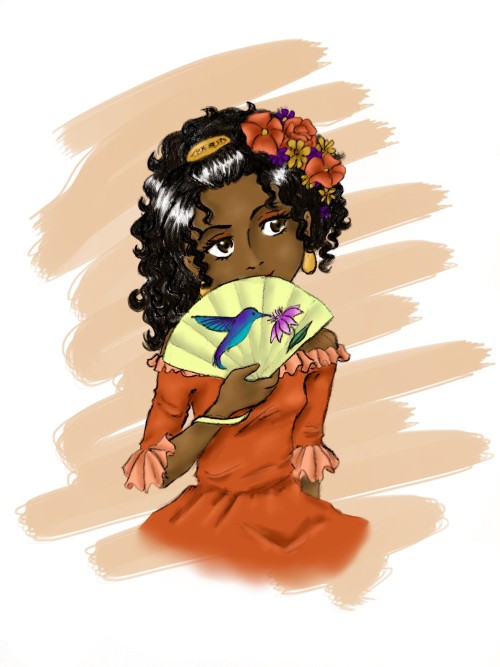
A Robin Hobb Rereading Series: Entry 132: Ship of Magic, Chapter 31

Read the previous entry in the series here.
Read the next entry in the series here.


The following chapter, “Ships and Serpents,” begins with Wintrow and the Vivacia conferring about their respective perspectives. The ship notes that, in the absence of Wintrow, she had begun to become aware of something she cannot put into words, some sense of identity other than that of herself as a liveship awakened by the blood of Wintrow’s kin. They are disturbed by the captain’s approach to the foredeck.

Wintrow _1
An image of the boy…
Wintrow_1 by MartAiConan on DeviantArt, used for commentary

Said captain rails against a crew that struggles to maintain order and good form while the ship they sail is unwilling to cooperate. Mentally, he rails against his son for not meeting his expectations, as well as against his wife and her family for the same. The ship and the trailing serpent also attract his ire, and he assaults Wintrow, making to pitch his still-fettered son overboard to the waiting sea-creature.

The serpents themselves are confused by the Vivacia as they follow her out of Jamaillia Bay and on her northward journey. One follows her as a food source; Maulkin and others follow her as a sort of echo of a pivotal figure. But they do so with hesitation, uncertainty.

Aboard the ship, a fracas ensues as Gantry answers the ship’s summons and tries to calm matters. Gantry works to put matters to rights as the captain considers what he had been about to do and the ship herself tries to puzzle out what she felt when she slapped at one of the trailing serpents. The captain looks on with patriarchal disgust as the mate tries to restore some semblance of calm and order to the ship, and he rails at the lot of them before stalking back to his cabin.

After, Wintrow considers matters as the ship makes what progress she can, given her cargo and crew. He and the ship fall into an angry existential argument, from which they emerge suddenly into an uneasy self-questioning and contemplation.

Aboard the Ophelia, Althea finds herself confronted by the liveship; her disguise is of no avail to her. The ship plays with her regarding her secret, winning far more than she gives up, and Althea learns something of the liveships’ community. She muses on what she has lost from not having asked for aid, and the ship presses on.

If there is a central theme to the chapter, it is encapsulated in the passage aboard the Ophelia, and it is the theme spoken to by the old adages of carpe diem and memento mori. It is the reminder that the present is of value, that being present is of value. Things are lost by absence, never to be reclaimed, even if the absence is needful or helpful–and especially when it is not, and not asking for aid often makes for absences that are not needed or helpful. As someone who has been away, perhaps too much, I find the reminder…uncomfortable, but I also know that being made uncomfortable is a good thing every now and again. Reactions to it are not always so, as the world shows far more often than could be hoped. But perhaps such discomforts can lead to better ends.

Perhaps.

I always appreciate whatever you can send along.

A Robin Hobb Rereading Series: Entry 131: Ship of Magic, Chapter 30

Read the previous entry in the series here.
Read the next entry in the series here.


The next chapter, “Defiance and Alliance,” opens with an account of the beginnings of trouble aboard the new slaveship Vivacia. As slaves are being loaded onto her, one opts to die quickly, jumping overboard and drowning as the chains about him pull him under. Serpents rouse to eat the flesh, and Torg lashes the slaves together in anger. Wintrow sorrows with the others’ dehumanizing sorrows, which the ship causes him to feel more keenly, and most of the crew begins to chafe at the change to their work.

#jani khuprus from Katrin Sapranova
The fateful meeting…
Image by Katrin Sapranova on Tumblr, used for commentary

The Vivacia considers her captain and his jealous ire at Wintrow. She has the captain bring the boy to her as she considers her changed relationship to him more closely. His attempt to leave has hurt her, but she makes herself something of a nuisance until he is brought to her.

In Bingtown, Keffria and Ronica make ready to receive the Rain Wild Festrew Traders; their preparations are noted. What she knows of the Festrews, as well as of the situation with Malta’s dream-box, is rehearsed, as are her continuing annoyances with Ronica, and she longs for her husband to take over running things. At length, the Rain Wild Traders arrive–but it is not only a Festrew, but Jani Khuprus, as well, whom the Vestrit women greet.

After pleasantries are exchanged, the reason for the Khuprus visit is made clear: the dream-box. Khuprus, through her son, Reyn, is aware that the box has been opened and the contained dream shared. More, the debt for the Vivacia that had been owed to the Festrews has been transferred to the Khuprus Trader Family; the debt would have been forgiven as a marriage gift. With Malta not yet eligible for marriage, however, the arrangement is in substantial peril, and tensions suddenly rise sharply. Caolwn Festrew brokers a compromise, however, to which Keffria agrees.

For all the problems inherent in making marriage an economic contract, the present chapter does present an interesting conundrum in the interaction between economics and amorousness. Admittedly, the amorousness in question is itself problematic, evoking the doomed and hormone-driven inanity of Romeo & Juliet in a twenty-year-old becoming infatuated with a girl barely into adolescence (Caolwn Festrew’s comment about being married at fifteen notwithstanding). Even so, it highlights the fundamental irrationality of finance–namely that people, even people as ostensibly money-savvy as a group that defines itself via its mercantilism, are not rational actors.

It also brings up an interesting bit of anachronism. While the Six Duchies, existing in the same narrative universe, appears to operate at a nebulously medieval European level of technology, the Traders and Jamaillia operate at what seems for the most part to be the Age of Sail, some centuries later. (The lack of gunpowder weaponry continues to be an interesting quirk, to be sure.) The disparity can be explained in some of the same ways that the technological disparities between the Mediterranean region and northern Europe during the traditional later medieval period can, of course, but neither of the periods was noted for encouraging romantic marriage among its upper classes–which the Traders are. I find myself again strangely in mind of a romance novel as I reread the chapter, and I have to wonder at some of the genre boundaries that seem still to linger for me.

I don’t suppose I could get a little help?

A Robin Hobb Rereading Series: Entry 130: Ship of Magic, Chapter 29

Read the previous entry in the series here.
Read the next entry in the series here.


The chapter that follows, “Dreams and Reality,” starts with Keffria and Ronica confronting Malta regarding the dream-box that had been sent to her and that has been marked as missing. Keffria is satisfied by Malta’s responses, but Ronica is not and tries to impress upon her granddaughter the seriousness of their situation. Their confrontation causes Ronica to reassess Malta and lay bare more of the Vestrits’ knowledge to her. The exchange continues, and Ronica leaves the room; Malta exults in her perceived victory and lashes out at the servant, Rache.

Actor Profile: Tim Curry
There are worse renditions of such a figure than this one that comes to mind.
Image from Muppet Treasure Island, used for commentary.

Amber confers with the Paragon, asking the ship after itself in some detail. The ship grows upset at the notion of being sold away from the Ludluck Traders, and Amber relates something of the prevailing straitened circumstances–for them and their peers. The Paragon makes mention of the Rain Wild Traders, about whom few outside Bingtown know, and Amber voices a fantasy that the ship pointedly rejects.

Away, aboard the Marietta, Etta tries to minister to Kennit’s injury; he rebuffs her forcefully. Sorcor, when he answers his captain’s summons, agrees with Etta that the amputation needs to be re-made, more of the leg cut away to allow the rest of him to heal, but he also stops such talk when bidden and makes his report on the state of affairs about his crew. Kennit resumes his plans to seize a liveship; Sorcor begins to object until Kennit manipulates him into compliance. Kennit’s wizardwood charm chides the captain after the mate leaves in a paroxysm of loyalty.

Kennit being on a crutch calls up one of the tropes associated with pirates of the age of sail–not unjustly. Any work with heavy moving objects has the potential to cause injury; work with heavy moving objects and minimal safety equipment carries the risk of grievous injury, yet the work must still be done. And Kennit, being an amputee and leaning on a crutch, calls to mind two literary forebears, in particular: Robert Louis Stevenson’s Long John Silver and Herman Melville’s Captain Ahab.

Thinking on the matter from the perspective of having read the Liveships novels before, as well as Moby-Dick (somehow, Treasure Island has escaped me to this point, though a copy is on one of my bookshelves at home), I think there’s something to be said for how Kennit refigures the character types of the earlier works. I’m not at all sure I have the notes that would let me work through that idea well, though; they might have been culled. But then, they might not have…

Someday, I hope to have the leisure to pursue such ideas again. Someday.

Your continued support is greatly appreciated.

A Robin Hobb Rereading Series: Entry 129: Ship of Magic, Chapter 28

Read the previous entry in the series here.
Read the next entry in the series here.


The next chapter, “Vicissitudes,” opens with Wintrow being taken to be tattooed as one of the Satrap’s slaves. Thus marked, he is returned to the pens where the slavers keep people imprisoned, smarting from the pain of the tattooing and from not being redeemed by his father. He rebukes himself for having had hope of rescue.

“Wintrow Vestrit”
Not really sure if the Vivacia tat’s supposed to be the whole ship or just the figure head. Decided on the figure head.
It’s a good image of the young man.
Image from emmitys on Tumblr, here, and used for commentary

At anchor in Jamaillia Bay, the Vivacia mulls over her separation from the Vestrits. Gantry, the first mate, tries to console the ship, to no avail. She presages doom to him, but he does not take the warning.

Elsewhere, Althea–posing again as Athel–attempts to sign onto the crew of the Tenira liveship, the Ophelia. She manages to talk her way into a berth among the crew, and is told to report to the mate, Grag Tenira. Happy at her success, she makes to retrieve her kit, noting to herself that she will not see Brashen again.

Brashen, meanwhile, seeks a berth on the coastal trader Springeve. He suspects it of trafficking with pirates and is reluctant to engage, but financial straits and a dearth of his preferred stimulant, cindin, motivate him. Through bravado, he manages to secure a solid berth at the ship’s mate, and he makes to report to his new ship, thinking a bit of Althea and wondering if he will still be known in the Pirate Isles.

Wintrow wakes, still a captive, and learns more of his situation from another held with him. He is soon herded off and assessed, as if so much livestock, and soon is put up for auction. Kyle sees him and offers an insultingly low initial bid; it does not pass. At length, he is sold, Torg taking him in hand and hustling him off to be tattooed again, marked as slave to the Vivacia, herself.

In the Farseer novels, Hobb positions her protagonist as distinctly other than the typical fantasy hero. I’ve argued the point, so I’ll not rehash it–but I will note that Wintrow seems to be in much the same mold, made even more so in the present chapter than he had been by the earlier parts of the novel. By being made a slave, and one not even claimed by his father, he is placed into a particularly abject position, one even more tenuous and precarious than his predecessor, Fitz. It marks him as perhaps the focal character of the Liveship Traders novels, as well as reinforcing just how execrable Kyle Haven and the institutions in which he participates are.

Given continuing events surrounding the composition of this little piece, I have to think that more people need to be reminded more forcefully of that execration and its lingering effects.

I’ll be holding off for next week’s commemorations, Monday and Friday. I could use a little help in the meantime…

A Robin Hobb Rereading Series: Entry 128: Ship of Magic, Chapter 27

Read the previous entry in the series here.
Read the next entry in the series here.


The succeeding chapter, “Prisoners,” starts with Wintrow incarcerated and facing being sold off as a slave, days after he has been taken. The absence of the priesthood from civil life and aid is noted to him, and Wintrow considers his straitened circumstances ruefully, musing with horror on the dehumanization awaiting him.

Old Gaol - Nantucket Historical Association
Not the kindest kind of view
Image taken from the Nantucket Historical Association, used for commentary; it seemed to fit a sailing novel…

Torg, looking over potential slave purchases, sees Wintrow and delights in the chance to earn a reward. He ensures that Wintrow hears what awaits him, and he leaves him in his incarceration. Wintrow considers his errors in the past days, but hindsight is no comfort.

Aboard the Marietta, Kennit rages as Etta as she attempts to tend to his wound. She leaves his cabin, leaving him to consider his amputation alone–save for his wizardwood charm, which rebukes him for his folly. He summons Sorcor, receiving a report of events after his maiming; the rest of the capture of the slaveship went well. Kennit’s injuries start to tell on him, and Sorcor and Etta make to tend him.

Kennit begins swiftly to work towards returning to active captaincy, and he continues to receive reports from Etta. She notes to him news of two liveships, one of which is the Vivacia. His actions seem to renew his crew’s confidence in his abilities and spirit, and Kennit continues to plot as well as he can amid his injuries.

Wintrow, at last, realizes his errors, and he remains a child even by his own reckoning (which is rare for an adolescent boy and a sharp contrast from his younger sister, Malta, who professes herself ready for adulthood). Hindsight is never a comfort, however, and his horror at what awaits him elicits no small sympathy.

It is tempting, almost, to feel sympathy for Kennit in his present circumstances; Hobb’s descriptions tend toward that end, certainly, and his reactions are understandable, at least. But the same things are true of Kennit that are true of other figures about which I’ve written (for example, here); he is a bad person who has done many bad things, and he is not working to atone for those errors. Sympathy for him would be false, somehow, and even fiction should do better.

What better way to end a month than to send some support along?

A Robin Hobb Rereading Series: Entry 125: Ship of Magic, Chapter 24

Read the previous entry in the series here.
Read the next entry in the series here.


The following chapter, “Rain Wild Traders,” opens with Ronica in a foul mood and Keffria attempting to negotiate it as Malta looks on and plots her own affairs, rehearsing what she knows of upcoming events. A major Trader social function is in the offering, and Malta seeks to impress at it; her family’s situation hinders her prospects of doing so.

Malta meets Reyn
This would seem to be the focus of the chapter.
Malta meets Reyn by ThereseOfTheNorth on DeviantArt, used for commentary

The three ride to the event with Davad Restart, who muses on the benefits of slavery as they ride along together. Malta notes mentally and with some aspersion Ronica’s handling of the conversation, and she acts something of an ass as the Vestrits enter the darkened venue for the event. Malta muses on the reasons for the darkening as she, Keffria, and Ronica make to enter. While they wait to be announced, Malta is introduced to the Rain Wild Trader Jani Khuprus. She makes a slight faux pas with her, though the older woman takes it in stride.

When the Vestrits are seated, Malta continues to muse aspersively on their surroundings and the event as it gets underway. It is something of a legal convocation, and Trader Khuprus addresses the assembled Bingtown Traders on behalf of the Rain Wild group, calling for their intercession with the Satrap in Jamaillia, to whom they owe nominal allegiance and from whom they claim exclusive legal privileges that are being infringed upon.

A tumult arises in the wake of Khuprus’s plea, the Traders present growing fractious and argumentative. Khuprus calls for unity, and discussion continues as Malta excuses herself. Along the way, she encounters another Rain Wild Trader, with whom she converses for some minutes before realizing that he is not what he seems and that there is potential for scandal. She gives him her name before she makes her way back to her family.

Elsewhere, a group of serpents proceeds northward, if uncertainly. They press forward, striving towards something of which they are unsure.

I forget if I have noted another one of Hobb’s meaningful names: Davad Restart. The surname seems a fairly obvious bit of foreshadowing, promising to be the source of a renewal in the book–and it can be argued that he does, in his approval of chattel slavery and alliance with the New Traders whose landed presence violates the promises of Bingtown’s founding, look towards a new beginning for his home. That does not mean it is a pleasant or desirable one, however, for many or most who would be affected by it.

I note also that the focus on Malta offers insight into her still-childish character, and it is also not a pleasant or desirable one. Frankly, the girl is spoiled. She has been allowed to be, which is not her fault, but not all of her unpleasantness is a result of easy circumstances. There is this to consider, however; her character is not alone in being thus unpleasant, and there is room for her to grow from where she is in the present chapter…

The editor’s changed; send some support so I can bring you a better experience?

A Robin Hobb Rereading Series: Entry 124: Ship of Magic, Chapter 23

Read the previous entry in the series here.
Read the next entry in the series here.


The next chapter is titled “Jamaillia Slavers,” and it begins with Wintrow exulting in his freedom from the ship and service, walking along the streets of Jamaillia City. He considers his present circumstances, how to return to his monastery, and the ship he has left, and it nags at him no less than the clear signs of corruption in the city that is supposed to be the heart of civilization.

katrindraws. Photo by Katrin on June 19, 2020.
Quite a mouthful.
Image taken from @katrindraws on PictoSee, used for commentary

The Vivacia stands sullenly as her officers query her about Wintrow’s departure. At length, she rebukes them openly and violently, striking Kyle and damning him. Gantry persuades Kyle to go out and look for the boy and to put out word of a reward for his safe return. Gantry tries to ease the ship, showing respect to her, but she stiffly rebuffs him, weeping at her current circumstances.

Elsewhere, Kennit and Sorcor make ready to take another slaver. Sorcor tries to spare Etta the sight of it, but she refuses, and the plan to take the slaver begins. Kennit makes to lead the boarding party, and as the Marietta draws close to the slaver, the slaver begins tossing slaves overboard, threatening to send more screaming into the sea if they are accosted. Kennit presses the attack anyway, and into the fracas presses a serpent that had been following the slaver and feeding upon the dead. The serpent takes Kennit’s leg, even as Etta saves his life.

Wintrow finds himself among the slave markets in Jamaillia City, stunned by the squalor and suffering he finds there. He responds to one of the enslaved who asks for pity and mercy–not for himself, but for a woman suffering from a botched abortion. Wintrow initially seeks to find an ordained priest to help, but the idea is laughed at; with some reluctance, he offers a terminal last rite to the woman. The slavemonger takes exception to the mercy, however, and challenges Wintrow for the lost revenue. When he cannot tender it, he is taken, himself.

As I read the chapter again, I find the juxtaposition of events curious. I am aware that yoking them together is supposed to tell readers that they are roughly contemporaneous, and that comes across fairly clearly, but I also know that the events are under their author’s control; they are made to be contemporaneous. And so readers are led to understand them as somehow linked other than by time–fallaciously, perhaps, but readers who will seek such fantasy as Hobb writes are not necessarily reading to make a predominantly logical argument.

I’m not sure where else I can go with that line of thought, though. Perhaps it is simply me reading badly once again. I tend to think not, though; I’m supposed to be trained to read analytically and critically, and if there is such a yoking in place, such a construction of a contemporaneity of events, there has to be something going on in it, right?

School’s starting soon; help me defray expenses?

A Robin Hobb Rereading Series: Entry 123: Ship of Magic, Chapter 22

Read the previous entry in the series here.
Read the next entry in the series here.


A chapter titled “Plots and Perils” follows, opening with Kennit fuming at a failure to take a liveship he pursued. The wizardwood charm he wears chides him in advance of Etta approaching; the changes in her carriage and clothing are noted as she offers an idea of how to capture such a ship. Outwardly, he rejects the idea and reasserts his mastery.

In the Arms of a Pirate (A Sam Steele Romance Book 2) - Kindle ...
Somehow, reading the first passage, I can’t help but see something like this…
It’s the cover of In the Arms of a Pirate, as shown on Amazon.com, used for commentary

Just outside Bingtown, Mingsley brings another prospective buyer to survey the Paragon. The ship warns the buyer about Mingsley’s machinations even as the broker notes that a liveship is needed to sail the destructive waters of the Rain Wild River–the source of Bingtown’s riches. The Paragon rages futilely against the idea.

Aboard the Reaper, Althea sights a serpent, musing about Brashen and about serpents as the beast attacks halfheartedly. As her watch ends, she continues fretting and finds herself talking with Brashen again until the attack is rejoined with greater vigor. The ship’s captain opts against a more dedicated pursuit, deciding to flee back to home port with the full cargo rather than take the risk; the Reaper escapes, but only at cost.

In Jamaillia, Wintrow approaches the Vivacia and tells the ship his intention to depart. The ship quails, but he does not relent, and she mourns his flight as she hopes for his return.

In the morning after, Etta revels in Kennit’s attention, and the wizardwood charm smiles.

As I note in captioning this entry’s image, I am put in mind of trashy romance novels by the first passage in the chapter, the kind of thing I remember my grandmother reading in those long-ago days when I could spend my summers with my nose in a new book every day, and she was the only one who read as much as I did. My own reading was just as trashy, I know; a lot of popular science fiction and fantasy novels are, and they were most of what I read, then. Anymore, I do not read nearly as much or as broadly as I ought to do, particularly since I have a small person watching me not read so much when I ask her to read more than she currently does. It is a thing I must correct.

I’ve only skimmed such books, and that, not often; what I recall from them is far afield from what it seems to me Hobb does in her work. I have to wonder if there is some sort of backhanded joke at work with it; I do tend to look for such things, and not always in expected places, so it should not be a surprise that I have such a thought, though I will admit that I may be apt to see such where none exist. It’s not the only thing I find when I make to look, after all…

School’s starting soon; help me defray expenses?

A Robin Hobb Rereading Series: Entry 122: Ship of Magic, Chapter 21

Read the previous entry in the series here.
Read the next entry in the series here.


The succeeding chapter, “Visitors,” begins with Ronica receiving Cerwin and Delo Trell, with the former thinking to call on Malta. Ronica sends for Keffria amid the faux pas; her daughter meets her en route. When they greet their guests, Keffria seeks to stifle Cerwin’s interest in Malta with subtlety and tact, Malta’s entrance spoiling the effort to some extent. Keffria presses on for control of the situation, however, handling it adroitly, and Ronica reassesses her grandchildren in the light of the changes she marks in Malta.

Art ID: 6206
Perhaps it’s something like this for Wintrow?
High Fantasy Castle by Robert D. Brown on ArtAbyss, used for commentary

She moves on to mull over changes in Bingtown, generally, including the increasing divide between servant and served, spurred by increasing acceptance of slavery in the area. After Keffria, Malta, and her guests depart, Ronica confers with Rache about Malta and what has happened leading up to the day.

Elsewhere, the Vivacia approaches port in Jamailla, and the ship wakes Wintrow to show him the city they approach. The overall geography and some of the history of the city are glossed, and Wintrow finds himself bitter. He and the ship confer about ponerology, and the Vivacia warns him to caution. He is smitten by her, and he cannot place why, though he moves towards philosophical acceptance. The results of the affair with the bear are also noted. And when Wintrow is called away to work, the ship considers what she knows of the city and its lurking foulnesses.

Back in Bingtown, Ronica and Keffria confer. Keffria lays bare that she has ever felt neglected by Ronica in favor of Althea. Ronica accepts the rebuke, as well as Keffria’s insistence upon taking back her authority over her daughter and her inheritance. Ronica does note the arrangement with the Festrews, however, and Malta’s possible liability for paying the family’s debt as soon as she is formally recognized as a woman grown.

I delight, of course, in the opportunity to use the word ponerology (I clearly like words, else I’d not’ve sought and earned three degrees in English). It’s not something I often get, so I take the chance when I can, even if the philosophical motions are not as deft as might be hoped. Then again, there is something to be said about the faith Wintrow follows, and it may also be that there is some more commentary to be made. For Jamaillia is something of a shining city on a hill, one evoking London in being rebuilt in stone after a fire in centuries past, as well as one evoking Rome in being made the center of a theocracy. But the Realm of the Elderlings is far more the New World than the old, and it is hard to ignore in such days as these that, however glimmering the promise of the United States may be, there is an awful lot of corruption and filth at its roots, and hungry serpents nurtured on the lives of the enslaved waiting to take another meal.

Care to chip in?

A Robin Hobb Rereading Series: Entry 121: Ship of Magic, Chapter 20

Read the previous entry in the series here.
Read the next entry in the series here.


The following chapter, “Crimpers,” begins with Althea aboard the Reaper on her return journey from her hunting expedition, laden with cargo. A brief resupply stop has the crew on a night’s liberty, and Brashen watches over the fortunate “Athel.” He approves silently of her conduct and her comportment on the voyage and ashore as he nurses a dose of cindin. He muses on it, finding himself feeling strangely and making to excuse himself from the tavern where he and many of his crewmates have been drinking and dicing. One of the servers suggests he overnight in her bed, and he moves to accept the offer.

Sailors Carousing - National Maritime Museum
Might be something like this…
Julius Caesar Ibbetson’s Sailors Carousing at the National Maritime Museum, used for commentary

Meanwhile, “Athel” and some crewmates make to wrap up their night of drinking. One of them mentions that another ship in port has lost crew to disease and is starting to press-gang sailors found alone. The crewmates make for the ship, and “Athel” goes looking for Brashen, finding him just as an attack comes. “Athel” yells a warning and is struck down.

When the ship’s “boy” wakes, “Athel” finds “himself” under some scrutiny. There is disbelief that the tavernkeeper and server are complicit with the press-gang, but there is another other disruption that “Athel” is able to collect Brashen and get him back to the Reaper. As they hobble along, Brashen suggests that Althea head for the Six Duchies; she refuses, citing the barbarism of the people there.

Later, Brashen summons the ship’s “boy” for medical treatment; blows to the head do demand some consideration, after all. They confer about their narrow escape from kidnapping, and he doses her with cindin in the absence of more appropriate medicines as he stitches her scalp. The drug and the danger and the damage to their heads combines to push them to have sex. In the wake of it, Brashen comments on the prophylactic wizardwood charm in her belly button; Althea relates the story behind it. And, despite their better judgment, they have sex again.

As I reread the chapter, I find myself thinking that it introduces cindin–something of an analogue of chewing tobacco, and not the first appearance of addictive stimulants in the Realm of the Elderlings novels (as witness here, here, and here, in addition to the noted addictive qualities of the Skill in the Six Duchies). Brashen’s musing on the substance and his old captain’s insistence against it rings true to me; I work in substance abuse treatment at present, and there are no few employers in my area who will fire employees on suspicion of drug use–unfairly, to be sure, but it is an at-will state, to its misfortune–or who will send them to my agency for drug testing. (If they are fired after that, it is not quite so unfair, I think.) And I know many, many people who got into trouble with substance use through something like Brashen describes: a need to take an edge off of sensation and dull pain just a little bit so that they can relax. It is certainly the case that may substances will harm the body; it is also certainly the case that overwork and excessive stress will, as well. So there is that to consider.

Also worth considering is the disregard in which Althea holds the Six Duchies. She remarks aspersively upon their lack of sophistication, comments that seem excessively colonialist, even if the Bingtown Traders from which she hails are not colonizers in the sense of pushing out indigenous peoples. Still, it is a haughty and imperialist perspective, and one that reveals a surprisingly lingering blindness to the level of privilege with which Althea grew up; the conditions that she deplores in the Six Duchies are doubtlessly current among the other-than-Trader families in Bingtown. They are all too current even now in supposedly affluent places; how much more must they be so in a parallel of the Golden Age of Sail?

Your support continues to be appreciated.