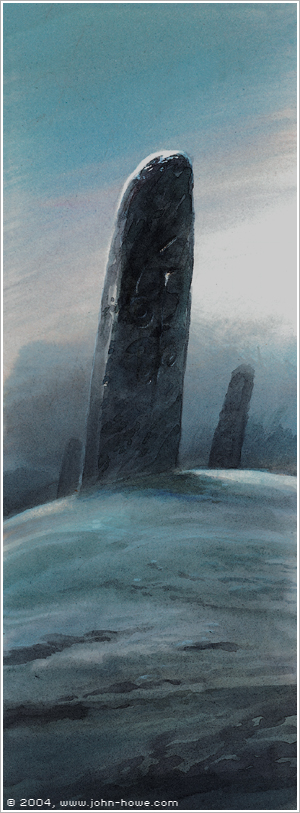
A Robin Hobb Rereading Series, Entry 441: Fool’s Quest, Chapter 19

Read the previous entry in the series here.
Read the next entry in the series
here.


After a description of Clerres reported to Chade, “The Strategy” begins with Fitz waking up to the crow, Motley, haranguing him for food and flight. After tending to the bird, Fitz reaches out through the Skill to Chade and finds him dreaming and disoriented. Nettle rebukes him through the Skill, and Dutiful summons him by that same agency. As Fitz considers his response, his anger at his situation grows, and he quashes it as he attires himself in a manner befitting his station.

By Archives Départementales de Pyrénées-Orientales 1B31, Public Domain, https://commons.wikimedia.org/w/index.php?curid=1353641

Suitably attired, Fitz makes to answer Dutiful’s summons, but he is waylaid along the way by Foxglove, a former commander of the guard unit that had formed around Kettricken in her early days at Buckkeep and in which he himself had served for a time. The pair reminisce briefly before Fitz accompanies her to a guards’ mess. There, Fitz finds himself suddenly presented with a guard unit wearing the emblem of a charging buck long ago assigned him by Verity. Foxglove introduces some of her own kin, wearing the livery of Fitz’s new guard unit, and, after some Skilling with Nettle and Dutiful, Fitz accepts their oaths and asks for Foxglove’s own, naming her the captain of his guard.

After Fitz is able to gracefully exit the impromptu ceremony, he attends on Dutiful, Nettle, Kettricken, and Chade, the last of whom shows his age and injuries. Reports are exchanged and counsel taken, and Fitz’s own condition is noted with some concern. Plans for how to search for Bee and Shun are made, and the King, Skillmistress, and Kettricken leave to begin to enact them. Alone, then, Fitz and Chade confer about private events, Fitz voicing concerns about predestination. Their talk turns to dragons’ blood, and Chade notes Shun’s strength in the Skill. Chade reluctantly accepts the attentions of a healer, and Fitz moves to address the terms under which he does so.

Returning to the hidden suite where the Fool is kept, Fitz is startled by the appearance of a young woman–one Spark, who is the truth of Ash, who explains herself to him. The Fool is hurt by the deception, although Fitz seems to accept the explanation offered. As Spark then moves to summon Chade’s preferred healer, Fitz searches out his own medicines for his old mentor, and he and the Fool confer about Spark. The pair determine to talk together again, and Fitz takes his leave.

On his way back to Chade, Fitz encounters Dutiful’s sons, King-in-Waiting Integrity and Prince Prosper. An awkward conversation ensues and is soon concluded, and Fitz returns to Chade. The old assassin is in decline, his mind wandering as Fitz attends to him, and Nettle bustles him out of the room, informing him of the treatment that must follow for Chade and the need for his exclusion therefrom. Reluctantly, Fitz accedes.

As I reread the present chapter, which overtly calls back to earlier events, I find myself annoyed at myself for some of the way in which I gloss the events of earlier chapters. Had I been more thorough with listing names than I was, I would have an easier time of things now. That said, a summary should gloss details; it exists to make a brief account, after all, and offering all of the details means it cannot be shorter. Too, while a summary can be presented as an issue of fair use, especially when it is accompanied by explanation and commentary that run longer than it does, the more that is reproduced directly in the summary, the less fair the use is. I do not want to exceed what is fair, in this or in my other endeavors, so there is some tension…but I could have done better with character names than I did. And than I am likely to do, moving forward.

I find myself also once again uneasy with the Fool’s reaction to gender fluidity. Given the Fool’s own easy movements among presentations of masculinity and femininity, the long-standing failure to consider that the Unexpected Son might be a daughter sat oddly with me; the vehement reaction to the revelation that the boy, Ash, is a performed persona of the girl, Spark, seems even more so. (I do note, though, the parallel to Fitz’s own reaction to the revelation of Amber. Perhaps that underscores what’s going on, that the Fool has taken on some of Fitz’s less admirable ideas. It seems erratic if so, however.) Fitz’s acceptance of Spark’s explanation makes more sense to me, in fact; for one, he does seem to have a soft spot for children (Hap is but one example), and for another, Fitz has long known that Chade is not unaccustomed to doing such things in his own clandestine work. I remain…uncomfortable with it–not the fluidity, but the reactions to it of characters who seem to me as would have other reactions. But that may just be me.

I am more comfortable with the guard company coalescing around Fitz and the ceremonies related thereto. I’m a sucker for such things, honestly, for the presentation of lauds and honors in heavily symbolic contexts; indeed, for a while, I’d thought about how I could get work in the US Office of Protocol. (It’s one of many things that did not happen, like my being a band director or a college professor.) I am overly sentimental, to boot; heartfelt grand gestures get to me. (It’s been a problem before; I’ve been manipulated in such ways on occasion, taking at face value things that were, in the event, merely pro forma. Such cynicism as I evidence has some justification, after all.) I’ll admit that my reading of the ceremony does tend towards the medievalist–go figure that one out–and I’ve picked a post-image to suit that, but I have to wonder–go figure that one out–whether there’s some Native American practice being emulated in the specifics of the ceremony. I’m not versed enough in such things to be able to say so or affirm not, of course, and it is the case that Hobb remains within the Tolkienian fantasy tradition even as she ranges outside it…I’ll hope to see someone more up on such things than I am or can be take up the discussion.

They’re not all scholarly somedays for me.

Help me keep this going; pay me to write for you!

← Back

Thank you for your response. ✨

Or you can send your support along directly!

A Robin Hobb Rereading Series, Entry 440: Fool’s Quest, Chapter 18

Read the previous entry in the series here.
Read the next entry in the series
here.


Following the text of a binding resolution from the Traders’ Council of Bingtown, “The Changer” begins with Fitz musing over the possible effects the Fool will experience from drinking dragon’s blood and conferring with the Fool about current conditions. The Fool reports feeling more energized, and Fitz prepares a medicine as he settles in to get more information from his friend. Conversation is uncomfortable, ranging to many questions that find few answers, although the Fool is able to lay out some of the social structure in which Dwalia and her company are enmeshed.

Because I got an A on this one…
Photo by Pixabay on Pexels.com

Fitz lays out much of Bee’s early history, and the Fool’s belated acceptance of the idea of Bee as the Unexpected Son allows him to understand much of what has happened at last. Fitz, however, does not take the news as calmly. After laughing uproariously, the Fool attempts again to explain matters before turning to the destination towards which Bee is headed–Clerres–and how to intercept her captors. Fitz takes his leave and ruminates on the Fool’s explanations and some implications of the same, and his thoughts turn to Patience in the court where he now resides.

The present chapter brings to mind once again something I found…vexatious…in my first readings of the present novel and its immediate predecessor. On the rereading, or on this rereading, I find myself less vexed and more open to the ideas of 1) magic mucking about with things and 2) longer exposure and engagement prompting different circumstances. After all, I am older, now, than I was then, by more than a decade, and the differences between what I was and what I am are in many cases only those of greater familiarity. I am a better father now than I was then, for instance, but largely because I’ve had more time to learn how to parent. (It’s mostly because I have an excellent daughter who has, so far, made the work of parenting relatively easy. Credit where it is due.)

I am struck once again by the mismatch between the Fool’s understanding of Bee as the Unexpected Son and the Fool’s own gender fluidity (let alone Fitz’s visceral reaction to the Fool’s assertions of their mingling). I know that it is a humanizing thing to give characters blindnesses, and I know that Hobb is much concerned with imparting verisimilitude into her work; both such lend themselves to the Fool having trouble accepting the idea (and Fitz, to be certain). Still, for that to be the sticking point…it is a splinter between my fingers, and I don’t have the tweezers to address it well.

Help me keep this going; hire my pen!

← Back

Thank you for your response. ✨

Or you can send your support along directly!

A Robin Hobb Rereading Series, Entry 439: Fool’s Quest, Chapter 17

Read the previous entry in the series here.
Read the next entry in the series
here.


Following commentary from Chade about medicinal uses of dragon-parts, “Blood” begins with Fitz relating a remarkably vivid image to describe the sensation of his plunging through the standing stones and of reconstructing himself and Chade as they travel poorly therein. He emerges into the world, pulled thence by Dutiful and his coterie, and as he returns to normal consciousness, he makes such report of his experiences and recent events as his condition allows him to do. He subsequently stumbles through initial tending to his injuries, and he sleeps under pharmaceutical influence.

Seems benign…
Photo By: Kaboompics.com on Pexels.com

Fitz wakes to greater certainty and reaches out through the Skill, conferring with Dutiful and Nettle, although both urge him to restrain his Skill because he is not yet in control of himself. Nettle joins him in person, helping him to steady his magic, and the two confer briefly before food arrives and Fitz’s attention focuses entirely on it. After, Dutiful lays out to Fitz what actions he has taken and is taking, and Fitz gains greater control over himself, although with effort. Dutiful and Nettle also inform Fitz of what has befallen the Fool.

Fitz makes his way to the Fool, assessing his old friend as Kettricken looks on, and he quizzes Ash on what he has given the Fool. Ash reports in detail, and Fitz learns that the Fool has been dosed with dragon’s blood purloined from a supply meant for Andronicus Kent.

The prefatory materials to the present chapter, as often, attract my attention. In the present case, two major reasons obtain for their doing so. The first is the comment that “this scroll has been translated many times, to the extent that seventeen of the [twenty-seven substantiated] remedies make no sense,” which is given an accompanying example. While I know that the commentary is fabricated–and I have more to say about such constructions elsewhere–I also know that the kind of nonsense presented is the result of word-to-word translation, rather than sentence-to-sentence or idiomatic renderings. In the long-ago days when I had students and had occasion to discuss such things with them, I would ask Spanish speakers in my class if “¿Quién cortó el queso?” had the same valence as “Who cut the cheese?”; the answer was always a laughing “no.”

Chade’s comments about the “fifty-two unsubstantiated remedies” are also on-point. The regard for attestation that he uses as a rubric for contrasting the unsubstantiated remedies with the substantiated ones is, perhaps, something of an analytical bias (because, after all, user testimonies can be faked), but it is at least something. Too, the comments about manuscript positions–the unsubstantiated remedies are described as add-ons in the text from which Chade works–check out with what I have seen in discussions of even such august works as Beowulf; there’s a whole big thing about how the section of the poem dealing with the dragon is someone else’s work than who wrote of Grendel and his mother. So there is more than a bit of verisimilitude at work in the prefatory materials, which I appreciate seeing.

I note in the main line of the present chapter a return of one of Hobb’s narrative techniques, one previously deployed on the Skill-road to the stone-quarry and which has occasioned some readerly comment. In the present chapter, as in the earlier, Fitz’s experience with the Skill leaves him confused and befuddled, finding it difficult to conceive of thoughts and to convey them to others in any way they can easily parse. The present chapter, which notes Chade doing much the same thing, suggests that it is the Skill itself that has such an effect, rather than it simply being Fitz’s limits. I note, too, the similarities between Fitz’s narrated experience and the Fool’s report of the Skill-silvering; the intense, intimate focus on even the smallest details is another thing that seems to be of the Skill rather than of its users. I am put in mind of other media; Hobb here seems to be using a particular trope, although she uses it well in the present chapter–and I am taken with the notion that Fitz finds himself lessened by his return to himself after his Skill experience. There is something worth exploring there…

Do you need some writing done?
Hire me; I am the one
Who will steer your words aright–
And at a price you’ll think is right!

← Back

Thank you for your response. ✨

Or you can send your support along directly!

A Robin Hobb Rereading Series, Entry 438: Fool’s Quest, Chapter 16

Read the previous entry in the series here.
Read the next entry in the series
here.


Following more commentary about the Servants and their machinations, “The Journey” returns to Bee as she begins to recover from her illness, tended as she can be amid the demands of travel in haste. Thoughts of escape for her and Shun are quashed by vile threats from Dwalia, and her illness is ascribed to the kind of change that marks the lives of the Fool and Prilkop. Bee is urged to record her dreams again, using materials provided by her captors, and the Wolf-Father within her urges her to caution. Bee, who has dreamt prophecies, manages to dissemble.

Not quite the thing, but it still comes to mind…

It seems treatment of Bee has moved back to shorter chapters with the present one; in the edition I am reading, it is only five pages long, and while it is the case that I have still not done the work to examine chapter-lengths in any kind of rigorous way, there is still something striking about just how brief the present chapter is. I am still not sure what the function of the brevity is, although I am convinced there is some function, some purpose (chimerical as I know discussion of intent and purpose are). It seems to me to be too consistently the case that the Bee-centered chapters are short that it is without some reason. But uncovering it looks like it will remain a scholarly someday for now.

I’m happy to write to order for you! Fill out the form to begin!

← Back

Thank you for your response. ✨

Or you can send your support along directly!

A Robin Hobb Rereading Series, Entry 437: Fool’s Quest, Chapter 15

Read the previous entry in the series here.
Read the next entry in the series
here.

Something of a content warning (torture) applies to the chapter and, to a lesser extent, the discussion following.


Following a brief note that lays out some of the Servants’ methodology, “Surprises” begins with Chade and Fitz continuing to dose and question members of the Withywoods household. The pair discuss theories about their daughters’ abduction, and Fitz determines to return to Buckkeep and confer with the Fool. Chade determines to accompany him after they finish questioning the members of the household.

Thematic.
Photo by Annika Thierfeld on Pexels.com

Fitz stalks through the estate, musing on his failures once again, and he directs the members of the household he encounters to attend to a diversity of tasks, thinking that occupying them would help them not focus on their own sufferings. Successors to slain members of the household are named, and matters begin to be set to rights until after dinner, when the remaining members of the household are dosed and questioned, the information they provide slotted in among what Chade and Fitz already knew.

As Fitz bears witness, Skilled members of Dutiful’s court join him through that magic, and they confer along with Chade about next steps. A report of the Fool’s declining condition is made to Fitz, and Chade steels him against acting rashly once again. At Chade’s urging, Fitz retires to a fitful, fretful night, after which the pair take breakfast along with the officers of Chade’s rough unit. Preparations are made for setting out, and Chade and Fitz confer as they ride along. Unexpected members of the rough unit join them, attempting to assail them. Battle is joined, and Fitz messily and brutally dispatches of his opponents. Chade is far less kind to his own opponent, extracting information from him, before the two plunge through a standing stone towards Buckkeep.

The present chapter is a reminder, as if one was needed, that Fitz and Chade both are very, very dangerous people within the milieu. The fight, even though it left Fitz injured and Chade in a perilous position, saw the pair of them fight off superior numbers that had the element of surprise in their favor–albeit not so much as they had thought they would. That Fitz is yet capable of savagery is, perhaps, foreshadowing, something with which the Realm of the Elderlings corpus as a whole is concerned and on which the present series focuses more narrowly. If it is, however, it’s not terribly illuminating; it does not take much to guess that a trained killer, magically empowered, hunting for his daughter would resort to no small amount of violence. But then, despite its motions away from it, Hobb’s work is part of the Tolkienian tradition.

Another commonplace in Hobb’s work reemerges in the present chapter, as well: torture. That it pops up in the Realm of the Elderlings corpus is amply noted (see this, this, this, this, this, this, this, and this, for examples; Selden in Chalced also offers examples). It also pops up in her non-Elderlings work; a contribution to Warriors comes to mind, and I recall it being a factor in the Soldier Son novels. That it sticks out for me is something of uncertain importance. It may well be that it sticks out for me, that my eye finds it because it is primed, for whatever reason, to search out such things. It may well be that it is part of Hobb’s work towards verisimilitude; torture is, certainly and unfortunately, part of the world her readers inhabit, and so working to create a milieu that immerses readers will necessarily involve it. It may well be, however, that there is some authorial preoccupation with it, and while I have noted more than once that biographical criticism is fraught, that it is so does not mean that it is without value, even if I’m not in a position to be able to do much to follow it.

Many are my scholarly somedays, and no few of them will never come.

I’m still happy to write for you! Fill out the form below to hire my pen!

← Back

Thank you for your response. ✨

Or you can send your support along directly!

A Robin Hobb Rereading Series, Entry 436: Fool’s Quest, Chapter 14

Read the previous entry in the series here.
Read the next entry in the series
here.


Following an excerpt from an in-milieu herbal, “Elfbark” begins with Fitz walking Withywoods again, now aware of the Skilled nature of the ensorcellment that has afflicted it. Steeled against it, he surveys the damage and loss again, and how he addresses the feelings that survey occasions is noted. He and Chade brew elfbark and other herbal concoctions, purposing first to dose Perseverance against the ongoing pain of his injuries and then to administer elfbark to those at Withywods who have been affected by the ensorcellment. Lant is the first of the latter, and the memories breaking upon him once the compulsion to forget is blocked stun him, though Chade questions him despite the shocks.

I doubt it was so cozy…
Photo by Hc Digital on Pexels.com

Lant reports events leading up to the raid on Withywoods and of the event itself. Chade continues to prod, and Fitz quashes bitterness within himself. As Lant completes his report, Fitz and Chade confer together about the implications thereof, determining the power involved in enacting such work. Others are summoned and dosed with elfbark, and more reports are made, clarifying events surrounding Bee’s abduction. Fitz continues to puzzle over the idea of the Unexpected Son, and Perseverance lets out that Fitz is himself. How to proceed thence is discussed.

The present chapter is not the first one to bear the title, of course; one such prior chapter is here, with another here. Both such chapters focus on the deleterious effects of the drug, something the preface to the present chapter reinforces. And some of the negative effects of elfbark, particularly for those being introduced to it for the first time, do show up in the present chapter, although how much of the despair evidenced by characters in the text is a result of the drug and how much is a result of being forced to confront their trauma and victimization is not entirely clear; what the text presents could easily be taken either way. So much said, having the consistency in depiction across the milieu and across decades of writing is a good thing to see; while there may be some argument made against the insistence of late twentieth and early twenty-first century fan communities on internal alignment, such insistence does inform the context in which Hobb writes and in which I read and reread the work, so it is something worth pointing out, at least for now.

With the contexts of composition and initial reception in mind, I suppose some note about the moralizing in the prefatory materials is in order. It is, as I believe I’ve noted and as I know no few people have remarked, not the case that an author of fiction will believe everything that is presented in a text; the perspectives of characters, even unnamed ones not appearing directly, may reflect the author’s informed understanding, but they do not necessarily reflect the author’s opinions or beliefs. As such, I do not think it is the case that Hobb opposes recreational use of mild intoxicants; I think it would be too much of a stretch to read the text in such a way. I do think it would also be too much of a stretch to read the text as a full-throated endorsement of such use, however; as with many things in Hobb’s work, there’s more nuance than that–and, frankly, even the worst drugs used in the Realm of the Elderlings corpus seem to have a time and a place. So maybe that’s the “message” to take from this, if there is one.

It is, after all, “just a story.”

I’m happy to write to order for you; fill out the form below to get your piece started!

← Back

Thank you for your response. ✨

Or you can send your support along directly!

A Robin Hobb Rereading Series, Entry 435: Fool’s Quest, Chapter 13

Read the previous entry in the series here.
Read the next entry in the series
here.


Following an excerpt from Bee’s dream journals, “Chade’s Secret” opens with Fitz waking suddenly from his earlier exertions. After briefly wrestling with his conscience, he reads Bee’s journal and begins to slide toward despair. Fitz presses along despite its weight, attempting to move toward some sense of normalcy and finding that the ensorcellment hanging over Withywoods remains firmly in place. The wrack occasioned by the raid is described in some detail as Fitz looks at it in the daytime, and he sees to Perseverance and Lant.

Something like this, maybe?
Photo by Robert Clark on Pexels.com

As Fitz confers with him, Lant reports having gaps in his memories and unaccountable shame in his heart. Their conversation is interrupted by the arrival of troops from Buckkeep whose livery Fitz recognizes as belonging to a rough unit assigned to accompany Slidwell. After a pointed exchange, they are joined by Chade and Thick, and Chade asks after Shun and Lant. Fitz finds himself upbuoyed by Thick, whose Skill manages to pierce the fog in which Fitz has been wandering and awakens the deep anger in him at the theft of his daughter.

At Thick’s frightened outburst, Fitz remasters himself, and he and Chade give orders to see about billeting and restoration. Chade and Fitz step aside to confer, and Fitz finds himself startled at Chade’s reaction to events. Chade reveals that Shun is his daughter and begins to turn his ire towards her family, railing at them for past wrongs. Fitz manages to redirect Chade’s anger alongside his own, and Lant enters to find himself included as another of Chade’s children. Perseverance, answering a summons, also joins the talk and is questioned by Chade.

Thick then joins the throng, escorted by Lant, making comments about the oddity of his surroundings, and Fitz and Chade reach out with the Skill to verify his words and cement their own understandings. The pair of them determine to use elfbark to confound the ensorcellment under which Withywoods has fallen. Lant volunteers to be a test subject, and preparations for dosing are made under some concern. More of Lant’s parentage is revealed, as is Shun’s. Amid the revelations, the pair of bastard assassins purpose to enact revenge.

The present chapter touches, but not much more, on the kinds of things that move Hobb’s principal protagonist away from the bright image of warrior-hero more common to the Tolkienian tradition of fantasy literature in which she partly, but not wholly, participates. I have, in the past and less than gracefully, discussed such things (witness this), but the present chapter is more open in presenting them than is typical of the earlier components of the Realm of the Elderlings corpus. (I say typical largely because of events near the end of Fool’s Errand, here; I am aware of the exceptions, thank you.) Where they appear before, they are in report of actions ordered and seemingly necessary; here, they are, if not more detailed, presented more coldly and with greater ruthlessness, more personal effect. It is the kind of thing that prompts wonderings about Chade’s earlier exploits and, at least for me, some relief that they are not so fully on display as other authors might make them be.

I will leave aside the specter of elfbark for now; the coming chapter addresses it more fully, so I expect to write more on the subject then. What I will discuss is the way in which the present chapter addresses one of the more prominent themes in the Realm of the Elderlings novels: secrecy. Throughout the corpus, characters fail to confide in one another, fail to disclose to one another information that would be useful, helpful, or even outright necessary. Reasons vary, of course, with some of them being unavoidable (Fitz’s lack of knowledge about his father preventing him from saying much of Chivalry to Dutiful–here and elsewhere) or excusable (how much is not told to children because they are children and not yet equipped to handle the information well?) to the “obligatory” (compartmentalization of information to protect operational security / state interests) and the selfish–such as in the present chapter. Much of what Chade could have said to Fitz about his children when he sent them to him for protection was hidden out of vain concern regarding his image. While Chade does occupy something of a paternal position towards Fitz–the avuncular relationship is clear, certainly, and professional mentorship is its own kind of thing–and it is understandable that elders wish to retain the regard of their juniors, not having the information gave Fitz the cognitive space to do as he did. (Lant’s infatuation with Shun takes on additional meaning in the event, as well.) This does not mean Fitz was not in error in his actions–he clearly was–but perhaps they might have been avoided.

Then again, where would the narrative go without such things?

Need help writing? I can do that! Fill out the form below to get yourself started!

← Back

Thank you for your response. ✨

Or you can send your support along directly!

A Robin Hobb Rereading Series, Entry 434: Fool’s Quest, Chapter 12

Read the previous entry in the series here.
Read the next entry in the series
here.


Following a passage from the Servants’ histories that articulates a change in terminologies, “The Shaysim” returns to Bee as she recounts the party, led by Dwalia, making off with her and Shun, tracking their progress away from Withywoods to the extent she is able. Bee notes her situation and Shun’s, remarking on the depressed state of the latter, and she notes particular unease with one of the members of the group: Odessa. Regular patterns of her moving captivity are related, as well.

Cool.
Photo by Eva Bronzini on Pexels.com

At one point along the journey, Shun breaks her silence to Bee, cautioning her to conceal her physicality from their captors. She relates her suffering and rebukes Bee sharply for her interference, and she notes that they are both being drugged by their captors. Bee accedes to Shun’s directions about deception, and the captivity presses ahead.

Dwalia makes to tend Bee, and Bee reflects on her apprehensions regarding the woman. She also further considers Shun and her situation, finding some sympathy for the woman and attempting to identify avenues through which she can act against her captors. The ensorcellment maintained by those captors continues to work on Bee, however, and something of their rhetoric receives attention, reinforcing to Bee the peril Dwalia represents. When Bee asks about that rhetoric, she is reminded of some of her earlier visions and how she acted upon them, and she considers further her own place in the world. The revelations dizzy her to the point of illness, and Dwalia’s companions find themselves stymied.

As is often the case, I find the chapter-prefatory materials of interest. As I believe I have noted and as I know at least two other scholars have mentioned, the inclusion of such materials works in part to present the narrative as existing within a larger world, something that allows it to deploy a Tolkienian “inner consistency of reality” and facilitate a Coleridgean “willing suspension of disbelief.” That is, having excerpts, often from “outside” sources, at the heads of chapters helps to create the impression that the world in which the Realm of the Elderlings corpus occurs is a “real” one. In the present chapter, the “historian voice” at work comes across, at least to my reading, as a particularly pointed example of doing that; there’s something about it that seems authentically academic as I reread it. The snarky comment in the second paragraph, for example, brings to mind the kind of sniping I have seen–and, if I am honest, participated in–in conference papers and the occasional journal article. The plea to recognize agency also brings to mind a lot of academic discourse with which I am familiar. While Hobb is, avowedly, not an academic, she manages to get right enough of it that the present chapter’s preface “rings true.” It’s not the first time, of course, but it does stand out for me, reading from where I do.

Another note of interest, if a little thing: I’ve commented on several occasions about the use of emblematic names in Hobb’s work, usually but not always among the nobility of the Six Duchies. I find the focus on Odessa in the present chapter to be of interest in that light. The name is one linked to two cities, one in Ukraine and one in Texas. Not being Ukrainian, I am not entirely up on what associates with that city; being Texan, I can note that Odessa, Texas, does loom large in the area’s consciousness. I find, too, that there is an Odessa, Washington, that might well be of interest to the Pacific Northwesterner Hobb. Whether or not there is something being said about any or all of them, I am not sure, but I think it might well be worth looking at. Sometime.

I’m happy to write to order for you! Fill out the form; see what we can do!

← Back

Thank you for your response. ✨

Or you can send your support along directly!

A Robin Hobb Rereading Series, Entry 433: Fool’s Quest, Chapter 11

Read the previous entry in the series here.
Read the next entry in the series
here.


After a letter to Fitz from Civil Bresinga, “Withywoods” begins with Fitz hastening to his home, using the Witness Stones to do so, despite the peril and cost. Fitz finds himself praying as he proceeds in as much haste as he can reasonably make, and he rehearses nightmarish scenarios as he does so. He also notes feeling more and more reluctant to go forward as he does proceed, and when he arrives at Withywoods and begins Skilling to Chade and others to report, he finds his magics stymied. Encountering other residents, he asks after Bee and those to whom he has entrusted her care, receiving disjointed and confused answers. The lack of clarity frustrates and confuses Fitz, and those he questions begin to suffer under his questioning.

Nothing ominous about this at all…
Photo by Lum3n on Pexels.com

Fitz happens to notice Perseverance, who pleads with him for recognition. Dismissing the others, Fitz confers with the boy, learning what has befallen his family and its estate. Lant brings medicine and, when he challenges Fitz about his regard for Perseverance, Fitz upbraids him, revealing his true identity, at which Perseverance is reverent. Under further questioning, Perseverance unfolds information about the raiders on Withywoods to Fitz, who arrives at ideas for the raiders’ motivations.

Fitz then turns his attention to Lant, puzzling out from what he learns from the man that some kind of ensorcellment is at work. The arrival of a royal messenger known to Fitz, Slidwell, confirms as much, as well as establishing the physical limits of the ensorcellment and its effects. Slidwell notes, too, that Chade and Thick are on their way, but Nettle is not because of potential harm to the child she carries. FItz dismisses Lant, who leaves in anger, as well as Slidwell, who takes brandy with him.

So much done, Fitz walks the halls and searches the rooms for clues. Few present themselves until he encounters the cat with whom Bee had conferred. From the cat, Fitz learns more of the raid, that Bee and Shun had been taken and that some of the raiders had no smell of their own–something that puts Fitz in mind of the Fool. Fitz considers matters in sorrow.

The present chapter is not the first in the Realm of the Elderlings corpus to carry the title “Withywoods.” Indeed, the first chapter of the Fitz and the Fool Trilogy does so, so the present chapter is necessarily calling back to that beginning in some way. As in that chapter, the present chapter happens amid winter with people making their way towards the estate bequeathed upon Molly Chandler, enwrapped in concerns of the Wit and of the maintenance of that household, so there are some textual resonances, although I readily admit they are not exact correspondences or parallels. The present chapter is much heavier and darker in tone than the first one in the present series–although it is to be expected of the second book in a trilogy that it will be in such a place, the typical sequence for such things being introduction, complication, and resolution.

I note that the present chapter touches on Fitz’s religiosity. I’ve written on the matter of religion in the Realm of the Elderlings corpus, although I do not make much in that paper of Fitz’s own practice. Rereading the present chapter, I remember why: “I had never had a deep faith” (199) does not suggest that there is much depth to that well. I do have an opinion about such things, as might be expected; there’s a little about it here, and it may be that I revisit that project as one of my many scholarly somedays. For the moment, the note that there is a note to add is worth making.

Affectively, I found the present chapter somewhat hard to read. I followed the action easily enough, unlike some parts of the Realm of the Elderlings corpus; despite the depiction of being fogged at work in the present chapter, the plot was plain enough. (So much has not been the case for all such parts of the corpus, as a recent comment reminded me.) For me, the difficulty was in the text awakening fears that already slumber uneasily in me. I’ve mentioned–once or twice–that I am a father of a daughter whom I love very much. While I know that much is sensationalized and overblown, I know there are risks to her, even absent bad actors in the world, and I do not think I am wrong to act with some eye toward them. As I write this, my daughter is well cared for and safe, but it does not take much for me to imagine that she might not be so, and the present chapter does some prompting that way. I find no fault with the writing that it does so, but it does so so.

Then again, maybe the fact that the book does command emotional responses from me is part of why I keep reading, that I have done so for some years, now, and that I am like to keep doing so for more years yet.

I’m happy to write for you; fill out the form below to hire my pen!

← Back

Thank you for your response. ✨

Or you can send your support along directly!

A Robin Hobb Rereading Series, Entry 432: Fool’s Quest, Chapter 10

Read the previous entry in the series here.
Read the next entry in the series
here.


Following what appears to be a report from Ash to Rosemary about approaching the Fool, “Tidings” opens with Fitz returning to his rooms to sleep and rising to uncertainty about his new role in the Six Duchies. He and Nettle confer through the Skill, with Nettle discussing a number of things with Fitz that had occurred in a meeting where he had not been present, and some matters between them are eased.

Much is made of this kind of thing…
Photo by Pavel Danilyuk on Pexels.com

Afterwards, Fitz confers with Chade through the Skill, discussing their respective re-emergences into public life. Chade reminds Fitz that he has a role to play in his public persona and must act to suit it, noting that the same is true for private life. Fitz retreats to Chade’s hidden chamber to confer with the Fool–and with Ash, who is present–about how to put on his role. The pair delight in outfitting Fitz, who finds himself appreciative of their efforts and the results, and Ash asks Fitz about the truth of some of the Fool’s claims to him. Fitz speaks well of the Fool and invites him to dinner, but is refused, the reasons cited. At the urgings of Chade and others, Fitz makes to descend to dinner, and Ash reports to him of the Fool’s status.

Fitz is brought in by Riddle, who now sports the title Kesir in acknowledgement of his receipt of a Chyurda holding from Kettricken. The two talk together as Riddle ensures Fitz’s swift arrival with the royal party, along with whom he enters to dine. The events of the evening are glossed, among which Fitz is crowned again and publicly, and among which he is pressed socially in ways to which he is entirely unaccustomed.

Following the dinner, Fitz is again part of the royal party as it adjourns to Dutiful’s chambers. There, the group confers about next steps to take regarding Fitz and Bee, and Chade finds himself stymied at not being able to reach an agent he had dispatched to Withywoods, Slidwell. Nettle notes some annoyance at Chade’s use of Slidwell, noting “There were a number of reasons I chose to discontinue his Skill-training” (191), but she reaches out to him through the Skill, aided by Dutiful and Fitz. They find something fogging the magic, and Fitz and Chade both purpose to make for Withywoods in haste. Discussion of the fogging and its possible sources follows, and Chade briefs and equips Fitz for his journey, on which he departs in haste.

The discussion in the present chapter about the performativity of public personae–with public including any association with other people–attracts some attention. If memory serves, inhabiting a public role for any length of time, especially one seemingly at odds with his inclinations, is a strain for Fitz; his sojourn as Lord Golden’s servingman stands out as an example of his difficulties. If memory serves, the Fool is perhaps the best person to consult about the overt performativity of dealing with other people; having lived as other people than himself, as several people other than himself, across many years, affords him substantial experience with and a detailed perspective on the matter. (Yes, I know that the Fool’s presentation varies. He does seem to be presenting as masculine in the present text.) There is a temptation to read the exchange between the two–assisted by Ash, who receives some interesting comment from the Fool–as another metaphor for some issue or another, or as some level of gloss on Judith Butler’s rhetoric, but I’ll acknowledge that might just be my graduate schooling talking.

I have my role to play, as well.

Part of that role, at least as has regarded my rereading Hobb, has been that I read affectively more than is perhaps good for me. In keeping with that, I will note that my daughter, Ms. 8, has long been engaged as a performer; she has, in fact, just started rehearsals for her next show as I write this. As part of that performance practice, she has had to inhabit other personae than her “real” one (and she is branching out into costume design as part of that work, as well, which seems relevant to the present chapter); I have had some success in explaining things to her as being parts of a role she has to adopt for specific audiences she encounters. (There’s something to be said about meeting people where they are, even when they are people well known already.) My own role-playing, in an overt sense, has gotten going again, as I’ve noted recently, and I always have some concerns about what I am doing as a husband and a father. As such, playing roles, fulfilling perceivedly expected functions for other people, has been much on my mind recently. It is perhaps coincidental that the present chapter focuses so much on such things; were I more Jungian in my approach, I might be inclined to consider the synchronicity of it. But I never have been as much embedded in psychoanalytic criticism as others have been, even others under whom I did some study in years long gone away now. At this point, I’m not sure what theoretical stance I take, really, if I do take one consistently (which is another question, and an open one).

Perhaps that is also part of my role.

I’m happy to take commissions for your writing needs, whether that’s a summary and analysis of a chapter in a book, a 420-line poem with repeated refrain, or something in between! Fill out the form below to get yours started today!

← Back

Thank you for your response. ✨

Or you can send your support along directly!