Sample Assignment Response: A Rhetorical Analysis for ENGL 112 at DeVry University

To continue on from earlier work (herehere, and here), I will go further along the assignment sequence expected of the students in ENGL 112: Composition and develop the assignment students in the class are asked to do for their fourth week: the rhetorical analysis for which they (and I) planned last week. As previously, I hope that my efforts will assist in my students’ efforts–and others’.

No, it’s not the Illuminati. Just the rhetorical triangle, traditionally and simply conceived.
Image taken from http://www.ou.edu/englhale/triangle.html

For the assignment, students are asked to draft a rhetorical analysis of the advertisement they selected in the previous week, asserting whether or not the ad is likely to be effective at its presumed purpose for its presumed audience. The analysis should take the form of a brief (title page and three to four pages of text) thesis-driven essay, formatted according to APA standards and making minimal if any use of outside information other than the assessed ad–which need only be cited by way of providing its URL. It is a fairly standard assignment, calling for a fairly standard response, and one that should emerge easily from the work done in the previous week’s assignment.

To begin my own work, I opened the advertisement being assessed and my earlier planning sheet. I also set up a document for my response, formatting it on letter-sized sheets with double-spaced 12-point Times New Roman type. I then set up my title page and main text, inserting running heads and page numbers as appropriate. (How to do so has been covered during class time; it is also in video tutorials in the University’s online materials.) I hadn’t yet determined a title for the project, so that received attention before I moved further into the work.

Because the current project is an extension of last week’s work, or last week’s work was preparation for the current project, I felt justified in bringing the text over from the planning sheet to the main document wholesale. I had done a fair bit of work on it, and, as I told my students during class time, the more work done on the planning sheet, the less would (in theory) need to be done on the essay itself. I did strip out the headings from the planning sheet, as I do not think them necessary in so short a paper as the exercise calls for; explicit transitions and clear statements of ideas serve to guide readers through the document.

I did notice, though, that I had quite a few paragraphs beginning more similarly than I like to see. Several consecutive paragraphs started with “The ad,” and, while pattern-forming can help to unify a document and to establish argument, the flat beginnings threatened to come off as uninspired and pro forma–and if I am merely going through the motions with something in which I am invested, I cannot hope that readers will engage with it. Consequently, I adjusted my transition into one of the paragraphs, offering some variety in the hope of maintaining readerly interest.

As I made the change, I also noted places where I could connect my prose back more strongly and explicitly to my thesis. The paragraphs treating logos, ethos, and pathos in the advertisement could each stand to have an overt return to the thesis at their ends, so they received such. The third paragraph, describing the advertisement, also looked like it would accept an explicit motion towards the thesis; it received one, as well. (The offers of explicit return to the thesis also helped me make page length; I was a bit short of the full essay in the planning sheet, which is to be expected–and corrected before the full submission.)

Additionally, one or two comments about the desirability of the advertisement’s target audience seemed called for; I made them. Further, given the relatively specialized nature of what was being advertised, I felt it appropriate to offer more context for my discussion as a whole; I expanded my initial paragraph a bit to accommodate that contextualization, which I hope will make clearer what I am talking about.

The content made ready, I deleted my highlighted notes and reviewed my document for style and mechanics. After making the adjustments that needed making, I rendered the document into an accessible format, which I present here: G. Elliott Sample Rhetorical Analysis November 2018. May it be of good service!
Help me to keep helping others; send some money my way.

Sample Assignment Response: A Rhetorical Analysis Planning Sheet for DeVry University’s ENGL 112

To continue on from earlier work (here and here), I will follow further the assignment sequence expected of the students in ENGL 112: Composition. The second paper they are asked to write is a rhetorical analysis of a classroom-appropriate* advertisement; as with the earlier profile, they are asked to precede their work on the main paper with a planning sheet. Since they are asked to do it, I will be doing it, as well, in the continued hopes that I can help my students and others by doing so.

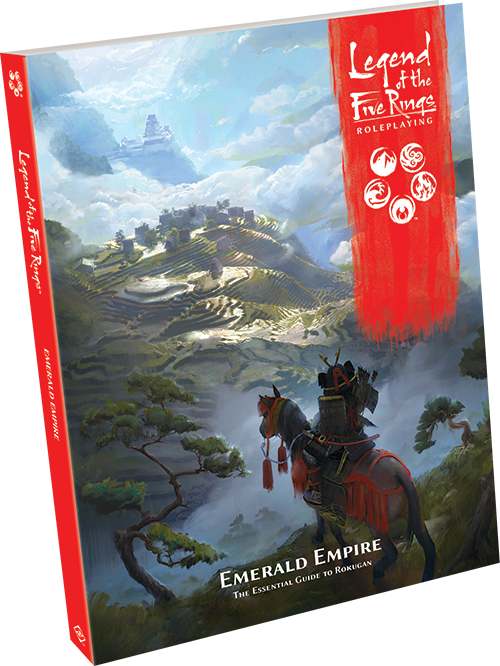
It’ll be about this.
Image taken from https://www.fantasyflightgames.com/en/news/2018/11/6/those-who-serve/.

The first task was to select an advertisement to review. Given the sheer number of such available, even within the rubric of “classroom appropriate,” it was not an easy thing, at least at first. Faced with the over-abundance of examples, and feeling that I ought to make the exercise work for me as well as for my students, I focused my attention on my own interests and prior efforts for the class. (Following up on earlier course materials helps in many cases.) In terms of Google image searches to run, I went from “advertisement” to “classroom appropriate advertisement” to “advertisement Legend of the Five Rings.” Said search yielded a plethora of results, so I applied my existing knowledge to winnow the results down to those reflecting the current holder of the intellectual property of the game, Fantasy Flight Games. And, since I primarily play the role-playing game, I focused on that, selecting the promotional material for a specific supplement.

With the advertisement selected, I moved on to setting up the document for my response. As before, I eschewed the University-provided template, setting up a document on letter-sized paper with one-inch margins and single-spaced 12-point Times New Roman type. (It is not APA standard, I know, but the document is not of the sort as demands it. Rather, it follows the sample profile plan I did earlier.) I also stubbed out sections and prompts from the assignment documentation. Directions for completion were highlighted to attract attention and to serve as a reminder for later deletion. The called-for URL linking to the advertisement was easily inserted early on; I did so to be sure it got done.

I began then to address the other prompts in the document. Context for the advertisement and a description of it received attention, followed by specific work on the advertisement’s deployment of logos, ethos, and pathos. Along the way, I checked APA style guidelines to be sure I was presenting materials in a way that would oblige minimal adjustment later.

I had needed to do the descriptive work because I had needed it in place to come up with the thesis for which the later analysis calls. Once I had that work done, I was able to address the issue of whether or not the advertisement would likely succeed with its presumed purpose and audience, and I needed that information to draft the introduction and conclusion for which the current exercise called. Having it, I did so.

The content made ready, I deleted my highlighted notes and reviewed my document for style and mechanics. After making the adjustments that needed making, I rendered the document into an accessible format, which I present here: G. Elliott Sample Rhetorical Analysis Planning Sheet November 2018. May my readers use it in good health!

*As might be imagined by those who know me, either in person or from reading what I write, I have…issues with such a term. Since I’ve already treated the matter, I’ll not belabor the point at this time.

I hope I can count on you helping to keep this kind of thing going.

Sample Assignment Response: A Profile Essay for DeVry University’s ENGL 112

To continue on from earlier work (here), I will be drafting a profile essay of the sort my students are asked to write. For the assignment, students are asked to draft a two- to three-page profile of a person, place, or event familiar to them; the profile should adhere to APA formatting standards, although no outside information is expected or required.

Painted City Homepage
As it looked as I was drafting this.
Image taken from the forum where the event occurred, used for commentary.

I’ve written profiles before (here, for example), so the idea of one was neither foreign nor intimidating. And in starting one, I first set up my document to align to APA formatting guidelines: double-spaced 12-point Times New Roman on letter-sized paper with one-inch margins. I also set up a cover page with title, my name, and affiliation (for purposes of the assignment), as well as page numbering and running heads. I also opened the planning sheet I had previously drafted; since it was meant as a guide to completing the profile, it made sense to have it open while I worked. And I opened the website that hosted the role-playing game event I meant to profile, which does move a bit away from the assigned guidelines–but I needed the refresher.

With the documents and website open, I began to stub out points I meant to address in the profile. As is my personal practice, I noted the angle I wanted to push in the profile–that the play-by-post role-playing game offers a fulfilling experience well worth undertaking–highlighting it in green so that I could see it easily (and remember to delete it when done composing). Then I sketched out the beginning of an introduction and gave myself informal labels for what would follow, something like section headings that I would later delete (and so highlighted in blue, per my personal practice, to differentiate themselves from the green target of my angle while still noting that they needed to be addressed and then deleted).

That said, I started writing. The topic was one with which I was intimately familiar, so finding things to say was reasonably easy. I did need to review it for concerns of my audience; my putative primary readers are familiar with the kind of thing I discussed, though not the thing itself. Still, that was a relatively minor issue, the more so since I’ve introduced many people to the kind of thing my topic is.

With the content compiled, the formatting was re-checked to ensure ease of reading. A review of content for style was conducted, as was proofreading. All that done, the document was rendered into an accessible format, presented here: G. Elliott Sample Profile November 2018.

I hope, as ever, that the work I do is of use to my students and to others. And I am grateful for the opportunity even to try to be so.

Your kind support remains greatly appreciated.


Sample Assignment Response: A Profile Process Planning Sheet for DeVry University’s ENGL 112

To continue my practice of drafting sample assignment responses for my students, I am working to follow the pattern my first-semester composition students are asked to follow and work through a series of writing assignments ostensibly meant to introduce them to the processes and demands of academic writing. Unlike ENGL 135, ENGL 112 does not ask students to address a single project, but instead calls for them to address different writing tasks throughout the term, working in small pieces to foster a skill-set that will, hopefully, serve them well in their future coursework and in their continuing lives outside the classroom.

It’s not a bad model to follow.
Image taken from Giphy.com

The first piece of writing students are asked to do is a profile essay; in the first week of class, they are asked to prepare for it, reflecting writing as an ongoing process. Specifically, that preparation asks students to conduct an initial rhetorical situational analysis, examining their prospective profile topic, their angle of approach to it, their purpose for treating their topic as they do, characteristics and needs of their audience, and their own authorial perspectives and biases. It seems a good exercise to have students do, certainly, and one that would be helpful to have repeated with more detail in successive writing classes. (That it is not part of the standard assignment sequence in those classes, I know–I teach said classes.)

As with my efforts in the previous session (here, here, here, here, here, here, and here), I eschewed the University-provided template as I began my work on the exercise. Setting my Word document to 12-point, single-spaced Times New Roman with one-inch margins on letter-size paper sufficed. And, given the exercise’s constraints, I did not set up a title page or running head for the document of my response; I did, however, insert page numbers, and I offered something of a heading and title, following my practice in assignment documentation given to students. (Students will please note that this is not APA format.)

With my document’s layout set up, I proceeded to address issues of content. I started by copying the relevant questions over from the University template. That done, I began to address them, answering openly and honestly as best as I could. Given my predilections and associations, as well as the exercise’s guidelines, I opted to focus on an event–and a particularly nerdy one, at that, which can be found here: http://shadowsovernaishou.com/paintedcity/index.php. Answers to the several questions emerged easily from that decision, and I addressed the prompts of the exercise with little difficulty.

The content made ready, I reviewed my document for style and mechanics. After making the adjustments that needed making, I rendered the document into an accessible format, which I present here: G. Elliott Sample Profile Process Planning Sheet November 2018. I hope it will be useful for my students and others in the days to come.

Help me help students do better better? (Parse it; it works.)

Sample Assignment Response: A Final Draft of a Researched Paper for DeVry University’s ENGL 135

Continuing on from earlier work (here, here, here, here, here, here, and here), I mean to narrate my process for compiling a final draft of a researched paper. (I offer it even though the session has ended when I began the project.) As before, I’ll not be using the template provided by the University, though my results will be similar, given the formatting constraints placed on it. I hope that my students and others’ will find my continued efforts to be of help.

It can feel like this, even if the paper’s a sprint rather than a marathon.
Image taken from the Huffington Post, here.

For the assignment, students are asked to compile a conference-length paper of approximately 2500 words (excluding title page and reference list) that incorporates illustrative graphics. It is a fairly standard final assignment for second-semester composition classes, and the requirements of the University present no unusual challenges for it.

Since the final draft is supposed to be a reworking of the earlier materials, I began by opening the earlier documents and reincorporating the main text of the labeled first draft into that of the second. Prewriting and references were excepted from the copy-over, the former due to irrelevance, the latter due to already being in the second draft’s materials. The file-name and title were changed, too, to reflect the current exercise.

Reviewing the materials I had showed me that I was somewhat short of requirements for the exercise–a page or two, in the event. As such, I knew that I needed to develop more material for presentation, and a direction to move for doing so suggested itself quickly. I am in a community band, and began looking into support for such ensembles in part because I am in one. Applying my findings to my own situation was an obvious step to take to do expand my paper, and offering something of a prospective test case is a common motion made by academic papers, of which the overall course project for ENGL 135 is supposed to be an example.

Consequently, I stubbed out a place for me to make such a presentation and left the paper itself aside for a bit; I knew I would need more information to present the test case, as well as to develop another graphic (because I recalled the assignment asking for two; the template provided to students includes two, for example). Data regarding the population in my local communities and regarding charitable work done in the area seemed to me to be good places to start looking, so I delved into the local municipal and county websites and records, as well as a directory of charitable organizations with which I am familiar from other work I do (GuideStar, to be specific). US Census Bureau data was also incorporated. Income and assets information was pulled out and made accessible (including graphical representation) before being explained in terms of how it conduces to the idea of local support being ideal for my own community band.

With the content compiled, the formatting was re-checked to ensure ease of reading. A review of content for style was conducted, as was proofreading. All that done, the document was rendered into an accessible format, presented here: G. Elliott Sample Final Draft September 2018.

I find that I have some comments to make about revisiting my old practice of composing sample assignments for my students. I think they will go into the reflective comments on the session that are forthcoming. I hope they will be of some value to my students and others in time to come.

Help me help my students move forward?

Sample Assignment Response: A Presentation Related to a Researched Paper for DeVry University’s ENGL 135

Continuing on from earlier work (here, here, here, here, here, and here), I mean to narrate my process for putting together a presentation of the sort my students are asked to compose during the sixth week of the session. There is not a template available for the students, but I am hopeful that my work will provide them something they can use to guide their own work–and something that will be helpful for others, as well.

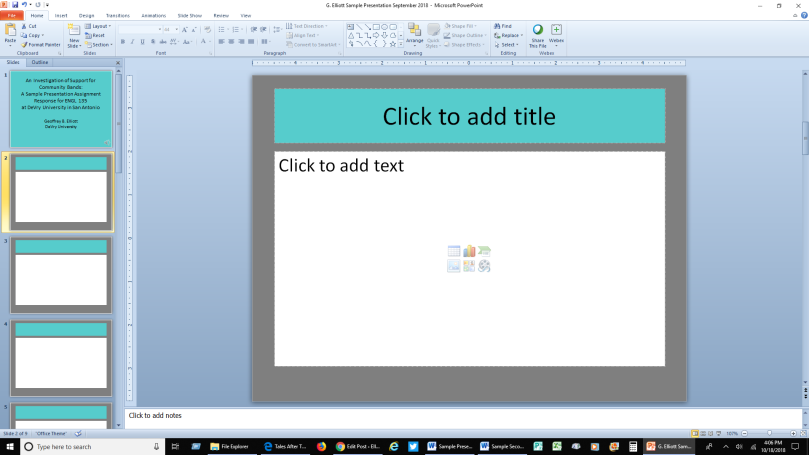
Presentation Screenshot
I did a lot of staring at this sort of thing.
The image is a screenshot from while I was working.

For the assignment, students are asked to develop a five- to seven-minute slide presentation with embedded audio and slides that follow basic design principles. The presentation should give an overview of the project as a whole, since a full read of a conference-length paper will generally take eighteen to twenty minutes; students are encouraged to frame their issue, present their thesis, and support that thesis before offering a conclusion and a slide displaying their references in APA citation style.

In putting together a slide presentation, it is necessary to have a consistent color scheme that allows for easy reading and that conveys an appropriate impression. Working in this webspace fortunately gives me the basis of an easy one to use; I mean for my sample work to reflect my other work, as well as to travel with me if and when I must go elsewhere. (I remain contingent “visiting” faculty at DeVry.) I had earlier developed a color scheme working from that of this blog, adding complementary colors according to common design principles and using the tools available at Paletton.com.

Color scheme in place, I opened the earlier exercises to cull information from them. Following the recommendations made to students, I copied my thesis and major arguments over to another document, as well as my references list. I also copied my title over before adjusting it to suit the present exercise; consistency across the project suggests itself as something useful to maintain. And as I did the copy-over work, using the fact of the ongoing project as justification for doing so, I arranged my materials for presentation on individual or related slides. The order differs from that presented in the paper itself, something that the shift in medium seems to warrant.

That done, it remained but to generate and populate the slides. I first generated a title slide, coloring it in the accent color I had chosen and filling in title and authorial information. I next developed a blank content slide, establishing it as a basic pattern for use in the rest of the presentation. Looking at my notes, I determined that I would need a slide for a presentation overview, at least six for content, and at least one for references, totaling at least eight slides; I consequently made as many, duplicating my pattern slide until I had enough to start. I also left one blank at the end in case I would need to add or insert others later.

With the basic presentation set up, I saved my work and began to insert text into the slides. First, I worked to insert my references, knowing that I would have to make adjustments to formatting and the like to make them legible but not overpowering. Having them ready to hand helped, as well. At length, I was able to get all of them into the presentation, although it took several slides to do so; the first of them got an audio note explaining matters, one swiftly followed by an audio note on my title slide. I determined I would position the audio cues consistently on slides throughout my presentation, making it easier to find them for my audience and presenting a more uniform–thus more polished–appearance.

Afterwards, working through the content slides, I made sure to work with bulleted text only, eschewing complex sentences and more erudite vocabulary in favor of ease of reading and orientation. And, because I was working in PowerPoint, I made sure to save my work repeatedly as I went along, not wanting to have to go back and re-do work if it could be avoided.

I worked through the slides in order afterwards, moving from the presentation overview through the thesis into content and the conclusion. Along the way, I inserted the text before inserting audio, using the former as a guide while I put in the latter. And, again, I saved my progress after each component of each slide. I have had to reconstruct work before, and it never goes as well the second time as the first.

The materials compiled and saved, it remained but to put them where they can hopefully serve as a helpful example for my students and others’. To wit: G. Elliott Sample Presentation September 2018. (It is a PowerPoint presentation, so it requires software that can open a .pptx file to view.)

Please help support me as I support my students’ learning.

Sample Assignment Response: A Second Draft of a Researched Paper for DeVry University’s ENGL 135

Continuing on from earlier work (here, here, here, here, and here), I mean to narrate my process for putting together a draft of the sort students are asked to compose in their fifth week of the session. As before, I’ll not explicitly use the template provided by the University, though the results will still hopefully be similar enough to what the school requires that my students–and others’–will find my efforts helpful.

Although not quite right, this is what most people think about when they think of revision.
Image from Inside Higher Ed.

For the assignment, students are asked not so much to revise what they have already submitted as to add onto it, completing the paper begun in the first draft. As such, the assignment title is something of a misnomer; it is a second first draft rather than a second draft, as such.

Rather than starting a new document and formatting it, I added onto the document I had generated for the first draft, making sure to save the new version under a different name (i.e., replacing “First Draft” with “Second Draft” in the file name). I made similar adjustments to my title page and first page of actual text, ensuring consistency across the material being developed. I also marked the prewriting for deletion from the current exercise, as it is not called for in the putative second draft, but I retained it at the outset of development due to its notes for expansion.

I then moved to the end of the already-written text, placing the notes for expansion I had on hand where I could use them most readily. Noting that doing so brought up a source for which I had an annotation but had not yet included in my document, I made sure to enter that source’s citation into my references list, ensuring that I would not forget to do so. The citation came, as had several others, from my earlier annotated bibliography–and, since I was working on that part of the paper already, I decided to develop that idea for a bit (working from the summary and earlier discussion in the annotated bibliography, as well as from the original article) to see how it could work.

That source introduced and put to the service of my stated thesis, I moved back up the page and addressed the other development note I had brought down from the first draft of the paper. Its source was already in my references list, so I had nothing to do on that score, but I did pull up the original article again to be sure I all of the information available from it that I would need. Or I attempted to do so; library services disallowed access to the article I needed, despite my having logged into the University’s library. I was obliged to put that part of the work aside for a time as a result, which rankled.

Fortunately, there was much else for me to do. I realized swiftly that I had exhausted my previously-acquired resources and, given the difficulties I had had with the University library, I turned to an open online search to help fill the void. Doing so led me to Google Scholar, where I searched for “supporting community organizations,” restricting the initial search to pieces published after 2010. Unfortunately, the results that came up were located behind paywalls, but I recalled that my local library has database access, so I ran a similar search on its databases, adding restrictions to articles, book chapters, and case studies. One article suggested itself for inclusion in short order; information was integrated from it.

That done, I used my local library resource to pull up the article I had earlier searched for in the University library. I was able to bring it up without any trouble, and so I integrated the materials I needed from it into my essay, as well. As doing so took me to the end of my notes from earlier, I deleted the prewriting materials; they had outlived their utility to my present purpose.

Still needing more support to make the case, and needing information more narrowly targeted to the specific thesis with which I was working, I ran another outside search. It was a simple Google search for “community band.” More than 693 million results were returned, but the first page offered enough material–or a gateway to enough material–to make a reasonable case. Information was culled from websites to make the necessary case–as well as to generate the graphic for which the overall assignment calls. (The second draft in itself does not, but it is not a bad thing to look ahead when composing a project in explicit stages.) The information was entered into an Excel spreadsheet and used to generate a graphic that was subsequently cut-and-pasted into the Word document in which I did my composition. Necessary figure data was incorporated, as well, and citations for the sources for my graphic’s data were integrated into the references list.

As I reviewed assignment guidelines to ensure that my work would continue to serve as a useful guide for my students, I noted comments that only the latter sections needed to be developed in the second draft. To align my work more fully thereto, I deleted the text I had developed for the first draft–although I did not adjust the references list further.

Looking at the document at that point, I noted that I had enough material developed to move on to a conclusion. My earlier materials had pointed towards final remarks looking for a call to action. I drafted my conclusion with an eye towards my own purposes and my own ensemble; I have an idea for how I might further expand it for a final draft, if I find I need or want to do so.

With the content compiled and directions for further development set, the formatting was re-checked to ensure ease of reading. A review of content for style was conducted, as was proofreading. All that done, the document was rendered into an accessible format, presented here: G. Elliott Sample Second Draft September 2018.

Your help continues to be appreciated. Please give.

Sample Assignment Response: A First Draft of a Researched Paper for DeVry University’s ENGL 135

Continuing on from earlier work (here, here, here, and here), I mean to narrate my process for putting together a draft of the sort students are asked to compose in their fourth week of the session. As before, I’ll not explicitly use the template provided by the University, though I will be including the prewriting students are asked to submit (and about which I have some comments, below). The results should still be similar enough to what the school requires that they will be useful for my students–and I hope they will prove useful for others, as well.

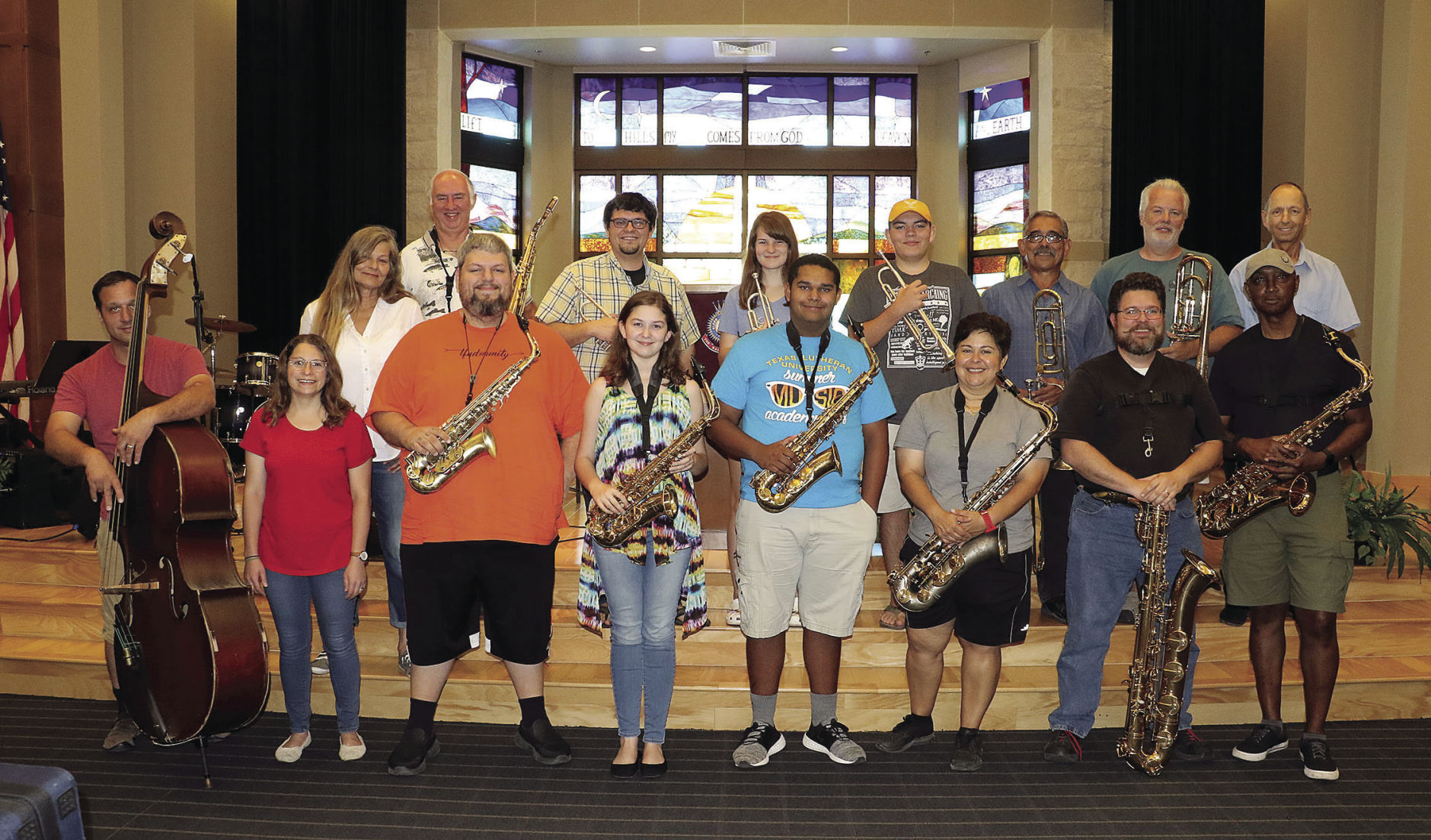
For reference, the band I’m in.
Image taken from the Hill Country Community Journal.

For the assignment, students are asked to present an introduction and an argumentative section incorporating previous research, as well as a title page and references list. Content should come after the University-determined pre-writing, which students are also expected to submit under their title page. Formal sectional division is encouraged but not required; more important is that the draft present a sound beginning and a solid thesis, and that it move smoothly forward from that thesis.

As in previous exercises, I began by formatting my document, setting my typeface to double-spaced 12-point Times New Roman and inserting running heads as appropriate. I also stubbed out spaces for the prewriting, the main text, and the references list–as well as setting up the half-inch hanging indentation required of reference list entries. That done, I copied over relevant materials from earlier portions of the project, since my title should largely remain in place, and my references entries should already have been in order. Such adjustments as I needed to make to suit the specific exercise were made–converting “Annotated Bibliography” to “First Draft,” for example.

That done, I brought over the prewriting questions from the University’s template, leaving myself space to answer them. I did what I could to keep the formatting from the template in place. The prewriting itself is not part of regular APA formatting, so its inclusion need not adhere to the standards promulgated by that body–though concerns of usage should remain consistent throughout the document as much as possible in any case.

Prewriting framed in–I did not begin with completing it for reasons I lay out below–I moved on to composition, working directly from materials I had already compiled for earlier exercises. The proposal and outline offered sound initial materials, although I did adjust them slightly to offer a more conversational narrative introduction before moving on to incorporate materials I identified in earlier exercises as offering useful context for discussion. Owing to concerns of audience, I sought to keep my paragraphs relatively short–an average of 125 to 150 words seemed a good target. (In the event, I tended to exceed that length more than to adhere to it.) I also worked to keep the reading level of my paper in and around the high school level for the same reason. (I often overshoot audiences.)

One thing I made sure to do as I moved through composition was to insert entries into my reference list as I made references to items. I have heard many students–and other writers–say they compose their references last; I have had to assign many students lower grades or begin academic dishonesty proceedings no few times because of that practice. It is not a pleasant thing to do; to avoid it happening with my own work, I make sure to build my references as I go. I commend the practice to others’ use.

As I compiled my first paragraphs, I did go back to the ostensible prewriting, filling in items that had become clear to me. I believe I have noted in this webspace that I do not compose linearly, the less so when I move between composing multiple documents as narrating my processes obliges me to do. It will not work for all, to be sure, but I appreciate the flexibility doing so offers me, as well as the authenticity it lends to my accounts. And while I did so, I made sure to align my terminology to what the school’s materials uses; I call things by different labels at times, but since the example is supposed to serve my students, it needs to follow what they are asked to follow.

After getting my introduction in place, though, I hit a bit of a snag. I found myself with a clear idea of where to take my rebuttal and refutation, and I had some means to get back into my central argument from them (and I made such notes in my prewriting materials, as well as stubbing out space for later development). I did not, however, have a clear idea of how to proceed with the direct support of my argument past that point. I imagine the situation is similar to that which my students face, and so I tried to put myself in my students’ position. As I did, I noted that the draft does not need to be a complete paper; there is more to be added in the next assignment given to the students. Knowing that I did not have to generate a full eight- to ten-page paper all at once offered some relief, though the impulse to delay unduly showed, and it was and is one that needs to be fought.

The realization in place, I proceeded to flesh out the rebuttal and refutation, working from the notes I had made and from earlier exercises. I also filled in more of the expected prewriting. I may not adhere to it as the exercise continues, but it will be useful to have something of a framework as I move ahead. And I would note the same to my students. They are not bound by their outline; it is a guideline, not a rule, to follow as needed and not otherwise.  I was at ease, then, setting up the informal sections I had ready and leaving the rest for another time.

With the content compiled and directions for further development set, the formatting was re-checked to ensure ease of reading. A review of content for style was conducted, as was proofreading. All that done, the document was rendered into an accessible format, presented here: G. Elliott Sample First Draft September 2018.

I note above that I have some comments about the prescribed prewriting. To be sure, I do a fair bit of prewriting when I work on projects of my own, and I do expect that students who want to write well will do some sort of prewriting. The specific form, however, is not something I am happy to regulate, and I have noted to students previously that they are free to use the school’s form if it helps them–and that they should back-fill it from their draft if it does not. I understand assigning a grade to the completion of the prewriting as a way to get students even to attempt such a thing. And I understand restricting options both as a cost-saving measure and as a means of easing assessment burdens. But none of that means I think it is an ideal teaching practice.

Your help will still help. Please give.

Sample Assignment Response: An Annotated Bibliography for DeVry University’s ENGL 135

Continuing on from earlier work (here, here, and here), I mean to narrate my process for putting together an annotated bibliography of the sort students are asked to compose in their third week of the session. As in earlier posts, I’ll not be using the template the University provides its students, although what I do produce will again be remarkably similar, as the University’s template works in APA format. I still continue to hope that my remarks and the resulting document will be helpful for my future students and others’.

AnnBibScreenshot
As might be guessed from the screenshot, I’ve done some annotated bibliography work.

For the assignment, students are asked to develop an introduction and five three-part annotations; the annotations are expected to consist of an APA-style citation, a summary of the cited source, and an assessment of that source’s usefulness to the project. Annotations should be alphabetized by citation, and the sources they treat should be secondary (that is, talking about a thing rather than being the thing itself) sources of a scholarly nature. The introduction does well to note the thrust of the overall project and the methodology and rationale for source selection.

As in previous exercises, I began by formatting my document, setting my typeface to double-spaced 12-point Times New Roman and inserting running heads as appropriate. I also stubbed out spaces for my introduction and annotations, since the formatting should shift within the latter; citations take a hanging indentation, while paragraphs such as the introduction, summaries, and assessments take a first-line indentation (half an inch in all cases). I also inserted a blank line between annotation-stubs to make future reading easier. Titles and running heads were inserted as usual and appropriate, as well.

Because I had already done some work establishing a thrust for the project and laying out search methods, I worked first on my introduction. Since the project is a continuation of work already done, I brought over what I could from previous materials, incorporating the earlier work without comment. (This can only be done ethically if the carry-over is within the development of a single project, as in ENGL 135. Carrying work from term to term or class to class–say, from ENGL 112 to ENGL 135–requires citation.) Although I had cited and summarized two sources, however, I felt I should not bring them over; the idea is to find more information, rather than to re-hash information already obtained.

As such, I re-ran my initial search to bring up the results I already knew I had, and I looked again at those I had not already incorporated into the project. One such source focused on instrument maintenance, rendering it useful for other purposes than mine; another served only as the front-matter of a journal, making no argument. The third, though, looked at the decades-long endurance of one organization, suggesting that it might speak in some way to support; I read it, finding a small amount of useful material in it. As such, I drafted its citation, summary, and assessment, incorporating each into my bibliography. (Note that the citation omits database information, following current APA guidelines reported on the Purdue OWL.)

Annotating the source, however, exhausted the resources from the initial search, so an expansion of search parameters seemed in order. The first such was to open the search to articles dating back to 2008–ten years prior to work on the project and after several of the significant cultural events that continue to influence the project-present. Three more articles emerged, of which all three promised some use; all three were reviewed, and those that were found useful were included in the bibliography. As they were, notes were added to the introduction to account for the expanded search method and rationale. Further notes were added to account for an article revealed in the references of another, as well as an outside piece resulting from an additional search.

As notes and annotations were finalized, formatting was adjusted to ensure that citations were not abandoned by the rest of their annotations. A review of content for style was conducted after, as was proofreading. All that done, the document was rendered into an accessible format, presented here: G. Elliott Sample Annotated Bibliography September 2018.

I could use your help to develop better teaching materials and practices. Please give.

Sample Assignment Response: Proposing a Project for DeVry University’s ENGL 135

Following up on an earlier post in which I begin to enact the kind of project I expect my students to do (itself a follow-up on a yet earlier post), I mean to narrate my process of developing the second of the required course project assignments: a proposal and outline. As in the earlier post, I’ll not be using the template the University provides its students, although what I do produce will be remarkably similar, as the University’s template works in APA format. I do have some remarks about the assignment itself, which I include along with my resulting document, and I continue to hope that they will be helpful for my future students and others’.

Related image
Proposals have a long history.
Image from Quora.com, with an original source not as clear to me as I would like.

Students are tacitly asked to give a brief introductory paragraph before offering a formal outline for their paper. The outline takes four parts, numbered with capital Roman numerals: Introduction, Evidence, Conclusion, and References. The first two parts are divided further: the introduction treats topic, context, and audience; evidence looks at already-gathered and yet-to-be gathered information. Each part, save references, has accompanying questions to guide response; the references are directed to be in APA format. (When I set up my document, I did not copy them over.)

As in the previous exercise, I began by formatting my document, setting the typeface, spacing, running head, and page numbers as I mean them to be. Since I already had a title in place (again, from the previous exercise), I was able to insert it as appropriate, as well.

Indeed, the title was not the only thing I was able to pull directly over–and since the proposal is explicitly a continuation of the same project begun in the topic selection, doing so is expected. As such, I pulled over my references from the earlier exercise, inserting them as appropriate into the current one. Answers to such questions as I had available–partial answers for the questions of the current exercise–also got transferred over without comment and amended as necessary.

Because I had my document stubbed out, with the school-determined parts already in place, I did not feel bound to compose my responses in order. I typically do not do so, in fact, moving around projects as I have specific ideas and inserting them where I think they are appropriate. I did so in composing the proposal, the references data giving rise to what evidence I would gather and moving thence to the called-for conclusion; the conclusion, in turn, prompted me to add to my understanding of what research I need to conduct to make my case most effectively.

Only after bringing over materials and working on the end-goal did I back-fill the earlier parts, and I did not treat them in linear order, either. Secondary audience got treated early (and with recourse to my over-arching project of producing useful examples for my expected future students). Context received treatment next, with me moving back and forth between justification and my personal ethos with the project. Afterwards, I formalized my research question, working thesis, and statement of angle, revising them from parts of earlier materials in light of what I had developed in filling out the rest of the proposal.

After I had filled out the numbered parts of the proposal, I spend some time away from the project before turning to the overall introduction. I had thought that it, too, would benefit from some copy-over from my earlier work, but, as I reviewed the earlier piece, I found that it did not have what I needed. Instead, I decided to use the introduction to the project proposal to draft some work towards the overall introduction to the project as a whole (knowing as I did so that the work was provisional and might need to be discarded utterly in future iterations of project work).

Content completed, I reviewed my document for formatting and style before proofreading it for what my amid-composition corrections missed. The formatting review occasioned some adjustments, since I did not want to leave headings orphaned at the bottoms of pages. The proofreading obliged a few minor adjustments, including at least one instance of my most common typo: confusing form and from. And I took the time to adjust my title slightly, as the project had shifted a bit while I was working on it–as projects are wont to do.

With the review done, I put the file into an accessible format, which I offer here:
G. Elliott Sample Project Proposal September 2018.

I do not always favor working from a static outline; I rarely do so in my own work, although I do commonly stub out sections of projects and make notes of ideas I want to pursue at specified points in the papers I write. The problem that inheres in doing so is that, by offering a framework as a standard, such constructions often prompt writers–including, if not especially, student writers–to act as if the putative standard is the only way to organize, as well as to act as if the organization, once set, is immutable. Different projects require different organizational strategies, but the way issues are framed in standardized curricula tend to blind students to that requirement. Too, writing has to be flexible to be authentic, and, again, standardized curricula tend to keep students from seeing such truths.

At the same time, the kind of grading demands placed on instructors who teach such courses–most who do are contingent labor, working more than one job, and are teaching classes that enroll far more students than should be the case while having it demanded of them that they work toward total uniformity among sections of the course–make such measures almost obligatory. And it is the case at public colleges and non-profit schools as well as at for-profit institutions, at least in my experience, so it is not only a matter of for-profit money-making strategies (though it is among the money-making strategies, to be fair). Thus, while I conduct the present exercise, and I do expect my students to do the same (because I need my paycheck, after all), I do so with some reservation.

It remains true that my teaching doesn’t make much. Care to help support instructional quality?