Read the previous entry in the series here.
Read the next entry in the series here.
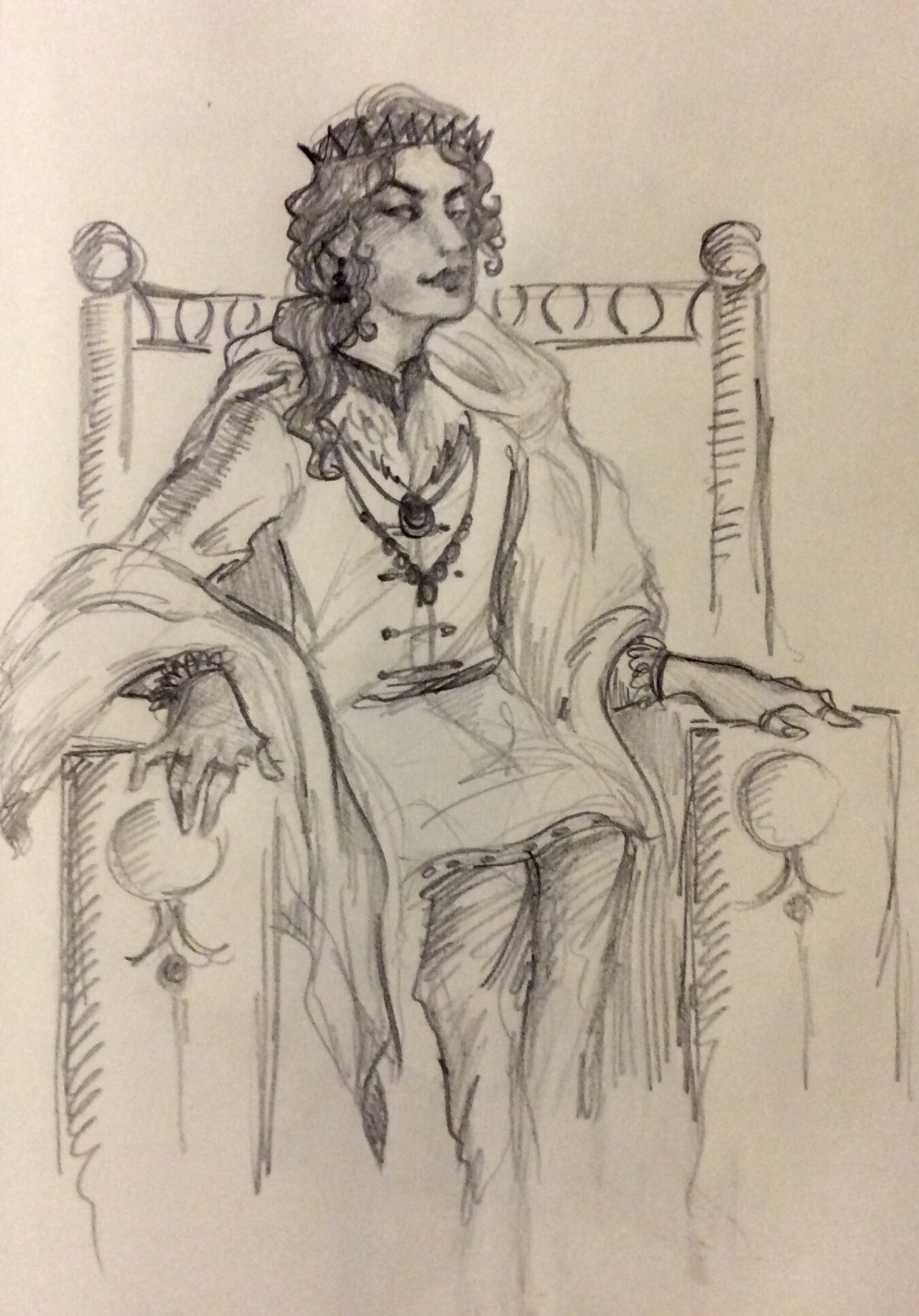
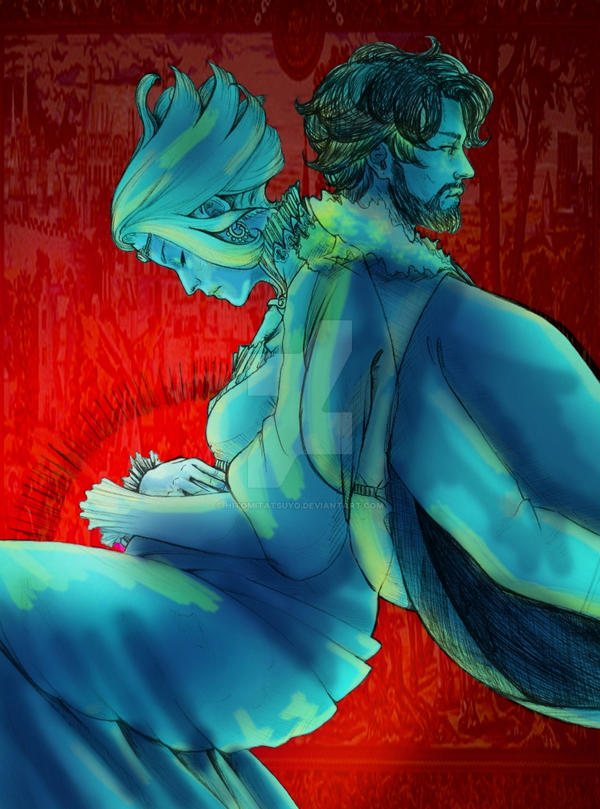
A chapter titled “Escapes and Captures” follows, opening with commentary about the historical basis for the tensions between the Coastal and Inland Duchies. It moves to gloss over the lead-up to the ceremony in which Regal is invested as King-in-Waiting. Rumors of ill portents surround the event and penetrate it as Regal crowns himself as the heir apparent to the Six Duchies’ throne.
In the wake of the formalities, Fitz realizes that the Coastal Dukes do not fear Regal as they ought to do. He makes as hasty an exit as he can from the following revelry and sets about the next phase of his plan, feeling the weight of his folly as he does so. Stealing into Shrewd’s chambers, he looks on as Kettricken, the Fool, Rosemary, and a hated attendant try to make a bit of cheer in the room without success. The attendant is dismissed, and Kettricken and Rosemary exit, leaving the Fool and Fitz to spirit Shrewd away. The old king refuses to go, however, and uses Fitz to Skill to Verity one last time.
The effort kills Shrewd, and Fitz learns that the other Skilled ones–Serene and Justin–had been leeching power from Shrewd. A clamor rises, and Fitz urges the arrived Chade to take the Fool and flee. Fitz then goes about foolish, burning revenge. While he kills Serene and Justin, he is taken in the following melee.
The present chapter refers back to comments made in previous chapters about Fitz’s self-destructive tendencies; Fitz himself asks “Did I taunt self-destruction, or did I desire it?” as he sets about his revenge for Shrewd. Given the references to Galen in the chapter and the demonstrated lingering effects of Galen’s work upon Fitz, I have to wonder if the self-destructive tendencies are themselves the ongoing work of Galen’s machinations, if they are the echoes of a Skill-suggestion or command that Fitz die. It is not the only explanation for them, of course; Fitz is an adolescent who has suffered repeated traumas and who has indulged in or been subjected to mood-altering chemicals on no few occasions, so a fair bit of recklessness is to be expected. But the idea that Galen has had a lingering effect on him fits with Fitz.
As I continue to work through the re-read–and I am surprised to realize I’ve got more than half a hundred entries in it so far, with a lot of reading left to do again–I find myself wondering about the fan communities whose edges I glimpse as I look for images to use to accompany my commentary. I wonder how much of what I see has been seen by others already and where such sayings are, if they are. I have tried to compile scholarly and related works on Hobb, of course, but I do not pretend that I have a comprehensive list, and I know better than to think that the scholarly world is the sum of insightful treatments of the Elderlings corpus. I am aware of my not-“fan” status and of the dangers fandom can present (as noted), and I wonder what I miss because of it.
The final assignment required of students in ENGL 135 during the November 2019 instructional session at DeVry University is a career connection analysis. For it, students are asked to compose a somewhat informal paper (formatted in double-spaced 12-point Times New Roman with one-inch margins on letter-sized paper, but not requiring formal citation or most other APA apparatus) of some 500 words in length that addresses one of two prompts (quoted from University materials here):
Discuss how the skills of writing, researching, presenting, working in teams, and using technological tools help you in your current role in the workplace. Which of these skills do you find most important right now? Which skills do you think will be important to you in helping you achieve future goals?
or
Look up an occupation you are interested in pursuing after you graduate from DeVry. To find information on occupations, you can visit the Occupational Outlook Handbook at https://www.bls.gov/ooh/. Search for a career you are interested in, such as software developer. Then, click on the “What They Do” tab. Compare the duties of that occupation to what you learned in this class. Which skills that you learned in this class will be most useful to you in your chosen career?
Being well past my own graduation, I cannot address the second prompt directly as given. I can, however, address the first. As such, in the interest of posting an example for my students’ use, I set up a Word document with the requisite formatting and proceeded to draft a response to the prompt. To do so, I divided the task into several short, informal sections (i.e., I stubbed out keywords to guide my drafting, but I did not put in headings, as such): my current workplace role; uses of writing, researching, presenting, working in teams, and employing technological tools; most important skills; and future-goals-related skills.
As I began drafting, I found that the first “section” occasioned only a little bit of attention; it was enough to note the position and its basic duties before moving into the details of composition-class skills I use. The rest, though, seemed to fall into place relatively easily; having taught college-level writing since 2006, I have had time to think about how the skills such classes trade in apply to the working world outside. Since leaving off the search for full-time academic work (note here, here, and elsewhere in this webspace), I have had more occasion to think about how what I have learned can continue to serve me outside the enterprise I had sought to enter. Compiling half a thousand words on the subject took little doing in light of such thinking.
Having composed the document, I looked over it for ease of reading, hoping to keep it in late high school or early college, per Flesch-Kincaid grade levels. I also looked it over for adherence to usage standards; even an informal document benefits from easy reading. That done, I rendered the document such that it can be opened by multiple operating systems, which I offer here in the reiterated hopes that it will be of use: G. Elliott Sample Career Connection Analysis.
Read the previous entry in the series here.
Read the next entry in the series here.
A chapter titled “Treasons and Traitors” follows, opening with a note regarding the children of Shrewd and Desire. It moves to follow Fitz’s continued plotting to spirit Shrewd and Kettricken from Buckkeep; he confers with Burrich, not entirely comfortably. He moves then to confer with Nighteyes; man and wolf both chide him for thanking them for what they perceive as their duty.
Be Careful in Buckkeep Castle from Realm of the Elderlings on Tumblr, here; image used for commentary
Fitz moves next to Kettricken, and, after she manages to achieve privacy for them, he relays what he can of what she is to do. After, he finds himself wandering in thought, and he arrives in Verity’s chambers. Reminiscing about the man, he inadvertently makes Skill contact with him, and they confer through that medium until Verity grows aware of an interloper and breaks off the connection. Fitz soon confronts said interloper, Justin, who is joined by Serene; they depart, and Fitz continues his errands.
Fitz is distracted from them by a summons from Duke Brawndy of Bearns. Answering it, he finds himself the focus of something of a plot. Brawndy, speaking for his counterparts in Shoaks and Rippon Duchies, purposes to put Fitz forward as a regent for the child Kettricken bears. Fitz steps slightly aside from that purpose, and Branwdy offers him his fealty. He also asks Fitz to accept Celerity’s betrothal, and Fitz nearly accepts, but demurs in favor of resolving the present conflict first.
Later, Chade presses Fitz for information about the plot, clearly in high dudgeon. He reminds his protege of their rightful place and backs away from earlier concerns about Regal’s kingship, then sets aside that line of conversation in favor of returning to their plot to spirit Shrewd and Kettricken away. It is an unhappy conversation, one without much hope.
The name of Shrewd’s second wife, Queen Desire, is not newly announced in the chapter, but as I reread it this time, I was struck by the comment being offered by way of her name. I’ve noted (here, here, here, and here), as have others, that the Six Duchies tends towards emblematic names, particularly among its royal and noble houses. Given that, Desire reads as being something of an allegory of her name, the more so with the reminder at the head of the chapter that she was routinely intoxicated, and not always on alcohol, and in conjunction with the earlier notes of Desire’s…amorousness (here, for example). She is clearly given to indulging her name, and was presumably able to instill her name in others–such as Shrewd. Given how matters fall out from that relationship–it seems not to have been happy, and the fruit of it, Regal, is hardly the most pleasant of fellows–it is possible to read into the Six Duchies’ monarchy the comment that succumbing to desire or putting the enactment of desire above other concerns is the unmaking of the shrewd, as well as much else.
Read the previous entry in the series here.
Read the next entry in the series here.
The next chapter, “Conspiracies,” opens with a series of what read as folk sayings before moving into plans to present Kettricken as having had a miscarriage in the hope of creating a sufficient distraction to allow Chade to have a private audience with Shrewd. Kettricken but begrudgingly goes along with the plan, finding the situation distasteful.
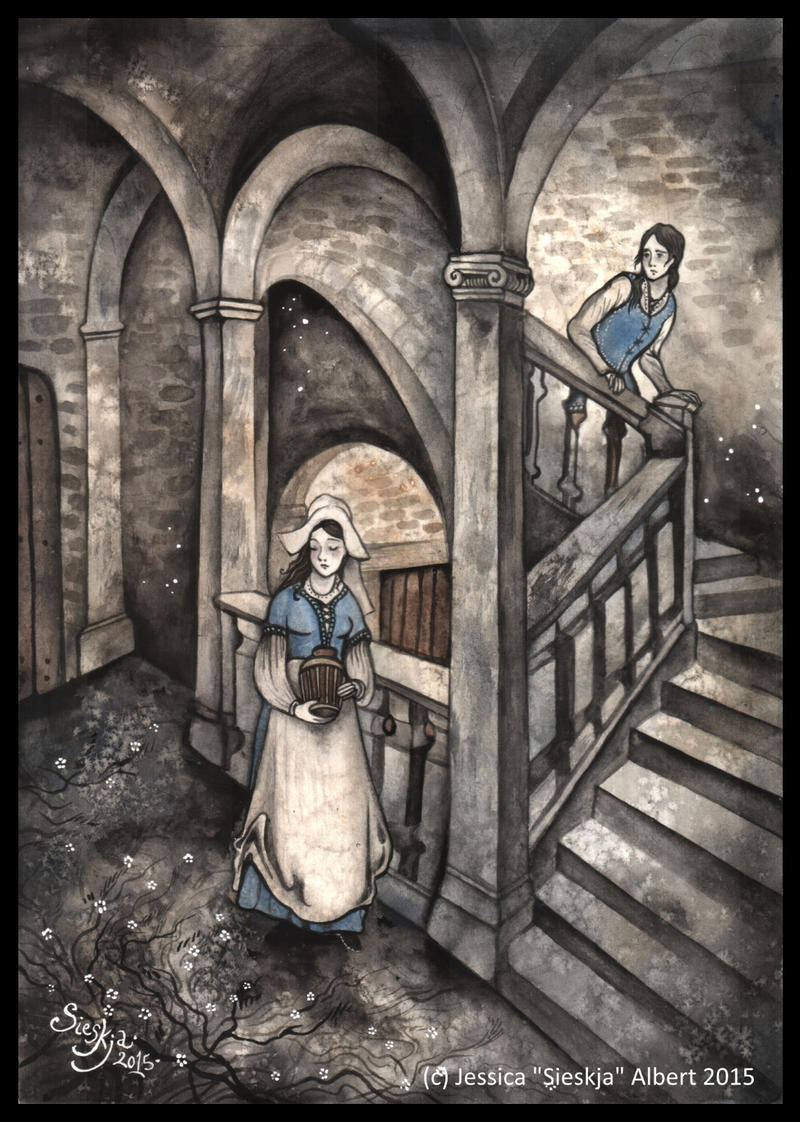
I Never Meant to Break Your Heart by Jessica “Sieskja” Albert on DeviantArt, image used for commentary
After tumult from Kettricken summons Regal away, Fitz presents a fatal distraction to the guard left on Shrewd’s door, allowing Chade time to meet with his king. Fitz then goes about the castle, looking as nonchalant as he can manage, and taking in the gossip. It indicates to him that Chade has been at work around Buckkeep. And he encounters Molly as he goes about; she rebukes him and declares her intent to go elsewhere to protect someone she loves more than him.
After being staggered by Molly’s break with him, Fitz calls on Burrich; the Fool is with him. They confer about events, and Burrich and the Fool offer their sympathies for Fitz’s broken heart. They all incur rebuke from Lacey, who arrives to have them help dispose of the signs of the feigned miscarriage and to note to Fitz that there are axemen trying to break down Shrewd’s door. The Fool is scandalized, but Fitz allays his concerns.
The group of conspirators disperses, and Fitz calls on Nighteyes. They spend a bit of time together, happily. After, Fitz returns to Buckkeep, taking in more gossip before returning to his rooms and finding Serene waiting for him. A tense exchange follows, after which, Fitz is summoned to Kettricken. They two have an oblique conversation about next steps to take–which Fitz carries to Chade when he reports to his summons, in turn. They purpose to move swiftly to evacuate Chade and Kettricken from Buckkeep, and Chade begins to exhibit a strange merriment at plotting how he will enact the escape.
The rush towards the end of the novel continues in the present chapter, as might be expected, and it is coupled with in-milieu urgency by the need of the various characters to effect their plans before Regal can take certain people–Shrewd and Kettricken, particularly–more fully into his power, both through not having other oversight and through assuming more formal, titular authority.
As I think on it now, though, I have to wonder why those involved–notably Chade and Fitz–do not take more overt action against Regal. They obviously fear Regal is acting against Shrewd–Fitz far more so than Chade, admittedly, but even Chade is acting as if Regal is a threat. They know Regal is a traitor to his father. Why neither of them takes steps to eliminate the problem he presents is not clear; Fitz might, admittedly, be restrained by obedience to Chade and a promise effectively extorted from him by Shrewd, though those justifications scan weakly. Chade, however, is not in such a position; his reluctance to act seems strange in context, now. And things will grow yet more odd…
Yet another assignment required of students in ENGL 135 during the November 2019 instructional session at DeVry University is a presentation deriving from the earlier Persuasive Writing and Counterargument Case Study that distills and re-presents the materials from the written document in more interactive form. The assignment asks for seven to ten slides and ten to twelve minutes of audio, which precludes giving a straight reading of the paper. (Typically, a five-page paper will be a ten-minute read–and not all of the papers will be the full five pages.) Slides to introduce the presentation and to provide references are obligatory; slides to present content will vary based on the needs of the presentation.
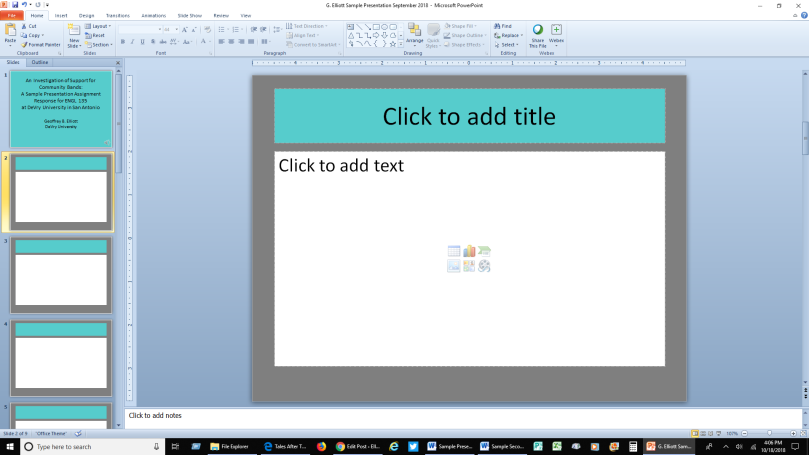
Once again, I’ve gotten to do a lot of staring at this kind of thing. The image is still a screenshot taken from my earlier work.
I’ll note here that I make liberal use of previously prepared materials in this discussion, as the assignment and its preparation follow general models I’ve already established, here and here.
As I had with previous exercises of this sort, I opened the paper I would be remaking for presentation, printing out a copy (because I still work on some things better physically than on a screen) and conducting a reverse outline of it to highlight what ideas I treat and in what proportions. Doing so, I found that I had overlooked some typographical errors in the piece when I had proofread it (annoyingly enough, but correcting them is an effort for another situation); I also found that I had eight “sections” in the paper. Taking them with the requested introductory and references components would yield ten slides (and the paper from which the presentation emerges only deploys four references, so one slide for citations would likely be enough).
With the basic organization of the presentation taking shape, I once again opened the PowerPoint template I have prepared against use for this webspace and saved it as a working document for ease of finding it again at need. (I should emphasize here the utility of saving self-generated templates; it makes much easier later on if there is going to be continuation of a project.) After I had, I stubbed out the slides I expected to need, leaving myself an additional blank one ready to use at need. I also set up the overall introduction on the title slide, as well as inserting the references list where it needed to go. (Again, I do that early so as to prevent forgetting to do it later.)
Having set up my basic slideshow, I knew I would need to introduce explanatory images; as I’ve noted elsewhere, such media as students are asked to produce for the assignment rely on graphics for their effect, but merely decorative pieces distract and annoy. Fortunately, an early slide appeared to admit of some illustration for context, as did at least one of the more argumentative slides later on in the presentation. I pulled down images for those slides, putting them into place and citing them both at their inclusion and in the references slide. It did introduce more material into the last, not enough to prompt an additional slide, but enough to occasion reformatting. As with earlier presentations, however, the fact that the references slide could be examined in isolation allowed me to feel comfortable with the changes.
Figures in place, I began to put text into the slides. A commonplace of presentations is that the text on the slides is not a script but a guide for the audience and the presenter; it is neither necessary nor advisable that the presenter read straight from slides (save for quotations). Instead, the text on the slide should help orient both presenter and audience to the information being delivered verbally. Consequently, while I did find myself once again making some notes that came out as complete sentences, I worked to avoid such in stubbing out text on my slides, and I produced versions of my earlier writing of much less formality, given the demands of the medium.
Text laid out, the time came to insert audio into the presentation. Following my previous practice, I worked slide by slide, recording short stretches of audio through the embedded recorder in PowerPoint. (The convenience of having such is part of what keeps me using the program.) I also once again made sure to save after each slide, still having no desire to suffer data loss if it can be avoided. And, following previous practice, I made sure to keep my audio cues in the same place on each slide, the consistency serving to make my slides easier to navigate.
Getting that done, I gave the presentation a final review to check it against assignment requirements (and, hopefully, to eliminate any typographical errors in the current version). Afterwards, I put it where my students and others can see it, where I hope it will be of some help–here: G. Elliott Sample Presentation. As noted, it is a PowerPoint, so it requires such a program to view it.
Read the previous entry in the series here.
Read the next entry in the series here.
The next chapter, “Skilling,” opens with a rumination by Chade about the dichotomy between the Forged Ones and the Skilled. It moves to Fitz and Burrich forcing their way into Shrewd’s chambers, where Kettricken and the Fool attend the elderly king. The Fool tries to dissuade them, unsuccessfully; Shrewd rouses himself and bids Fitz make himself available to Skill through to reach Verity.
It does seem the kind of thing that could be used to hide another… Image from Paleotechnics, here, used for commentary
In the event, Fitz uses Shrewd to Skill, rather than the intended other way around, and they reach Verity briefly before Shrewd falters and Regal interrupts them. The Fool manages to calm matters, and Burrich manages to extricate Fitz from the room before Regal can vent his anger upon him. And after, Burrich chides Fitz for his austerity and self-destructive tendencies–and notes that Regal is soon to be named King-in-Waiting. He also reports that Molly has visited, and that he has relayed Fitz’s words.
After Burrich leaves, Fitz thinks to call on Molly. He is dissuaded after Nighteyes makes him aware that Will is trailing him; Fitz returns to his rooms, from whence Chade summons him. Chade rebukes Fitz’s rashness of the evening. He also intimates that his regular hiding place may be compromised and reiterates to Fitz that Regal must think himself secure. Fitz makes to engage in the formal mourning expected of him after the (false) report of Verity’s death.
The following days are troublesome for Fitz, full of tumult with Regal’s impending elevation. The Skilled ones with whom Fitz had trained and who came to hate him hound him. Patience and Lacey find themselves largely despoiled, as well, and confused that Shrewd has not stopped the egress of goods and supplies. They also let slip that Kettricken took a fall; Fitz speeds off to tend to her, but is assured by her ladies that there has not been a miscarriage. Fitz follows up and finds the trap that had been set for Kettricken, a greased step.
The Fool meets Fitz there, having been beaten again. He reports on Regal’s most recent machinations with Shrewd. He also implores to be taken with Shrewd if and when the king is spirited away.
A lot seems to be happening in the chapter–fittingly enough, since it is near the end of the novel, and things have to be wrapped up for the novel to stand alone. It might be argued, of course, that as a member of a series, Royal Assassin need not be a complete narrative in itself; it emerges from and feeds into other works, so not all of its narrative threads need be tied off. And even were it a stand-alone project, it need not tie off every loose end; leaving some things unresolved helps to create the “inner consistency of reality” about which Tolkien writes, the correspondence to the observed world of the reader–and we never know the whole of another’s story.
Even so, for a given work to be satisfying, it does have to offer some closure. The present chapter points toward that closure, certainly, and ominously. For cause, as will soon become clear.
I need a break. It’s a holiday week, and I’ll be traveling anyway, so I’d not be able to get as much done as I’d like, anyway, and I’m tired. So I’m going to take this week off, more or less.
I expect to resume next week as normal, and I thank you for your continued reading!
Read the previous entry in the series here.
Read the next entry in the series here.
The next chapter, “Buckkeep,” opens with a brief note on the inland town of Tradeford. It moves thence to the return trip from Neatbay, during which Nighteyes is noticed by some in the contingent. Burrich warns Fitz against the occurrence and rebukes both wolf and man sharply. That night, Fitz dreams of Molly.
Along the way, the contingent is greeted by messengers from Buckkeep. They deliver a missive that Verity is dead, and they return to the castle solemnly. In the ensuing fuss, Fitz learns that the news of Kettricken’s pregnancy has spread, and he and Burrich confer about the possibility that the news is a forgery by Regal. Implications follow, chilling Fitz. Burrich bids him confer with Shrewd and offer to Skill with him; Fitz attempts to demur, but relents.
As Fitz goes about the castle after, he learns that Regal’s takeover is more or less complete; Shrewd is written off as effectively a dotard, with Regal seen as governing in his stead and name.
Later, Fitz is visited by the Fool, who echoes Fitz’s conceit that Verity is not dead and presses him not to kill Shrewd. Fitz is aghast at the comment, but he again follows the implications and recognizes that he cannot stand aside as the Fool asks him to do.
A feast follows that evening, highlighting Regal’s mastery of political theater and Kettricken’s honesty. Regal uses it to undercut Kettricken further and to announce a transfer of the Six Duchies’ seat of power to Tradeford. A chance comment from an addled Shrewd confirms that Kettricken will accompany them, and it appears entirely that Regal has his desires ready to hand.
I am not able at this point not to read the text in light of current circumstances, somewhat anachronistic as such a reading must be. I cannot but read Regal as grossly misogynistic and exhibiting unfettered, unchecked privilege in his manipulations of the court and his treatment of both Shrewd and Kettricken. It points to the kind of thing I’ve discussed about Regal elsewhere, and if it is the case that none of the royals are exactly “good,” some of them at least try to be so, and most have a sense of obligation to their nations as a whole–while Regal seems either not to or, at best (and entirely unlikely), a much more restricted sense of who his nation is than his brothers and kin.
Surely, surely there are more parallels to a spoiled manchild scheming his way to power so that he can get his way, taking credit for others’ work, and mocking those who actually do the work as somehow fools than what is going on in the world even now. Surely, too, there are other parallels to the hangers-on who cling to such schemers in the hopes of finding some fortune before they, too, are cast aside as being no longer of use. And surely, there is some resolution in this world as in the narrative Hobb writes…
Another assignment required of students in ENGL 135 during the November 2019 instructional session at DeVry University is a short paper that explicates one argument and offers a refutation of that same piece; the paper will form the basis of a graded presentation later in the session. Students are asked by the University to select “a scholarly article from a reliable source that relays a strong position on a debatable topic” for treatment. A further refinement specific to the class advises students that a set of topics will not be acceptable for treatment (i.e., papers treating them will be refused or awarded failing grades):
Abortion
Gun Control
Legalization of Marijuana
LGBTQIA+ Rights
Political Ideology
Religious Ideology
An indication of the topic treated… Image taken from HBO.com, used for commentary
The paper is to be some four to five pages, or 1,300 to 1,625 words, exclusive of title and references pages, formatted and copy-edited to align to APA standards. It is also to address a University-provided series of questions that presents a serviceable outline for a short paper; in brief, they ask for an introduction to the selected article, a summary of the selected article, a short rhetorical analysis of the same, presentation of one or more counterarguments, and an explication of the writer’s own position on the selected topic (with the tacit acknowledgement that the position may well have changed in the course of doing the reading and drafting for the paper).
In preparing an example of such a paper for student use–whether my own or others’ who may happen across such things–I began by selecting a topic to consider. Most of those occupying current news headlines have not received formal scholarly study such as would be printed in academic journals, so, for me, recourse to my own more scholarly interests seemed to be in order. Much of my work focuses how the medieval is mis/used by later periods (i.e., medievalism, as distinct from medieval studies), so I figured to look at some of the ongoing scholarly arguments in that area. Knowing that the piece to be written is fairly brief, I figured that more involved scholarly treatments would not be ideal for me to select, so I thought to turn to The Explicator, which focuses on presenting shorter pieces of literary explication.
Neither the University library nor my local library had access to The Explicator, however, so I expanded out from the specific journal to the Academic Search Complete database that both have, using my local library (which I find easier to access) and entering the term “medievalism” as a general search parameter. The search returned a total of 555 hits, so I moved to narrow my search parameters. First came restricting results to peer-reviewed full-text articles, which trimmed the results down to 209. Next, I restricted results to the previous ten years–2009 to 2019; 107 results remained. I did notice, though, that the database offered another search limiter, restricting to academic journals only; I selected it, narrowing my search results to 60 sources–a much more manageable number than the original set of results.
Skimming the 60 results, I found a couple of articles that appeared to directly address medievalist texts with which I have had some engagement. Both were longer, perhaps, than I had originally intended to treat for the present project, but my familiarity with the subject matter of both suggested that they would be relatively quick reads for me. I looked at their references lists to see what lines of argument they would be engaging, and one made more use of secondary and critical materials with which I am familiar than the other; I chose that article, printing it out for my own ease of reading and notation.
Having pulled down the article, I did as I had done with the earlier current event assignment, setting up a Word document in which to draft my sample and inserting the article’s APA-style citation into it immediately so as not to forget to do so later. Then I read the article, making marginal notes (and benefiting from wide margins on my printed copy) as I did.
After reading the article, I stubbed out a prospective paper structure in my set-up Word document, following the general structure lined out by the University. With that structure in place, I began working towards a thesis statement, knowing that a fair bit of the material I would compose in the process of arriving at that thesis would need to be discarded as I worked on a fuller draft of the sample assignment. It does not pay to get too attached to words amid drafting; they are supposed to change in revision.
When I arrived at a working thesis, I followed my common composition practice of copying it, pasting it to the end of my working text, and highlighting it in green–something I do to help keep myself on target while reminding myself that I need to delete it later. For me, it’s like scaffolding when building; it’s needed to get the building up, but once the building’s up, it needs to be taken down. Once that was done, I started drafting, working backwards from the thesis to flesh out the introduction and then moving forward through the paper.
A couple notes about that drafting need making. For one, I did not work linearly through the draft. I rarely, if ever, do so when I am composing with a keyboard. Instead, I stub out bits to ease transitions into parts of my papers, and I halt work on one part when I have an idea about another part. I am usually able to get back into my own head when I read what I have written, but I lose track of ideas easily if I do not write them down, so I spend a fair bit of time jumping back and forth as I put words on the page, working to smooth them together as I go and in revision. I suppose that I make some small, repetitive use of what Asimov discusses in “The Eureka Phenomenon,” namely letting my subconscious mind address issues while I attend elsewhere.
For another, I did not have the luxury of sitting down to compose in the same place where I have my standing research apparatus. Over years of study, I’ve put together a workable library of scholarly texts, most of which are not open-access, and all of which have my marginalia throughout; even where the texts are now in the public domain, my annotations are not, and I use my annotations a fair bit. Consequently, as I drafted, there were several points at which I noted that reference to other sources would be useful. Following my long-standing practice, I made in-text notes about them, highlighting the notes in teal so that they would attract my attention for fleshing out and removal.
When I had fleshed out a draft, I saved it and sent it where I could supply the references that were yet missing. Once I had filled those gaps in the paper and expanded somewhat, I reviewed my draft for ease of reading; once again, considering the needs of the audience for which I write it, I strove to peg its reading level late in high school, perhaps early in college. Finding some success in that, and having proofread for adherence to APA usage conventions as I did so (again, with the note about the problems in doing it so close to having done the writing), I rendered the paper into a form accessible to readers. I present it here, hoping that it, and my efforts more generally, will continue to be of some value: G. Elliott Sample Case Study.
Read the previous entry in the series here.
Read the next entry in the series here.
An image of the Pocked Man from John Howe, used for commentary
The next chapter, “Neatbay,” begins with a reminder of the Six Duchies figure of the Pocked Man. It moves swiftly to a gloss of events through more of the winter, and Fitz finds himself decidedly isolated and in foul humor. Burrich fares little better. Buckkeep follows in kind, its provisions sent to the Inland Duchies while the Coastal Duchies languish.
Fitz seeks to drown his sorrows in bad brandy one night–a night Chade sees fit to summon him to aid nearby Neatbay. Fitz rushes off to summon official assistance, and while it goes well with Kettricken, it goes less well with Shrewd, who still struggles against ailment and enforced intoxication. Fitz is able to deliver his message, but Regal soon intervenes and orders him bundled out. Kettricken intercedes in turn, and Shrewd finally manages to assert himself and order Neatbay defended; Kettricken makes to join the efforts, bringing Fitz along. There is some dispute at the gate about Fitz leaving Buckkeep, but he is released to go.
The issue of Fitz’s Wit-bond with Nighteyes arises again as Fitz and Burrich ride to accompany Kettricken. It takes them two days to reach Neatbay, and when they do, they find the town besieged but still defended, and they move to besiege the besiegers. An uncomfortable wait ensues, broken by a nighttime raid from the Red-Ships crews that have invaded. Fitz falls again into a savage berserker state, from which he only emerges fully long after the battle has ended. He debriefs with Burrich after the battle, and they note the oddity of the Raiders’ deployment. In the end, though, the action was a success, even if there is still a sense of foreboding about things.
The present chapter makes much of calling back to an early incident in the previous novel, and the characters involved–Lady Grace and Fitz–seem to reminisce comfortably about it and about the changes to their lives that followed. It is good to see that ideas are carried forward in works, that the changes characters make in the lives of others within the milieu are not elided or ignored–and that the changes that happen away from the “main” action of the plot carry forward as much as do those in the main line of action. Having such helps enrich the narrative world, making it more compelling because it comes across as more authentic.
As to the scare-quotes about the “main” action, while it is the case that the narrative of the Farseer novels focuses on Fitz and his doings, there is a sense that what would traditionally be the focal action is elsewhere–namely, with Verity, who pursues a quest to invoke the aid of ancients that is reminiscent of Tolkien’s Eärendil and his mission to Valinor. Like that antecedent, though, Verity’s mission is largely known in glimpses rather than in detail, which is an interesting bit of Tolkienian tradition to pass forward.