I know that I should have been there, For, although she knows that I care, I’m not often found; I’m seldom around, And there’s ever less time I can spare.
A body can only wait so long… Photo by u00d6zgu00fcr Avu015far on Pexels.com
There’s more to come. Maybe some of it can be for you?
Getting crabs: that, I do not regret, Since it never was really a threat Given how I have acted; I have never transacted Such as would incur that kind of debt.
It’ll do in a pinch… Photo by Karvanth 16 on Pexels.com
Don’t be left standing on the sand; get your writing well in hand!
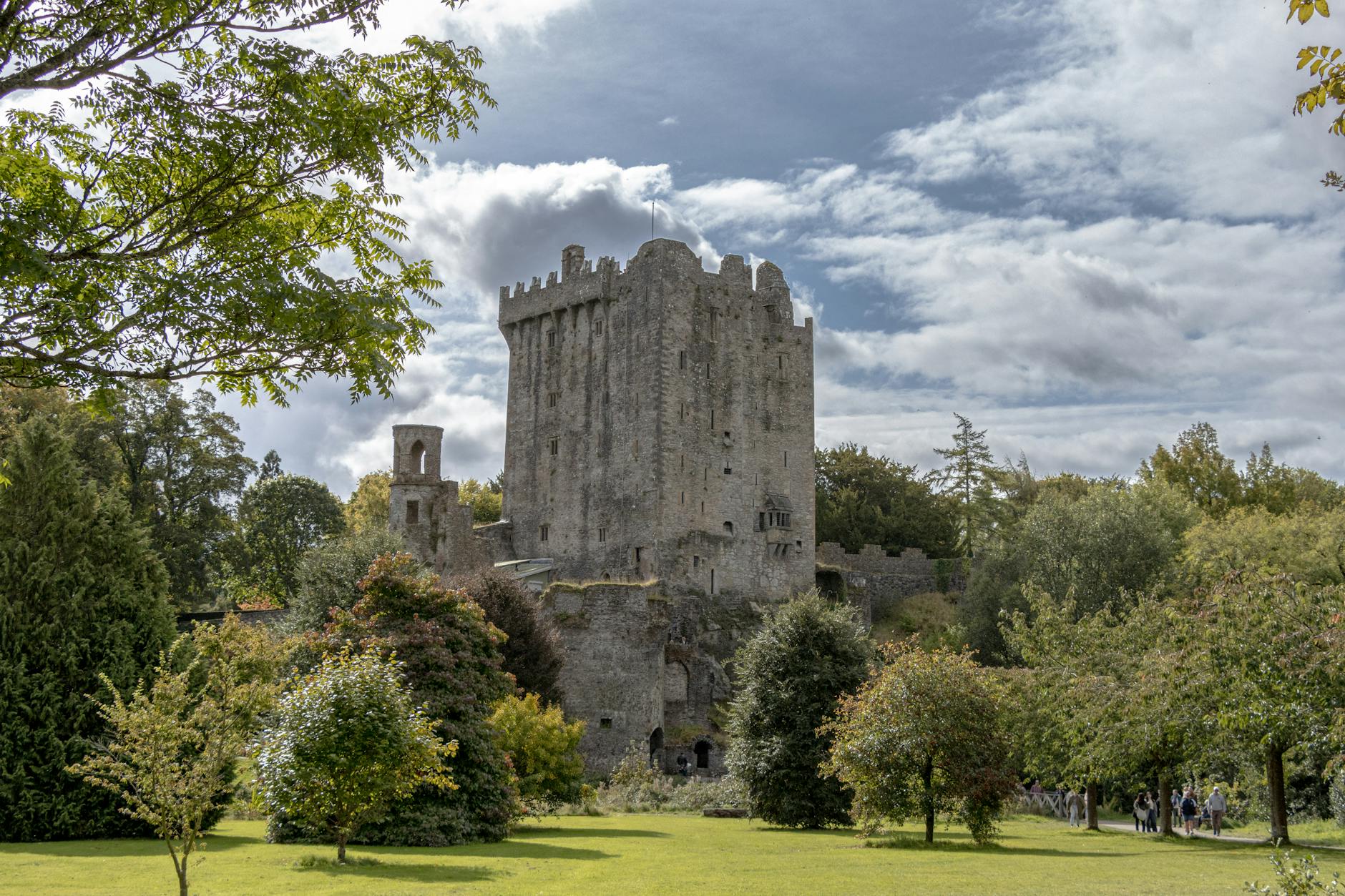
With less than a month left of scheduled sessions at the local library, the middle-school-aged gaming group for whom I’ve been running a Dungeons & Dragons game got to talk about the ambiguously (neo-) medievalist setting of the game, both in its default iteration and in the specifics of the campaign I think may be winding down. (I hope to reprise later on, but since it is a library program and not my own, I cannot guarantee it.) There are a number of scholars and others who have commented on the topic at some length, and I’m not exactly a stranger to the discussion, myself (as witness this, among others). I’ll admit to some pleasure in speaking from a position of some knowledge on the subject, and I’ll note that I did have to rein myself in; having been an academic and still participating in some small ways in scholarly research, I am prone to running off at the mouth about things I’ve studied. But that should be nothing like a surprise to anybody who knows or reads me at this point.
This almost strikes the right tone, I think. Photo by Phil Evenden on Pexels.com
As to play, itself: the players continued to progress through the dungeon in which they have been for several sessions, now. An NPC “handler” emphatically suggested that, following the events of last week’s session, the party take a long rest. So much done, and players’ characters restored to reasonable health, the party pressed ahead, moving from large halls into narrow corridors that presented traditional-to-the-genre threats partly determined by random chance. Intra-party conflict was present as it always is, but there was also humor (if perhaps more attempted than realized). Really, the kids are a pretty typical gaming group, and, for the most part (aside from cases of main-character syndrome in various intensities and the overwhelming desire of one player, in particular, to be “cool”), it’s been good to have them at the table. I’ve been glad to have the opportunity, and I think I will miss it when it’s done.
But it’s not done yet, not hardly, and I mean to get out of it all that I can while I can.
If you’d like me to write some game for you, fill out the form below!
To list, too, the things I’ve not done And wish that I had, I would run Beyond my life’s time, Pass all sense and rhyme, And, again, would’ve barely begun.
I’ll need more sticky-notes than this. Photo by SHVETS production on Pexels.com
I’m keepin’ ’em comin’, but it ain’t too late to get your own in!
Read the previous entry in the serieshere. Read the next entry in the serieshere.
Comments about the Treasure Beach on Others’ Island precede “The Vengeance.” The chapter returns to Bee as she watches what the dragons do that emerge from the Paragon, and she assesses her situation as she directs Perseverance to seek what can be found amid their tumultuous surroundings. Survivors begin to gather and take stock of their collective disposition, and Bee sours on the Fool. Kennitsson’s death is reported, as is the poor condition of the son of Althea and Brashen, and the Fool and Bee confer about their loss, Bee souring on him yet further, and rapidly.
Nothing so kindly or quaint as this, no. Photo by Thanh Binh on Pexels.com
Bee continues to watch the dragons wreak ruin on Clerres, and those that emerged from the Paragon are joined by Heeby and, unexpectedly, by Icefyre. Motley joins the onlookers as Icefyre enacts his own revenge on Clerres, and the crow soon flies among the dragons as Prilkop emerges to offer Bee and her companions assistance. Prilkop urges the Fool to sue for peace, but the Fool replies that the dragons will have none of it, and Tintaglia joins the fray. The Fool urges Prilkop and his own companions to flee, and Bee speaks her own recriminations of Clerres.
Conversation is interrupted by Brashen’s recovery and his son’s report of events to him. The dragons’ ruin of Clerres continues around her and her companions, during the night and into the morning. In the morning, the dragons that had emerged from the Paragon claim the body of Kennitsson, consuming it and his memories, and one of them shares his name, Karrigvestrit, adopting the ship’s family’s name as part of his own. The dragons depart, and the survivors begin to take care for themselves. Bee finds, to the surprise of most assembled, that she can heal with the Skill. Rapskal joins the group, offering awkward condolences and reporting the imminent arrival of the Vivacia before joining those assembled in remembrance.
Bee wakes the next morning to breakfast served by Perseverance and a report from him. Part of the report is that the Fool has sought Fitz again; the Fool returns, unsuccessful, and Bee hardens her heart against him.
The prefatory materials of the chapter call back to the beginnings of the Liveship Traders novels, laying out explicitly the rules Kennit violates in his own trip to the shore in question. As at several earlier points in the Realm of the Elderlings corpus, there is an impression with them that the rules are of advanced age; they are presented in the current chapter as if in translation, and in their earlier appearance, they are presented as long-known lore. It is another implication of the long term at work in the Realm of the Elderlings, one reinforced by Icefyre’s comments and the Fool’s about the ways in which Clerres worked to commit what amounts to genocide on the dragons. Icefyre, after all, had been encased in the ice of Aslevjal long enough that his image had faded to a dull shadow under the ice and reports of his presence had become tales told by the old around the fire at night, and even though it is made clear throughout the Realm of the Elderlings novels that dragons inherit memories from their forebears and from what they eat, his tirade is plain that he was, himself, present at Clerres as dragons were slain by deceit and trickery. It is the case that language seems to change more quickly in the absence of mass media than in its presence; consider the differences between Wulfstan’s English and Laȝamon’s, Laȝamon’s and Chaucer’s, Chaucer’s and Malory’s, or even Malory’s and Shakespeare’s, then between Shakespeare’s and that of Wordsworth or Coleridge, and note how much remains from the earlier to the later. But given that there are characters present in the novels who live centuries and more, and that the passage of generations is remarked upon, there still has to be a long time involved.
I suppose it is something that emerges as a frustration of Hobb’s motion away from the Tolkienian tradition, something certainly clear in earlier series as I have remarked once or twice (and probably will again). Then again, Hobb herself notes her indebtedness to Tolkien, and I have noted, too, that, despite her motions away from the Tolkienian tradition, Hobb works in conversation with it. That she works over long scales of time is not unlike the chronologies presented in the appendices to The Lord of the Rings and in The Silmarillion–and there is a correspondence to the latter in the present chapter, as well, the description of Icefyre as he arrives at Clerres reminiscent of descriptions of Ancalagon the Black. But there is no heavenly mariner to send him tumbling to the ruin of mountains, no shining savior to plead before gods for release from evil. And there are still many other ways in which Hobb moves away from The Professor, even as there are some ways in which she remains clearly his student.
Want me to write for you? Fill out the form below!
Not too long ago, I wrote about my intentions for this year’s iteration of National Poetry Writing Month. As I have promised, so do I deliver; based on such results of polling as I received, I will be writing a series of limericks centering on the theme of regret. (Alas that none thought to sponsor my endeavors–although I would still dearly welcome patronage!) It should prove an interesting challenge; limericks typically run to the humorous and ribald (as I’ve commented elsewhere, such as here, here, and here), although I have had some experience attempting (with less success than I might have preferred, with an example beginning here) to apply them to other notions. I welcome the chance to stretch myself again, and I hope to find better success this time than last.
It came up on an image search… Photo by Dahlia E. Akhaine on Pexels.com
Some other comments about the endeavor need making. For one, I do still intend to press ahead with my regular projects. Hanlon will only go through the end of April, so far as I know, so it matters to me that I keep it going here, as well. The Robin Hobb rereading is not quite at the stopping-place I had thought was coming, so I will continue it until the end of the Fitz and the Fool Trilogy before taking a short break from it (unless I get caught out even more than I seem to be already and it does, in fact, take me through the end of April to get to that point). I’ve also got a couple of conference talks that will need addressing; I know, more or less, what I want to say in each, but I do need to prepare the more formal notes for them. Going off on tangents is…not helpful in presentations, although it does very well in discussions afterward. And there is the matter of my day-job to address, as well, especially in the next couple of weeks as things grow particularly intense in it; it will be taxing, indeed.
As before, I mean to have a poem post each calendar day. Also as before, I think I will make multiple posts on the days when I have “normal” content coming out. That is, I will still have my commentaries and rereadings and the like come out Mondays, Wednesdays, and Fridays; I will supplement those days with poetry posts, and I will have the poems post at a set time each day. Maybe in the morning will be good, so as to spur me on a little bit more vigorously…or possibly to give me something else to regret; I am already amply supplied with source material, but more about which to write is not a bad thing to have.
Even as I work on other things, I am happy to write to order for you! Get your piece started by filling out the form below!
Since last week was a bit of a bust for gaming for me, I was glad to be back at the table yesterday, working after two weeks with the kids at the library to delve further into the dungeon that has been the focus of this narrative arc. Out of deference to the need for overtly educational content, I spoke briefly to the players of the narrative concepts of protagonists, deuteragonists, and antagonists, as well as how the ensemble narrative of which such tabletop roleplaying games as Dungeons and Dragons are examples functions.
Not just this, but this. Photo by Pixabay on Pexels.com
I noted to the players, too, that only six sessions remain allocated to the program by the library. It’s not the first time a game in which I’ve participated has had a definite end-date in view; most of the gaming I’ve done in recent (and less recent!) years has been done in time-limited play-by-post forum games, so I’m accustomed to having something of a ticking clock counting down. My players, for most of whom this is only the first campaign they’ve participated in, have not, although I know they have experience with deadlines. (My daughter is among the players. She has homework with due dates. She is not always fond of this.) The sense of a looming end to something they (seem to) enjoy has something of a focusing effect, at least in the moment (preteens aren’t noted for their permanence of thought, and they really should not be so), and I had the impression that things moved along at a better clip than in most previous play-sessions.
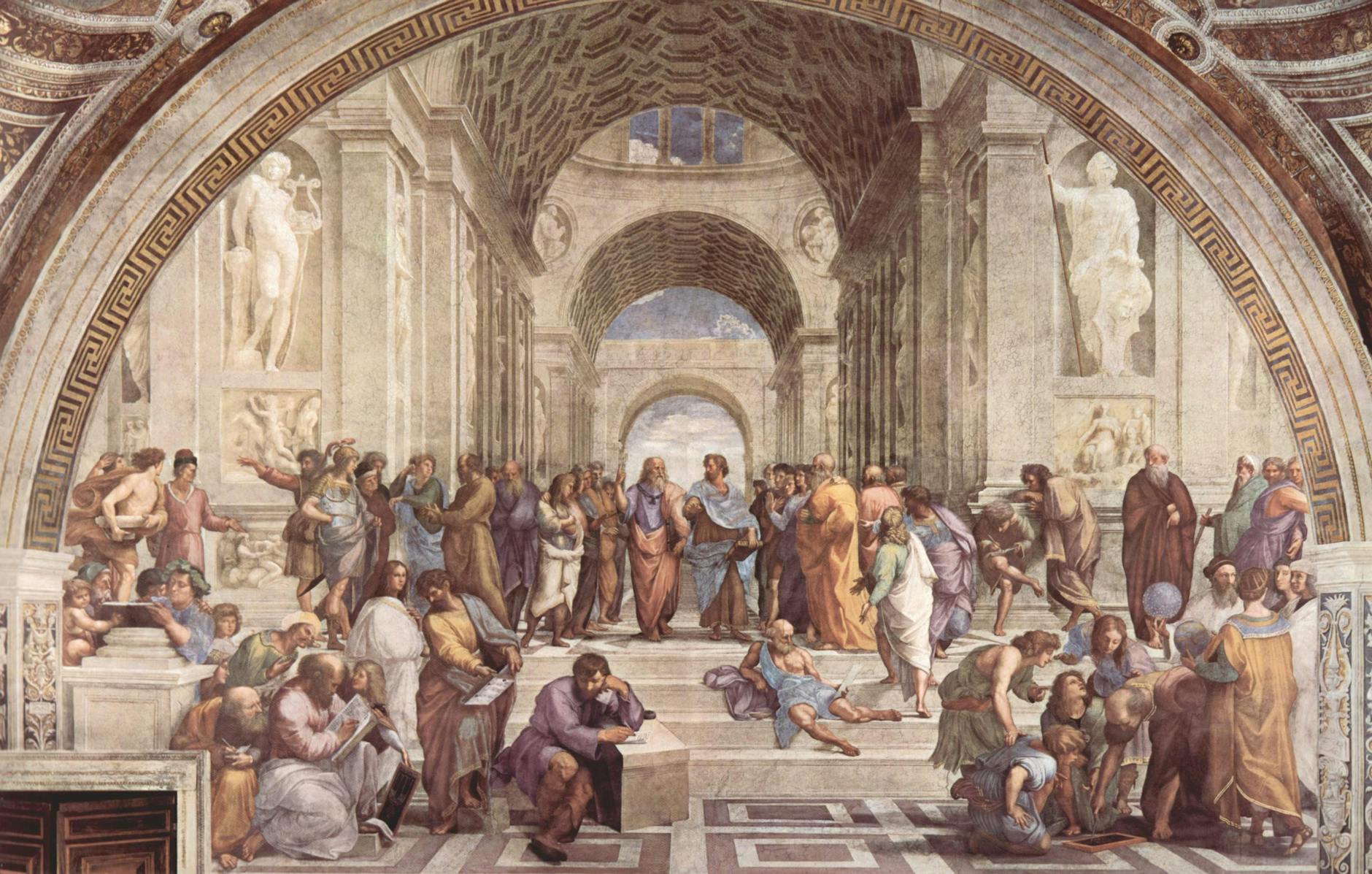
The imminent end brings to mind, at least for me, the concept of memento mori (“remember that you will die”) as well as the related carpe diem (“seize the day”) and YOLO (do I need to explain this one?)–overall the notion that time is limited and enjoyment must be wrung from each available moment. Within a game, the concepts resonate oddly; in Dungeons and Dragons, and in many other tabletop roleplaying games, death is an inconvenience more than anything else. Characters die, yes, but there are several means of resuscitation and resurrection in many games, and even in games that do not admit quite so easily of returning from the dead, it is not so difficult to produce another character and introduce that figure into an ongoing game. I have the nagging thought that consideration of such in a more formal philosophical sense would be an interesting exercise, and I wonder if someone has or several someones have written such exercises; present circumstances prevent my immediate detailed exploration of such things. (My day job is as it is, and it is getting to be busy.)
No world presented by a tabletop roleplaying game, even one that purports to exist more or less in the “real” world (the scare quotes are necessary; philosophy and the word “real” have an uneasy relationship), is the “real” world inhabited by the players. (Layers of simulacra may be in place, but the principle still holds, I think.) The assumptions that inhere in dealing with the “real” world do not apply to the world presented by the game; even when the rule is that “it works like the real world until it doesn’t,” as is often the case, the “it doesn’t” emerges remarkably quickly into gaming. The first magic missile thrown, the first undead rebuked, the first goblin guarding a chest, and–poof! The gaming world is other than the gamers’ world, and what is true in the latter is not necessarily true in the former. How thought and logic and all the other constructions thousands of years and hundreds of schools of philosophy have developed would apply in such circumstances…I am not trained well enough to venture to say, except to note that they would have to change to apply at all, were philosophers interested in treating such things.
I do not speak for them; I cannot affirm or deny that they are or are not. But it might be interesting to see what has been done or what could be done, and in another life, I might have been such a person as would do it.
Want some gaming materials written for your own? Reach out through the form below!