Read the previous entry in the series here.
Read the next entry in the series soon.
The sixteenth chapter of Forest Mage, “The Cemetery,” opens on Nevare filling out enlistment papers under the pseudonym of Nevare Burve and being informed of the exceeding irregularity of the situation in Gettys. He is given such supplies as are available, their condition described, and is directed to ride out to the end of the King’s Road. On his way to do so, he returns briefly to Hitch, conferring with the drug-addled officer before requisitioning supplies and heading out.
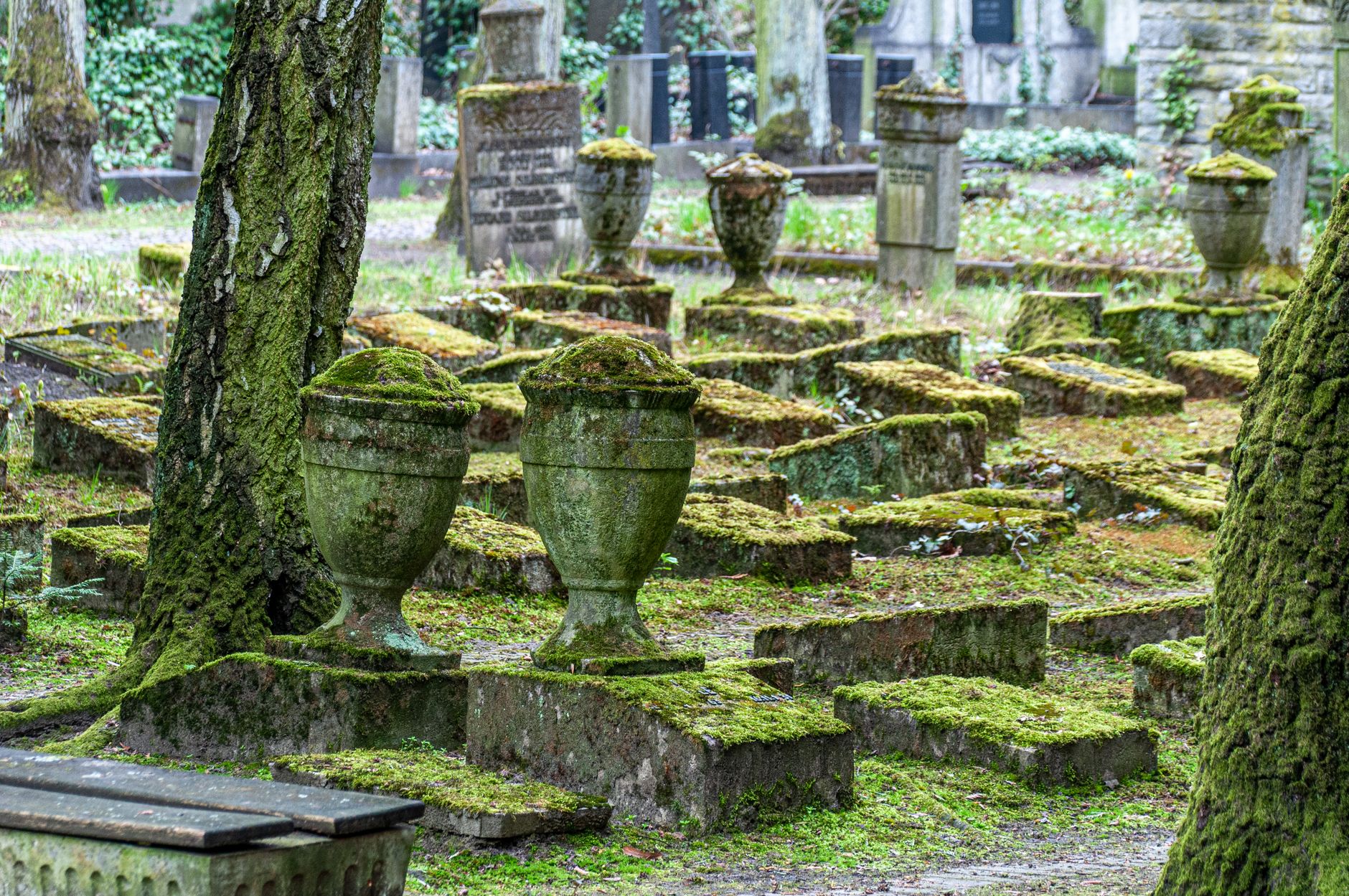
Photo by wal_ 172619 on Pexels.com
Nevare’s progress to the end of the King’s Road is described, the condition of the road deteriorating as Nevare moves further along it, and an oppressive sense of dismay weighs upon him and those he encounters. A small flight of croaker birds attracts his attention along the way, as does the disarray of the in-progress end of the road. Although Nevare marvels at the grandeur of the trees that surround him, he is also taken by fear of them and their sudden impression of sentient judgment of him, and he flees in terror from it.
Nevare returns from the experience to some acclaim from his new comrades, the experience of terror at the end of the road being something of a ritual among them, and he travels from that end to his assigned cemetery post. Said post is surveyed and described, and Nevare begins to settle into it. As he does so, he recognizes that Gettys was once a better place than it now is, and he thinks of asking that Amzil’s bag be returned to her. He also tends to his hunger, considering it and the changes that have taken place in his body, before going out among the graves that are now his to tend.
Rain arrives, and Nevare settles in, soon turning inward in thought to his sister and his annoyance at his present situation before sleeping and, he thinks, dreaming erotically of a woman of the Dappled People stalking through his lodgings. He wakes unable to return to sleep in the night, and the next morning sees him report back to Gettys to requisition more supplies. They are given him without trouble, and he calls on Hitch once again, the scout remarking on the magic used against the Gernian forces by the Dappled People.
As Nevare makes to return to his lodgings, he sees Epiny present, and he hides from her. Recognizing that his situation and hers–as well as that of Spink, whose presence at Gettys explains hers–will be fraught, he again contemplates the changes to his body and tries to immerse himself in work on his lodgings and station, ending the day with a bleak feeling growing upon him.
To address the chapter-length issue: the present chapter,* in the edition of the novel I’m rereading, runs 26 pages in length, approximately 3.56% of the novel. It is more than one and a quarter times the length of the average chapter in the novel, which juxtaposes it against the previous chapter, but as there is need for substantial explication at this point, so much makes sense. Nevare has been delivered to the location where he needs to be for the story to progress; it is only fitting that the location, and his specific situation within it, be described, and such descriptions take time.
Also, for indexing purposes, the following: Amzil, Clove, Colonel “Rabbit” Haren, Croaker bird, Dancing Spindle, Elisi Burvelle, Epiny Kester, Gernian, Gettys, Gettys beer, Gettys Cemetery, Gettys sweat, Gnats, Laudanum, Nevare Burve, Nevare Burvelle, Plague, Rollo’s Tavern, Scout Lieutenant Buel Hitch, Sergeant Gafney, Speck, King’s Road, Spinrek “Spink” Kester, Widevale, Yaril Burvelle. Despite the longer chapter, there are relatively few indexables; this is because Nevare markedly does not report a large number of his comrades’ names despite encountering a fairly large number of people. That the names are not remarked indicates, among others, that Nevare is changing in how he regards the people among whom he was raised and ostensibly hopes to live and that his situation in Gettys is not one like to last long; there is little point in rehearsing the names of those who will little elsewise appear, except in that it reinforces verisimilitude–but as Hobb tends to value verisimilitude (as noted in “5000 Words”), the lack of a device to foster it is a marked choice, indicating that more is going on.
Of note is the pseudonym under which Nevare enlists. Given that “Nevare” occasions no comment from those accepting his enlistment paperwork, it would seem to be a common enough name in Gernia, even if it strikes an English-language reader oddly.** The surname is an easy choice because of its similarity to his “real” name, so that if he answers to it, it will not seem out of place for him, but it does seem a bit odd that, given that similarity and the renown Keft enjoys among the military, nobody has yet mentioned the close correspondence.
I also note that the present chapter does do more to break down Nevare’s previous preconceptions of military life. The present novel and its antecedent make clear that Nevare grows up with and long retains an idealized vision of what the Gernian military is and does; as he continues to encounter the reality of it, he becomes increasingly disenchanted with it, to the point that, in the present chapter, he finds hmself questioning his very existence as a soldier, although he rebukes himself for asking the question (362-63). The tension between “should be” and “is” remains strong in the novel, and it is one with which I, reading affectively once again, sympathize.
Nevare’s encounter with croaker birds (349) merits attention. There is a peculiarly trinitarian resonance in it that I notice but that I am not well equipped to unpack at this point, unless perhaps to make the points that 1) it is a separation of Gernian religion from the Christianity of its United States antecedent and 2) there may be something of a backhanded reference to the Fool on display in the image. Yet more scholarly somedays beckon.
To pivot: although I maintain that it is the case Hobb moves away from the Tolkienian fantasy tradition in a number of ways,† Hobb herself avows having emerged from that tradition (note “A Bar and a Quest“). The present chapter shows that emergence powerfully, the resistance of the Dappled People’s forest to incursion by Gernian colonialist efforts and the size and ancientry of its trees bringing to mind Fangorn Forest as encountered in The Two Towers. The forest seems somehow sentient and angry, attempting to push back against those who would invade it and working powerfully upon such people. This is not the first instance of Hobb making a Tokienian gesture of appreciation towards trees (see Fool’s Errand‘s “Dead Man’s Regrets” and Shaman’s Crossing‘s “Journey” for examples), but it is a particularly emphatic one–not enough to break the overall trend of distancing from the Tolkienian tradition, but enough to merit attention, certainly.
* I find that I lament the timing of this part of my rereading; had I been just a little faster in getting these reflections out into the world, the present piece would have hit before Halloween, an observance for which the content is appropriate. As it is, I’m on the first working day following, which I will have to take as being close enough, as well as a reminder that I ought always to be more diligent in following what I set out to do. Literature offers lessons for life, it seems.
** Spanish, referenced earlier (see Shaman’s Crossing‘s “Classmates” and “Initiation“) doesn’t help, either, “nevare” being a conjugation of a word meaning “to snow,” and the character not showing much of the typical association therewith.
† See “Moving beyond Tolkien’s Medievalism: Robin Hobb’s Farseer and Tawny Man Trilogies,” “An Update to ‘Moving beyond Tolkien’s Medievalism,'” and “Another Update to ‘Moving beyond Tolkien’s Medievalism‘”; along with Shaman’s Crossing‘s “Magic and Iron,” “Harbinger,” “Dewara,” “Sword and Pen,” the above-linked “Journey,” “The Academy,” and “Plague“; as well as the present novel’s “Rosse’s Wedding.”
Need some writing done and want to avoid putting your name on AI slop? Hire me! Fill out the form below!


