Again, it rises, that old pressing need
To lift up voices, resist the shrill screed
That children from that darkness must be freed
Of rolling dice and telling lies for fun,
Which in the minds of many has begun
To wrap them in a cult, a mighty one.
And yet, those who might be thought at its head,
Did such a thing exist, as not, have led
Themselves to folly, and those same have pled
That they themselves but jested, did not mean
To anger those on both sides of the screen
Who now themselves have started them to wean
Away from sagging tit and milk gone sour.
Stupid God, we hope, laments this hour.
You know what I’m talking about… Photo by Armando Are on Pexels.com
Like the writing that I do? Reach out; I can do some for you!
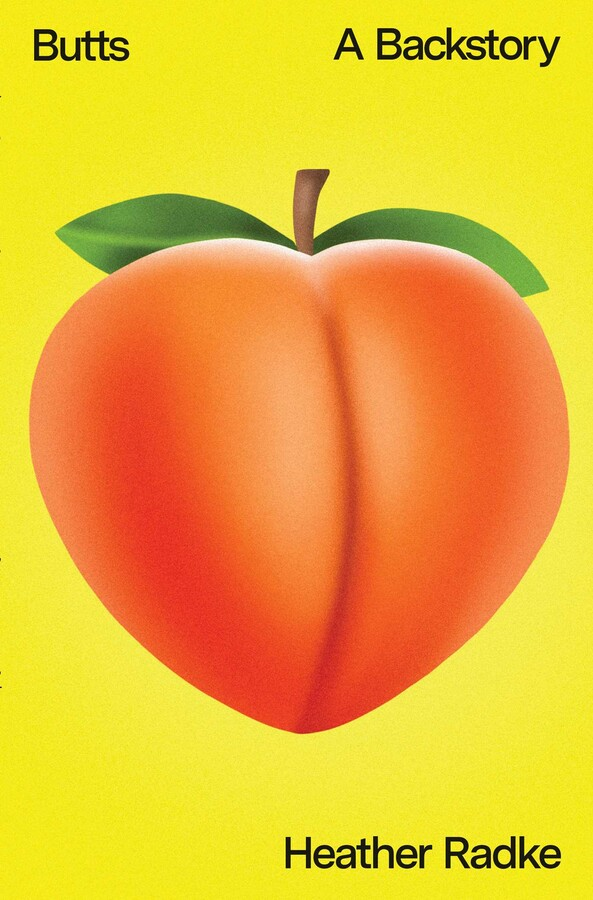
I received a copy of Heather Radke’s Butts: A Backstory (Simon & Schuster, 2022, ISBN 978-1-9821-3548-5) as a belated holiday present (with the gift message “sorry it’s a little behind…”) and took the opportunity to read it in bed across the ensuing several nights. I found the series of interrelated essays, grouped into seven sections (Origins, Sarah, Shape, Norma, Fit, Bootylicious, and Motion, plus an introduction, conclusion, and other back matter) to be a reasonably informative and overall enjoyable read. Radke stakes out clear theoretical positions (which, I acknowledge, some will find objectionable) from which to approach her overall topic, using her own experience as a means of entry into broader consideration of the human butt, and the woman’s butt more particularly. Obvious jokes aside (and there are no few such, hardly a problem for me, although I know that some will not appreciate such humor), Radke’s book is an engaging read, one I felt was well worth doing; I might well have bought the book myself had it not been given me as a gift.
The cover, from the publisher’s website.
The overall approach of the text, moving from a personal introduction through the physical and physiological to a focus on others’ experiences and broader cultural contexts, returning irregularly but not seldom to personal reflection, struck me as generally sensible. Humanizing the topic by beginning with embedded personal experience is often a useful rhetorical maneuver, engaging both situated ethos (“I can talk about this thing because I have experience with this thing”) and pathos (“You should care about this thing because it affects people, clearly, and you are, I assume, a people”). That Radke acknowledges the limits of her approach is also a useful rhetorical move. She explicitly disclaims universality of experience and understanding, and she notes that the text emerges, in part, from her desire to address her own concerns about her butt (13). What this does is position her and her text not as a determination against which resistance can be made, but more as a report or a series of them; limiting her claims reduces the angles from which she can be attacked for her writing.
“Reduces” is not the same as “eliminates,” admittedly. As I note above, Radke takes clear ideological positions in her work, and while she does make efforts to acknowledge them explicitly, there are others that come across without being made overt. That they largely align with my own understandings does tend to make the text sit better with me than it might otherwise, but even in my overall agreement with and acceptance of her reports, I know that the unexamined assumption is often problematic. And even the examined assumptions are likely to provoke outcry from some quarters, some of which Radke anticipates–but only some. I can see places where Radke might be called out for her words, although I was not reading to look for such things; I have to think that those who would look for fault will find it. Admittedly, they would anyway, but there are some places where Radke makes it easier for them than might be hoped.
(I do not think Radke is lying, although I know that she, as all, misses some things and does not report on others. None of us can really report on what we do not observe, and the vantage point from which we operate does much to determine what we will and will not observe. Too, there are limits on the ability to convey what is observed, language being a blunt tool for some details, and there are always constraints on any given work. Standard stuff, really, although not always things about which readers think, and rarely things discussed by those who will decry a work for its content or what they are told is that content.)
In all, though, I enjoyed reading the book, and I commend it to others. I think I may well revisit it, when time and circumstances permit. It seems, among others, the kind of reading that would reward the kind of treatment I give other works for money: lesson plans and discussion questions…and I do need more writing samples…
Like the writing that I do? Take a minute, fill out the form below, and we’ll talk about what I can do for you!
Who suffers from the Words in a wonderful talking book written at the top of its reverse page Let that one beware The two-faced month matching the betrayer’s number on the hangman’s day Surely no good omen for those who believe
Dear friends, we have a winner! Photo by Aliaksei Semirski on Pexels.com
Even those who give less heed To portents put up in the past and handed down Dowries and remembrances of days gone by Tend to nerves
For me, it’s just another day My fears all run another way And I have not the time to play The credulous
I’m still happy to write to order; fill out the form below, and see what I can do for you!
Again, the acolytes of Stupid God
Think to take into their hands the rod
With which to beat down others to the sod
That they may think them tall and mighty folk,
Even as they bend beneath the yoke
To bear the Stupid God. They are a joke
Told to a sober audience that stands
And does not laugh at loud-voiced drunks’ demands
Which, being met, despoil common lands
And legacies that would to children go.
How doubtful, now, that children e’er will know
What could have been! Instead, they now will grow
To forms far less than promise once had said,
Forced to go where Stupid God has led.
Why look behind them when the charlatans do not use them to hide? Photo by cottonbro studio on Pexels.com
Need help with writing, either making sense of it or making it happen? I can help you! Take 30 seconds to fill out the form below, and we can talk!
I feel myself becoming a bullfrog again Or the namesake of one whose friends raid the wine cellars Croaking madly disregarded in one of the many places where Eagles fly This one seated by a flinty river in a whitewashed limestone land
Clearly what I mean… Photo by Magda Ehlers on Pexels.com
The fait accompli is in place The thing already done And I know what is coming Have seen the sadness that will follow But I cannot say too much about it
Frogs are easily trodden underfoot Though they know more of the crowding flies than most And it is of small things whizzing through the air my croaking warns And others’ croaking
I hope that I am wrong I know that I am not And there is no blessing to follow after this hope The coming croaking gives the lie to Pope
I’m happy to write to order; if you’d like me to do so for you, take 30 seconds, fill out the form below, and we’ll talk!
Now Zibethicus commands a horde,
Ondatran menace striking up discord
As raveners with citrus, growing bored,
Look for some new distraction from their pain.
Even so, they dance in the long train
That Stupid God still leads, without refrain,
And in which the Stupid God does still delight,
Stumbling through each day into each night
And back again. The everlasting plight
Afflicts us all, both those who do not dance
And those who after Stupid God will prance
And, ass-like, bray upon the merest chance.
That which those donkeys pull behind, abjure,
Along with Stupid God and all its spoor.
Surely this is the only thing that it could be. The only thing. Photo by Fabian Willer, Follow my Instagramud83dudcf8ud83dude01 on Pexels.com
I’m pleased to write to order, ranging from short, formal poetry to longer works of prose. Sound like something you can use? Take 30 seconds and fill out the form below!
As the small snare drum sounds a tight roll again Tiny xylophone or glockenspiel accompanying it My hand reaches out to add a single percussive beat And do a little better than John Cage Though I have never been able to do the splits And my sunglasses are kept in the car
Rarely, if ever, this late… Photo by Oladimeji Ajegbile on Pexels.com
There is never enough time to take the time And I really ought not to interrupt the performance Making it stop and start again is no good thing for the gigging It is better for me if I simply leave off spectation Having other things to do in plenty And my own practice to which to attend
If you’d like me to write for you, take 30 seconds to fill out the form below, and we’ll discuss how I can help you with what you need!
It isn’t for all Of course Because some are at their ends Today and every day But there are yet others Who will And must Go on
Retrospection is in season Of course Little endings prompting looking back And thoughts of how to do better moving forward But most of us will simply Go on as we have been Regretting doing so a little Until we forget that we were doing that Again
Start the new year off with writing to order. Fill out the form below, and we can get you started!
Sitting with cups of coffee ready to hand While the birds have barely begun their chorus And other creatures stalk near-silent Through the lifting darkness I read I write Neither as much as I might like Both as much smiling as remains in me
I am a thief And prodigal Taking more such moments for me than is likely my due Spending them frivolously and to no good end But I have asked no inheritance Even if I might have to herd swine And I am the elder brother, anyway
If you’d like to have writing done to order for you, do me a favor and take 30 seconds to fill out the form below. I’ll be happy to talk to you about how you can get the writing you want done!