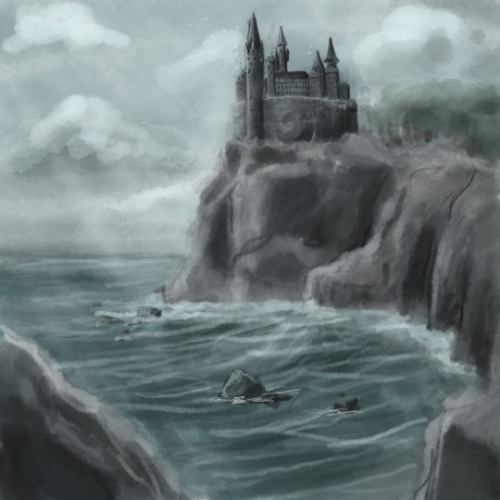
I find myself again confused Struggling now to reuse The things I’d made to give me cues For how I ought to go I muddle forward as I can Pretending that I have a plan That I had one since I began In truth, I do not know
It’s not even this focused… Photo by Moritz Bu00f6ing on Pexels.com
Read the previous entry in the series here. Read the next entry in the series here.
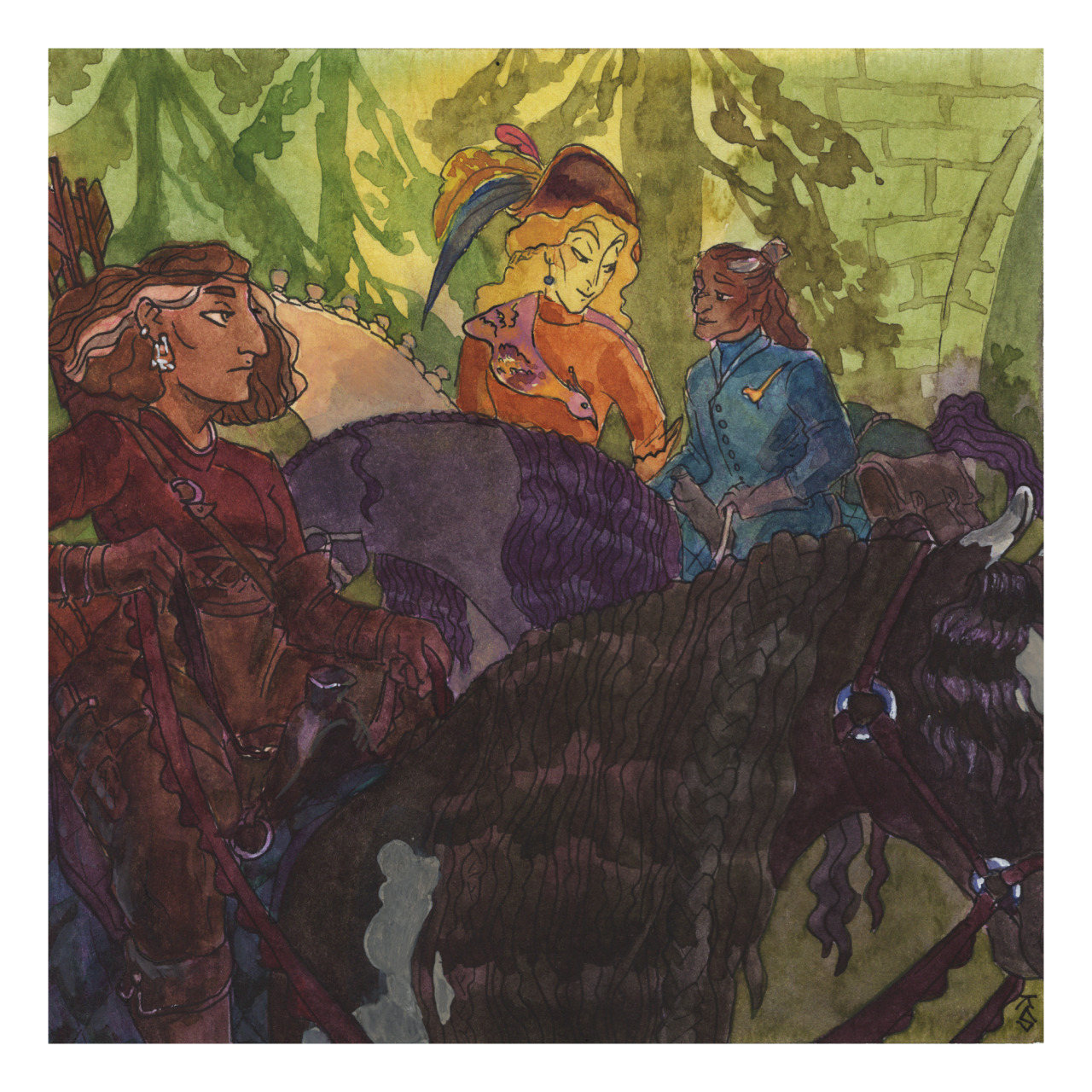
The succeeding chapter, “Galeton,” opens with an in-milieu discussion of the Piebalds before pivoting to Fitz as Badgerlock, the Fool as Golden, and Laurel arriving at the ferry to Galeton, where they are forced to wait; they converse to pass the time. Talk turns to potentially dangerous places as Fitz attempts to sound Laurel out, interrupted by the appearance, however fleeting, of Nighteyes. Golden arrives shortly after, escorting Laurel off and leaving Fitz to ruminate. NIghteyes rejoins him, and the two confer through the Wit.
Golden and Laurel summon Badgerlock back in time to board the ferry and cross the river it spans, and they proceed to Galeton in the night. Lady Bresinga and her son, Civil, welcome the party with their household, and Fitz determines that Old Blood are present among the entourage. Golden and Laurel are taken off to formal greetings, while Badgerlock is left to unpack and see to Golden’s quartering. The multiplicity of the Fool’s lives breaks upon him while he does so, and Nighteyes reports initial scouting efforts as Badgerlock is bidden attend on Golden at dinner that evening. After he prepares for the duty, he is taken aside and confronted with his own appearance; when he takes the time to present well, he presents well. After a brief exchange with the Fool as Fool, Fitz as Badgerlock accompanies Lord Golden to the meal.
Some of what gives the lie to the idea of the Wit as metaphor for homosexuality emerges in the present chapter; there are decidedly homoerotic overtones in the text at this point. Admittedly, sources I’ve annotated do a better job of explicating such things than I am equipped to do; while I am back in the classroom, I am not back into my scholarship in earnest, although I am striving to be so. In some ways, the energy fairly crackles toward the end of the present chapter; from the vantage of rereading, I can attest that it moves further as the Tawny Man novels continue. How much so, though, will have to wait for later chapters’ discussions.
Read the previous entry in the series here. Read the next entry in the series here.
The next chapter, “Laurel,” begins with a musing on the stone with which the Elderlings built before turning to Fitz waking in the bed in Chade’s hidden chambers, still fully clothed. He assesses his situation as Chade arrives, noting a coming breakfast with Lord Golden and a coming expedition to Galeton. The two exchange information, Fitz reporting his Skill-sharing and Chade noting the lack of romantic entanglements for Prince Dutiful. Chade also notes that matters are being prepared for Hap to have a chance to succeed.
The titular vision… Image from Talking about the Weather, here, used for commentary
Fitz begins to attend to his errands in his guise as Badgerlock, including making arrangements for Hap. Despite worries, he notes being eager to get underway, and he is comforted by a brief touch of the Wit from the approaching Nighteyes. He reports being called to an errand before the wolf breaks contact, and when he returns to Buckkeep proper, he is bidden report to Lord Golden at once. There, he is informed that the Queen has bidden her Huntswoman, Laurel, join the pair, and they pack to depart.
Laurel meets Golden and Badgerlock as they make to depart, and they go out together, exchanging backgrounds as they do. After they are clear of Buckkeep Town, Golden urges haste, and the horses all leap into gallops, Badgerlock’s fractious mount outstripping the other two as they proceed.
The musing early in the chapter on the tensions between love and duty as they applied to Fitz in his youth, and how Chade and Kettricken have steered Dutiful away from encountering such entanglements, resonates strangely with me as I read the chapter once again. I’m fortunate enough not to have experienced such a thing; my loyalties are neatly ordered and not in conflict, and I met my wife when we were both in graduate school–neither of us were children at that point. But I cannot help but feel for the as-yet unmet Prince Dutiful, bearing an emblematic name as is so often the case among the Six Duchies nobility and royalty, and one that constrains him mightily despite his youth–no less than his position as the sole heir to an uncertain throne must.
I have noted my return to teaching and commented upon some of the work I’ve done in the classroom after making that return, I know. The work continues, of course, and that means I’ve gotten to come up with more things for my students to do–and since I teach English, that’s meant I’ve had the opportunity to share my love of reading, and some of the things that I love to read, with my students. Whether or not they like it.
The man himself Image from the Marlowe Society, used for commentary.
One such thing was Christopher Marlowe’s “The Passionate Shepherd to His Love,” a poem I’ve read repeatedly over the past twenty or so years and that I’d previously taught, along with Raleigh’s “The Nymph’s Reply to the Shepherd” and Donne’s “The Bait,” several times during that span. I’ve enjoyed the reading and the teaching pretty much every time, and students usually get into it by the time we get to Donne, catching on to what’s going on in the poems and realizing that we are still doing more or less the same things the three of them do in their poems. When I had the students read and discuss the sequence most recently–a couple of weeks ago, as this emerges into the world–I had much the same experience; I had a good time, and so did the students, with even some of the more reticent getting into discussion.
I say much the same experience because there was one key difference. As it happened, I stumbled into understanding a joke in Marlowe’s poem that I’d not previously recognized–and I’m embarrassed to admit that I hadn’t seen it before, although I must plead that I am not a specialist in early modern English literatures. I mean, yes, I sat for a comprehensive exam in it, but it was not my major or even my secondary area. (My apologies to Prof. Vaught; the fault is entirely mine.)
Anyway, at the beginning of the third stanza, Marlowe’s narrator offers to make for his putative love “beds of roses,” which seems a strange thing to offer someone, especially as a first item to be offered. Now, my students noted, rightly, that offering a bed works as an invitation into bed, and the shepherd is trying to make something of a score–a “goods for services” arrangement, as one student put it, not incorrectly. With the first class I had that day, though, I noted the thorniness of roses and that a bed of them would make for uncomfortable lying down–which the students seemed to understand and agree with.
With the second class I taught that day, though, I had the revelation. A bed of roses, one still having all the thorns, would be a bed upon which the shepherd’s love could expect to be pricked abundantly. It’s the kind of joke I should have pointed out years ago, a little bit of fun embedded in the lines that helps make them continue to merit study–and something that, like a chicken joke in Malory about which I failed to get published, I wouldn’t’ve realized without the help of my students. And it’s the kind of thing that makes teaching continue to be worthwhile.
Read the previous entry in the series here. Read the next entry in the series here.
A chapter titled “Bargains” follows, opening with a brief in-milieu commentary on hunting cats before turning to Fitz receiving a clandestine evening summons to the Queen. As he answers it, he rehearses his progress through the day, including an extended musing on weapons practice with Prince Dutiful’s training partner and his assessment of the boy as a solitary figure. He also notes having infiltrated and inspected Dutiful’s suite, as well as his old castle room–which is largely unchanged and untended. When he returns to Lord Golden’s chambers, he accidentally stumbles into a magical experiment the Fool had been conducting, which unsettles him badly, and the Fool passes along the message that Chade wants to see him.
Chade conducts Fitz to the Queen through hidden passages, commenting on their construction along the way. She welcomes Fitz warmly, and after a remarkably friendly exchange, their talk turns to the recovery of Dutiful. Fitz reports that he has no information to offer, and Kettricken affords him two more days to make progress before she will make public the prince’s disappearance. She also grants him full access to the spy tunnels, Fitz musing on what that access will cost him and what it has likely cost Chade. And he agrees to ply his Skill to the extent of his ability, despite knowing what will come afterwards.
Afterward, Chade conducts Fitz back to his hidden chambers, and they confer. The source of the gift of a hunting cat to Dutiful is noted: the Bresingas of Galeton. Fitz advances the idea that a Wit-bond has been offered to the prince without his knowledge or understanding, used to lure him in. At length, Fitz begins to ply his Skill again, and though he does not find Dutiful, he does suffer the deleterious effects of working that magic. Chade eases him as best he can without elfbark, and Fitz suffers the pain poorly. Amid it and Chade’s questions, he notes needing to gather coin for Hap’s apprenticeship; Chade is offended that Fitz thought he must bargain himself so, that he has trusted so few. He sets aside his offense, however, and sends Fitz off to rest as best he can. And as Fitz’s mind slips between wakefulness and sleep, he becomes aware of Dutiful and his location: Galeton.
Fitz’s experience in Skilling rings true for me, not because I have such powers, and not because I am an addict as he is depicted as being, but because I worked with addicts for some time. His rage at having been robbed of his elfbark and his carryme–something of a narcotic, as described–read to me very much like the reactions of addicts to the loss of their preferred substance. So is his swift repentance; I’ve seen no few snap and apologize immediately, and while some might follow Chade and note that “sorry” only works so many times, others might recognize the changes to brain structures and chemistries that chemical dependencies cause. I, at least, tend to be more sympathetic–but that’s me; again, I’ve not been an addict or suffered at the hands of one, so I know my opinions come from places of privilege. Others’ experiences differ; so, too, will their readings.
Read the previous entry in the series here. Read the next entry in the series here.
The next chapter, “Charms,” begins with an in-milieu commentary about Kettricken’s tenure as Queen of the Six Duchies. It pivots to Fitz returning to his assigned quarters, assessing them and weighing options. He frets over Hap and Nighteyes and rehearses some of what Chade told him and showed him of the remaining available Skill scrolls before waxing eloquent about once-Skillmaster Galen‘s deficiencies. His thoughts turn to the problem of Prince Dutiful, and he reaches out to Nighteyes through the Wit. Reassured by the psychic contact, he falls asleep at last.
Getting to work… Image from Faceless Frey’s Tumblr, here, used for commentary.
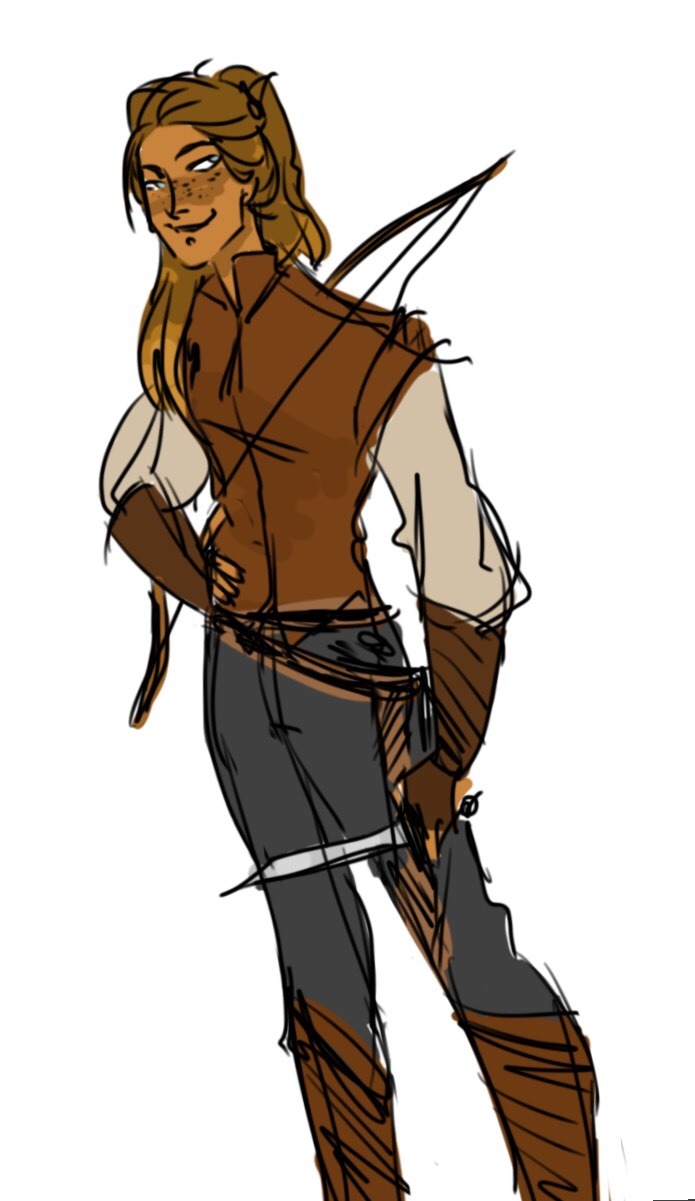
Fitz wakes the next morning to the aspersive words of the Fool as Lord Golden; the pretense drops swiftly as the Fool reminds Fitz of the roles they must play together in the present circumstances. Fitz has some pangs at his preparation for the role of Tom Badgerlock, servingman, and he goes about expected tasks. Once again, he finds himself nostalgic and marking differences between the Buckkeep of his youth and that of his present–though he notes some things remain in place. He happens to see the Queen and marvels at her until he is rebuked by a passing petty noble, and he forces himself into his role despite his anger. That anger inspires him to make some adjustments to the basic role he plays for the Fool-as-Lord-Golden; the adjustments are approved, the two converse, and Golden sends Badgerlock out on some morning errands.
When Badgerlock goes about the errands, Fitz muses on his relative invisibility as a servingman. He also takes in as much gossip and information as he can while he is fitted for new clothes and seeks out a working weapon. He also seeks out Jinna, asking her to relay a message to Hap; she offers instead to host the young man for a time, and Fitz has the strange experience of being Wit-addressed by Jinna’s cat. Jinna also offers Badgerlock some warning about recent animus against Old Blood, noting that his demeanor is not one that normally sets people at ease; she offers him a hedge-magic charm to assist with that, one that works even on her, and they start to act on it when Jinna’s niece, Miskya, arrives. Introductions are made, and Badgerlock returns to Buckkeep proper, seeking the weaponsmaster.
There is much to note about the performance of social roles and concerns of social strata in the present chapter. Fitz lampshades no small amount of it, noting his own contrasting statuses as a servingman presently and formerly as a (bastard) prince of the realm; others, notably Jinna, comment on the lower social status that comes with employment, even if it affords Badgerlock more material wealth than he was able to command in his small, independent holding near Forge. As ever, it is perilous to read with affect, but, as ever, I cannot help but do so, and with my recent relocation and shift in employment, I have had both an elevation and a reduction in social status, even as I am making more money in the classroom than at the treatment facility. The chapter, as well as experience, remind me that social status is a complex, nuanced thing, not the simple system many want to assume it is; it’s a reminder, among many others, that many would do well to take.
The dark blue curtains fall Bespangled with their shining jewels Twinkling with their own shine And the softer house light comes up Strangely swiftly against how languidly the Single stage-light dims after shining Hot upon the actors making their Exits and their entrances Playing each their parts Improvising and extemporizing Because there is hardly any script to Go off of
Sometimes, it’s like this, yeah. Photo by Lisa on Pexels.com, used for commentary.
Read the previous entry in the series here. Read the next entry in the series here.
The succeeding chapter, “Chade’s Tower,” begins with comments from an in-milieu source regarding the formation of the Hetgurd, an alliance of Out Island holdings meant to unify them Out Islands against attack and to normalize trade relations. It turns to track Fitz’s return to Buckkeep at Chade’s summons, and to describe Buckkeep itself. Fitz notes the many changes that have occurred in his boyhood home as he returns in disguise to it.
It’s good to be home… Image from the Elderling Magic Tumblr, here, used for commentary.
When, under darkness, Fitz returns to Buckkeep Castle itself, the Fool greets him, assigning him a role as servant to Lord Golden, the latter his own role. The Fool rehearses some of the needed reasoning, emphasizing to Fitz the seriousness of the masquerade they must both perform, and takes him in. Fitz marvels at yet more changes and is afflicted by nostalgia as he progresses behind Lord Golden to the latter’s sumptuous quarters. Said quarters have a small room for Fitz’s use as Tom Badgerlock, one which offers passage to Chade’s secret chambers.
After being “dismissed” by Lord Golden and welcomed back by the Fool, Fitz proceeds to meet with Chade, once again taken by nostalgia as he moves along the network of hidden passages. After a brief exchange of pleasantries, and while Fitz eats, Chade notes the current dilemma: the heir to the Six Duchies, Prince Dutiful, is missing. He is also rumored to wield the Wit magic, with all the attendant problems thereupon. Chade also notes the activities of the Piebalds and their social campaigns. He further muses on the political instability at large in the Six Duchies, noting that Dutiful’s absence or transformation into the kind of being Fitz was after returning from death would end the kingdom.
Matters are further complicated by the impending marital alliance with the Out Islands via the Hetgurd, and Fitz realizes that his old mentor’s age is beginning to tell upon him as Chade relates more of the prevailing situation to him. Chade asserts that Fitz’s Skill can prevail in retrieving the prince, despite his protestations, and, after a few choice questions and comments, he accepts the charge to retrieve the prince, and he begins to be briefed on what he needs to know.
A couple of things prompt my attention. For one, I’ve often noted the parallels to addiction and what I’ve seen of others’ experience with it while I was working at the substance abuse treatment center; Hobb flatly links the two in Fitz’s musing that “A surge of exhilaration came with that thought [that he could Skill well]. It was probably, I told myself viciously, much the same as what a drunk felt on discovering a forgotten bottle beneath the bed.” So that puts that out there; those more adept in addiction studies than I–I administered, I did not provide treatment–could doubtlessly say more on the topic than I ought to attempt.
A second is the nostalgia that afflicts Fitz as he returns to Buckkeep. Again, I find myself reading affectively, if perhaps at some remove. I did not expect that I would ever live in Kerrville again after moving off to New York City late in my graduate studies; while I did not end things there as a dead man, I did not end them well, and I certainly felt some guilt at moving back to the city in 2016. Yet even with that, I found myself marveling at the changes to things no less than the ways in which things had remained as I had left them. It was a strange tension that has since subsided; years living in the place made it familiar again, and now, I no longer live there again. But I remember it all too well, and I find myself feeling for Fitz again–which is probably as I am meant to do, as far as purpose can be trusted.
Read the previous entry in the series here. Read the next entry in the series here.
The next chapter, “A Sword and a Summons,” starts with FitzChivalry’s written musings on the myth that spurred Verity to head into the mountains and carve his dragon. It turns thence to gloss over the next days, with Fitz musing on the changes in his outlook and perspective. The Fool continues to carve on the wooden features of Fitz’s cottage, and Nighteyes continues to be largely quiet and still, his age clearer than previously. They continue together for a time, until the Fool declares one evening that he must leave on the morrow. Fitz protests, but the Fool notes the need–and his desire to remain.
A compelling symbol Image from Pinterest, used for commentary
At an off-hand comment from Fitz, the Fool is startled and reveals more of his own background and experience–something he does not do often. He notes that another had been thought to be the White Prophet that he knows himself to be, and that that other, the Pale Woman, had been part of the driving impetus behind the Red Ship War.
When, on the next day, the Fool makes to depart, Nighteyes notes that they should accompany him; Fitz demurs in favor of waiting for Hap, although he chafes at it. The Fool leaves in peace and friendship, and Fitz turns reluctantly to the chores of the day. Days pass, and weeks, and Hap returns, having fared poorly in his attempt to earn his own apprentice fee; he frets about prospects as he hears the news Fitz shares of Jinna’s visit and the Fool’s. Fitz offers to borrow the money, which surprises and elates Hap; Nighteyes puts in archly, and Hap notes that the sooner they go to Buckkeep, the better off they’ll be.
Fitz reluctantly agrees and makes preparations for the return to Buckkeep. His clothes are hardly fit, and the same is true of his fighting instincts, but he still possesses both, as well as a sword given him by Verity. He is about to depart for Buckkeep when a messenger arrives, bearing a scroll emblazoned with Fitz’s old emblem. It is a summons from Chade, and Fitz gives directions for a departure in haste rather than the leisurely trip he had planned.
I note with some happiness the commentary at the beginning of the chapter, in which Fitz waxes poetic about cultures having myths of returning heroes from days past. As a scholar of Arthurian literature, still, and of Malory, still, I am attuned to such references, as I’ve demonstrated. I note, though, on this rereading that Fitz himself seems to fit the criteria, if only as loosely as he fits being a hero. Coming out of a quiet, clandestine retirement after years away may not be a return from Avalon, but it is a figure from a generation ago returning to activity–and quite a bit of it, as will become clear.
A while back, I opined about an assignment sequence I regret not offering when I was teaching college-level writing. At the time, I noted that there were reasons I was thinking about the assignment sequence again, but I declined to go into them; I can safely note now that I had been putting in for teaching positions in anticipation of my wife’s promotion and our relocation, one of which worked out, if not entirely expectedly. And, as it happens, some of the classes I am teaching–on-level high-school senior English, aimed at students not going straight into college–might actually lend themselves to something like that regretted-because-never-given assignment sequence.
Yessss…. Image from CmdrKitten, here, used for commentary.
Might.
I am tempted to try it, certainly, for all the reasons I noted earlier; it would be a coherent assignment sequence, and it would allow students practice in the kinds of workplace writing they are apt to encounter in the world outside college. (The job postings I still receive frequently call for high-school graduates and scads of report-writing, among others.) It would also be a different kind of engagement for the students, many of whom chafe at trudging through textbooks’ often-tepid literary selections and milquetoast interpretations of the same. (I don’t blame them, even if I am often frustrated by their intransigence.) And, yes, it would add to my portfolio, which, now that I am teaching again, would be a damned fine thing.
But.
I am teaching in a Texas Hill Country town, and not a large one. (As I write this, Burnet’s still under 10,000 people.) And while not all the stereotypes of such places are true, a fair number of them are; I anticipate that I’d have a fair amount of resistance from some quarters–and their parents. Some folks have never gotten over the Satanic panic, for example, and my own predilections are not likely to help that…
If I retool–maybe not for this year, but possibly for next?–I could make it an option, certainly; as long as it’s an option and not a requirement, I think I can get some grace from my administration. (So far, they’ve treated me well, and I don’t want to abuse that.) But how much will be extended…that’s always a question, and I’ve been…spoken to…about things before.