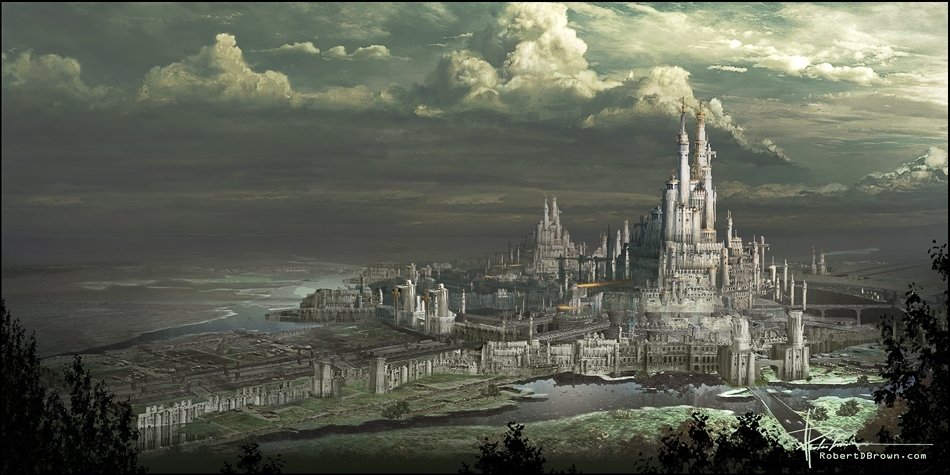
A Robin Hobb Rereading Series: Entry 82: Assassin’s Quest, Chapter 23

Read the previous entry in the series here.
Read the next entry in the series here.


The next chapter, “The Mountains,” opens with a gloss of the legended early history of the Mountain Kingdom. It moves thence to Fitz’s account of how Kettricken supplied her intended expedition to find Verity–or his fate. Starling will accompany them; Chade will not, but must return to Buck. He leaves gifts for his sullen former pupil, about which Fitz complains somewhat when the Fool presents them; the Fool forces Fitz to consider Chade’s perspective on things, as well.

Perhaps this is when they confer…
drawing 17 from Fitz and the Fool coloring book by AlexBerkley on DeviantArt, here, used for commentary

The Fool also offhandedly notes an intent to accompany Fitz, despite the cold and peril. Kettle is more pointed in her assertion that she will also go along. But they are rushed to depart by news of a messenger from Regal that has asked for a goodwill gesture to deescalate hostilities: the return of the fugitive Fitz. And they depart in that haste, taking the already-packed supplies, but themselves and no others; Starling catches up slightly after, somewhat angry, but quickly silenced by Kettricken’s terse manner. When Nighteyes rejoins them somewhat later, he notes that Kettle is following, slowly but in high dudgeon; when, at length, she arrives, she and Kettricken quickly arrive at what seems a prickly understanding.

They proceed thus for several days until Kettricken queries Fitz about Verity’s likely earlier actions. When she asks him to reach out to Verity through the Skill, he refuses, citing the danger posed by Regal’s Skilled servants and their abilities. He also notes their likely earlier interference in the defense of the Six Duchies, which rouses cold ire in Kettricken. And he feels the powerful pull of the Skill upon him, more than is normal for him.

I have argued before that the Realm of the Elderlings, despite clear parallels to the Tolkienian-tradition fantasy milieu of an analogue to the Western Europe of the High Middle Ages, reads better as derived from North America. Part of the argument has to do with the fauna described in the region. The present chapter amends that conclusion somewhat; the Realm of the Elderlings borrows from the Americas more generally, though the emphasis remains on the Pacific Northwest for reasons I elaborate on in Fantasy and Science Fiction Medievalisms.

The amendment comes in the form of the jeppas, the beasts of burden Kettricken determines to employ despite Fitz’s objections. They are described as like “long-necked goats with paws instead of hooves,” a description that brings to mind the llama. Domesticated animals used primarily to haul some loads up the steep slopes of the Andes, yielding hair and, at need, meat, they seem to be a solid parallel to the jeppas–something that ties the milieu more to the Western Hemisphere than the Eastern, even if they are somewhat displaced even within that analogy. Still, it is a bit more a remove from the Tolkienian tradition, a bit more an association with not-as-commonly-depicted-in-fantasy places, and that is and remains good to see.

Imaginings should be broad.

Help me show nice things to my daughter on her first Spring Break trip?

In Still Another Response to Eric Weiskott

On 21 February 2020, Eric Weiskott’s “tyrannical curriculum” appeared on his website. In the piece, Weiskott opines about the integration of teaching and research and the ways in which curricular structures and research demands combine to focus scholars’ attentions. Such focus skews research and understanding of individual works and the contexts from which those works arise, limiting prevailing knowledge of how things have been. He remarks on the ways in which his own privileged position within academe, as tenured faculty at an elite institution, allows him some limited circumvention of such constraints, but Weiskott also notes that the constraints still obtain in academe, generally, hindering no few potential endeavors. He motions towards some small way to alter circumstances, but he concludes with the idea that a lack of care by those outside medieval studies all but guarantees that such alterations will not take hold.

File:Geoffrey Chaucer (17th century).jpg
The unintended tyrant?
Anonymous Portrait of Geoffrey Chaucer, British Poet and Comptroller of Customs (circa 1340 -1400), which I am told is public domain and is used here for commentary

I’ve written in response to Weiskott before (here, here, and here), and I continue to respect and appreciate the man’s work. His students are lucky to have him, and his peers are, too. And I am generally in agreement with what he puts in the present blog piece. I have been shaped by curricular standards, certainly, as have been the students I have had in my classes–though I did make efforts, when I taught classes that would admit of them, to cross at least the periodical boundaries Weiskott mentions. My own work with the Tales after Tolkien Society being what it is, I could hardly do otherwise than to make the attempt.

I find that the discussion in which Weiskott participates through the article–if perhaps not overtly–is one worth having, pointing out that curricular decisions are always political ones. Propping up the Greatest of Geoffreys as a standard-reference author, or holding up Shakespeare or Milton as the other members of a putative holy trinity of English-language literature, or including Beowulf or Malory among a somewhat broader pantheon, or any such thing serves to indicate to people that “the educated” know those things–and, because they receive institutional support, they should know those things. It is a vision of what a populace should be, and embodiment of that vision is used as a stand-in for personal value (or at least as a veneer for the “real” personal value of how much money a person has or makes). And it is a vision that is imposed on people by others, not always others whom they choose; it is a vision that reflects ideologies that are themselves shaped by similar, earlier influences on the people who hold them.

There is some value in a canon, certainly. Having a common body of reference eases understanding and comprehensibility; having access to the reference helps people get the joke, and the world can damn well use more laughter. But having a common body of reference is also necessarily exclusionary; there is only so much that can be included, because we do not, as Marvell reminds us, have world enough and time to do it all. What gets kept out matters as much as what gets kept in, and those who have been excluded are likely to continue to be so as long as the conditions towards which Weiskott gestures remain in place. And I think Weiskott is correct to be pessimistic about the prospect of things opening up.

I’d like to keep doing this. Please help me do it.

A Robin Hobb Rereading Series: Entry 81: Assassin’s Quest, Chapter 22

Read the previous entry in the series here.
Read the next entry in the series soon.


The next chapter, “Departure,” opens with a description of Chade that paints him as something of a folk-hero emerging from the Red-Ship Wars. It moves to a particularly embarrassing episode for Fitz, one in which he learns more about why he had been considered dead by those who had known him best. Fitz is also warned about Kettricken, whom he is set to face the next day.

No, she doesn’t seem happy…
Kettricken by GerdElise on DeviantArt, here, used for commentary.

In the night, Fitz dreams strange dreams, in which he joins Verity. Fitz is taken aback by the appearance of his king, and he watches in horror as Verity plunges his arms into a flow of magic power. Verity uses Fitz to pull himself back from the power, and he pleads once again for Fitz to come to him, to aid him against those who oppose him. The dream sends him into a seizure, for which he is treated by those around him with elfbark.

Fitz rises the next morning and bathes. In the wake of the dream, his anger is gone, and he struggles to comprehend what transpired. When he returns to the Fool’s hut to dress for his audience with Kettricken, the Fool informs him that his identity is not widely known in Jhaampe, and he voices curiosity about Kettle. The two proceed to call upon Kettricken, and the Fool finds a place quickly; FItz is made to wait, growing markedly uncomfortable.

When, at length, Fitz is asked to speak, it is sharply and without affection. He reports events from before his imprisonment, moving forward, describing his deeds and misdeeds along the way. Kettricken informs him of her purpose to summon Molly and his child to Jhaampe to preserve the Farseer lineage; Fitz objects, noting Verity’s life and the possibility of another child coming from them, but Kettricken is not satisfied with the report. Fitz notes, too, that he will seek Verity, regardless; he is compelled to that end.

In the description of the Skill-river Fitz sees through Verity, Hobb makes a compelling case for the utter incomprehensibility of magic. I know that one of the things Hobb takes pains to do in her fiction is to make the fantastical elements emerge organically from a solidly realized milieu, so it makes sense that the utter strangeness of a source of magical power, something that has no real analogue in the readers’ world, would need some attention and focus. There is a strong thread of such attention in fantastic fiction; Lovecraftian works, with their impossible geometries, are perhaps the most prominent examples, but they are not the only ones. Hobb does better than Lovecraft, however, acknowledging the incomprehensibility of it while not relying overmuch on less accessible vocabulary; “otherness” generally seems more at home in literary theory than in fantasy fiction, but it is at least not the repeated squamous eldritch. So there is that.

Help me take my daughter on her first Spring Break trip?


A Robin Hobb Rereading Series: Entry 80: Assassin’s Quest, Chapter 21

Read the previous entry in the series here.
Read the next entry in the series here.


The next chapter, “Confrontations,” opens with a brief musing on diplomacy. It transitions to Fitz’s convalescence amid the Fool having to handle those who seek to approach him as a sort of religious figure–and Starling, whom he rebuffs adroitly.

It’s a chilling image…
The White Prophet by Michelle Tolo (Manweri) on DeviantArt, here, used for commentary

Amid the disjointed conversations, Fitz learns that Kettricken knows of his daughter and is moving towards legitimizing her as a Farseer heir. Fitz lies to the Fool to disclaim the child in the interest of preserving her from the internecine politics of the family. He determines to see Chade and Kettricken, though with regrets.

Fitz dreams strangely and wakes at least once to see Kettle watching him. He wakes later at Starling’s intrusion, and he learns that Starling has seen Kettricken and told her of Fitz’s child. Fitz’s lie to the Fool comes unraveled, but following the implications of the unraveling is interrupted by the entrance of Kettricken in anger. Chade enters also, and is overjoyed to see Fitz alive. Fitz has to challenge him over the child, however, and Chade replies as he must. Nighteyes inserts himself and offers through the Wit to kill the lot of them, and Fitz, overwhelmed, confesses his compulsion to go to Verity. All save the Fool, whose house it is, leave.

After more odd dreaming, Fitz wakes under the Fool’s care again. They talk together, not entirely comfortably in the wake of Fitz’s lie. Fitz apologizes as best he can, and the Fool lays out what he knows and has reasoned out of the situation. The Fool also lays out some of his prophetic powers reasonably plainly.

The next day sees Fitz suffer having the arrowhead removed from his back. His convalescence continues, perforce, and slowly; he uses it as an excuse to delay doing what he knows he must. He also reconciles with the Fool, as well as handling visits from Starling and Kettle; during a visit form Starling, he learns a fair bit about Chade’s activities. Thoughts of what will come beset him, and it is clear he is not yet recovered.

As I reread the chapter, I find myself amused by the way in which the Fool lampshades existence within a world governed by fate–and a world in which prophecy is possible is one that is thus governed. The wry humor in the Fool turning to puppet-making seems in line with the Fool’s literary antecedents, certainly, and something that fan-artists such as Michelle Tolo, above, take advantage of in their depictions of the Fool. It is an easy enough image to access and understand, that of being puppets on strings, even if it begs the question of who pulls those strings. (Hobb’s treatment of religion in the Elderlings corpus is something about which I spoke at the 2019 International Congress on Medieval Studies; I imagine I’ll be working on that paper a bit more as I move further through the reread–and, indeed, working on the conference paper helped spur the project.)

Another note, though: Chade’s cruelty. I have noted before the unsettling expectation of loyalty to an oath that passes beyond death. To have it reaffirmed and reinforced…it is not a comfortable thought.

Now, as ever, I can use your support.

A Bit More on Leaving Academe

I‘ve made it clear, I think, that I’m out of academe at this point almost entirely. (This and this are perhaps the easiest examples. They are not the only ones.) I have given up working at the front of the classroom (note this, this, and this), and I have sharply tapered off the tutoring work I was doing as yet another supplement to my income. I do remain engaged in some low-level scholarship and commentary, as evidenced here and present in the papers I still present at the International Congress on Medieval Studies. There are one or two things I am told are in process, that are going to find publication at some indeterminate point, but all of that is comparatively minor stuff. I do not have a book in press, and I do not have an academic one in draft. Nor yet am I likely to have such anytime soon, if ever again.

Journal and Pen
This is the kind of writing I do most now. I think. Maybe.

I know this, I have stated it openly and repeatedly on multiple platforms. Yet many of those same platforms have begun in recent weeks (as of this writing, which is happening well before its publication) to show me ads about teaching products and practices, to offer me connections to people who are still engaged in the academic world–far more than did while I was doing such things as drafting classroom reports and commenting directly on others’ remarks about classroom concerns and practices. And I am confused by this (as well as mildly annoyed, I must admit).

Part of me wants to think that, because the body of writing I have done online thus far focuses in large part on what happened in and around my classrooms, that the advertising algorithms that continue to infiltrate life are picking up my work and sending materials my way as a result–though why I am getting them more now than when I was in the work confuses me. If the ads are improving their reach, they are demonstrating less understanding; “not” and “no” are hardly hard words to find or interpret.

The same concern applies if it is simply a matter of my writing having broader audiences now than previously (and I would be happy to find it so!); missing the negative is a problem in language as much as in mathematics. And if it is because I continue to associate with academics online…yes, I think the same concern still applies.

I have to wonder, though, if my online presence provoking more materials about education reflects some part of my psyche of which I am aware and against which I struggle. I did spend a damned lot of time and am spending a damned lot of money (thank you, student loans) learning (badly, in the event) how to be a teacher; I spent no few years working at making the classroom my profession. I have realized I was wrong to do so, that I do not belong at the front of the room and that I was damaged or warped or perverted (and not in the ways I think might be fun) by being in the seats in it, but I am not immune to the sunk cost fallacy. Part of me still thinks about returning to the work, even though I know, I know it would be a bad idea.

If the algorithms are responding to that…I think I have to worry. And I think I may not be alone.

Care to support my ongoing efforts?

A Robin Hobb Rereading Series: Entry 79: Assassin’s Quest, Chapter 20

Read the previous entry in the series here.
Read the next entry in the series here.


The following chapter, “Jhaampe,” opens with a description of the titular city, one familiar from earlier. It passes after to Fitz proceeding deliriously under Nighteyes’s guidance to a dimly glimpsed figure who takes him.

I was wondering when we’d get here…
Awakening by Atrika on DeviantArt, here, used for commentary

Fitz wakes intermittently as the figure who took him and others tend to his injuries, which range to frostbite in addition to the arrow wound and overall fatigue and ill treatment. As Fitz assesses himself and returns to his senses, he asks about his situation. He recognizes the Fool as he slips back out of and into consciousness, and the two exchange tidings as best they are able at the time. Among those tidings is that the child Kettricken had carried when she fled Buckkeep was stillborn, and she has mourned Verity as dead, but the Fool notes that Fitz’s emergence has provided new hope to him. Chade has been at work, as has Patience, but matters remain grim, and there has been no sign of Starling or of Kettle that the Fool knows of.

Fitz asks the Fool not to report his survival to Kettricken or Chade. The Fool reluctantly agrees, and the two begin to fall back into their old amity and ease, despite the pain.

In the chapter, the Fool makes one of his wryer comments about Fitz in response to being addressed as a revered figure: “‘Holy one?’ There was bitter humor in [the Fool’s] voice. ‘If you would speak of holes, you should speak of him, not me. Here, look at his back.'” There is a part of me, one steeped in the humorous writings of the past, one that looks for sometimes-subtle bits of wordplay such as this, that wonders if the previous chapter’s action, hunting and shooting Fitz, was plotted out for no other purpose than to make the pun in the Fool’s comment. Hobb borrows from Asimov throughout the series, as noted here, and Asimov several times wrote pieces specifically to put puns across–such stories as “About Nothing,” “Death of a Foy,” and “Sure Thing” in The Winds of Change and Other Stories come to mind as examples–so it is not outside the realm of possibility that another such borrowing has taken place in the present chapter. Whether intended or not, it does seem a useful setup for such a joke.

More broadly, I’ve argued that Hobb borrows freely from fools in Shakespeare in informing her own Fool, and the kind of word-play evidenced by the Fool in the present example is decidedly present in Shakespeare, both from “fools” and from other jokesters. Mercutio’s comment that calling on him the day after he is stabbed will find him “a grave man” is but one easily accessed example, while no few of Benedick’s remarks in Much Ado about Nothing are of similar sort, and even Othello‘s Iago expounds similarly. It may seem a strange thing to have the kind of pun at work that is at work in the chapter, but if it is strange, it is a strangeness with no small precedent.

Don’t joke around; send a little my way!

A Robin Hobb Rereading Series: Entry 78: Assassin’s Quest, Chapter 19

Read the previous entry in the series here.
Read the next entry in the series here.


The chapter treated for this post, “Pursuit,” opens with a passage glossing the military situation between the Six Duchies and the Mountain Kingdom as Fitz made his way towards Verity. It moves thence to Fitz conferring with Starling and Kettle as they flee from the burned ruins of Moonseye. Fitz sends the women ahead of himself, which Kettle recognizes as him drawing away pursuit from them to him. Starling is not so sanguine about the matter as they part.

A pivotal scene in the present chapter…
Bastard Hunt
by ThereseOfTheNorth on DeviantArt, here, and used for commentary

Fitz and Nighteyes move away, and Fitz ensures that he will be Regal’s sole focus for some time by Skilling openly and brazenly in the night. As he does, he finds Burl in the Skill, being tortured therewith through the efforts of Will and Carrod–while Regal observes with glee. Fitz opines about the depravity of his uncle, then lashes out brutally through the Skill. When he is next aware, Nighteyes is near frantic with fear at what Fitz has done, and the two make a slow pace as they flee for Jhaampe.

As they go, Fitz considers his situation again and the likely welcome he will receive from Kettricken, whom he believes to be in Jhaampe. Implications of news of his survival are unpleasant, and he considers bypassing the Mountain Kingdom’s capital–but rejects the idea as untenable for several reasons. His ruminations are interrupted by an encounter with a party of Regal’s soldiers that spots and pursues him–aided by one of the Old Blood. Fitz and Nighteyes flee, with the wolf working to distract the hunters from the slower-moving Fitz. It is not successful; the Old Blood hunter is wise to the deception, cornering Fitz and shooting him in the back with an arrow as Fitz tries to climb to safety.

Nighteyes pulls Fitz up the last bit of his climb, and their flight continues–slower now that Fitz has been shot. He begins, almost reflexively, to transfer his consciousness back into the wolf, but Nighteyes rejects him, and Fitz starts at what he had tried to do. When they achieve some distance from pursuit, Fitz tries to treat his injury. It is difficult, painful work, ultimately unsuccessful; Nighteyes ultimately snaps off the shaft of the arrow, leaving the head in Fitz. And still they must move on.

The thing that stands out to me as I read the chapter again is the juxtaposition of the shock at one of the Old Blood turning on Fitz and the relatively little attention the Old Blood receives in the pursuit. Yes, he is the one to wound Fitz, but he remains largely faceless and utterly nameless in the chapter despite his key role in inflicting yet another wound on the protagonist. Are readers to take it as passe that a member of an oppressed group would turn that group’s talents to the oppressor’s ends? If so, it is a subtle bit of commentary that seems all the more biting for being presented as off-handedly as seems to be the case here.

Remember the Alamo! Remember Goliad!

Remember your writer?


A Rumination on Sousa

Today is a holiday for band nerds–and I remain one, “unapologetic if inept” as my Twitter bio has it–across the United States, a punning reference to John Philip Sousa. Noted for his martial music–and so appropriately celebrated on March Fo(u)rth–he remains a presence in the repertoires and award-walls of bands nearly a hundred years after his death, as well as providing a welcome opportunity to inflict a bad joke on people annually.

From marineband.marines.mil, here, which I believe makes for public domain

I do not need to go into much detail about the man; his biography is easily accessible and written by better writers than I. Nor do I need to wax eloquent about his music; it is widespread and, again, easily accessible. Playing it remains a standard practice for concert bands and others, and it is certainly challenging enough to do, not only in its more famous iterations, but in the less-played pieces, as well.

I have to wonder at a people, though, who made the man and his work so popular. Thinking on it from the perspective of my own time, I am confused that marches would capture so much popular imagination–but I have written to that effect before, and what I noted then remains true. I do not know who benefits and how from the continuation of Sousa’s legacy in schools and in such ceremonial culture as the United States retains–diminishing as it is against the various influences upon it (and not without justice, though that is a discussion for another time). Someone must, obviously, or it wouldn’t be suffered to stay in place, even as much as it has.

Charts ain’t cheap; help?

A Robin Hobb Rereading Series: Entry 77: Assassin’s Quest, Chapter 18

Read the previous entry in the series here.
Read the next entry in the series here.


The next chapter, “Moonseye,” opens with a brief note about Moonseye’s position and its history with Chivalry Farseer. It moves thence to Fitz and the others’ conveyance to the titular location. Fitz makes contact with Nighteyes through the Wit, and they reassure each other of their lives and relative safety. Nighteyes also shows Fitz an incoming attack; when it falls, it is family of the betrayed smugglers coming to rescue their kin.

Definitely the kind of thing to give pause.
Nighteyes by Alcine on DeviantArt, here, used for commentary.

After the attack, Fitz is guarded more closely, and he describes Moonseye as he reaches it in custody. His incarceration is also described, and Fitz assesses his situation. He also tries to work on his captors, meeting limited success with that or with finding an escape option. Nighteyes has more success, however, and he informs Fitz of fires beginning in the town.

As the fire spreads, Nighteyes takes the opportunity to make himself known to Fitz’s captors. They flee, and Nighteyes pursues, retrieving the key to Fitz’s cell as Starling arrives to aid Fitz. They make their escape from the burning town into the bitter cold, where they join Kettle. Starling relays the status of the earlier party to Fitz as they flee, and Fitz shivers from more than the cold.

Through Fitz, Hobb lampshades the cyclical nature of the heroic journeys that pervade Tolkienian-tradition fantasy fiction. Bilbo returns to the Shire, as do Frodo and Sam, and Fitz returns to Moonseye, site of his earliest memories. In some sense, he has returned home, though he feels no real connection to the place. But, as with the earlier examples, the place he has returned to has changed–and not necessarily for the better. The Shire to which Bilbo returns has assumed he is dead (not without cause, admittedly) and begun despoiling his possessions. The Shire to which Frodo and Sam return is treated far worse, laid largely to waste and the depredations of outside forces. At Fitz’s involuntary return, Moonseye is more like the latter than the former, with troops loyal to Regal imposing their will far outside what should be the confines of the law. It is not the most comforting touchstone connecting Hobb to her literary forebears, but it is one that lines up relatively well with them.

Too, each of Tolkien’s Ringbearers moves on from the Shire. Bilbo retires to Rivendell before going with Frodo into the West. Sam joins them later. Fitz is similarly bound for other places–coincidentally, perhaps, a mountainous west. It is such things that push readings of Hobb towards the Tolkienian model; there are correspondences to be found, certainly, and I’ve written to that effect before. A closer examination of the parallels specifically to Tolkien, rather than to the amorphously European / English settings of Tolkienian fantasy literatures generally might be warranted–but that is yet another project for another time.

Send me a Texas Independence Day gift?

A Robin Hobb Rereading Series: Entry 76: Assassin’s Quest, Chapter 17

Read the previous entry in the series here.
Read the next entry in the series here.


The following chapter, “River Crossing,” opens with a brief note about the mounting resistance of the Six Duchies’ people to the Red Ship Raiders. It moves thence to preparations for the smuggling party to move on. Fitz indulges himself in elfbark, earning rebuke from Kettle.

Image result for rushing frozen river
Not the kind of thing that makes for an easy crossing.
Image from Shutterstock, here, used for commentary.

Later that day, Nighteyes ranges ahead of the party, to the annoyance of the smugglers. The group comes to a hidden barge, and they begin to cross the river–with some struggles. Weather and debris in the river make the crossing more difficult. Fitz and Nighteyes are attacked as they try to cross, and Nighteyes is swept into the water; Fitz is not, but he is subdued, along with the smuggler and most of the party. They have, evidently, been double-crossed by local soldiers who purpose to deliver him to Regal’s forces. Fitz reasons through how he has been betrayed and offers such mental support as he can to Nighteyes as the wolf labors out of the flooded river and finds some small shelter.

When Fitz is delivered to the soldiers’ local quarters, he is recognized by one of the Skilled Ones from his earlier training: Burl. After expressing some small curiosity about Fitz’s survival, he takes an inept report from the soldiers, rebukes them, and dismisses them. He then turns his attention to Fitz, noting to him that his erstwhile companions will suffer if he gets unruly. To prove his point, he has Starling brought in and two of her fingers broken in front of Fitz before securing the now-compliant Fitz for a trip to Moonseye.

Reading the chapter this time, I find myself sticking on the name of the character Burl. The Six Duchies tends towards emblematic names, as long since noted, and the word “burl” does refer to a misshapen growth of wood, so there is some sense to it; Burl is made misshapen by what Galen does to him during training, his loyalty to Regal an artificially imposed thing that cannot help but warp him. Burl wood, though, is often valuable as a material, one prized for its beauty; indeed, one of the things I have that I value most is the pen I use to write in my journals, one whose shaft is turned from maple burl. The physical description of Burl–a large man, formerly muscled but grown slack–and the depiction of him as ruthless and cruel (blithely ordering a flogging and the breaking of a musician’s fingers are hardly kindly words) do not conduce to that end. Perhaps the hardness of burl wood caused by the contortions of the wood grain are the resonances to be found, but that seems a bit odd a direction to go.

I continue to rely upon your support.