A Robin Hobb Rereading Series: Entry 96: Assassin’s Quest, Chapter 37

Read the previous entry in the series here.
Read the next entry in the series here.


The next chapter, “Feeding the Dragon,” opens with a note about the progress of the Red-Ship raids against the Six Duchies, with raids striking into the central regions of the kingdom while few troops remained to repel them. It continues with Verity and Fitz returning to the party, which has anxiously awaited them. Nighteyes exults in Fitz’s return and in being able to convey need to Kettricken. Kettle reveals that Verity had taken her to the Skill-river to enhance her power, at which Fitz grows jealous and protests his treatment.

The Fool’s fixation…
Girl on a Dragon by Crooty on DeviantArt, used for commentary

Reports of events and findings are exchanged, and the party deploys itself in response to the new information. Fitz tries to get more information from Verity and Kettle about the dragon, and they answer as they are able, but words do not suffice, and Skilling is too perilous in the circumstances to attempt. Kettle does note to Fitz, though, that Verity refuses to give him to the dragon, despite Fitz’s offer and Verity’s ability.

Less comfortably for Fitz, she also notes to him that he does have memories of his mother, despite his protestations. She also notes to him that Molly is beyond his reach, now, and ever after, the time in their lives when they could have loved as they did having passed. Fitz grows angry with the news and moves to confront Verity, who takes the anger from him and puts it into the dragon. Fitz is left with a better understanding of things in the wake of it. Verity also thanks Fitz for helping him to feel again, to have food for the dragon he carves with Kettle.

Stymied, Fitz retires for the night. The next day, he hunts with little success with Nighteyes and Kettricken, though they fish successfully. After, realizing that Verity has stopped work, Fitz rushes to his king’s side, the rest of the party joining. But though the carving is done, the dragon does not quicken, and Verity despairs. He and Kettle soon fall to sleep, exhausted by their work, leaving Fitz and the others to tend to them.

The comments in the present chapter about the insufficiency of words are interesting to read, coming from an author, whose craft depends entirely on the appropriate arrangement of words. Hobb writes in other places about the importance of getting words right, as I have discussed elsewhere, so it is perhaps surprising to have the admission that words are not enough.

But that it is a surprise does not mean it is untrue, of course. Words are slippery, for one thing. Back when I had students to teach and thought I could do well at that work, I would talk with them about such things, looking at the word “blue” and noting the many meanings it has even when restricted to color. That there is so much variation in so simple a word shows that there is space within words as between them, and much lingers in those spaces.

And there is this, too: Hobb writes in a milieu that admits of forces and powers not present in the readers’ world. We who read her work do not have access to the phenomena at work in the Six Duchies; we do not have the experience of things that would allow us to understand words that fit them. It works well, thus, that there are not words given for what happens.

Help me give the mothers in my life a good weekend?

Additional Thoughts on Writing

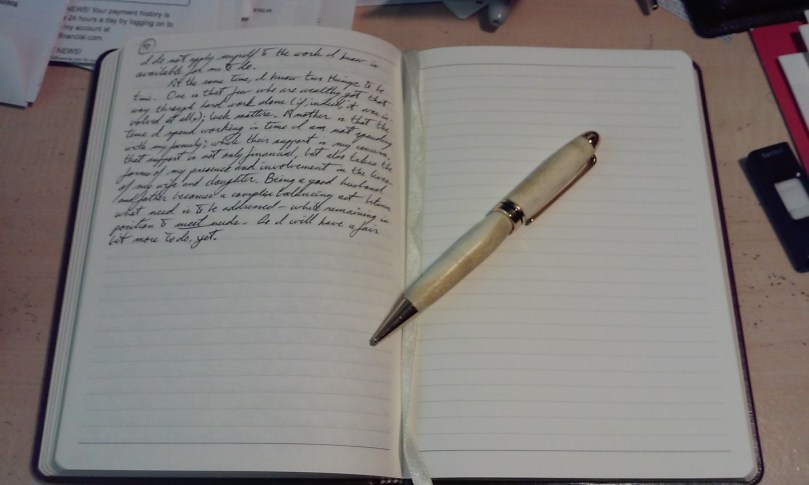
I am aware that I have only recently discussed my writing amid my writing,so it may well be too soon to talk about it more. But I have been having trouble doing writing, so it has been much on my mind as the COVID-19 panic persists. And as I have been trying to get myself back to doing the kind of writing I need to be doing–daily, really, and not only in the pages of my journal–I have been falling back on something of a standby, not only for me, but for a great many writers.

Yep, this is the kind of thing I’m trying to do.
Image from Roman de la Rose in the National Library of Wales via Wikipedia; I am assured it is public domain.

Sex.

Yes, I know it’s an abrupt shift, and probably not one that speaks well of my writerly skill. But that does not mean that there is not a lot of writing about sex; even a casual glance about affirms it. And some of my own writing treats the subject; indeed, it was to that topic I turned to get myself writing again. Doing so, of course, induced me to wonder why.

There are easy reasons, of course. I am libidinous, probably far more than is good for me, certainly far more than I am comfortable detailing here. It’s an easy topic for me to turn to, and it’s often with easy things that work starts. I imagine it’s much the same for others, though I would not presume to speak for them, but I cannot think that the perceived association between creative endeavor and (sometimes illicit) sexuality has no basis in fact.

Too, I have the thought that sex is an accessible topic for many people. I am well aware that not all readers are motivated by sexual desire, and that even those who may be are not as apt to indulge that motivation as I am (yes, I do tend to look for sex in works, and I have suggested that the students I have had do so, as well, when they asked me where to start delving into texts in those receding days when I was trusted to guide learning), but it remains an open avenue of inquiry for them, even so. Sex sells, after all, and the mercantile nature of contemporary popular culture tends towards making everything transactional; if getting people to buy pervades such zeitgeist as is, and sex pervades getting people to buy things, then it follows sex will pervade the zeitgeist–insofar as that goes.

What all this means is, of course, open to more interpretation than I am equipped to provide. And I acknowledge that an awful lot of what I write and what others write is more onanistic than elsewise, though I hold it no sin to be so, in keyboard work or in the lives that surround it.

Nothing special today, just a hope you can help out.

A Robin Hobb Rereading Series: Entry 95: Assassin’s Quest, Chapter 36

Read the previous entry in the series here.
Read the next entry in the series here.


The next chapter, “The Wit and the Sword,” opens with a gloss of the history between the Six Duchies and the Out Islands, naming the leader of the Forging Red-Ship Raiders: Kebal Rawbread. It moves into Verity’s refusal of Fitz’s assistance in carving the dragon; Verity knows Fitz does not know what he offers and refuses him on those grounds. A following exchange leaves Fitz ashamed as Verity and Kettle leave off work for the day.

That’ll sting.
drawing 4 from Fitz and Fool coloring book by AlexBerkley on DeviantArt, here, and used for commentary

As Fitz checks up on the rest of the party, he finds himself drawn to check in on Molly and Burrich through the Skill. He finds them in the midst of an attack, and while Burrich defends them as adeptly as could be hoped, he is one man against many. Molly, however, uses her knowledge of bees and their ways to drive off the attackers in fear, saving Burrich and Nettle. Verity pulls Fitz away from the unintended Skilling with more words of caution.

The next morning sees Fitz and the Fool confer before they, Nighteyes, and Kettricken go out into the surrounding woods to gather supplies. When they return with fish and firewood, they find that Verity and Kettle have made progress on the dragon, and Verity summons Fitz to him to begin a task. He is to return through the standing stones–Skill-pillars–to the garden where the other carved dragons rest, there to attempt to rouse them.

Fitz goes, and he finds that the dragons seem more to have alighted where they rest than to have been carved in place. While he is about that work, he spies some of Regal’s forces and realizes his peril and Verity’s. Fitz makes to eliminate the immediate peril, setting a trap for the soldiers that have come. One falls to his machinations, and another to a suddenly arrived Verity, who accepts the surrender of the third, tasking him to herald his imminent return. The soldier, Tag, flees on the errand, and Fitz and Verity return to the quarry.

There are another few instances of deus ex machina in the chapter, both occasioned by Verity–his emergence from the Skill-pillar and his resharpening of his sword. The latter, at least, receives some lampshading in Verity’s comment that he “should have known [he] could do that,” so it does not rankle as much as might otherwise be expected, even aside from the issues about the device noted in the previous entry in this series.

Perhaps more important is the reconnection to the greater narrative milieu the chapter presents. Much of the discourse of Hobb’s novels hinges on foreshadowing and precognition, and both the names Kebal Rawbread and Tag, son of Reaver, first noted in the present chapter, factor into future novels in the series. It might be remarked, somewhat cynically but not without merit, that Hobb is setting up for sequels to a trilogy that should be bounded and contained (and the Farseer trilogy does work well as an isolated thing), but it is something that makes sense within the greater context of the narrative milieu.

And it is good to have more to read.

Help me celebrate Star Wars Day?

A Robin Hobb Rereading Series: Entry 94: Assassin’s Quest, Chapter 35

Read the previous entry in the series here.
Read the next entry in the series here.


The chapter that follows, “Kettle’s Secrets,” begins by commenting briefly on the Witness Stones outside Buckkeep Castle. It moves thence into Verity’s return to work; Fitz and the Fool return to the statue of the girl on the dragon. It registers oddly to Fitz’s Wit, and the Fool touches the statue with his Skill-impressed fingertips. It goes badly for him, and Kettle rebukes them both harshly when she arrives there shortly afterwards. When Fitz rebukes her, in turn, Kettle demurs slightly.

He’s got the touch; he’s got the power…
Silver Fingers by AlexBerkley on DeviantArt, here, and used for commentary.

After Fitz tends to the Fool, he reports to Verity and Kettricken, who sits beside him while he continues to scrape at the statue he has made. As Fitz reports, Verity leaves off his work and resumes more of himself, which appears to hearten Kettricken, in turn. The rest of the group joins them as Fitz continues his account, and Verity notes, somewhat absently, that Regal listens through the Fool.

Fitz pleads with Verity for aid in the wake of the revelation; Verity denies it as irrelevant and reaffirms his need to complete the dragon alone. Kettle argues against the stance, noting that dragon-making has been collaborative in the past. She also declares her true self and circumstances, to some disbelief. Verity directs Fitz to assist Kettle, and he attempts it unsuccessfully.

The Fool joins the two, putting his Skill-stained flesh to the task. In a glorious communion that takes in Fitz, the Fool, Nighteyes, and Kettle–who has resumed her former name of Kestrel–Fitz helps her to free herself from the punishment that has been imposed upon her. In the wake of it, Kestrel aids Verity’s work, and Fitz and the Fool confer. Fitz purposes to join his king in the work.

Of particular note in the present chapter is the revelation of the titular Kettle’s secrets. While Hobb does do much to foreshadow that the old woman knows much, the specifics of the reading do threaten to come off as something of a deus ex machina, which can easily be taken as an annoyance by readers. Of course, the Elderlings novels partake heavily of the Tolkienian fantasy tradition, even if other antecedents work more strongly in them, and so they partake of the medieval European. As such, they fall under a rubric about which I have written before, one that admits of a tradition that readily invokes such a device. And while the direct comparison between a novel of some heft and episodes of a children’s cartoon may be a bit of a stretch, that does not mean the underlying idea is a bad one. Namely, although Hobb’s Elderlings novels do not operate in an analogue of medieval Europe, they emerge from and participate in a tradition that showed up abundantly during that period–as Douglas A. Anderson points out in Tales before Tolkien and that many others have pointed out at length and eloquently–so that the presence of something like a deus ex machina is not a reason to take on a particular literary atheism.

It’s May Day!
I’m not in distress;
Help me keep it that way!

More Rumination on Writing

As the COVID-19 pandemic continues to push changes to how things are done, I am trying to keep up with the writing I have been doing in my personal journal, on a couple of other websites than this, and in this webspace. Given some other things I have going on in my life at present–nothing bad, worry not, but nothing I’m set to discuss in detail here–the thought had occurred to me once again that I might try my hand at fiction-writing. I might tell stories, hoping that people would like them.

The Jim Henson Company | The Storyteller
I do not fancy myself so adept, to be sure.
Image from Henson.com, used for commentary.

I have made some attempts to do so before, of course, here and here and elsewhere. I do not flatter myself that I have done well in those attempts; I have read many stories, more than most, and I have looked deeper into them than those same most, but there is something about putting together a coherent and engaging narrative that eludes me. Or it has in the past. And I am chary of telling many of the stories that are actually mine to tell, things I have seen or that have been told to me so many times I might as well have seen them.

Many of the stories that I have to share are from parts of my life of which I am not proud. I have changed as I have aged, and not only in that my hair and beard are grayer, my belly flabbier and my arms skinnier, my skin more wrinkled. No, I like to think that I have become somewhat kinder and more compassionate–which has unpleasant implications for my younger self. Certainly, I have become more aware of inequality and inequity, and too many of the things I took for granted in my youth, that I accepted as the way things were and neutral therefore, are not the kinds of things I would repeat now. The names, at least, need to be changed, but changing them alone makes them the kind of fiction that really isn’t and that might invite rebuke from those who otherwise would have been named.

More of the stories I might tell, though, depend on context that is usually not clear; I suffer much from “you had to have been there,” the more so since I made many efforts to reduce the number of people who were there, and they have not flooded in since. I do not know what I need to explain and to whom, and it is hard to follow a narrative without such information–and harder to develop one. But most of all, I think, is that my life has been remarkably sedate. I have done little, certainly little of account, and I do not know how to make the life I have lived interesting to any save a very, very few–and they already know, for the most part.

I would hate to bore them with the repetition.

Help me and mine make it through?

A Robin Hobb Rereading Series: Entry 93: Assassin’s Quest, Chapter 34

Read the previous entry in the series here.
Read the next entry in the series here.


The next chapter, “Girl on a Dragon,” begins with notes about the dearth of Skilled people to aid Verity before moving into an interruption of discussion. The Fool touched Verity’s Skill-overlain flesh, and Kettle tends to the Fool, directing Fitz to attend to Verity. Fitz does so, learning more from Verity about the work he has been doing to carve his dragon. When Kettricken enters and embraces her husband, Fitz is called away.

King Verity Farseer and Queen Kettricken by ElenaSilvagni on DeviantArt, here, and used for commentary

While Kettricken and Verity confer, the rest of the party and Fitz talk. The Fool is altered by his contact with Verity, his fingertips marked with the Skill that suffuses Verity’s hands and arms, and the implications of that marking are noted. Kettricken and Verity emerge from their tent, and Verity begins to eat in a way that shows it has been long since he did so. Kettle announces that they will remain on site to assist Verity, his success being the only hope the Six Duchies has in its current crisis.

As the evening draws on, the Fool relates to Fitz what he learned from his contact with Verity. The idea is that Verity will carve and waken his dragon, going thence to fight the Red-Ship Raiders alone. The dragons themselves, the Fool understands to be the Elderlings of Six Duchies legend.

That night, Fitz wakes early at Nighteyes’s insistence; Kettricken has been gone longer than she ought. They find her with ease, and Kettricken confides in Fitz the sadness she feels at the current situation. She does so near the carved image of a girl on a dragon, and Fitz feels something taken from himself suddenly.

After, Fitz speaks with the Fool again, who is testing the limits of his new abilities. They confer about their situation and the Fool’s plan to visit the girl on a dragon. The Fool also reports to Fitz much of what had led to Regal’s efforts to gain the quarry and the power dormant therein.

There is an interesting bit in the present chapter: the comments that dragons are Elderlings. It is an issue that will come up in later novels in the corpus, and it is the case that some of the ideas established in Assassin’s Quest come up for reinterpretaion. That is to be expected as narrative milieus evolve under their authors’ pens; Tolkien’s own work was hardly immune to it, as his son’s editorial comments make clear, and the successive editions of rules-sets for the tabletop roleplaying games that account for so much engagement with fantasy and medieval/ist ideas are also indications of change in progress. Still, one of the pleasures of doing a rereading is that things remembered from earlier readings are reconfirmed, and writing about them in such wise as this helps to fix them in memory, allowing for more work later on.

Things are tight here as in many places. If you can throw a little bit my way, I’d be obliged.

A Robin Hobb Rereading Series: Entry 92: Assassin’s Quest, Chapter 33

Read the previous entry in the series here.
Read the next entry in the series here.


The next chapter, “The Quarry,” opens with notes about old tales from the Mountain Kingdom that depict ancient creatures of power. It moves on to skip several days, until Fitz’s party reaches the quarry of the title; the remains of the work once done therein stand as ruined cyclopean altars to masons long dead. They begin to make camp as Kettricken despairs of finding Verity, and Nighteyes finds a corpse. Investigation reveals it is one of Regal’s coterie, Carrod, killed through the Skill–but still in the quarry.

Not quite, but close?
Photo by Suki Lee on Pexels.com

The party begins to search out the quarry more thoroughly, finding partly-completed carvings of dragons. They also find Verity at last, and Kettricken has to be held back from rushing to him and immolating herself in the embrace of his power. Verity is haggard and distracted, and Kettricken flees from him under the weight of her own emotions; Nighteyes follows her. The Fool sets about setting up camp, enlisting Starling to help; Fitz confers with Verity as best he can, getting little information from his king but giving him a lengthy and detailed report in his turn.

Conversation makes clear that Verity is focused on carving his dragon, to the exclusion of eating and sleeping. Kettle and Fitz prevail upon Verity to take a short break from the task and attend to himself for Kettricken. And as the traveling party confers during the preparations, Kettle makes clear the scope of Verity’s still-incomplete achievement, as well as the likely threat to it that Carrod had posed as he died.

The idea of the call of the Skill as addiction seems to push itself forward as I read the chapter once again; Verity’s sleepless fixation on his task and the vagueness of mind that accompany it align with what I see from some of the people I help serve in my day-job, at least. And, as I write this entry in the midst of the coronavirus (I and mine are well as I write this, thank you, though my wife and I both count as working “essential services,” so we are not able to stay at home, really), I cannot help but see a parallel to current circumstances. Many people are fixated on the novel coronavirus, not without cause, and such has affected my sleep and eating, as well as others’. Nor am I immune to vagueness in the present situation, as I am probably making clearer than I ought as I write this entry.

It is, of course, not entirely appropriate to read the text against today when it was written more than twenty years ago, now. It cannot be responding to what had not yet then happened. But it is not entirely inappropriate, either; one of the values of any work of art is that it does speak beyond the circumstances of its own composition. And if it is the case that I am the target audience for such a text now as I likely was then, that does not mean I do poorly to hear what it says now, even against a different background noise.

Help me and mine keep on going?

An Older Bit of Roleplaying Game Design?

I‘ve made nothing resembling a secret of the fact that I play tabletop roleplaying games–witness this, this, this, and this for some general examples. Nor yet have I made a secret that much of my involvement in roleplaying games has associated itself with the Legend of the Five Rings roleplaying game (L5R) in its several iterations–as witness this and its antecedents, as well as this and its antecedents, this, this, and doubtless others.

This is what it looks like now.
Banner image from the current owner, Fantasy Flight Games, here and used for commentary.

It should be no surprise that, in the years I’ve spent playing L5R that I would spend time running games–and drafting work to help me do so. And, some years ago, when L5R was in its revised third edition (it is in its fifth at the time of this writing), I put together a campaign setting for the game, one I call West of Rokugan. I forget when I started working on it; I recall that I finished it in 2010, and I have learned a lot since that point. (Hell, I’d barely passed my prospectus at that point, and I still thought I’d have the full-time continuing teaching job I had then. Ah, youth!) I had thought that I might be able to move the group I was playing with at the time towards it, but, alas, it never happened.

What did happen was what happens to many roleplaying game groups: the group fell apart. Schedules conflicted, people moved, and somehow, we never did find ourselves in another game. Nor have I been able, in the time since, to get an in-person game going–and the edition of the game has updated twice since, anyway, so the stuff that I’ve got linked above is unlikely to play well with any of the online groups to which I have access.

But I have been thinking about running a game again, and I went back through my files to look at the things that I have done as part of the prep-work for doing so. Looking back over it was…strange; it is the most involved document I’ve compiled other than my dissertation, but it has…issues. Again, I was much younger when I wrote it than I am now, and I’ve learned at least a couple of things since that point.

It’s possible, of course, that I will adapt what I have in the older materials to newer systems. It’s more likely, however, that I will pull some concepts rather than pulling the materials directly. Some things, I remain proud of; others, not so much–but it is good to be reminded, from time to time, of who and what I have been other than in my working life. And it may be that somebody gets some use out of my old efforts; I’d be gratified to learn that it happened.

Could you send a little my way to help through these strange times?

A Robin Hobb Rereading Series: Entry 91: Assassin’s Quest, Chapter 32

Read the previous entry in the series here.
Read the next entry in the series here.


A chapter titled “Capelin Beach” follows. It begins with a brief comment about the Wit before moving into the party’s progress. It is not pleasant; the Fool is particularly annoying under the effects of elfbark. Kettle again assumes authority over Fitz and seeing to his mental stability.

A bond, indeed.
Evergreen by Lalawu29 on DeviantArt, here, used for commentary

When, at one point, the party stops, Nighteyes relates to Fitz that Kettricken has spoken to him through the Wit. After, the Fool makes conversation with Fitz, asking after Molly. Fitz notes a town near where she currently lives, after which the Fool seems to pass out; Fitz takes it for a game and stalks off. It soon after emerges that it was no game; the Fool was asleep and, when roused, was addled. Starling asks Fitz about the matter, and Fitz notes his conversation with the Fool. Nighteyes comments thereupon through the Wit, and Fitz realizes some of the import of what the Fool had said to him many times before.

Fitz makes to confer with the Fool again, laying out something like a final will and testament. The conversation reveals that the Fool had not been the earlier interlocutor, at least not consciously; he reports having been somewhat distant from what he thought a speech in dream. Nighteyes opines on the connection among them and makes a suggestion that the Fool answers, confirming the strength of the bond.

There is perhaps something elegaic in Fitz’s recognition of the carpe diem principle. He knows at this point that his survival is not expected–not that he has necessarily been expected to survive a great many things previously, and irrespective of the fact he has been dead. The realization or reminder throws into stark relief the times he had pushed things aside in favor of tending to them tomorrow, not from simple procrastination, but because he allowed other things to matter more in the moment. Admittedly, there were many times his task at hand demanded full and immediate attention, but it was not always so, not by any means.

Rereading once again overly affectively, I have to consider the times I have made similar decisions. I have been better about it than I might have been, I know, and I have been better about it than many in my positions have been, but I have not seldom set aside time with family in favor of working time or in favor of some other kind of activity. And if it has been the case many times that my presence made things far less enjoyable than they might otherwise have been–I am curmudgeonly, and it has been remarked that “nobody can have a bad time like Geoff can”–it has also been the case many times that I have not bothered to try. More and more, I regret it, as I do many things. Nor do I expect that I am alone in that regret.

Send a little somethin’ my way?

A Robin Hobb Rereading Series: Entry 90: Assassin’s Quest, Chapter 31

Read the previous entry in the series here.
Read the next entry in the series here.


A chapter titled “Elfbark” follows. It begins with a brief comment about one of the White Prophets’ prophecies before turning to Fitz and Kettricken plotting out their next steps. Fitz and Nighteyes share a pleasant exchange before the party sets out, as do Fitz and the Fool.

Perhaps something like this is afoot?
Fitz and Nighteyes by davidkeen on DeviantArt, here, and used for commentary

As the party proceeds, Kettle accompanies Fitz, helping him keep his focus as they move towards the Skill road. That night, Fitz, the Fool, and Nighteyes go out to hunt. While they do, Nighteyes scents one of Regal’s coterie, Burl. The wolf moves to eliminate him as Burl works to Skill against Fitz. Nighteyes drives Burl off as Fitz is assailed through the magic; they make their way back to the party, where the Fool is still in the grip of the Skill. Fitz recalls him from it, finding a bond between them through the magic, and Kettle prepares more elfbark for the Fool to drink in the hope its Skill-dampening effect would protect him from further assault through the Skill for a time.

Kettricken demands explanations, which Kettle provides. She mulls over their situation afterward, and the Fool begins to make strangely lewd comments. Kettle presses on with the elfbark treatment, learning of Fitz’s long use of the substance–and of Verity’s. In the wake of the information, Kettle offers more to Fitz, citing its quelling effects; he considers taking it, but decides against doing so, and he immediately begins to suffer for the choice.

There might be something of a joke to be found in Kettle concerning herself so much with brewing in the present chapter. Less humorous, but more important for future work, is the mention that use of the Skill becomes almost intuitive; it is a small comment, but it is one that serves to vitiate complaints about deus ex machina that might be brought up.

Too, there is motion towards Fitz’s seeming addiction to elfbark (earlier noted here). Kettle’s commentary about the substance’s effects–and its uses–bring to mind the “go pills” reported as being given to operatives in the field, as well as far less savory experiments done ostensibly in the name of freedom. As with a number of addictive substances, the potential application for the Fool–in measure and as a response to a specific circumstance, including an addictive magic that lies outside control or experience–rings true. And there is something to be said in Fitz’s favor that he rejects indulging his seeming addiction, as well as that he immediately begins to feel effects associated with that rejection.

There may be more that could have been done to demonstrate the effects of the seeming addiction on Fitz. And I have to wonder about game-based treatment for addiction. But the fact that it is treated at all, that there is any verisimilitude in it, is another of the many points in favor of Hobb’s writing.

Nothing special today, but I could still use your help.